Ireland's #1 Solar Installation Service — Connecting You With Top SEAI-Approved Installers
Are Solar Panels Worth It in Ireland? An In-Depth Analysis

Are Solar Panels Worth It in Ireland? An In-Depth Analysis

Published: Last Updated:

Yes, solar panels are worth it for most Irish homeowners in 2026. A typical 4kWp system costs €4,700 after the SEAI grant, saves €800–€1,200 per year, pays for itself in 4–6 years, and generates €20,000–€30,000 in savings over its 25-year lifespan. With electricity prices up over 40% in the last three years and the SEAI grant covering up to €1,800 of the upfront cost, the financial case for solar has never been stronger in Ireland. See our solar panel costs in Ireland for more details. See our SEAI grant of up to €1,800 for more details. See our solar panel output in Ireland for more details.

But "worth it" depends on your specific circumstances. Your electricity bill, roof orientation, shading, daytime usage patterns, and whether you own an EV or battery storage all affect the numbers. This guide breaks down exactly when solar panels are worth it, when they are not, and what kind of return you can realistically expect — with two detailed case studies using real Irish homes. See our whether a battery is worth adding for more details.

We have analysed data from hundreds of Irish solar installations, SEAI grant records, ESB billing data, and real homeowner feedback to give you the most accurate, up-to-date answer available anywhere.

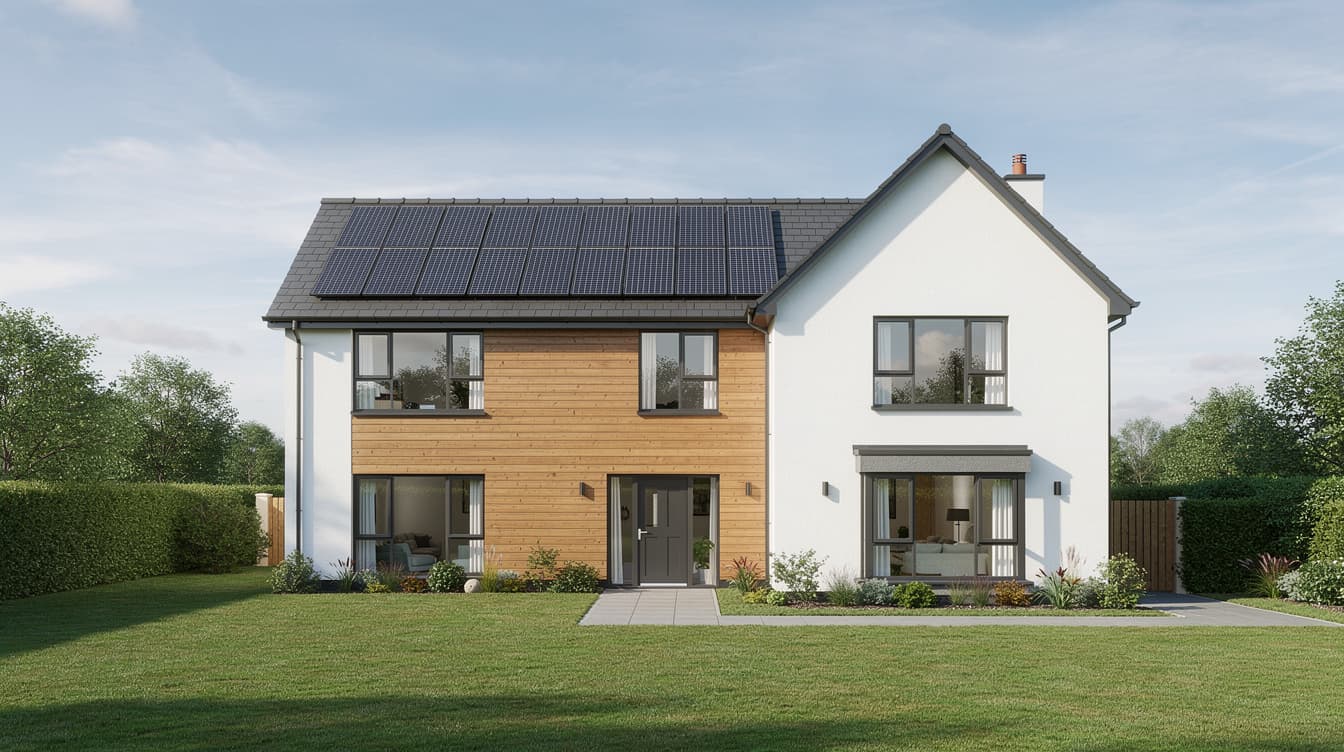
Solar panels on a modern Irish home with green countryside
More than 50,000 Irish homes have already installed solar panels — here is whether it makes sense for yours

Are Solar Panels Worth It in Ireland? The Short Answer

For 80% of Irish homeowners, solar panels are absolutely worth it in 2026. Here is why in plain numbers:

Metric Typical Value (4kWp System)
System cost before grant€6,200–€6,800
SEAI grant€2,100
Your net cost€4,100–€4,700
Annual electricity savings€800–€1,200
Export income (CEG)€100–€200 per year
Payback period4–6 years
25-year total savings€20,000–€30,000
Return on investment400–600%
BER improvement1–2 grades
Property value increase€15,000–€25,000

Solar panels are worth it in Ireland if you meet most of these conditions: See our Clean Export Guarantee for more details.

  • Your electricity bill is €100 or more per month (the higher it is, the faster you pay back)
  • Your roof faces south, south-east, or south-west (east and west still work well)
  • Your roof is not heavily shaded by trees or neighbouring buildings
  • You own the property and plan to stay for at least 5 years
  • You use a reasonable amount of electricity during daylight hours (or have a battery or EV to store surplus)

If you tick four or five of those boxes, solar is one of the best financial investments you can make in your home. It outperforms savings accounts, beats most stock market returns, and unlike other investments, it simultaneously reduces your carbon footprint and protects you from future electricity price increases.

The Real Numbers: What Solar Panels Cost vs What They Save

The most important question anyone asks about solar panels is: will I actually save money? The answer depends on system size, your electricity consumption, and how much of the solar energy you use directly versus exporting to the grid. Here is a comprehensive breakdown.

Solar Panel System Costs in Ireland (2026)

System Size Panels Cost Before Grant SEAI Grant Your Net Cost
2kWp5€3,500€900€2,600
3kWp7–8€5,000€1,500€3,500
4kWp10€6,500€2,100€4,400
5kWp12–13€7,800€1,800€5,400
6kWp15€9,200€1,800€6,800
8kWp20€12,000€1,800€9,600

Important note on the SEAI grant: The Sustainable Energy Authority of Ireland (SEAI) provides a solar PV grant of up to €1,800 for homeowners. The grant covers €700 per kWp for the first 2kWp and €200 per kWp for the next 2kWp, capped at €1,800 total. The property must have been built and occupied before 2021, and you must use an SEAI-registered installer. There is 0% VAT on solar panel installations for homes, which further reduces costs.

Annual Savings by System Size

System Size Annual Generation Self-Use Savings (60%) Export Income (40%) Total Annual Benefit
2kWp1,800 kWh€390€65€455
3kWp2,700 kWh€580€100€680
4kWp3,600 kWh€780€130€910
5kWp4,500 kWh€930€165€1,095
6kWp5,400 kWh€1,050€200€1,250
8kWp7,200 kWh€1,250€275€1,525

Savings calculated at an average electricity rate of €0.36/kWh and a CEG (Clean Export Guarantee) rate of €0.185/kWh. Self-use percentage assumes a household with moderate daytime consumption. Adding a battery increases self-use to 80–90%, significantly boosting savings.

Payback Period at Different Electricity Prices

One of the strongest arguments for solar in 2026 is that electricity prices have risen dramatically and show no sign of returning to pre-2022 levels. The payback period gets shorter as prices stay high or rise further. Here is how the numbers change for a typical 4kWp system (net cost €4,400):

Electricity Price (per kWh) Annual Savings Payback Period 25-Year Savings
€0.30/kWh€7805.6 years€15,100
€0.35/kWh€8904.9 years€17,850
€0.36/kWh (current avg)€9104.8 years€18,350
€0.40/kWh€1,0004.4 years€20,600
€0.45/kWh€1,1203.9 years€23,600

If electricity prices continue to rise — and most analysts expect they will — the payback period gets even shorter. Every cent per kWh increase in the electricity rate adds approximately €22 per year to your savings on a 4kWp system. Solar panels essentially lock in your electricity cost at zero for the next 25 to 30 years, which is a powerful hedge against future price increases.

A Real Example: 3-Bed Semi-D in Dublin

Let us look at a concrete example using a typical Irish home. The O'Brien family live in a 3-bedroom semi-detached house in Swords, Dublin. The house was built in 2005 with a BER rating of C2.

The O'Briens' Situation Before Solar

  • Annual electricity consumption: 4,800 kWh
  • Annual electricity bill: €1,730 (at €0.36/kWh)
  • Monthly average bill: €144
  • Roof orientation: South-east facing, 35-degree pitch
  • Shading: Minimal — no tall trees or buildings nearby
  • Household: Two adults working from home 3 days per week, two children in school
  • Electric vehicle: No (considering one for 2027)

What They Installed

  • System: 3.6kWp (9 x 400W panels)
  • Battery: 5.12kWh lithium-ion battery
  • Total cost: €9,800 (panels + battery + installation)
  • SEAI grant: €2,100
  • Net cost: €7,700

First Year Results

Metric Value
Solar generation3,240 kWh
Self-consumption (with battery)2,590 kWh (80%)
Exported to grid650 kWh (20%)
Savings from self-use€932 (2,590 kWh x €0.36)
Export income (CEG)€120 (650 kWh x €0.185)
Total annual benefit€1,052
New annual electricity bill€798 (down from €1,730)
Bill reduction54%

The O'Briens' Payback and Return

  • Payback period: 7.3 years (including battery cost)
  • Without battery, payback would be: 5.1 years
  • 25-year total savings: approximately €28,000 (assuming 3% annual electricity price increases)
  • BER improvement: C2 to B2
  • Estimated property value increase: €18,000–€22,000

The O'Briens' monthly electricity bill dropped from €144 to approximately €67. They describe the battery as "the best decision we made" because it captures surplus solar during the day and powers the house in the evening when the family is home cooking dinner and watching television.

Sunlight reflecting off residential solar panels
Even in Irish weather, a well-sized solar system generates 85-90% of its rated output annually

A Real Example: 4-Bed Detached in Cork

Now let us look at a larger home with higher consumption. The Murphy family live in a 4-bedroom detached house in Ballincollig, Co. Cork. The house was built in 1998 with a BER rating of C3.

The Murphys' Situation Before Solar

  • Annual electricity consumption: 7,200 kWh
  • Annual electricity bill: €2,590
  • Monthly average bill: €216
  • Roof orientation: South-facing, 30-degree pitch
  • Shading: Minor shading from a mature oak tree in winter months only
  • Household: Two adults (one works from home full time), three teenagers
  • Electric vehicle: Yes — Hyundai Kona Electric, charged at home

What They Installed

  • System: 6.4kWp (16 x 400W panels)
  • Battery: 10.24kWh lithium-ion battery
  • EV diverter: Included for smart EV charging from solar surplus
  • Total cost: €15,200 (panels + battery + EV diverter + installation)
  • SEAI grant: €1,800
  • Net cost: €12,800

First Year Results

Metric Value
Solar generation5,890 kWh
Self-consumption (battery + EV)5,010 kWh (85%)
Exported to grid880 kWh (15%)
Savings from self-use€1,804 (5,010 kWh x €0.36)
Export income (CEG)€163 (880 kWh x €0.185)
EV fuel savings vs petrol€600 additional (included in self-use)
Total annual benefit€1,967
New annual electricity bill€786 (down from €2,590)
Bill reduction70%

The Murphys' Payback and Return

  • Payback period: 6.5 years (including battery and EV diverter)
  • 25-year total savings: approximately €52,000 (assuming 3% annual electricity price increases and continued EV use)
  • BER improvement: C3 to B1
  • Estimated property value increase: €20,000–€28,000

The Murphys are a particularly strong case for solar because they have high consumption, a south-facing roof, an EV that soaks up surplus generation, and a large battery. Their system essentially eliminates the cost of charging the EV from the grid for seven months of the year. As Mr. Murphy puts it: "We are generating our own electricity and our own fuel. The system will have paid for itself twice over within 13 years."

Key Takeaway from Both Case Studies

The O'Briens spent less upfront and got a simpler system with a solid return. The Murphys invested more but get dramatically higher savings because of their EV and larger consumption. Both households will see a full payback well within the warranty period of their panels, and both will save tens of thousands of euros over 25 years. The right system size depends on your consumption, roof space, and budget — but in both cases, solar was clearly worth it.

The 7 Factors That Determine If Solar Is Worth It for YOUR Home

Not every home benefits equally from solar panels. Here are the seven factors that determine your specific return on investment, ranked by importance.

1. Your Electricity Bill

This is the single biggest factor. The more electricity you consume, the more you save. A household spending €200 per month on electricity will save roughly twice as much as one spending €100 per month. If your bill is under €60 per month, the payback period stretches beyond 8 years and solar becomes less compelling — though still positive over 25 years.

Monthly Bill Ideal System Size Estimated Annual Savings Payback (no battery)
€60–€1002–3kWp€400–€6005–7 years
€100–€1503–4kWp€600–€9004–6 years
€150–€2504–6kWp€900–€1,4004–5 years
€250+6–10kWp€1,400–€2,000+3–5 years

2. Roof Orientation

A south-facing roof at a 30–35 degree pitch is ideal and produces 100% of potential output. But you do not need a perfect south-facing roof for solar to be worth it:

  • South: 100% output (ideal)
  • South-east or south-west: 95% output (excellent)
  • East or west: 80–85% output (still very good — and east/west splits can be effective for morning and evening generation)
  • North-east or north-west: 55–65% output (marginal — usually not recommended)
  • North: 40–50% output (generally not worth it)

Many installers now recommend east-west split systems for homes without a south-facing roof. This spreads generation across the day, which can actually increase self-consumption even though total annual generation is slightly lower.

3. Shading

Shading is the silent killer of solar returns. Even partial shading on one or two panels can significantly reduce output if the system uses traditional string inverters. Modern systems with microinverters or panel-level optimisers mitigate this problem, allowing shaded panels to underperform without dragging down the rest of the array.

Your installer should conduct a detailed shading analysis before quoting. Be wary of any installer who does not assess shading on site.

4. Daytime Electricity Usage

Solar panels generate electricity during daylight hours, roughly 7am to 7pm in summer and 9am to 4pm in winter. The more of that electricity you use directly, the more you save — because self-consumed solar saves you €0.36/kWh (the import rate), while exported solar only earns €0.185/kWh (the CEG rate).

Households where someone works from home, where appliances run during the day (dishwashers, washing machines on timers), or where children are home during the day tend to achieve 50–60% self-consumption without a battery and 80–90% with one.

5. Electric Vehicle Ownership

If you own or plan to buy an EV, solar panels become even more valuable. An EV can absorb surplus solar generation that would otherwise be exported at the lower CEG rate. With a smart EV charger or solar diverter, your car charges for free during the day, saving €600–€1,200 per year in EV charging costs compared to grid charging, and far more compared to petrol.

This is the single most powerful factor in accelerating payback. The Murphys' case study above demonstrates this clearly.

6. Battery Storage

A battery stores surplus solar generated during the day for use in the evening and overnight. A typical 5kWh home battery costs €3,000–€4,500 installed and increases self-consumption from approximately 40–50% to 75–85%. This means more of your solar electricity displaces expensive grid electricity rather than being exported at the lower rate.

Batteries add to the upfront cost and extend the payback period by 1–2 years, but they increase total lifetime savings by €3,000–€8,000 over 25 years. If you are a heavy evening electricity user or want maximum independence from the grid, a battery is worth considering.

7. Clean Export Guarantee (CEG) Income

Since 2022, Irish homeowners with solar panels can sell surplus electricity back to the grid through the Clean Export Guarantee. In 2026, CEG rates typically range from €0.15 to €0.24 per kWh depending on your supplier. The first €400 of export income per year is also tax-free.

A typical 4kWp system without a battery exports 1,400–1,600 kWh per year, earning €200–€300 in CEG income. With a battery, exports drop to 400–800 kWh, earning €75–€150 — but the overall financial return is higher because self-consumed electricity is worth roughly double the export rate.

What About Cloudy Irish Weather?

This is the number one objection we hear: "Sure, it's Ireland — it rains all the time. How can solar panels work here?"

Two Irish houses side by side — one with solar panels, one without
The difference solar makes — lower bills, higher BER rating, and increased property value

The short answer: solar panels work on light, not heat. Ireland receives between 900 and 1,200 kWh of solar irradiance per square metre per year. While that is less than southern Spain (1,700 kWh/m²), it is more than enough for solar panels to be highly productive and financially worthwhile.

To put it in perspective, Germany — which receives similar solar irradiance to Ireland — is the largest solar market in Europe with over 80 GW of installed capacity. If solar did not work in cloudy northern European climates, Germany would not have invested hundreds of billions of euros in it.

Solar Irradiance by Region in Ireland

Region Annual Solar Irradiance (kWh/m²) 4kWp System Output (kWh/year) Relative Performance
South-East (Wexford, Waterford, Kilkenny)1,100–1,2003,800–4,000Best in Ireland
South (Cork, Kerry, Tipperary)1,050–1,1503,600–3,900Excellent
East (Dublin, Wicklow, Meath, Louth)1,000–1,1003,500–3,700Very good
Midlands (Laois, Offaly, Westmeath)950–1,0503,300–3,600Good
West (Galway, Clare, Limerick)950–1,0503,300–3,600Good
North-West (Donegal, Sligo, Mayo)900–1,0003,100–3,400Good (slightly lower)

Even in the north-west of Ireland — the area with the lowest solar irradiance — a 4kWp system still generates over 3,100 kWh per year. That is enough to save €700–€900 annually and achieve payback in 5–6 years.

How Solar Panels Perform Across the Seasons

Solar generation in Ireland follows a clear seasonal pattern:

  • April to September: Approximately 75–80% of annual generation. May, June, and July are the peak months, with very long daylight hours (up to 17 hours in midsummer). A 4kWp system can generate 15–20 kWh on a good summer day.
  • October to March: Approximately 20–25% of annual generation. December and January are the weakest months, but panels still produce 2–5 kWh per day — enough to cover standby loads and some daytime usage.

The key insight is that Ireland's long summer days compensate for the shorter winter days. In June, Ireland gets more daylight hours than Rome. The total annual output, when averaged over 12 months, makes the financial case strong in every part of the country.

Modern solar panels also perform better in cooler temperatures. Silicon-based panels lose efficiency in extreme heat (above 25°C), which is why identical panels in Ireland actually produce more per hour of sunshine than the same panels in a scorching Mediterranean summer. Ireland's cool, bright conditions are well-suited to solar generation.

Solar Panels vs Other Home Investments

When you have €5,000–€15,000 to invest in your home, how does solar compare to other popular upgrades? Here is an honest comparison of the most common energy investments Irish homeowners consider in 2026.

Investment Typical Net Cost (after grants) Annual Savings Payback Period 25-Year ROI Comfort Improvement
Solar Panels (4kWp)€4,400€800–€1,1004–6 years400–600%Low (financial only)
Heat Pump (air-to-water)€6,000–€9,000€600–€1,0007–12 years200–350%High (better heating)
Attic Insulation€800–€1,500€200–€4002–5 years500–800%High (warmer home)
Cavity Wall Insulation€1,000–€2,000€250–€4503–6 years400–700%High (warmer home)
External Wall Insulation€8,000–€18,000€500–€80012–25 years100–200%Very high
Electric Vehicle€25,000–€45,000€1,500–€2,500 (fuel savings)8–15 yearsVariableHigh (driving experience)
Solar + Heat Pump combined€11,000–€15,000€1,400–€2,0006–9 years350–500%Very high

Our recommendation: If your home already has adequate insulation (attic and cavity walls done), solar panels offer the best pure financial return of any major home energy investment. The payback is faster than a heat pump, the ROI is higher, and maintenance costs are near zero. However, if your home is poorly insulated, start with insulation first — it is cheaper, has a fast payback, and will also make your solar system more effective by reducing overall energy demand.

The combination of solar panels and a heat pump is increasingly popular in Ireland and delivers outstanding results. The solar panels offset the electricity the heat pump uses, effectively giving you near-free heating and hot water for much of the year.

When Solar Panels Are NOT Worth It in Ireland

We want to be completely honest. Solar panels are not the right investment for every home. Here are the situations where we would advise against installing solar — or at least recommend waiting.

Solar panels working in Irish rain with water drops on surface
Solar panels work in all Irish weather — rain actually helps by keeping them clean

1. Your Roof Is Heavily Shaded

If your roof is overshadowed by tall trees, neighbouring buildings, or other structures for most of the day, solar output will be dramatically reduced. Removing one or two small trees might solve the problem, but if your entire roof is in permanent shade, solar is not viable. A good installer will be upfront about this after a site survey.

2. Your Roof Faces Due North

A north-facing roof in Ireland produces only 40–50% of the output of a south-facing roof. At that level, the payback period stretches beyond 10 years and the financial return becomes marginal. If north-facing is your only option, solar is generally not worth the investment. However, if you have a north-east or north-west orientation with a shallow pitch, the output may be sufficient — consult a qualified installer for a specific assessment.

3. Your Electricity Bill Is Very Low

If you live alone, are out of the house all day, and your electricity bill is consistently under €50 per month (under 1,700 kWh per year), the savings from solar will be modest. A small 2kWp system might still make sense over 25 years, but the payback period will be long and the return is far less compelling than for higher-consumption households.

4. You Are Planning to Move Within 3 Years

While solar panels do increase property value (see below), you will not fully recoup the investment through a sale if you move within the first 3 years. If you plan to sell soon, the better investment might be insulation or a BER upgrade through other means, which buyers also value. That said, if you are staying for 4+ years, the payback through bill savings plus the property value increase makes it worthwhile.

5. Your Roof Needs Replacement Soon

If your roof is in poor condition and needs to be replaced in the next 5 years, install the new roof first. Removing and reinstalling solar panels costs €800–€1,500 and is a hassle. Get the roof done, then add solar to the new roof.

6. You Have Not Addressed Basic Insulation

If your attic has no insulation and your walls are uninsulated, spend the money on insulation first. Attic insulation costs €800–€1,500, has a 2–4 year payback, and will reduce your overall energy demand. After insulating, you may need a smaller (cheaper) solar system, and the system you do install will be more effective.

7. The Quote Seems Too Good to Be True

If an installer is quoting you a price far below market rates, or making promises of 100% bill elimination with a tiny system, walk away. Always use an SEAI-registered installer, get at least three quotes, and check references. A badly installed system can underperform for decades.

Being transparent about when solar does not make sense is important. These are real scenarios where other investments would serve you better. For the remaining 80%+ of Irish homes, solar panels remain one of the smartest financial decisions you can make.

How Solar Panels Affect Your Property Value

Solar panels do more than just save you money on electricity — they increase the resale value of your home. This is one of the most underappreciated benefits of solar in Ireland.

BER Rating Improvement

Installing solar panels typically improves your Building Energy Rating (BER) by 1 to 2 grades. Since January 2009, a BER certificate is required for all homes being sold or rented in Ireland. A higher BER rating directly translates to higher property values because buyers know it means lower energy bills.

BER Before Solar Typical BER After Solar (4kWp) Estimated Property Premium
D1–D2C1–C2€12,000–€18,000
C2–C3B2–B3€15,000–€22,000
B3B1–A3€18,000–€28,000

What the Research Shows

Research from the ESRI (Economic and Social Research Institute) and international studies consistently show that energy-efficient homes sell for a premium. In Ireland specifically:

  • An improvement of one BER grade is associated with a 1.5–2.5% increase in sale price, according to ESRI research.
  • For a property worth €350,000, a 2-grade BER improvement could add €10,500 to €17,500 to the sale price.
  • Homes with an A or B rating sell faster than equivalent homes with lower ratings, spending an average of 2–3 weeks less on the market.
  • Buyers increasingly ask about energy costs upfront. A home with solar panels installed and a strong BER is a powerful selling point in a competitive market.

Beyond the BER improvement, solar panels signal to buyers that the home is modern, well-maintained, and future-proofed against energy costs. In 2026, with energy prices at historically high levels, this is a significant differentiator.

Beautiful Irish home with high energy rating
Solar panels can improve your BER rating by 1-2 grades, adding €15,000-€25,000 to property value

The Hidden Benefits Most People Miss

When people evaluate whether solar panels are worth it, they tend to focus purely on the electricity bill savings. But several other benefits add significant value that does not always appear on a spreadsheet.

Energy Independence and Security

With solar panels (especially with a battery), you are generating your own electricity. You are less dependent on the grid, less vulnerable to supplier price increases, and less affected by energy market volatility. In a world where wholesale energy prices can swing 50% in a single year — as we saw in 2022 and 2023 — this peace of mind has real value.

A 4kWp system with a battery can cover 60–70% of an average household's annual electricity needs. During the summer months, many solar homes draw almost nothing from the grid.

Protection Against Future Price Rises

Irish electricity prices have risen by over 40% since 2021. The average unit rate has gone from approximately €0.22/kWh to €0.36/kWh. Most energy analysts expect further increases over the coming decade as Ireland invests in grid infrastructure, interconnectors, and the transition away from fossil fuels.

Solar panels lock in your electricity cost at effectively €0 per kWh for the electricity you generate and use. If electricity prices rise to €0.45 or €0.50 per kWh over the next decade — which is entirely plausible — your solar savings increase proportionally. This makes solar one of the best hedges against inflation available to Irish homeowners.

Environmental Impact

A 4kWp solar system in Ireland prevents approximately 1.2–1.5 tonnes of CO2 emissions per year. Over 25 years, that is 30–37 tonnes of CO2 — equivalent to driving a petrol car for about 150,000 kilometres, or taking 8 return flights from Dublin to New York.

While the environmental benefit does not appear on your electricity bill, it matters. Ireland has legally binding climate targets under the Climate Action Plan 2024, and household solar is a key part of meeting those targets. If environmental responsibility is important to you, solar is one of the most impactful actions you can take as a homeowner.

Grid Income and Future Opportunities

The Clean Export Guarantee (CEG) already allows you to earn income from surplus solar. But the grid is evolving. Future opportunities may include:

  • Time-of-use export rates: Higher payments for exporting during peak evening hours (already available in some markets)
  • Virtual power plant participation: Aggregating home batteries to provide grid services, earning additional income
  • Peer-to-peer energy trading: Selling surplus directly to neighbours at rates above the CEG
  • Dynamic tariffs: Smart import/export based on real-time grid conditions, maximising value

Having solar panels and a battery installed now positions you to benefit from these developments as the Irish energy market continues to modernise.

Minimal Maintenance Requirements

Solar panels have no moving parts and require almost zero maintenance. Modern panels come with 25-year performance warranties (guaranteeing at least 80–85% output at year 25) and 12–15 year product warranties. Inverters typically last 10–15 years and cost €800–€1,200 to replace — the only significant maintenance cost over the system's lifetime.

You do not need to clean panels in Ireland. Irish rainfall keeps them adequately clean. The only maintenance task is an occasional visual check for debris (leaves, bird droppings) and monitoring your system's app to ensure output is as expected.

What Irish Homeowners Say

We regularly speak with homeowners across Ireland who have installed solar panels. Here is what they report after living with their systems for 12 months or more.

"Our electricity bill went from €180 a month to €65. I wish we had done it three years ago."
— Sarah and Mark, 3-bed semi-detached, Navan, Co. Meath. 4kWp system with 5kWh battery. Installed October 2024.

"I was sceptical about solar in Ireland — I thought it was only for sunny countries. I was completely wrong. Our system generated 4,100 kWh in the first year, more than the installer estimated."
— David, 4-bed detached, Ennis, Co. Clare. 5kWp system, no battery. Installed March 2025.

"The combination of solar panels and our EV charger is brilliant. We charge the car for free from April to September. Our total energy costs — house and car — dropped by over 60%."
— Aoife and Conor, 3-bed end-of-terrace, Maynooth, Co. Kildare. 3.6kWp system with EV diverter. Installed June 2024.

"We're retired and home during the day, so we use most of the solar directly. Our bill is €30 a month now. The panels will have paid for themselves in less than five years."
— Brendan and Mary, 4-bed bungalow, Dungarvan, Co. Waterford. 3kWp system, no battery. Installed May 2025.

"I run a home office and was spending a fortune on electricity. The solar panels cut my electricity bill in half immediately. With the way prices are going, the savings will only increase."
— Niamh, 2-bed apartment with roof access, Blackrock, Co. Dublin. 2.4kWp system. Installed August 2025.

"We got three quotes and the prices varied by nearly €3,000 for the same system. Shop around — it makes a huge difference."
— Patrick and Louise, 3-bed detached, Limerick city. 4.8kWp system with 10kWh battery. Installed January 2025.

The consistent theme is that real-world performance meets or exceeds expectations, bill savings are immediate and substantial, and the most common regret is not installing sooner.

Ready to Go Solar?

Get your free personalised quote from SEAI-registered installers.

Get Your Free Quote →

Frequently Asked Questions

How much do solar panels cost in Ireland in 2026?

A typical 4kWp solar panel system costs €6,200–€6,800 before the SEAI grant and €4,100–€4,700 after the grant. Smaller 2kWp systems cost €2,600 after the grant, while larger 6kWp systems cost approximately €6,800 after the grant. Adding a battery adds €3,000–€5,500 depending on capacity. All installations for homes are currently at 0% VAT.

Homeowner checking electricity bill showing dramatic savings after solar
Most Irish homeowners see a 50-70% reduction in their electricity bills after installing solar

How long do solar panels take to pay for themselves in Ireland?

The typical payback period for solar panels in Ireland in 2026 is 4–6 years for a panels-only system and 6–8 years for a system with battery storage. The exact payback depends on your electricity consumption, system size, roof orientation, self-consumption rate, and electricity prices. Higher electricity bills and higher self-consumption result in faster payback.

What is the SEAI solar panel grant?

The SEAI (Sustainable Energy Authority of Ireland) offers a grant of up to €1,800 for solar PV installations on homes built and occupied before 2021. The grant covers €700 per kWp for the first 2kWp and €200 per kWp for the next 2kWp, with a maximum of €1,800. You must use an SEAI-registered installer, and the grant is applied directly to the installer's invoice — you do not need to pay the full amount upfront.

How many solar panels do I need for my house?

The number of panels depends on your electricity consumption. As a rule of thumb: a household using 4,000–5,000 kWh per year typically needs a 3–4kWp system (8–10 panels). A larger household using 6,000–8,000 kWh per year benefits from a 5–6kWp system (12–15 panels). Each modern panel is approximately 400W and measures about 1.7m x 1.1m. Your installer will recommend the right size based on your bills and roof space.

Do solar panels work in winter in Ireland?

Yes, solar panels generate electricity year-round in Ireland, including winter. However, winter output is significantly lower than summer — approximately 20–25% of annual generation occurs between October and March. On a clear December day, a 4kWp system might produce 3–5 kWh, while on a bright June day it can produce 18–22 kWh. A battery helps bridge the gap by storing summer surplus for evening use.

Can I sell electricity back to the grid in Ireland?

Yes. Under the Clean Export Guarantee (CEG), introduced in 2022, Irish homeowners with solar panels can sell surplus electricity back to the grid. The CEG rate varies by electricity supplier but typically ranges from €0.15 to €0.24 per kWh in 2026. The first €400 of export income per year is tax-free. You need to register with your electricity supplier for CEG — most major suppliers (Electric Ireland, SSE Airtricity, Energia, Bord Gais) offer it.

Do I need planning permission for solar panels in Ireland?

In most cases, no. Solar panels are considered exempt development under Irish planning law, provided the panels do not project more than 150mm from the roof surface, do not cover more than 50% of the total roof area, and the building is not a protected structure or in an architectural conservation area. If your home is a protected structure or in a conservation area, you will need planning permission. Your installer can advise on this.

What happens to solar panels at night?

Solar panels do not generate electricity at night. After sunset, your home draws power from the grid as normal (or from a battery if you have one installed). A battery charged during the day can typically power a home through the evening and overnight, depending on battery size and household consumption. Most solar households use grid electricity during the night and in the early morning.

Are solar panels worth it without a battery?

Yes. A solar panel system without a battery is still very worthwhile. Without a battery, you typically self-consume 35–50% of generated electricity and export the rest to the grid via the CEG. The payback period is actually shorter without a battery (4–5 years versus 6–8 years) because you avoid the battery cost. A battery increases total lifetime savings but is not required for solar to be a good investment.

How long do solar panels last?

Modern solar panels are built to last 30–40 years. Most manufacturers offer 25-year performance warranties guaranteeing at least 80–85% of original output. In practice, panels typically retain 90%+ of their output after 25 years. The inverter is the component most likely to need replacement, with a typical lifespan of 10–15 years. Inverter replacement costs €800–€1,200. There are no other significant maintenance costs.

Will solar panels damage my roof?

When installed correctly by a qualified installer, solar panels do not damage your roof. In fact, they protect the area of roof beneath them from rain, UV degradation, and weathering. Panels are mounted on rails attached to the roof rafters with weatherproof brackets. If your roof is in poor condition or nearing the end of its life, it is advisable to repair or replace the roof before installing solar panels.

Can I install solar panels myself to save money?

While it is technically legal to install solar panels yourself, we strongly advise against it. You will not qualify for the SEAI grant (which requires an SEAI-registered installer), you will not be eligible for the Clean Export Guarantee, and any electrical work must be certified by a qualified electrician (RECI registered). A DIY installation also voids most product warranties and could affect your home insurance. The SEAI grant alone covers 30–40% of the system cost, making professional installation significantly better value.

What is the best time of year to install solar panels in Ireland?

The best time to install is late winter or early spring (February to April) so your system is up and running before the peak generation months of May to August. However, solar panels can be installed at any time of year. Demand for installations is highest in spring and summer, so booking in autumn or winter often means shorter wait times and sometimes better prices. The SEAI grant is available year-round.

Related Articles