
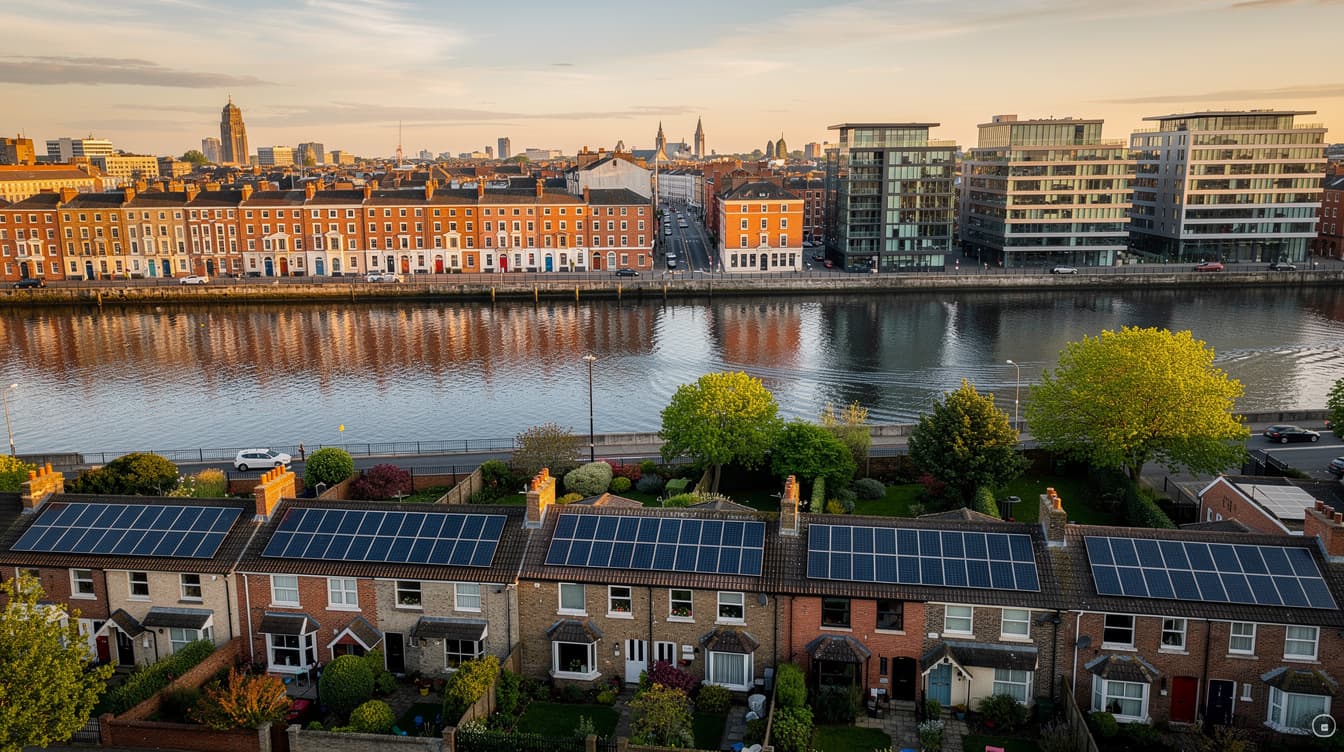
Top 5 Solar Companies in Dublin 2026: How to Pick the Right Installer
If you’re searching “top 5 solar companies in Dublin” you’re really asking one question: which installer is least likely to mess up a six-figure asset bolted to my roof for 25 years. This guide is built for that question. Not for clickbait. Dublin has the biggest concentration of SEAI-registered solar PV installers in Ireland — roughly 180 of the c.1,200 approved firms list a Dublin office or a Leinster region service area — and the gap between the best and worst is large enough to matter on price, on warranty backup, and on what your roof actually looks like a decade from now.
Updated July 2026: refreshed CEG export rates to the July 2026 average of 20 c/kWh, and adjusted lead times to the current 5–8 weeks from deposit to install day.
What follows is the 2026 working framework: the five archetypes of solar installer operating in Dublin, the questions that separate them, the actual prices a 4–6 kWp Dublin install should cost this year, the SEAI grant maths against Dublin-specific conditions, and the verification steps that take you from a glossy quote to a contract you can sign without losing sleep.
Why “top 5 solar companies in Dublin” cannot be a ranked league table
There is no honest static ranking. Quality varies install-by-install, day-by-day. Some big installers do brilliant work in Lucan and sloppy work in Howth two weeks later, because the crews are different. Some small installers run two perfect installs a week with a five-star roof but a 90-day backlog. A 2024 review site “Top 5” is, in practice, an SEO list paid for, sometimes implicitly, by who advertises hardest — not by installation quality. So this guide does not list five company names. Instead, it gives you the five categories of Dublin installer you will encounter when you start asking for quotes, the strengths and the failure modes of each, and the exact questions that separate the real ones from the cowboys.
The 5 archetypes of Dublin solar installer in 2026
1. National scale-up — the “volume installer”
You’ll know them by name. Multi-county footprint, 30–120 installs per week, dedicated sales team, glossy showroom, often part of a larger energy or utility group, marketing budget of seven figures. Examples in the Dublin market historically include energy retailers’ in-house solar arms and the largest PV-dedicated nationals.
| Strengths | Weaknesses |
|---|---|
| Won’t go bust before warranty period ends | Often the most expensive (15–25% over mid-size installers) |
| Inventory of premium-brand panels and inverters | Installation crews can be subcontracted — quality varies day-to-day |
| Better post-install monitoring infrastructure (app, dashboards) | Sales pressure: free quote visits can run 2 hours, time-limited “today only” discounts |
| SEAI grant handled smoothly — they file it for you | Generic system design — less appetite for unusual roofs |
Best for: standard suburban semi/detached, homeowners who value warranty backing over price, anyone who finds dealing with smaller trades stressful.
2. Mid-size regional specialist
10–40 employees, founded between 2018–2023 as solar took off, headquartered in north or south Dublin or the commuter belt (Meath, Kildare, Wicklow), with their own in-house electrical and roofing teams. They typically run 3–8 installs a week, the owner is reachable, and they have a portfolio of 500–3,000 completed installs by 2026.
| Strengths | Weaknesses |
|---|---|
| Best balance of price and quality — usually 10–20% cheaper than nationals | Lead times can stretch to 8–14 weeks during peak season (March–June) |
| Same crew likely on your roof from start to finish | Some are 3–5 years old — financial track record short |
| Owner-led customer service | Smaller selection of panel/inverter brands |
| Often more flexible on system design and roof variations | Aftercare app/monitoring may be third-party rather than in-house |
Best for: most homeowners. This is the sweet spot for value and quality on a standard Dublin install. Where most of this guide’s recommendations point.
3. Owner-operator (1–10 staff)
One or two qualified electricians, sometimes with a roofing partner. Often run by an industry veteran who left a bigger firm. Modest fleet, modest overhead. Installs 1–3 systems per week.
| Strengths | Weaknesses |
|---|---|
| Lowest pricing — often 15–25% below nationals | Warranty risk if the business closes (especially the workmanship 10-year) |
| Often technically excellent — the owner is the installer | Single point of failure on response time if the owner is sick |
| Highly recommended local referral chains | Less polished pre-sales process |
Best for: cost-sensitive homeowners with a roof and electrical situation that aren’t unusual, who’ve received a strong personal referral, and who are happy to manage the SEAI grant paperwork themselves if needed.
4. The cross-region operator
Headquartered outside Dublin (often the south-east, the midlands, or Cork) but actively quoting Dublin work. Typically chase the higher Dublin per-install pricing while keeping their labour costs at regional rates. Can be excellent value but the maths of the travel time changes for warranty callouts.
| Strengths | Weaknesses |
|---|---|
| Often competitive on price | 90+ minute drive for a callout means slower service-level recovery |
| Can have strong technical reputations in their home county | Less familiar with Dublin-specific planning conditions and ACAs |
Best for: situations where local Dublin installers won’t quote (often commercial or unusual technical jobs), or where you have an existing relationship.
5. White-label resellers and door-to-door
Avoid. This archetype is the source of nearly all the “solar nightmare” coverage that hits the consumer press each spring. Door-knockers, pop-up websites, names that change every 18 months, paperwork written by a third party, panels and inverters sourced from a single low-cost wholesaler, no in-house electrical team. They are sometimes also technically SEAI-registered because registration is per-business not per-quality. They tend to disappear before the warranty period elapses, taking their workmanship guarantee with them.
Red flags: someone arriving at your door un-announced, “today only” pricing, refusing to give you the names of panel/inverter brands until contract, asking for >30% deposit, asking to be paid in cash or to a personal account, asking you to sign before the technical survey.
What a Dublin solar install actually costs in 2026
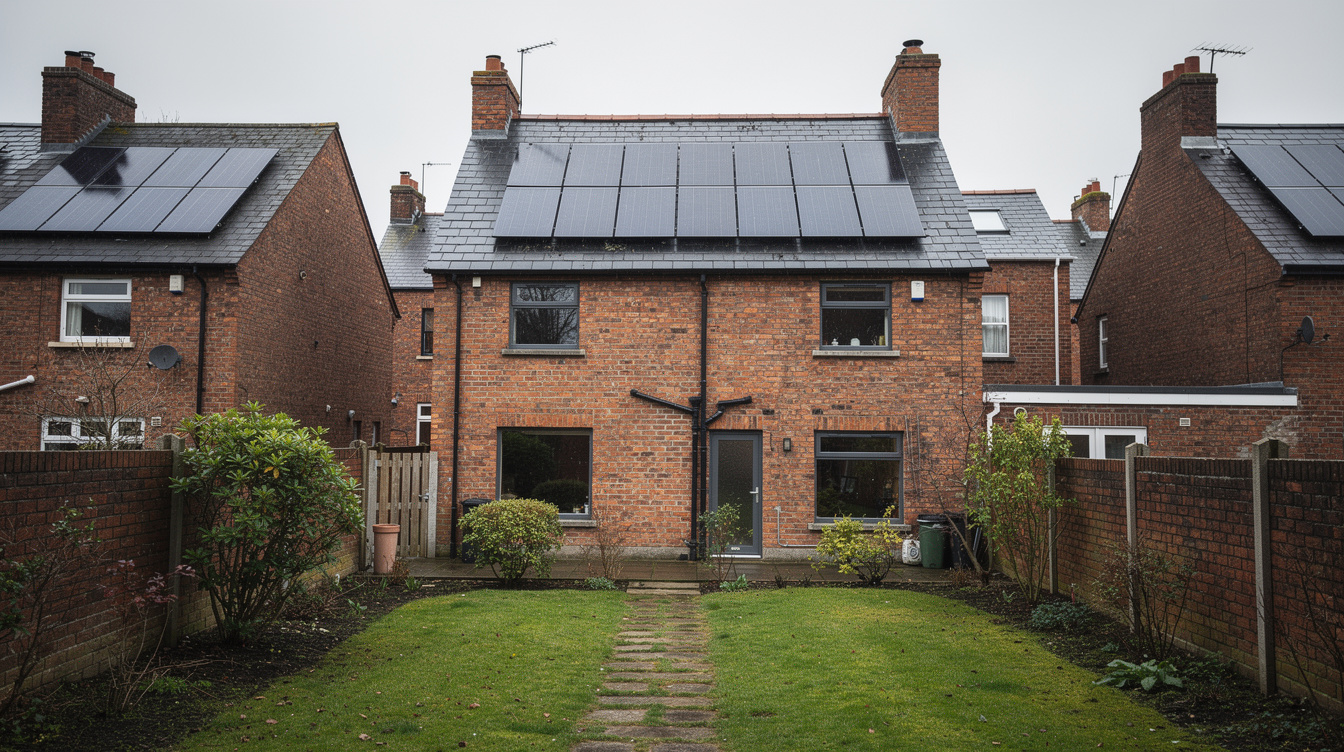
Pricing in Dublin runs 4–8% above the national average, mostly because of labour rates and crew travel time within the M50. Here’s what a fair quote should look like before the SEAI €1,800 grant:
| System | Dublin fitted price (low) | Dublin fitted price (mid) | Dublin fitted price (high) | Net after €1,800 grant |
|---|---|---|---|---|
| 3.0 kWp (7–8 panels) | €6,800 | €7,400 | €8,200 | €5,000–€6,400 (grant cap €1,350 for 3 kWp) |
| 4.4 kWp (11 panels) | €8,200 | €9,200 | €10,400 | €6,400–€8,600 |
| 6.0 kWp + 5 kWh battery | €12,500 | €14,200 | €16,400 | €10,700–€14,600 |
| 8.0 kWp + 10 kWh battery | €16,200 | €18,500 | €21,000 | €14,400–€19,200 |
If a Dublin quote sits more than 15% above the high-column figure, push back — that’s premium-brand inverter (Solis vs Sungrow, Tesla Powerwall vs Huawei Luna) territory only. If it sits more than 12% below the low-column figure, ask what brand of panel and inverter they’re actually quoting and whether it’s a tier-1 manufacturer with an Irish service presence. Cheap panels exist; cheap warranty backing is the catch.
The 7 questions that filter the top 5 from the next 50
Get three written quotes. Score them on these seven questions. The installer scoring 6 or 7 out of 7 is your top pick.
- SEAI registration verification: “Can you confirm your SEAI Registration Number? I’ll check it on seai.ie.” A real installer reels off their number from memory. Verify it at SEAI’s Solar PV Registered Companies list before signing.
- Safe Electric registration: “Which Safe Electric registered electrician will sign off the consumer-board connection — in-house or subcontracted, and what’s the registration number?” SI 192/2018 requires registered sign-off on any electrical alteration to the dwelling’s circuit. Anyone glossing over this is cutting corners.
- Brand and model in writing: “What is the brand and model of the panel, inverter, and battery in this quote?” Get make and model in writing. Cross-check the panel against Bloomberg’s Tier-1 PV Module list and the inverter against the IEC 62109 standard. Substitution on delivery day is the #1 complaint Irish solar buyers raise with the CCPC.
- Workmanship warranty length: “What does your workmanship warranty cover and for how long?” Look for 10 years on labour and roof seal, separate from the 12–15-year panel product warranty and the 25-year panel output warranty. Less than 10 years on workmanship is a soft no.
- Same-week response SLA: “If my inverter throws a fault next January, what’s your written commitment on response time?” National installers usually have a 5–7 day SLA. Mid-size and owner-operators may commit to 48 hours. Get this in writing.
- Recent Dublin install reference: “Can you give me three reference customers in Dublin from the last 6 months that I can call?” A serious installer will offer this without hesitation. Take 30 minutes and actually call them.
- Roof and structural assessment: “Will you do an on-site structural assessment before issuing the final quote?” Avoid anyone who quotes purely from satellite imagery. A roof survey catches everything from rotten battens to undersized rafters to slate fragility that you don’t want discovered on install day.
Dublin-specific gotchas your installer must understand
Architectural Conservation Areas (ACAs)
Dublin City Council has 18 ACAs covering significant chunks of inner Dublin: Drumcondra, Phibsboro, Stoneybatter, Portobello, Ranelagh, Rathgar, Rathmines, Sandymount, parts of South Circular Road, the Liberties, Mountjoy Square, North Great George’s Street, parts of Glasnevin. South Dublin and Dun Laoghaire-Rathdown councils have separate ACAs covering Dalkey, Sandycove, Killiney, Monkstown and more. PV inside these zones is usually exempt under the 2022/2024 Solar Safeguarding Regulations for rear-facing roofs but may need a Section 5 Declaration for front-facing arrays where streetscape character is at stake. Installers should be running a planning lookup on the council GIS portal before quoting.
Protected Structures (RPS)
Dublin has roughly 9,000 Protected Structures. PV here needs planning permission, not just a Section 5 — and approval rates are low for visible roofs. Most reputable Dublin installers won’t quote until you confirm RPS status.
Slate roofs and rotten battens
A meaningful slice of Dublin’s pre-1970 housing stock has natural slate with timber battens 50–80 years old. A good Dublin installer will spot brittle slate from the satellite image and warn you the install may need partial re-slating (€1,200–€2,800 extra). A bad one ploughs ahead and discovers the problem mid-install.
Shaded back gardens in dense suburbs
Mature trees in older Dublin estates (Templeogue, Terenure, Clontarf, Donnybrook) shade roofs more than satellite imagery suggests. Insist on either a Solmetric SunEye reading or a dedicated shade analysis before the system is sized — otherwise you end up with a 5 kWp system that actually generates as a 3.5 kWp one.
Compare Quotes From Dublin’s Top Installers
Get three SEAI-registered quotes for your Dublin home. Free, no obligation, no door-knockers.
How to verify the SEAI register yourself in 2 minutes
- Open seai.ie. Navigate to Home Energy → Solar PV Grant.
- Click “Find a Registered Company”.
- Filter by “Dublin” (or your relevant county).
- Type the proposed company name. The list returns active and expired registrations. Expired = not eligible to claim your grant. Active = paperwork in order.
- Note their registration number. Quote it back to them; legitimate installers welcome the check.
This is the single most powerful filter you have. Around 18% of the companies advertising solar installs in Ireland in late 2025/early 2026 were not actively SEAI-registered — usually subcontractors of subcontractors, or expired registrations that hadn’t been refreshed. If they’re not on the live register on the day you check, walk away.
What payback looks like on a Dublin install
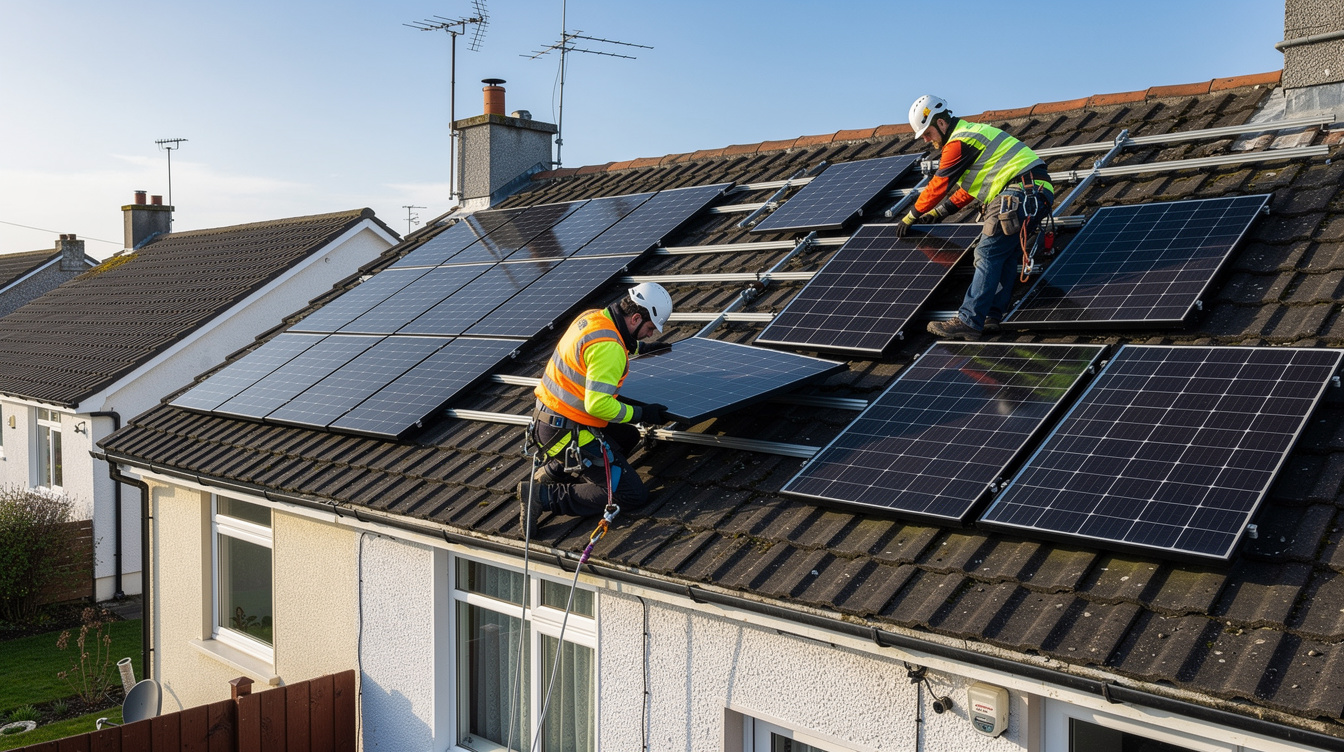
Dublin yield (~960 kWh/kWp) is slightly above the national average and second only to the south-east counties. Here’s what a 4.4 kWp install pays back on a typical Dublin household:
| Item | Figure |
|---|---|
| Fitted price (4.4 kWp) | €9,200 |
| SEAI grant | €1,800 |
| Net cost | €7,400 |
| Annual generation | ~4,200 kWh |
| Self-consumption (no battery, immersion diverter) | ~38% |
| Annual saving (offset @ €0.35/kWh) | €560 |
| CEG export income (2,600 kWh @ €0.20) | €520 |
| Total annual benefit | €1,080 |
| Simple payback | ~6.9 years |
Dublin solar FAQs
Should I go with a national name or a smaller installer?
For most Dublin homes the mid-size regional specialist gives the best blend of price and quality. National brands are worth the premium if you place a high weight on long-term warranty backing or if your job is unusual. Owner-operators are excellent if you have a personal reference.
How long does a Dublin solar install take?
Standard 4–6 kWp install: 1–2 working days on the roof, plus 5–8 weeks of lead time between deposit and installation date in 2026. Battery and EV charger add an extra half-day. ESB Networks then has 8–12 weeks to commission the export meter for CEG payments, but you’re generating from day one of switch-on.
Do I need planning permission for solar in Dublin?
For 90%+ of Dublin homes, no. The 2022/2024 Solar Safeguarding Regulations exempt domestic rooftop PV from planning permission regardless of size. Exceptions: Protected Structures (need full planning), some properties inside an ACA with front-facing roofs (Section 5 recommended), and ground-mount systems > 25 m².
What’s the cheapest legitimate way to do solar in Dublin?
2.0 kWp grid-tied, no battery, single roof side, mid-size installer. Around €5,300 fitted, €900 SEAI grant, €4,400 net. Generates ~1,920 kWh/yr. The 4.4 kWp size has a better cost-per-watt and stronger payback, but if cash flow is the constraint, the 2.0 kWp entry point is real.
Should I add a battery on day one or later?
Add a battery if your daytime electricity consumption is genuinely low — e.g. nobody home 9-5 — and if grid prices look likely to stay elevated. If you work from home most days, the battery’s extra payback period (typically 4–6 years on its own) is less appealing because you’re already self-consuming most of your solar.
What about the SEAI Solar PV grant in Dublin specifically?
Identical to the rest of the country: €900 per kWp up to a €1,800 cap. Your home must have been built and occupied before 1 January 2021, you must be the homeowner-occupier, and the property must have no prior PV grant at its MPRN. Dublin properties are eligible like any other Irish home.
The bottom line on picking a Dublin solar installer in 2026
The right answer isn’t a brand. It’s a process: three written quotes from SEAI-registered companies, brand and model in writing, workmanship warranty over 10 years, a verifiable Dublin reference list, and a roof survey before contract. Run that process and you will arrive at a top-3 shortlist faster than any “top 5” list on the internet can deliver, and the one you sign with will be the right one for your house specifically — not the company that bought the SEO spot.
Skip the Cold Calls — Get Vetted Dublin Quotes
Free quotes within 48 hours from SEAI-registered Dublin installers who meet our 7-point vetting criteria.
Related Articles
Top 10 Solar Companies in Ireland 2026: The Honest National Guide
Honest 2026 guide to picking a solar installer in Ireland — 10 installer archetypes, county-by-county vetting framework, real prices, SEAI grant maths, no SEO league tables.
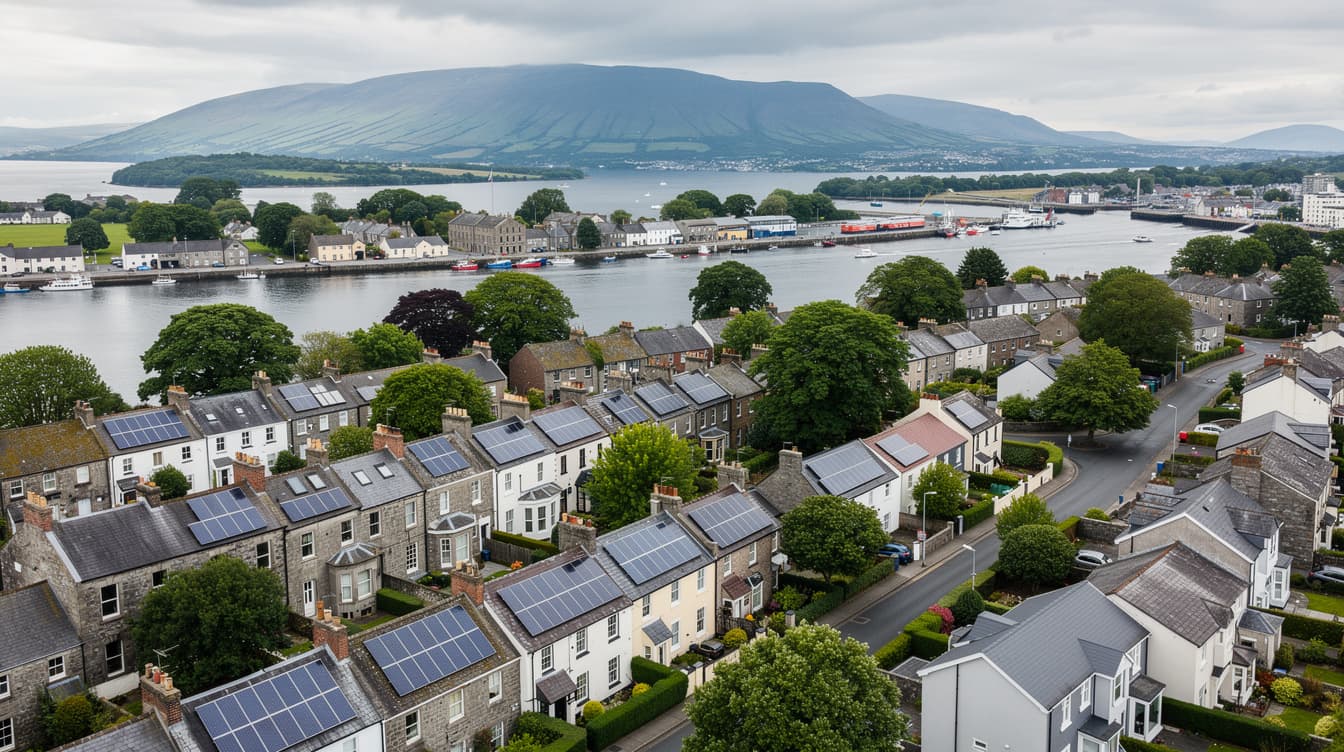
Top 5 Solar Companies in Waterford 2026: How to Pick the Right Installer
How to pick the right Waterford solar installer in 2026: 5 installer archetypes, 7-question vetting framework, 2026 prices, coastal salt gotchas & SEAI grant maths.
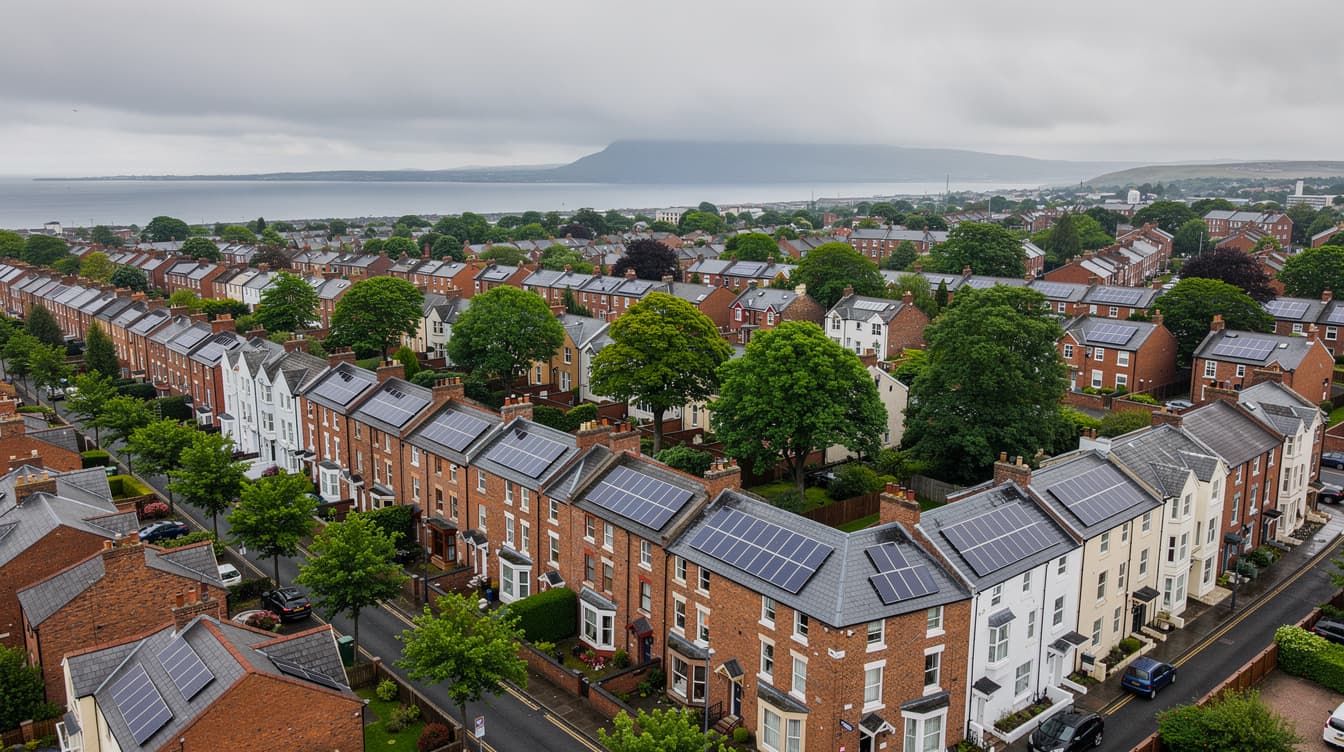
Top 5 Solar Companies in Belfast 2026: How to Pick the Right Installer (NI)
How to pick the right Belfast solar installer in 2026: 5 archetypes, 7-question vetting, NIE Networks G98/NI, supplier export tariffs & real prices in £.