
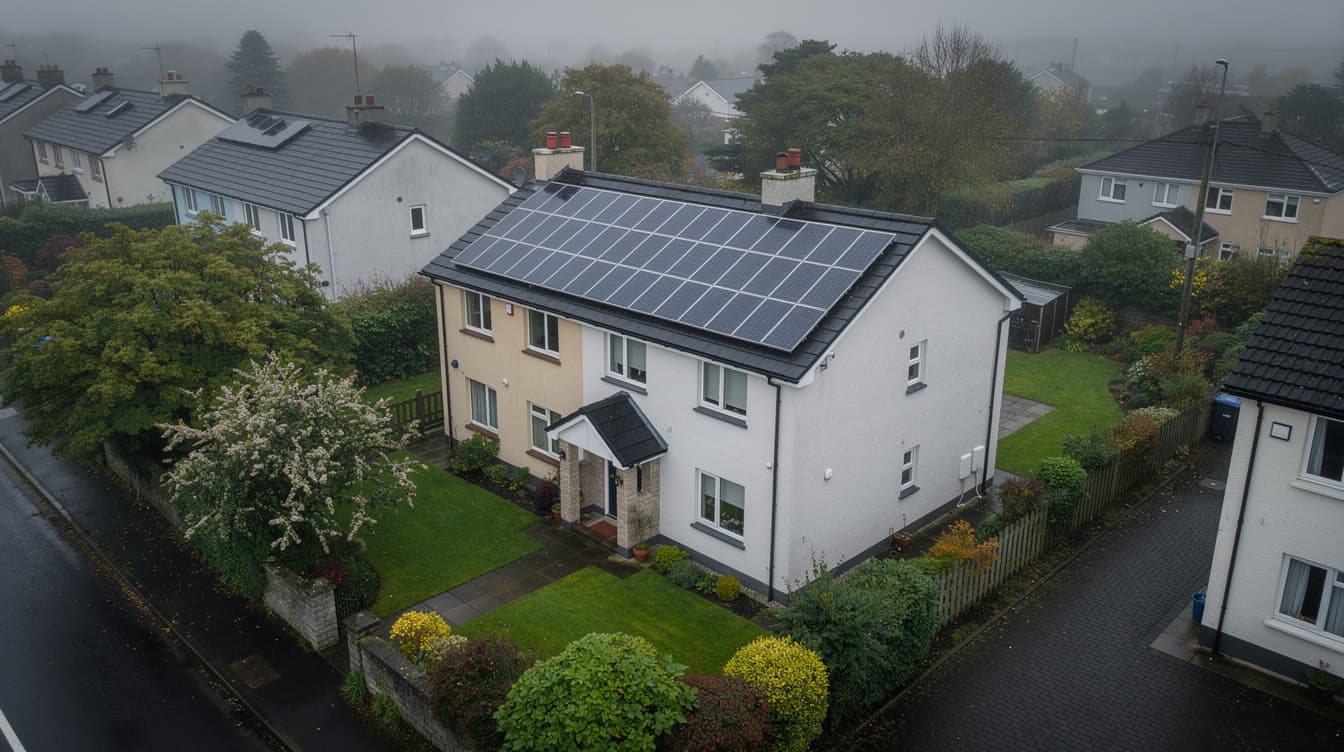
How Much Do Solar Panels Cost in Ireland? 2026 Prices, SEAI Grant & Real Payback
Updated 14 August 2026 — latest Irish install pricing
Two fresh mid-August market moves. (1) N-type panels have overtaken P-type in the residential channel: a 14-panel Jinko Tiger Neo 470 W (6.58 kWp) install with hybrid inverter is landing at €9,400–€10,300 net after the €1,800 SEAI grant from the top 20 SEAI-registered installers in Aug 2026 — down another €300–450 since the July refresh as JA DeepBlue 4.0 Pro 445 W wholesale dropped a further €12–18/panel through the first two weeks of August. (2) The 0% VAT rate on residential solar PV was extended to 31 December 2030 in Budget 2026 (announced October 2025) — not 2026 as previously scheduled — giving Irish households four extra years of the 23% tax saving vs the 13.5% reduced rate that would otherwise apply.
The SEAI €1,800 grant is unchanged, still flat for any residential array ≥2 kWp on a home built before 1 January 2021. LFP batteries continue to soften: a 10.24 kWh Pylontech / BYD / Sunsynk stack is now €5,600–€6,400 fitted (down from €5,900–€6,700 in July).
Updated 30 July 2026 — latest Irish install pricing
Panel wholesale is down another 3–4% since June. A typical 4 kWp Jinko Tiger Neo install with iron rails and a Solis single-phase inverter is landing at €8,900–€9,600 before the €1,800 SEAI grant (net €7,100–€7,800). Batteries have softened too: a 5.12 kWh Pylontech pack is now €3,400–€3,900 fitted; a 10.24 kWh stack is €5,900–€6,700 fitted.
TL;DR — Solar Panel Cost Ireland (July 2026)
Pricing below is what SEAI-registered installers are actually quoting Irish homes this month for a like-for-like spec (Tier-1 panels, MCS-listed hybrid inverter, iron rails, DC isolator, NC6 paperwork, commissioning, handover). All figures include 0% VAT.
| System size | Panels only (before grant) | Panels only (after €1,800 grant) | With 5–10 kWh battery (net) | Typical annual saving |
|---|---|---|---|---|
| 2 kWp (4–5 panels) | €5,900–€6,600 | €4,100–€4,800 | €7,700–€8,900 | €450–€650 |
| 4 kWp (8–10 panels) | €8,900–€9,600 | €7,100–€7,800 | €10,700–€11,900 | €900–€1,300 |
| 5 kWp (10–11 panels) | €10,200–€11,300 | €8,400–€9,500 | €12,000–€13,700 | €1,100–€1,550 |
| 6 kWp (12–13 panels) | €11,700–€13,000 | €9,900–€11,200 | €13,500–€15,400 | €1,300–€1,850 |
| 8 kWp (16–18 panels) | €14,400–€16,200 | €12,600–€14,400 | €16,200–€18,600 | €1,650–€2,300 |
| 10 kWp (20–22 panels, 3-phase) | €17,800–€20,400 | €16,000–€18,600 | €19,600–€22,700 | €1,950–€2,800 |
Reading the table: the “annual saving” column blends self-consumption savings at 33–38 c/kWh (standard 24-hour tariff) with Clean Export Guarantee (CEG) income at 18–24 c/kWh — the rate you actually get depends on your supplier (see our CEG rates comparison). Add a battery and you push more evening usage onto self-consumption, which is why the with-battery net cost is often only 30–40% higher than panels-only but pushes annual savings up 25–35%.
Not sure what size to get? Use our panel-count vs kW guide to translate the “how many panels” question into an install price, or our Ireland solar calculator for a personalised estimate. When you’re ready to compare live quotes from SEAI-registered installers in your county, our free quote tool takes 60 seconds:
Ready to Go Solar?
Get your free personalised quote from SEAI-registered installers.
If you’re researching solar panels in Ireland in 2026, the question that decides everything is: what will this actually cost me, and what do I get back? Pricing has moved a lot in the last 12 months. Panel wholesale prices are down roughly 12–15% year-on-year, battery attach rates are above 60% on new domestic installs, the SEAI grant is still €1,800 (now claimed online with a faster turnaround), and 0% VAT on residential PV runs until 31 December 2026. The Clean Export Guarantee (CEG) is paying 18–24c/kWh depending on supplier — better than most homeowners realise.
This 2026 guide gives you the real numbers. Not Sunday-paper headlines, not the €3,000 telesales offer that disappears when the surveyor walks the roof — the full breakdown by system size, the line items inside an installer quote, the financing options that exist after the 0% VAT & grant stack, and what payback actually looks like across an Irish year.
Quick Answer: Solar Panel Cost Ireland 2026
A typical 4kWp Irish residential system in 2026 costs €6,800–€9,000 before the SEAI grant, or roughly €5,000–€7,200 net after the €1,800 grant. Add a 5–10kWh battery and net cost climbs to €8,500–€13,000. Typical annual saving + CEG payment: €900–€1,500. Payback: 5–8 years. System lifespan: 25+ years.
July 2026 pricing update: what’s moved this quarter
Since the last major update to this guide (June 2026), a few 2026 numbers have shifted in ways worth flagging up-front:
- Panel wholesale prices down another 4–6% Q2 to Q3 2026. Tier 1 mono N-type TOPCon panels (Trina Vertex, Longi Hi-MO 6, JA Solar Deep Blue) are landing in Ireland at €105–€125 per 435W panel wholesale. That’s translated to €150–€300 lower installer quotes on 4kWp jobs since the start of the year.
- 0% VAT extended to 2030. Budget 2026 confirmed the extension of the 0% VAT rate on domestic solar PV (originally 1 May 2023, previously due to expire 31 December 2026). Now runs through end-2030 with battery-only installs newly included.
- SEAI grant unchanged at €1,800. Still paid on 2kWp+ SEAI-registered installs on properties built before 1 January 2021.
- CEG rates have stabilised at 20–22c/kWh for most Irish suppliers — Electric Ireland at 21c, Bord Gáis at 20c, Energia at 22c, Community Power at 24c (best in market).
- Battery attach rate above 65% on new Irish domestic solar installs in Q2 2026 — up from 60% in late 2025. Driven by lower LFP battery costs (€500–€650 per usable kWh installed) and rising evening electricity prices.
Solar cost per kWp benchmark — is your quote fair?
An honest way to sanity-check any solar quote in Ireland is by cost per installed kWp. This normalises across system sizes and lets you compare quotes on the same basis:
| Install type | Cost per kWp (pre-grant) | Cost per kWp (post €1,800 grant, 4kWp+) |
|---|---|---|
| Budget installer, standard panels, no optimisers | €1,500–€1,700 | €1,150–€1,300 |
| Mid-market installer, Tier 1 panels, hybrid inverter | €1,700–€1,900 | €1,300–€1,500 |
| Premium installer, SolarEdge/Enphase, per-panel monitoring | €2,000–€2,400 | €1,550–€2,000 |
If a 4kWp quote is over €2,400 per kWp pre-grant (i.e. €9,600+ before grant), you’re either getting premium hardware you may not need or the installer is running high margins. Get more quotes. If the number is under €1,400 per kWp pre-grant, verify the panel model, inverter model, and SEAI registration are all real. See our new cheapest solar panels guide for the value end.
Solar Panel Cost in Ireland 2026 by System Size
The single biggest driver of your install cost is system size in kilowatt-peak (kWp). One modern panel produces ~440–460Wp, so a 4kWp system uses about 9 panels and covers roughly 17–19m² of roof. Below are the all-in 2026 prices we see across SEAI-registered installers nationwide — supply, mounting, inverter, isolators, cabling, scaffolding, certification, and the One Stop Shop SEAI paperwork.
| System Size | Panels | Gross Cost (PV only) | After €1,800 SEAI Grant | Best For |
|---|---|---|---|---|
| 2kWp | 4–5 | €4,500–€5,800 | €2,700–€4,000 | Apartments, holiday homes, very low usage |
| 3kWp | 6–7 | €5,800–€7,500 | €4,000–€5,700 | Couples, retired homeowners, ~3,000kWh/yr |
| 4kWp | 9 | €6,800–€9,000 | €5,000–€7,200 | Average Irish 3-bed semi, ~4,200kWh/yr usage |
| 5kWp | 11–12 | €8,000–€10,500 | €6,200–€8,700 | 4-bed family home, EV charging, ~5,500kWh/yr |
| 6kWp | 13–14 | €9,500–€12,000 | €7,700–€10,200 | Larger detached, heat pump, 2 EVs |
| 8kWp+ | 18+ | €12,500–€16,000 | €10,700–€14,200 | Rural homes >200m², micro-generation cap is 6kW export |
All prices include 0% VAT (zero-rated until 31 Dec 2026) and reflect real installer quotes pulled across Q1 and Q2 2026. Roof-mounted, single-storey or two-storey, slate or tile. Flat roof installs run ~€800–€1,500 higher due to ballast frames or penetrative mounts.
What’s Actually in That Quote? Line-by-Line Breakdown
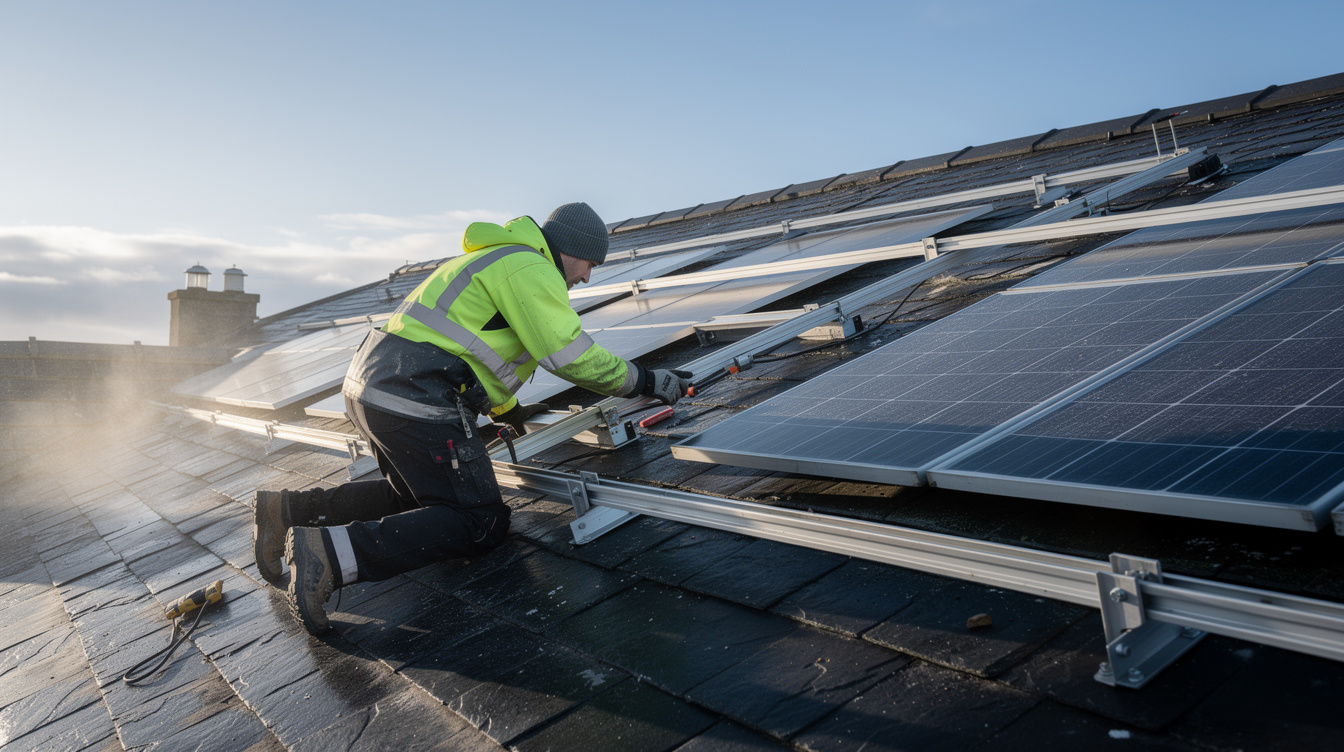
The first time you receive three quotes, you’ll notice they all use different language. One installer prices “turnkey,” another breaks out scaffolding, a third bundles “system commissioning” with no detail. Here’s a typical 2026 4kWp quote broken down into the line items that actually sit underneath that headline number.
| Component | Typical Spend | What to Check |
|---|---|---|
| Panels (9 × ~450Wp) | €2,000–€2,700 | Brand & warranty — Longi, JA Solar, Aiko, Jinko, Trina dominate quality 2026 installs. Look for 25–30yr product warranty |
| Inverter | €900–€1,800 | SolarEdge, GoodWe, Solis, Fronius, Huawei. Hybrid (battery-ready) costs ~€300 more — almost always worth it |
| Mounting rails & brackets | €400–€700 | K2, Schletter, Renusol. Slate-roof premium adds €200–€400 |
| DC + AC cabling, isolators, surge protection | €350–€550 | Should include separate AC isolator at consumer unit |
| Scaffolding | €500–€1,100 | Single-storey: ~€500. Two-storey gable end: €900–€1,100. Some quotes hide this — always ask |
| Labour (2 days, 2 fitters) | €1,400–€2,200 | Includes Safe Pass & electrical certification |
| SEAI paperwork & commissioning | €200–€400 | Includes BER post-works update (mandatory for grant claim) |
| NC6 ESB Networks notification | Usually included | If priced separately, ~€75. Required before commissioning |
| Installer margin | €1,000–€1,800 | Covers van, insurance, aftercare. Sub-€700 margin is a red flag for cut-corner installers |
The single biggest reason real-world installer prices vary by €2,000+ is not panel brand or even inverter brand — it’s scaffolding logistics, roof complexity, and aftercare commitment. A dormer cottage in Wicklow with three roof faces will price 10–15% above a flat 30° rear-facing 3-bed semi in Tallaght.
Battery Storage Cost in Ireland 2026
Battery attach is now the default. Roughly 6 in 10 domestic PV installs in Ireland in 2026 include a battery from day one, and another ~15% are spec’d hybrid-inverter-ready for retrofit. The CEG export rate (18–24c/kWh) helps battery economics but doesn’t replace them — you still save more by self-consuming than by exporting in most tariff scenarios.
| Battery Size | Typical 2026 Cost (Fitted) | Suits |
|---|---|---|
| 5kWh (e.g. SigenStor, Pylontech) | €3,000–€4,200 | Couples, 3kWp PV, light usage |
| 10kWh (e.g. GivEnergy AIO, SolarEdge Home) | €4,500–€6,500 | Average family home, 4–5kWp PV |
| 13.5kWh (Tesla Powerwall 3) | €9,500–€11,000 | EV-charging + heat-pump households, premium spec |
| 15–20kWh stacks | €7,500–€11,000 | Larger detached, off-grid–capable, EV + heat pump |
Battery prices fell ~10% from 2025 to 2026 driven by LFP (lithium iron phosphate) cell pricing. Tesla Powerwall 3 is still the highest single-unit cost but offers the best inverter integration; modular brands like GivEnergy, SigenStor and Pylontech are 25–35% cheaper for similar capacity. See our 2026 battery storage comparison and Tesla Powerwall Ireland deep-dive for brand-by-brand cost analysis.
SEAI Grant & 0% VAT — What You Actually Save
Two stackable supports cut the headline cost of a residential solar install in 2026:
- SEAI Solar PV Grant: €1,800. Flat amount for systems 2kWp+. Property must have been built & occupied before 31 December 2021, and the homeowner must own the property and have no prior PV grant claimed at that MPRN. Apply before the install — the SEAI approval letter is now usually issued within 5–10 working days in 2026.
- 0% VAT on residential PV. The Finance Act zero-rates the supply & installation of solar PV for principal private residences. Currently extends to 31 December 2026 with strong industry expectation of renewal. Already baked into installer quotes — you won’t see a “VAT line” on a residential PV quote in 2026.
On top of the grant + VAT relief, the Clean Export Guarantee (CEG) pays you for surplus electricity you export to the grid. Live 2026 rates from the major suppliers:
| Supplier | CEG Rate 2026 (c/kWh inc VAT) | Notes |
|---|---|---|
| Electric Ireland | 20.0c | Largest install base; quarterly credit |
| SSE Airtricity | 21.0c | Bi-annual payment |
| Bord Gáis Energy | 21.0c | Bill credit, not cash |
| Energia | 24.0c | Highest headline 2026 rate |
| Pinergy | 21.0c | Smart-meter required |
| Yuno Energy | 18.0c | Lower headline but competitive import rates |
For typical 4kWp residential systems exporting 35–45% of generation, CEG payments add ~€200–€380/year on top of bill savings. See our supplier comparison for a deeper look.
Get an accurate quote tailored to your home
SEAI-registered installers compete for your business. Free, no-obligation.
Real Payback Periods in 2026
Payback — the number of years until total bill savings + CEG payments equal your net install cost — is what most homeowners actually care about. Here’s how a 4kWp system performs across realistic 2026 Irish scenarios:
| Scenario | Net Cost | Annual Saving + CEG | Payback |
|---|---|---|---|
| 4kWp, no battery, retired couple at home daytime | €5,500 | €1,150 | ~4.8 years |
| 4kWp, no battery, working family (low daytime use) | €5,500 | €850 | ~6.5 years |
| 4kWp + 10kWh battery, working family | €10,500 | €1,350 | ~7.8 years |
| 6kWp + 10kWh battery + EV charging | €13,000 | €1,750 | ~7.4 years |
| 3kWp, no battery, small household, southwest Ireland | €4,500 | €780 | ~5.8 years |
Assumes 23–26c/kWh import tariffs, 20–22c/kWh CEG export, 35–55% self-consumption depending on battery and household pattern. 25-year panel performance warranty.
The headline: most Irish households see payback in 5–8 years, and the system continues delivering €800–€1,800/year in savings for another 17+ years after that. Total 25-year benefit is typically €20,000–€40,000 on a €5,000–€13,000 net spend. Use our solar panel calculator for a personalised estimate.
Does Cost Vary by County?
Yes, but less than people assume. The installation labour rate moves ±5% nationwide. Scaffolding logistics matter more — islands and far-west coastal addresses can carry a €200–€400 surcharge. Output yield matters too: a Wexford 4kWp system generates ~3,800kWh/yr, the same kit in Donegal generates ~3,500kWh/yr, which shifts payback by 4–7 months at the same hardware spend. County-by-county breakdowns:
- Solar Panels Dublin 2026 — postcode-by-postcode pricing
- Solar Panels Cork 2026
- Solar Panels Galway 2026
- Solar Panels Limerick 2026
- Solar Panels Donegal
Financing Options if You Can’t Pay Cash
The SEAI grant is paid after commissioning — you still need to front the full install cost. Most homeowners in 2026 use one of four routes:
- Green personal loan — AIB, Bank of Ireland and Avant Money all offer green-purpose loans at 6.5–7.9% APR for solar/EV/insulation projects. Typical 5-year term on €8,000 = €160–€170/month, which is often less than the monthly bill reduction.
- SEAI Home Energy Upgrade Loan (HEU loan) — backed by Department of Climate & available through participating banks at sub-3% APR. Caps and timing vary; check seai.ie for current scheme status before committing.
- Credit Union — long-running, locally underwritten energy upgrade loans. Typically 5.5–7.5% APR, fast approval, no balloon fees.
- Mortgage top-up / equity release — lowest rate (3–4%) but adds 20–30 years of interest. Only makes sense if you’re already remortgaging.
What to avoid: installer-introduced “0% finance” products where the “0%” is already baked into a marked-up headline price — you’re paying the interest in advance through a higher gross cost. Always compare the cash price to the finance price.
Common Cost Traps to Watch For
- Telesales “flash” pricing. If a quote is offered over the phone with no roof survey, treat it as theoretical. Reputable installers send a surveyor before issuing a binding price — or at minimum review high-resolution drone/satellite imagery.
- Hidden scaffolding line. Some quotes exclude scaffolding and only show it on the final invoice. Ask explicitly: “Does this price include all scaffolding for the install?”
- Upsell on battery brand. Tesla Powerwall is excellent kit but €3,000–€5,000 more than a comparable 10kWh GivEnergy or SigenStor stack. Make sure the battery brand is your choice, not a margin choice.
- Optimistic yield numbers. Some quotes assume 1,100kWh/kWp output (Wexford peak). For most of Ireland, plan around 880–980kWh/kWp. If a payback calculation uses >1,000, ask the installer to justify it.
- No post-works BER mention. The SEAI grant requires an updated BER after install. Some cut-corner installers skip it — that means no grant, sometimes leaving the homeowner liable for the gross cost.
- Vague warranty wording. “Manufacturer warranty” is not the same as “installer warranty.” You want both: panel 25yr product / inverter 10yr / workmanship 5yr minimum.
Should I Wait for Prices to Drop Further?
Panel and battery hardware prices are still trending down ~5–10% per year in 2026 — but installation labour, scaffolding and the inverter component aren’t. So a 2027 system might be 4–7% cheaper than a 2026 one. Meanwhile, every month you delay is a month of bill savings (€75–€125 for an average system) you don’t get back, plus uncertainty around whether the 0% VAT runs past December 2026.
The practical answer for most Irish homeowners: if you’re planning to install within 18 months, do it in 2026 while the grant + 0% VAT stack is confirmed. If the timeline is >2 years, prices and grant structures may both look different. Don’t pause because you’ve seen a forum thread predicting a 30% price collapse — that hasn’t shown up in installer quotes for 18 months running.
FAQs — Solar Panel Cost Ireland 2026
How much do solar panels cost in Ireland in 2026?
A typical 4kWp residential install costs €6,800–€9,000 before the SEAI grant and 0% VAT (already baked into installer quotes). After the €1,800 grant, net cost is roughly €5,000–€7,200. Add a 10kWh battery: total ~€10,500–€13,500.
Is the SEAI €1,800 grant still available in 2026?
Yes. The grant has been at €1,800 since 2024 and is confirmed for 2026 with budget allocated through year-end. Apply via seai.ie before the install starts. Approval typically issues in 5–10 working days.
What is the payback period for solar panels in Ireland?
5–8 years for most residential systems. Faster (4–5 years) if you’re at home during daytime and skip the battery. Slower (7–9 years) if you add a large battery but have low daytime consumption.
Do I need a battery to make solar worth it?
No. A battery improves self-consumption and resilience but adds €4,000–€7,000 to the project and 2–3 years to payback. With Ireland’s 18–24c/kWh CEG export rate, no-battery payback is often the fastest route — especially for retired or work-from-home households.
Is there VAT on solar panels in Ireland?
No. Residential solar PV is zero-rated through 31 December 2026 under the Finance Act. Installers no longer itemise VAT on residential quotes. Commercial & agricultural installs use a different VAT treatment (typically 23%, reclaimable).
How long do solar panels last?
Modern panels carry 25–30 year product warranties and 30-year linear performance warranties (typically guaranteed to produce 87%+ of nameplate output at year 30). Real-world Irish installs from the early 2010s are still producing within 3% of original yield.
What size system do I need?
Use 1kWp per 800–1,000kWh of annual electricity use. An average 3-bed Irish home consuming 4,200kWh/yr suits a 4–5kWp system. Larger if you have a heat pump, EV, or high evening usage with a battery to shift the load.
Compare 3 SEAI-Registered Installers in Your Area
Free, no-obligation, no telesales calls. We match you with vetted local installers.
Next Steps
- Run the numbers for your roof and consumption with our solar panel calculator Ireland
- Browse SEAI-registered installers near you
- Read our 2026 SEAI Solar PV grant guide
- Compare battery storage brands & prices
- See if you qualify for the €1,800 grant in 60 seconds
Related Articles

Is It Worth Getting a Battery With Solar Panels in Ireland? (2026 Analysis)
Is a solar battery worth it in Ireland in 2026? Updated June: 5 kWh now €3,800–€5,500, 7–10yr payback on smart tariffs. When it pays, when it doesn't.
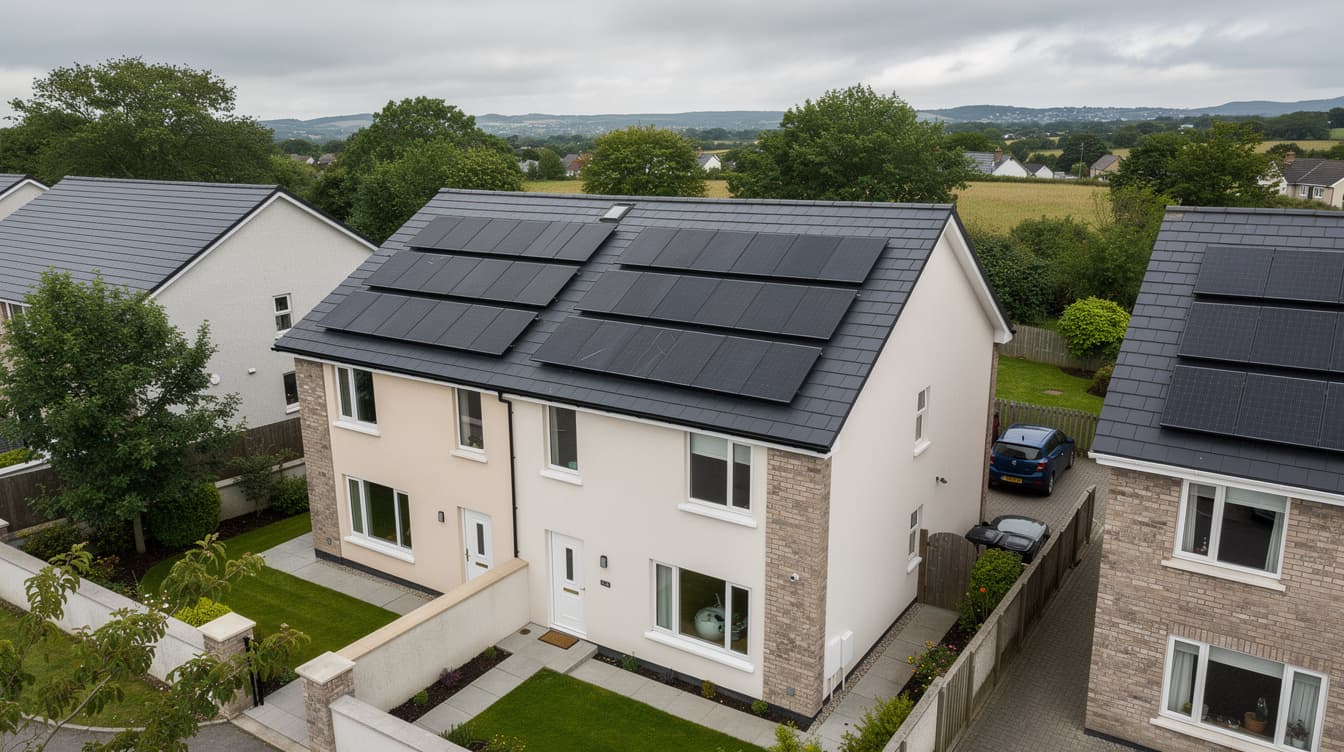
Solar Panel System Cost by Number of Panels Ireland 2026: 8, 12, 14, 20, 24 Panel Prices
What 8, 12, 14, 16, 20 or 24 solar panels actually cost in Ireland 2026 — net after €1,800 SEAI grant & 0% VAT, output kWh, roof area & battery add-ons.
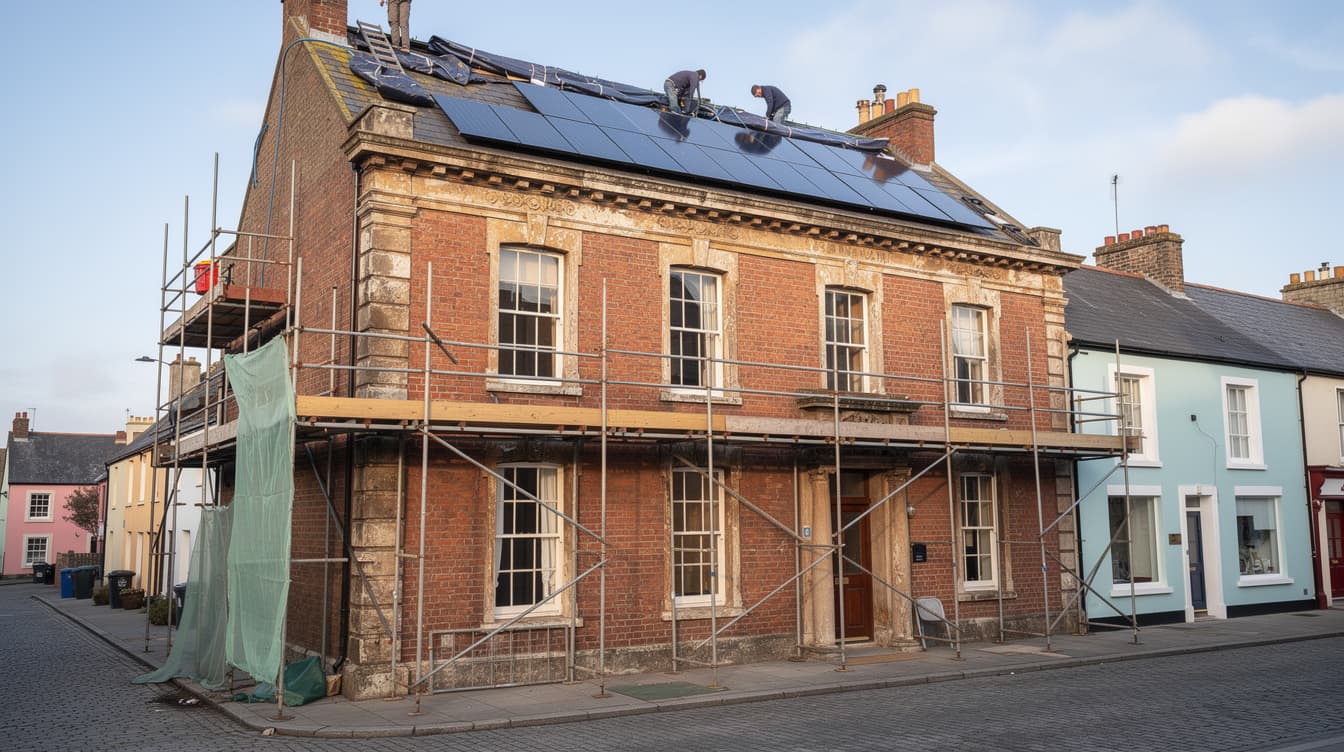
Vacant Property Refurbishment Grant + Solar Ireland 2026: How to Stack €50k VPRG With €1,800 SEAI
Stack the €50,000 Vacant Property Refurbishment Grant with the €1,800 SEAI Solar PV grant in Ireland 2026 — real refurb numbers, timing, traps.