
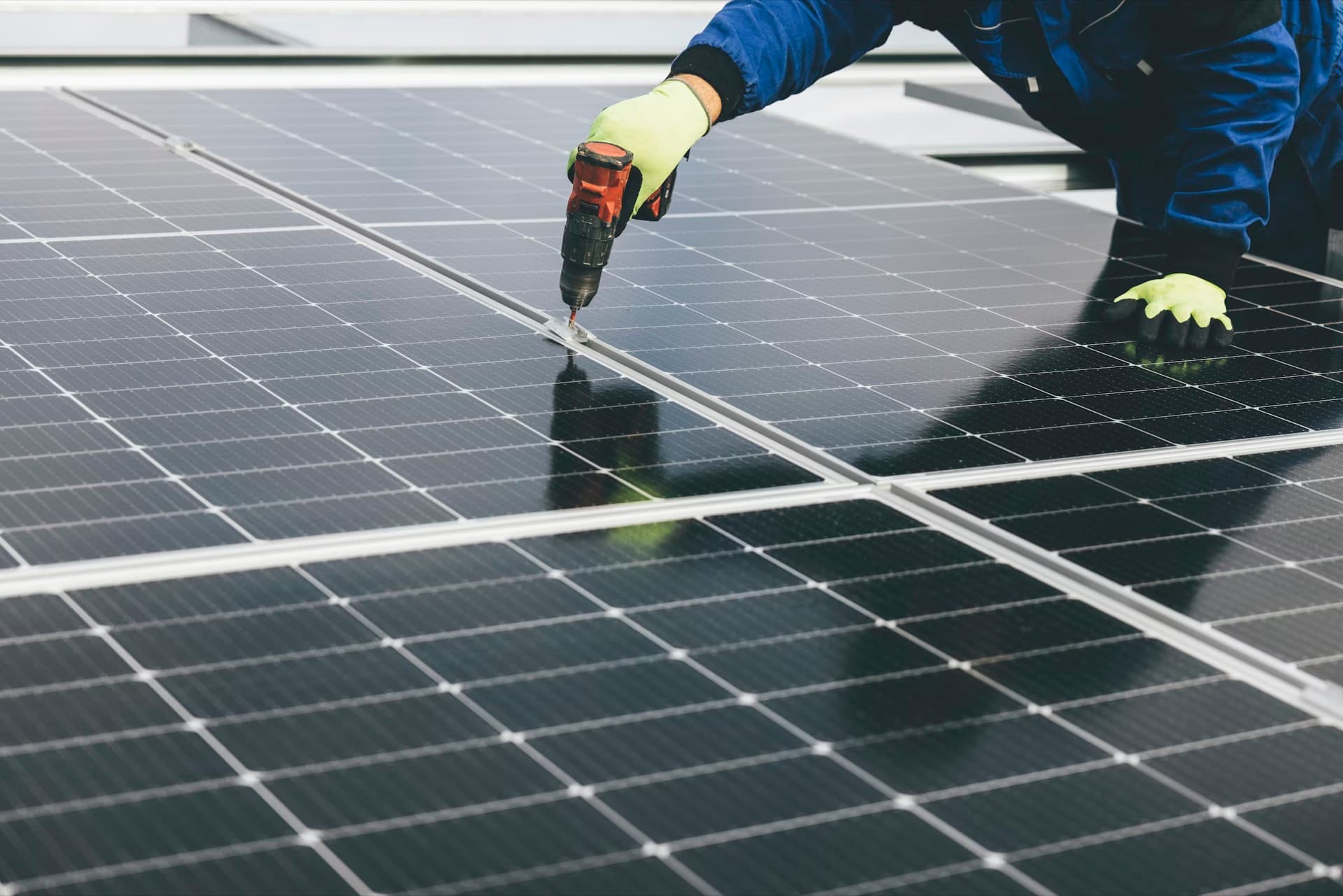
Solar Battery Storage Ireland 2026: Costs, Brands & Is It Worth It?
Ireland’s solar revolution is well underway, but here’s the thing most homeowners discover after installing panels: without a battery, you’re exporting a huge chunk of the electricity you generate back to the grid — often for a fraction of what you pay to buy it back in the evening.
\n\nThat’s where solar battery storage comes in. A home battery lets you store the excess electricity your panels produce during the day and use it when you actually need it — in the evening, at night, or during cloudy spells. In 2026, battery prices have come down significantly, smart tariffs have made battery ownership even more attractive, and the SEAI still offers a grant to help with the upfront cost.
\n\nBut is a solar battery actually worth the investment for your home? In this guide, we break down the real costs, compare the leading brands available in Ireland, run the savings numbers, and help you decide whether adding battery storage makes financial sense for your situation.
\n\nHow Solar Battery Storage Works
\n\nThe concept behind solar battery storage is straightforward. During daylight hours, your solar panels often generate more electricity than your home is using at that moment. Without a battery, that surplus power flows back to the grid. Your electricity supplier may pay you a small feed-in tariff for it — typically 18–24 cent per kWh — but that’s far less than the 38–42 cent you pay to buy electricity in the evening.
\n\nA battery sits between your solar panels and the grid. When your panels are producing more than you need, the excess charges the battery instead of being exported. Then, when the sun goes down and your household demand picks up — cooking dinner, running the dishwasher, watching television — the battery discharges and powers your home using the solar energy you generated earlier.
\n\nMost modern home batteries are lithium iron phosphate (LFP) or lithium nickel manganese cobalt (NMC) chemistry. They’re compact, wall-mounted units that sit in your garage, utility room, or on an exterior wall. Installation typically takes half a day when done alongside a solar panel system, or a full day as a retrofit.
\n\nThe key metrics you need to understand are:
\n\n- \n
- Capacity (kWh) — how much energy the battery can store. A 5 kWh battery stores enough to run typical evening loads for 3–4 hours. \n
- Power output (kW) — how quickly the battery can deliver energy. Most home batteries deliver 3–5 kW, which is enough to run most household appliances simultaneously. \n
- Depth of discharge (DoD) — the percentage of the battery’s capacity you can actually use. Premium batteries offer 90–100% DoD. \n
- Cycle life — how many charge/discharge cycles the battery can handle before capacity degrades significantly. \n
Solar Battery Costs in Ireland (2026)
\n\nBattery prices have fallen steadily over the past few years, driven by increased manufacturing capacity and competition between brands. However, the cost still represents a significant investment. Here’s what you can expect to pay in Ireland in 2026, including installation:
\n\n| Battery Capacity | \nInstalled Cost Range | \nCost After SEAI Grant | \nBest For | \n
|---|---|---|---|
| 5 kWh | \n€3,000 – €4,500 | \n€2,400 – €3,900 | \n1–2 person households, small solar systems | \n
| 7.5 kWh | \n€4,000 – €5,500 | \n€3,400 – €4,900 | \nAverage 3–4 person household | \n
| 10 kWh | \n€5,000 – €7,000 | \n€4,400 – €6,400 | \nLarger households, EV owners | \n
| 13.5 kWh (Tesla Powerwall) | \n€7,000 – €9,000 | \n€6,400 – €8,400 | \nHigh-consumption homes, backup power priority | \n
These prices include VAT at 0% when the battery is installed alongside a solar PV system. This zero-rate VAT applies to the supply and installation of solar panels and associated equipment, including batteries, and has been a significant cost reducer since it was introduced. If you install a battery as a standalone retrofit without solar panels, standard VAT of 23% may apply — so there is a clear financial advantage to installing both together.
\n\nSEAI Battery Grant: What You Get in 2026
\n\nThe Sustainable Energy Authority of Ireland (SEAI) offers a battery storage grant of €600 as part of their solar PV scheme. There is one important condition: the battery must be installed alongside a solar PV system to qualify. You cannot claim the battery grant on its own.
\n\nThe overall SEAI solar grant structure for 2026 is:
\n\n- \n
- €900 for the first 2 kWp of solar panels \n
- €300 per kWp for the next 2 kWp \n
- €200 per additional kWp after that \n
- €600 for battery storage \n
For a typical 4.5 kWp solar system with a battery, the total grant comes to roughly €2,400–€2,700. To claim the grant, your installer must be SEAI-registered, and your home must have been built and occupied before 2021 (for the standard grant) or be any age for the solar PV pathway. Your installer handles the paperwork, and the grant is paid directly to you after installation.
\n\nGet a Quote for Solar Panels + Battery Storage
\nCompare prices from SEAI-registered installers in your area. Free, no-obligation quotes.
\nGet My Free Quote →\nBrand Comparison: Best Solar Batteries in Ireland (2026)
\n\nFive brands dominate the Irish residential battery market in 2026. Each has distinct strengths, and your choice will depend on your budget, installer availability, and whether features like backup power matter to you.
\n\n| Brand & Model | \nCapacity | \nChemistry | \nWarranty | \nKey Strength | \n
|---|---|---|---|---|
| Tesla Powerwall 3 | \n13.5 kWh | \nLFP | \n10 years | \nIntegrated inverter, seamless backup, premium app | \n
| Huawei LUNA 2000 | \n5–30 kWh (modular) | \nLFP | \n10 years | \nModular design, excellent value, pairs with Huawei inverter | \n
| BYD HVS / HVM | \n5.1–12.8 kWh (modular) | \nLFP | \n10 years | \nProven reliability, compatible with many inverter brands | \n
| GivEnergy | \n2.6–10.2 kWh (modular) | \nLFP | \n12 years | \nExcellent monitoring portal, strong UK/Ireland support | \n
| Fox ESS | \n2.56–12.0 kWh (modular) | \nLFP | \n10 years | \nBudget-friendly, all-in-one hybrid inverter option | \n
The Tesla Powerwall 3 remains the most recognisable name in home batteries. Its 13.5 kWh capacity is larger than most competitors, and it now includes an integrated solar inverter, which can simplify installation. The Tesla app is best-in-class for monitoring. However, it sits at the top of the price range and requires a Tesla-certified installer. For a detailed breakdown, see our guide to Tesla Powerwall costs in Ireland.
\n\nThe Huawei LUNA 2000 is arguably the most popular battery among Irish installers in 2026. Its modular design lets you start with 5 kWh and expand later. When paired with a Huawei SUN2000 inverter, it delivers excellent performance at a very competitive price point.
\n\nThe BYD HVS is the workhorse of the industry. It is compatible with a wide range of inverters — including SMA, Fronius, and Victron — giving you flexibility in system design. BYD is the world’s largest battery manufacturer, so supply and support are rarely an issue.
\n\nGivEnergy has built a loyal following thanks to its outstanding monitoring platform and active online community. Its 12-year warranty is the longest of the five brands listed here, and their customer support in the UK and Ireland is well regarded.
\n\nFox ESS offers the most budget-friendly option. Their hybrid inverters with integrated battery connections make for a clean, cost-effective installation. They are a solid choice for homeowners who want battery storage without stretching to premium pricing.
\n\nSelf-Consumption: With vs Without a Battery
\n\nThis is the core financial argument for battery storage. Self-consumption refers to the percentage of your solar generation that you use in your own home rather than exporting to the grid.
\n\nWithout a battery, a typical Irish household with solar panels achieves 30–40% self-consumption. That means 60–70% of the electricity your panels generate goes back to the grid. You get paid a feed-in tariff for it, but at only 18–24 cent per kWh, you’re losing value compared to the 38–42 cent per kWh you pay to import electricity.
\n\nWith a correctly sized battery, self-consumption jumps to 60–80%. The battery captures that surplus daytime generation and shifts it to the evening and night, when your household demand is highest.
\n\nThe financial impact of this shift is significant. Every kWh you store and use yourself instead of exporting saves you the difference between your import rate and your export rate. In 2026, that difference is typically 16–22 cent per kWh.
\n\nReal Savings Calculation
\n\nLet’s work through a realistic example for a 4.5 kWp solar system in Ireland:
\n\n- \n
- Annual solar generation: approximately 4,000 kWh \n
- Without battery: 35% self-consumption = 1,400 kWh used, 2,600 kWh exported \n
- With battery: 70% self-consumption = 2,800 kWh used, 1,200 kWh exported \n
- Extra self-consumed kWh: 1,400 kWh shifted from export to self-use \n
Now let’s calculate the value of those extra 1,400 kWh:
\n\n- \n
- Without battery, those 1,400 kWh would be exported at €0.21/kWh = €294 earned \n
- With battery, those 1,400 kWh offset imports at €0.40/kWh = €560 saved \n
- Net additional annual benefit from battery: €266 – €420 \n
When you factor in smart tariff optimisation (covered below), the additional annual benefit from a battery rises to €300–€500 per year for most households. The exact figure depends on your electricity consumption patterns, tariff rates, and system size.
\n\nUse our solar panel calculator to estimate savings based on your specific household.
\n\nPayback Period: How Long Until the Battery Pays for Itself?
\n\nThe payback period for a battery depends heavily on whether you’re looking at the battery in isolation or as part of a combined solar-plus-battery system.
\n\nBattery alone: If you’re adding a 10 kWh battery at a net cost of around €5,000 (after the SEAI grant) and saving an additional €400–€500 per year, the standalone payback period is approximately 8–12 years. This is longer than solar panels alone, which typically pay back in 4–6 years.
\n\nSolar + battery system: When you look at the combined system, the payback picture improves considerably. A 4.5 kWp solar system with a 10 kWh battery might cost €12,000–€14,000 before grants and €9,000–€11,000 after grants. With total annual savings of €1,400–€1,800, the combined system payback is 5–7 years. After that, you have 15–20 years of near-free electricity generation.
\n\nIt is worth noting that electricity prices in Ireland have been volatile. If prices rise further, payback periods shorten. The battery also adds resilience against future price increases, which has a value that is hard to quantify but very real.
\n\nSmart Tariffs and Battery Arbitrage
\n\nOne of the most exciting developments for battery owners in 2026 is the growing availability of smart tariffs — also called time-of-use tariffs. Suppliers like Energia, SSE Airtricity, and Electric Ireland now offer plans with significantly different rates depending on the time of day.
\n\nA typical smart tariff structure looks like this:
\n\n| Time Period | \nTypical Rate | \nBattery Action | \n
|---|---|---|
| Night (2 AM – 5 AM) | \n€0.10 – €0.14/kWh | \nCharge from grid | \n
| Day (8 AM – 5 PM) | \n€0.30 – €0.38/kWh | \nCharge from solar | \n
| Peak (5 PM – 7 PM) | \n€0.38 – €0.42/kWh | \nDischarge to home | \n
| Evening (7 PM – 11 PM) | \n€0.30 – €0.38/kWh | \nDischarge to home | \n
Battery arbitrage means charging your battery when electricity is cheapest (typically 10–14 cent per kWh at night) and using that stored energy during peak and evening hours when rates are 38–42 cent per kWh. The spread of 24–32 cent per kWh on every cycle adds up quickly.
\n\nOn a 10 kWh battery cycling once per day, that’s a potential saving of €2.40–€3.20 per day just from arbitrage — or roughly €70–€95 per month. In practice, most households combine solar charging during the day with grid charging at night rates, maximising the value from both sources.
\n\nMost modern battery systems — including Huawei, GivEnergy, and Tesla — allow you to programme charging schedules to take advantage of these tariffs automatically.
\n\nWhen a Battery IS Worth It
\n\nA solar battery makes strong financial sense in the following situations:
\n\n- \n
- High evening electricity usage: If your household uses most of its electricity between 5 PM and 11 PM — which is typical for families where everyone is out during the day — a battery lets you shift your solar generation to when you need it. \n
- Smart tariff subscriber: If you are on a time-of-use tariff with cheap night rates, the arbitrage opportunity alone can add €50–€95 per month in value, even during winter when solar generation is low. \n
- Power backup is important: If you work from home, have medical equipment, or simply want peace of mind during power cuts, certain batteries (Tesla Powerwall, GivEnergy with EPS) can provide backup power during grid outages. \n
- Installing solar and battery together: The economics are strongest when you install both simultaneously. You benefit from 0% VAT on the full system, a single installation cost, and the SEAI battery grant. \n
- Planning to get an EV: If an electric vehicle is in your future, a larger battery system helps you charge the car using solar energy and cheap night-rate electricity, multiplying your savings. \n
- You want to maximise energy independence: Reducing reliance on the grid and insulating yourself from future price hikes has a value beyond the pure financial calculation. \n
When a Battery is NOT Worth It
\n\nTo be fair, a battery is not the right choice for everyone. Consider skipping or delaying the battery if:
\n\n- \n
- You have a tight budget: If adding a battery means stretching your finances uncomfortably, install solar panels first. Panels alone deliver a faster payback, and you can always add a battery later. \n
- You already have high daytime self-consumption: If someone is home during the day running appliances, and you are already using 50%+ of your solar generation directly, the incremental benefit of a battery is smaller. \n
- You have a small solar system: A 2–3 kWp solar system does not generate enough surplus to fill a battery regularly. The battery would sit partially charged most days, reducing its cost-effectiveness. \n
- You are not on a smart tariff and do not plan to switch: Without time-of-use pricing, you lose the arbitrage benefit, and the battery’s value is limited to shifting solar generation only. \n
- You are planning to move house soon: While a battery adds value to your property, you may not recoup the full cost in the sale price if you move within 3–4 years. \n
For a deeper analysis of the battery decision, read our comprehensive guide: Is it worth getting a battery with solar panels in Ireland?
\n\nBattery Lifespan and Warranty
\n\nModern solar batteries are built to last. Here is what you can expect in terms of longevity:
\n\n- \n
- Expected lifespan: 10–15 years, depending on usage patterns and environmental conditions \n
- Cycle life: 6,000–10,000 full charge/discharge cycles. LFP batteries (used by most brands listed above) sit at the higher end of this range. \n
- Warranty: Most brands offer 10-year warranties guaranteeing the battery will retain at least 70–80% of its original capacity. GivEnergy offers 12 years. \n
- End of life: A battery does not stop working at the end of its warranty. It gradually loses capacity, similar to a phone battery. A 10 kWh battery might hold 7–8 kWh after 10 years — still useful, just slightly reduced. \n
If you cycle your battery once per day (which is typical for a solar-plus-smart-tariff setup), that is 365 cycles per year. At 6,000 cycles, the battery would last over 16 years. At 10,000 cycles, you are looking at over 27 years of theoretical life. In practice, other components may need attention before the battery cells themselves wear out.
\n\nAll of the brands available in Ireland use lithium iron phosphate (LFP) chemistry, which is the safest and longest-lasting lithium battery technology. LFP batteries are thermally stable, non-toxic, and have no risk of thermal runaway under normal operating conditions.
\n\nReady to Add Battery Storage to Your Home?
\nTell us about your home and energy usage. We’ll connect you with SEAI-registered installers who can recommend the right battery for your needs.
\nGet My Free Quote →\nFrequently Asked Questions
\n\nCan I add a battery to my existing solar panel system?
\nYes, you can retrofit a battery to an existing solar PV system. However, there are a few considerations. Your current inverter may need to be replaced with a hybrid inverter that can manage battery charging, which adds to the cost. You will also need to check whether the SEAI battery grant is still available to you if you already claimed the solar grant separately. In most cases, retrofitting is straightforward and takes a day to complete.
\nWhat size battery do I need for my home?
\nAs a general rule, your battery capacity in kWh should roughly match the excess solar generation you produce on an average day. For a 4–5 kWp system, that is typically 7–10 kWh. A smaller 5 kWh battery suits apartments, small homes, or 1–2 person households. A 10–13.5 kWh battery suits larger families, especially those with an electric vehicle or high evening consumption. Your installer can analyse your electricity bills and solar generation data to recommend the right size.
\nWill a solar battery power my home during a power cut?
\nNot all batteries provide backup power during grid outages. Standard grid-tied battery systems will shut down when the grid goes down, for safety reasons. However, batteries with Emergency Power Supply (EPS) or backup functionality — such as the Tesla Powerwall and certain GivEnergy configurations — can isolate your home from the grid and continue supplying power from the battery. If backup power is important to you, make sure to specify this when getting quotes.
\nDo solar batteries require maintenance?
\nSolar batteries require virtually no maintenance. They have no moving parts, operate silently, and are designed to function autonomously for their entire lifespan. The battery management system (BMS) handles cell balancing, temperature regulation, and charge/discharge optimisation automatically. The only thing you should do is keep the area around the battery clear and ensure adequate ventilation. Most systems also provide remote monitoring via a smartphone app, so your installer can identify any issues without visiting your home.
\nIs it better to get a battery now or wait for prices to drop further?
\nBattery prices have already fallen substantially and are expected to continue declining, but at a slower rate than in previous years. The counterargument to waiting is that you are paying full electricity prices every day you delay. With the SEAI grant, 0% VAT, and current smart tariff opportunities, the economics of installing a battery in 2026 are the strongest they have ever been. Waiting another year might save you €300–€500 on the battery, but you would lose €400–€500 in savings over that same year.
\nCan I install two batteries for more storage?
\nYes, most battery systems support stacking multiple battery modules. Huawei LUNA 2000, BYD HVS, GivEnergy, and Fox ESS are all modular systems that can be expanded. Tesla Powerwall also supports multiple units. However, for most Irish homes, a single battery of 10–13.5 kWh provides sufficient storage. Adding a second battery has diminishing returns unless you have very high consumption, multiple electric vehicles, or a particularly large solar array.
\nThe Bottom Line
\n\nSolar battery storage in Ireland has reached a tipping point in 2026. Prices are lower than ever, smart tariffs offer genuine arbitrage opportunities, and the combination of the SEAI grant plus 0% VAT makes the upfront cost more manageable than it has been at any point in the past.
\n\nA battery is not essential for every solar installation. If you are on a tight budget, solar panels alone still deliver excellent returns. But if you have typical evening-heavy electricity usage, are willing to switch to a smart tariff, and are installing solar panels anyway, adding a battery makes strong financial sense. The extra €300–€500 in annual savings, combined with energy independence and protection against rising prices, means most battery owners in Ireland will see a positive return well within the battery’s lifespan.
\n\nThe best way to get an accurate picture for your specific home is to request a free, no-obligation quote from SEAI-registered installers who can assess your roof, review your electricity usage, and recommend the right battery size and brand for your situation.
\n\n\nRelated Articles
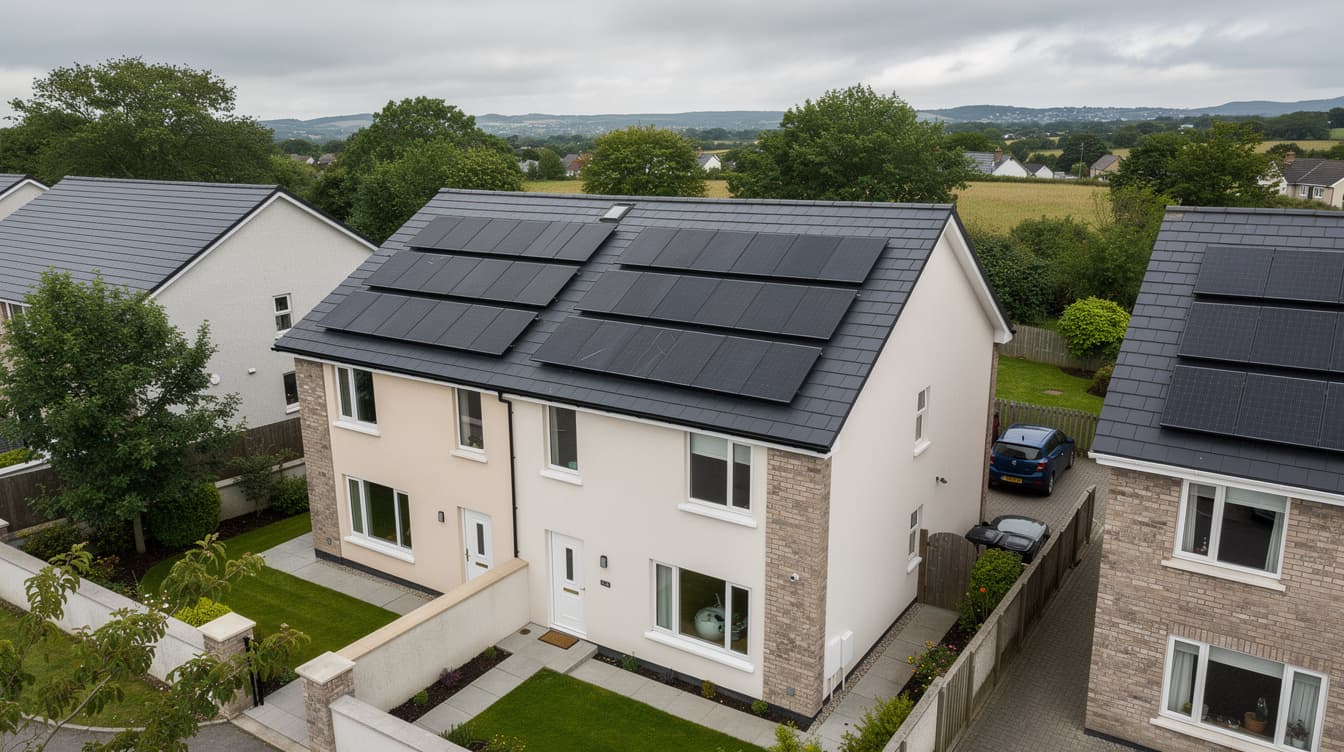
Solar Panel System Cost by Number of Panels Ireland 2026: 8, 12, 14, 20, 24 Panel Prices
What 8, 12, 14, 16, 20 or 24 solar panels actually cost in Ireland 2026 — net after €1,800 SEAI grant & 0% VAT, output kWh, roof area & battery add-ons.
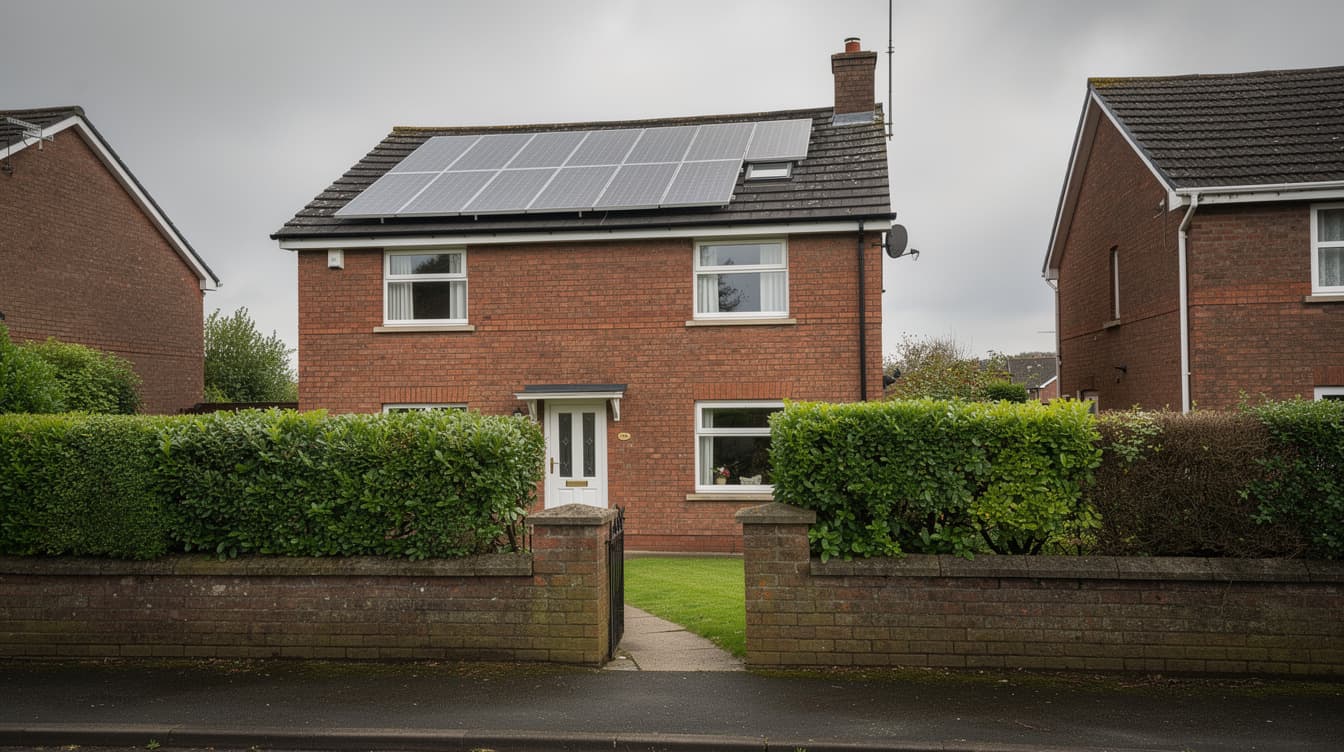
4kW Solar System Cost Ireland 2026: Real Prices, Output & Payback
Real 2026 Irish 4kW quotes (€7,210 gross, €5,410 net after €1,800 SEAI grant), 3,600–4,200 kWh/yr output, 4.8yr payback and when 4kW beats 3kW or 5kW.
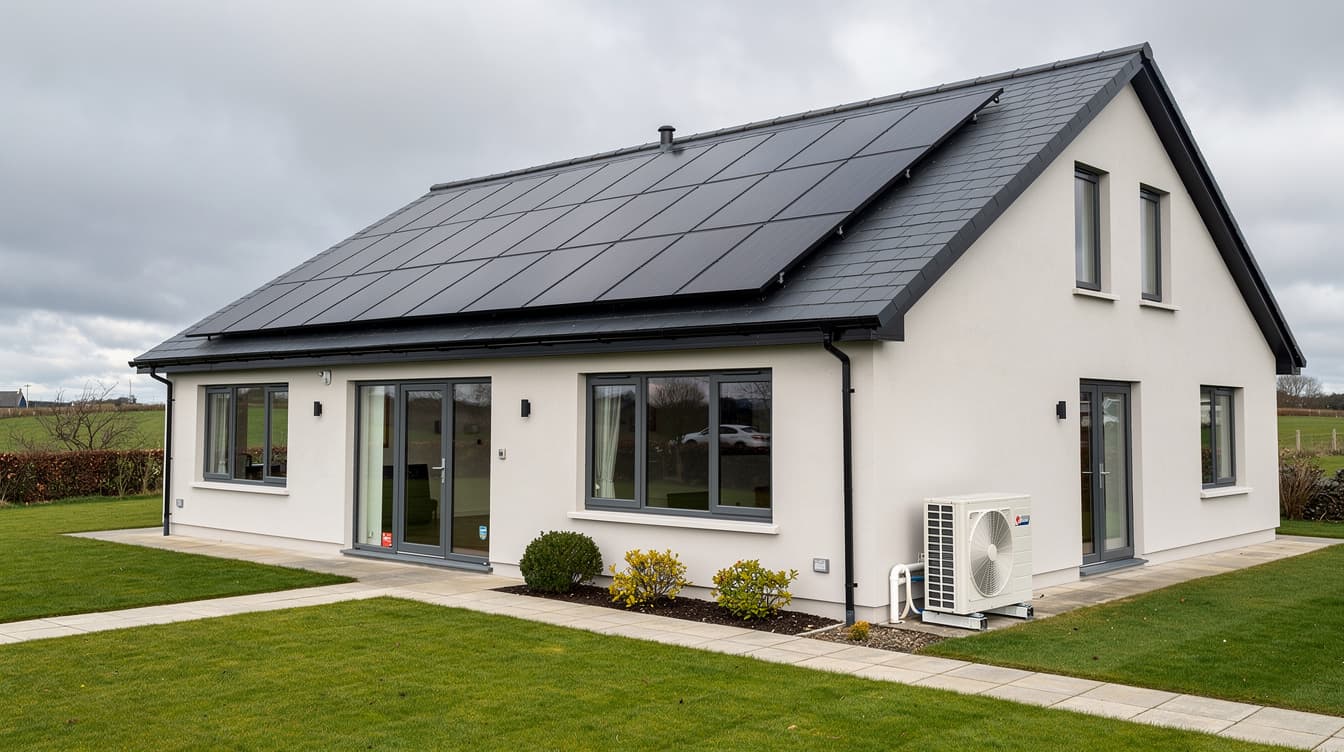
10kW Solar System Cost Ireland 2026: Price, Output & When It’s Worth It
Real 2026 Irish installer prices for a 10kW solar system (€14,300 gross – €1,800 SEAI grant), three-phase rules, expected output and when 10kW beats 6kW.