
Solar Panels in Donegal: Costs, SEAI Grants & Local Installers (2026)
Donegal might sit at Ireland’s north-western tip, but that doesn’t mean solar panels aren’t worth it here. In fact, 881 Donegal homes received SEAI solar grants in 2025 alone – and that number is climbing fast in 2026. With electricity prices still around 38c per kWh, a €1,800 SEAI grant, and 0% VAT on installations, the economics of solar in Donegal have never been stronger.
This guide covers everything a Donegal homeowner needs to know: real costs, expected output for our latitude, how to claim grants, local installers, and whether solar panels are genuinely worth the investment in the north-west.
Does Solar Actually Work Well in Donegal?
Let’s address the elephant in the room. Yes, Donegal gets less sunshine than Wexford or Cork. But the difference is far smaller than most people assume.
| County | Annual Solar Yield (kWh/kWp) | % of Best County |
|---|---|---|
| Wexford (best) | 965 kWh/kWp | 100% |
| Dublin | 910 kWh/kWp | 94% |
| Galway | 870 kWh/kWp | 90% |
| National average | 884 kWh/kWp | 92% |
| Donegal | 817 kWh/kWp | 85% |
Donegal produces roughly 85% of what Wexford generates – that’s an 18% gap, not the 50% gap many people imagine. A 4kWp system in Letterkenny will generate around 3,268 kWh per year. That’s enough to cover approximately 78% of an average household’s electricity consumption.
Why does it still work so well? Modern solar panels generate electricity from daylight, not direct sunshine. Donegal’s long summer days (up to 17 hours of daylight in June) partially compensate for the lower irradiance. And diffuse light – which is what you get on overcast days – still generates a meaningful amount of power.
What Does Solar Cost in Donegal in 2026?
Installation costs in Donegal are broadly in line with the national average, though some installers charge a small premium for more remote locations in west Donegal.
| System Size | Cost (before grant) | SEAI Grant | Net Cost | Annual Output |
|---|---|---|---|---|
| 2 kWp (5–6 panels) | €4,000–€5,000 | €1,400 | €2,600–€3,600 | ~1,634 kWh |
| 3 kWp (8–9 panels) | €5,000–€6,500 | €1,600 | €3,400–€4,900 | ~2,451 kWh |
| 4 kWp (10–12 panels) | €6,000–€8,000 | €1,800 | €4,200–€6,200 | ~3,268 kWh |
| 5 kWp (13–15 panels) | €7,500–€9,500 | €1,800 | €5,700–€7,700 | ~4,085 kWh |
| 6 kWp (16–18 panels) | €9,000–€11,500 | €1,800 | €7,200–€9,700 | ~4,902 kWh |
Remember: All these prices already reflect the 0% VAT rate that’s been in place since May 2023. That alone saves you roughly €800–€1,200 compared to the old 13.5% rate.
For most Donegal homes, a 4 kWp system hits the sweet spot – it maximises the SEAI grant, generates enough to cover most of your daytime usage, and has a payback period of around 5–6 years.
Get a Free Quote for Your Donegal Home
Compare prices from SEAI-registered installers serving Donegal. Takes 60 seconds.
The SEAI Grant: How to Claim Your €1,800
The SEAI Solar PV grant has been confirmed at the same level for 2026. Here’s exactly how it works:
| System Size | Grant Amount | Calculation |
|---|---|---|
| First 2 kWp | €1,400 | €700 per kWp |
| 2–4 kWp | €400 | €200 per kWp |
| Maximum (4+ kWp) | €1,800 | Capped at 4 kWp |
Eligibility for Donegal Homeowners
- Your home must be built and occupied before 31 December 2020
- Installation by an SEAI-registered contractor (see installer list below)
- You must get grant approval before any work starts – no retroactive claims
- A BER assessment is required after installation (€150–€300)
- You have 8 months to complete the work after receiving your Letter of Offer
- No means testing – the grant is property-based, not income-based
Application tip for Donegal residents: Apply early in the year. SEAI processing times are typically 2–4 weeks, but they can stretch to 6–8 weeks during peak summer months when demand spikes. Many Donegal homeowners apply in January–March to get installation done before the long summer days begin.
Step-by-Step Application Process
- Get quotes from 2–3 SEAI-registered installers (see below)
- Apply online at seai.ie
- Wait for your Letter of Offer (2–4 weeks typically)
- Book installation with your chosen contractor
- Get a BER assessment done after installation
- Submit completion paperwork to SEAI
- Receive payment directly to your bank (4–6 weeks)
Finding SEAI-Registered Installers in Donegal
Using an SEAI-registered installer isn’t just recommended – it’s mandatory if you want the grant. There are currently 279 registered installers listed for Donegal on the SEAI database, though many of these are based in neighbouring counties and travel to Donegal.
How to find your installer:
- Search the SEAI Solar PV Company Register – filter by “Donegal”
- Browse our solar installers directory for companies with verified Donegal coverage
- Get at least 3 quotes – prices vary significantly between installers
What to ask each installer:
- Are you SEAI-registered for solar PV? (verify on seai.ie)
- What panel brand and model do you use?
- Do you handle the SEAI paperwork?
- What warranty do you offer on workmanship (separate from panel warranty)?
- Do you charge extra for remote Donegal locations?
- Can you provide references from other Donegal installations?
Ready to Go Solar in Donegal?
Get your free personalised quote from SEAI-registered installers covering Donegal.
Real Savings: What a Donegal Homeowner Can Expect
Let’s work through a realistic example for a 4 kWp system on a south-facing roof in Letterkenny:
- Annual generation: ~3,268 kWh
- Self-consumption (60%): ~1,961 kWh saved at 38c = €745/year
- Export income (40%): ~1,307 kWh at 21c (Clean Export Guarantee) = €274/year
- Total annual benefit: approximately €1,019/year
- Net system cost (after grant): €4,200–€6,200
- Payback period: 4.1–6.1 years
After payback, you’re looking at €1,000+ per year in savings and export income for the remaining 20+ years of the panel’s lifespan. Over 25 years, that’s €20,000–€25,000 in total value from a €4,200–€6,200 investment.
Boost your savings further:
- Add a battery (€3,000–€5,000): Store excess daytime generation for evening use, increasing self-consumption to 80–90%
- Use a solar diverter (€300–€600): Automatically heats your water cylinder with excess solar, saving €200–€400/year on immersion costs
- Shift usage to daytime: Run your washing machine, dishwasher, and immersion on timers during peak solar hours (10am–3pm)
Use our free solar calculator to see exactly what a system would save for your specific home.
Planning Permission in Donegal
Good news: most residential solar installations in Donegal don’t need planning permission. Since October 2022, solar panels are classified as exempt development for homes, provided:
- The panels don’t extend more than 15cm above the roof surface
- They don’t project above the ridge line
- The total area doesn’t exceed 50 sq m (or 25 sq m in a conservation area)
- The property is not a protected structure
Most domestic systems (4–6 kWp) easily fall within these limits. However, if your home is in a designated conservation area or is a protected structure, check with Donegal County Council’s planning department before proceeding.
For farms and commercial buildings, the exemptions are even more generous – up to 300 sq m of roof-mounted panels without planning permission.
Donegal-Specific Considerations
A few things to keep in mind that are particularly relevant for Donegal installations:
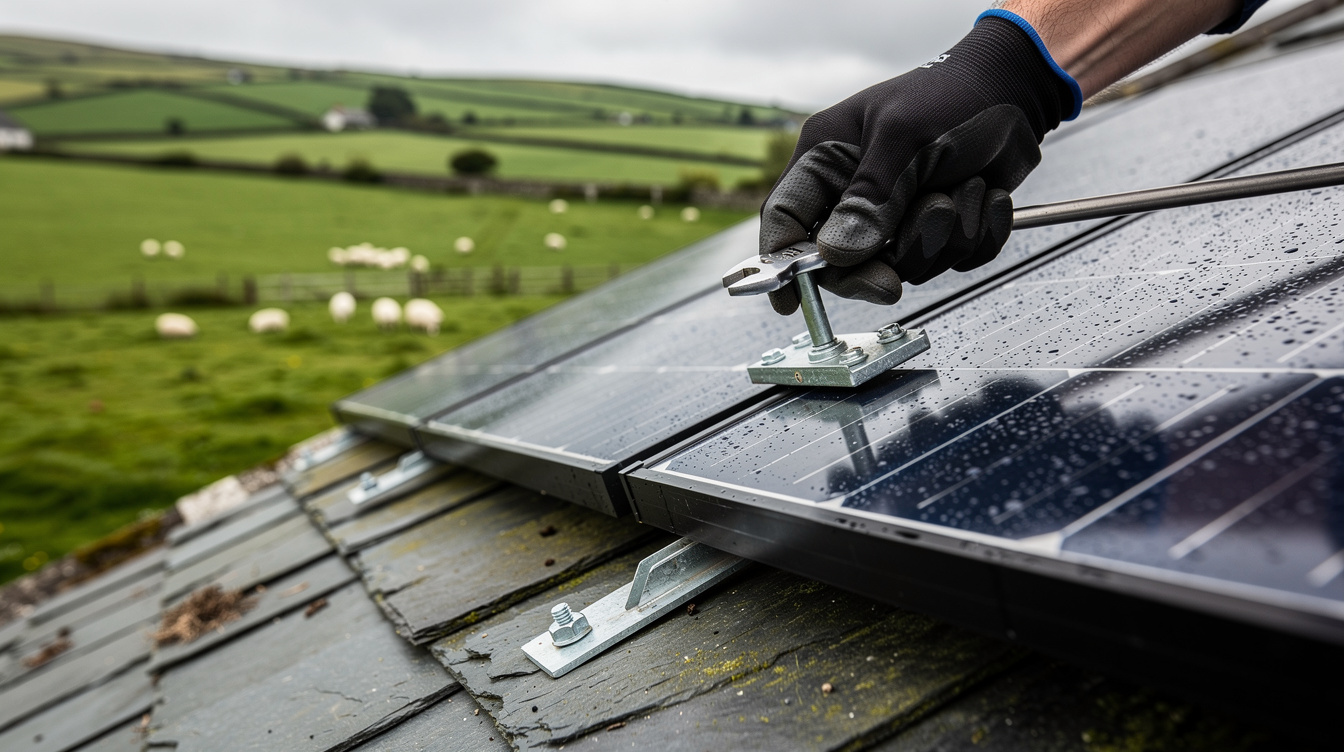
- Wind loading: Donegal gets some of the strongest winds in Ireland, especially along the Atlantic coast. Make sure your installer uses appropriately rated mounting systems and factors wind loading into the design. This is non-negotiable for exposed coastal properties in areas like Malin Head, Arranmore, or the Rosses
- Salt spray: Coastal properties within 1–2 km of the sea should use panels and mounting hardware rated for marine environments. Standard aluminium frames can corrode faster in salt air
- Roof orientation: Many older Donegal homes face in non-ideal directions. East-west splits can still work well – you’ll get about 85% of optimal output. Read our guide to east/west facing solar panels for details
- Grid connection: Some rural Donegal areas have older ESB infrastructure. In rare cases, ESB Networks may need to upgrade the local transformer before your system can export. Your installer should check this during the site survey
Frequently Asked Questions
Is Donegal too far north for solar panels?
No. Donegal produces 85% of what Ireland’s sunniest county (Wexford) generates. Germany, which is at a similar latitude and gets less sunshine than Ireland, is the world’s fourth-largest solar market. The economics work here.
How long do solar panels last in Donegal’s harsh weather?
Modern panels are rated to withstand winds of 130+ km/h and heavy rain. Most come with 25–30 year performance warranties. Donegal’s weather won’t shorten their lifespan – just make sure the mounting system is appropriate for your exposure level.
Can I sell excess electricity back to the grid?
Yes. Under the Clean Export Guarantee, electricity suppliers must offer you a payment for exported solar electricity. Rates currently range from 18–24c per kWh depending on your supplier.
Will solar panels increase my home’s BER rating?
Yes. A 4 kWp system typically improves your BER by 1–2 grades. This increases your property value and is especially valuable in Donegal’s housing market, where energy-efficient homes command a premium. Read more about solar panels and BER ratings.
Can I combine solar panels with a heat pump?
Absolutely – and it’s one of the smartest combinations for Donegal homes. Solar panels generate the electricity, and the heat pump uses it to heat your home at 300–400% efficiency. Read our guide to heat pumps and solar panels for the full breakdown.
See What Solar Would Save You
Use our free calculator to get a personalised estimate for your Donegal home.
Related Articles
Solar Panel System Cost by Number of Panels Ireland 2026: 8, 12, 14, 20, 24 Panel Prices
What 8, 12, 14, 16, 20 or 24 solar panels actually cost in Ireland 2026 — net after €1,800 SEAI grant & 0% VAT, output kWh, roof area & battery add-ons.
6kW Solar System Cost Ireland 2026: Real Prices, Output & Payback
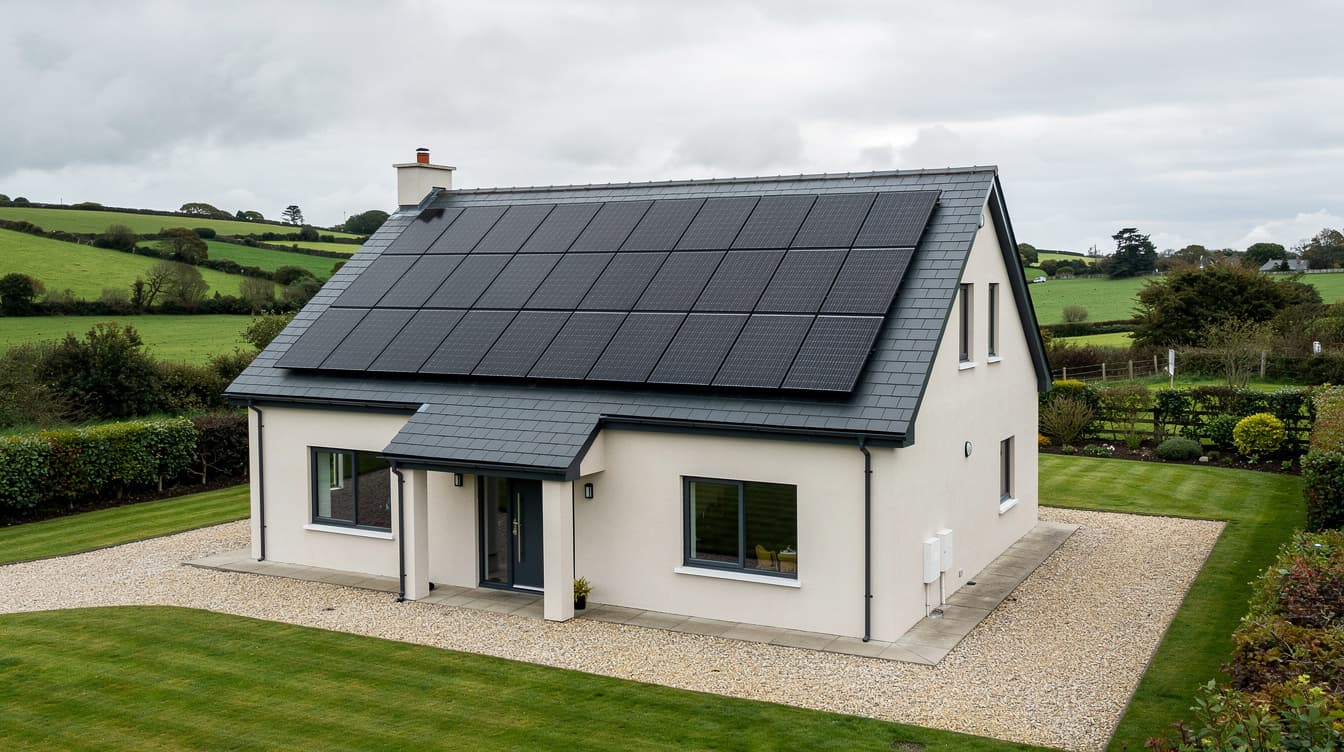
6kW solar costs €7,700–€10,500 net after the €1,800 SEAI grant and 0% VAT in Ireland 2026. Real quote, 5,270 kWh/yr output, EV/battery ROI.
5kW Solar System Cost Ireland 2026: Real Prices, Output & 25-Year ROI
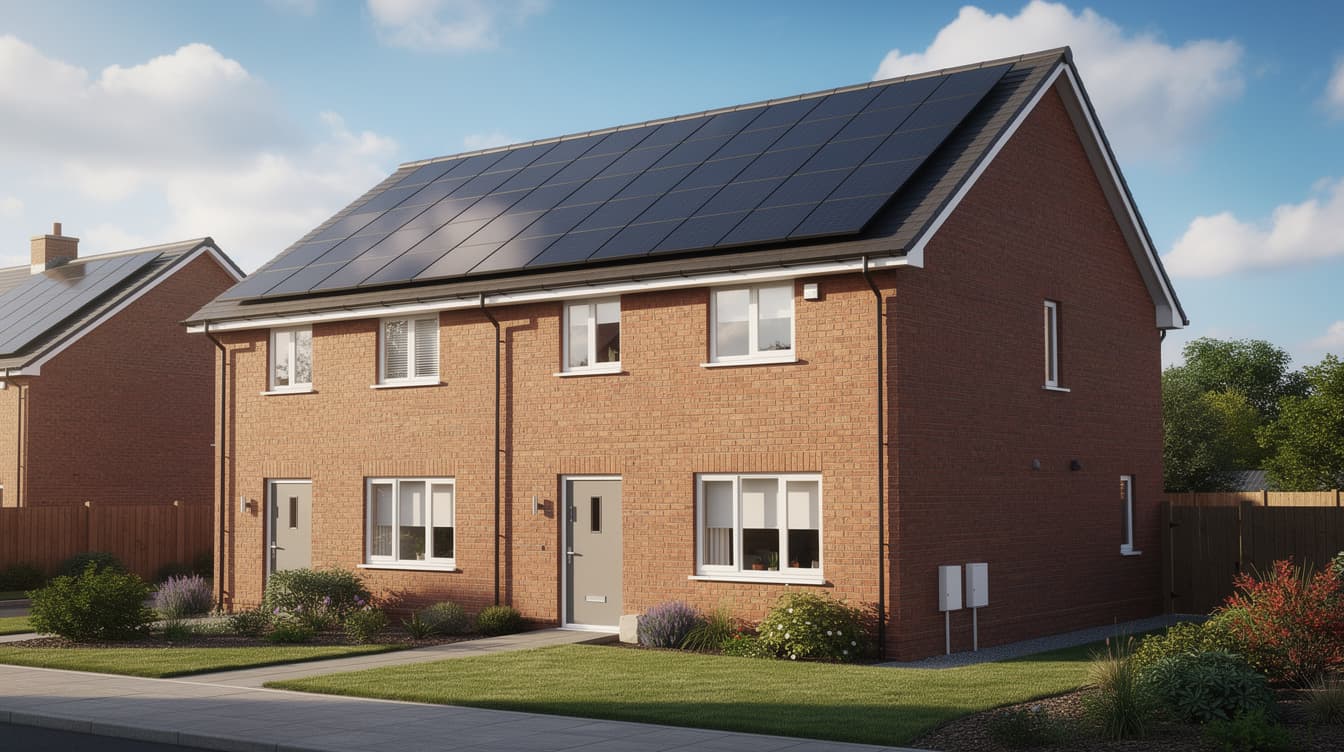
5kW solar system costs €6,700–€9,200 net after the €1,800 SEAI grant and 0% VAT in Ireland 2026. Full itemised breakdown, real output data & battery ROI.