
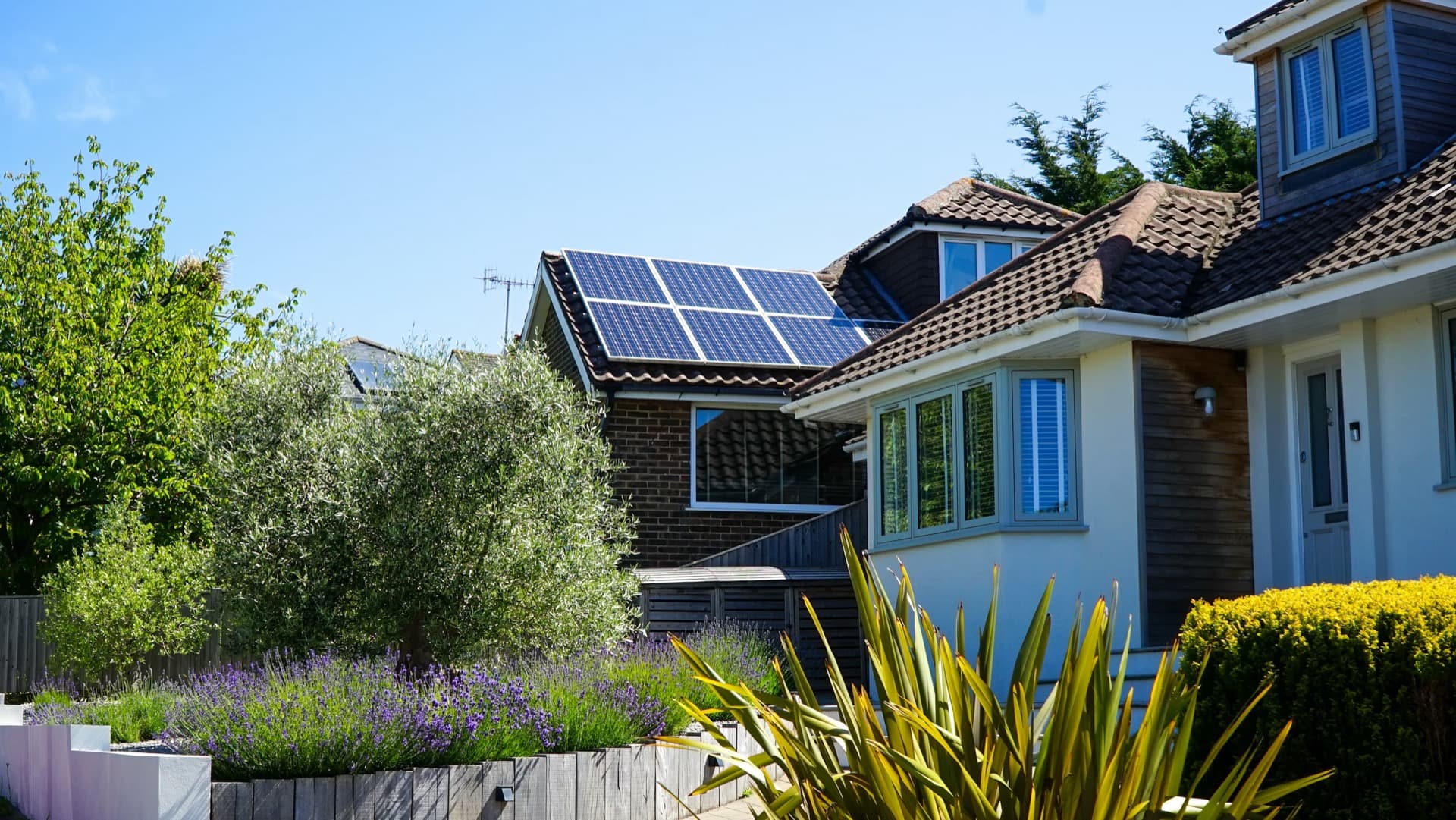
SEAI Solar Panel Grants Ireland 2026: How to Apply Step by Step
If you’re considering solar panels for your home in Ireland, the SEAI solar panel grant can knock up to €1,800 off your installation cost (plus an extra €600 if you add a battery). But the application process trips up thousands of homeowners every year — often because they start work before getting approval or pick an unregistered contractor.
\n\nThis guide walks you through everything: exact grant amounts, the full 7-step application process, eligibility rules, timelines, and the mistakes that get claims rejected. Whether you’re just exploring or ready to apply tomorrow, this is the most complete breakdown of solar panel grants in Ireland for 2026.
Quick Answer: SEAI Solar Grant Ireland 2026
- Solar PV grant: €1,800 (flat rate, system must be ≥ 2 kWp)
- Battery storage grant: +€600 (optional, must be installed at same time)
- Total maximum: €2,400 (PV + battery combined)
- Eligibility: Home built before 1 January 2021 · you live there · no previous PV grant claimed at the same MPRN · installer is SEAI-registered
- Timeline: Application approval ~7–10 working days · install within 8 months of approval · grant paid 4–6 weeks after install
- 0% VAT: Still active on supply & install of solar PV in 2026 — an extra ~€1,500–3,000 saving on top of the grant
1. Exact SEAI Solar Grant Amounts for 2026
\n\nThe SEAI (Sustainable Energy Authority of Ireland) structures the solar PV grant on a tiered basis. The more capacity you install, the more grant you receive — up to a cap. Here is the exact breakdown:
\n\n| System Size (kWp) | \nGrant Rate | \nTotal Grant | \n
|---|---|---|
| 1 kWp | \n€700/kWp | \n€700 | \n
| 2 kWp | \n€700/kWp | \n€1,400 | \n
| 3 kWp | \n€700 + €200/kWp | \n€1,600 | \n
| 4 kWp or more | \n€700 + €200/kWp | \n€1,800 (max) | \n
How to read this: You receive €700 per kWp for the first 2 kWp installed, then €200 per kWp for the next 2 kWp. Once you reach 4 kWp, the grant caps at €1,800 — regardless of whether you install 5 kWp, 6 kWp, or more.
\n\nMost Irish homes install between 3.5 kWp and 6 kWp systems. A typical 4 kWp system costs €6,000–€8,000 before the grant. After the €1,800 SEAI grant and with 0% VAT, your net cost drops to roughly €4,200–€6,200. Use our solar panel calculator to get an estimate tailored to your home.
\n\n2. Full Eligibility Checklist
\n\nBefore you apply, make sure you tick every box below. Missing even one requirement will delay or disqualify your application.
\n\n- \n
- Your home was built and occupied before 2021. New builds completed from 2021 onwards are required to meet NZEB (Nearly Zero Energy Building) standards, which already factor in renewable energy. The SEAI grant is designed to retrofit older homes. \n
- You have not previously received an SEAI solar PV grant for this property. The grant is a one-time payment per dwelling. If a previous owner claimed it, you cannot claim again. \n
- You use an SEAI-registered contractor. This is non-negotiable. Your installer must appear on the SEAI registered contractor list. Work done by unregistered contractors will not qualify. You can browse vetted installers on our solar installers directory. \n
- You get grant approval BEFORE any work begins. This is the mistake that catches out most people. If your contractor installs a single panel before SEAI issues your approval letter, your entire claim is void. \n
- All products meet SEAI technical specifications. Panels, inverters, and mounting systems must comply with SEAI’s published product standards. Any reputable SEAI-registered contractor will handle this automatically. \n
- A BER (Building Energy Rating) assessment is completed after installation. A registered BER assessor must visit your home and publish an updated BER to the SEAI’s national register after your solar panels are installed. This is required for grant payment. \n
- You are the homeowner or have landlord authorisation. Tenants cannot apply directly, but landlords can apply for properties they own and rent out. \n
Quick check: Home built before 2021? Never claimed a solar grant at this address? Planning to use an SEAI-registered installer? You’re eligible. Move on to the application steps below.
\n3. The 7-Step Application Process
\n\nThe SEAI solar grant application is straightforward but strict. Follow these seven steps in order.
\n\nStep 1: Check Your Eligibility
\nRun through the checklist above. Confirm your home’s build date (your property’s BER certificate or local authority records will show this). Confirm no previous solar grant was claimed at your MPRN (Meter Point Reference Number).
\n\nStep 2: Get at Least 3 Quotes
\nContact a minimum of three SEAI-registered solar installers. Ask each for a written quote that includes: system size (kWp), panel brand and model, inverter brand and model, total cost including VAT, estimated annual generation (kWh), and projected payback period. Our free quote service connects you with vetted installers in your area — you can get up to three quotes with one form.
\n\nStep 3: Choose Your Contractor
\nCompare the quotes on value, not just price. Check reviews, ask for references, and verify the contractor is on the SEAI registered list. Your chosen installer will typically handle much of the paperwork, but you are ultimately responsible for ensuring the grant process is followed correctly.
\n\nStep 4: Apply Online Through SEAI
\nSubmit your grant application on the SEAI online portal. You will need your MPRN, your Eircode, proof of home ownership, and your chosen contractor’s SEAI registration number. The application is free and takes about 15–20 minutes.
\n\nStep 5: Wait for Approval — Do NOT Start Work
\nSEAI will review your application and issue a grant offer letter. This typically takes 2–4 weeks. Do not allow any installation work to begin until you have this letter in hand. Your offer is valid for 8 months from the date of issue, giving you plenty of time to schedule the installation.
\n\nStep 6: Installation and Declaration of Works
\nOnce approved, your contractor installs the solar panels (typically 1–2 days for a standard residential system). After installation, they submit a Declaration of Works to SEAI confirming the system meets all technical requirements. You pay the contractor the full amount — the grant is reimbursed to you after, not deducted upfront.
\n\nStep 7: BER Assessment and Grant Payment
\nA registered BER assessor visits your home and publishes your updated BER. Once SEAI verifies the Declaration of Works and the new BER, they process your grant payment directly to your bank account. This typically arrives 4–6 weeks after all paperwork is submitted.
\n\nReady to Start Your Application?
\nGet up to 3 free quotes from SEAI-registered installers in your area. No obligation.
\nGet Free Quotes →\n4. Timeline: How Long Does the Whole Process Take?
\n\nFrom first quote to money in your account, here is a realistic timeline:
\n\n| Stage | \nTypical Duration | \n
|---|---|
| Getting quotes and choosing a contractor | \n1–2 weeks | \n
| SEAI grant application review | \n2–4 weeks | \n
| Scheduling and installation | \n1–4 weeks (depends on contractor availability) | \n
| Installation itself | \n1–2 days | \n
| BER assessment after installation | \n1–2 weeks | \n
| SEAI grant payment to your account | \n4–6 weeks | \n
| Total end-to-end | \n10–16 weeks | \n
Pro tip: Summer is peak season for installations. If you apply in spring, expect longer wait times for contractor availability. Applying in autumn or early winter often means faster scheduling and the same grant amount.
\n\n5. 0% VAT on Solar Panels — An Extra Saving Most People Miss
\n\nSince May 2023, the Irish government has applied a 0% VAT rate to the supply and installation of solar panels for residential properties. This measure was extended through 2026 and is currently set to run until at least October 2026.
\n\nBefore this change, solar panel installations attracted the standard 23% VAT rate. On a €7,000 system, that was €1,610 in VAT alone. With the 0% rate, that saving is yours to keep.
\n\nWhat this means in practice: On a typical installation costing €6,000–€8,000 (after grant), you save approximately €800–€1,500 compared to paying the old 23% rate. Combined with the SEAI grant, the effective cost of going solar has dropped by roughly 40% since 2022.
\n\nThe 0% VAT applies automatically — you do not need to apply for it separately. Your contractor’s invoice should show 0% VAT on both the supply of panels and the installation labour. If you see 23% VAT on a solar quote, query it immediately.
\n\n6. Battery Storage Grant (€600)
\n\nIf you install a battery storage system alongside your solar panels, SEAI provides an additional €600 grant. The battery must be installed at the same time as, or after, your solar PV system — you cannot claim a battery grant without having solar panels in place.
\n\nA battery typically costs €2,500–€5,000 depending on capacity (5–10 kWh is standard for homes). After the €600 grant, a battery adds €1,900–€4,400 to your project cost.
\n\nIs a battery worth it? If you use most of your electricity in the evening (as most households do), a battery lets you store daytime solar generation and use it at night. This can increase your self-consumption from around 40% to 70–80%, significantly reducing your grid import. For homes on day/night tariffs or with an EV, the payback case is strong. See our full cost guide for detailed battery economics.
\n\nCombined maximum grant: Solar PV (€1,800) + battery (€600) = €2,400 total.
\n\n7. Solar Thermal Grant (€1,200)
\n\nSolar thermal panels (which heat water, as opposed to solar PV which generates electricity) qualify for a separate SEAI grant of €1,200. This is a different technology and a different grant — you can claim both if you install both systems.
\n\nA solar thermal system typically costs €3,500–€5,000 installed and can provide 50–60% of your hot water needs annually. The €1,200 grant brings the net cost to €2,300–€3,800.
\n\nSolar thermal is particularly suited to homes with high hot water demand (larger families, homes without heat pumps). However, most homeowners in 2026 are choosing solar PV over solar thermal because PV is more versatile — electricity powers everything, while thermal only heats water.
\n\n8. Other SEAI Grants You Can Combine with Solar
\n\nThe SEAI solar grant is part of a broader suite of home energy upgrade grants. You can claim multiple grants for different measures in the same home. Here are the most commonly combined upgrades:
\n\n| Upgrade | \nSEAI Grant | \nNotes | \n
|---|---|---|
| Air-to-water heat pump | \n€6,500 | \nPairs exceptionally well with solar PV | \n
| Ground-source heat pump | \n€6,500 | \nHigher install cost but greater efficiency | \n
| Heat pump (National Home Energy Upgrade Scheme) | \nUp to €12,500 | \nCovers 50% of costs for deeper retrofits | \n
| Attic insulation | \n€1,500 | \nLow-cost upgrade with high impact on BER | \n
| Cavity wall insulation | \n€1,700 | \nQuick install, significant heat retention | \n
| External wall insulation | \n€6,000 | \nMost expensive but biggest BER jump | \n
| Windows and external doors | \n€4,000 | \nA-rated windows required | \n
The deep retrofit play: Under SEAI’s National Home Energy Upgrade Scheme, if you bring your home to a BER B2 or better, you can access enhanced grants covering up to 50% of the total cost. This is where combining solar panels with insulation and a heat pump becomes extremely cost-effective — total grants can exceed €20,000 for a whole-house retrofit.
\n\n9. Clean Export Guarantee: Sell Surplus Power Back to the Grid
\n\nSince 2022, Irish homeowners with solar panels can sell surplus electricity back to the grid through the Clean Export Guarantee (CEG). Here is how it works:
\n\n- \n
- Rate: Most electricity suppliers now offer between 18c and 24c per kWh for exported solar electricity. Rates vary by supplier, so shop around. \n
- Earnings: A typical 4 kWp system exports roughly 1,500–2,500 kWh per year (depending on your self-consumption). At 20c/kWh, that is €300–€500 per year. \n
- Tax-free: The first €400 per year of CEG income is tax-free for individuals. This exemption is in place until at least 2028. \n
- Smart meter required: You need a smart meter to measure exports. ESB Networks is rolling these out nationwide — if you do not have one yet, request one when you sign up for a CEG tariff. \n
- No separate application: You arrange CEG directly with your electricity supplier, not through SEAI. After your solar panels are installed and commissioned, contact your supplier to activate your export tariff. \n
The CEG effectively shortens your payback period by 1–2 years. Combined with the SEAI grant, 0% VAT, and electricity bill savings, most homeowners see a full return on investment in 5–7 years.
\n\nFind Out What You Could Save
\nEnter your details and get a personalised estimate of grant savings, electricity savings, and export income.
\nTry the Solar Calculator →\n10. Common Mistakes That Get Grant Claims Rejected
\n\nSEAI rejects a significant number of grant claims every year. Almost all rejections are avoidable. Here are the most common mistakes:
\n\nMistake 1: Starting Work Before Grant Approval
\nThis is the number one reason claims are rejected. Some contractors will try to schedule installation immediately after you apply. Resist this. Wait for the official grant offer letter from SEAI. No exceptions.
\n\nMistake 2: Using a Non-SEAI-Registered Contractor
\nYour brother-in-law might be a great electrician, but if he is not on the SEAI registered contractor list, your grant claim will be rejected. Always verify registration before signing any contract. Check the SEAI contractor list directly.
\n\nMistake 3: Not Getting Multiple Quotes
\nWhile SEAI does not strictly require three quotes, getting only one quote means you have no way to benchmark price or quality. We have seen quotes vary by €3,000+ for the same system size. Overpaying does not just hurt your wallet — it extends your payback period by years.
\n\nMistake 4: Forgetting the Post-Installation BER
\nThe BER assessment after installation is a grant requirement, not optional. Some homeowners assume their contractor handles this — they usually do not. You need to book and pay for the BER assessment yourself (typically €150–€200). Without it, SEAI will not release your grant payment.
\n\nMistake 5: Letting the Grant Offer Expire
\nYour SEAI grant offer is valid for 8 months. If you do not complete the installation and submit all paperwork within that window, the offer expires and you must reapply. Mark the deadline in your calendar the day you receive approval.
\n\nMistake 6: Installing on a Home Built After 2021
\nHomes built from 2021 onwards must meet NZEB standards and are not eligible for the retrofit solar grant. If your home was completed in 2021 or later, the builder should have already included renewable energy provisions. Check your completion certificate if unsure.
\n\n11. Historical Grant Comparison: 2023–2026
\n\nSEAI solar grants have been gradually reduced as installation costs have fallen and adoption has increased. Here is how the grant has changed over recent years:
\n\n| Year | \nFirst 2 kWp Rate | \nNext 2 kWp Rate | \nMax Grant (4 kWp) | \nBattery Grant | \n
|---|---|---|---|---|
| 2023 | \n€900/kWp | \n€300/kWp | \n€2,400 | \n€600 | \n
| 2024 | \n€800/kWp | \n€250/kWp | \n€2,100 | \n€600 | \n
| 2025 | \n€700/kWp | \n€200/kWp | \n€1,800 | \n€600 | \n
| 2026 | \n€700/kWp | \n€200/kWp | \n€1,800 | \n€600 | \n
The trend is clear: grants are declining over time. The 2026 rates have held steady from 2025, but there is no guarantee they will remain at this level for 2027. If you are considering solar, the financial case for acting now rather than waiting is strong — especially with 0% VAT still in effect and CEG export rates still competitive.
\n\n12. FAQ: 8 Common Questions Answered
\n\nQ1: Can I get the SEAI solar grant if I already have solar panels?
\nNo. The grant is a one-time payment per property. If solar PV panels have already been installed and a grant claimed (by you or a previous owner), you cannot claim again. However, if you installed solar panels at your own expense without claiming the SEAI grant, contact SEAI directly to discuss your eligibility — this is assessed case by case.
\n\nQ2: Do I get the grant money upfront or after installation?
\nAfter. You pay your contractor the full cost of the installation. SEAI reimburses the grant amount to your bank account once all paperwork (Declaration of Works and post-installation BER) is submitted and verified. Allow 4–6 weeks for payment.
\n\nQ3: Can I install the solar panels myself and still get the grant?
\nNo. The work must be carried out by an SEAI-registered contractor. DIY installations do not qualify for the grant under any circumstances.
\n\nQ4: Does the grant cover solar panels on rental properties?
\nYes. Landlords can apply for the SEAI solar grant for properties they own, provided the property was built before 2021 and no previous solar grant was claimed for that address. The landlord applies, not the tenant.
\n\nQ5: What happens if my application is rejected?
\nSEAI will provide a reason for the rejection. Common reasons include: the property was built after 2021, a previous solar grant was already claimed, or incomplete documentation. You can address the issue and reapply. There is no limit on the number of times you can apply.
\n\nQ6: Can I claim the solar PV grant and the solar thermal grant together?
\nYes. Solar PV (electricity) and solar thermal (hot water) are separate technologies with separate grants. You can claim €1,800 for solar PV, €600 for a battery, and €1,200 for solar thermal — a total of €3,600 in grants if you install all three.
\n\nQ7: How long do solar panels last? Is it worth the investment?
\nModern solar panels come with 25–30 year performance warranties and typically last well beyond that. Most homeowners see a return on investment within 5–7 years (after the SEAI grant, 0% VAT, and CEG export income). That means 20+ years of essentially free electricity generation. Read our full cost and savings guide for detailed payback calculations.
\n\nQ8: Will the grant reduce further in 2027?
\nSEAI has not confirmed 2027 rates yet. Based on the historical trend (the grant has fallen from €2,400 maximum in 2023 to €1,800 in 2025–2026), further reductions are likely. The 0% VAT rate is also not guaranteed beyond October 2026. If you are on the fence, the current combination of grant, tax relief, and 0% VAT represents the best financial package available.
\n\nGet Your SEAI Grant Process Started Today
\nSubmit your details and we will connect you with up to 3 SEAI-registered installers for free, no-obligation quotes.
\nGet Free Quotes →\nSummary: The Numbers at a Glance
\n\nHere is your total savings stack for a typical 4 kWp solar panel system with battery in Ireland in 2026:
\n\n| Saving | \nAmount | \n
|---|---|
| SEAI solar PV grant | \n€1,800 | \n
| SEAI battery grant | \n€600 | \n
| 0% VAT saving (vs 23%) | \n€800–€1,500 | \n
| Annual electricity bill reduction | \n€600–€1,000/year | \n
| CEG export income (tax-free) | \nUp to €400/year | \n
| Upfront savings (grants + VAT) | \n€3,200–€3,900 | \n
With €3,200–€3,900 in upfront savings and €1,000+ in annual bill reductions and export income, the payback period on a solar investment in Ireland has never been shorter. The process is straightforward, the grants are generous (for now), and every month you delay is a month of savings you miss out on.
\n\nReady to take the first step? Get your free, no-obligation quotes from SEAI-registered installers and find out exactly what solar would cost and save for your home.
\n\n\nRelated Articles
Solar Panel System Cost by Number of Panels Ireland 2026: 8, 12, 14, 20, 24 Panel Prices
What 8, 12, 14, 16, 20 or 24 solar panels actually cost in Ireland 2026 — net after €1,800 SEAI grant & 0% VAT, output kWh, roof area & battery add-ons.
6kW Solar System Cost Ireland 2026: Real Prices, Output & Payback
6kW solar costs €7,700–€10,500 net after the €1,800 SEAI grant and 0% VAT in Ireland 2026. Real quote, 5,270 kWh/yr output, EV/battery ROI.
Average Cost of Solar Panels Ireland 2026: What Homeowners Really Pay
Real 2026 Ireland solar prices by kW size, region and battery option. Average 5kW after SEAI grant: €7,100-€9,000. Full breakdown inside.