
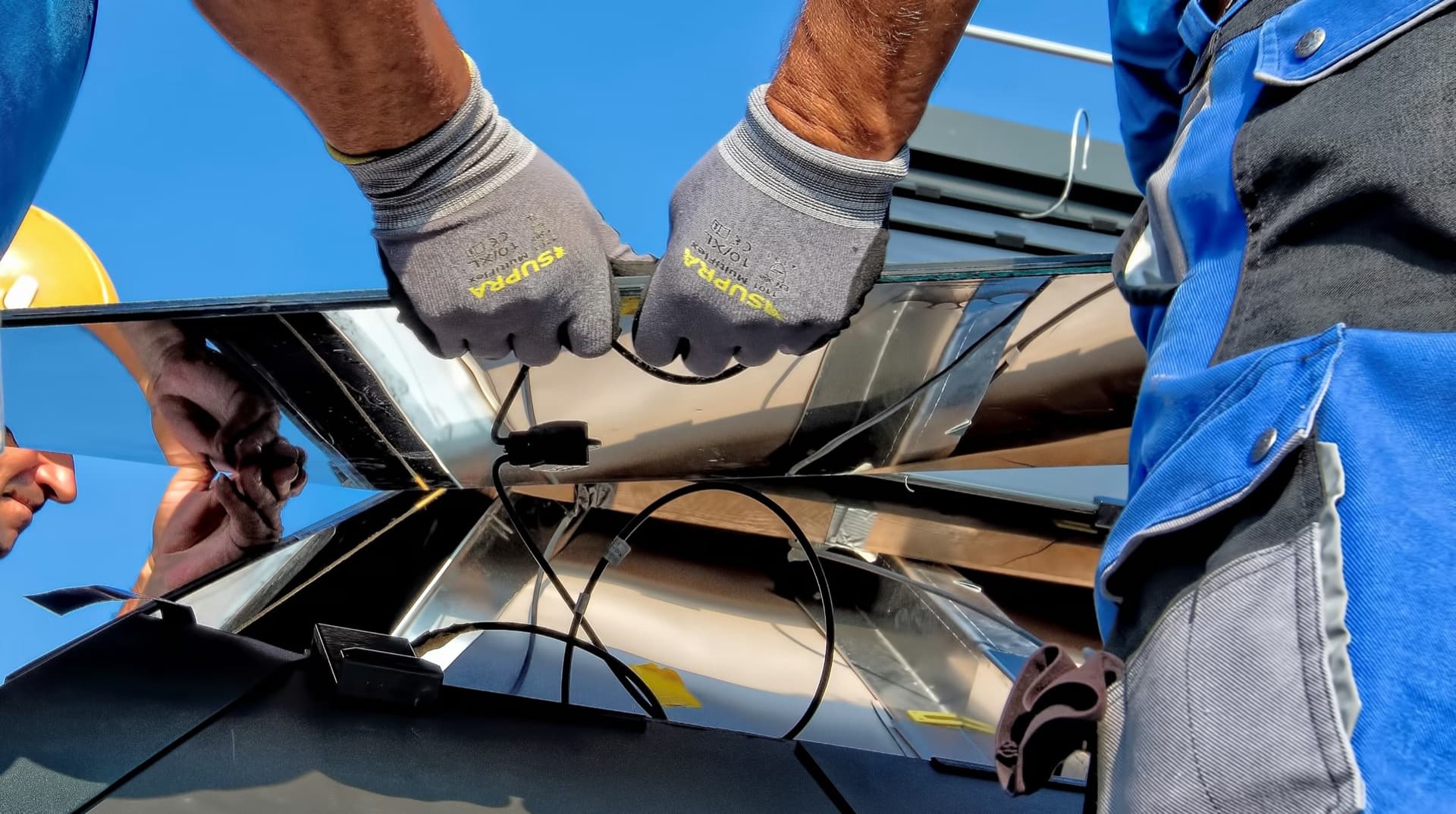
Solar Panel Costs Ireland 2026: The Definitive Pricing Guide
Solar Panel Costs in Ireland 2026: The Definitive Guide to Prices, Grants & Payback
\n\nEverything you need to know about how much solar panels cost in Ireland in 2026 — from system prices and SEAI grants to battery storage, payback periods, and how to get the best deal.
\n\nIf you are searching for solar panels cost Ireland or wondering how much do solar panels cost in Ireland right now, you have come to the right place. This is the most comprehensive, up-to-date guide to solar panel prices in Ireland for 2026, built from real installer quotes and verified data.
\n\nThe short answer: a typical 4kWp home solar system costs €6,000–€8,000 before the SEAI grant, dropping to roughly €4,200–€6,200 after the grant. But the full picture depends on your home, your electricity usage, and whether you add battery storage. Let us break it all down.
\n\n\n\n\nSolar Panel Costs in Ireland 2026: Full Breakdown
\n\nThe table below shows what you can expect to pay for a solar panel system in Ireland in 2026, covering panels-only and panels-with-battery options, both before and after the SEAI grant.
\n\n| System Size | \nPanels Only (Before Grant) | \nSEAI Grant | \nPanels Only (After Grant) | \nPanels + Battery (After Grant) | \n
|---|---|---|---|---|
| 2kWp (5–6 panels) | \n€4,000–€5,000 | \n€1,400 | \n€2,600–€3,600 | \n€5,000–€7,000 | \n
| 3kWp (7–8 panels) | \n€5,000–€6,500 | \n€1,600 | \n€3,400–€4,900 | \n€5,800–€8,300 | \n
| 4kWp (10–11 panels) | \n€6,000–€8,000 | \n€1,800 | \n€4,200–€6,200 | \n€6,600–€9,600 | \n
| 5kWp (12–13 panels) | \n€7,500–€9,500 | \n€1,800 | \n€5,700–€7,700 | \n€8,100–€11,100 | \n
| 6kWp (15–16 panels) | \n€9,000–€11,500 | \n€1,800 | \n€7,200–€9,700 | \n€9,600–€13,100 | \n
| 8kWp (20–21 panels) | \n€11,500–€14,500 | \n€1,800 | \n€9,700–€12,700 | \n€12,100–€16,100 | \n
| 10kWp (25–26 panels) | \n€14,000–€18,000 | \n€1,800 | \n€12,200–€16,200 | \n€14,600–€19,600 | \n
Note: "Panels + Battery" figures include a 5kWh battery (add €2,000–€2,500 for a 10kWh upgrade). All prices include installation and are based on 0% VAT. The SEAI grant caps at €1,800 for systems of 4kWp and above.
\n\nWant to see what a system would cost for your specific home? Try our free solar panel calculator for an instant estimate.
\n\n\nWhat Affects Solar Panel Prices in Ireland?
\n\nTwo homes on the same street can receive wildly different quotes. Here is why.
\n\n1. System Size
\nThis is the single biggest factor. A 2kWp system uses 5–6 panels and costs roughly €4,000–€5,000. A 6kWp system with 15–16 panels costs €9,000–€11,500. The cost per kWp drops as systems get larger because installation labour and scaffolding are somewhat fixed costs — bigger systems spread those costs over more panels.
\n\n2. Panel Brand and Quality
\nBudget panels from lesser-known manufacturers sit at the lower end of price ranges. Premium brands like SunPower, REC, or LG command a premium but offer better efficiency (producing more electricity per square metre), longer warranties (25–30 years), and slower degradation over time. For most Irish homeowners, mid-range panels from brands like JA Solar, Trina, or Canadian Solar offer the best balance of value and performance.
\n\n3. Inverter Type
\nThe inverter converts DC power from the panels into AC power for your home. A standard string inverter (one box for the whole system) is the cheapest option. Microinverters (one per panel) or power optimisers cost €500–€1,500 more but are worth it if your roof has shading issues or faces multiple directions, as each panel operates independently.
\n\n4. Battery Storage
\nAdding a battery increases the upfront cost by €3,000–€7,000, depending on capacity. We cover battery costs in detail below.
\n\n5. Roof Type and Complexity
\nA standard pitched roof with slate or tile is the easiest and cheapest to work with. Flat roofs require mounting frames (add €300–€600). Multi-storey buildings or roofs that need extra scaffolding add €400–€800. Listed buildings or heritage properties may require special planning permission.
\n\n6. Installer Choice
\nPrices vary significantly between solar installers in Ireland. Some operate with lower overheads; others include premium aftercare packages. This is precisely why getting multiple quotes is so important — the same system can vary by €1,500–€3,000 between installers.
\n\n\nGet 3 Free Solar Quotes for Your Home
\nCompare prices from SEAI-registered installers in your area. No obligation, no cost.
\nGet My Free Quotes\nSEAI Solar Panel Grant Breakdown 2026
\n\nThe Sustainable Energy Authority of Ireland (SEAI) provides a grant for solar PV installations on homes built and occupied before 2021. Here is exactly how the grant is calculated:
\n\n- \n
- €700 per kWp for the first 2kWp \n
- €200 per kWp for the next 2kWp (from 2kWp to 4kWp) \n
- Maximum grant: €1,800 (reached at 4kWp) \n
| System Size | \nFirst 2kWp (€700/kWp) | \nNext 2kWp (€200/kWp) | \nTotal Grant | \n
|---|---|---|---|
| 1kWp | \n€700 | \n– | \n€700 | \n
| 2kWp | \n€1,400 | \n– | \n€1,400 | \n
| 3kWp | \n€1,400 | \n€200 | \n€1,600 | \n
| 4kWp+ | \n€1,400 | \n€400 | \n€1,800 | \n
Key points about the SEAI grant:
\n- \n
- The grant is paid directly to your installer, so your quote should reflect the post-grant price. \n
- Your home must have a BER of C3 or better after the works, or you must also carry out enough upgrades to reach C3. \n
- The installer must be registered on the SEAI’s Domestic Register. \n
- There is no additional grant specifically for batteries, but the battery cost does not affect your solar panel grant eligibility. \n
0% VAT on Solar Panels: How Much Does It Save?
\n\nSince May 2023, Ireland has applied a 0% VAT rate on the supply and installation of solar panels for homes. This was extended through at least the end of 2026. Previously, solar installations attracted 13.5% VAT.
\n\nWhat does this mean in real money?
\n\n| System Cost (ex-VAT) | \nOld 13.5% VAT | \nYour Saving | \n
|---|---|---|
| €6,000 | \n€810 | \n€810 | \n
| €8,000 | \n€1,080 | \n€1,080 | \n
| €11,000 | \n€1,485 | \n€1,485 | \n
For a typical 4kWp system, the 0% VAT rate saves you approximately €800–€1,080. Combined with the SEAI grant, the government is effectively subsidising roughly €2,600–€2,900 of a standard installation. This makes 2026 one of the best years ever to go solar in Ireland.
\n\n\nBattery Storage Costs in Ireland 2026
\n\nA battery lets you store surplus solar electricity generated during the day and use it in the evening when your panels are no longer producing. Without a battery, a typical home self-consumes only 30–40% of their solar generation. With a battery, that figure jumps to 60–80%.
\n\nFor a thorough analysis, see our guide on whether a battery is worth it with solar panels in Ireland.
\n\n| Battery Size | \nCost (Installed) | \nSEAI Battery Grant | \nNet Cost | \n
|---|---|---|---|
| 5kWh (e.g. Huawei Luna, GivEnergy 5.2) | \n€3,000–€4,500 | \n€600 | \n€2,400–€3,900 | \n
| 10kWh (e.g. Tesla Powerwall, BYD HVS) | \n€5,000–€7,000 | \n€600 | \n€4,400–€6,400 | \n
The SEAI provides a €600 grant towards battery storage when installed alongside solar panels. While the battery grant is modest, the real value of a battery lies in the extra electricity you keep rather than exporting cheaply. At 38c/kWh import cost versus 18–24c/kWh export rate, every kWh you store and use yourself saves you 14–20c compared to exporting it.
\n\nOur recommendation: A 5kWh battery is the sweet spot for most 3–5kWp systems. A 10kWh battery makes sense for larger systems (6kWp+), homes with high evening usage, or households with an electric vehicle.
\n\n\n3 Worked Examples: Real Costs for Real Homes
\n\nExample 1: Apartment / 2-Bed Terraced House — 2kWp System
\n\nProfile: A couple in a 2-bed apartment or terraced house. Annual electricity bill around €1,200. Limited south-facing roof space.
\n- \n
- System: 2kWp (5 x 410W panels + string inverter) \n
- Gross cost: €4,500 \n
- SEAI grant: −€1,400 \n
- Net cost: €3,100 \n
- Annual generation: 1,760 kWh (2 x 880 kWh) \n
- Self-consumed (35%): 616 kWh × €0.38 = €234 saved \n
- Exported (65%): 1,144 kWh × €0.21 = €240 earned \n
- Total annual benefit: €474 \n
- Simple payback: 6.5 years \n
Example 2: 3-Bed Semi-Detached — 4kWp System
\n\nProfile: A family of four in a semi-D in the Dublin suburbs. Annual electricity bill around €2,200. Good south-west facing roof.
\n- \n
- System: 4kWp (10 x 410W panels + string inverter) \n
- Gross cost: €7,000 \n
- SEAI grant: −€1,800 \n
- Net cost: €5,200 \n
- Annual generation: 3,520 kWh (4 x 880 kWh) \n
- Self-consumed (35%): 1,232 kWh × €0.38 = €468 saved \n
- Exported (65%): 2,288 kWh × €0.21 = €480 earned \n
- Total annual benefit: €948 \n
- Simple payback: 5.5 years \n
Example 3: Large Detached Home — 6kWp + 5kWh Battery
\n\nProfile: A family of five in a 4-bed detached home in County Cork. Annual electricity bill around €3,000. Large south-facing roof. Electric vehicle being charged at home.
\n- \n
- System: 6kWp (15 x 410W panels + hybrid inverter + 5kWh battery) \n
- Gross cost (panels + battery): €13,000 \n
- SEAI grant (solar + battery): −€2,400 \n
- Net cost: €10,600 \n
- Annual generation: 5,280 kWh (6 x 880 kWh) \n
- Self-consumed with battery (70%): 3,696 kWh × €0.38 = €1,404 saved \n
- Exported (30%): 1,584 kWh × €0.21 = €333 earned \n
- Total annual benefit: €1,737 \n
- Simple payback: 6.1 years \n
Notice that the battery system in Example 3 generates the highest total annual benefit because so much more electricity is self-consumed at the full 38c/kWh rate rather than exported at 21c/kWh. The battery adds to the upfront cost but dramatically improves the value of every kWh you generate.
\n\n\nWhat Would Solar Cost for Your Home?
\nEvery home is different. Get personalised quotes from up to 3 local installers.
\nRequest Free Quotes\nSolar Panel Payback Period in Ireland
\n\nThe payback period is the number of years it takes for the savings and export income from your solar panels to equal the net cost of the system. Based on 2026 electricity prices and export rates, here is what to expect:
\n\n| Scenario | \nNet Cost | \nAnnual Benefit | \nPayback | \n
|---|---|---|---|
| 4kWp panels only | \n€5,200 | \n€948 | \n5.5 years | \n
| 4kWp + 5kWh battery | \n€7,600 | \n€1,160 | \n6.6 years | \n
| 6kWp + 5kWh battery | \n€10,600 | \n€1,737 | \n6.1 years | \n
These payback calculations are based on current electricity prices of 38c/kWh and export rates of 21c/kWh. If electricity prices rise (as they have consistently done over the past decade), your payback period shortens. After payback, your system generates free electricity for another 19–25 years, given panel warranties of 25–30 years.
\n\nOver a 25-year lifespan, a 4kWp system with a net cost of €5,200 will generate approximately €23,700 in total savings and income — a return of more than 4.5 times your investment.
\n\n\nSolar Cost per kWh vs Grid Electricity
\n\nOne of the most powerful ways to understand solar value is to calculate the levelised cost of energy (LCOE) — the total cost of the system divided by the total electricity it will produce over its lifetime.
\n\nFor a 4kWp system:
\n- \n
- Net cost: €5,200 \n
- Annual production: 3,520 kWh \n
- 25-year production (accounting for 0.5% annual degradation): approximately 84,500 kWh \n
- Cost per kWh: €0.062 (6.2 cent) \n
Compare that to what you pay your electricity supplier:
\n- \n
- Current grid electricity: 38c/kWh \n
- Solar electricity: 6.2c/kWh \n
Solar electricity costs roughly one-sixth of grid electricity. Even if grid prices dropped by 50% (extremely unlikely), solar would still be significantly cheaper. This is why solar panels are one of the best financial investments an Irish homeowner can make in 2026.
\n\n\nRunning Costs and Maintenance
\n\nOne of the most attractive aspects of solar panels is that they have virtually no running costs. Here is what to expect over the life of your system:
\n\n- \n
- Day-to-day maintenance: €0. Solar panels have no moving parts. Rain keeps them reasonably clean in Ireland’s climate. You do not need to wash them regularly. \n
- Monitoring: €0. Most modern inverters come with free smartphone apps that let you track generation in real time. \n
- Inverter replacement: €800–€1,500 once. String inverters typically last 10–15 years, so you may need one replacement during the panel lifespan. Microinverters generally last 20–25 years and may not need replacing at all. \n
- Optional professional clean: €100–€200 every 3–5 years. Not essential in most cases, but can boost output by 3–5% if panels accumulate bird droppings or heavy dust near construction sites. \n
- Insurance: €0 extra in most cases. Most home insurance policies cover solar panels at no additional premium. Check with your provider to confirm. \n
Total maintenance cost over 25 years is typically €1,000–€2,000 — less than €100 per year. Factor this into payback calculations and solar still comes out dramatically ahead.
\n\n\nHow to Get the Best Price on Solar Panels in Ireland
\n\nFollow these practical steps to ensure you get the best deal:
\n\n1. Get at Least 3 Quotes
\nThis is the single most important step. We consistently see price differences of €1,500–€3,000 for the same system size between different installers. At GetSolarPanels.ie, we connect you with multiple SEAI-registered installers so you can compare like with like.
\n\n2. Time Your Installation
\nInstallers are busiest from March to June when homeowners think about summer. Booking in autumn or winter (October–January) can sometimes get you a better price or shorter wait times, and your system will still be fully operational before the long summer days.
\n\n3. Right-Size Your System
\nBigger is not always better. Use our solar panel calculator to match system size to your actual electricity consumption. Oversizing means more electricity exported at lower rates rather than self-consumed at full value.
\n\n4. Compare Panel Specifications, Not Just Price
\nA cheap quote using budget panels with 15-year warranties may cost more long-term than a slightly pricier quote with 25-year warranty panels. Ask every installer what brand and model they propose, and compare efficiency ratings and warranty terms.
\n\n5. Check Installer Credentials
\nOnly use installers on the SEAI Domestic Register — this is required for the grant. Also look for Safe Electric registration, customer reviews, and ask for references. Browse our directory of verified solar installers as a starting point.
\n\n6. Do Not Pay the Full Amount Upfront
\nA reasonable payment structure is a small deposit (10–20%) at contract signing, with the balance due on completion. Be cautious of any installer demanding full payment before work begins.
\n\n\nClean Export Guarantee: Get Paid for Surplus Electricity
\n\nUnder Ireland’s Clean Export Guarantee (CEG), electricity suppliers must offer you a payment for every kilowatt-hour of surplus solar electricity you export to the grid. As of 2026, export rates range from 18c to 24c per kWh, depending on your supplier.
\n\nHere is what different systems might earn annually from exports alone:
\n\n| System | \nAnnual Export (est.) | \nIncome at 18c/kWh | \nIncome at 24c/kWh | \n
|---|---|---|---|
| 4kWp (no battery) | \n2,288 kWh | \n€412 | \n€549 | \n
| 4kWp (with battery) | \n1,056 kWh | \n€190 | \n€253 | \n
| 6kWp (with battery) | \n1,584 kWh | \n€285 | \n€380 | \n
To maximise your CEG income, shop around between electricity suppliers for the best export rate. Some suppliers offer smart tariffs with higher export rates during peak demand periods. Note that the first €200 of CEG income is tax-free for homeowners.
\n\n\nFinancing Options for Solar Panels in Ireland
\n\nNot everyone has €5,000–€10,000 in savings to spend on solar. Fortunately, there are several attractive financing options available in 2026:
\n\n1. Home Energy Upgrade Loan Scheme (HEULS)
\nBacked by the SBCI (Strategic Banking Corporation of Ireland), the HEULS offers low-interest unsecured loans specifically for energy upgrades including solar panels. Typical terms include interest rates of 3.5–4.5%, loan amounts up to €75,000, and repayment periods of up to 10 years. Because monthly repayments can be less than your electricity savings, solar can be cash-flow positive from month one.
\n\n2. Credit Union Green Loans
\nMany credit unions offer dedicated green or energy loans at competitive rates, often 4–6% APR. Credit unions are typically flexible on terms and do not require home equity. Check with your local credit union — some offer rates as low as 3% for solar installations.
\n\n3. Bank Personal or Green Loans
\nAIB, Bank of Ireland, and Permanent TSB all offer green personal loans at reduced rates compared to standard personal loans. Rates vary from 4.5–7% APR depending on the lender and your credit profile.
\n\nQuick Financing Example
\nA €5,200 loan at 4% over 7 years gives monthly repayments of approximately €71. If your solar system saves you €79/month (based on €948 annual benefit), the system is paying for itself from day one while you build equity in a valuable home improvement.
\n\n\nReady to Find Out What Solar Would Cost You?
\nIt takes 60 seconds. Get up to 3 quotes from trusted, SEAI-registered installers.
\nGet My Free Quotes Now\nFrequently Asked Questions About Solar Panel Costs in Ireland
\n\n1. How much do solar panels cost in Ireland in 2026?
\nA typical 4kWp solar panel system costs €6,000–€8,000 before the SEAI grant. After the €1,800 grant, the net cost is €4,200–€6,200. Smaller 2kWp systems start from around €2,600 after the grant, while larger 6kWp systems with batteries range from €9,600–€13,100 after the grant.
\n\n2. Are solar panels worth it in Ireland with our weather?
\nAbsolutely. Ireland receives enough sunlight for solar panels to generate an average of 880 kWh per kWp installed per year. A 4kWp system produces approximately 3,520 kWh annually — enough to cover a significant portion of a typical household’s electricity needs. Payback periods of 5–7 years with 25+ years of useful life make solar an excellent investment regardless of our climate.
\n\n3. How long does it take for solar panels to pay for themselves?
\nBased on 2026 electricity prices (38c/kWh) and export rates (18–24c/kWh), most systems pay for themselves within 5–7 years. Systems without batteries tend to pay back slightly faster (5–6 years) because the upfront cost is lower, even though annual returns are also lower.
\n\n4. Do I need planning permission for solar panels in Ireland?
\nIn most cases, no. Solar panels are exempt from planning permission provided they do not extend more than 15cm above the roof surface, do not exceed 12 square metres (or 50% of the total roof area), and are not on the front of a house in an architectural conservation area. Most residential systems of up to 6kWp fit well within these limits.
\n\n5. Can I get solar panels with no upfront cost?
\nWhile there are no widespread "free solar panel" schemes in Ireland, the combination of low-interest green loans (like the HEULS) and your electricity savings can mean the system is cash-flow positive from day one — your monthly savings exceed your monthly loan repayment. This effectively means you pay nothing extra out of pocket.
\n\n6. Should I add a battery to my solar panel system?
\nA battery makes the most financial sense if you use most of your electricity in the evenings, have a system of 4kWp or larger, or want to maximise self-consumption. Without a battery, you will self-consume only 30–40% of your generation. With one, that rises to 60–80%. See our detailed battery analysis for a full breakdown.
\n\n7. How much will solar panels increase my home value?
\nWhile there is no definitive Irish study, international research consistently shows solar panels increase home values by 3–5%. A solar system also improves your BER rating, which is increasingly important to Irish buyers. A jump from a C to a B rating, for instance, can add meaningful resale value — some estimates suggest €5,000–€15,000 depending on the property.
\n\n8. What happens to solar panels after 25 years?
\nSolar panels do not suddenly stop working at 25 years. Most manufacturers guarantee at least 80–85% of original output at the 25-year mark, and panels typically continue producing useful electricity well beyond 30 years. The 25-year warranty is a guarantee of minimum performance, not a lifespan limit. When panels are eventually decommissioned, they are recyclable — the glass, aluminium, and silicon can all be reclaimed.
\n\nThe Bottom Line: Solar Panel Costs in Ireland 2026
\n\nSolar panel prices in Ireland have never been more attractive. Between the SEAI grant (up to €1,800), 0% VAT (saving €800–€1,500), the Clean Export Guarantee (earning 18–24c/kWh for surplus power), and historically high electricity prices, a solar installation pays for itself in 5–7 years and then delivers free electricity for another two decades.
\n\nThe key numbers to remember for 2026:
\n\n- \n
- Most popular system (4kWp): €4,200–€6,200 after grant \n
- Annual savings: €800–€1,700+ depending on system size and battery \n
- Payback period: 5–7 years \n
- Cost per kWh of solar: approximately 6c vs 38c grid electricity \n
- 25-year total return: 3.5–5x your investment \n
The single best thing you can do right now is get multiple quotes to see exactly what a system would cost for your specific home. Every roof is different, and the only way to know your true cost is to have SEAI-registered installers assess your property.
\n\nGet Your Free Solar Quotes Today
\n\nLast updated: May 2026. All prices are indicative and based on market averages. Actual quotes will vary depending on your location, roof type, and chosen installer. Always get multiple quotes and ensure your installer is registered on the SEAI Domestic Register.
\n\n\nRelated Articles
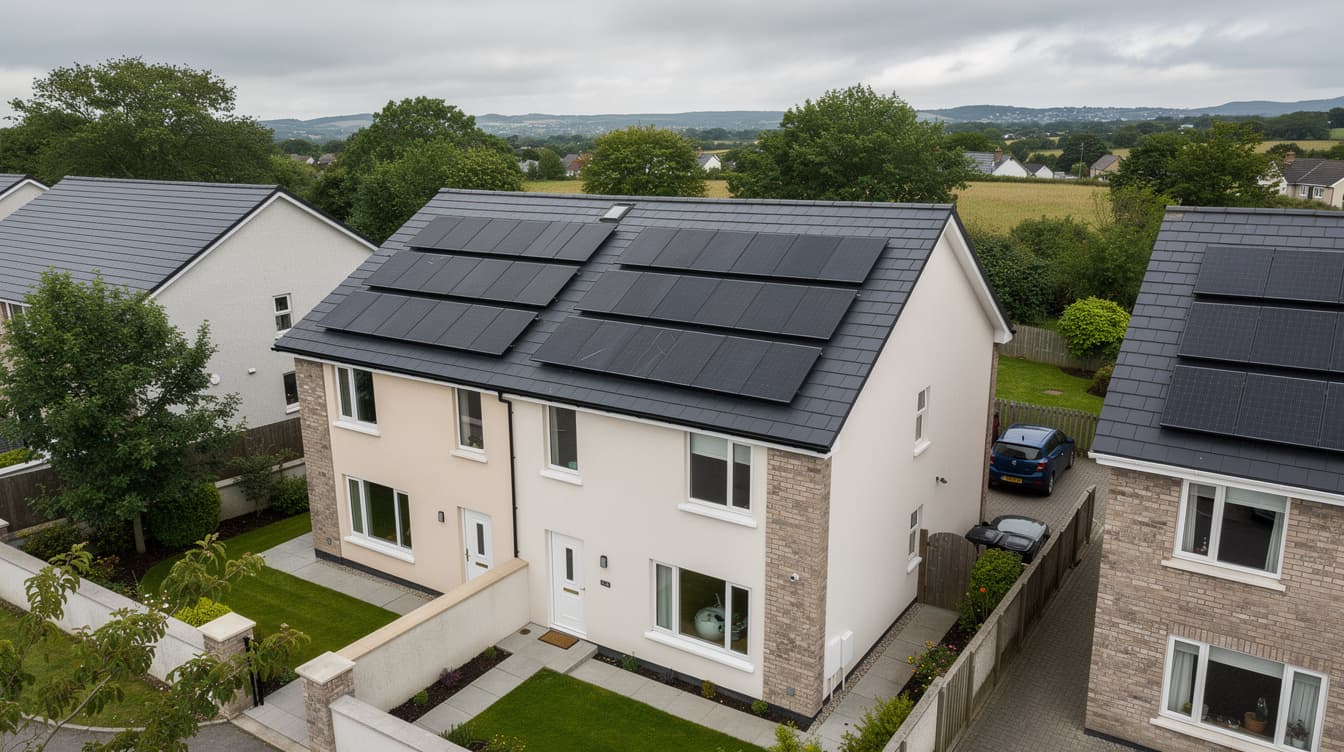
Solar Panel System Cost by Number of Panels Ireland 2026: 8, 12, 14, 20, 24 Panel Prices
What 8, 12, 14, 16, 20 or 24 solar panels actually cost in Ireland 2026 — net after €1,800 SEAI grant & 0% VAT, output kWh, roof area & battery add-ons.
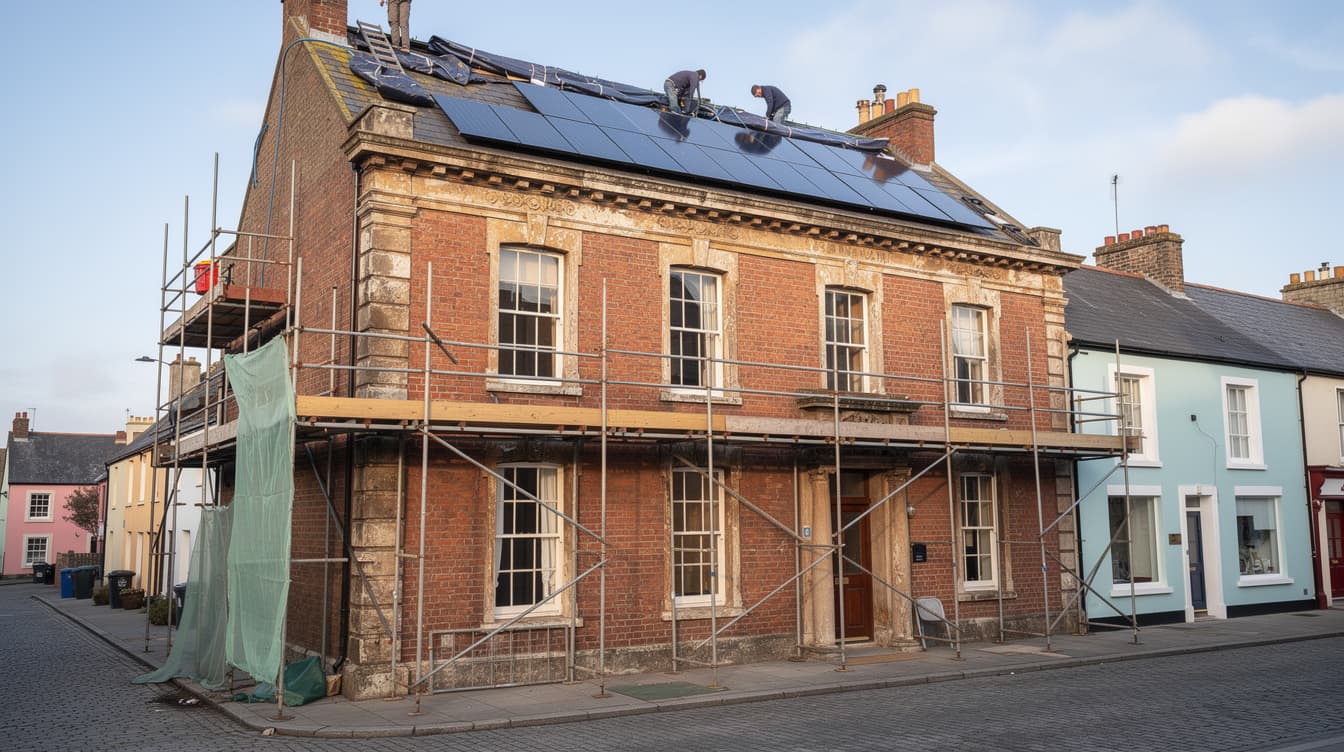
Vacant Property Refurbishment Grant + Solar Ireland 2026: How to Stack €50k VPRG With €1,800 SEAI
Stack the €50,000 Vacant Property Refurbishment Grant with the €1,800 SEAI Solar PV grant in Ireland 2026 — real refurb numbers, timing, traps.
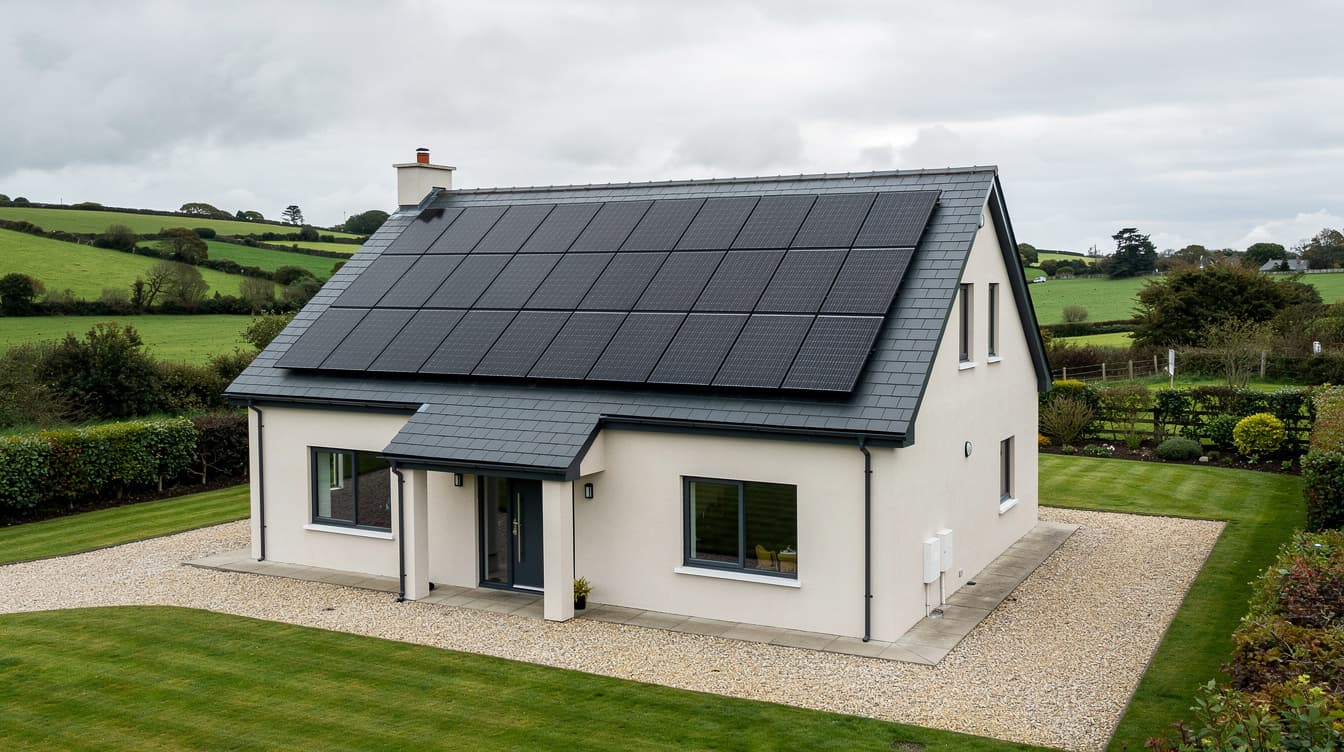
6kW Solar System Cost Ireland 2026: Real Prices, Output & Payback
6kW solar costs €7,700–€10,500 net after the €1,800 SEAI grant and 0% VAT in Ireland 2026. Real quote, 5,270 kWh/yr output, EV/battery ROI.