
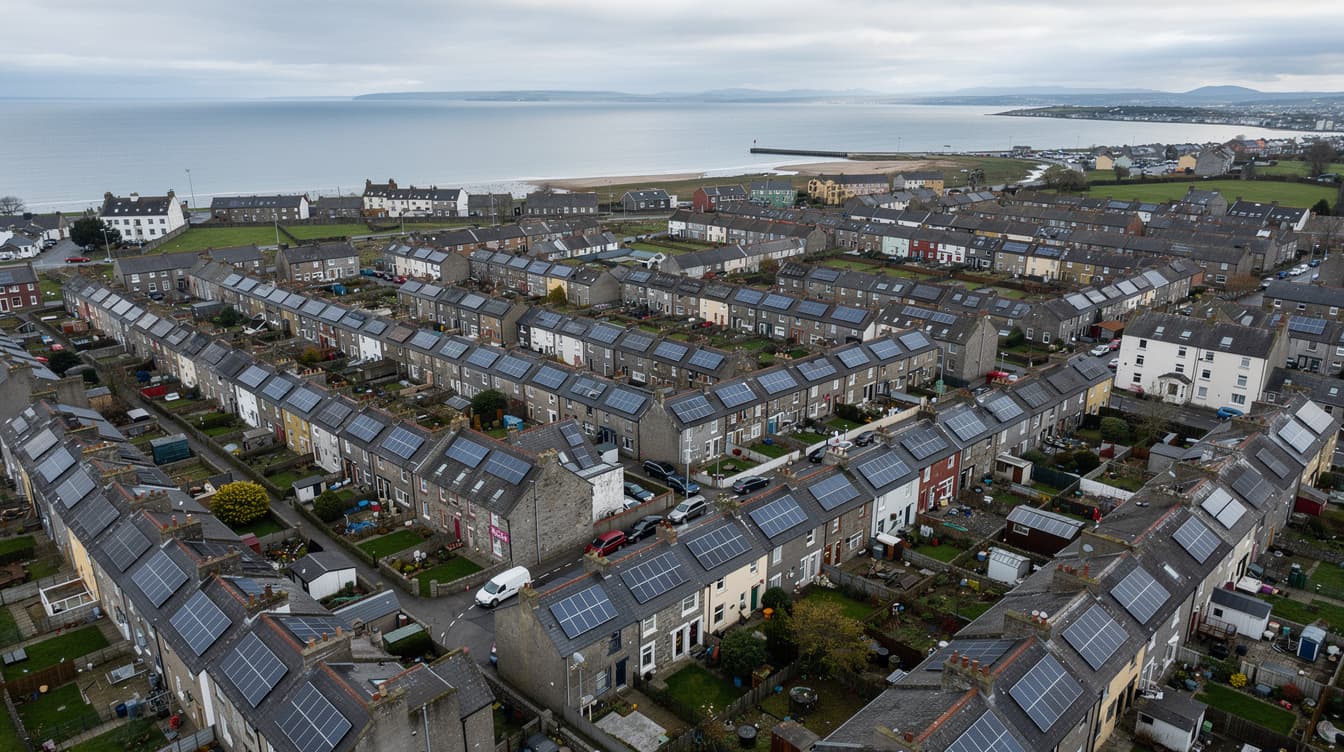
Top 5 Solar Companies in Galway 2026: How to Pick the Right Installer
If you’re searching “top 5 solar companies in Galway” what you’re really asking is: which installer is least likely to mess up a six-figure asset bolted to my roof for the next 25 years. This guide is built for that question — not for clickbait. Galway has roughly 60–80 SEAI-registered solar PV installers serving the city, the suburbs, Connemara and east into Galway county, and the gap between the best and the worst is large enough to matter on price, on warranty backup, and on what your roof actually looks like a decade from now.
Updated July 2026: CEG export tariff verified at ~20 c/kWh average across suppliers, lead times refreshed to the current 5–8 weeks from signed contract to commissioning.
What follows is the 2026 working framework: the five archetypes of solar installer operating in Galway, the questions that separate them, what a 4–6 kWp Galway install should actually cost this year, the SEAI grant maths against west-coast roof realities, and the verification steps that take you from glossy quote to contract you can sign without losing sleep.
Why “top 5 solar companies in Galway” cannot be a ranked league table
There is no honest static ranking. Quality varies install-by-install, day-by-day. The same Galway installer that nailed a Salthill job in March might phone in a Tuam install in June because the crew is different. Small specialists in Oranmore can run two perfect installs a week with a five-star roof but a 90-day backlog. A 2024 review site “Top 5” is, in practice, an SEO list paid for — sometimes implicitly — by who advertises hardest, not by installation quality. So this guide does not list five company names. Instead, it gives you the five categories of Galway installer you will encounter when you start asking for quotes, the strengths and the failure modes of each, and the exact questions that separate the real ones from the cowboys.
The 5 archetypes of Galway solar installer in 2026
1. National scale-up — the “volume installer”
The big nationals do roughly 1,000–2,000 installs a year across Ireland, and Galway is typically 4–6% of their book. They run a Galway crew (sometimes two), book you a survey within a week, and turn a quote around inside 48 hours. Their warranties are robust because the company will still exist in 2031. Their pricing is mid-pack — not the cheapest, not the most expensive. Their weakness: the crew that bolts panels to your Knocknacarra slate is rarely the same crew that designs the system, and any roof oddity (Salthill bay window, Renmore dormer, a Loughrea farmhouse with a clay tile mix) gets bounced back through three layers of office before anyone makes a call.
Best for: Standard 3-bed semi with a clean south or south-west pitch. Build year 1990–2015. Concrete tile or natural slate. Single MPRN, no quirks.
Avoid if: Your roof is anything unusual — old natural slate that needs replacing under the panels, a Conamara stone-built cottage, a thatch transition, an extension that doesn’t match the original pitch, or a complex shading question involving mature beech trees.
2. Regional mid-size — the “Connacht installer”
The 5–15 staff outfit, often founded by a former roofer or electrician, headquartered in Galway, Tuam, Athenry or Loughrea. They’ve done 200–800 installs in the west and they know the local quirks — the planning officers in Galway County Council, the ESB Networks engineer who covers their patch, the specific way Connemara Atlantic exposure chews through low-end clamps inside three years. Their crews are smaller, more cohesive, and they often own their installation. Pricing is comparable to the nationals or slightly lower because their overhead is lower. Their weakness is queue length: a 6–12 week wait is common in spring.
Best for: Anything west of Athlone, Conamara coastal exposure, older houses, anyone who wants the same lead electrician returning their call in 2028 for a battery add-on.
Avoid if: You need an install before Christmas and it’s already October — their books will be closed.
3. Owner-operator — the “one-van outfit”
A single qualified installer, 1–3 helpers, 30–80 installs a year. Often the cheapest written quote — sometimes 15–25% below the nationals on like-for-like hardware. Often the highest-quality install when it goes well, because the owner is on the roof. The risk: if they get sick, go on holiday, or the business folds in 2028, your 20-year workmanship warranty is worth what the paper costs. This is fine if the install is genuinely faultless and the equipment warranties (panel, inverter, battery) are with manufacturers who will still be trading.
Best for: Buyers who can verify the installer through references (ideally three Galway addresses where the system has been running over two years), and who understand that hardware warranties trump workmanship warranties on a 25-year asset.
Avoid if: You want a single throat to choke for two decades. The maths only works on price; on operational continuity, the bigger companies win.
4. Specialist — farm, commercial, or off-grid
Galway and the surrounding county still have a meaningful agricultural base, and a small number of installers in the west specialise in agri PV (dairy, beef sheds, slurry pumping), commercial rooftop (industrial estates around Ballybrit and Oranmore), and off-grid or hybrid systems for one-off rural houses where the grid connection is marginal. These specialists are not the right fit for a 4 kWp domestic install, but they’re exactly the right fit if you’re putting 30–100 kWp on a shed and need an installer who understands TAMS, three-phase, and the export limits that apply to non-domestic.
Best for: Farm rooftop, commercial premises, off-grid one-offs, three-phase domestic with NC6.
Avoid if: You’re a 4 kWp single-phase semi — you’ll be the smallest job on their desk and the price will reflect that.
5. White-label / lead-broker — the “avoid”
The fifth archetype is the one to walk past. These are slick-looking websites and call-centres that gather your enquiry, sell the lead to one of categories 1–4, and take a margin. Sometimes that’s fine; often it isn’t, because the install is then done by whoever paid for the lead, not by whoever you spoke to. Tell-tale signs: the salesperson cannot name the installation crew lead, the “company” has no SEAI registration number on the website, the quote arrives without panel and inverter model numbers, and the warranty is “our company” with no underwriter named. Walk away.
What a Galway solar install should actually cost in 2026
The honest 2026 numbers for a Galway domestic install, including SEAI grant offset, hardware, scaffolding, ESB Networks NC1 paperwork, and commissioning:
| System size | Typical Galway gross | SEAI grant | Net cost |
|---|---|---|---|
| 3.0 kWp (~7 panels) | €6,400–€7,100 | €1,800 | €4,600–€5,300 |
| 4.0 kWp (~9 panels) | €7,400–€8,400 | €1,800 | €5,600–€6,600 |
| 5.0 kWp (~11 panels) | €8,600–€9,800 | €1,800 | €6,800–€8,000 |
| 6.0 kWp (~13 panels) | €9,800–€11,200 | €1,800 | €8,000–€9,400 |
| 5.0 kWp + 5.0 kWh battery | €12,500–€14,500 | €1,800 | €10,700–€12,700 |
Galway pricing tends to run roughly 2–4% above Dublin on like-for-like specification, mainly because crews travel from outside the county more often, scaffolding is harder to source in coastal areas, and the wind exposure means heavier-gauge mounting kit is common. If a Galway quote comes in 20% below the table above, it’s either using house-brand panels nobody has heard of, a battery you can’t buy spares for in 2030, or both. Ask for the model numbers and check them online before signing.
Skip the Sales Pitches — Get Vetted Galway Quotes
Free quotes within 48 hours from SEAI-registered Galway installers who meet our 7-point vetting criteria.
The 7-question vetting framework for a Galway installer
Ignore the brochure. Ask these seven questions of every shortlisted installer, in writing, and compare the answers side by side.
1. What is your SEAI registration number, and how long have you been on the SEAI register for the solar PV grant? Real installers can answer in one line. Anyone hesitating is selling you a lead, not an install.
2. Who is the lead electrician on this job, and how many installs have they personally completed in 2025 and 2026? Get the name. If the answer is “our team,” ask for the name. The lead electrician is who you want to be talking to the day something doesn’t work in 2028.
3. What panel make and model, what inverter make and model, and what mounting system will you use? Are these on the SEAI-approved Triple-E list? The Triple-E list is searchable on SEAI’s website. If the installer quotes off-list, your grant is at risk.
4. What is the panel manufacturer’s product warranty (years), and the inverter manufacturer’s warranty (years)? Who pays for labour to swap out a failed panel or inverter inside warranty? Tier-1 panels carry 25–30 years product, 25–30 years performance. Hybrid inverters are typically 10–12 years standard, extendable to 20. Labour for warranty swaps is almost never covered by the manufacturer — that is the workmanship warranty, and you want it to be at least 10 years from the installer.
5. Can you give me the addresses of three Galway-area installs that are at least two years old, and the contact details of the homeowners? This is the verification step that separates real installers from posers. The good ones will give you the list. The cowboys cannot.
6. Will you do a roof survey before quoting, or is the price subject to change once you climb up? No serious installer should quote a final number without a survey. If they do, the “final” price is the floor — the ceiling moves the day they spot a fascia that needs replacing.
7. What is your standard NC1 turnaround with ESB Networks, and do you handle the paperwork end-to-end? ESB Networks NC1 paperwork is what registers your system on the grid and gates your microgeneration export tariff. Galway sits in the West region with typical NC1 turnaround of 2–6 weeks. Good installers do it for you; bad ones leave you to chase ESB Networks yourself.
Galway-specific gotchas that other guides miss
Atlantic exposure changes the mounting spec
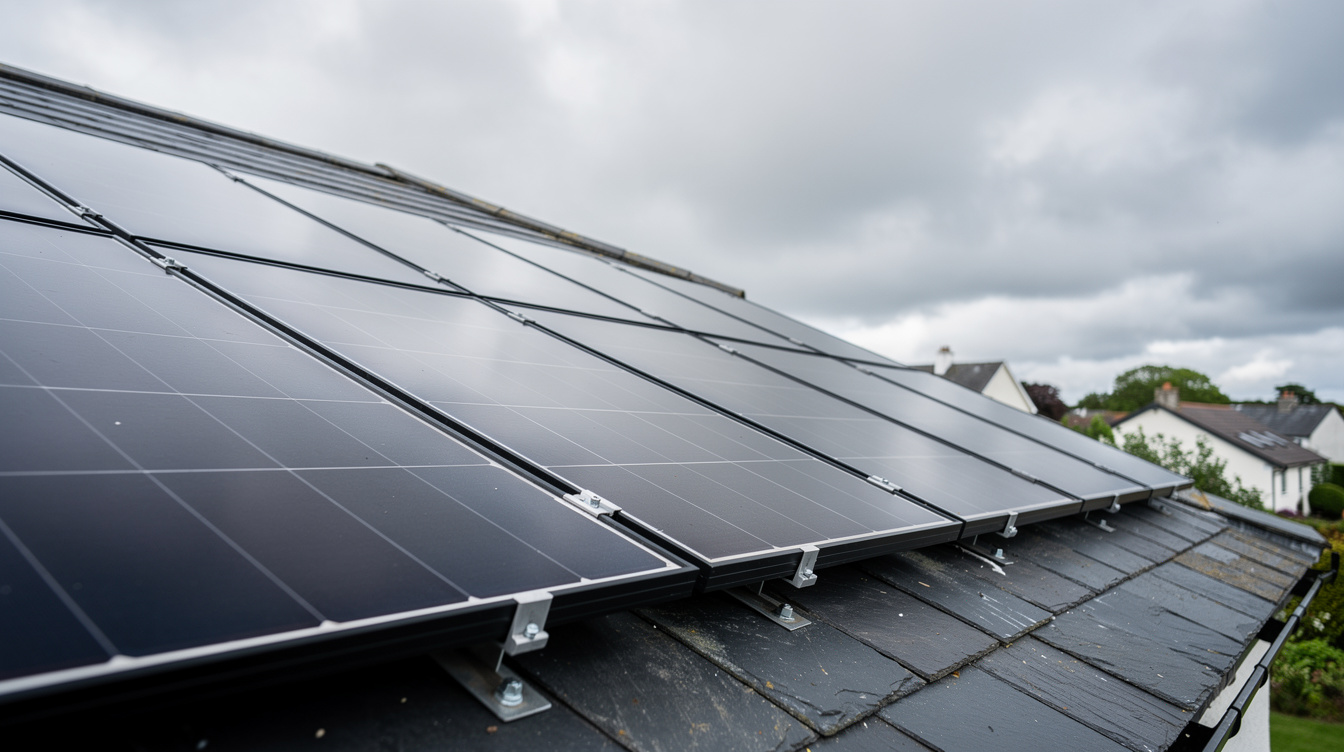
A standard rail-and-clamp system rated for inland Ireland is not the same spec you want on a Salthill seafront house, a Spiddal cottage, or anything in west Conamara. Coastal salt spray accelerates corrosion on cheaper alloys, and the wind uplift figures west of Galway city are at the high end of the Irish range. Ask the installer specifically: which wind zone is your structural calc to, and which clamp grade are you fitting? If they look blank, walk away.
Knocknacarra and Salthill estate roofs
The 1990s–2000s estates in Knocknacarra and Salthill are predominantly concrete tile on timber rafters with reasonably accessible loft spaces. Standard install — nothing exotic. The west-facing pitches on those estates are often the better install side because they catch the longer summer evenings.
Galway city centre and Claddagh
The older terraces and the Claddagh have planning sensitivities. Most domestic installs of up to ~30 kWp are exempt under SI 235/2022, but if you’re inside an Architectural Conservation Area or on a Protected Structure (some Claddagh and Spanish Arch addresses are), exemptions don’t apply and you’ll need a Section 5 declaration or formal planning. The right installer flags this on day one.
Connemara off-grid and weak-grid
West of Maam Cross and into north Conamara, ESB grid quality can be marginal — voltage rise on long single-phase rural feeders is real, and an export limit of 6 kW single-phase domestic may be the binding constraint, not the panel area. A specialist installer (archetype 4) will model this; a volume installer (archetype 1) may not.
Tuam and east Galway farm sheds
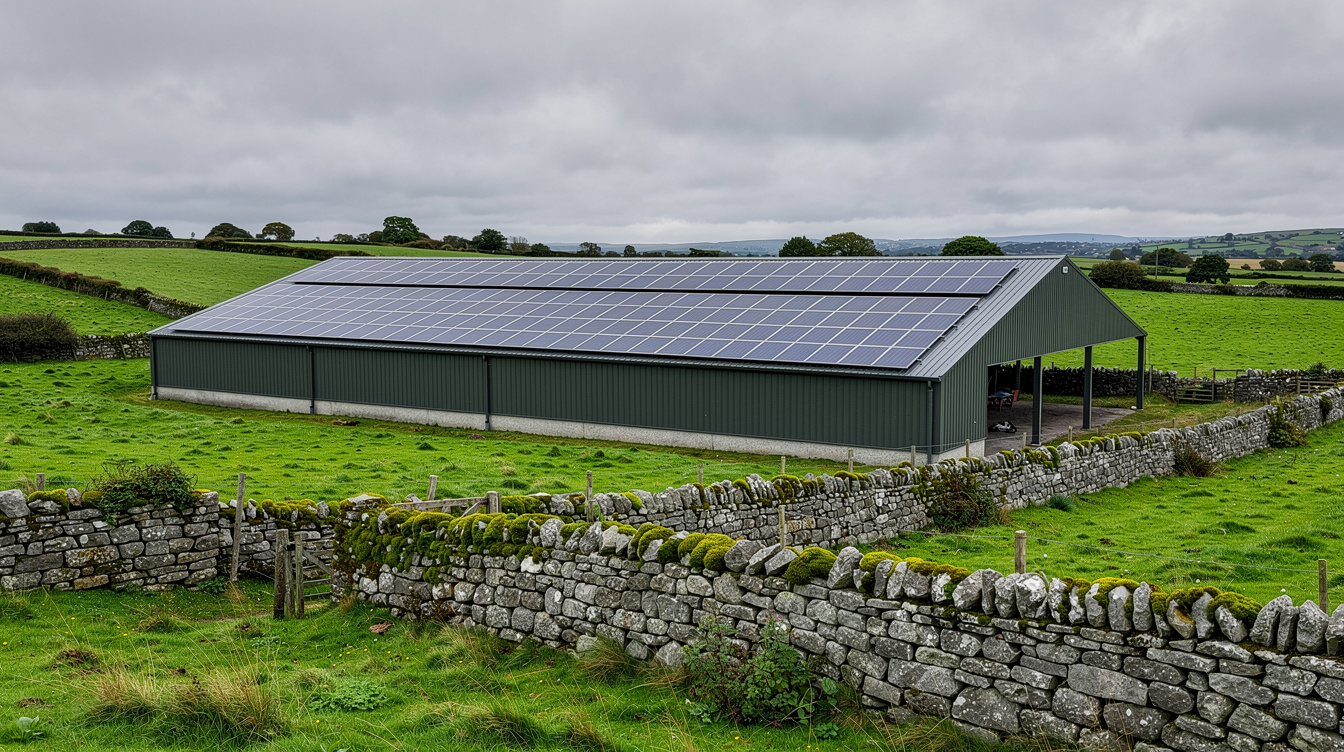
The east Galway agricultural belt is one of the best PV use-cases in Ireland: large south-facing shed roofs, weekday daytime load (milking parlours, slurry pumping), and TAMS 3 grant support stacking on top of the SEAI domestic grant for any house element. The economics are excellent; the installer choice should lean to archetype 2 or 4, not 1.
The SEAI grant maths for a Galway home
The 2026 SEAI Solar PV grant is €900 per kWp installed, capped at €1,800 (so the cap bites at 2.0 kWp and above). Eligibility for a Galway home is identical to the rest of Ireland: the property must have been built and occupied before 1 January 2021, you must be the homeowner-occupier (not a landlord), and there must be no prior solar PV grant at that MPRN. The installer must be on the SEAI register at the date of install, and the equipment must be on the Triple-E list.
For a typical Galway 4 kWp install at €7,800 gross, your net cost after grant is €6,000. Generation in Galway averages 850–900 kWh per kWp per year — slightly below east-coast figures because of the heavier Atlantic cloud, but the spring and autumn shoulder months are remarkably good thanks to long daylight hours and breezier conditions that cool panels into higher efficiency. A 4 kWp system in Galway will produce roughly 3,400–3,600 kWh per year, of which 50–70% can be self-consumed without a battery (depending on weekday occupancy) and the balance exported under the Clean Export Guarantee.
At current Galway electricity prices (35–40c per kWh peak, 20c per kWh export) and a 60% self-consumption rate, a 4 kWp system saves roughly €900–€1,100 a year, putting payback at 5.5–7 years on the €6,000 net — with the remaining 18–19 years of the panel warranty effectively producing free electricity.
A working shortlist process for Galway in 2026
- Get three written quotes from three different archetypes (one national, one regional, one owner-operator). Don’t take fewer; the spread will surprise you.
- Demand model numbers for panel, inverter, mounting system and battery in writing, on the quote.
- Cross-check Triple-E on the SEAI website yourself.
- Verify SEAI registration for each company on the SEAI register.
- Phone three references per shortlisted installer. Ask: was the price the final price? Was the install finished on schedule? Has anything gone wrong, and how was it handled?
- Insist on a roof survey before contract. No survey, no signature.
- Read the contract for workmanship warranty length, what triggers it, and who underwrites it.
Save 6–10 Hours of Galway Quote-Hunting
Tell us your eircode and roof. We’ll match you to vetted Galway installers in 48 hours — free, no obligation.
FAQ — Galway solar in 2026
Is solar worth it in Galway given the weather?
Yes. Galway gets less sun than Wexford but more than people think — 850–900 kWh per kWp per year is comfortably enough to pay back a properly priced install in 6–7 years. Modern panels work in diffuse light, not just direct sun. The Atlantic cloud cover hurts less than the long daylight hours help.
How long does an install take?
For a standard 4–5 kWp domestic install, the on-roof work is one to two days. The end-to-end timeline from signed contract to commissioning is typically 5–8 weeks, gated by ESB Networks NC1 turnaround and the installer’s backlog. April–June is the busiest window in Galway — book earlier if you want a summer install.
Do I need planning permission?
Almost never for domestic rooftop. SI 235/2022 (as amended) exempts roof-mounted solar PV up to roughly 30 kWp on most domestic homes nationwide, with no cap on roof area. Exemptions narrow if you’re in an Architectural Conservation Area (parts of Galway city), on a Protected Structure, or inside a Solar Safeguarding Zone (a Knock SSZ exists in Mayo but not Galway specifically). When in doubt, ask your installer to flag any exemption questions before contract.
Can I get the SEAI grant if I rent?
No. The grant requires homeowner-occupier status. Landlords are not eligible for the residential SEAI Solar PV grant in 2026.
How much can I export back to the grid?
Single-phase domestic in Galway is capped at 6 kW export under ESB Networks NC1. Three-phase domestic is capped at 11 kW export. If your panel array exceeds this, the inverter is configured to clip output at the cap — you don’t lose the panel value, you just don’t export everything during peak summer hours.
What about batteries?
A 5 kWh battery added to a 4–5 kWp system in Galway typically pushes self-consumption from 50–55% to 75–85%, adds roughly €3,500–€5,000 to the install cost (no separate SEAI grant for batteries since 2023), and extends payback by 1–3 years. Worth it if your daytime occupancy is low; less compelling if you work from home most weekdays.
The bottom line on picking a Galway solar installer in 2026
The right answer isn’t a brand. It’s a process: three written quotes from SEAI-registered companies covering at least two of the five archetypes, brand and model in writing, workmanship warranty of 10+ years, a verifiable Galway-area reference list, and a roof survey before contract. Run that process and you will arrive at a top-three shortlist faster than any “top 5” list on the internet can deliver, and the one you sign with will be the right one for your house specifically — not the company that bought the SEO spot.
Ready to Go Solar in Galway?
Get free, no-obligation quotes from SEAI-registered Galway installers vetted against our 7-point checklist.
Related Articles
Top 10 Solar Companies in Ireland 2026: The Honest National Guide
Honest 2026 guide to picking a solar installer in Ireland — 10 installer archetypes, county-by-county vetting framework, real prices, SEAI grant maths, no SEO league tables.
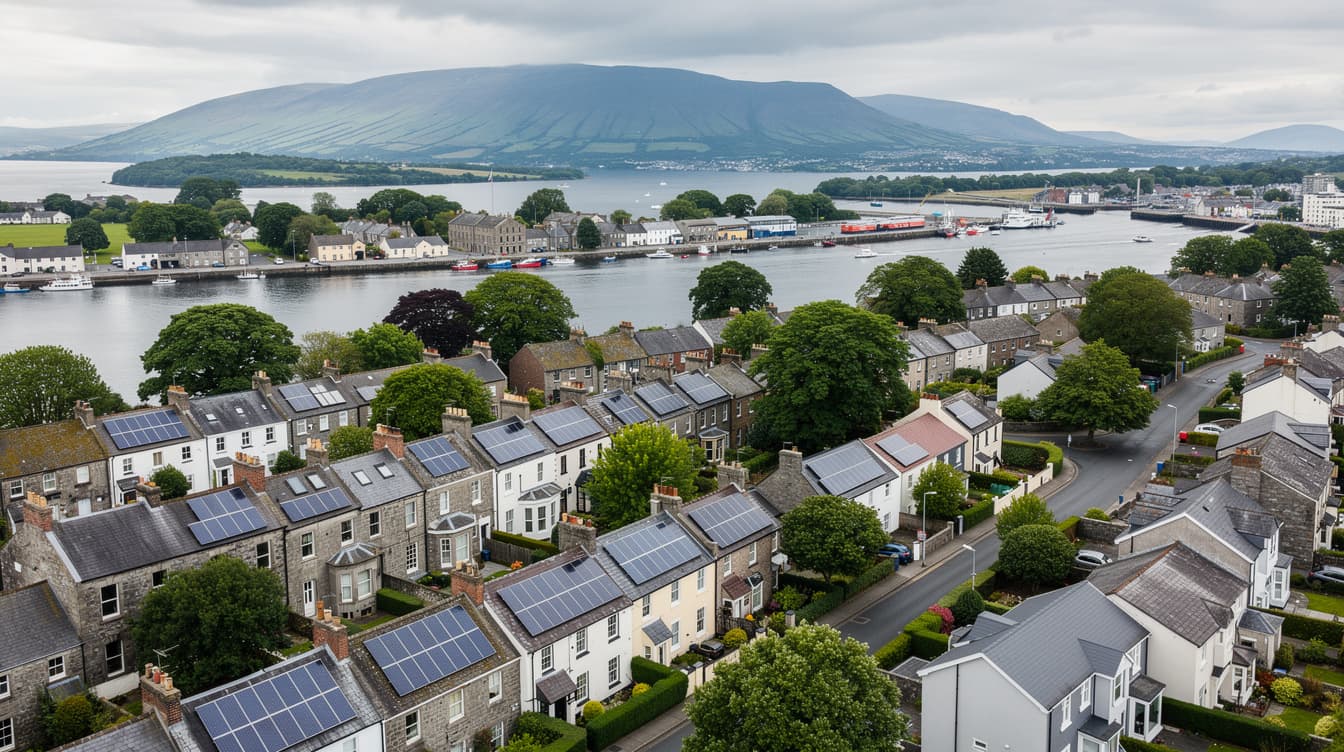
Top 5 Solar Companies in Waterford 2026: How to Pick the Right Installer
How to pick the right Waterford solar installer in 2026: 5 installer archetypes, 7-question vetting framework, 2026 prices, coastal salt gotchas & SEAI grant maths.
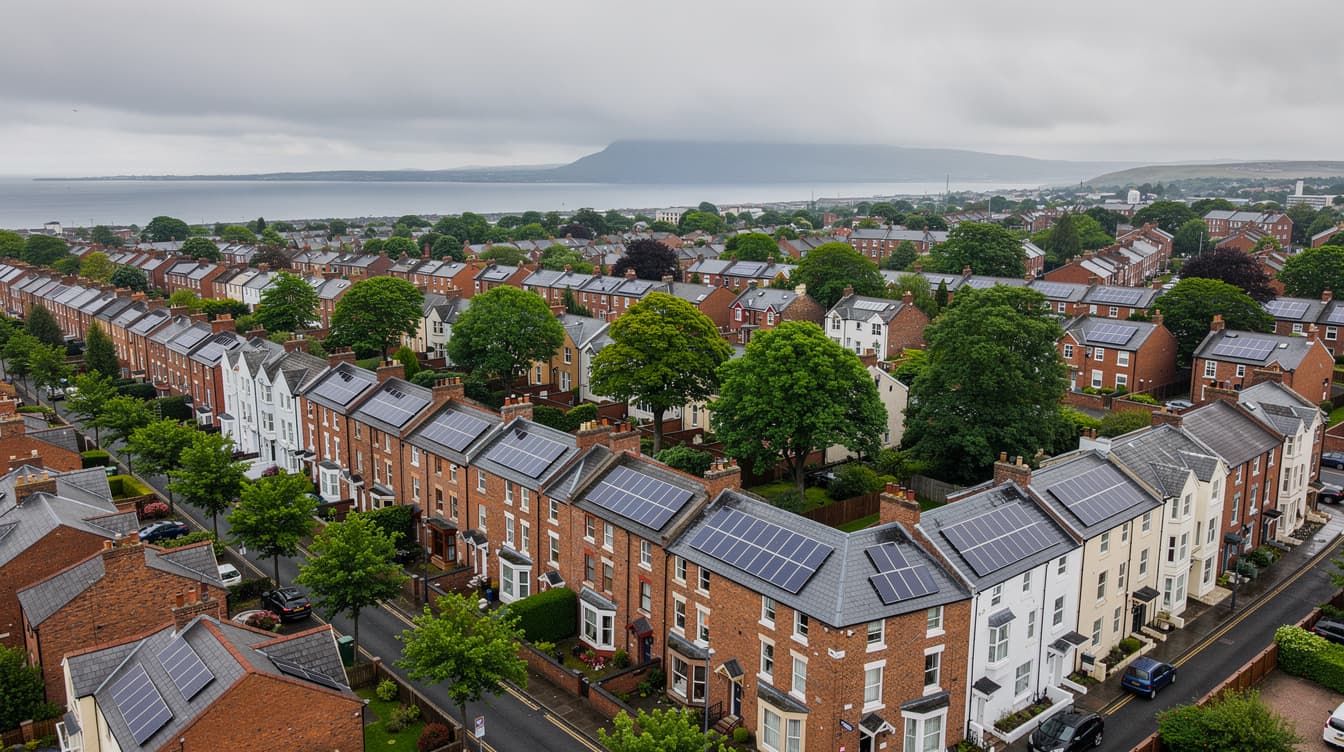
Top 5 Solar Companies in Belfast 2026: How to Pick the Right Installer (NI)
How to pick the right Belfast solar installer in 2026: 5 archetypes, 7-question vetting, NIE Networks G98/NI, supplier export tariffs & real prices in £.