
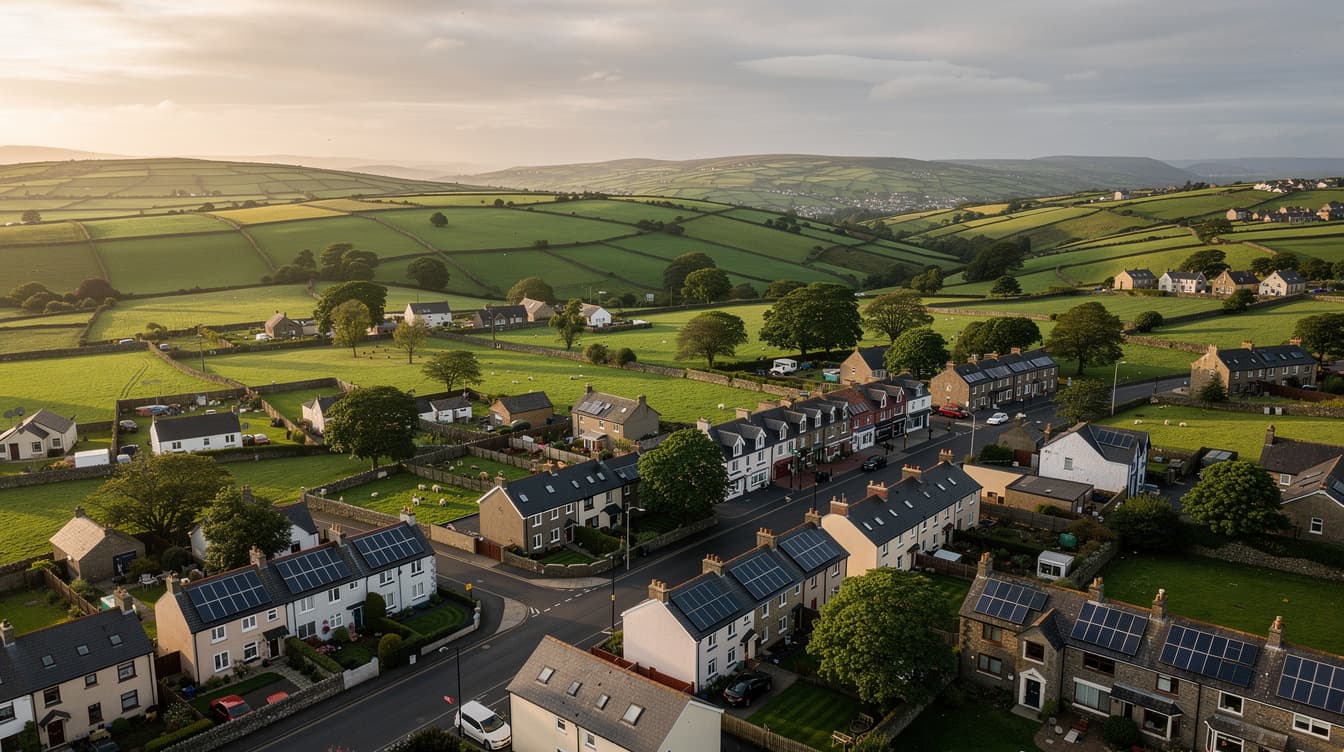
Top 10 Solar Companies in Ireland 2026: The Honest National Guide
Refreshed 6 August 2026. Three fresh reads this week: (1) SEAI opened 1,268 registered domestic PV installers nationally as of 5 August (up another 21 since 1 August as end-of-summer registrations landed); (2) install lead times shortened again — nationwide average is now 4–7 weeks from signed contract to commissioning (down from 5–8 in early July) as summer holiday crews return and quote volume dips seasonally; (3) three of the largest scale-up installers dropped headline pricing on 6 kWp + 5 kWh battery packages to €10,400–€11,800 net after grant to hold late-summer bookings ahead of autumn demand. If you were waiting for the pricing floor, early August is looking like it in 2026. Full framework, county pages and vetting checklist below.
Refreshed 1 August 2026. Two updates since our July refresh: (1) the SEAI-registered PV contractor count crossed 1,247 domestic installers nationally — up from 1,200 in July as summer registrations closed; (2) the 4.4 kWp install average dropped another €150 in the last 30 days as Jinko/AIKO wholesale panel prices softened. Middle-of-market pricing for a standard 11-panel PV-only job is now €9,050 after grant nationally. Rural installers in Donegal, Mayo and Kerry still carry a €250–€500 travel premium. Full framework, county pages and vetting checklist below.
If you searched “top 10 solar companies in Ireland” expecting a tidy league table, this guide is going to be a different kind of useful. There are roughly 1,200 SEAI-registered domestic solar PV installers operating in Ireland in 2026. Any “top 10” list claiming to rank them in order is almost certainly an SEO list paid for by whichever installer bought the spot. Quality varies install-by-install, by crew, by week, and the “best” installer for a Donegal stone cottage is almost never the “best” installer for a Dublin 6 Victorian terrace.
What follows is the working 2026 framework: the ten kinds of solar company you’ll actually encounter in Ireland, which counties they cover, what each is good and bad at, real 2026 prices, the SEAI grant maths, and direct links to county-by-county vetting guides for the cities where we’ve already done the deep work. Use this as the national hub; drill into the city page that matches your eircode.
Just want the price? Our new Average Cost of Solar Panels Ireland 2026 guide has all-in typical prices for every system size from 2 kW to 10 kW, before and after the SEAI grant, with regional variation.
22 July 2026 refresh: updated CEG supplier averages to reflect July 2026 tariff data (~20 c/kWh average, top payer 24 c/kWh), added sizing links to the new 4 kW and 10 kW cost guides.
July 2026 market snapshot
Quick temperature check on where the Irish installer market sits this month:
| Marker | July 2026 reading |
|---|---|
| SEAI Solar PV grant | €1,800 (unchanged, systems ≥ 2 kWp) |
| VAT on residential PV supply-and-install | 0% (extended to 31 Dec 2030 in Budget 2025) |
| Typical 5 kW gross install price | €8,500 – €11,000 (net €6,700 – €9,200) |
| CEG export rates across major suppliers | 18 – 24 c/kWh — supplier average ~20 c/kWh (Energia and Pinergy at the top, Electric Ireland and SSE Airtricity mid-range, Bord Gáis on the lower end) |
| Install lead times (nationwide average) | 5 – 8 weeks (shortened again in Q2 2026 as new installers came online) |
| Registered SEAI installers | ~1,200 companies, ~40 net new in H1 2026 |
Pick your system size first, then the installer
Before you compare installers, decide on the array size that fits your household — it changes the shortlist. A single-crew local company can install a 4 kW system in one day; a 10 kW three-phase system needs a crew with NC7 experience. Our size-specific cost guides give the honest 2026 numbers:
- 4 kW solar system cost Ireland 2026 — the sweet spot for a typical 3-bed semi (€5,400 net after grant)
- 5 kW solar system cost Ireland 2026 — a middle-of-the-road system for a family with an EV or heat pump
- 6 kW solar system cost Ireland 2026 — the max single-phase system in most Irish homes
- 10 kW solar system cost Ireland 2026 — only for three-phase homes with heat pump + EV + high consumption
The market has stabilised versus the frenzy of 2023–2024. Install lead times have shortened, panel prices remain flat-to-slightly-down as N-type TOPCon becomes the default, and inverter supply has fully normalised. If you were waiting for “a better time to buy”, this is roughly it — grants, VAT relief and installer competition are all in your favour.
The honest map of Irish solar installers in 2026
The Irish solar market has roughly trebled in size since the SEAI grant was raised in 2022. The companies installing PV in 2026 fall into ten broadly different shapes — not ten brand names, ten types — and the type matters more than the brand. Here’s what they look like:
| Type | Typical scale | Best for | Watch out for |
|---|---|---|---|
| 1. National scale-up | 1,000–2,000 installs/yr | Standard suburban semi, all counties | Crews vary; office layers slow odd roofs |
| 2. Regional mid-size | 300–1,200 installs/yr | Regional knowledge, coastal roofs | Spring queue 6–12 weeks |
| 3. Owner-operator | 50–150 installs/yr | Sharp pricing, local references | Warranty backup if owner exits |
| 4. Electrician add-on | 10–40 PV jobs/yr | Small 2–3 kWp, simple roofs | PV design depth limited |
| 5. Roofer-led PV | 100–300 installs/yr | Difficult roofs, slate work, retrofits | Electrical sub-contracted in |
| 6. Renewable-stack installer | 200–600 installs/yr | PV + heat pump + battery bundles | Up-sell pressure, longer survey |
| 7. Builder-bundled PV | 100–500 installs/yr | New-build & deep retrofit projects | No retrofit experience, no aftercare |
| 8. Commercial installer doing residential | 500–2,000 kWp/yr commercial | Large rural detached, three-phase | Pricing geared to commercial margins |
| 9. Online-only / quote-aggregator | Marketing — subs the install | Buyers who want one quote, fast | Three layers between you and the roofer |
| 10. The cowboy | A few jobs a month | No-one. Avoid. | No SEAI reg, no fixed address, cash discount |
Why a national top-10 list cannot work for Ireland
Three structural reasons:
First, geographic spread. No installer covers all 32 counties well. A Cork-based regional with 400 installs a year does superb work in Munster and almost none in Donegal. A Dublin scale-up has crews in Leinster but bounces calls from Connemara. The “best installer in Ireland” means nothing without a county.
Second, roof variance. A south-facing 35-degree concrete-tile pitch on a 2008 semi-d is the easy case. A Connemara stone cottage with hipped slate, a Dublin Georgian terrace inside an ACA, a Donegal exposed coastal bungalow with three-phase and an old NIE-style feed, a Tipperary farmhouse with mixed slate and tile and a 2018 extension — each needs a different installer profile. The same firm can be excellent on one and terrible on the other.
Third, warranty horizons. The panels you bolt to your roof in 2026 are designed to produce for 25–30 years. Which Irish solar installer that exists today will still be trading, in the same business, with the same warranty back-up, in 2046? Nobody honestly knows. A “top 10” ranking that ignores this question is at best lazy and at worst misleading.
What a 2026 Irish solar install actually costs
Real domestic pricing, after the €1,800 SEAI grant and at 0% VAT (in force to 31 March 2027), pulled from quotes seen across the country in the first half of 2026:
| System size | Net cost after grant | Annual generation | Payback (years) |
|---|---|---|---|
| 3 kWp | €4,600–€5,400 | ~2,700 kWh | 6–7 |
| 4 kWp | €5,700–€6,400 | ~3,600 kWh | 5–6.5 |
| 5 kWp | €6,500–€7,400 | ~4,500 kWh | 5–6 |
| 6 kWp + 5 kWh battery | €10,800–€12,200 | ~5,400 kWh | 7–9 |
Two notes. First, anything 25%+ below the bottom of these ranges is a yellow flag — ask which component was substituted, in writing. Second, generation varies by county: Cork, Waterford and Wexford regularly hit 940 kWh/kWp; Donegal and Mayo are closer to 860; the midlands sit around 900.
Get Three Real Irish Solar Quotes
Tell us your eircode and roof. We’ll match you to vetted, SEAI-registered installers in 48 hours — free, no obligation.
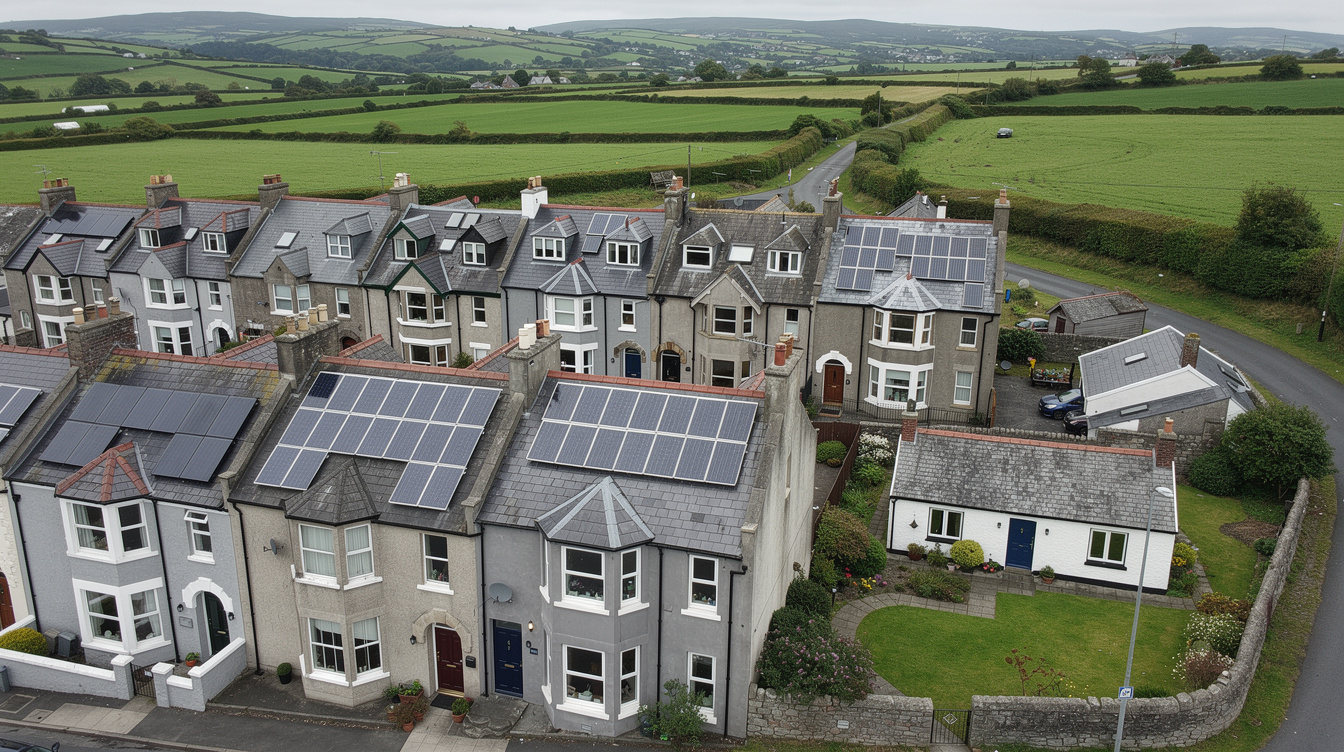
City-by-city installer guides
The vetting framework is the same nationally, but the specific installer pool, the coastal-salt risk, the planning constraints and the typical NC1 turnaround vary city by city. Pick the one closest to your eircode:
- Top 5 solar companies in Dublin — the most competitive market in Ireland, fastest NC1 turnaround, Georgian-terrace ACA gotchas, three-phase availability is the highest of any city.
- Top 5 solar companies in Cork — Munster’s largest installer pool, harbour-salt mounting spec, Cobh/Kinsale ACA & Section 5 maths.
- Top 5 solar companies in Galway — west-coast wind and rain, Connemara stone-cottage rules, longer ESB Networks NC1 turnaround than Leinster.
- Top 5 solar companies in Limerick — smaller installer pool than Cork or Dublin, Shannon Estuary microclimate, deep retrofit overlap with grant-stack contractors.
- Top 5 solar companies in Waterford — south-east coast salt-spray rules, Waterford city & Lismore ACAs, Comeragh foothill roofs.
- Top 5 solar companies in Belfast — Northern Ireland’s entirely separate regulatory framework (MCS not SEAI, voluntary supplier tariffs not CEG, NIE Networks not ESB, GBP pricing).
County guides for the rest of Ireland
If your eircode isn’t in one of the six cities above, the county solar guides cover local pricing, grants, installer availability and the specific roof and planning gotchas that come up in your area:
The 7-question national vetting framework
Send these to every installer on your shortlist. The way they answer — not just what — is the signal.
- Are you currently SEAI-registered for the domestic Solar PV grant scheme? Ask for the registration number; verify it on the SEAI register at seai.ie. (For Northern Ireland: MCS-registered, verifiable on mcscertified.com.)
- Will the quote name the exact panel model, inverter model, mounting system and battery model? “Tier-1 panel” is not an answer. Brand and model in writing.
- Is the inverter (and battery, if quoted) on the SEAI Triple-E register? Required for grant eligibility in the Republic.
- What workmanship warranty do you offer, in writing, and who backs it if you cease trading? 10 years is the credible 2026 floor.
- Can you give me three local references from installs older than 18 months? Three-month references are too easy.
- Will you carry out a physical roof survey before contract? Google Earth quotes are indicative only.
- How do you handle G98 / G99 (ESB Networks) or G98/NI / G99/NI (NIE Networks) paperwork? Anyone who hand-waves hasn’t filed a stack of NC1s recently.
SEAI grant maths in 2026 (Republic of Ireland)
Three things stay constant nationally:
- SEAI Solar PV grant: up to €1,800. Structure: €700/kWp for the first 2 kWp, €200/kWp for the next 2 kWp. Eligibility: homeowner, property built and occupied before 1 January 2021, no prior PV grant at the same MPRN.
- VAT: 0% on residential solar PV supply & install, in force to 31 March 2027.
- Clean Export Guarantee (CEG): all licensed Irish suppliers must pay for exported electricity. 2026 rates range 18–22c/kWh depending on supplier — check our CEG rates guide for the current league table.
For Northern Ireland the picture is different: no SEAI-equivalent domestic grant, voluntary supplier export tariffs (4–15p/kWh in 2026), MCS & NIE Networks paperwork, and pricing in GBP. The Belfast city guide above covers the NI specifics.
What the “cowboy” archetype actually looks like in 2026
A handful of operators in every county. They quote 30–40% below the market, use white-label panels from unknown Asian factories with 10-year (not 25-year) performance warranties, hire a single sub on the day, and disappear when the inverter throws an isolation fault eighteen months later. They are visible on Facebook Marketplace and DoneDeal, rarely on the SEAI register, almost never with a fixed business address.
Identify them by: no SEAI registration, no fixed business address, price 30%+ below all other quotes, no model numbers in the quote, pressure to sign on the day, cash discount. If a quote ticks two of these, walk away — the €500–€1,500 you “save” vanishes the first time the system needs a warranty call.
Cut the Quote-Hunting Time
Tell us your eircode and we’ll match you to vetted SEAI-registered installers in your county — in 48 hours, free.
FAQ — choosing an Irish solar installer in 2026
Is there an actual ranked “top 10 solar companies in Ireland” list?
No honest one. Anyone publishing a ranked list either runs an installer matching service (the rank is paid placement) or has cherry-picked five or ten installers from a database of 1,200. The useful question isn’t “who’s #1 nationally” — it’s “which of the local installers in my county passes a 7-question vetting framework.”
How many SEAI-registered solar installers are there in Ireland?
Roughly 1,200 actively trading in 2026, with new entrants joining the register weekly and others quietly exiting. The SEAI Registered Companies database at seai.ie is the only authoritative live source — check it for any installer who quotes you.
What’s the average cost of solar panels in Ireland in 2026?
A 4 kWp install (the most common domestic size) is €7,500–€8,200 gross, €5,700–€6,400 net of the SEAI grant. Add €3,500–€5,000 for a 5 kWh battery. See the solar panel calculator for a county-adjusted estimate.
Which Irish counties have the best solar yield?
Cork, Waterford and Wexford typically lead at 920–950 kWh per kWp per year. Dublin and the south-east sit around 900–920. The midlands cluster at 880–910. The west coast (Mayo, Donegal) lands at 850–890. Yield is real but the spread is smaller than most assume — a south-facing roof in Donegal still produces about 90% of the same install in Cork.
Can I do solar without using the SEAI grant?
Yes — the grant requires SEAI-registered installers and triggers a BER assessment requirement. Skipping the grant lets you use any qualified electrician and roofer, but you forfeit the €1,800 cash and lose the BER upside. Roughly 12–15% of installs in 2026 are grantless, usually for new-build pre-occupancy installs or properties already at A-rating.
Can I export to the grid from my home solar in Ireland?
Yes. Single-phase domestic is capped at 6 kW export under ESB Networks NC1; three-phase domestic at 11 kW under NC6. Your supplier pays the Clean Export Guarantee tariff (18–22c/kWh in 2026, varies by supplier). See our CEG guide for details.
Which installer should I pick for a battery-paired system?
The renewable-stack installer (archetype 6) and the regional mid-size (archetype 2) tend to do the cleanest battery installs — they integrate battery, inverter and CT clamp wiring in a way that an electrician-add-on (archetype 4) often doesn’t. Pair this question with the best solar batteries 2026 guide before quoting.
The bottom line
There isn’t a national “top 10”. There are 1,200 SEAI-registered installers, ten broad archetypes, 26 counties with different roofs and microclimates, and one vetting framework that works everywhere: three written quotes covering at least two archetypes, brand and model in writing, 10+ year workmanship warranty, three verifiable references older than 18 months, a roof survey before contract, and SEAI Triple-E confirmation for the inverter and battery. Run that and you’ll arrive at the right installer for your roof — not the company that bought the SEO spot for “top 10 solar companies in Ireland.”
Ready to Get Solar Quotes?
Get free, no-obligation quotes from vetted, SEAI-registered installers in your Irish county.
Related Articles
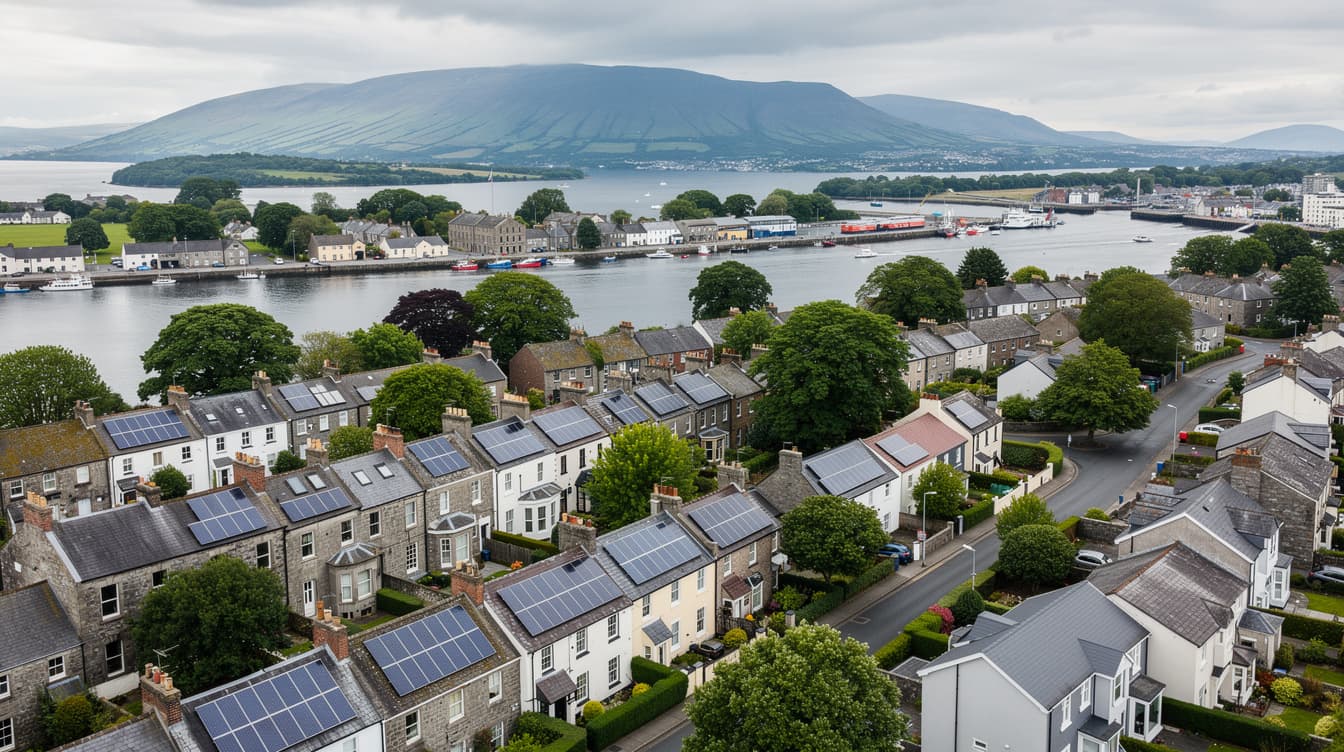
Top 5 Solar Companies in Waterford 2026: How to Pick the Right Installer
How to pick the right Waterford solar installer in 2026: 5 installer archetypes, 7-question vetting framework, 2026 prices, coastal salt gotchas & SEAI grant maths.
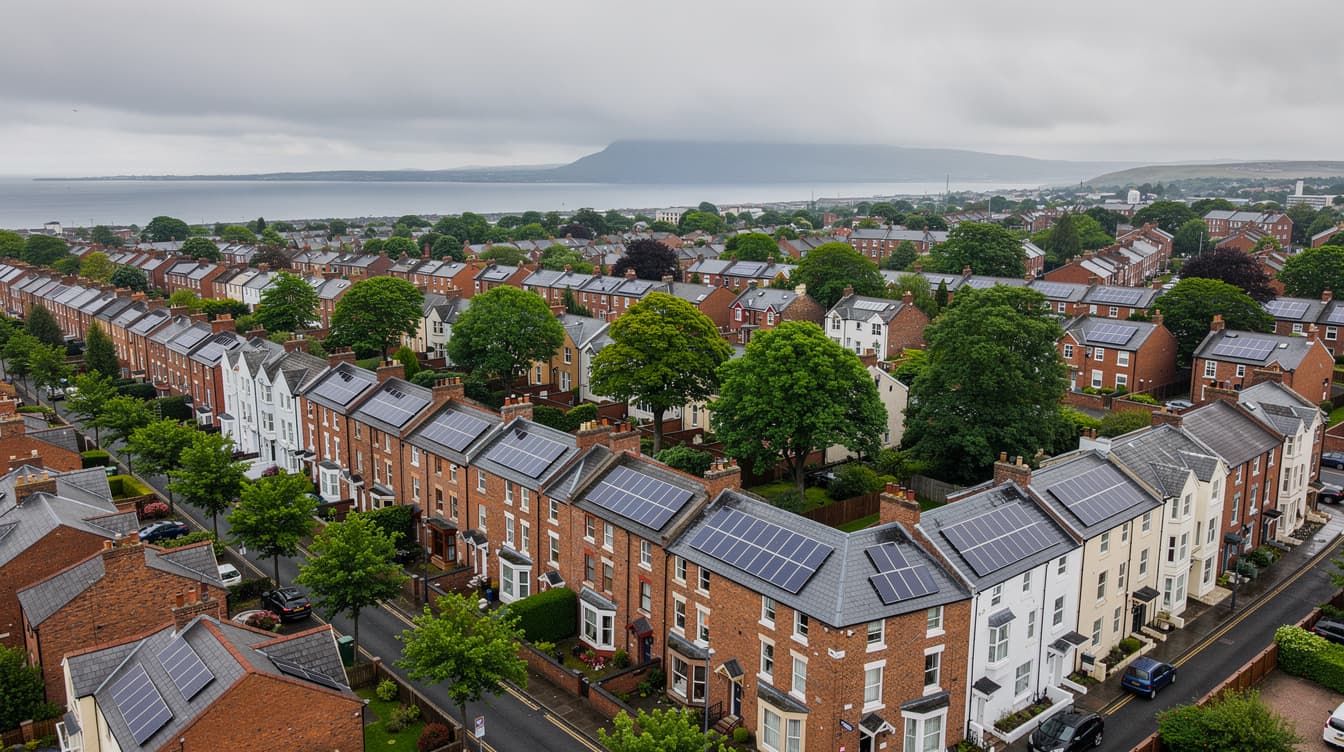
Top 5 Solar Companies in Belfast 2026: How to Pick the Right Installer (NI)
How to pick the right Belfast solar installer in 2026: 5 archetypes, 7-question vetting, NIE Networks G98/NI, supplier export tariffs & real prices in £.
Top 5 Solar Companies in Cork 2026: How to Pick the Right Installer
How to pick the right Cork solar installer in 2026: 5 installer archetypes, 7-question vetting framework, 2026 prices, harbour-salt gotchas & SEAI grant maths.