
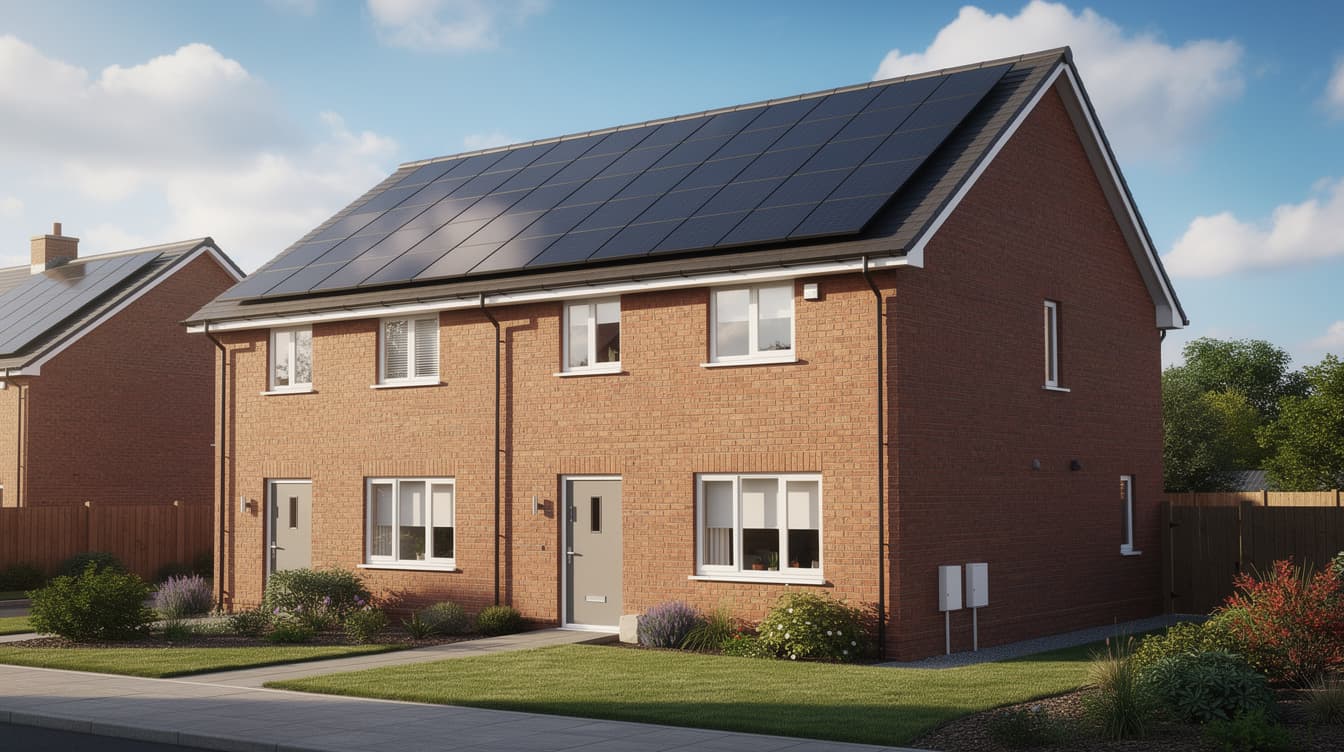
5kW Solar System Cost Ireland 2026: Real Prices, Output & 25-Year ROI
A 5 kW solar system is the Goldilocks size for a typical Irish home in 2026 — big enough to cover most of a family’s daytime electricity, small enough to fit on a standard 3–4 bed roof, and priced comfortably inside the SEAI grant sweet spot. This is the article we wish existed when we started quoting 5 kW systems: a straight-talking breakdown of what you actually pay, what you actually get, and how the maths works out over 25 years in Irish weather.
We’ve gathered installer quotes across Leinster, Munster and Connacht through mid-2026, cross-checked SEAI grant terms and CEG export rates, and pulled real generation data from Irish 5 kW systems. Here’s where a 5 kW build lands right now.
5 kW at a glance — 2026 Ireland numbers
| Metric | Typical 5 kW build in Ireland |
|---|---|
| Total install cost (before grant) | €8,500 – €11,000 |
| SEAI Solar PV grant | €1,800 |
| Net cost after grant | €6,700 – €9,200 |
| Panels (at ~440 W each) | 11 – 12 panels |
| Roof space needed | ~22 – 26 m2 |
| Annual generation (south-facing, 35° tilt) | ~4,200 – 4,600 kWh |
| VAT rate on install | 0% (extended to 31 Dec 2030) |
| Typical payback | 6 – 9 years |
| 25-year lifetime savings | €22,000 – €30,000 |
Those numbers assume PV only. Add a 5 kWh battery and the total climbs by roughly €2,500 – €3,500 — more on that below.
Ready to Go Solar?
Get your free personalised quote from SEAI-registered installers.
What’s in a 5 kW solar system?
A 5 kW build isn’t just panels bolted to a roof. Here’s every component you’re paying for, and what percentage of the invoice each one typically represents.
- Panels (~30–35% of cost). Around 11 – 12 monocrystalline panels rated 430–460 W. In 2026 the most common tier-1 modules on Irish roofs are Longi, JA Solar, JinkoSolar, Trina and REC.
- Inverter (~15–20%). A 5 kW hybrid or string inverter — brands like SolarEdge, SolaX, GoodWe, Sungrow, Fronius. Hybrid models add ~€500 but let you plug a battery in later without a swap.
- Mounting & racking (~5–8%). Aluminium rails, clamps, roof hooks. Slate roofs cost slightly more than concrete tile.
- DC/AC cabling & isolators (~5%). The wiring, MC4 connectors, isolators, and consumer-unit breakers.
- Labour (~20–25%). Two-day install for a standard semi — scaffold, mounting, wiring, commissioning.
- Scaffolding (~5%). Usually 1–2 days rental. On some jobs an installer will include this free.
- Compliance & paperwork (~3–5%). NC6 form, ESB Networks notification, SEAI grant paperwork, MCS certificate, RECI cert.
If a quote lumps everything into a single line item, ask for a component-level breakdown. Reputable SEAI-registered installers will happily provide it — if they won’t, that’s a red flag.
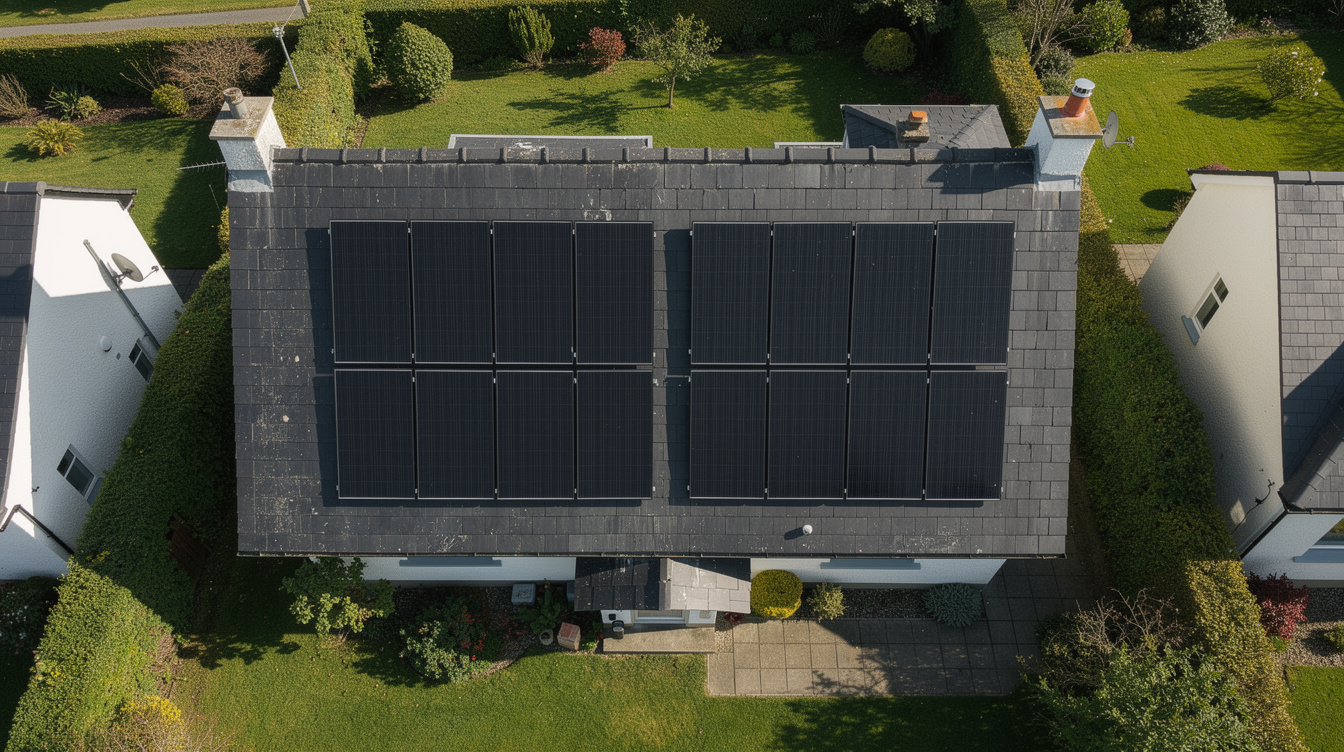
Real 2026 price breakdown
Here’s an itemised quote from a mid-2026 install in County Meath — a 5.28 kWp system on a standard 4-bed semi. This is representative of the middle of the market.
| Line item | Detail | Price (ex VAT) |
|---|---|---|
| 12 × 440 W panels | JA Solar N-type TOPCon | €2,760 |
| 5 kW hybrid inverter | SolaX X1-Hybrid G4 | €1,650 |
| Racking & roof hooks | Aluminium, slate hooks | €620 |
| DC & AC cabling, isolators, RCBOs | Full BOS | €480 |
| Scaffolding | 2 days | €450 |
| Labour (2 installers, 2 days) | Mount, wire, commission | €2,100 |
| Compliance & paperwork | NC6, SEAI, MCS | €320 |
| Sub-total (ex VAT) | €8,380 | |
| VAT | 0% (zero-rated to end of 2030) | €0 |
| Gross install | €8,380 | |
| Less SEAI grant | – €1,800 | |
| Net cost to homeowner | €6,580 |
Premium builds — SunPower Maxeon or REC Alpha panels, SolarEdge with per-panel optimisers, extended workmanship warranties — push the same 5 kW system to €10,500 – €11,000 gross, or €8,700 – €9,200 net. Budget builds using entry-tier panels can drop to €7,500 gross (€5,700 net) but you’re trading warranty length and inverter quality.
Stacking the SEAI grant and 0% VAT
Two things make the 5 kW size especially efficient in 2026 Ireland:
- SEAI Solar PV grant — €1,800. Any system ≥ 2 kWp on a home built before 31 December 2020 qualifies (subject to homeowner ownership, no prior PV grant at the MPRN). At 5 kW you’re getting the full grant with plenty of headroom. See our SEAI grant guide for the walkthrough.
- 0% VAT. Ireland zero-rated VAT on residential solar PV supply-and-install in May 2023 and extended it in Budget 2025 to run through the end of 2030. That’s another ~€1,100 saved on a 5 kW build versus the old 13.5% rate.
Together, grant plus VAT effectively knock ~€2,900 off a 5 kW system compared with pre-2023 pricing.
Real-world output: what a 5 kW system generates in Ireland
Ireland gets roughly 850 – 950 kWh per kWp per year on a well-oriented roof, based on SEAI’s PVGIS-derived figures and real generation data from monitored installs. For 5 kW that’s 4,200 – 4,750 kWh annually.
The seasonal split matters a lot for Irish homeowners, because our generation is heavily front-loaded to summer — but our consumption is heaviest in winter. Here’s a typical monthly breakdown for a 5 kW south-facing 35° system in the Midlands.
| Month | Generation (kWh) | % of annual |
|---|---|---|
| January | 115 | 2.6% |
| February | 180 | 4.1% |
| March | 330 | 7.5% |
| April | 475 | 10.9% |
| May | 560 | 12.8% |
| June | 585 | 13.4% |
| July | 560 | 12.8% |
| August | 490 | 11.2% |
| September | 375 | 8.6% |
| October | 235 | 5.4% |
| November | 130 | 3.0% |
| December | 85 | 1.9% |
| Total | ~4,370 | 100% |
The takeaway: May – August delivers roughly half your annual production. December is under 2%. If you’re relying on solar to shave winter bills, moderate your expectations — solar in Ireland is a strong summer performer and a modest winter contributor.
Do you need a battery with a 5 kW system?
Without a battery, a typical Irish family uses 35 – 45% of the solar they generate directly during the day. The other 55 – 65% is exported to the grid at your CEG rate (~18 – 21c/kWh in 2026, depending on supplier).
Adding a battery flips that ratio. A 5 kWh battery pushes self-consumption to 65 – 75%. A 10 kWh battery gets you to 80 – 90%. Because the retail unit price (32 – 42c/kWh) is roughly double the export price, every kWh you self-consume is worth about twice a kWh you export.
| Setup | Net cost | Yr 1 savings | Payback |
|---|---|---|---|
| 5 kW PV only | €6,700 | €950 | ~7 yrs |
| 5 kW PV + 5 kWh battery | €9,400 | €1,250 | ~7.5 yrs |
| 5 kW PV + 10 kWh battery | €11,500 | €1,500 | ~7.7 yrs |
The batteries barely change payback because they add both cost and savings roughly proportionally. What they do change is how much of the bill they wipe out year one, and how you handle winter evenings and short outages. Our battery sizing guide goes deeper on which capacity to pick.
Not sure if 5 kW is right for your home?
Get three tailored quotes from SEAI-registered installers — we’ll match you based on your bill size and roof.
Is 5 kW the right size for your home?
5 kW is a strong default, but it’s not the answer for everyone. Rough rule of thumb, based on average Irish consumption of ~4,200 kWh/year for a family home:
- Bill under €1,200/year, small home, 2 occupants: a 3 – 4 kW system will typically match your needs and cost €5,000 – €7,000 net.
- Bill €1,200 – €1,800/year, average 3–4 bed home, family of 4: 5 kW is the sweet spot. Enough to cover most daytime demand plus meaningful export.
- Bill €1,800 – €2,400/year, heat pump or EV charging at home: step up to 6 – 8 kW if roof space allows. The marginal cost per kWp drops as system size rises.
- Bill over €2,400/year, larger family or home office: 8 – 10 kW starts making sense, especially if you have three-phase power or a hot-water diverter set-up.
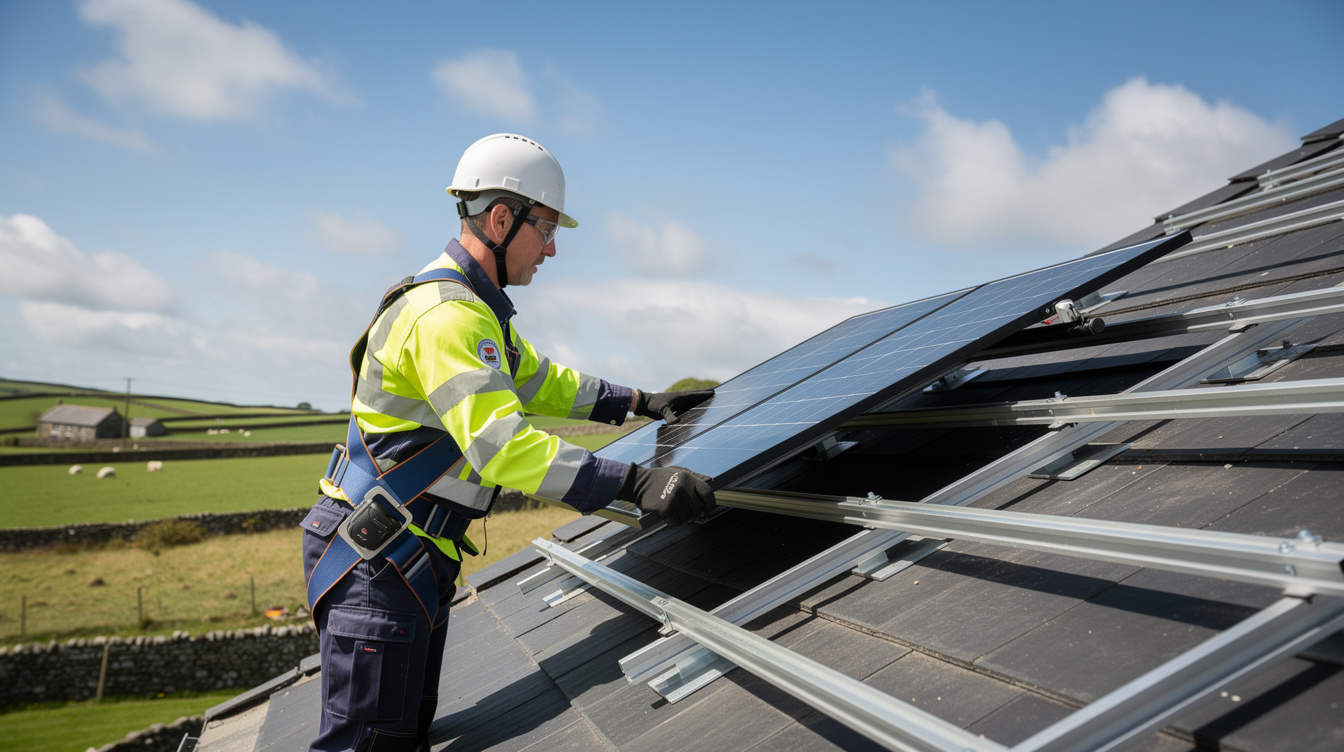
Roof space and orientation for 5 kW
Twelve 440 W panels each measure roughly 1.75 m × 1.13 m — about 2 m2 apiece. You need ~24 m2 of unshaded roof with reasonable orientation. That’s achievable on almost any standard Irish semi-detached south, east or west roof.
Orientation adjustments (versus a south-facing baseline):
- South-facing 30–40° pitch: 100% output
- South-east or south-west: ~95%
- Pure east or west: ~80–85%
- North-facing: ~55–65% (rarely worth it — see our north-facing analysis)
- Flat roof with 10° frame: ~90–92%
An east/west split system on two roof faces is genuinely competitive with south-only, because you get more even daily production — more electricity at breakfast and dinner, less mid-day export.
Comparing 5 kW to 4 kW and 6 kW
| System size | Net cost (after grant, 0% VAT) | Cost per kWp | Annual generation |
|---|---|---|---|
| 4 kW (9 panels) | €5,600 – €7,400 | €1,400 – €1,850 | 3,400 – 3,700 kWh |
| 5 kW (12 panels) | €6,700 – €9,200 | €1,340 – €1,840 | 4,200 – 4,600 kWh |
| 6 kW (14 panels) | €7,700 – €10,500 | €1,280 – €1,750 | 5,000 – 5,500 kWh |
Notice the €/kWp drops as you scale up — the SEAI grant is fixed at €1,800 regardless of size, so bigger systems dilute the fixed labour and paperwork costs. That’s why we usually recommend maxing out roof space if your consumption justifies it, even if you don’t need every kWh today.
What could go wrong — and how to avoid it
- Undersized inverter clipping. Some installers pair 5.28 kWp of panels with a 4 kW inverter to save cost. In peak summer you’ll lose 2–5% of generation to clipping. Ask for a 5 kW hybrid inverter.
- Cheap racking on slate. Slate roofs need proper slate hooks, not compression clamps. Cheap install = leaks in year 3.
- Missing surge protection. Cheap installs skip DC surge protection devices. In Ireland with our thunderstorm patterns, that’s a false economy.
- “Warranty” on the paperwork isn’t the same as workmanship cover. Panel manufacturers warrant panels. You want a separate 5–10 year workmanship warranty from the installer, in writing.
FAQ
How long does a 5 kW install take? Two working days for the roof/electrical work in most cases. Add ESB Networks NC6 notification (up to 20 working days) before you can legally export.
Will 5 kW cover my electricity bill entirely? Rarely on a strict annual basis without a big battery. Expect to eliminate 60–80% of your bill with PV-only, and 80–95% with a 10 kWh battery.
Do I need three-phase power? No. A 5 kW system runs happily on single-phase supply, which is what most Irish homes have.
Can I add a battery later? Yes, if you specified a hybrid inverter at install time. Retrofit AC-coupled batteries are also possible but slightly less efficient.
Do I need planning permission for a 5 kW system? No — solar PV on domestic roofs became fully exempt from planning in 2022 and remains so in 2026 (subject to reasonable placement rules).
Bottom line
A 5 kW system in Ireland in 2026 lands at roughly €6,700 – €9,200 net of the €1,800 SEAI grant and 0% VAT, generates ~4,400 kWh/year, and pays back in 6–9 years while saving €22,000+ over its 25-year lifetime. For a standard 3–4 bed home with a typical electricity bill, it’s the size we recommend most often. Get three quotes, insist on a component-level breakdown, and pick the installer who explains rather than sells.
Get 3 Free 5 kW Quotes from SEAI Installers
One form, three tailored quotes from vetted local installers. No obligation, no cost.
Related Articles
Solar Panel System Cost by Number of Panels Ireland 2026: 8, 12, 14, 20, 24 Panel Prices
What 8, 12, 14, 16, 20 or 24 solar panels actually cost in Ireland 2026 — net after €1,800 SEAI grant & 0% VAT, output kWh, roof area & battery add-ons.
6kW Solar System Cost Ireland 2026: Real Prices, Output & Payback
6kW solar costs €7,700–€10,500 net after the €1,800 SEAI grant and 0% VAT in Ireland 2026. Real quote, 5,270 kWh/yr output, EV/battery ROI.

Solar Panels Meath 2026: Costs, Boyne Valley Planning, TAMS 3 & Installers
Solar panels Meath 2026 — costs by area, €1,800 SEAI grant, Newgrange/Tara/Trim planning realities, TAMS 3 dairy economics.