
Solar Battery Sizing Ireland 2026: 5kWh vs 10kWh vs 15kWh Framework
Every Irish solar quote comes with a battery option, and almost every quote pushes you toward a bigger one than you need. Bigger battery, bigger margin for the installer, bigger monthly finance payment for you — and often the same real-world savings you would have got from a smaller unit.
The right battery for your house is a decision that depends on four numbers most homeowners have never looked at: your evening kWh use, your night-rate tariff, whether you own an EV, and how many daylight hours nobody is home. Get those right and the sizing answer usually picks itself.
This is the framework SEAI-registered installers use internally when they are being honest with a customer. We are going to walk through it with 2026 pricing, current CEG export rates, and the two mistakes that make people overspend by €3,000–€5,000 for storage they never fully use.
The 60-second sizing rule
Before we get into the detail, here is the short version most Irish homeowners can use to sanity-check any installer quote:
The evening rule
Your battery should hold roughly your evening + overnight kWh (typically 4pm–8am) minus anything you can shift to daytime. For most Irish semi-detached homes that lands between 5kWh and 10kWh. Bigger than that only makes sense with an EV, a heat pump, or a specific night-rate arbitrage plan.
If your installer is quoting you 15kWh or 20kWh and you don't tick one of those three boxes, ask them to show the payback maths on the extra capacity. In most cases it doesn't exist.
Why battery sizing goes wrong
Battery sizing goes wrong in Ireland for one specific reason: installers quote against total daily household consumption rather than the portion that actually happens outside solar production hours. A house that uses 20 kWh per day doesn't need a 20 kWh battery. It needs enough storage for the fraction of that 20 kWh that lands after sunset and before dawn.
The rest — the daytime chunk — comes from the panels directly, without ever touching a battery. Storage is only useful for shifting sunshine to evening. Anything beyond that is either an EV strategy, a night-rate arbitrage play, or, quite often, dead capacity that never gets cycled.
Step 1: Find your evening kWh
Log into your ESB Networks smart meter portal (or your supplier's app if they publish half-hourly data) and add up your consumption between 4pm and 8am on a typical weekday. Do this for three days and average it. That number is the ceiling on how much battery you can meaningfully use overnight.
Rough benchmarks for Irish households in 2026:
| Household type | Typical evening/overnight kWh | Sensible battery size |
|---|---|---|
| Couple, no kids, gas heating | 3–5 kWh | 5 kWh |
| Family of 4, gas heating, no EV | 6–9 kWh | 5–10 kWh |
| Family of 4, EV, gas heating | 10–15 kWh | 10–15 kWh |
| All-electric home + heat pump | 15–25 kWh winter | 10 kWh + night-rate strategy |
| Rural home, oil heating, no EV | 5–7 kWh | 5–10 kWh |
Notice something important: the heat-pump home doesn't sit at 25 kWh of battery. A battery isn't the right tool for winter heat pump loads — you'd have to buy 3× the capacity to cover just the coldest weeks, and it would sit idle from March to October. Night-rate importing does that job for a fraction of the cost.
Not sure what size you need?
Get a free personalised quote from SEAI-registered installers who will size the battery against your actual smart-meter data — not their standard package.
Step 2: The three real-world sizes
Almost every home in Ireland ends up in one of three battery buckets. Here's what each one actually looks like day-to-day.
5 kWh — the honest starter
Usable capacity around 4.5 kWh (batteries reserve 5–15% for cycle life). Covers 4pm–11pm for a two-person or gas-heated household. Fully charged from panels on almost every May–August day; charges partially even in shoulder months.
Installed price in 2026: around €3,800–€4,500 for a decent brand (BYD, Puredrive, Solax, Growatt) fitted alongside a solar install. Payback if you're actively using it: 7–9 years.
Best fit: retired couples, working couples in city apartments, small families with gas heating, anyone dipping their toe in before committing to bigger storage.
10 kWh — the family workhorse
Usable around 9 kWh. Covers the full evening and overnight window for a family of four. Enough headroom to run the washing machine, dishwasher and immersion off stored solar overnight without importing from the grid.
Installed price in 2026: €5,500–€7,500 depending on brand and inverter compatibility. Payback: 8–11 years.
Best fit: families of 4–5, homes with a small EV commute, anyone doing night-rate arbitrage where the numbers stack up. This is the size most installers push, and for most family homes it's actually correct.
15 kWh (or 2 × 10 kWh stacks) — the EV + heat pump combo
Usable around 13–14 kWh. Only makes sense if you have at least one of: a heat pump running through winter evenings, a daily EV commute you can't schedule to night-rate, or a genuinely large all-electric household.
Installed price in 2026: €8,500–€12,000. Payback: 11–14 years in typical use, faster if you're arbitraging a Smart Night rate at 8–10c/kWh against day rates near 30c.
Best fit: EV households, heat pump homes with a specific arbitrage plan, larger farms and rural properties with substantial night loads.
Step 3: The battery-to-panel ratio
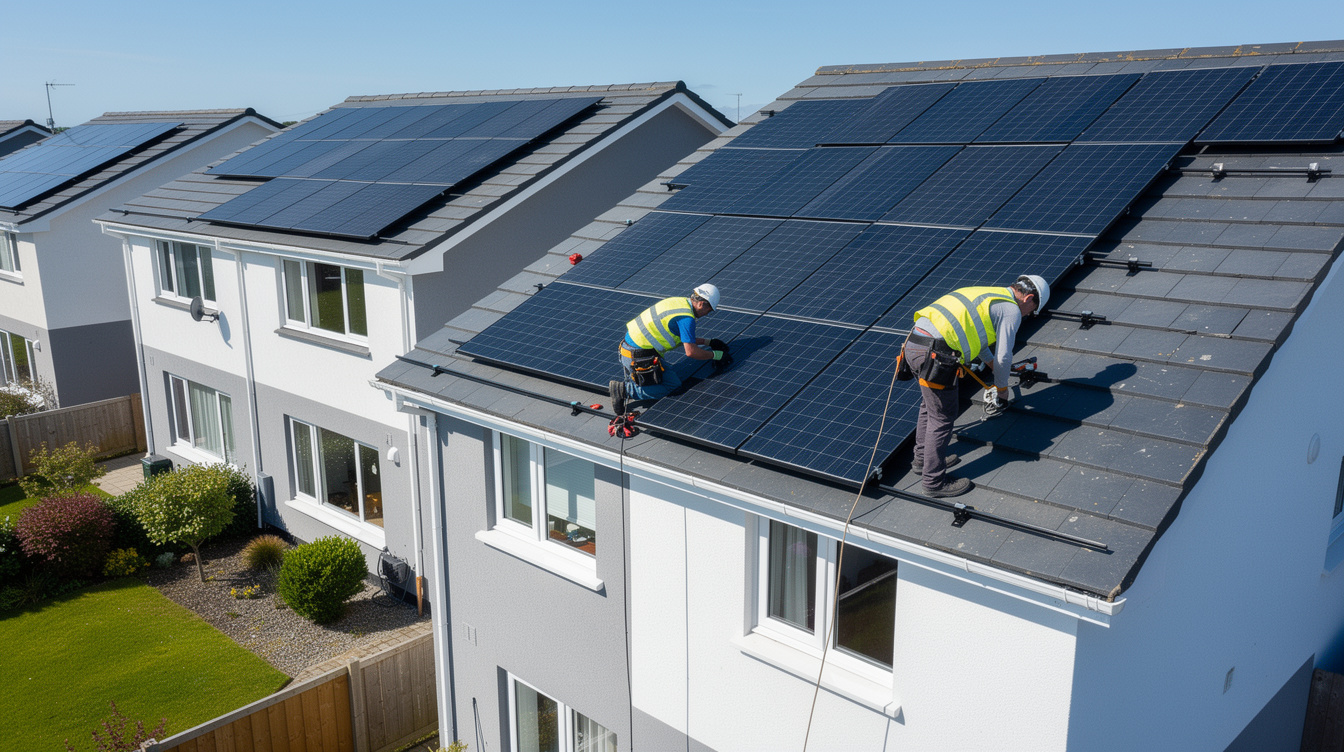
Batteries only save you money if the panels can actually fill them. Under-panelled systems produce a very common regret: a big shiny battery that only charges to 40–60% on most days from October to March.
Rough guide for Ireland:
| Battery size | Minimum panel array | Comfortable panel array |
|---|---|---|
| 5 kWh | 3.6 kWp (~9 panels) | 4.4 kWp (~11 panels) |
| 10 kWh | 5.2 kWp (~13 panels) | 6.4 kWp (~16 panels) |
| 15 kWh | 7 kWp (~17 panels) | 8.5 kWp (~21 panels) |
If your roof physically won't fit the "comfortable" array, drop the battery a size. A 5 kWh battery well-fed by a 4 kWp system will out-earn a 10 kWh battery that's chronically under-fed.
Step 4: The EV question
Owning an EV changes the maths in one specific way: it gives you a home-grown reason to overnight-import at cheap rates. Every major Irish supplier now offers Smart Night tariffs pricing 2am–5am at 8–12c/kWh — often less than a third of day rates.
If you can charge the car and the battery from that cheap window, the battery pays back much faster because you are arbitraging the night–day price gap on top of solar self-consumption. In that model 10 kWh is genuinely the sweet spot: enough to shift the whole household to night-rate imports plus soak up all the solar you don't self-consume during the day.
If you don't have an EV and don't have a heat pump, there is no arbitrage story. The battery only saves you when the sun is shining and you're not home, which caps the useful size dramatically.
Step 5: Payback maths with CEG in the picture
The Clean Export Guarantee (CEG) currently pays 15–20c/kWh depending on supplier for exported solar. That number matters because it sets the "opportunity cost" of storing energy vs sending it back to the grid.
Every kWh you cycle through a battery instead of exporting is worth roughly:
(day import rate) − (CEG export rate) = savings per kWh cycled
At current rates that's about 30c − 18c = 12c per kWh cycled. A 5 kWh battery cycling once daily saves ~€220/year. A 10 kWh battery cycling once daily saves ~€440/year. But the second half of the 10 kWh only cycles fully from April to September in most homes — annual reality is more like €320–€380/year.
That's the maths behind the 8–11 year payback on a 10 kWh unit. If someone quotes you significantly shorter than that, ask which cycle assumption they're using.

The three mistakes that cost people money
- Buying storage before shifting behaviour. Moving the washing machine, dishwasher and immersion to a solar-timer routine can eliminate 3–5 kWh of evening demand for free. Do that first, then size the battery against what's left.
- Ignoring the inverter cap. Some hybrid inverters throttle battery discharge at 3.6 kW even if the battery could deliver more. If you routinely run a 4kW oven plus tumble dryer in the evening you'll import from the grid regardless of battery size.
- Sizing for winter. There is no battery small or large that meaningfully covers a heat pump through January in Ireland. The economics for winter heating live in the night-rate tariff, not in extra storage.
What about scalable or "stackable" batteries?
BYD, Puredrive HV and several other systems let you start with 5–7 kWh and add modules later. This is often a smart hedge if:
- You're not sure whether an EV is 12 or 36 months away.
- You want to see actual solar production before committing to bigger storage.
- Your budget today doesn't stretch to the 10 kWh unit you'd otherwise want.
The cost per kWh of adding a module later is usually 10–20% higher than buying it up front, but the flexibility often justifies the premium. Ask specifically whether the inverter your installer is quoting supports later expansion; not all of them do.
FAQ
Is a battery worth it without the SEAI battery grant?
The dedicated SEAI battery grant ended in 2024, but batteries added at the time of a grant-eligible solar install still benefit indirectly — you get the €1,800 solar PV grant that reduces the whole-system cost. Standalone batteries added later aren't grant-funded.
Does a bigger battery mean bigger export earnings?
No — opposite. Every kWh stored is a kWh not exported. A bigger battery reduces CEG income while increasing self-consumption savings. The two only align if the panels are big enough to fill the battery and still have surplus.
Lithium iron phosphate (LFP) vs NMC — does it matter?
For Irish home use LFP is now standard: better safety profile, longer cycle life (6,000–10,000 cycles vs 3,000–5,000), and no meaningful cold-weather penalty in an insulated utility room. Any 2026 quote using older NMC chemistry for a home install should be questioned.
What warranty should I look for?
Standard for reputable brands in 2026 is 10 years or 6,000 cycles, whichever comes first, guaranteeing 60–70% capacity retention at end of warranty. Anything under 10 years or under 6,000 cycles is a budget product.
Ready to Go Solar?
Get free quotes from SEAI-registered installers who will size your system — battery included — against your real energy use.
The one-line summary
Most Irish homes are best served by 5–10 kWh of storage. Go bigger only if an EV or heat pump gives you a specific reason. And never buy more battery than your panels can realistically fill through an Irish winter.
For a payback sanity-check on any quote you've received, try the solar panel calculator, or read our full breakdown on solar battery storage costs and brands.
Related Articles
Solar Battery Brands Ireland 2026: Tesla Powerwall 3 vs BYD vs Pylontech vs Sigenergy vs Sunsynk Compared
Compare Tesla Powerwall 3, BYD, Pylontech Force H2, Sigenergy and Sunsynk for Irish homes in 2026: installed prices, warranties, cycle counts, backup and V2G.
Best Solar Batteries Ireland 2026: Huawei, Tesla, GivEnergy & More Compared
Compare every solar battery available in Ireland: Huawei Luna €4,500+, Tesla Powerwall €9,000+, GivEnergy €5,500+. Real prices, specs & honest advice.
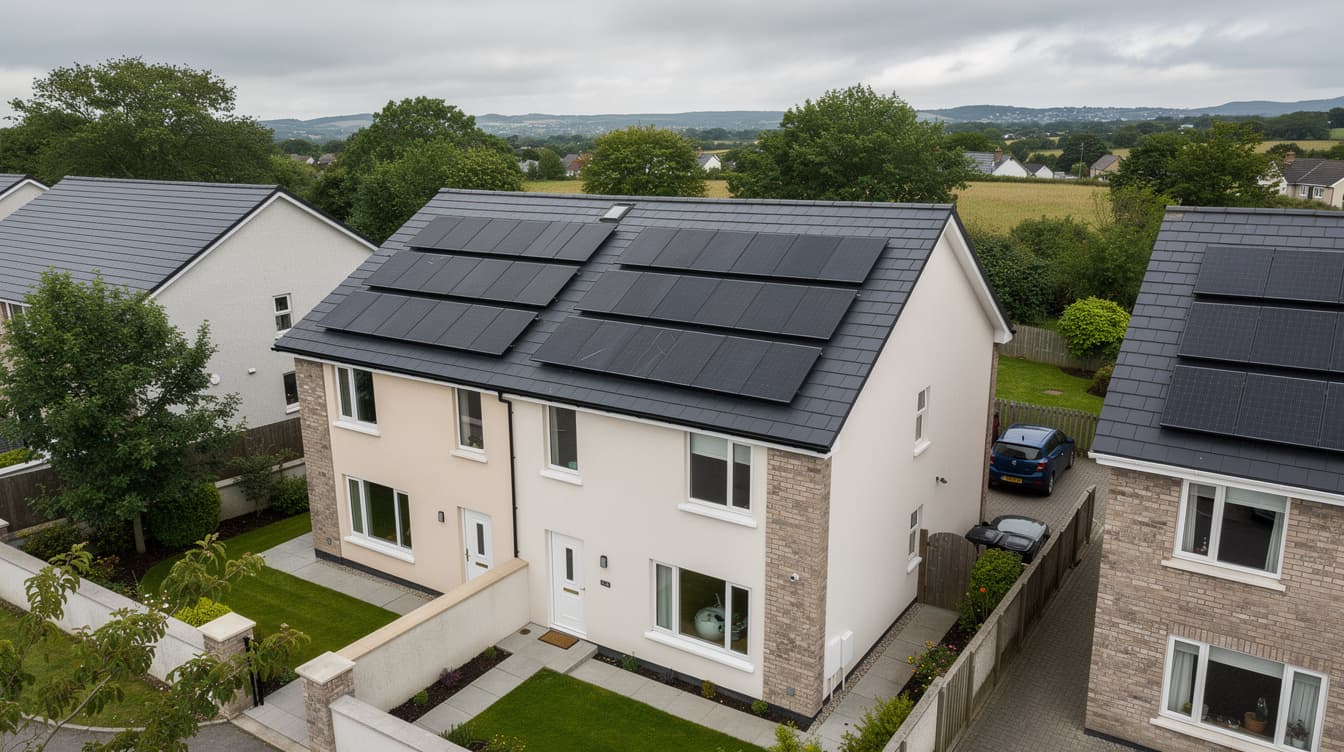
Solar Panel System Cost by Number of Panels Ireland 2026: 8, 12, 14, 20, 24 Panel Prices
What 8, 12, 14, 16, 20 or 24 solar panels actually cost in Ireland 2026 — net after €1,800 SEAI grant & 0% VAT, output kWh, roof area & battery add-ons.