
Solar Battery Brands Ireland 2026: Tesla Powerwall 3 vs BYD vs Pylontech vs Sigenergy vs Sunsynk Compared
Choosing a home solar battery in Ireland in 2026 is genuinely difficult because the market has fragmented. Five years ago the shortlist was Tesla and “everything else”. Today every SEAI-registered installer has a preferred stack — usually one of Tesla Powerwall 3, BYD Battery-Box HV, Pylontech Force H2, Sigenergy SigenStor, or a Sunsynk-branded LFP tower — and the price-per-usable-kWh gap between them has narrowed to under 20%. What actually differentiates them now is warranty length, cycle count, AC-vs-DC coupling, blackout backup capability, and (increasingly important in 2026) whether they can play the new dynamic-tariff arbitrage game.
This guide compares the five battery brands you’ll actually be quoted on in Ireland this year, with real 2026 installed prices, warranty specifics, real-world cycle counts, and where each one wins.
The 2026 shortlist — who actually installs what
By our count of quotes crossing the desk in the first half of 2026, these five brands account for roughly 88% of home battery installs in Ireland:
| Brand | Typical stack | Installed price (with new solar) | Warranty |
|---|---|---|---|
| Tesla Powerwall 3 | 13.5 kWh integrated hybrid inverter | €8,500–€10,500 | 10 yrs / 70% capacity |
| BYD Battery-Box Premium HVM | 11 kWh (5x 2.76 kWh modules) | €5,900–€7,200 | 10 yrs / 70% or 6,000 cycles |
| Pylontech Force H2 | 10.65 kWh (3x 3.55 kWh modules) | €5,200–€6,400 | 10 yrs / 60% or 6,000 cycles |
| Sigenergy SigenStor | 10 kWh (2x 5 kWh) integrated inverter | €7,400–€9,200 | 10 yrs / 70% + 25-yr option |
| Sunsynk (branded Dyness/GSL LFP) | 10.24 kWh wall-mount | €4,800–€5,900 | 10 yrs / 60% |
All prices assume the battery is supplied and installed as part of the same contract as a solar PV install — qualifying for 0% VAT since 1 May 2023. A retrofit (added after the panels are already up, under a separate contract) attracts 23% VAT, adding roughly €1,000–€2,200 depending on brand.
Comparing Battery Options?
Get free quotes from SEAI-registered installers who specify multiple battery brands — not just their favourite.
Tesla Powerwall 3 — the “buy nothing else” option
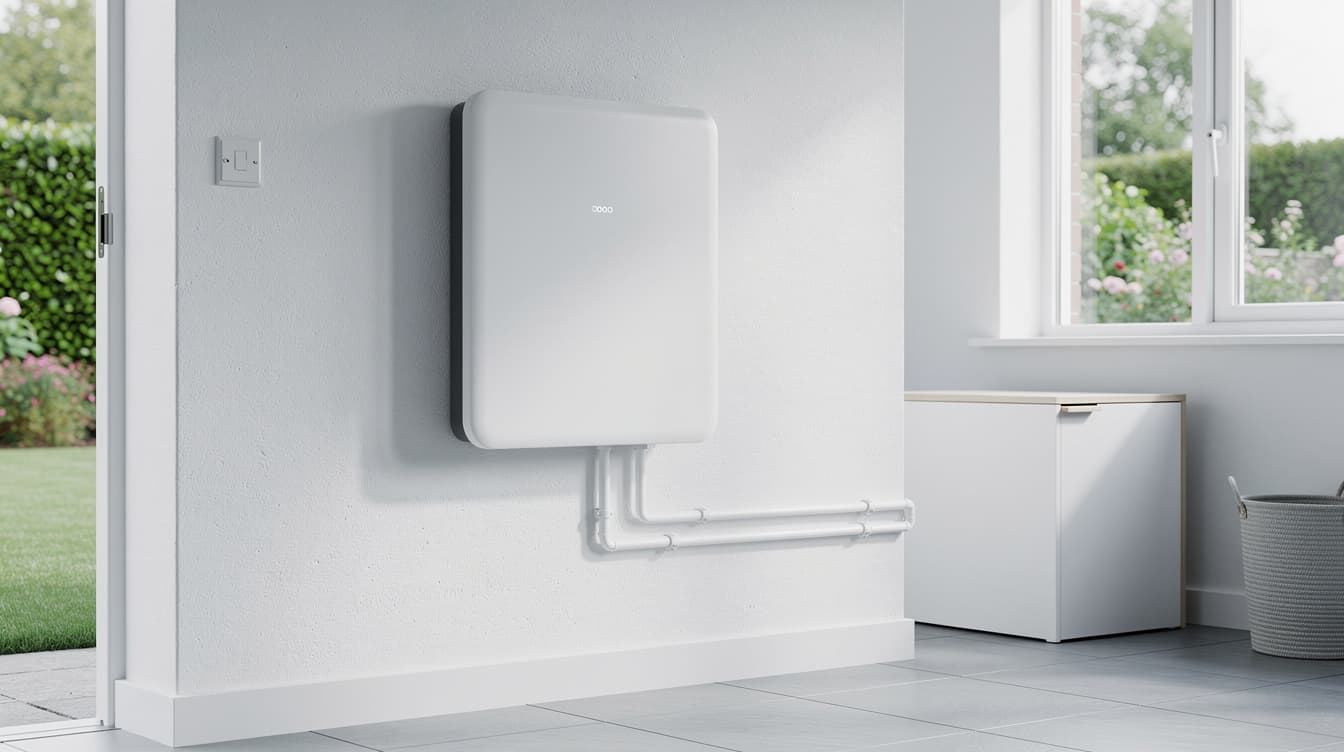
The Powerwall 3 is Tesla’s first proper hybrid-inverter-integrated battery for the European market. 13.5 kWh usable capacity, 11.5 kW continuous AC output, four independent MPPT inputs so you can plug the solar panels directly into the battery unit without a separate hybrid inverter. That last detail is the important one — a Powerwall 3 install is one box on the wall, not a battery-plus-inverter pairing, and that cuts install labour by 4–6 hours.
Where it wins
- Blackout backup is bulletproof. Powerwall 3 has whole-home backup (up to 200A service) built in, seamless changeover under 200ms, and its Storm Watch feature auto-charges the battery when Met Éireann issues a red weather warning — it’s the only battery in Ireland that does this automatically.
- 11.5 kW continuous output means it can run an electric shower, oven and immersion simultaneously off-grid. BYD and Pylontech typically max at 5–7.6 kW continuous.
- Apps and monitoring are best-in-class. The Tesla app aggregates energy flow, grid outage history, and (with a compatible EV) car charge scheduling.
Where it loses
- Most expensive per kWh. Roughly €700–€800 per usable kWh installed — 40–60% more than Sunsynk or Pylontech.
- Non-modular. If you want 20 kWh, you buy two Powerwalls (€16,000+); Pylontech Force H2 stacks in 3.55 kWh modules so you pay only for what you need.
- Tesla installer network in Ireland is small. Fewer than 40 SEAI-registered installers hold current Powerwall 3 certification, and lead times can run 8–14 weeks.
BYD Battery-Box Premium HVM — the mainstream pick
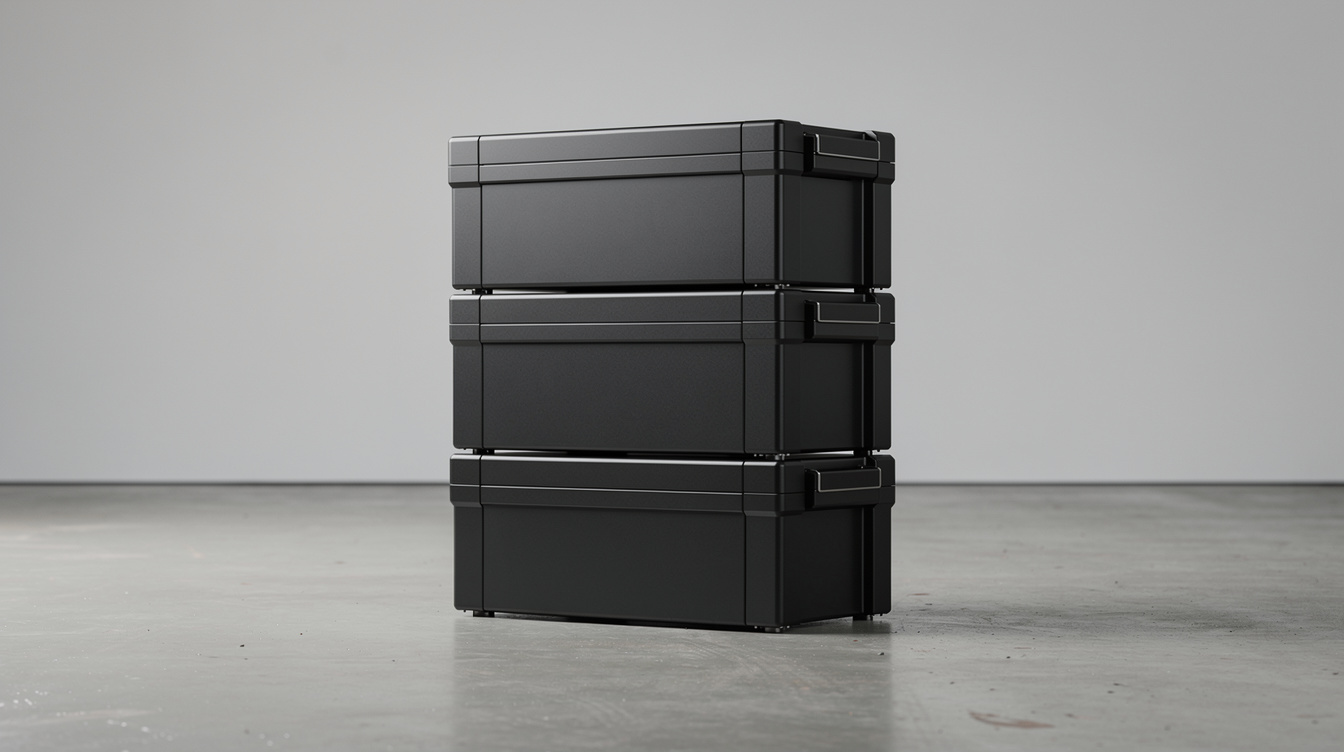
BYD (Build Your Dreams) is the world’s largest LFP battery manufacturer and also the world’s largest EV maker. The Battery-Box Premium HVM is a high-voltage modular tower — 2.76 kWh per module, stack 4 to 8 modules for 11–22 kWh usable. It pairs with almost every hybrid inverter sold in Ireland (Fronius, GoodWe, SolarEdge, Sungrow, Solis, Sofar) via BYD’s open BMS protocol.
Where it wins
- Best warranty terms in the mid-market. 10-year, 70% capacity retention or 6,000 cycles — whichever comes first — on all HVM modules. BYD honours the warranty even if you change hybrid inverter mid-life.
- Modular expansion. Buy 3 modules now (8.28 kWh), add 2 more in 2028 when the CEG drops and battery arbitrage matters more.
- Widest inverter compatibility. Zero lock-in — if your Fronius Gen24 fails in 2032, you can swap it for a Sungrow SH-RT and the BYD keeps working.
Where it loses
- Slightly more complex install than a Powerwall 3 — needs a separate hybrid inverter, a BMS communication cable, and correct DIP-switch config for the inverter brand.
- Blackout backup requires a compatible “backup box” add-on and is typically limited to essential circuits, not whole-home.
Pylontech Force H2 — the modular budget king
Pylontech is a Chinese LFP specialist. The Force H2 is their high-voltage modular battery — 3.55 kWh per module, up to 4 modules per stack (14.2 kWh), and you can parallel two stacks to reach 28 kWh. It’s the cheapest per-usable-kWh option that any serious Irish installer will recommend, and it’s specified with Sunsynk, GoodWe, Solis, and Sofar hybrid inverters more than any other battery brand.
Where it wins
- Lowest €/kWh from a Tier-1 brand. Roughly €490–€600 per usable kWh installed — 25% less than Powerwall 3.
- Small starter stacks work. 7.1 kWh (2 modules) is a legit “starter” battery for a small family, still with the 10-year warranty and full BMS.
- Genuinely proven in the field. Pylontech has been in Ireland since 2019; installers know exactly what fails, what to look for, and how to warranty-claim.
Where it loses
- Warranty is 60% capacity retention, not 70% like BYD or Powerwall. A 10-year-old Force H2 might legitimately deliver only 6.4 kWh of its original 10.65 kWh.
- Cloud monitoring is basic. You rely on the inverter’s app (SolisCloud, GoodWe SEMS) rather than a Pylontech-native app.
Sigenergy SigenStor — the all-in-one future-proofer
Sigenergy is the new entrant that’s picked up rapid share in Ireland since late 2025. The SigenStor is a single tower containing hybrid inverter, LFP battery modules (5 kWh each, stackable to 48 kWh), and optionally a built-in 22 kW EV charger + V2G module. It’s the closest thing on the market to a “one product does it all” energy centre.
Where it wins
- Vehicle-to-grid ready in Ireland once ESB Networks approves V2G (expected Q2 2027). Sigenergy is currently the only brand that has the V2G hardware pre-installed — other batteries will need swap-outs.
- Optional 25-year extended warranty at additional cost (~€600) — longest available in Ireland.
- Single-vendor stack reduces finger-pointing on faults. If it doesn’t work, one company owns it.
Where it loses
- Newer — less track record. First Irish installs date to Q4 2024, so we don’t yet know how the battery cells hold up past year 3.
- Locked-in ecosystem. Swapping inverters later means starting over with a new battery stack.
- Firmware updates required to enable most advanced features — a couple of Irish installers have reported units that arrived with dated firmware needing an on-site update.
Sunsynk (Dyness/GSL LFP) — the value pick for Sunsynk-inverter homes
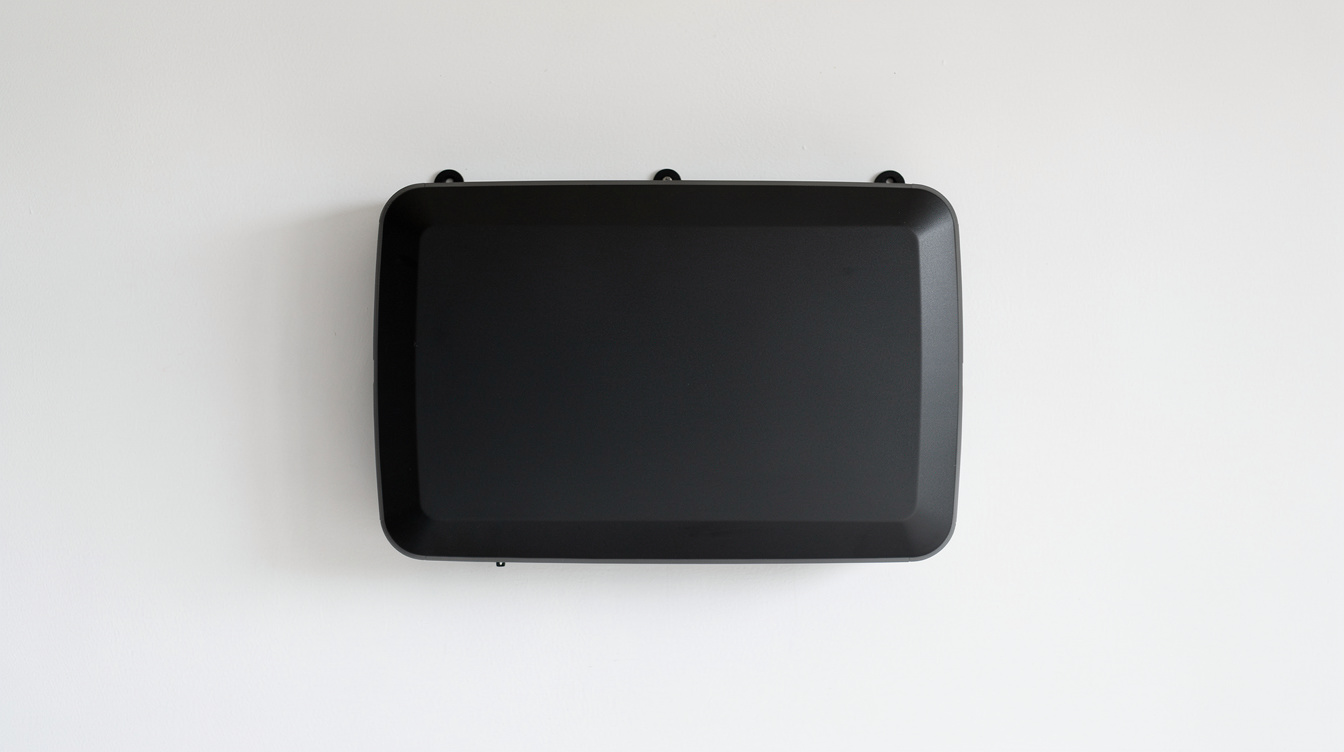
Sunsynk is a UK-based inverter brand that has become huge in Ireland since 2023 (great app, wide feature set, aggressive pricing). Sunsynk also badges LFP battery towers (often manufactured by Dyness or GSL) that are pre-configured to work with Sunsynk hybrid inverters out of the box.
Where it wins
- Cheapest full stack. A Sunsynk 5.5 kW hybrid inverter + 10.24 kWh battery is roughly €4,800–€5,900 installed with new solar — the lowest usable-kWh price from any major-brand pairing.
- The Sunsynk app is genuinely great for battery arbitrage: schedule charge windows, set force-discharge for evening peaks, remote firmware over the air.
Where it loses
- Not a Tier-1 cell brand. Dyness and GSL are respectable but nowhere near BYD or CATL for cell quality — expect 60% capacity retention at 10 years.
- Warranty support in Ireland is via the installer, not a Sunsynk Ireland office. If your installer goes out of business, warranty claims get slow.
Price per usable kWh — the only number that matters
| Brand | Usable kWh | Installed € | € / kWh |
|---|---|---|---|
| Sunsynk 10.24 kWh | 10.24 | €5,350 | €523 |
| Pylontech Force H2 10.65 kWh | 10.65 | €5,800 | €544 |
| BYD Battery-Box HVM 11 kWh | 11.04 | €6,550 | €593 |
| Sigenergy SigenStor 10 kWh | 10.00 | €8,300 | €830 |
| Tesla Powerwall 3 13.5 kWh | 13.50 | €9,500 | €704 |
Sunsynk and Pylontech are within €20/kWh of each other — effectively the same price. BYD is 10% dearer for a genuinely better warranty. Tesla Powerwall 3 sits at a premium justified by its integrated inverter + whole-home backup. Sigenergy is the most expensive on paper but includes the future-proof V2G hardware.
Blackout backup capability — who keeps your lights on?
| Brand | Backup type | Continuous kW off-grid | Notes |
|---|---|---|---|
| Tesla Powerwall 3 | Whole home (up to 200A) | 11.5 kW | Built-in; Storm Watch auto-charge |
| BYD (with backup box) | Essentials only | 5–7.6 kW | Depends on inverter (Fronius, GoodWe) |
| Pylontech (Sunsynk EPS) | Essentials only | 5–8 kW | Uses inverter EPS port; manual re-config often needed |
| Sigenergy SigenStor | Whole home | 10–12 kW | Native; V2G-ready |
| Sunsynk 10.24 kWh | Essentials only | 5.5–8 kW | Great EPS behaviour; smooth handover |
If seamless whole-home backup is a hard requirement, Powerwall 3 and Sigenergy are the only two options that do it without compromise. Everything else is an “essentials circuit” setup — typically lights, fridge, WiFi and a couple of sockets on a dedicated backup consumer unit.
Dynamic tariff arbitrage — the new 2026 factor
Since 1 June 2026, Electric Ireland Home Electric+ Dynamic and Bord Gáis Smart Match Dynamic have been offering half-hourly wholesale-linked prices. On a windy winter night, you can charge the battery at 4–7c/kWh; on a still Tuesday evening at 6pm you can discharge into the house instead of importing at 68c/kWh. That’s a spread of 60c/kWh, and a 10 kWh battery cycling once per day earns roughly €1.20–€2.00 per day in arbitrage on top of solar self-consumption.
Not every battery can do this well. What matters:
- Sub-minute schedulable charge/discharge windows — Sunsynk, Sigenergy and Tesla have it natively; BYD and Pylontech depend on the paired hybrid inverter’s app.
- Round-trip efficiency — every 10% efficiency loss eats roughly €0.20 per full cycle. Powerwall 3 leads at 97.5%, BYD/Pylontech at 95%, Sunsynk/Sigenergy at 94–95%.
- API access for third-party optimisers like GivEnergy Cloud or Emlite (currently only Sunsynk and Sigenergy have open APIs for Irish users).
Want a Battery + Dynamic Tariff Setup?
Get quotes from installers who’ll spec a battery that plays well with Electric Ireland or Bord Gáis dynamic pricing.
The 60-second recommendation matrix
- Prioritise blackout backup for the whole house → Tesla Powerwall 3 or Sigenergy SigenStor.
- Prioritise lowest cost per kWh → Sunsynk 10.24 kWh or Pylontech Force H2.
- Prioritise best warranty and modular expansion → BYD Battery-Box Premium HVM.
- Prioritise V2G-ready hardware for 2027+ → Sigenergy SigenStor with EV-charger module.
- Existing solar system, adding battery only → AC-coupled Pylontech or Sunsynk on top of the existing inverter, or a Powerwall 3 (which has its own inverter and doesn’t care about your existing kit).
Common battery mistakes we see in Irish quotes
- Undersizing to the SEAI grant. The SEAI Solar PV grant caps at 4 kWp regardless of what battery you add. Installers sometimes spec a 5 kWh battery to keep the “grant-eligible” price low. A 5 kWh battery on a 4.4 kWp system is almost always undersized — you want 10–13 kWh to catch summer surplus properly.
- Assuming batteries are grant-eligible. They are not. The SEAI grant covers panels and inverter only. Batteries are 100% out-of-pocket, though they qualify for 0% VAT when bundled with a solar install.
- Ignoring cycle depth-of-discharge (DoD). A 10 kWh battery rated at 90% DoD gives 9 kWh usable; a 10 kWh battery at 100% DoD gives 10 kWh. Ask the installer to quote usable kWh, not nameplate.
- Forgetting the smart meter dependency. None of these batteries can do dynamic-tariff arbitrage without an ESB Networks-installed smart meter operating in 30-minute settlement mode. Check yours is active first — see our MPRN & smart meter guide.
FAQ
Can I mix battery brands (e.g. add a Pylontech to an existing BYD)?
No. Each brand’s battery management system (BMS) is closed and does not communicate with a competitor’s. Even within a brand, you generally cannot mix generations — BYD Battery-Box HVM modules cannot be stacked with older LV modules, and Pylontech Force H2 modules cannot join US-series stacks.
What’s the real-world lifespan of a home battery in Ireland?
Modern LFP chemistry (all five brands above) will typically deliver 5,000–7,000 full-equivalent cycles before dropping below 70% capacity. For a battery cycling once per day — the normal Irish usage pattern — that means 13–19 years of useful life. All the brands here warranty for 10 years, which is the safest planning horizon.
Do I need a battery if I have solar?
Not necessarily. With the Clean Export Guarantee at 21c/kWh and grid import at 42.8c/kWh, a battery still saves money by shifting export-value (21c) to displaced-import (42.8c) — roughly a 21c/kWh spread. But if the CEG stays at 21c and battery prices don’t fall further, the payback is 9–13 years for most Irish homes. See our full battery sizing framework for the maths per household size.
Which brand pairs best with a Sunsynk hybrid inverter?
Sunsynk’s own-branded LFP battery is the plug-and-play choice; Pylontech Force H2 is the most-common third-party pairing and has bulletproof compatibility. BYD Battery-Box HVM also works but needs correct DIP-switch setup on the Sunsynk end.
Will a battery still work if the installer goes out of business?
The battery itself will keep working — it’s the warranty support that becomes complicated. BYD, Tesla and Sigenergy have direct manufacturer support in Europe that survives an installer failure. Pylontech and Sunsynk-branded batteries route warranty via the installer, so pick a firm with a long trading history if this matters. Check our SEAI installer verification guide before signing.
Bottom line for 2026
If the top spec matters most, Tesla Powerwall 3 remains the reference product. If value matters most, Pylontech Force H2 or Sunsynk 10.24 kWh get you 80% of the capability at 60% of the price. Sigenergy is the “bet on the future” play — V2G-ready and single-vendor — if you’re planning an EV in the next 2 years. BYD Battery-Box Premium HVM sits in the middle: best warranty terms, widest hybrid-inverter compatibility, and modular expansion if your usage grows.
Whichever brand you pick, the two decisions that matter more than the badge are (1) getting the battery sized correctly to your household’s consumption pattern, and (2) fitting it as part of the same contract as a new solar install so it stays at 0% VAT. Both of those save you more money over 10 years than picking Brand A over Brand B.
Ready to Go Solar with Battery?
Get free quotes from SEAI-registered installers specifying Tesla, BYD, Pylontech, Sigenergy or Sunsynk — and compare like-for-like.
Related Articles
Solar Battery Sizing Ireland 2026: 5kWh vs 10kWh vs 15kWh Framework
How to size a home solar battery in Ireland 2026. Real payback maths for 5, 10, 15 kWh options, the evening-kWh rule, and the mistakes that cost you thousands.

Time of Use Tariffs & Solar Panels Ireland 2026: Smart Meter Strategy
Which Irish smart meter tariff pairs best with solar? 2026 supplier comparison, load-shifting rules, worked payback example and CEG rate gotchas.

Solar Panels & Power Cuts in Ireland 2026: Will Yours Work During a Blackout?
Will solar panels power your home during a blackout in Ireland? Real 2026 answers on EPS, battery backup, whole-home gateways and storm outage stats.