

Time of Use Tariffs & Solar Panels Ireland 2026: Smart Meter Strategy
Since ESB Networks finished rolling out smart meters to almost every home in Ireland, a completely new question has landed in every solar buyer's inbox: which time-of-use tariff should I pair with my panels? Get it right and a 6 kWp system plus 5 kWh battery can shave hundreds off your bill through load-shifting alone. Get it wrong, and you are literally selling your daytime solar to the grid at 20 cent while buying it back at 33 cent at 6pm.
This is the July 2026 field guide to time-of-use (ToU) tariffs in Ireland – what the bands actually look like, which supplier suits which solar setup, and the load-shifting rules that turn a smart tariff from a marketing gimmick into real cash savings.
What is a time-of-use tariff (and why does it exist)?
A time-of-use tariff simply means you are charged a different unit rate depending on when you use electricity. Every supplier in Ireland that offers a smart meter plan now runs the same three–band structure:
| Band | Weekday hours | Weekend hours |
|---|---|---|
| Day | 8am–5pm and 7pm–11pm | 8am–11pm |
| Peak | 5pm–7pm | no peak on Saturday/Sunday |
| Night | 11pm–8am | 11pm–8am |
The peak band is the killer. Between 5pm and 7pm on a weekday – exactly when families come home, switch on the kettle, cook dinner and put the immersion on – every ToU plan charges the highest unit rate on the market. The night band is the mirror image: cheap electricity while the country sleeps, designed to soak up excess wind on the grid.
Why this matters more when you have solar
Without solar, a ToU tariff is a straight bet: do you consume enough of your electricity outside peak hours to beat a flat 24-hour rate? With solar, the maths gets richer because you now have three price points to juggle:
- Your own generation – effectively free once the panels are paid off
- The grid import rate at each band (day, peak, night)
- The Clean Export Guarantee (CEG) rate your supplier pays for anything you push back to the grid – typically 18–24 c/kWh in 2026, well below peak import
The optimisation goal is simple to state and hard to execute: consume your own solar first, use the grid at night rates only, avoid the grid entirely during peak, and only export the true surplus you cannot use or store.
Not sure a smart tariff is worth it for your setup?
Get a free personalised solar quote from an SEAI-registered installer – they'll model the tariff/battery combo that pays back fastest for your bill.
2026 supplier comparison: the smart tariffs that matter
Every one of the ten Irish electricity suppliers now has at least one smart meter plan. These are the ones we actually see solar homes signing up to in mid-2026, with headline unit rates including VAT and standard new-customer discounts:
| Plan | Day | Peak (5–7pm) | Night (11pm–8am) | Best for |
|---|---|---|---|---|
| Electric Ireland Home Electric+ Night Boost | 20.5c | 15.1c | 8.8c (plus 2am–4am "boost" window) | EV + heat pump + battery homes |
| Electric Ireland Home Electric+ Weekender | 31.4c | 31.4c | 31.4c – but 1 chosen weekend day is FREE 8am–11pm | WFH families who batch laundry & cooking on weekends |
| Bord Gáis Weekend Discount | 33.9c | 36.1c | 23.5c (extended: all Sat 8am–Mon 8am counts) | Solar + weekend-heavy households |
| Energia Smart Data | 28.6c | 32.1c | 14.8c | Cheapest overall – low-consumption solar homes |
| SSE Airtricity Smart Home | 30.2c | 33.4c | 18.9c | All-rounder if you want a familiar brand |
| Pinergy Drive EV | 29.1c | 32.8c | 17.2c (plus dedicated 2am–5am EV window at ~9c) | EV owners without a hybrid inverter |
Rates include 9% VAT. All ToU plans require an active smart meter with 30-minute half-hourly data enabled (call ESB Networks free on 1800 372 757 if yours is still on estimated reads).
Load-shifting: the four rules that pay back a smart tariff
The whole point of moving to a ToU tariff is to change your behaviour. If your electricity usage looks identical the day after you switch, you probably just made your bills worse. The four load-shifting rules below account for 80% of the savings we see solar households achieve:
Rule 1 – Kill peak (5pm to 7pm) at all costs
Move dinner earlier, delay dishwashers and washing machines to their timer, and if you have a hot-water immersion, make absolutely sure your solar diverter is fitted so the immersion never fires from grid electricity in peak hours. Even a single 3 kW appliance running for the full 2-hour peak window costs roughly €1.80 per day on a typical ToU plan – that's €650 a year of avoidable spend.
Rule 2 – Push the battery to charge from solar first, night rate second
A hybrid inverter with a properly-configured battery should:
- Charge from solar surplus during the day (free)
- Discharge into the house during peak (5–7pm) to displace the most expensive grid units
- Top up from the grid overnight only if the following day's solar forecast is poor
Modern batteries (BYD, Sigenergy, GivEnergy, Huawei Luna, Solax) all support this "peak-shave then night-fill" schedule out of the box. If your installer left the battery on the factory default "self-consumption only" mode, you are leaving €150–€300 a year on the table.
Rule 3 – Time-shift your big loads to the cheap window
Every appliance with a timer or a smart plug should default to night rate:
- Dishwasher and washing machine: delay-start to 11:30pm
- Tumble dryer: same (or better, avoid altogether on sunny days – run a rack in the porch)
- EV charging: only during the night window, ideally 2am–5am if your supplier has a super-cheap sub-band
- Immersion heater backup: schedule a 30-minute burst at 3am if your solar diverter didn't top up the tank that day
Rule 4 – Do not chase perfect self-consumption if it means missing peak-shave
A common newbie mistake is programming the battery to reserve every kWh for the following day's household use. In an Irish winter, the following day might deliver 3 kWh from a 6 kWp array – not enough to matter. It is almost always better to discharge the battery fully during the current evening peak (displacing 33c grid units) than to save it for tomorrow morning's 25c day-rate consumption.
Worked example: 4-bed semi-detached, 6 kWp panels + 5 kWh battery, Dublin
Here's a real July 2026 modelled bill for a Sandymount home we quoted earlier this year. Annual household consumption 4,800 kWh. Solar generates 5,200 kWh; 55% self-consumed, 45% exported at 20c CEG.
| Tariff choice | Annual grid import cost | CEG export credit | Net annual bill |
|---|---|---|---|
| Standard 24-hour flat rate (before ToU switch) | €620 | €468 | €152 |
| ToU with no load-shifting | €712 | €468 | €244 – you lost money |
| ToU with battery on peak-shave + night appliances | €385 | €468 | –€83 (credit balance) |
The middle row is what happens when a homeowner switches to a smart tariff and then doesn't change how they use electricity – they end up worse off than on the boring flat rate. The bottom row is what happens when the battery is programmed correctly and the family remembers not to run the tumble dryer at 6pm. Same panels, same battery, same house – the difference is entirely tariff strategy.

Which supplier is best for your solar setup?
There is no universal "best" ToU plan – the right choice depends on what other flexible loads live in your house. Match your setup to the shortlist below:
You have solar + battery + EV + heat pump
Go straight to Electric Ireland Home Electric+ Night Boost or Pinergy Drive EV. The sub-9c overnight boost window is engineered exactly for you: EV charges 2am–5am, heat pump does a hot-water top-up on the same schedule, battery tops up from grid if needed. Expected saving vs 24-hour: €350–€600/yr.
You have solar + battery, no EV
Energia Smart Data or SSE Smart Home. You don't need the deep-discount 2am boost band (nothing to charge at that hour), so pick whichever supplier has the lowest headline night rate for your consumption profile. Expected saving vs 24-hour: €150–€280/yr.
You have solar only, no battery
Honestly? Stay on a flat 24-hour rate unless you can genuinely commit to running dishwasher/washing machine/tumble dryer only at night. Without a battery, you can't dodge the peak window on days when solar isn't generating (winter evenings, the whole of January). Only switch to ToU if you already have night-loving appliances (immersion timer, storage heater, EV).
You have solar + you work from home
Bord Gáis Weekend Discount or Electric Ireland Weekender. The extended weekend cheap window (Sat 8am to Mon 8am on Bord Gáis; one full free weekend day on EI) rewards you for batching your weekly laundry, cooking prep and battery-topping into the weekend when you're also home to soak up the solar generation.
The CEG angle: don't let your export rate quietly undo the savings
When you switch to a smart tariff, your Clean Export Guarantee rate changes too – and not always in your favour. In July 2026 the CEG rates range from 18c (Energia standard) to 24c (Electric Ireland). If a shiny ToU night rate is offered alongside a low CEG, run the numbers: for a solar-only home exporting 3,000 kWh/yr, the difference between 18c and 24c CEG is €180/yr – enough to wipe out the ToU savings entirely.
Every supplier now has to publish its CEG rate on the switching site. Always check both numbers before you sign, and re-check at every 12-month contract anniversary because the market moves. Our CEG rate tracker is updated whenever a supplier changes.
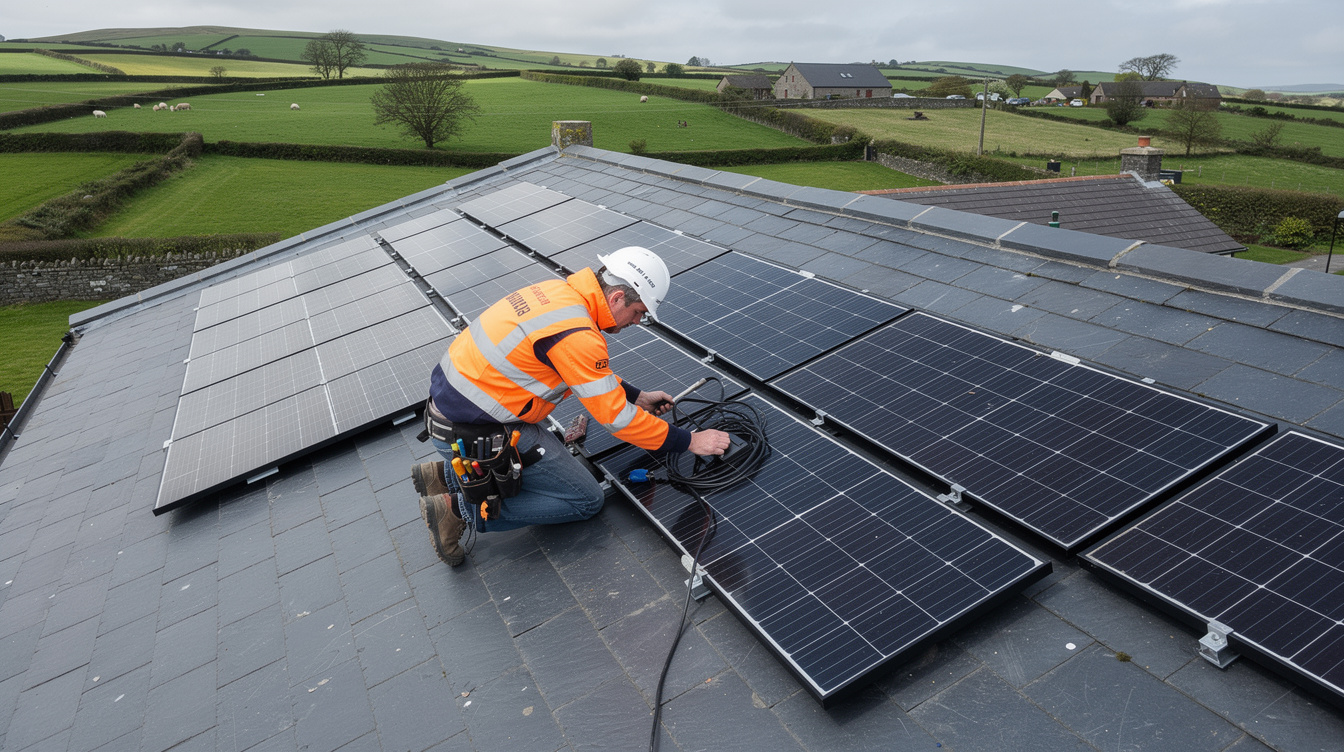
Setting up your smart meter for ToU (the bit installers forget to tell you)
You cannot switch to a smart tariff until three things are true:
- Your ESB Networks meter is a physical smart meter (silver-grey unit with a display, installed post-2019)
- The meter is configured to send 30-minute half-hourly data – NOT the default "24-hour" mode
- Your existing supplier has your MPRN flagged as "smart-ready"
Roughly 30% of Irish smart meters are still on 24-hour reporting because homeowners never actively opted in. To fix it, call ESB Networks on 1800 372 757 and ask them to switch you to "smart tariff data" – it's free, takes a couple of weeks to activate, and does not require your supplier's involvement. Only after activation can you compare accurate half-hourly consumption in the ESB Networks app.
Thinking about panels + battery?
Our SEAI-registered network will size a system that matches your future smart-tariff strategy, not just today's bill.
Quick FAQ
Can I switch back to a flat rate if the ToU tariff doesn't work out?
Yes – there's no lock-in beyond your normal 12-month contract, and even inside the year most suppliers will let you swap between their own plans (e.g. Home Electric+ 24-hour to Home Electric+ Night Boost) without penalty. Give the tariff at least a full billing cycle before deciding.
Does the peak band apply on bank holidays?
Yes on Electric Ireland, Bord Gáis and SSE. Energia and Pinergy currently treat bank holidays as weekends (no peak). Check your specific plan's terms – the CRU publishes the standard peak calendar but suppliers can opt out.
What about the "Winter Peak Demand Reduction" scheme?
Separate from ToU tariffs, ESB Networks runs the Winter Peak Demand Reduction Scheme from November to March, paying you a bonus if your consumption during evening peaks is lower than your own historical average. If your smart meter is in half-hourly mode, you're already auto-enrolled. Payments in winter 2025/26 averaged €40–€90 per household.
Will a ToU tariff make my solar payback faster?
By 6–18 months typically, if you have a battery. A well-sized 5–10 kWh battery paired with a good ToU tariff often flips the household from paying €150/yr in electricity to a small annual credit, which shifts payback from ∼9 years to ∼7–8 years on a typical 6 kWp system. Without a battery the difference is negligible.
Bottom line
Smart tariffs in Ireland reward one behaviour above all others: using electricity when the grid has too much of it, not when it has too little. Solar helps you do that during the day; a battery lets you continue doing it during peak; a night-heavy tariff lets you top up when there's a surplus of wind on the system.
If you're planning a new solar install in 2026, pick your tariff strategy at the quote stage – not afterwards. Battery size, inverter brand and CEG-friendly supplier choice all interlock. A 5 kWh battery plus Night Boost is a very different economic proposition to a 10 kWh battery plus 24-hour flat rate, even on the same roof.
Ready to model your own numbers? Our solar calculator gives you a starting size estimate in 60 seconds, and the free-quote form connects you to SEAI-registered installers who can price a battery-plus-tariff strategy end-to-end.
Related Articles
Home Battery Storage Without Solar Panels Ireland 2026: Costs, Payback & the Grid-Arbitrage Case
Battery-only home storage in Ireland 2026: real installed costs, VAT hit vs solar+battery, 30c grid-arbitrage margin, and when it actually pays back.
Solar Battery Brands Ireland 2026: Tesla Powerwall 3 vs BYD vs Pylontech vs Sigenergy vs Sunsynk Compared
Compare Tesla Powerwall 3, BYD, Pylontech Force H2, Sigenergy and Sunsynk for Irish homes in 2026: installed prices, warranties, cycle counts, backup and V2G.
Solar Monitoring Apps Ireland 2026: The 6 You’ll Actually Use, Compared
The six monitoring apps Irish solar homeowners actually use in 2026 — iSolarCloud, SolisCloud, mySolarEdge, Enphase, GivEnergy, FusionSolar — honestly compared.