
Home Battery Storage Without Solar Panels Ireland 2026: Costs, Payback & the Grid-Arbitrage Case
Here’s a question that barely existed in Ireland eighteen months ago and now lands in every solar installer’s inbox: “Can I just get the battery and skip the solar panels?” Usually it comes from someone with a shaded, north-facing or slate-tile roof that installers keep gently declining. Sometimes it comes from an apartment owner. Increasingly it comes from a homeowner who has done the maths on smart-meter tariffs and realised the battery is where the money actually is.
The short 2026 answer is yes, a home battery without solar panels is now a real product in Ireland, and for households with a smart meter on the right tariff it can pay itself back inside seven to nine years purely from off-peak/on-peak grid arbitrage. No sunlight involved. But there are three catches Irish buyers keep missing — the €1,800 SEAI grant does not apply, the 0% solar VAT rate does not apply, and you need a specific type of battery inverter that most solar-only installers do not stock. This guide is the honest breakdown.
Thinking about battery-only storage?
SEAI-registered installers on our panel handle both solar+battery and battery-only builds. Get a free quote sized for your smart-meter tariff.
Why battery-only is suddenly a live option in Ireland
Two things changed between 2024 and 2026. First, the CRU’s smart-meter rollout hit critical mass — over 1.8 million domestic smart meters were live at the start of 2026, meaning most homes can now access half-hourly usage data and time-of-use tariffs. Second, and more decisively, the range between the cheapest overnight rate and the most expensive peak-hour rate blew wide open. On a standard 24-hour flat tariff a kilowatt-hour costs roughly the same at 3am as it does at 6pm. On the current 2026 time-of-use tariffs, that ratio is closer to six-to-one.
| Supplier / plan | Night / off-peak rate | Peak rate | Arbitrage spread |
|---|---|---|---|
| Pinergy EV Drive Time (3 hrs 2–5am) | 5.99c/kWh | ~40c/kWh | ~34c/kWh |
| SSE Airtricity EV Max (6 hrs 2–8am) | 12.13c/kWh | ~38c/kWh | ~26c/kWh |
| Energia EV Smart Drive (4 hrs 2–6am) | ~8–10c/kWh | ~37c/kWh | ~28c/kWh |
| Electric Ireland Smart Drive (2–4am) | ~9c/kWh | ~40c/kWh | ~31c/kWh |
| Dynamic (30-min wholesale) plans, launching mid-2026 | 2–15c/kWh | up to 48c/kWh | Variable, higher on windy nights |
An empty battery charged at 6c and discharged at 38c is a 32c-per-kilowatt-hour saving, minus a small round-trip efficiency loss of around 10 per cent. That’s the mechanic the industry now calls grid arbitrage, and it is the entire economic case for a solar-less battery.
Real 2026 costs: what battery-only actually installs for
Here’s where prospective buyers often get bad numbers. Almost every published Irish battery price online assumes the battery is bundled with a solar PV installation, which unlocks the 0% VAT rate under Ireland’s zero-rate solar goods scheme. Fitting the same battery without any panels above it means the installer is selling an electrical product, not a solar retrofit — and it drops back to the standard 23% VAT.
| Battery size | Bundled with PV (0% VAT) | Battery-only (23% VAT) | Rough cost delta |
|---|---|---|---|
| 5 kWh (Sigenergy, Sigenstor, Pylontech) | €4,000–€5,500 | €4,900–€6,700 | +~€900–€1,200 |
| 10 kWh (GivEnergy, BYD HVS, Sunsynk) | €5,500–€7,500 | €6,800–€9,200 | +~€1,300–€1,700 |
| 13.5 kWh (Tesla Powerwall 3, Fox ESS) | €8,500–€10,500 | €10,500–€12,900 | +~€2,000–€2,400 |
On top of that, standalone battery installs need an AC-coupled hybrid inverter or an all-in-one battery-inverter unit. Most solar installers stock DC-coupled inverters that expect PV panels attached. Fewer than half of Ireland’s SEAI-registered installer companies routinely quote for battery-only builds — ask on the phone before booking a site visit or the quote will come back solar-first anyway.
The math: does a battery-only system actually pay back?
Let’s use a realistic Irish household on the SSE Airtricity EV Max plan (a moderately competitive 6-hour night window at 12.13c/kWh, peak day ~38c/kWh). Annual electricity use: 4,800 kWh, which is close to the Irish domestic average.
Assume a 10 kWh battery that cycles once a day, delivering roughly 9 kWh useful (after depth-of-discharge and round-trip losses). Assume the household can genuinely time-shift about 6 kWh of daily consumption — things like dishwashers, immersions, EV top-ups, evening cooking, evening TV loads — from peak to off-peak windows.
Daily grid arbitrage saving: 6 kWh × (0.38 − 0.12) = €1.56/day
Annual saving: ~€569 (accounting for occasional missed cycles)
Battery-only install cost: ~€8,000 (10 kWh, 23% VAT, no PV)
Simple payback: ~14 years on savings alone
That payback looks long — and it is longer than a solar-plus-battery system, which typically returns cost inside 8–10 years. But there are three things this simple math misses:
- Rising peak rates. Peak-hour electricity in Ireland has climbed roughly 34% since 2022 and Eirgrid’s capacity margin forecasts suggest continued upward pressure through 2029. Every cent added to the peak rate shortens payback by roughly six months.
- Dynamic tariffs. The half-hourly wholesale tariffs launching across Irish suppliers in 2026 will occasionally push overnight rates to 2–4c/kWh on windy nights when Ireland is oversupplied with wind generation. A battery that can automate charging around these signals doubles arbitrage margin.
- Backup value. Ireland saw over 380,000 storm-outage-hours in winter 2023/24. A properly-installed hybrid inverter with battery gives 6–12 hours of essential-load backup — not free money, but not zero either.
Realistically, battery-only pays back in 9–12 years for the average household with active tariff optimisation, and closer to 6–8 years for high-consumption households (heat pumps, EVs, home office). Under 4,000 kWh a year of usage, it doesn’t pay back at all — and you should reconsider whether solar+battery would be a better use of the same money.
What’s different about installing a battery without solar
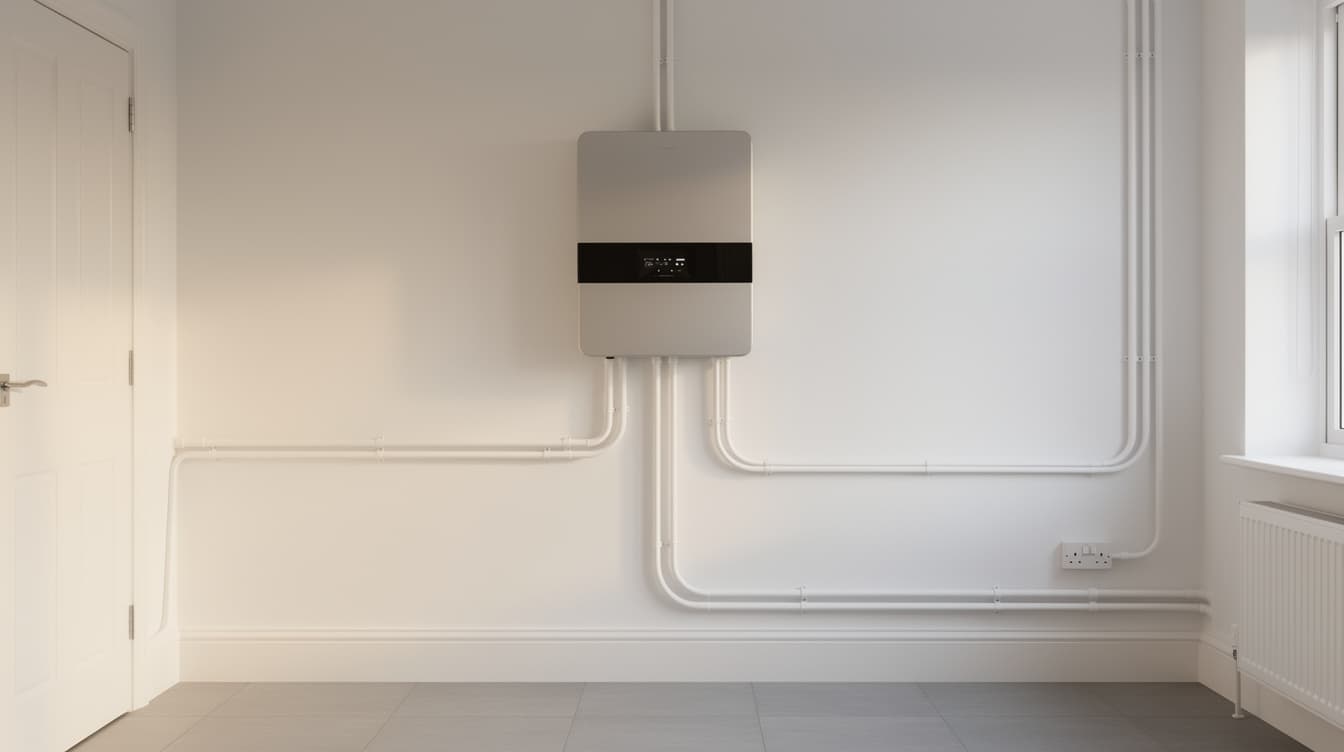
Physically, the box on the wall looks identical. What changes is the wiring topology and the paperwork.
| Aspect | Solar + battery | Battery only |
|---|---|---|
| Inverter type | DC-coupled hybrid (Solis, Sungrow, GoodWe) | AC-coupled hybrid or all-in-one (Tesla Powerwall 3, Sigenergy SigenStor AC, GivEnergy AC3) |
| MCB / DC isolator | Both DC and AC isolation required | AC-side only |
| ESB paperwork | NC6 (embedded microgeneration) | NC6 still required if inverter can export — most battery inverters can. If configured to non-export only, a simpler notification. |
| SEAI grant | Up to €1,800 for the PV portion | €0 — no battery-only grant exists |
| VAT rate | 0% on solar equipment including battery | 23% standard rate on battery + install |
| Install time | 1–2 days including roof work | Typically half a day — no roof scaffold, no penetrations |
| Planning permission | Exempt under 2022 exemption | Always exempt — internal electrical work |
The absence of scaffold, roof work and DC string commissioning genuinely does compress the job. Most battery-only installs are quoted, delivered and commissioned within two weeks of first contact, versus 6–12 weeks for full solar builds. If you already have a suitable indoor location (utility room, garage, back-hall press with ventilation), the disruption is minimal.
Which battery products are best-suited to battery-only in 2026
Not every battery is easy to install standalone. Products with a built-in AC inverter or an explicit AC-coupled retrofit configuration make the job clean; products designed as slave DC banks under a solar hybrid inverter can be forced into standalone mode but the wiring gets awkward and the warranty conversation gets fussy.
| Battery | Standalone? | Notes for Ireland |
|---|---|---|
| Tesla Powerwall 3 | Yes, first-class | 13.5 kWh, AC-coupled hybrid inverter built in, native time-of-use scheduling, Storm Watch backup mode. Widely stocked in Ireland by Tesla’s certified installer network. |
| Sigenergy SigenStor AC | Yes, purpose-built | 5–30 kWh modular, AC-coupled, tariff-aware. Growing fast in Ireland through Sigenergy’s partner network. |
| GivEnergy AC3 + Giv-Bat 9.5 | Yes | Popular UK product, good app for scheduled charging around Irish TOU windows. |
| Fox ESS EP series | Yes | Competitive on price, decent Irish installer coverage, five-year product warranty. |
| Pylontech / BYD HVM | Only with paired hybrid inverter | Cheap-per-kWh but need a separate compatible inverter — check installer’s pairing. |
| Enphase IQ Battery 5P | Yes, elegant | Modular 5 kWh units, purely AC-coupled, expensive per kWh but tidy. |
See our 2026 solar batteries guide and battery costs breakdown for deeper spec comparisons.
The three catches most buyers miss
1. The SEAI grant simply does not exist for battery-only
The SEAI Solar Electricity Grant (€1,800 in 2026) is legally attached to generation capacity, not storage. If you install zero solar panels, you claim zero grant, no matter how expensive the battery. This is the single biggest reason battery-only quotes look expensive versus solar+battery quotes — you’re losing €1,800 of grant plus the 23% VAT differential.
Some installers will pitch a “token” 1 kW solar array (2 panels) alongside the battery to unlock the grant and VAT relief. This is real: 2 south-ish-facing panels bolted to a garage roof, added purely to trigger the classification, will typically claw back €2,500–€3,000 in grant plus VAT versus a pure battery quote. If your site allows it, it’s worth asking.
2. Not every smart-meter tariff is worth batterising
If you’re still on a legacy 24-hour flat tariff, the battery can’t do arbitrage — the price is identical at 3am and 6pm. Moving to a time-of-use or EV-focused tariff is a prerequisite, and the smart meter has to be reading half-hourly (a CRU-supplied “CTF 4” meter class). Anyone quoting a battery-only build without asking about your current tariff is not doing the maths.
3. Non-export configurations lose flexibility
Some installers, to skip the NC6 microgeneration paperwork, will configure a battery-only inverter as strictly non-export — meaning it will never push power back to the grid, even during peak-price hours. That works fine for pure self-consumption arbitrage, but it forfeits the ability to earn from the Clean Export Guarantee later if you ever add solar. If you might add panels within five years, insist on a fully export-capable install and file the NC6 up front.
Get quotes for both options
Ask installers on our panel to quote (a) battery-only and (b) 2-panel token PV + battery. The comparison usually surprises people.

Who battery-only actually makes sense for in 2026
- Shaded or north-facing roofs where a solar installer has already declined the job. A battery still adds value even with no roof-based generation.
- Apartments with a smart meter and a suitable indoor location. Battery-only avoids the roof-permission problem that solar in apartments keeps hitting.
- EV households on a night tariff already time-shifting to overnight windows. Adding a battery lets you shift house loads to the same window, not just the car.
- Heat-pump households whose highest consumption is winter mornings and evenings — exactly when peak rates apply. Even modest arbitrage stacks up over Ireland’s 6-month heating season.
- Backup-critical loads (medical devices, remote workers dependent on power, freezers in a rural home) where the outage-avoidance value alone justifies the spend.
Who should skip battery-only
- South-facing unshaded roofs — the maths always favours adding panels. Grid arbitrage is worth ~30c/kWh saved; self-consumed solar is worth 38c/kWh avoided plus the €1,800 grant.
- Households under 3,500 kWh/year — the savings never accumulate fast enough to pay off €7,000+ of hardware.
- Anyone still on a flat 24-hour tariff — switch tariff first, watch a full year’s data, then decide.
Frequently asked questions
Do I need planning permission for a battery-only install?
No. All work is internal electrical work with an ESB Networks NC6 notification. No planning required.
Can I add solar panels later?
Yes, provided the inverter you chose can accept DC PV input or you install an additional PV-tie inverter. AC-coupled batteries like the Tesla Powerwall 3 are agnostic — add panels any time via a second inverter. Check with your installer at design stage.
How long does a battery last in Ireland?
Modern LFP batteries carry 10–15 year warranties and cycle counts of 6,000–10,000. In an arbitrage duty cycle of one charge/discharge per day, that’s comfortably 15–25 years of usable life before the cells hit 70% original capacity.
Will battery-only work if I lose grid power?
Only if the inverter has explicit backup / EPS (emergency power supply) capability — Tesla Powerwall 3, Sigenergy SigenStor, and GivEnergy AC3 all include this. Cheaper “non-backup” inverters will shut off with the grid for safety, giving you zero help during an outage.
Do I need to notify ESB Networks?
Yes, in most configurations. Any inverter capable of exporting to the grid needs an NC6. A non-export-only install can use a simpler notification but forfeits export earnings.
Can I claim the €1,800 SEAI grant?
Not for battery alone. Add at least 1 kW of solar PV and you can claim the grant against the PV portion. The battery’s own cost is not directly grant-funded, but the whole install becomes 0% VAT.
What about the Clean Export Guarantee?
Battery-only systems don’t generate, so there’s nothing to export. If you add PV later, the same MPRN registration handles both. See our CEG guide.
Is there a fire risk?
Modern LFP chemistry is dramatically safer than the NMC packs of a decade ago. Follow the installer’s ventilation and clearance guidance and site the unit somewhere with a smoke detector and no combustibles within 500 mm.
The bottom line
Battery-only home storage is no longer a fringe curiosity in Ireland — the combination of universal smart-meter coverage, aggressive TOU pricing spreads, and cheaper LFP hardware has turned it into a serious option for the ~30% of Irish homes that can’t or don’t want a full solar install. Payback is longer than solar+battery (call it 9–12 years versus 8–10), but the install itself is faster, less disruptive, and doesn’t require any roof work.
The two biggest mistakes buyers make: (1) treating any battery quote as equivalent when the VAT and grant math is dramatically different; (2) installing before switching to a genuine time-of-use tariff. Get the tariff right first, verify a year of half-hourly consumption data, then decide the battery size.
Ready to explore battery storage?
Get free quotes from SEAI-registered Irish installers who handle both battery-only and hybrid solar+battery builds.
Related Articles
Time of Use Tariffs & Solar Panels Ireland 2026: Smart Meter Strategy
Which Irish smart meter tariff pairs best with solar? 2026 supplier comparison, load-shifting rules, worked payback example and CEG rate gotchas.
Solar Monitoring Apps Ireland 2026: The 6 You’ll Actually Use, Compared
The six monitoring apps Irish solar homeowners actually use in 2026 — iSolarCloud, SolisCloud, mySolarEdge, Enphase, GivEnergy, FusionSolar — honestly compared.
Green Mortgages Ireland 2026: How Solar Panels Unlock Cheaper Rates from AIB, BOI, PTSB, Haven & Avant
How Irish green mortgages work in 2026, what BER you need, and where a solar install pays back inside the mortgage itself. AIB, BOI, PTSB, Haven, Avant.