
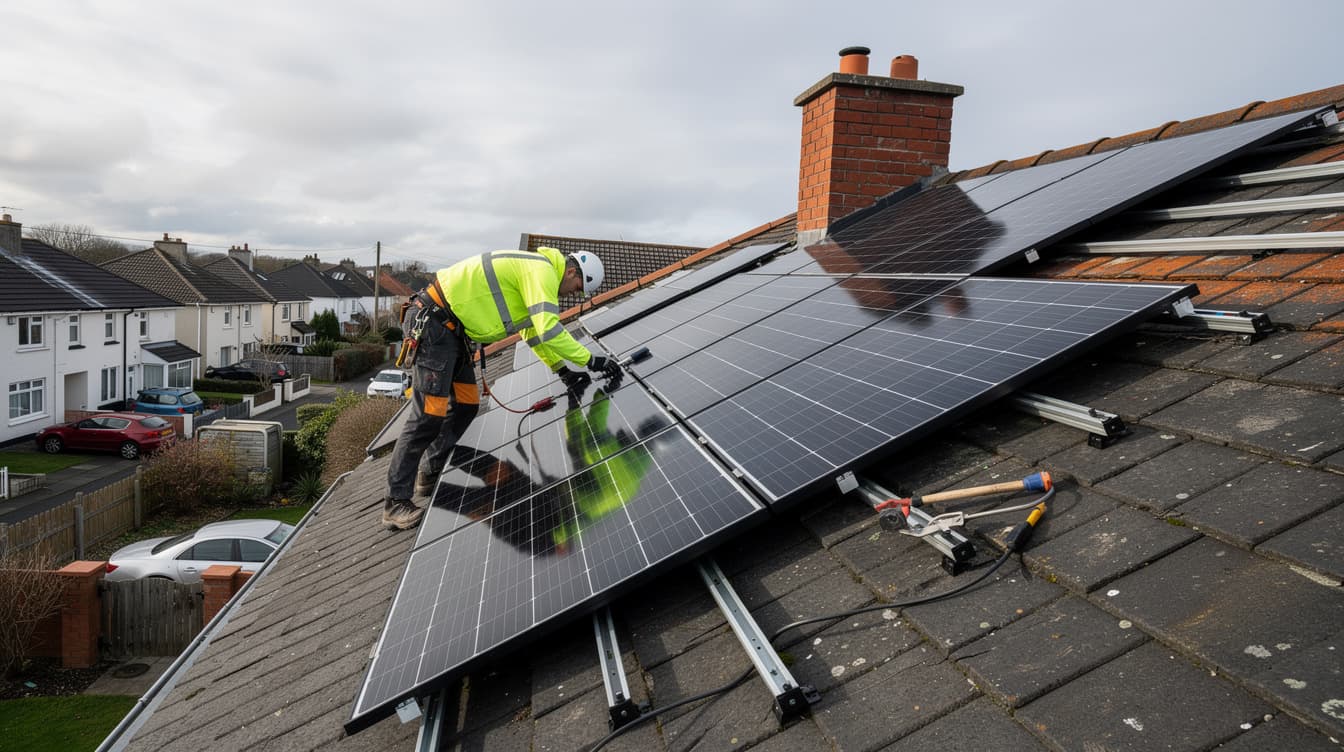
SEAI-Registered Solar Installers Ireland 2026: How to Verify (60-Second Check)
You cannot claim the €1,800 SEAI Solar PV grant unless your installer is on the SEAI Registered Installer List on the day the job starts. That’s the single most important thing to check before signing a contract in Ireland in 2026. Registration takes ~15 seconds to verify at seai.ie – but roughly 1 in 6 companies quoting solar in Ireland aren’t registered, and a few use the SEAI logo on marketing without being on the current list. This guide walks through how registration actually works, how to verify a company in under a minute, and the red flags that mean walking away.
The Sustainable Energy Authority of Ireland (SEAI) runs the Solar Electricity Grant scheme – the €1,800 you can claim off the cost of a domestic solar PV system installed on a home built before 1 January 2021. The grant only pays out if a Registered Installer completes the job, submits the paperwork correctly, and the installation is certified. The SEAI Registered Installer List is the public register of every company approved to do that. Getting this check wrong is the single biggest way Irish homeowners lose €1,800.
What does “SEAI-registered” actually mean?
SEAI Registered Solar Contractors have to prove – and keep proving – a specific set of things:
- The company holds a valid SafeElectric registration with RECI (Register of Electrical Contractors of Ireland) or ECSSA.
- At least one person on staff holds a QQI Level 6 Solar PV Installer qualification or an equivalent recognised training.
- They carry €6.5m public liability and €13m employer’s liability insurance.
- They agree to the SEAI Code of Practice for Solar PV, which covers system design (mainly the S.R. 54:2014+A2:2022 standard for grid-tied PV) and post-install commissioning.
- They complete the ESB Networks NC6 microgeneration application on the customer’s behalf.
- They provide a signed Declaration of Works once the installation passes commissioning.
Registration doesn’t guarantee the company is good – there are excellent registered installers and lazy ones. But it does guarantee they carry the qualifications, insurance and legal obligations to install safely and legitimately, and it’s the only way you get the €1,800.
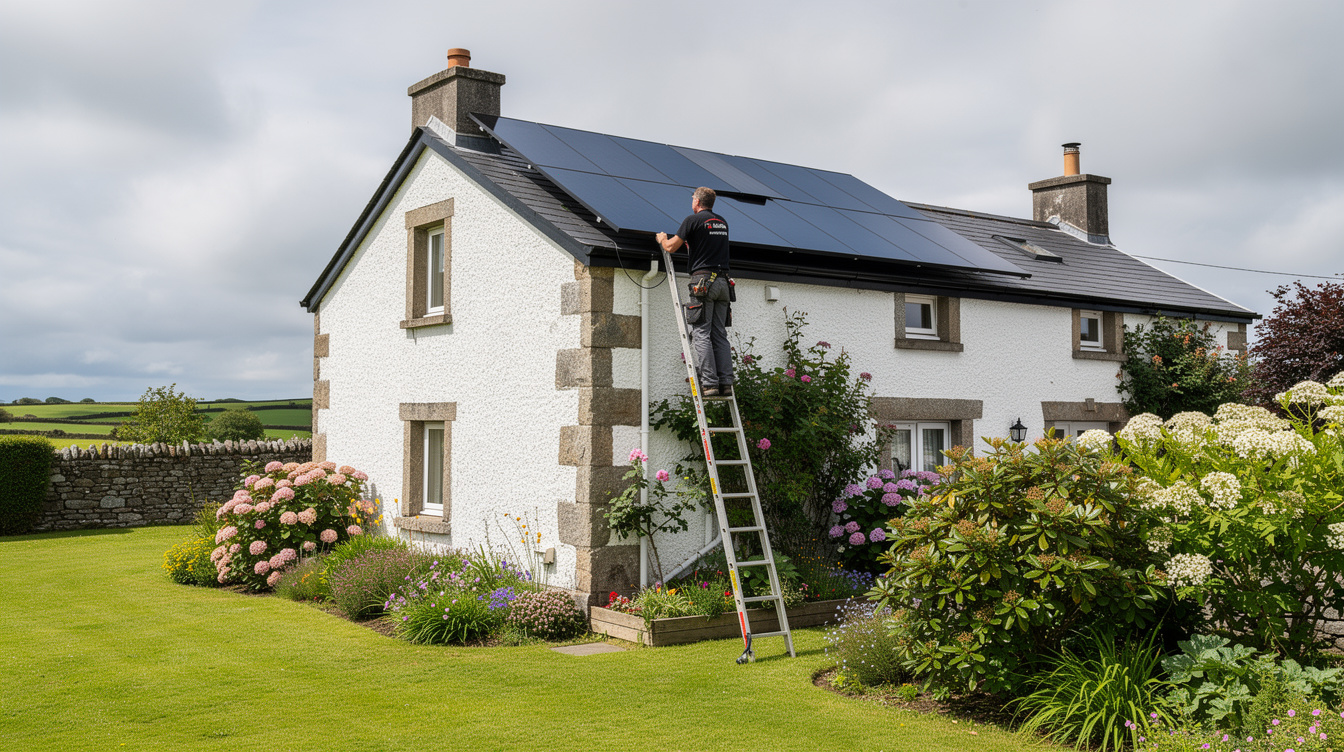
How to verify an installer is registered – 60-second method
Every quote you receive should let you check registration in one minute:
- Note the exact legal company name from their quote (not the trading name if different).
- Get their SEAI registration number from the quote or website. Registered installers must display it publicly.
- Go to seai.ie’s Registered Solar Companies List.
- Search by company name. The list shows the trading name, county coverage and registration status.
- Confirm the company name matches your quote exactly, not just something similar. A subsidiary or dormant sister company doesn’t count.
If you can’t find them, the quote isn’t grant-eligible – regardless of what any salesperson says. Ask the company to confirm in writing which registered entity the contract is with. If the answer is “we work under partner X’s registration,” walk away – SEAI does not allow subcontracting the registration itself, only the physical work.
Skip the verification headache
Get quotes only from SEAI-registered installers vetted by us – we filter out the ones you shouldn’t be talking to.
The three most common installer scams in Ireland
Based on complaints logged with the Competition and Consumer Protection Commission and reports from the SEAI throughout 2023–2025, three tactics keep resurfacing:
1. The “registration in progress” line
Salesperson tells you the company is “in the process of getting registered” and the grant will be paid retrospectively once it comes through. This is not how the scheme works. Registration must be in place before the job starts – the SEAI portal timestamps the application. If the installer registers a week after your commissioning date, you get zero. This tactic is especially common in Q4 when new companies are launching. If you see this, walk away.
2. The “partner registration” setup
Company A sells and marks up the system. Company B (registered) shows up on install day and signs the paperwork. This is a grey area that the SEAI has explicitly ruled against – the entity that signs the customer contract and pockets the profit must be the registered entity, otherwise the Declaration of Works is invalid. If the name on your invoice differs from the name on your Declaration of Works, the grant can be reclaimed after payment.
3. The logo-on-website trick
SEAI, RECI and CE-mark logos on the “About” page – but the company isn’t on the current registered list. Sometimes they were registered years ago and dropped off; sometimes they were never registered and pinched the logo from an installer they used to subcontract for. The public list at seai.ie is the only source of truth – ignore website logos entirely.
What the registered installer must give you
Once the install is complete, an SEAI-registered installer is legally obliged to hand over a specific paperwork bundle. Anything missing is a problem:
| Document | Who provides it | Why it matters |
|---|---|---|
| Declaration of Works | Installer | Uploaded to SEAI portal – triggers the grant payment |
| RECI/ECSSA Completion Certificate | Registered electrician | Required for house insurance and future sale |
| ESB Networks NC6 confirmation | Installer + ESB | Legal permission to export to grid – enables Clean Export Guarantee |
| MPRN change form (if needed) | Installer | Updates your meter details |
| Panel & inverter datasheets + serial numbers | Installer | Needed for warranty claims and future insurance |
| Product warranties | Manufacturers via installer | 25–30 years on panels, 5–10 on inverter |
| Workmanship warranty | Installer | Minimum 2 years under SEAI Code; better installers offer 5–10 |
| Handover pack & commissioning report | Installer | Contains inverter passwords, monitoring login, isolator locations |
If a registered installer refuses or delays any of the above, you can raise a complaint directly with SEAI – and they do act on them. Registration has been withdrawn from repeat offenders every year since the scheme launched.
Qualifications the registered installer’s team must actually hold
Ask your quoting installer to name the individual who holds the QQI Level 6 Solar PV qualification – not just “our team is qualified.” The relevant recognised courses in 2026 include:
- QQI Level 6 Solar Photovoltaic Systems (5N6013) – the core Irish qualification, run by SOLAS-approved training bodies including Cork Training Centre and City of Dublin ETB.
- QQI Level 6 Advanced Electrical Craft (Solar module) – for RECI-registered electricians upskilling.
- BPEC Solar PV Installer certification (UK-based, widely recognised in Ireland).
- City & Guilds 2399-13 Solar Photovoltaic Systems Installation (UK, also accepted).
SEAI-registered companies are audited on this – but audits are periodic, not real-time. Asking who’s qualified and when they last did continuous professional development (CPD) is a fair question and one a good installer will answer without hesitation.
The Sales-vs-Install split – a growing 2026 problem
An increasingly common structure in Ireland: a sales company (often unregistered) does the door-knocking and the “Google Ads” quote, then subcontracts the install to a small registered firm. The sales company keeps a 20–30% margin, adds middleman friction, and if things go wrong you’re bouncing between two entities with different phone numbers and no clear accountability.
To spot this pattern in a quote:
- The sales rep can’t answer basic technical questions (panel manufacturer, inverter model, mounting rail brand).
- The quote lists a company name you can’t find on the SEAI list, but the paperwork is “handled by our install partner.”
- The quote is priced 10–20% above other quotes for identical equipment.
- The company launched within the last 6 months and doesn’t have a physical Irish address.
- Reviews online are all 5-star and posted within a few weeks of each other.
Compare quotes carefully. Our quote comparison guide covers what to look for line-by-line.
Regional coverage – not every registered installer works everywhere
The SEAI list shows which counties each installer covers. Most Dublin-registered companies cover Leinster; Cork and Limerick companies typically cover Munster. Only about 40 of Ireland’s 300+ registered installers cover all 26 counties. If you’re outside the main cities, the practical list of registered installers who’ll turn up on a Wednesday might be closer to 8–15 companies. That’s still enough to get three real competing quotes.
Our county pages have the shortlists we’ve verified for each area – see solar installers by county.
The 14-day right to cancel – use it
Under Irish consumer law, if you signed a solar contract at home (in your kitchen, at the door, at a trade show or over Zoom) you have 14 days from signing to cancel with no reason and no penalty. This is called the “cooling-off period” and it applies even if you paid a deposit – the deposit must be refunded in full within 14 days of your cancellation notice.
Reputable registered installers include a cancellation form with the quote. If yours didn’t – that’s a red flag on its own. And if you’re within 14 days and something feels off, cancel by email (which starts the clock properly) and take a second look. Nothing about a genuine SEAI grant expires in 14 days; the pressure is manufactured.
What SEAI does if a registered installer fails you
If the paperwork is missing, the grant application is delayed unreasonably, or the install fails commissioning through installer fault, SEAI accepts complaints via seai.ie. The formal process:
- You complain in writing to the installer first, with a 14-day response window.
- If unresolved, escalate to SEAI’s Registered Installer team (contact via the SEAI website).
- SEAI investigates – usually within 4–6 weeks – and can require the installer to remediate at their own cost.
- Repeat offenders lose their SEAI registration and cannot participate in the grant scheme.
Since 2023 SEAI has publicly de-registered 12 companies for repeat compliance failures. It’s a real enforcement tool.
What to ask a registered installer before signing
Six questions any registered installer will answer straightforwardly – and where hedging is a red flag:
- “What’s your SEAI registration number, and can you confirm you’re currently on the active list?”
- “Which specific person on your team holds the QQI Level 6 or equivalent?”
- “Which panel and inverter models will you install – make, model, wattage?”
- “What’s your workmanship warranty, in writing, and how do I claim if there’s a leak in year 4?”
- “How long from deposit to commissioning – realistic timeline?”
- “Who handles the NC6 grid application and the SEAI Declaration of Works? What’s the fee if any?”
Any registered installer worth working with can rattle off answers to all six without checking. If the answer is repeated “let me get back to you,” they may not be the entity actually doing the work.
2026 changes to watch
SEAI has flagged the Registered Installer List will be split further in 2026 – separating solar PV installers from battery-only installers and heat pump installers, each with slightly different qualification requirements. In practice, if you’re getting a full PV+battery install, the company should be registered under both categories. Most established installers are – check both lists at seai.ie if you’re adding storage.
Also new for 2026: SEAI is quietly moving to require installers to provide a signed NC6 confirmation at handover, not just at start. Ask for both.
Frequently asked questions
Can I install solar panels myself in Ireland and still claim the grant?
No. SEAI grants require a Registered Installer to complete and certify the work. See our DIY solar Ireland guide for what you can and can’t legally install yourself.
How many SEAI-registered solar installers are there in Ireland in 2026?
The current list has approximately 300 registered companies, up from about 210 in 2022. Growth has slowed since 2024 as the market matured and SEAI tightened the audit process.
Can I use a UK-based installer for my Irish home?
Only if they’re specifically registered with SEAI as an Irish trading entity – most aren’t. Northern Ireland installers can register for Republic of Ireland work but require the Irish RECI/ECSSA registration on top of their UK NAPIT/NICEIC status.
Does the SEAI grant still apply if I add a battery separately later?
Yes. The €1,800 is for the solar PV element; batteries have separately been under review for grant support. Check the current status at seai.ie before assuming.
What if my installer goes out of business after installing?
Your panel and inverter warranties are with the manufacturers directly, not the installer. Keep the datasheets and serial numbers safe. For the workmanship warranty, if the installer folds, you may need to use the RECI CoC and public liability insurance route for major faults. This is why the RECI Completion Certificate matters – it’s independent of the installer’s business survival.
Ready to Go Solar?
Get your free personalised quote from SEAI-registered installers.
The one-line summary
Before you sign anything: check the exact legal company name on the SEAI Registered Solar Companies List at seai.ie. If the name isn’t there, you cannot claim the €1,800 grant – regardless of what the salesperson tells you. Everything else you evaluate about your quote is secondary to that single check.
Related Articles
Best Solar Setup Ireland 2026: Complete System Design Guide
The best solar setup for Ireland 2026 — panels, inverter, battery, diverter and installer — with 4 real-world configurations, prices and paybacks.

Accommodation for Solar Workers Ireland 2026: Rates, Options & Tax
Where solar installation crews stay in Ireland (2026): county-by-county nightly rates, cottage vs hotel math, Revenue subsistence rules, VAT and booking tips.

SEAI Home Energy Upgrade Loan Ireland 2026: 2.99% Loans for Solar & Retrofit
Full 2026 guide to the SEAI Home Energy Upgrade Loan: rates from 2.99% APR, €5k-€75k, how to use it for solar PV, lender comparison and worked example.