
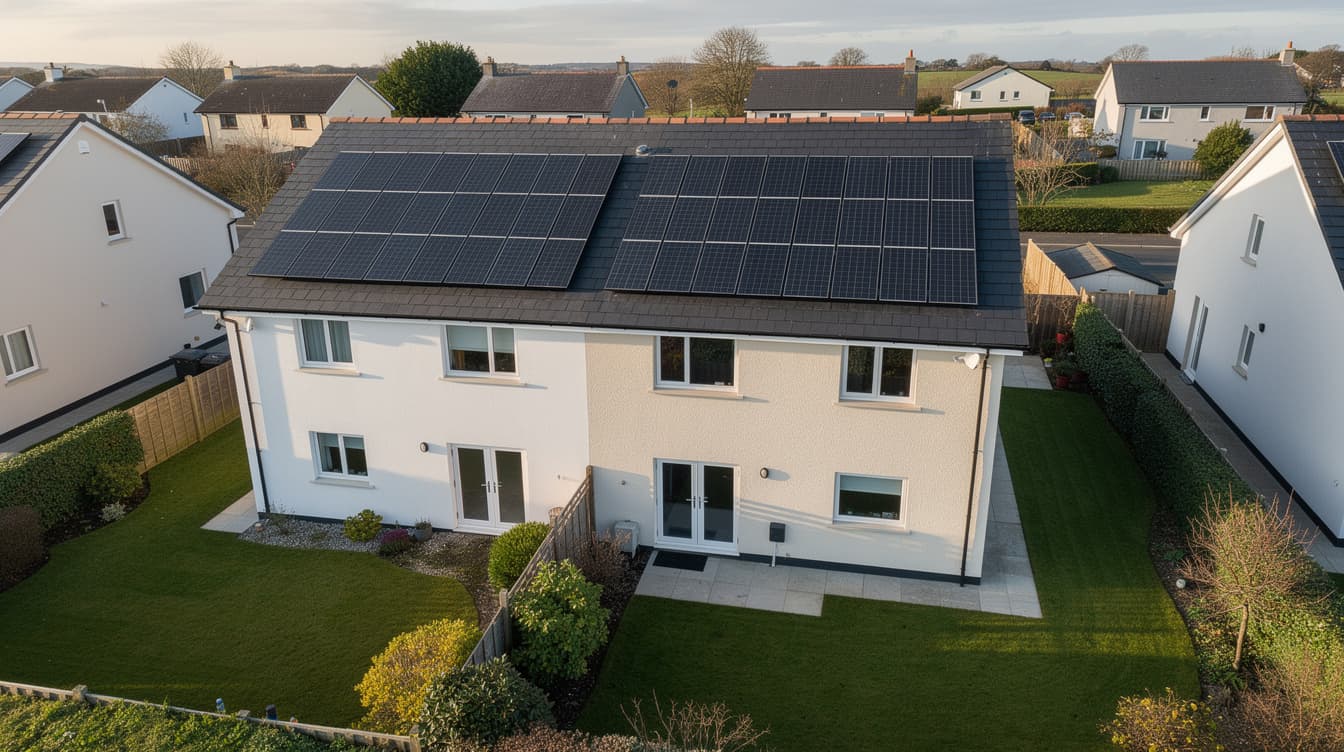
How to Compare Solar Panel Quotes in Ireland 2026: The 14-Point Buyer's Checklist
You've got three solar PV quotes in your inbox. One is €11,400. Another is €14,200. The third is €16,900. Same 6 kW system — same number of panels, similar battery, all SEAI-registered installers. So why the €5,500 spread?
The honest answer is: you're not comparing the same thing. The cheap quote uses Tier 2 panels, a single string inverter, a battery you've never heard of, and a 5-year workmanship warranty. The expensive quote uses Tier 1 N-type TOPCon panels, a brand-name hybrid inverter, a Tesla Powerwall, 12-year workmanship and includes scaffolding plus electrical upgrade. They're not the same product — they just look the same on a glossy proposal page.
This guide gives you the 14-point scorecard that strips out the marketing and shows you what you're actually buying. By the end you'll know how to spot the €3,000 of "value" you can negotiate off the expensive quote, and the €2,000 of hidden cost lurking in the cheap one.
Want pre-scored quotes you can actually compare?
We send you up to three SEAI-registered installer quotes with the same scope — so the prices are genuinely comparable. Free, no obligation.
Why "cheapest wins" is the most expensive choice
The single biggest mistake homeowners make is treating solar quotes like flat-screen TVs — pick the cheapest one with the right spec sheet, done. Solar is not a TV. It's a 25-year decision tied to your roof, your house wiring, your grant claim, and your relationship with one specific installer who you'll need to call if something fails at year three.
The cheap quote is almost always cheap because something has been cut. Most commonly:
- Second-tier panels — not Bloomberg Tier 1, no clear product warranty, no public bankability rating.
- White-label or rebrand inverters — ones with no public service network in Ireland.
- Reduced workmanship warranty — 5 years instead of 10.
- Subcontracted install crew — cheaper labour, fewer accountability layers.
- "Optional" scaffolding or ESB-Networks paperwork — added on later as €800–1,500 supplementary invoices.
The right yardstick is not "cheapest" — it's lowest verified total cost of ownership across 15 years. A €14,200 quote with 12-year workmanship and Tier 1 hardware almost always beats a €11,400 quote with 5-year workmanship and no-name kit, once you price in the failure-recovery risk.
The 14-point solar quote scorecard
Score each quote on these 14 dimensions. Use the matrix below to identify the strongest overall value — not just the cheapest line on the bottom.
| Point | What to ask | Green flag |
|---|---|---|
| 1. System size (kWp) | Exact kWp on quote? | Matched to your annual usage with 10–20% headroom |
| 2. Panel make & wattage | Brand, model, wattage per panel? | Tier 1 (Longi, Jinko, JA, Trina, REC), 430W+ N-type |
| 3. Panel warranty | Product + performance? | 25-yr product, 30-yr performance @ 87%+ retention |
| 4. Inverter make & model | Brand, model, hybrid or string? | SolarEdge, Sungrow, Solis, Huawei, Fronius, GoodWe — with Irish service network |
| 5. Inverter warranty | Years & extensions available? | 10 yr standard, extendable to 20 yr |
| 6. Battery make, usable kWh, cycles | Brand, usable not nominal, cycle life? | LFP chemistry, 6000+ cycles, 10-yr warranty, 90%+ usable depth |
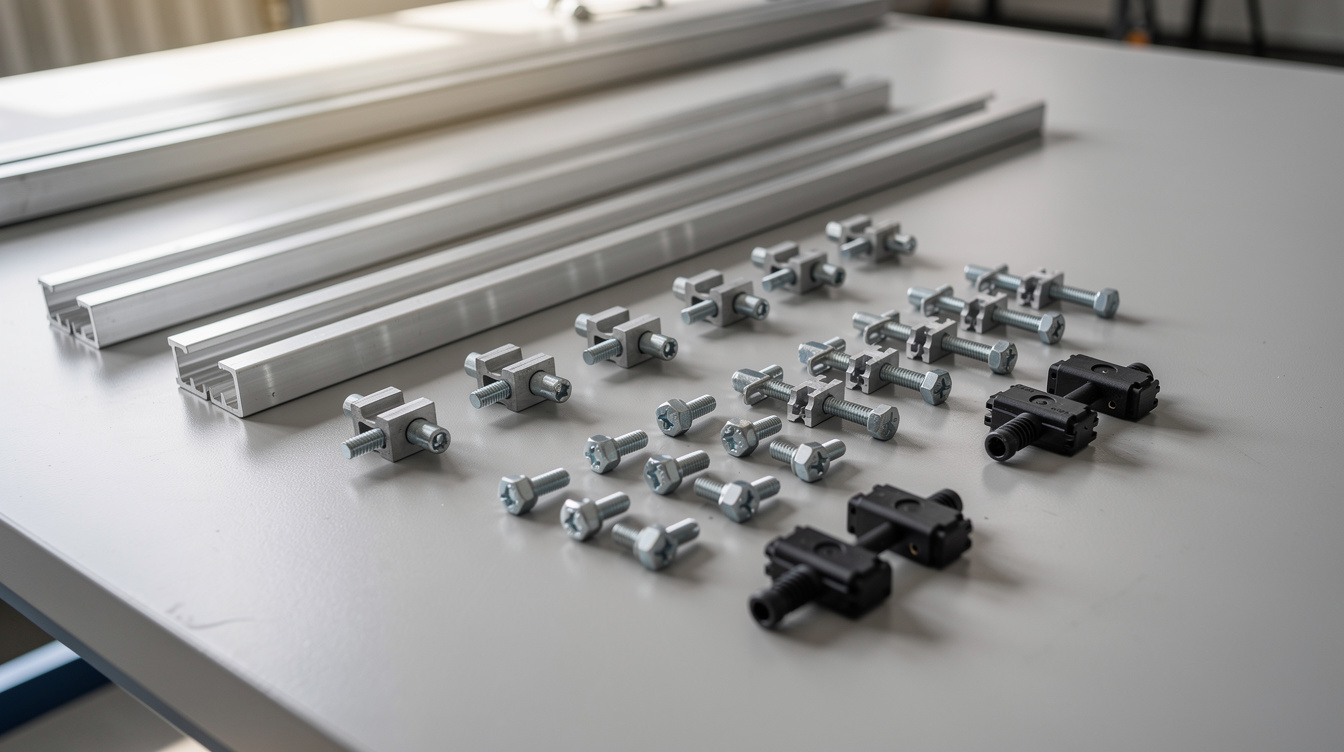
| 7. Mounting system | Brand & type? | Schletter, K2, SunGiraffe slate hook — not generic clamp |
| 8. Workmanship warranty | Length & what's covered? | 10–12 yr including labour & site revisit costs |
| 9. Scaffolding | Included or extra? | Included — not an "optional" line |
| 10. SEAI paperwork | Who handles BER + grant? | Installer handles all of it, end-to-end |
| 11. ESB Networks NC6 | Who submits & fees included? | Installer submits, fees included in quote |
| 12. Electrical upgrade | Consumer unit / earthing OK? | Surveyed in advance, any upgrade priced in not "to be advised" |
| 13. Monitoring app | Setup & subscription fees? | Setup included, no recurring fee to view your own data |
| 14. VAT & total clarity | VAT separately shown? | 9% VAT line itemised, grant subtracted, net total clear |
How to decode the panel spec line
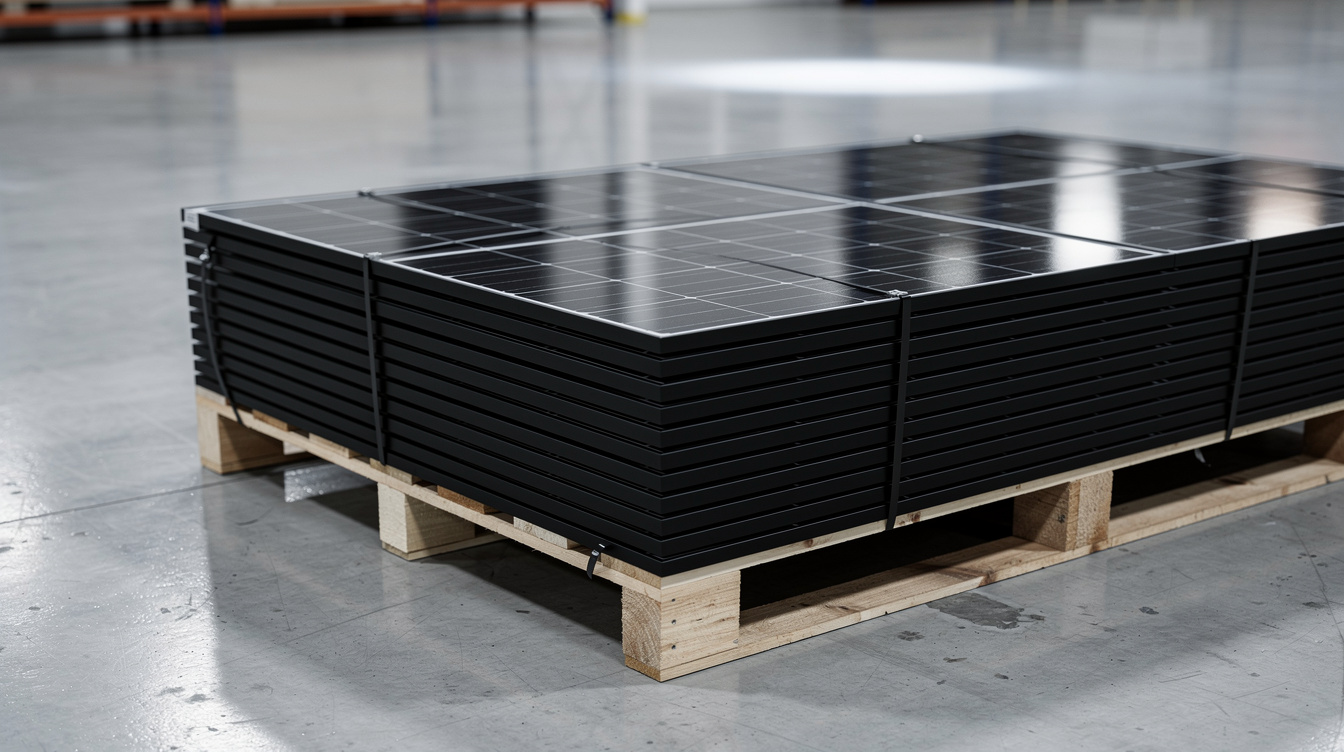
Most quotes show something like: "14 x 430W TOPCon panels". That single line hides four separate decisions.
Wattage: 430W is the 2026 sweet spot for residential roofs. Below 400W means older or budget panels; above 450W generally means larger physical dimensions that may not fit your roof bays. Higher wattage on the same number of panels is always better — ask if 440W or 450W versions of the same model are available.
Technology (TOPCon / HJT / PERC): N-type TOPCon and HJT outperform older P-type PERC in low light — which is most of Ireland, most of the year. If the quote just says "monocrystalline" without naming the cell technology, ask. If they say PERC, ask for a TOPCon alternative quote at no extra charge.
Brand & bankability: Bloomberg Tier 1 is the industry's bare-minimum financial-stability rating. Recognisable Tier 1 brands include Longi, Jinko, JA Solar, Trina, Canadian Solar, REC, Q Cells. White-label or no-name panels at first-tier prices are a red flag — the warranty is only as good as the brand backing it.
Warranty split: Two separate warranties: product (covers manufacturing defects) and performance (guarantees output retention). Strong panel quotes show: 25-year product, 30-year performance retaining 87–88% output. Weak quotes show 12-year product and vague performance language.
How to decode the inverter spec line
The inverter is the brain of your system — and the component most likely to fail first. Get this wrong and you'll lose half a winter's generation while you wait for a replacement.
String vs hybrid vs micro: If you're getting (or planning) a battery, you need a hybrid inverter — one that manages both panels and battery. A pure string inverter plus a separate battery inverter works but adds €800–1,200 of equipment and another point of failure. Micro inverters (one per panel) make sense for very shaded or multi-orientation roofs but add €1,500+ to system cost.
Brand tier: First-tier (SolarEdge, Sungrow, Fronius, Huawei FusionSolar, GoodWe, Solis) have proper Irish service partners, in-country spares, and 24/48-hour swap-out programmes. White-label or "brand X powered by" inverters at first-tier prices are exactly the kind of margin-padding the cheap quote was hoping you wouldn't notice.
Output rating vs system size: Inverter output should be 80–100% of your panel array's kWp. A 5 kWp array on a 3.6 kW inverter means clipping (lost generation) on sunny days. A 5 kWp array on a 6 kW inverter means future-proofing for additional panels — usually worth the €200–400 premium.
How to decode the battery spec line
Three numbers matter on any battery quote. Get them in writing.
| Spec | What good looks like in 2026 |
|---|---|
| Usable kWh (not nominal) | 5–10 kWh for typical Irish household; LFP usually 90%+ of nominal is usable |
| Chemistry | LFP (LiFePO4) — safer, longer life than NMC |
| Cycle life | 6000+ cycles to 80% capacity retention |
| Warranty | 10 years, with capacity retention guarantee 70%+ at end |
| Continuous power output | 3.6 kW+ to run a kettle and oven; lower means appliances trip |
| Backup capable? | Optional, but useful in a rural outage — check if extra hardware is needed |
Watch for the "nominal vs usable" trick. A "10 kWh" battery may only deliver 8.5 kWh of usable energy. Always ask for the usable figure and the depth-of-discharge percentage — if the quote just says "10kWh" with no qualifier, assume it means nominal and you'll be running short most evenings.
The hidden costs lurking in fine print
Six places where the cheap quote becomes the expensive one once the work actually starts:
- Scaffolding (€800–1,400 typical). For any two-storey install over four hours the HSA requires fall protection. Quotes marked "scaffolding optional" or "scaffolding TBA" are almost always going to bill it as an add-on. Insist it's in the headline price.
- Electrical consumer unit upgrade (€350–750). If your house has an older fuse board that doesn't accept a modern RCBO or has no spare way for a solar isolator, you'll need an upgrade. Reputable installers survey this before quoting.
- ESB Networks NC6 / NC7 fee (€0 for sub-25A connections in most cases, but commercial-size jobs can incur fees). Usually nominal but should be confirmed.
- SEAI BER cert (€120–200). Required for grant claim, and usually billed by an independent BER assessor. Some installers include it, some bill it separately.
- Cable run length & trunking (€200–500 if your inverter ends up far from the consumer unit). Should be surveyed.
- Optional extras presented as "must-haves": surge protection, monitoring subscriptions, performance guarantees with paid upgrade tiers, EV-charging adapter brackets. Often padding; rarely necessary.
Total hidden costs on a poorly-scoped quote: typically €1,500–3,000 of surprise invoices once work has begun. Better to face the higher honest number up front than the lower dishonest one followed by surprises.
Common pricing tricks to watch for
These come up often enough in our quote-comparison work that they deserve their own warning section.
Trick 1: The bait-and-upsell quote
The headline price is for a base spec that almost nobody actually buys — cheap panels, no battery, minimum warranty. The "real" recommendation comes later, €3,000–5,000 more. Defend against this by sending every installer the SAME scope sheet: "6 kW Tier 1 N-type, hybrid inverter, 6 kWh LFP battery, 10-yr workmanship, all paperwork included." Apples to apples.
Trick 2: The "today only" discount
"If you sign now we can hold 2025 pricing." Installer-side pricing for solar in Ireland is genuinely stable month-to-month; this is a sales tactic. A real installer will hold their quote for 30 days as standard. If they won't, walk.
Trick 3: The decoy upgrade
Three options presented: basic, "recommended", premium. The middle option is engineered to look like the value pick when it's actually overpriced — a classic anchoring trick. Always price the recommended-spec components individually against the basic version.
Trick 4: The hidden battery markup
"Standalone battery: €5,200. Battery as part of solar system: €3,800." This shouldn't be true — same battery costs the same. If you see this, ask for the battery line-itemised in the solar quote so you can verify it matches the standalone price.
Trick 5: The labour-vs-materials split
Some quotes break out labour and materials so labour can be quietly inflated. Two installers should be quoting similar labour totals for a similar job; if one is €2,000 higher on labour with the same kit, ask why.
How to negotiate effectively
Negotiation works on solar quotes — just not how most people think.
What works: "Quote A is €1,400 cheaper than yours for the same spec. Can you match it, or show me what you're giving me that justifies the difference?" Specific, evidence-based, polite. Good installers will either match, partially close the gap, or show you the value justification (often warranty length, in-house crew, longer-running company).
What doesn't work: "Just give me your best price." Installers hear this from tyre-kickers and respond with a small discount that doesn't move the needle.
The 10% rule: Expect 5–10% movement on most quotes if you ask properly. More than that and you're either dealing with an inflated starting price or you've already chosen the wrong installer.
Skip the back-and-forth — get scope-matched quotes
Tell us your roof size, county and battery preference. We send the same brief to up to three SEAI-registered installers so the prices are genuinely comparable.
Frequently asked questions
How many solar quotes should I get before deciding?
Three, all SEAI-registered, all with the same written scope. Two is not enough to triangulate a fair price; four+ is diminishing returns and burns trust with installers who realise you're shopping aggressively.
Is it OK to share other installer prices to negotiate?
Yes — respectfully and specifically. "Quote A is €1,400 lower" is fair game. Sharing full quote PDFs to multiple installers is poor form (and they often know each other).
What's a fair price for a typical 6 kW solar system with battery in Ireland in 2026?
Roughly €13,000–15,500 fully installed before the €1,800 SEAI grant, depending on county and battery brand. Anything under €11,000 for a 6 kW + battery system is almost certainly cutting corners. Anything over €17,000 is a premium-brand outfit and you should be paying for premium aftercare.
How long are solar quotes valid for?
Industry standard is 30 days. A short validity window is a sales tactic; ask for 30 days as standard.
Should the SEAI €1,800 grant be deducted from the quote?
Yes — reputable installers show: Total €X, less SEAI grant €1,800, your net €Y. If a quote doesn't deduct it, ask why. (One legitimate reason: the grant is paid to you, not to the installer, so the installer wants you to see the gross figure clearly.)
Can I get a refund if I cancel after signing?
You have a 14-day cooling-off period under Irish consumer law for contracts signed outside the installer's premises. Deposit terms after that depend on your contract — common is full refund up to material order, then 50% refund up to dispatch, then no refund.
Is the cheapest quote ever the right choice?
Occasionally — if the cheap quote happens to be from a strong regional installer with verified reviews and full credentials. But if "cheapest" is more than 15% below the next quote with similar spec, something is almost certainly being cut. Investigate before signing.
Ready to compare quotes properly?
Free, no obligation. Up to three SEAI-registered installers, matched to your roof and county. 60-second form.
Used properly, this 14-point scorecard turns three identical-looking quotes into a clear ranking of value. Skip the framework and you're back to picking the cheapest line on a PDF — which is how the €11,400 quote ends up costing €14,800 once the surprise invoices land.
Related Articles
Best Solar Installers in Ireland 2026: How to Pick a SEAI-Registered Company You Can Trust
Forget paid Top 10 lists. The framework Irish installers use themselves: 6 must-have credentials, a 7-point quality scorecard, 14 questions and 9 red flags.
Best Solar Setup Ireland 2026: Complete System Design Guide
The best solar setup for Ireland 2026 — panels, inverter, battery, diverter and installer — with 4 real-world configurations, prices and paybacks.
Accommodation for Solar Workers Ireland 2026: Rates, Options & Tax
Where solar installation crews stay in Ireland (2026): county-by-county nightly rates, cottage vs hotel math, Revenue subsistence rules, VAT and booking tips.