
Best Solar Installers in Ireland 2026: How to Pick a SEAI-Registered Company You Can Trust
Updated 4 August 2026
What’s new this month: the SEAI-registered domestic PV contractor list now stands at 1,247 companies nationwide (up from 1,200 in July as the summer registration window closed). The 4.4 kWp median install has settled at €9,050 net after grant in Q3 2026, with Jinko and AIKO wholesale panel prices softening a further 3.5% through July. If you got quotes in Q1 2026, expect to re-price down €300–€500 today.
Warning — two red flags for August 2026: (1) at least four large-volume installers have quietly de-registered from SEAI in the last six weeks after failing the 2026 audit cycle. Always re-check status at seai.ie/find-a-registered-company the week before you sign, not the week you first got quotes. (2) “Solar franchise” brands operating on lead-generation-plus-white-label crews have surged this summer — ask specifically whether the crew that will attend your roof is directly employed by the SEAI-registered company, or a subcontractor.
Search "best solar installer Ireland" and you'll get pages of "Top 10" lists. Most are paid placements. Some are written by AI scraping each other. None of them know which company is right for you, because the honest answer is: the "best" installer depends on your county, your roof, your budget, and how patient you'll be if something needs fixing in year 4.
This guide takes a different approach. Instead of ranking specific companies (a list that would be wrong within six months), we'll give you the framework that good installers themselves use when they're hiring sub-contractors. Six credentials any installer in Ireland must hold. A seven-criterion quality scorecard. Fourteen questions to ask before you sign anything. And the red flags that mean "walk away now."
By the end, you'll be able to walk into three quote meetings and know within ten minutes which installer is worth your €13,000 — and which one is going to ghost you when a panel fails in 2029.
Skip the legwork — get pre-vetted installer quotes
We match you with up to three SEAI-registered installers serving your county. All checked for credentials & warranty terms. Free, no obligation.
Why we don't rank installers by name
Most "Best Solar Installers in Ireland" articles are sponsored. The "rankings" are paid placements dressed up as editorial. We won't do that here, for two practical reasons.
First, installer quality changes fast. A company that was excellent in 2024 can deteriorate within a year — key staff leave, ownership changes, they take on too many jobs, they drop subcontractors who knew the craft. The "best" company today may have a six-week response time on warranty calls by next spring. A frozen list of names rots within months.
Second, "best" is local. An installer with five-star reviews in Dublin may take three months to get to West Cork, and when they do, you're at the end of a long subcontract chain. A regional electrical contractor who's installed forty systems in your immediate area may be the better choice — even though they're invisible nationally. National brand vs local craftsmanship is the wrong question. The right question is: who installs the most systems within thirty kilometres of my house, and what do their customers say after year three?
So instead of a ranking, this is a framework. Use it on every installer you're considering and pick the one who scores highest for your situation.
The 6 credentials every Irish solar installer must hold
Before you compare anything else — price, panels, warranty — check that the installer holds all six of these. If any are missing, walk away. There are over two hundred registered installers in Ireland; you don't need to settle for one without basics.
| Credential | Why it matters | How to verify |
|---|---|---|
| SEAI Registered Solar PV Installer | Without this, you cannot claim the €1,800 SEAI grant. Period. | Ask for registration number; cross-check at seai.ie |
| Safe Electric Ireland | All AC-side electrical work must be done by a registered electrical contractor. They issue your Cert of Completion. | Search at safeelectric.ie |
| ESB Networks NC6 / NC7 capability | Required to legally connect your system to the grid and qualify for the Clean Export Guarantee. | Ask for evidence of past NC6 submissions in your area |
| Public liability insurance €6.5m+ | If a panel falls and damages a neighbour's car, or someone gets injured on your roof, this covers it. | Ask for a current Cert of Insurance — check the expiry date |
| Workmanship warranty 10 years+ | Covers labour cost if the installer's work fails. Five years is a red flag; ten is good; twelve is excellent. | Written quote must state warranty length clearly |
| Membership of an industry body | Either Microgeneration Council of Ireland, ISEA, or equivalent. Indicates ongoing professional standards. | Member list usually on body's website |
One important caveat: SEAI registration on its own is not a quality stamp. It confirms the installer has met SEAI's minimum technical standards and has insurance — it does not guarantee craft or post-install service. Use it as a floor, not a ceiling.
The 7-criterion quality scorecard
Once an installer passes the credentials check, score them against these seven criteria. Score each 1 to 5. A great installer scores 30+ out of 35. Anything under 22 is a hard no.
| Criterion | 5 / 5 = excellent | 1 / 5 = red flag |
|---|---|---|
| Years installing solar PV | 7+ years of solar work, not just electrical work | <1 year solar; switched from another trade |
| Local install density | 20+ installs within 30 km of your house | No completed installs in your county |
| In-house vs subcontracted install team | Salaried in-house team, named on the day | Whole job subbed out to unnamed third party |
| Independent reviews (Google, Trustpilot) | 100+ verified reviews, 4.7+ avg, recent ones positive | No reviews, or pattern of complaints about aftercare |
| Product warranty | 25-year panel product, 12-year inverter, 10-year battery (if applicable) | Vague "industry standard" with no document |
| Post-install support | Named service contact, response SLA in writing | "Just email info@" with no SLA |
| Quote transparency | Itemised by panel, inverter, battery, scaffolding, electrical, paperwork, VAT | Single "€X total" with no breakdown |
The four types of installers in the Irish market
Roughly speaking, you'll meet one of four types. Each has trade-offs — there is no single "right" category.
1. National installers (50+ staff)
Large outfits doing several hundred jobs a year nationwide. Polished sales process, glossy brochures, consistent paperwork. Often higher prices — you're paying for the brand and overhead. Pros: stable, won't disappear; good for warranty claims if they survive long-term. Cons: installer on the day is often subcontracted; price premium 10–20% over regional installers; aftercare can be patchy if you're geographically distant from their core area.
2. Regional / county specialists (5–20 staff)
The sweet spot for most homeowners. Cover two to four counties, do 50–200 jobs a year, in-house install team, owner often still on the tools. Best prices, best craft, fastest aftercare. Cons: harder to verify financial stability; smaller insurance limits sometimes; quote paperwork less polished. For a typical 4–6 kW residential install in 2026, this category usually offers the best value.
3. Electrical contractors who added solar (1–5 staff)
Local sparks who diversified into solar PV after demand grew. Pros: cheap, local, fast. Cons: solar-specific knowledge can be thin — panel string sizing, optimiser placement, DC arc fault protection are easy to get wrong. They may not be SEAI registered. Use only if they can show 20+ completed solar installs and the SEAI registration number is verified.
4. Manufacturer-direct or franchise
Rare in Ireland but growing — a few brands sell direct via approved partners. Tightest panel/inverter integration. Cons: locked into one product family; you can't switch to a different inverter brand later without losing the integrated warranty.
The 14 questions to ask every installer before you sign
Ask these in your first meeting. The answers (and how they're delivered) tell you everything.
- What's your SEAI registration number? Don't accept "I am registered" — ask for the number, then cross-check at seai.ie.
- Are you Safe Electric Ireland registered, and will your team issue the Cert of Completion? If they say a sub will do it, ask which sub and verify that company separately.
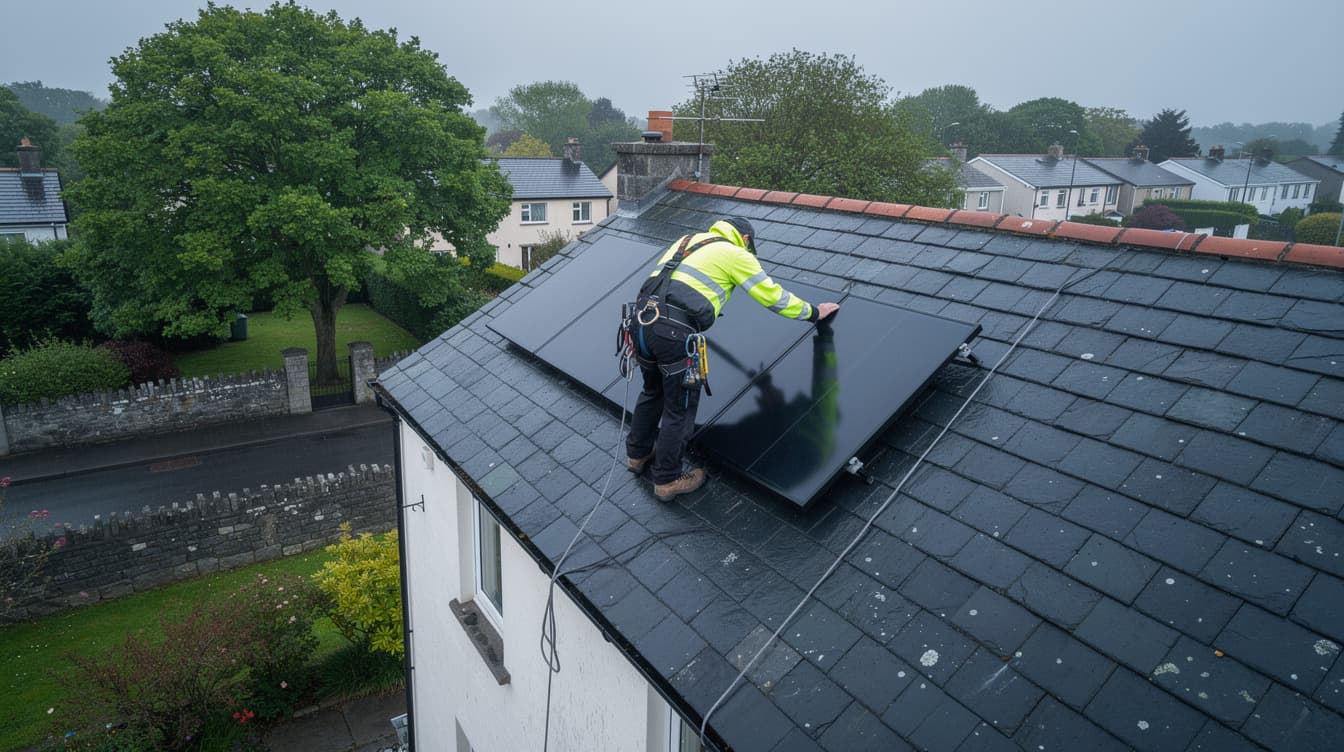
- Who will physically be on the roof? In-house team? Named? Or a subcontractor crew you've never met?
- What's the workmanship warranty — in years, and what specifically is covered? Push for a written definition. "Standard cover" is meaningless.
- What panels and inverter will you use, and why those specifically? A good installer will explain trade-offs (Tier 1 vs second-tier, hybrid vs string inverter, why a particular brand suits Irish irradiance).
- What's the lead time from deposit to commissioning? Eight to twelve weeks is normal in 2026. Anything over sixteen needs a discount or pull-out clause.
- Will you handle the ESB Networks NC6 application end-to-end? They should — if you have to chase it yourself, that's an immediate price renegotiation.
- Will you handle the SEAI grant paperwork including the BER cert? They should. Some installers will offer a discount for you doing it yourself; usually not worth it.
- If a panel fails in year 4, what's the process — who pays for diagnosis, removal, replacement, re-commissioning? Get this in writing. This is where most "warranty issues" become "your problem."
- Can I see your last five installs within 30 km? Could one of those customers speak with me? Reluctance here is a serious red flag.
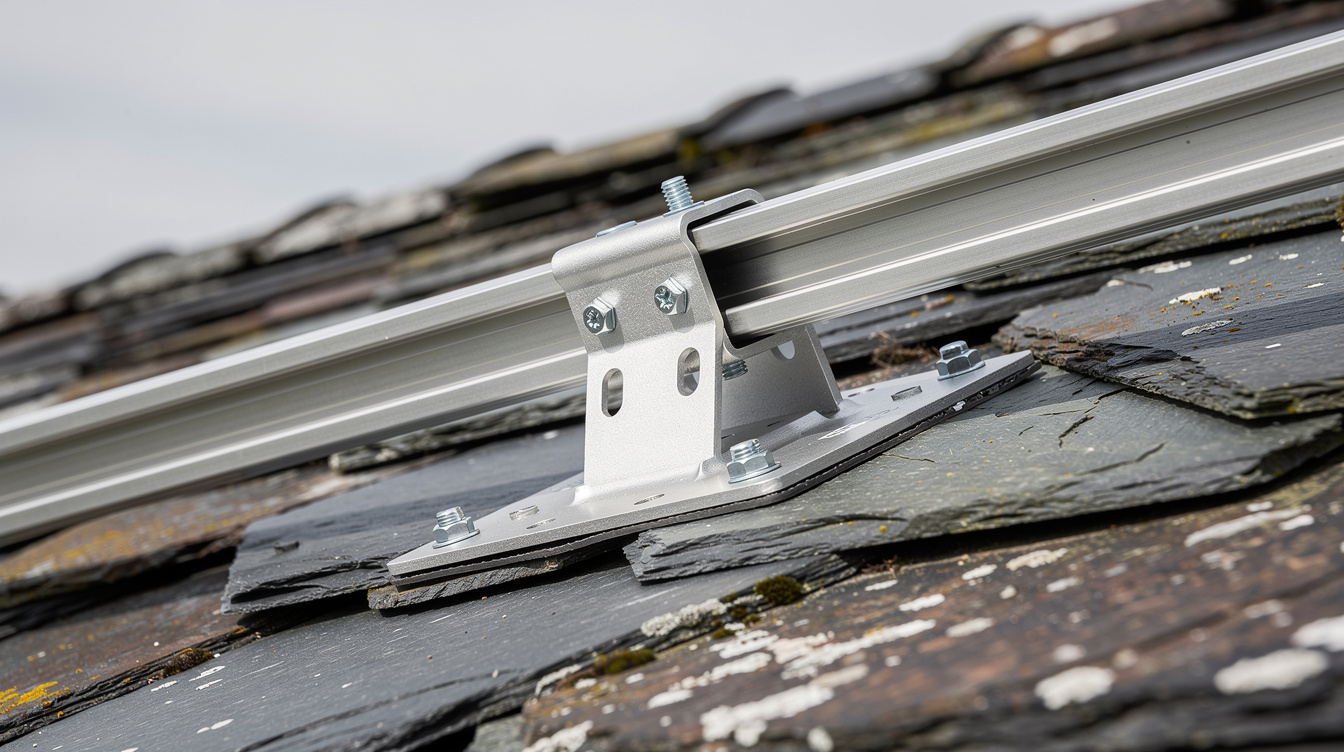
- What mounting system — Schletter, K2, SunGiraffe, in-house? Slate hook or in-roof? Cheap clamp-on-tile systems leak. You want a recognised slate/tile hook system.
- Will you scaffold the install, or rope-access? Scaffold is safer and required by HSA for jobs over four hours typically. Rope access is fine for some access types but worth asking why.
- What's the deposit, and what's the refund policy if I pull out before install? Standard: 10–25% deposit, refundable up to a defined point.
- What happens on commissioning day if I'm not happy with the work? The honest answer is: "We won't ask for the final payment until you are." Anything else — especially "the final payment is due on completion regardless" — is a problem.
Don't want to chase 5+ installers yourself?
Tell us your county and roof type and we'll send up to three credential-checked quotes within 48 hours.
9 red flags that mean "walk away now"
Some warning signs are absolute. If you see any of these, the conversation is over. There are over two hundred SEAI-registered installers in Ireland — you can do better.
- "This price is only good until Friday." Solar systems are a 25-year decision. Pressure tactics are a tell.
- No SEAI registration number printed on the quote. Even if they say they're registered, if it's not on paper, it's not real.
- No physical office address — just a mobile and a Gmail address. You need somewhere to send a registered letter in three years.
- VAT not separately listed. Means the company may not be VAT-registered (likely too small) or they're hiding the breakdown.
- Vague warranty wording like "industry standard" or "as per manufacturer." You need years in black and white.
- "All-in" price with no panel make/wattage or inverter brand stated. You're being asked to write a blank cheque.
- Subcontractor chain you can't trace. "We use our partners" without naming them is uninsurable from your side.
- Deposit over 30% of total. Reputable installers don't need your money up front; their bank does that.
- Cash payment requested at any stage. No legitimate installer in Ireland in 2026 needs cash — this is a tax-evasion signal at best, fraud at worst.

How county coverage actually works
One thing nobody tells you up front: even the largest national installers don't service every county equally. They have hub areas where they're staffed, and edge areas where they sub jobs out or quote prohibitively to discourage taking them on.
Typical patterns we see:
- Dublin, Cork, Galway, Limerick: Saturated — many installers compete, prices are lower, install timelines shorter.
- Kildare, Meath, Wicklow, Wexford: Well served by Dublin-based installers willing to drive 60–90 minutes.
- Donegal, Mayo, Kerry, West Cork: Regional specialists dominate. National installers will quote, but often at a 10–15% premium and longer lead times.
- Midlands (Laois, Offaly, Longford, Westmeath): Smaller specialist installers do most of the work; fewer choices but often very competitive pricing.
Translation: if you're outside Dublin/Cork, focus your search on installers based in your region first. They'll usually beat a Dublin firm on both price and aftercare response time.
Where to find SEAI-registered installers
Two reliable sources:
- SEAI's official registered installer list at seai.ie/grants/home-energy-grants/solar-electricity-grant/find-an-installer. This is the canonical source — if a company isn't on it, they cannot deliver an SEAI-grant-eligible install. Filter by county.
- Our independent solar installer directory — we list active installers by county with verified SEAI registration numbers, sample install evidence, and we remove anyone with sustained verified complaints.
For maximum confidence, cross-reference both lists. Any installer who appears on SEAI's official list and has consistent independent reviews is a credible starting point.
Frequently asked questions
Who is the best solar installer in Ireland?
There is no single answer — and any article that gives you one is selling something. The best installer for you is the one that scores highest on the quality framework above for your county, roof type, and system size. A 4 kW install in West Cork has a different "best installer" than an 8 kW with battery in Dublin.
How do I find an SEAI-registered solar installer near me?
Use SEAI's official registered installer search filtered by your county, then cross-check independent reviews. You should aim for three quotes from genuinely local installers before signing anything. Our matching service does this filtering for you.
Are big national solar companies better than local installers?
Not automatically. National installers offer brand stability and polished paperwork; regional installers usually offer better prices, in-house crews, and faster aftercare. For a typical Irish residential install, a strong regional installer often beats a national brand on overall value.
What workmanship warranty length should I expect?
In 2026, ten years on workmanship is the floor for a quality installer. Some now offer twelve. Panel product warranty should be 25 years; performance warranty (output guarantee) 25–30 years; inverter 10–12 years; battery 10 years.
How many quotes should I get before deciding?
Three, all with the same scope (same system size, same battery option, same scaffolding requirement). Apples-to-apples comparison is the only way to see who's pricing fairly. The cheapest quote is rarely the best; the median is usually the safest pick.
Is the SEAI grant worth picking an installer for?
You should only consider SEAI-registered installers anyway — the €1,800 grant is meaningful, and the registration acts as a basic quality filter. Don't let a non-registered installer talk you into "saving the paperwork" — you lose €1,800 and probably some recourse if things go wrong.
Should I use the cheapest installer?
No. Cheapest quotes are usually cheap because something has been cut — second-tier panels, no-name inverter, weaker mounting hardware, shorter warranty, or sub-contracted install with no quality control. The middle quote with the strongest warranty and clearest paperwork is almost always the right choice.
Ready to get matched with trusted installers?
Three credential-verified quotes for your address. Free, no obligation, takes 60 seconds.
Use the framework, score every installer the same way, and you'll end up with a system that's still performing well in 2050. Cut corners on installer choice and you'll spend the next decade chasing problems. The right framework saves you years of regret — and several thousand euro in avoided rework.
Related Articles
How to Compare Solar Panel Quotes in Ireland 2026: The 14-Point Buyer's Checklist
Three quotes, three prices, same job — what's actually different? A 14-point scorecard that decodes panel, inverter, battery, warranty and hidden-cost lines.
Best Solar Setup Ireland 2026: Complete System Design Guide
The best solar setup for Ireland 2026 — panels, inverter, battery, diverter and installer — with 4 real-world configurations, prices and paybacks.
4kW Solar System Cost Ireland 2026: Real Prices, Output & Payback
Real 2026 Irish 4kW quotes (€7,210 gross, €5,410 net after €1,800 SEAI grant), 3,600–4,200 kWh/yr output, 4.8yr payback and when 4kW beats 3kW or 5kW.