
Solar Panels on Protected Structures & Listed Buildings in Ireland 2026: Planning, Section 5 & Real Costs
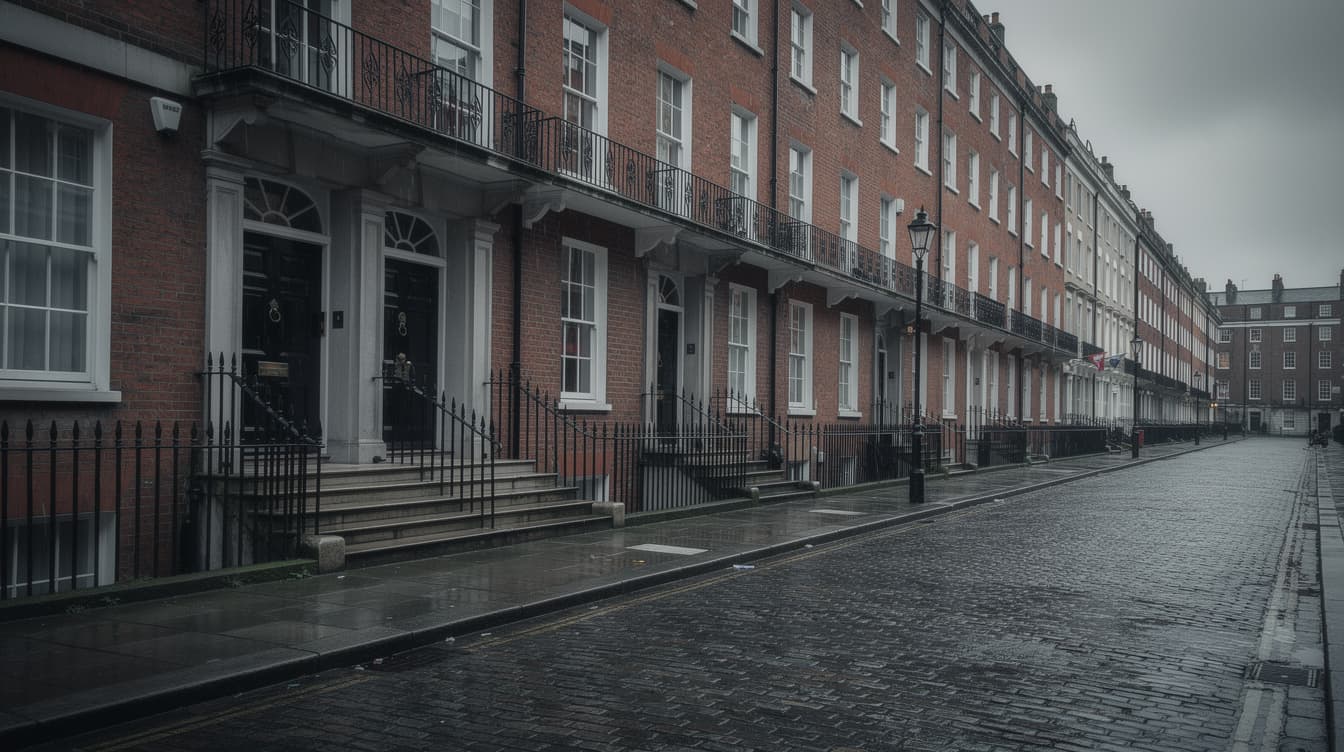
Own a Georgian terrace in Dublin 8, a stone cottage in Kilkenny, or an early-1900s farmhouse anywhere on the Section 57 list? The Irish planning exemption that lets most homeowners bolt solar to the roof without a whisper to the council does not apply to you. That does not mean solar is off the table — it means the route is different, slower, and needs a specific piece of paper from your local authority. Here’s the 2026 honest guide for owners of protected structures, listed buildings and homes inside Architectural Conservation Areas (ACAs) in Ireland: what’s allowed, what a Section 5 declaration actually costs, and how installers get panels approved on heritage buildings without triggering enforcement.
Own a period property? Get an installer who knows the heritage rules
Our SEAI-registered installer network includes contractors experienced with protected structures and ACA planning. Get a free quote and a heritage-aware roof survey.
The two-line summary
Protected structures and buildings inside Architectural Conservation Areas are excluded from Ireland’s solar planning exemption. You almost always need either a Section 5 declaration confirming your specific install is exempt, or full planning permission. Panels not visible from the public road, and mounted only to non-original roof surfaces, are the ones that most reliably get approved.
Why the general exemption doesn’t cover you
Since October 2022 (and refined in the 2026 rules), most Irish rooftop solar installations are “exempted development” under the Planning and Development Regulations. No area limit, no height rule for panels lying flush with the roof pitch, no permission needed. Great for a 2005 semi-detached in Lucan; useless for an early-1800s stone farmhouse in Wicklow.
The reason is a short clause buried in the regulations. Works to a protected structure — or to the exterior of any structure inside an Architectural Conservation Area — are only exempt if they do not materially affect the character of the structure or the area. Solar panels bolted to the front elevation of a Georgian terrace visibly alter the roofscape, so the exemption evaporates and full planning kicks in.
Is your home actually a protected structure?
Three legal categories treat solar differently. Get the category wrong and you’ll either overpay for planning you don’t need or install illegally and face enforcement.
| Category | Where it’s listed | Solar exemption? |
|---|---|---|
| Protected Structure | Record of Protected Structures (RPS) in your county/city development plan | No general exemption. Section 5 or planning required. |
| Architectural Conservation Area (ACA) | County/city development plan; there are 700+ ACAs across Ireland | Rear/side panels usually fine; front elevation almost never. |
| NIAH-listed only | National Inventory of Architectural Heritage — a survey, not a legal designation on its own | Full exemption unless your council has also added it to the RPS. |
How to check, definitively
- Open your county or city council’s current Development Plan (each council publishes it as a PDF or interactive map).
- Search Appendix or Schedule “Record of Protected Structures” for your address. Entries include an RPS reference number.
- Check the ACA map layer. Most Irish councils have online GIS viewers where you can enter your address and see if you’re inside an ACA polygon.
- If unclear, ring the council’s Planning Enforcement or Heritage Officer. They’ll tell you in under two minutes.
- NIAH-only listings can be checked at buildingsofireland.ie. If it’s only on the NIAH and not on your council’s RPS, you’re treated like a regular house for exemption purposes.
What the council actually cares about
Planning officers reviewing a heritage solar case run the same short mental checklist:
- Where on the roof — rear/side pitch not visible from a public road is the easiest approval.
- What roof material you’re bolting to — slate, natural clay tiles and stone slates are protected; concrete replacement roofs are not, so if your rear slope is already a modern re-roof you have a much better case.
- Panel colour and profile — all-black full-shingle modules mounted flush get through where silver-frame poly modules don’t. On slate roofs, in-roof mounting systems (panels sitting flush in place of tiles) are often preferred to on-roof rails.
- Reversibility — the works should be undoable without permanent damage to original fabric. That means no drilling into stone chimneys, no penetration through original slate on original battens.
- Cabling & inverter location — hidden runs through attic and internal walls, inverter mounted in an internal cupboard or garage rather than on an original external gable.
The Section 5 declaration route (usually the right first step)
A Section 5 declaration is a formal ruling from your local authority under Section 5 of the Planning and Development Act 2000. You describe the works you want to do; the council writes back and confirms whether it’s exempt development or requires full planning permission. If they rule exempt, you have written proof to keep with the house forever.
Section 5 — what it costs and how long it takes
- Fee: €80 (standard across all Irish local authorities in 2026).
- Statutory response time: 4 weeks (28 days).
- What you submit: a short cover letter describing the works, site location map, a roof-plan drawing showing panel positions, a photograph of the roof from public vantage points, and a product data sheet for the panels and inverter.
- Who prepares the pack: a competent installer with a heritage-friendly design, or an architect. Installer packs are usually enough for straightforward rear-roof cases.
What to include to swing the ruling to “exempt”
Councils rule things exempt when the applicant makes the exempt outcome look easy. Practical steps:
- Line-of-sight photos from the middle of the public road and from any nearby public spaces (parks, footpaths). If a passerby can’t see the panels, say so and show it.
- A short heritage impact note — two or three paragraphs stating no original fabric is affected, mounting is on a modern re-roof or on non-visible surfaces, and works are fully reversible.
- Panel and inverter data sheets with dimensions and colours, so the council knows exactly what will be mounted.
- A specific offer: black-on-black modules only, matte finish, flush-mount rails, no ground-mount, cabling internal.
When Section 5 doesn’t work: full planning
Rulings that come back “permission required” usually cover three cases:
- Front elevation panels on a terraced Georgian, Victorian or Edwardian house on a public street.
- Panels on the roof of a listed church, mill, courthouse, or other non-residential protected structure without prior heritage precedent.
- Any install that would disturb an original slate roof, drill into cut-stone chimneys, or affect a decorative parapet.
Full planning permission for a heritage solar case has a different fee structure and a longer clock.
| Item | Typical figure (2026) |
|---|---|
| Council planning fee (domestic) | €65 — €190 |
| Site notice + newspaper notice | €150 — €350 |
| Architect fee (design + submission) | €1,500 — €3,500 |
| Conservation architect input (recommended for RPS structures) | €1,000 — €2,500 |
| Structural report (if load-bearing question) | €500 — €1,200 |
| Council decision time | 8 weeks + any Further Information request |
| Third-party appeal window (An Coimisiún Pleanala) | 4 weeks after decision |
Realistically, budget €3,500 – €7,500 in soft costs on a full planning route for a heritage domestic solar install, and expect a 3–6 month timeline from architect brief to grant of permission.

Section 57 declarations — the heritage-only side track
Under Section 57 of the same Act, owners of protected structures can ask the council to specify in writing which categories of works to their structure would be exempt from planning permission and which would not. Once issued, a Section 57 declaration is a durable reference document you can hand to any future installer — not just for solar, but for windows, roofing, extensions and so on.
Practical rule of thumb: if you own a protected structure and plan to be there long term, apply for a Section 57 covering the whole exterior. It costs the same ballpark as a Section 5 (some councils charge nothing) and future works become far easier to plan.
What actually gets approved on Irish heritage buildings
Real approvals we’ve seen through installer partners in the last 18 months typically share these features:
- Rear-roof only installs on Georgian terraces where the modern rear slope was rebuilt in the 1970s or 1980s.
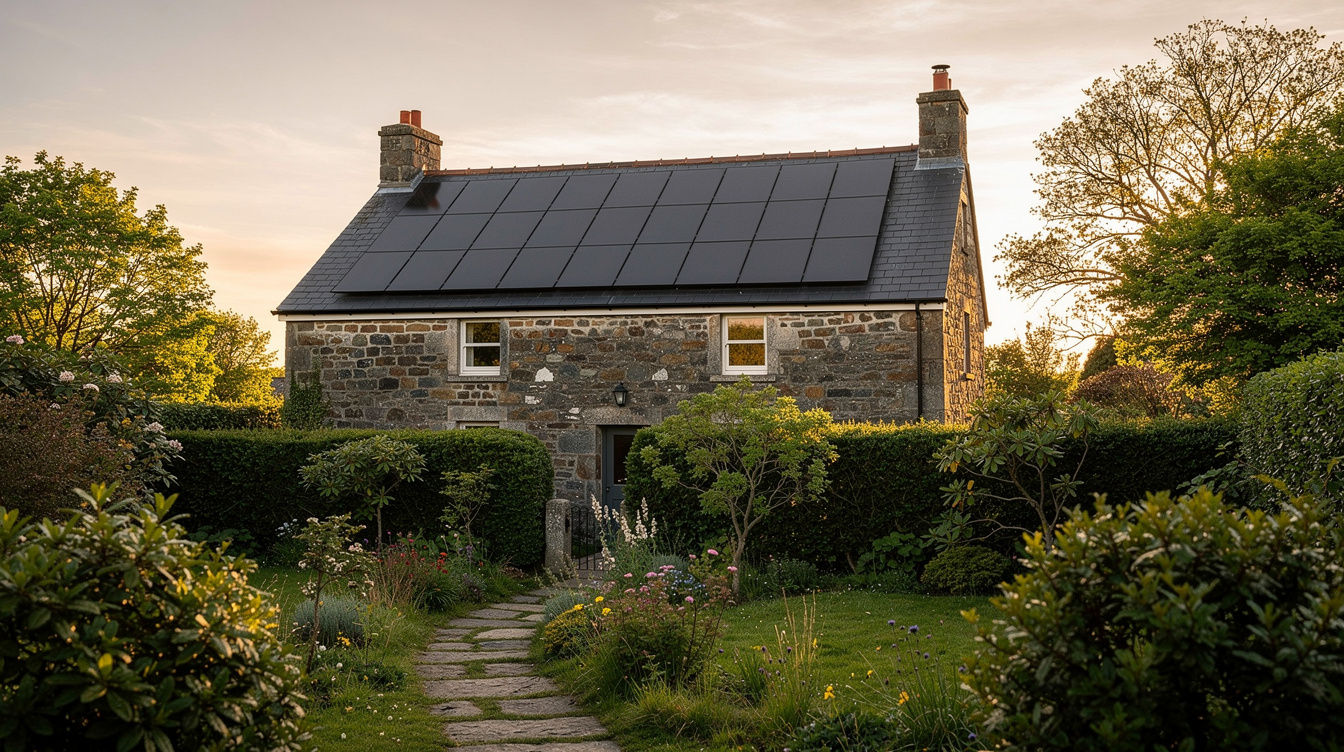
- In-roof integrated modules on stone cottages with re-slated rear pitches — the modules sit flush in place of slate, no rails visible.
- All-black or dark-brown polymer-frame modules, no silver frame, no white backsheet.
- Concealed cabling routed through internal chases; no external conduit on stonework.
- Inverter in an internal utility cupboard, garage, or attic — never on an original gable wall.
- No modification of chimneys, parapets, decorative barge boards or original slates.
- Written commitment to full reversibility in the application pack.
What gets refused
- Panels on front-elevation slate roofs visible from the public street of a Georgian, Victorian, or Edwardian streetscape.
- Any install that requires drilling into cut stone, original chimneys, or protected internal features to route cabling.
- Silver-framed panels on any dark slate or natural clay tile roof.
- Freestanding ground-mount arrays in the curtilage of a protected structure, particularly if visible from a public vantage.
- Battery cabinets, external inverters or additional plant on original external walls.
Do heritage owners still get the SEAI €1,800 grant?
Yes — the SEAI Solar PV grant applies to any qualifying owner-occupied home in Ireland built before 1 January 2021, regardless of protected-structure status, provided the system is installed by an SEAI-registered installer. Section 5 or planning approval doesn’t change grant eligibility, but the grant will not pay for planning fees or architect costs.
What a heritage-friendly install costs
| Component | Standard install | Heritage install |
|---|---|---|
| 4kWp modules | Silver-frame, poly backsheet from ~€170/panel | All-black shingle, ~€240–€300/panel |
| Mounting | On-roof rail, ~€400 | In-roof integrated tray, ~€1,200–€2,000 |
| Cabling | External conduit + attic, ~€150 | Full internal chase, hidden, ~€400–€800 |
| Inverter location | External wall, no cost premium | Internal cupboard, ~€150 extra electric run |
| Planning + design | Nil (exempt) | €80 (Section 5) or €3,500–€7,500 (full planning) |
| Typical net cost after SEAI grant | ~€8,200 | ~€11,500 – €15,500 |
Heritage installs cost more, but on a house that will hold its character over generations, the upgrade tends to be additive to value. Estate agents in Dublin’s inner suburbs report that discreet, planning-compliant solar on a Georgian rear roof is now viewed as a value-add rather than a red flag — the opposite of a 10-year-old street-facing install.
Get a heritage-aware installer quote
Our installer network includes contractors who’ve delivered Section 5–approved installs across Dublin, Cork, Galway, Limerick and Kilkenny. Free personalised quote for your address.
The step-by-step homeowner checklist
- Confirm your protected status using the council development plan and ACA map.
- Short-list heritage-experienced installers — ask on your first call whether they’ve done a Section 5 or planning pack before.
- Roof survey with heritage lens — installer photographs public vantages, notes original vs replaced roof surfaces.
- Confirm design — rear-only, all-black modules, in-roof or discreet on-roof, internal cabling, internal inverter.
- Apply for Section 5 declaration if there’s a good exemption argument (rear-only, non-visible). Fee €80. Response in 4 weeks.
- If exempt: book install, apply for SEAI grant, run ESB NC6 through your installer.
- If not exempt: appoint architect / conservation architect, submit full planning. Budget 3–6 months to grant of permission.
- Post-install: keep the Section 5 or planning decision letter with the house deeds. Future buyers, banks and re-BER assessors will ask for it.
FAQ
Can I install solar panels on the back of my Georgian house without planning permission?
Often yes — if the rear roof is a modern re-roof, panels are all-black, cabling is internal, and no original fabric is affected. Apply for a Section 5 declaration first so you have written proof.
What’s the difference between a protected structure and an ACA property?
A protected structure is individually listed on your council’s Record of Protected Structures. An ACA property is any home inside an Architectural Conservation Area boundary — the group of buildings is protected, not necessarily your specific house. ACA constraints usually apply only to exterior works visible from the public street; protected-structure constraints extend inside the building too.
How long does a Section 5 declaration take?
4 weeks by statute. Most Irish councils return them within the window; complex cases can go slightly over.
Can I use ground-mount solar in the garden of a protected structure?
Generally allowed under the standard ground-mount exemption — max 25 m², max 2 m high, 2 m from boundaries, not between the house and the public road — but only if the panels don’t materially affect the setting of the protected structure. In practice councils are cautious, so Section 5 first.
Do I need a conservation architect?
Not for a Section 5 declaration on a rear-only install. Yes for full planning permission on a protected structure. Councils give significant weight to a report from a member of the Grade I RIAI Conservation register.
Will solar reduce the value of my listed home?
Not if it’s planning-compliant and discreet. Non-visible rear installs are increasingly seen as a positive by Irish buyers of period homes because they solve the running-cost problem without altering the streetscape.
What happens if I install without permission?
The council can serve an enforcement notice requiring you to remove the panels and reinstate the roof. Fines up to €12.7 million and/or imprisonment are theoretically possible under the Act but in practice enforcement is remedial rather than punitive — you’ll be told to take them down. Doing the paperwork upfront is cheap by comparison.
The one-line summary
Protected structures and ACA properties are not shut out of solar — they just need the €80 Section 5 route (or a Section 57 declaration for the wider building) and a heritage-aware installer who specs black-on-black, rear-roof, reversible. Owners who follow the process add solar, keep their character intact, and avoid enforcement.
Ready for a heritage-friendly quote?
Our installer network can prepare a Section 5-ready pack for your address. Get a free quote and honest heritage feasibility check.
Related Articles
4kW Solar System Cost Ireland 2026: Real Prices, Output & Payback
Real 2026 Irish 4kW quotes (€7,210 gross, €5,410 net after €1,800 SEAI grant), 3,600–4,200 kWh/yr output, 4.8yr payback and when 4kW beats 3kW or 5kW.
10kW Solar System Cost Ireland 2026: Price, Output & When It’s Worth It
Real 2026 Irish installer prices for a 10kW solar system (€14,300 gross – €1,800 SEAI grant), three-phase rules, expected output and when 10kW beats 6kW.
Green Mortgages Ireland 2026: How Solar Panels Unlock Cheaper Rates from AIB, BOI, PTSB, Haven & Avant
How Irish green mortgages work in 2026, what BER you need, and where a solar install pays back inside the mortgage itself. AIB, BOI, PTSB, Haven, Avant.