
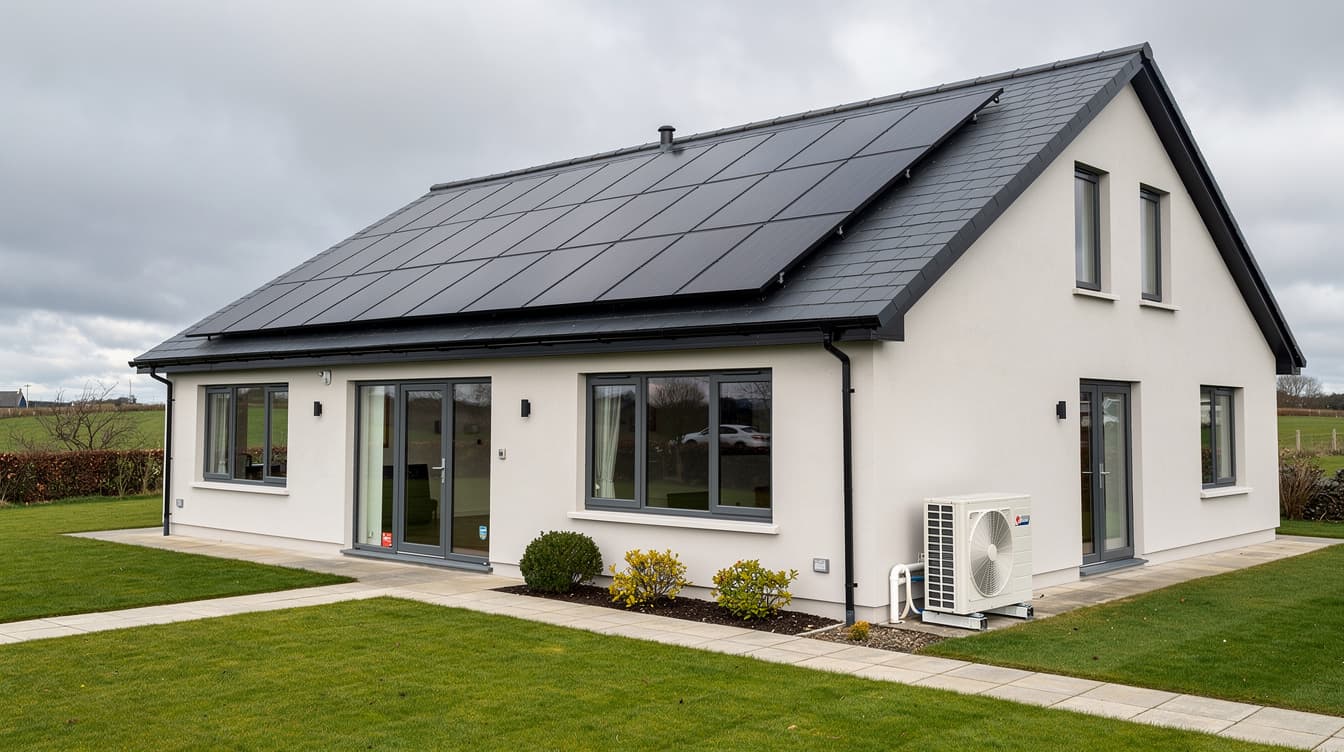
10kW Solar System Cost Ireland 2026: Price, Output & When It’s Worth It
A 10kW solar array is a serious system for a serious energy home — think heat pump, EV, hot tub, home office, teenagers who leave every light on. In Ireland in 2026 it’s the largest domestic system most homes will ever install, and the maths only works for a specific kind of household.
Real installer quotes in July 2026 are landing at €13,900–€16,800 gross for a 10kW system. After the SEAI €1,800 grant (still capped at 4kW, doesn’t scale) and 0% VAT, net is around €12,100–€15,000. Here’s exactly what you get for the money, when 10kW makes sense, and when a 6kW system does the job for €5,000 less.
Ready to Go Solar?
Get a personalised quote for a 10kW system from vetted SEAI-registered installers.
What a 10kW System Looks Like in 2026
10kW isn’t “bigger 6kW” — it’s a physically different install with different electrical requirements. Here’s the typical spec Irish installers are quoting right now:
| Component | Typical spec (2026) |
|---|---|
| Panels | 24–25 × 400–450W (Longi, JA Solar, Trina, Jinko) |
| Inverter | 10kW three-phase hybrid (Sungrow, Solis, Huawei, GoodWe) |
| Battery-ready | Yes — add 10–15kWh storage later |
| Roof space needed | 48–55 sqm of usable pitch |
| Grid connection | Three-phase required (see below) |
| Expected output (Ireland avg) | 8,500–10,500 kWh/year |
| Install time on-site | 2–3 days |
Real 2026 Cost Breakdown
Here’s a genuine July 2026 quote we’ve seen for a 10kW system on a large detached rural home in Meath, three-phase supply, straightforward south-west pitch:
| Line item | Cost |
|---|---|
| 24 × 425W Longi Hi-MO panels | €5,760 |
| Sungrow 10kW three-phase hybrid inverter | €2,340 |
| Mounting, DC/AC cable, isolators | €1,650 |
| Scaffolding + labour (2.5 days) | €3,100 |
| NC7 application + ESB paperwork | €550 |
| SEAI compliance, MPRN certs, warranty | €900 |
| Gross total (0% VAT) | €14,300 |
| Less SEAI grant | –€1,800 |
| Net cost to homeowner | €12,500 |
That works out to €1,250/kWp installed — excellent value at this system size. Smaller 4kW systems typically land at €1,700–€1,900/kWp, so per-watt you’re paying about 30% less at 10kW.
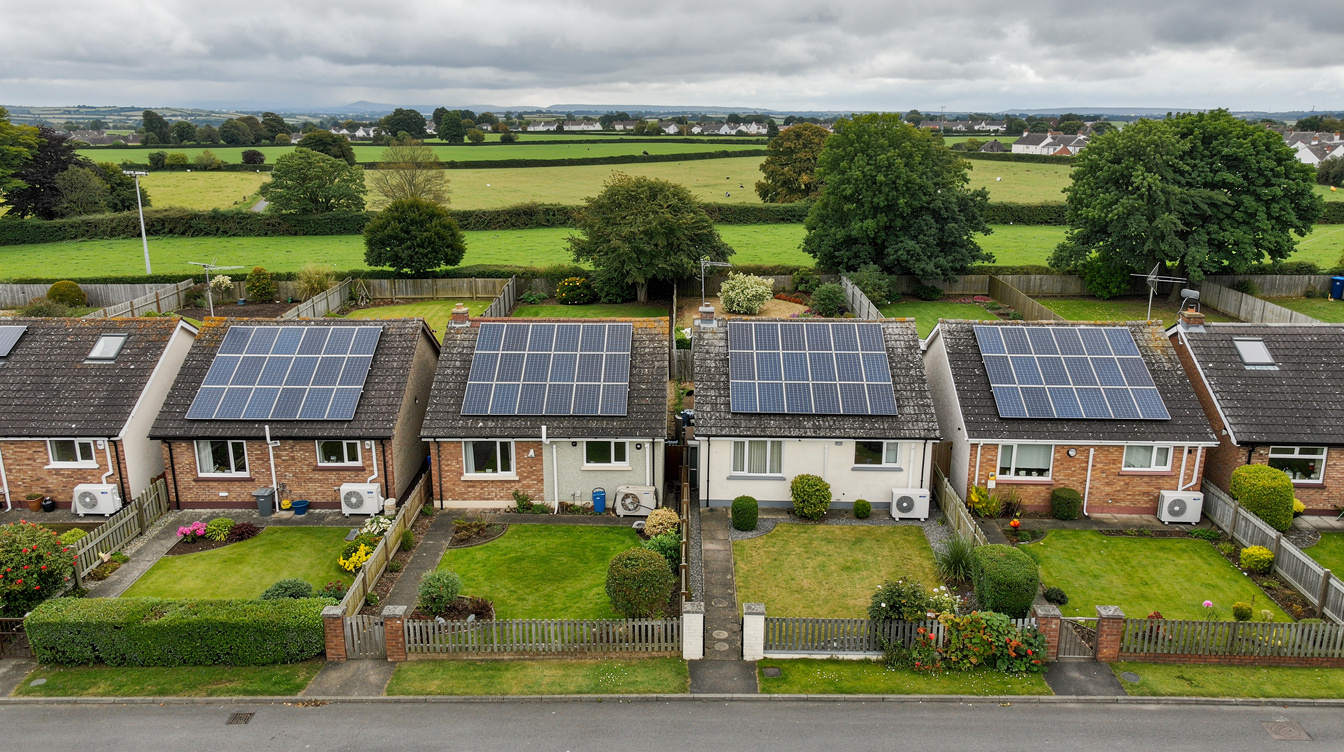
Three-Phase Requirement: The Deal-Breaker Nobody Warns You About
Under ESB Networks rules, a single-phase domestic connection can export a maximum of 6kW under the NC6 fast-track process. Anything above that requires three-phase electricity and the NC7 formal application. If you’re on single-phase (which most Irish urban homes are), you have three options:
- Downsize to 6kW. Cheapest — and for many homes the smarter choice.
- Install 10kW but throttle export to 6kW. Legal, common on hybrid inverters. You lose the CEG income on ~30% of your summer generation.
- Upgrade to three-phase. ESB Networks quote €2,500–€8,000 depending on your area, and it can take 4–6 months. Only worth it if you already need it (large workshop, EV rapid charger, farm equipment).
Read our full three-phase electricity guide before you commit — several homeowners we’ve spoken to signed for 10kW without realising they’d be capped at 6kW export.
Expected Output: 8,500–10,500 kWh/year
Ireland averages 900–1,050 kWh per kWp installed, depending on:
- Location: Wexford and Waterford get ~1,050 kWh/kWp; Donegal and north Mayo closer to 900.
- Orientation: Due south hits peak; east-west split typically loses 8–12% but flattens the daily curve.
- Pitch: 30–40° is optimal; anything from 15–50° is fine within a few percent.
- Shading: A single chimney or tall tree can cost 400–800 kWh/year on a big array.
For a well-sited 10kW system in the sunny south-east, plan for around 10,000 kWh/year. That’s comparable to the entire annual electricity use of a heat-pump-heated 4-bed detached house.
Who Actually Needs 10kW?
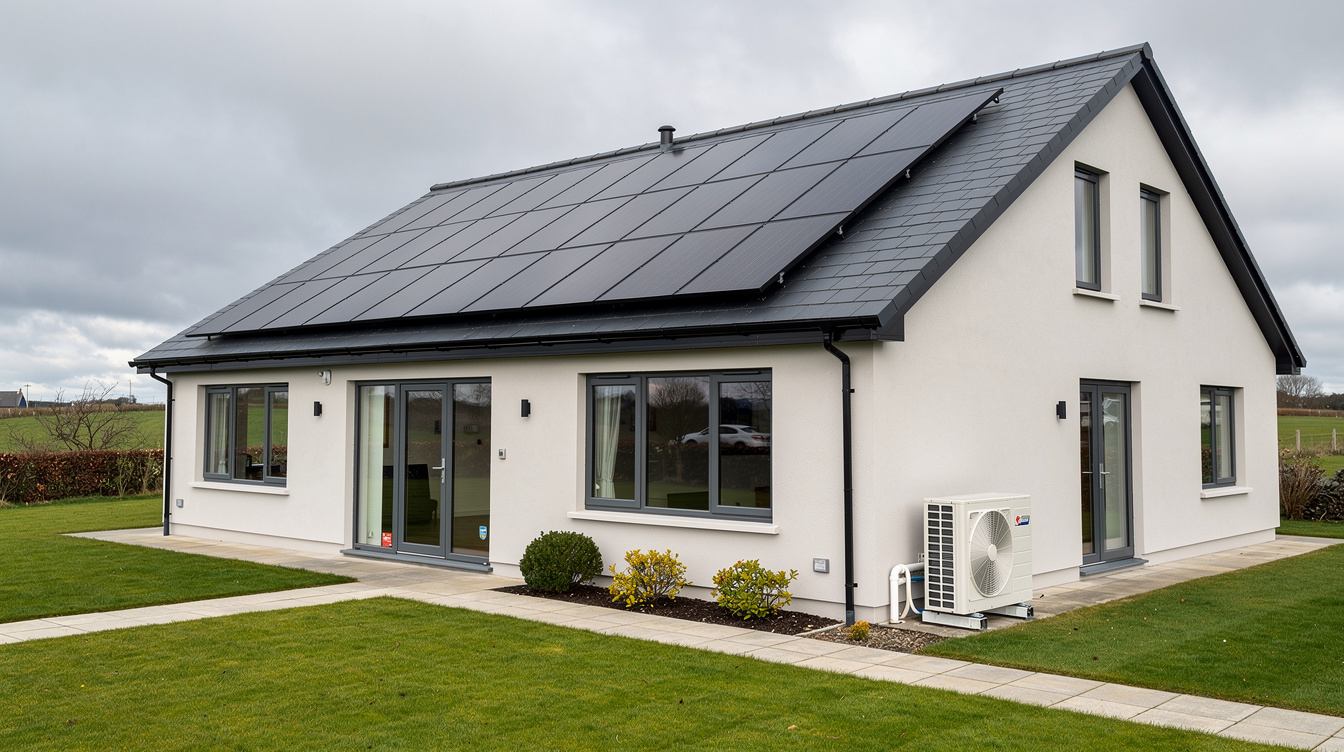
A 10kW system is genuine overkill for most Irish households. It makes sense in these specific scenarios:
| Profile | Why 10kW works |
|---|---|
| Heat pump + EV + big family | 10,000–14,000 kWh/yr electricity demand — system self-consumes 55–65% |
| Home office + 2 EVs | Daytime load matches solar generation curve |
| Small farm or B&B on three-phase | High daytime load: milk cooling, laundry, catering |
| Hot tub / heated pool household | 2,500–5,000 kWh/yr for the tub alone |
| Detached rural home, oversized roof | Marginal cost of extra panels is low once scaffolding is up |
If you don’t match at least two of those, a 6kW system (see our 6kW cost guide) will save you around €5,000 and produce enough for a family with an EV or a heat pump — just not both plus a hot tub.
10kW Payback & ROI
Here are three realistic 25-year scenarios for a €12,500 net 10kW system:
| Household | Self-consumption | Annual saving + CEG | Payback |
|---|---|---|---|
| Heat pump + EV, WFH couple | 65% | €2,180 | 5.7 yrs |
| Gas heat, 1 EV, family of 4 | 40% | €1,750 | 7.1 yrs |
| Empty-nesters, no EV, no heat pump | 22% | €1,280 | 9.8 yrs |
Assumes 35c/kWh import price, 20c/kWh CEG export tariff (2026 supplier average) and 0.5% annual panel degradation. Over 25 years the top scenario returns roughly €43,000 in savings on the €12,500 invested — a 3.4× lifetime return.
Not sure if you need 10kW?
Use our free calculator to size your system based on your bill and household setup.
10kW Solar + Battery: The Full Independence Setup
A 10kW array with 10–15kWh of battery storage is the closest a normal Irish home gets to grid independence. Typical add-on cost in 2026:
- 10kWh battery: +€5,500–€7,500 installed
- 15kWh battery: +€7,500–€9,500 installed
Combined 10kW + 15kWh: gross around €22,000–€25,000, net after grant roughly €20,000–€23,000. Adds 1–2 years to payback, but on a time-of-use tariff (Electric Ireland Home Electric+ Night Boost, Bord Gáis EnergySaver Night Boost, or Energia Smart Data Night 2am–5am) you can also arbitrage cheap night electricity at ~10c/kWh to displace 35c/kWh daytime usage — another €300–€500/yr.
Common Mistakes on 10kW Installs
- Not checking supply type first. Signing a contract for 10kW without confirming your ESB connection is three-phase. Get your MPRN checked before deposit.
- Under-spec inverter. A 10kW panel array on an 8kW inverter clips 400–700 kWh/yr in summer. Match inverter kW to panel kW.
- Not future-proofing the CU. Your consumer unit needs a spare RCBO slot for AC isolation. Retrofitting later is €350–€600 in electrician time.
- Wrong warranty tier. On a €14,000 install you want product warranty ≥15 years, performance warranty ≥25 years, and inverter warranty ≥10 years extended. Anything less is a red flag.
- Ignoring shading survey. On a big array, one shaded panel drags the whole string. Ask for an on-site survey with PVGIS output modelling, not just a satellite image.
FAQ
Can I fit 10kW on a semi-detached house?
Rarely. Most Irish semis have 25–35 sqm of usable roof, which caps you at 5–7kW. 10kW usually needs a detached or bungalow with an unbroken 45+ sqm pitch.
Does the SEAI grant scale with system size?
No. The Solar PV grant is fixed at €1,800 for any system 2kWp or larger. You get the same €1,800 whether you install 4kW or 10kW.
Do I need planning permission for 10kW?
As of the 2022 SI 405 exemption, domestic solar arrays are planning-exempt at any size in most residential zones, provided panels don’t project above the ridge line and don’t breach the exempted development thresholds for outbuildings/attached buildings. Full details in our planning permission guide.
Will my house insurance premium go up?
Most Irish insurers now include roof-mounted solar as standard with no premium change (Aviva, AXA, FBD, Allianz). Notify them in writing — a small subset add €30–€60/yr for large arrays. See solar & house insurance guide.
How long does a 10kW install take?
Site survey to system live is typically 6–10 weeks. The physical install is 2–3 days on-site; the rest is ESB Networks NC7 processing and MPRN paperwork.
Should I add a battery on day one or later?
Day one is cheaper — scaffolding is up, hybrid inverter can be spec’d once, single contract. Adding later is legal and common, but you’ll pay ~€800–€1,200 more in labour and inverter reconfiguration.
Get a real 10kW quote in under 2 minutes
We’ll match you with SEAI-registered installers who’ve done 10kW+ systems on Irish homes.
Prices, grants and CEG rates verified July 2026 against SEAI, ESB Networks and current Irish supplier tariffs. Individual quotes will vary with roof complexity, panel choice and location.
Related Articles
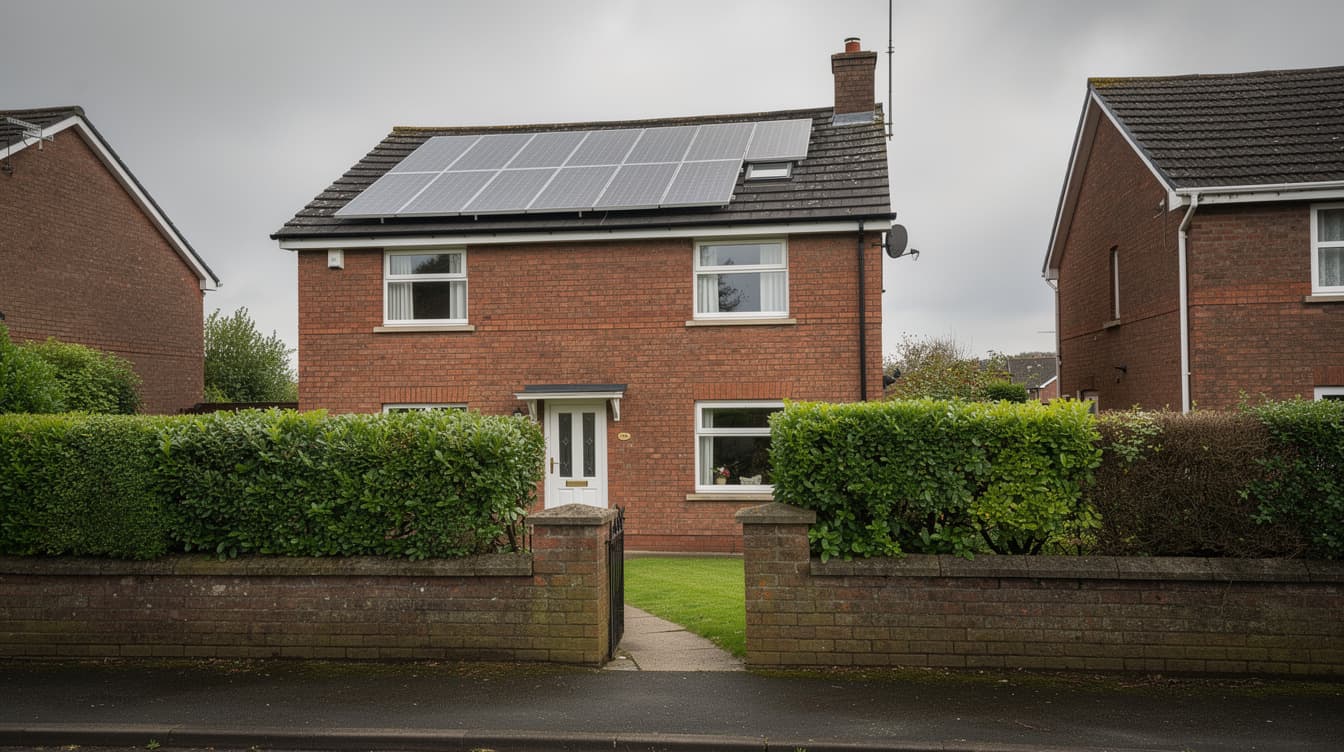
4kW Solar System Cost Ireland 2026: Real Prices, Output & Payback
Real 2026 Irish 4kW quotes (€7,210 gross, €5,410 net after €1,800 SEAI grant), 3,600–4,200 kWh/yr output, 4.8yr payback and when 4kW beats 3kW or 5kW.
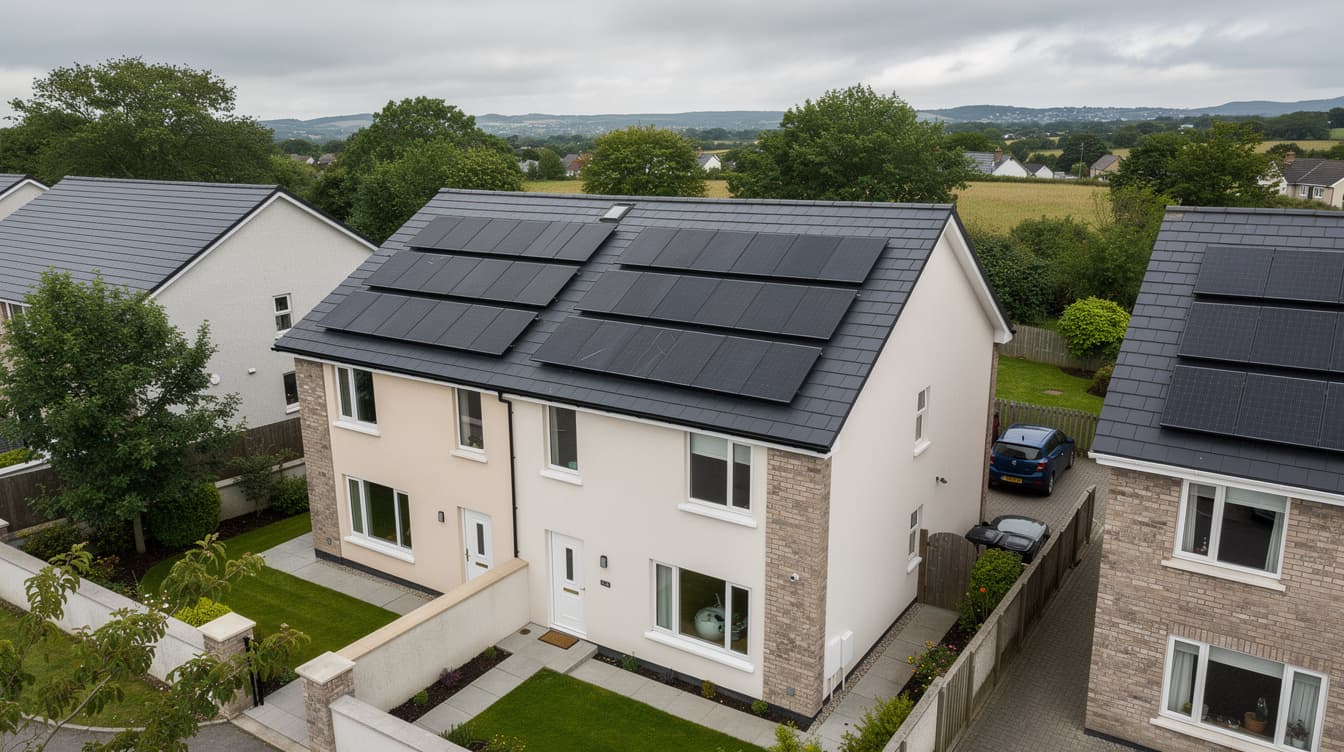
Solar Panel System Cost by Number of Panels Ireland 2026: 8, 12, 14, 20, 24 Panel Prices
What 8, 12, 14, 16, 20 or 24 solar panels actually cost in Ireland 2026 — net after €1,800 SEAI grant & 0% VAT, output kWh, roof area & battery add-ons.
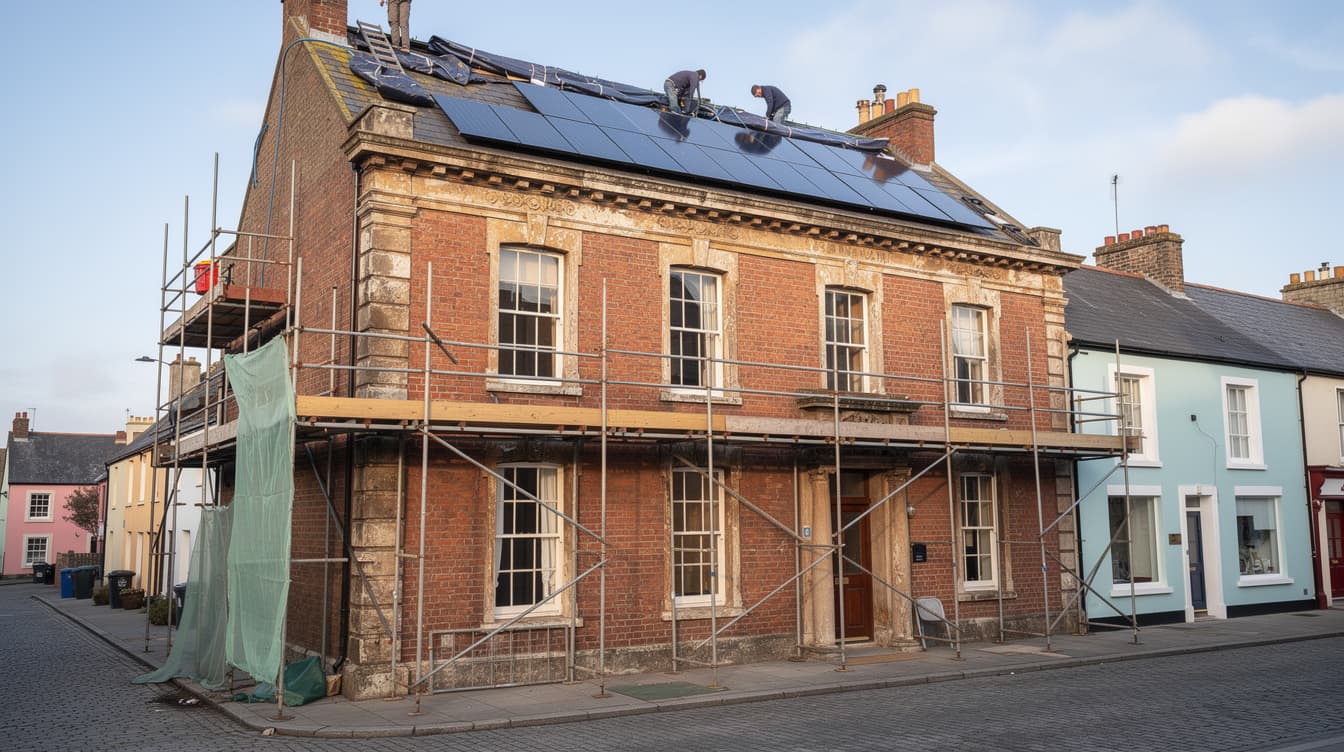
Vacant Property Refurbishment Grant + Solar Ireland 2026: How to Stack €50k VPRG With €1,800 SEAI
Stack the €50,000 Vacant Property Refurbishment Grant with the €1,800 SEAI Solar PV grant in Ireland 2026 — real refurb numbers, timing, traps.