
4kW Solar System Cost Ireland 2026: Real Prices, Output & Payback
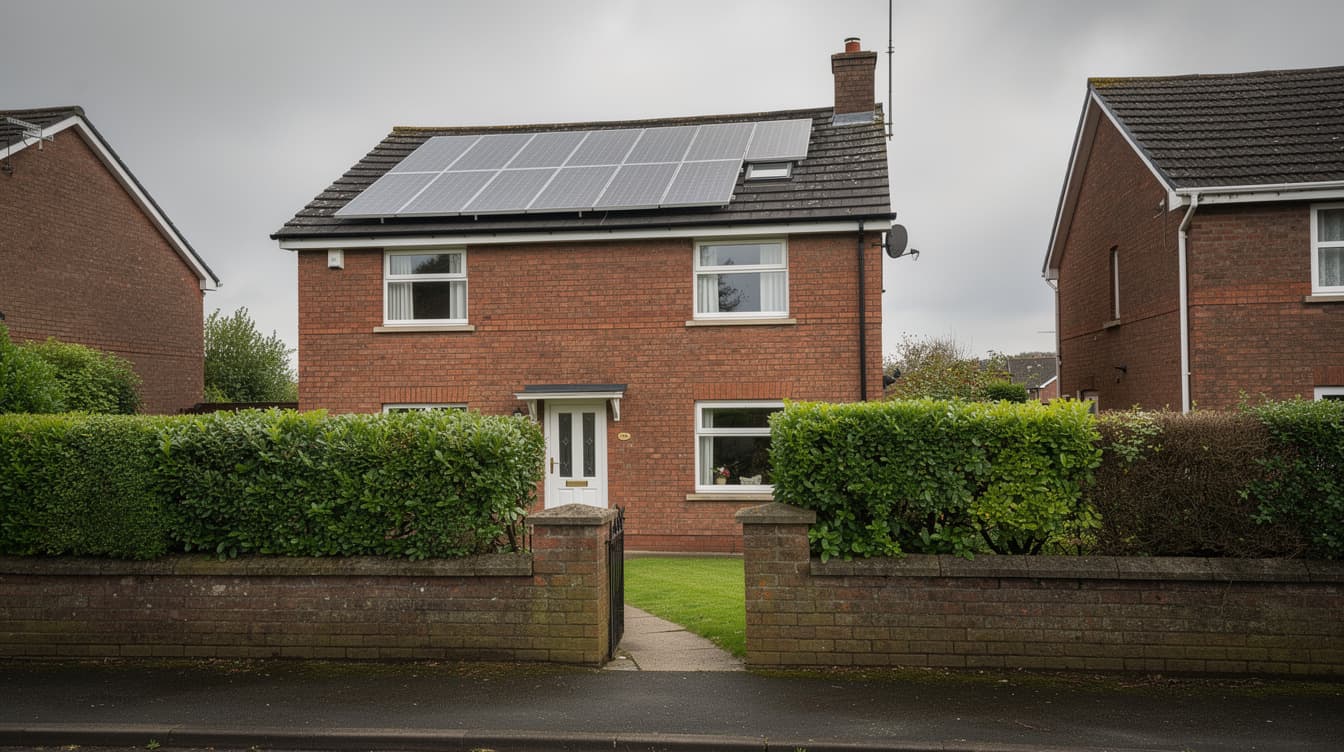
A 4kW solar system is the honest sweet spot for a typical Irish 3-bed semi in 2026. Big enough to make a real dent in your electricity bill, small enough to sit comfortably on one side of a standard roof, and priced to hit the SEAI grant cap without a single extra euro wasted.
Real installer quotes across Ireland right now are landing at €7,100–€8,400 gross for 4kW, or €5,300–€6,600 net once the €1,800 SEAI grant lands. Payback is 6–8 years for a family who’s home at least a couple of days a week. Here’s exactly what you get, what you don’t, and why 4kW beats both 3kW and 5kW for a specific slice of Irish homes.
Ready to Go Solar?
Get personalised 4kW quotes from SEAI-registered installers — free.
Why 4kW Is the Sweet Spot
There’s a specific reason 4kW keeps coming up in Irish installer proposals: the SEAI Solar PV grant is fixed at €1,800 for any system 2kWp or above. That means:
- A 3kW system uses your full grant on a smaller array — grant is 60% wasted (relative to size).
- A 4kW system maxes the grant and produces roughly 30% more electricity than 3kW for only €900–€1,200 more.
- A 5kW system produces another 20% on top for €900–€1,500 more — but pushes some homes toward the 6kW NC6 export cap.
For anyone with a modest budget and a single-storey or semi-detached roof, 4kW is the highest-return system before diminishing returns kick in.
What’s Actually Included in a 4kW Install
| Component | 2026 spec |
|---|---|
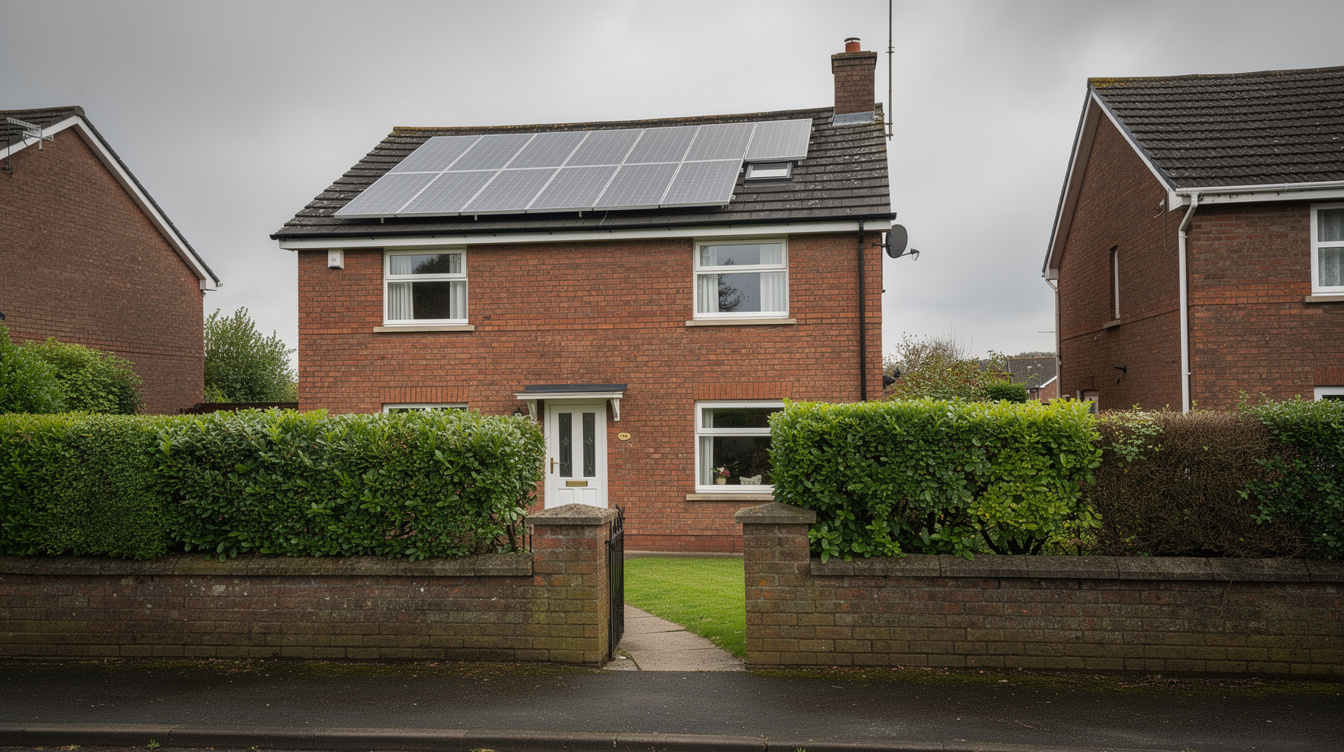
| Panels | 10 × 400–430W monocrystalline (Longi, JA, Trina, Jinko) |
| Inverter | 4kW single-phase string or hybrid (Sungrow, Solis, GoodWe) |
| Immersion diverter | Eddi or iBoost+ (typically add-on, +€400–€550) |
| Roof space needed | 20–22 sqm on one pitch |
| Grid connection | Single-phase (NC6 fast-track) |
| Expected output | 3,600–4,200 kWh/year |
| Install time on-site | 1 day for straightforward jobs |
Real July 2026 Quote: Line-by-Line
Here’s an actual 4kW quote we’ve seen from a mid-market Dublin installer for a 3-bed semi on a south-facing pitch with a simple gable roof:
| Line item | Cost |
|---|---|
| 10 × 410W Longi Hi-MO panels | €2,150 |
| Sungrow 4kW single-phase inverter | €1,180 |
| Aluminium mounting rails, hooks, DC cable | €780 |
| Scaffolding + labour (1 day) | €1,650 |
| NC6 application, MPRN certs, commissioning | €450 |
| Eddi immersion diverter (optional but recommended) | €480 |
| SEAI compliance, 25yr warranty admin | €520 |
| Gross total (0% VAT) | €7,210 |
| Less SEAI grant | –€1,800 |
| Net cost to homeowner | €5,410 |
Per-watt that’s roughly €1,350/kWp net — solid mid-market pricing. Bargain-basement quotes below €6,500 gross usually skip the immersion diverter, use no-name inverters or cut corners on mounting (see red flags below).
Expected Output on Irish Roofs
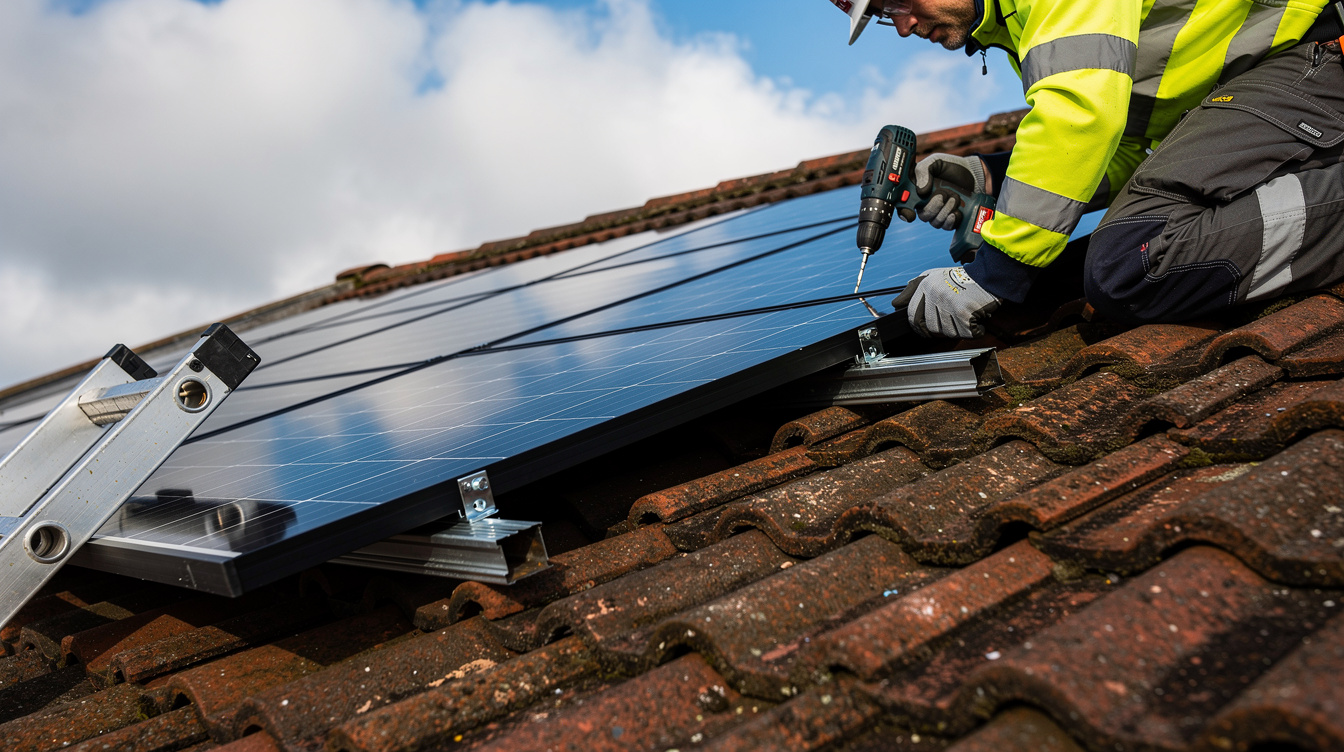
Ireland typically delivers 900–1,050 kWh per kWp installed for well-sited systems. A 4kW array should produce:
| Location | Yield (kWh/kWp) | 4kW total (kWh/yr) |
|---|---|---|
| Wexford / Waterford / Cork | 1,050 | 4,200 |
| Dublin / Kildare / Wicklow | 1,000 | 4,000 |
| Galway / Mayo / Clare | 950 | 3,800 |
| Donegal / Sligo / Cavan | 900 | 3,600 |
These are averages for south-facing 30°–40° pitches with no shading. East-west split arrays typically produce 8–12% less; a heavily shaded roof can lose 20%+ — ask for a shading survey before you sign.
Realistic Savings for a 4kW System
A 4kW system at 4,000 kWh/year on a typical Irish home breaks down like this in 2026:
| Where the electricity goes | kWh/yr | Value |
|---|---|---|
| Self-consumed (offsets 35c/kWh import) | 1,400 | €490 |
| Diverted to hot water (offsets 35c/kWh) | 800 | €280 |
| Exported to grid via CEG (20c/kWh) | 1,800 | €360 |
| Total annual value | 4,000 | €1,130 |
At €5,400 net cost and €1,130 saving/year, payback is 4.8 years for a household home most days and using the diverter properly. Empty-nesters or 9-to-5 couples who export more see 6–8 years.
Over 25 years (with 0.5% annual panel degradation and modest energy price inflation), the same system returns roughly €28,000–€32,000 in cumulative savings.
Use the calculator to check your specific savings
Enter your bill, roof direction and location to see a real projection for your home.
4kW vs 3kW vs 5kW: Which Is Right For You?
| System | Net cost | Yearly output | Best for |
|---|---|---|---|
| 3kW | €4,300–€5,100 | 2,700–3,150 kWh | Small apartment / 1–2 bed with tiny bill |
| 4kW | €5,300–€6,600 | 3,600–4,200 kWh | Typical 3-bed semi, no heat pump or EV |
| 5kW | €6,400–€7,700 | 4,500–5,250 kWh | 3–4 bed with EV or heat pump |
| 6kW | €7,600–€8,900 | 5,400–6,300 kWh | Larger family, EV + heat pump, single-phase max |
See our detailed 5kW guide and 6kW guide if you’re on the fence about going bigger.
When 4kW Isn’t Enough
Be honest about your household setup before choosing 4kW. It will underperform if you:
- Have an air-to-water heat pump using 5,000+ kWh/yr of heat electricity.
- Charge an EV overnight at home for 12,000+ km/yr.
- Run a full-time home office with monitors, servers and daytime AC.
- Live in a large 4-bed detached with 5+ occupants and €3,000+/yr electricity bills.
All four profiles above will see 4kW cover 30–40% of demand vs. 55–65% for 6kW. If any two of those apply to you, spend the extra €2,000 gross and go 6kW.
Red Flags in a 4kW Quote
- Gross under €6,300. Below this, corners are being cut — usually on inverter brand (unknown Chinese OEM with 5yr warranty), mounting hardware (steel not aluminium), or paperwork (NC6 fee dropped).
- No named panel brand. If the quote says “Tier 1 panels” without naming Longi, JA, Trina, Jinko, Canadian Solar or REC, ask for the specific model. See our panel brand comparison.
- No immersion diverter option. Reputable installers will offer this add-on. It transforms your payback numbers.
- Deposit >25%. Standard is 10–20%, balance on install.
- No shading assessment. Ask for the PVGIS output projection with your specific address plugged in, not a generic estimate.
- Warranty confusion. Product ≥12 years, performance ≥25 years, inverter ≥10 years. If any of those is missing, walk.
Full checklist in our solar contract red flags guide.
Adding a Battery Later
Most 4kW installs in 2026 don’t include a battery on day one — the maths for battery storage only crosses over into “worth it” territory once you’re on a time-of-use tariff and using 4,500+ kWh/yr. If you might add one later:
- Ask your installer to fit a hybrid inverter up front (adds €150–€400 over a plain string inverter).
- Leave rack space next to the inverter for a future battery unit (needs 200mm clearance).
- Typical 5kWh battery added later: €3,800–€5,000 installed.
SEAI Grant Steps for a 4kW Install
- Find an SEAI-registered installer. Only registered companies can claim the grant on your behalf. Verify via the SEAI register.
- Get the quote and confirm eligibility. Home built and occupied before 31 Dec 2020, no prior solar PV grant on the MPRN, homeowner or tenant with owner permission.
- Installer applies for grant approval. They handle the paperwork.
- Install and commission. System live within grant validity window (usually 6 months).
- Grant paid to installer. Reduces your bill directly — you only pay the net.
Full walkthrough on our SEAI grant eligibility checker — two minutes to see if you qualify.
FAQ
How many panels is a 4kW system?
Typically 10 panels of 400W each, or 9 panels of 450W. Recent 430W–450W panels mean fewer physical panels on the roof for the same output.
Will 4kW cover all my electricity?
Rarely all — but it will cover 45–55% of a typical 3-bed semi’s annual usage. In summer months you’ll produce a surplus; in winter you’ll still buy grid electricity.
Do I need planning permission for 4kW?
No. SI 405/2022 makes domestic rooftop solar planning-exempt regardless of size on most residential dwellings, provided panels don’t project above the ridge. See our planning permission guide.
Can 4kW power an EV?
Partially. You’ll get about 2,500–3,500 km/yr of free solar-charged driving if you plug in during daylight hours. Overnight charging still needs grid electricity.
What about the CEG export tariff?
You’ll get paid for any electricity exported to the grid — the July 2026 Irish supplier average is around 20c/kWh, and top payers hit 24c/kWh. See our best CEG supplier guide to make sure you’re on the right tariff.
How long will the panels last?
Modern Tier 1 panels are warrantied to produce 85–87% of nameplate at 25 years, and often keep working for 30–35. The inverter typically needs replacement once around year 12–15.
See what 4kW would cost on your house
Free, no-obligation quotes from vetted SEAI-registered installers — 2 minutes to submit.
Prices, grants and CEG rates verified July 2026 against SEAI, ESB Networks and current Irish supplier tariffs. Actual quotes vary with roof complexity, panel choice and location.
Related Articles
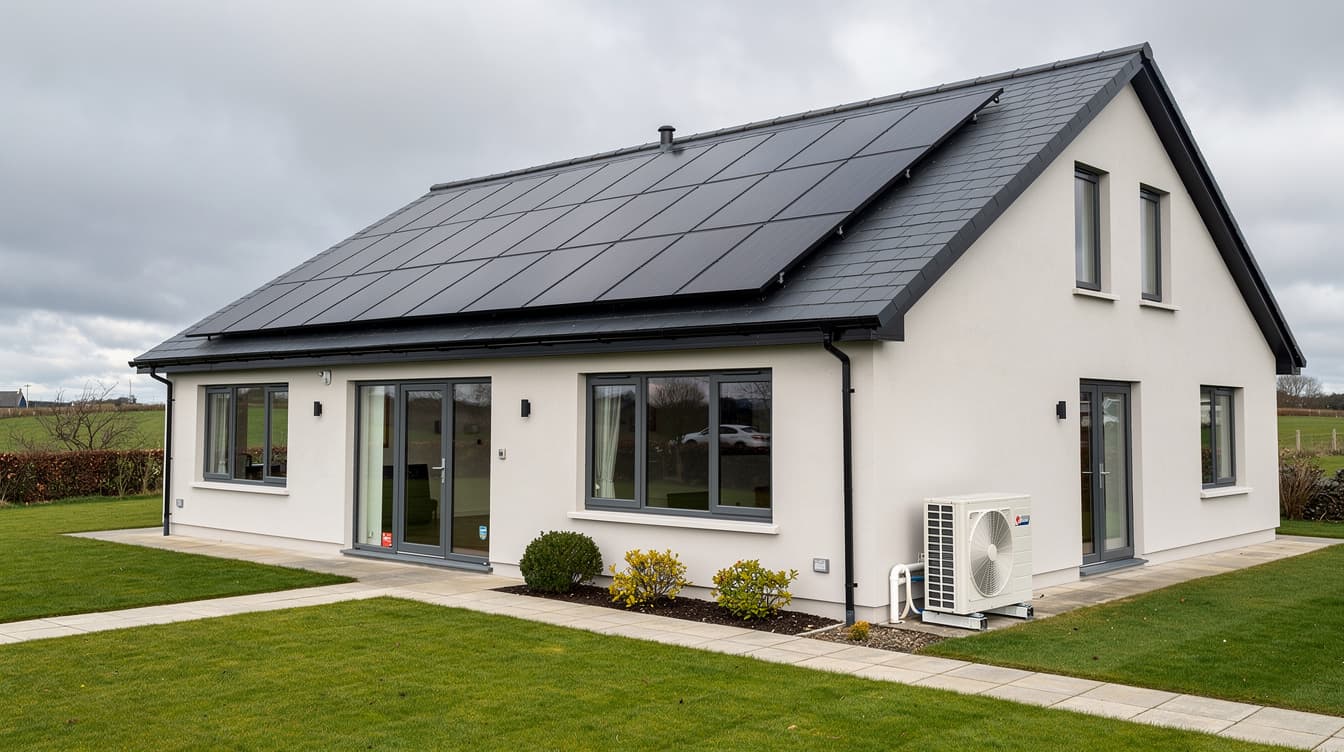
10kW Solar System Cost Ireland 2026: Price, Output & When It’s Worth It
Real 2026 Irish installer prices for a 10kW solar system (€14,300 gross – €1,800 SEAI grant), three-phase rules, expected output and when 10kW beats 6kW.
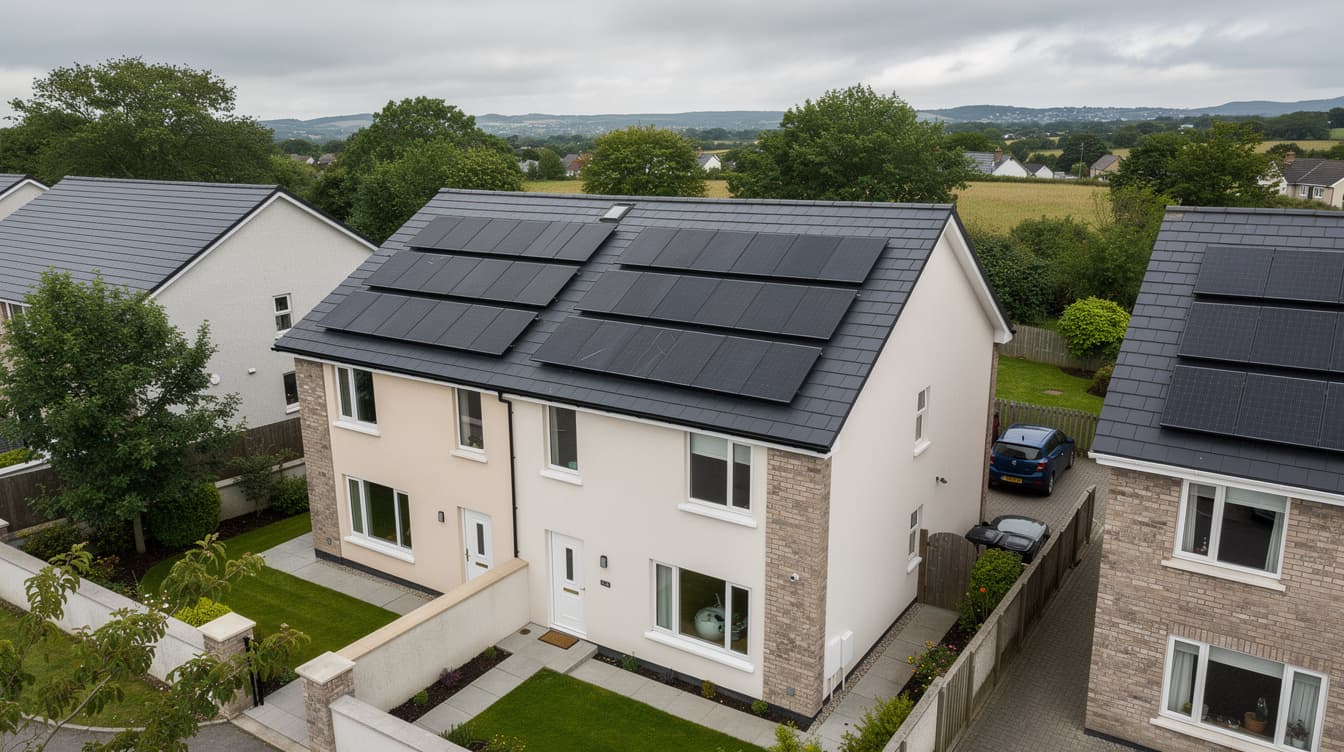
Solar Panel System Cost by Number of Panels Ireland 2026: 8, 12, 14, 20, 24 Panel Prices
What 8, 12, 14, 16, 20 or 24 solar panels actually cost in Ireland 2026 — net after €1,800 SEAI grant & 0% VAT, output kWh, roof area & battery add-ons.
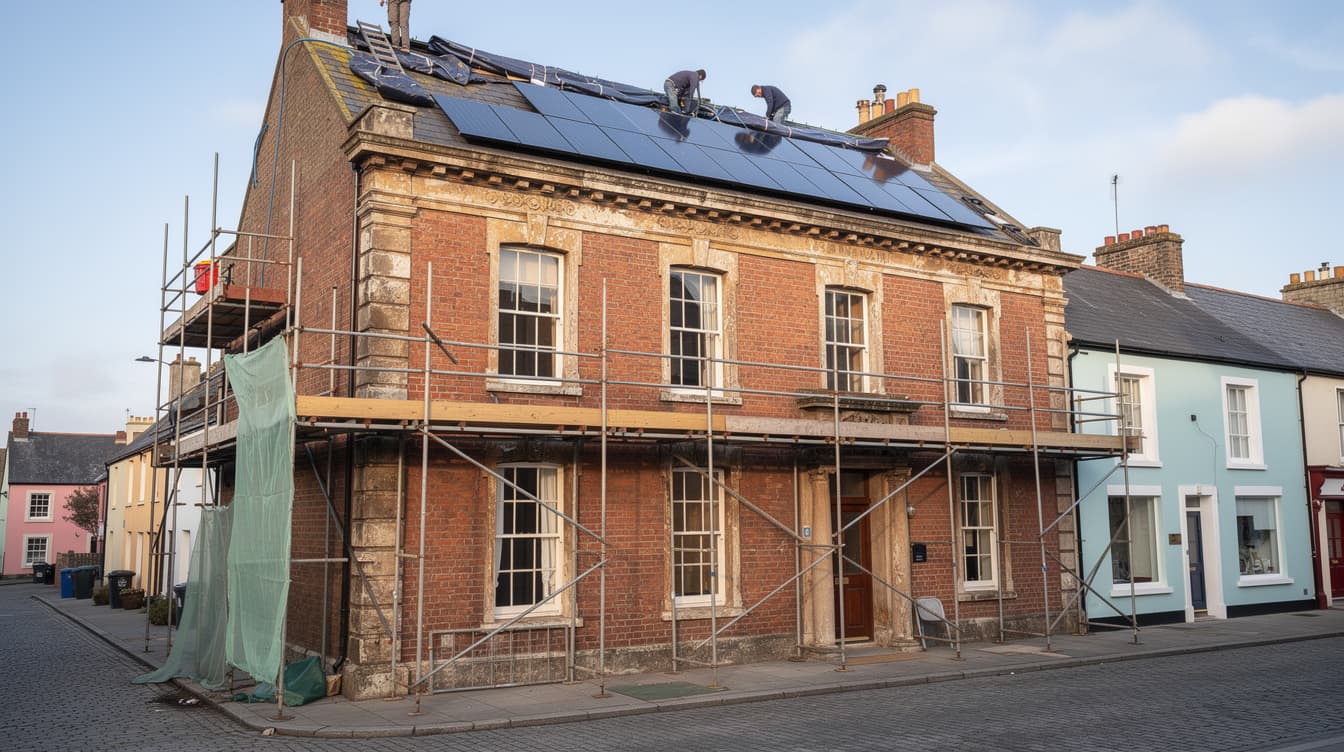
Vacant Property Refurbishment Grant + Solar Ireland 2026: How to Stack €50k VPRG With €1,800 SEAI
Stack the €50,000 Vacant Property Refurbishment Grant with the €1,800 SEAI Solar PV grant in Ireland 2026 — real refurb numbers, timing, traps.