
Solar Panel Planning Permission Ireland 2026: Do You Need It? (Complete Guide)
The short answer: probably not. Ireland removed most solar planning restrictions in 2022. Here is exactly what is exempt, what is not, and the handful of situations where you still need to apply.
It is the single most common question Irish homeowners ask before going solar: do I need planning permission? The good news is that Ireland’s planning rules for solar panels are now among the most relaxed in Europe. Since October 2022, homeowners can cover their entire roof in solar panels without filing a single form with the council.
But there are exceptions — protected structures, solar safeguarding zones near airports, and certain ground-mounted installations all have limits. Get it wrong and you could face an enforcement notice or have to remove panels you have already paid for.
This guide covers every scenario: houses, apartments, farms, commercial buildings, ground-mounted arrays, and even plug-in balcony panels. All updated for the rules in force as of May 2026.
The Quick Answer: Who Does and Does Not Need Permission
| Property Type | Rooftop Solar | Ground-Mounted | Notes |
|---|---|---|---|
| Standard house | No permission needed | Exempt up to 25m² | Full roof coverage allowed |
| Apartment building | No permission needed | Exempt up to 25m² | Management company approval may be needed |
| Commercial/industrial building | No permission needed | Exempt up to 75m² | Rooftop limit: 300m² |
| Farm building | No permission needed | Exempt up to 75m² | Rooftop limit: 300m² per building |
| Protected structure | Permission REQUIRED | Permission REQUIRED | No exemptions apply |
| Property in ACA zone | Permission REQUIRED | Permission REQUIRED | Architectural Conservation Area |
| Solar farm (ground-mounted, large) | — | Permission REQUIRED | Full planning application needed |
If your home is a standard house or apartment that is not a protected structure and not in an Architectural Conservation Area (ACA), you almost certainly do not need planning permission for rooftop solar panels. Read on for the technical details and edge cases.
Ready to Go Solar?
Get your free personalised quote from SEAI-registered installers.
Residential Rooftop Solar: Full Roof Coverage Allowed
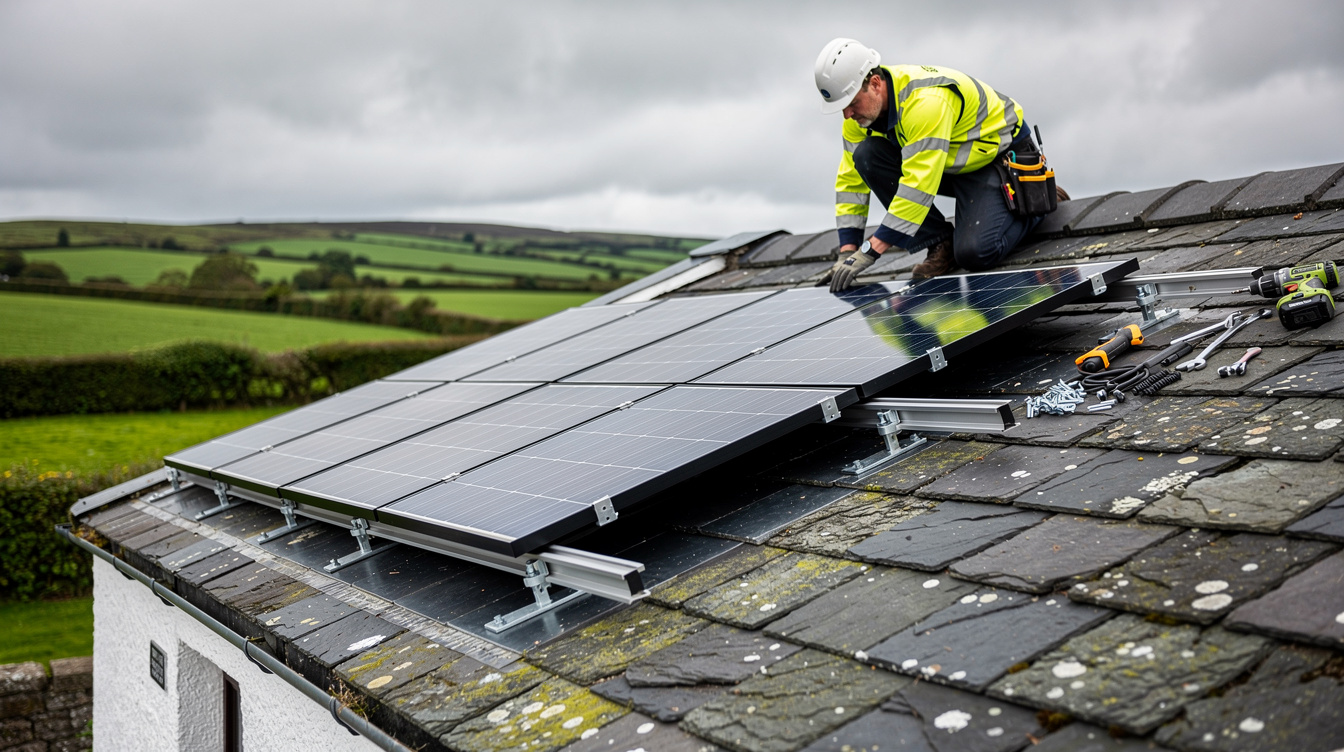
Before October 2022, homeowners were restricted to covering just 12m² (or 50% of the roof area, whichever was greater) with solar panels. That restriction was completely removed under the Planning and Development Act 2000 (Exempted Development) (No.3) Regulations 2022.
Today, you can install solar panels on your entire roof without planning permission, as long as you meet these technical conditions:
- Pitched roof: Panels must not project more than 15cm from the roof surface
- Flat roof: Panels must not project more than 50cm above the roof surface
- Setback: Panels must be at least 50cm from any edge of the roof
- Not a protected structure or within an Architectural Conservation Area
These conditions are easy to meet with a standard installation. Modern flush-mount systems sit just 6–10cm above a pitched roof, well within the 15cm limit. The 50cm setback from the edge is standard practice for safety and wind loading reasons anyway.
What counts as a “protected structure”?
Every local authority maintains a Record of Protected Structures (RPS). These are buildings of special architectural, historical, archaeological, artistic, cultural, scientific, social, or technical interest. If your home is on this list, all exemptions are cancelled and you need to apply for planning permission before installing solar panels.
Not sure if your home is protected? Check your local authority’s development plan online or ring their planning department. Georgian, Victorian, and Edwardian townhouses in city centres are the most commonly protected residential properties.
What is an Architectural Conservation Area (ACA)?
An ACA is a designated area where the planning authority considers the character of a place to be of special interest. Streets, squares, and historic village centres are typical examples. If your property is within an ACA, you also need planning permission for solar panels — even if the property itself is not a protected structure.
ACAs are mapped in your local authority’s development plan. You can usually find them on the council’s online planning map viewer.
Ground-Mounted Solar Panels: What Is Allowed
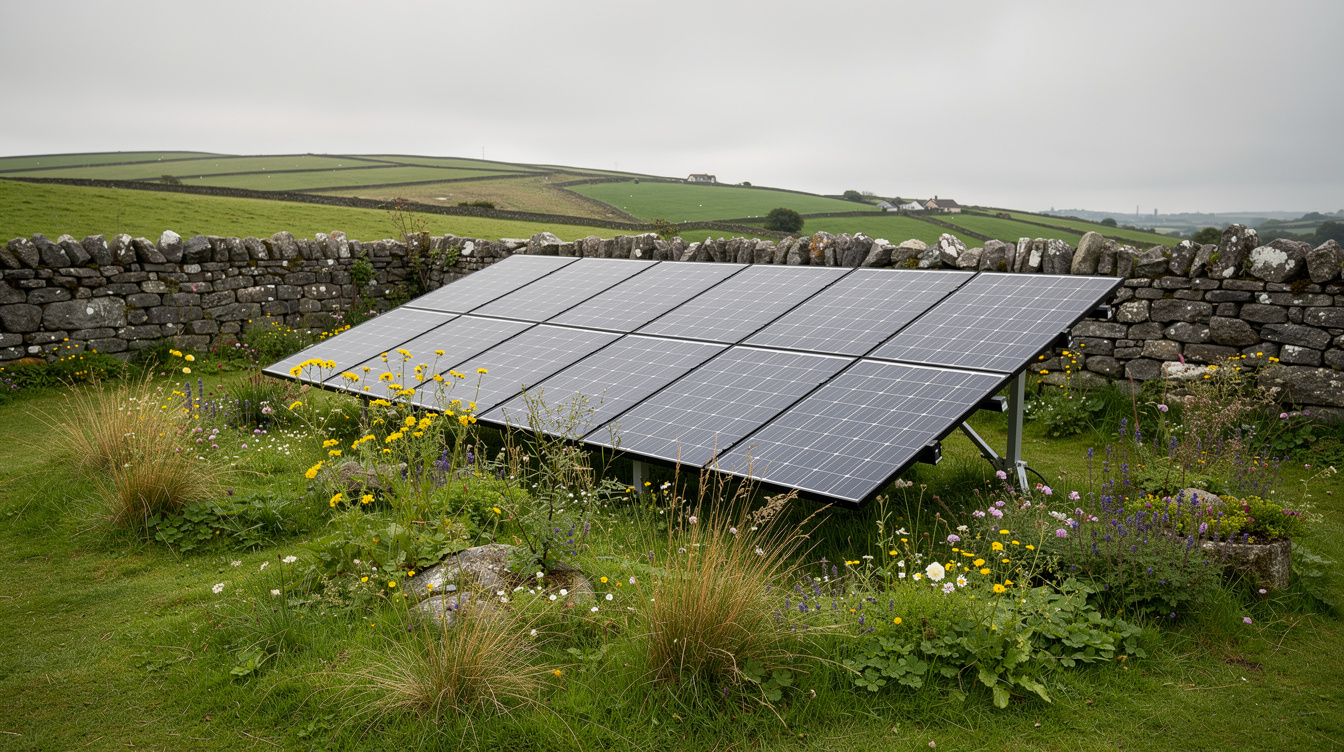
If your roof is not suitable — wrong orientation, too much shading, or you simply prefer ground-mounted panels — you can install them in your garden without planning permission, subject to these conditions:
- Maximum area: 25m² for houses (about 12–14 standard panels)
- Maximum height: 2 metres
- Remaining garden space: At least 25m² of open private garden must remain
- Not visible from a public road (this is the condition most people trip over)
- At least 2 metres from any boundary
The “not visible from a public road” condition is the trickiest one. If your front garden faces a road, ground-mounted panels there would likely need planning permission. Side and rear gardens screened by walls or hedges are usually fine.
Tip: If you need more than 25m² of ground-mounted panels, you can apply for planning permission. The application fee for domestic developments is €34, and decisions typically take 8 weeks.
Apartments: Exempt, But You Need Management Approval
The 2022 regulations extended the planning exemption to apartment buildings for the first time. This means the building itself does not need planning permission for rooftop solar. However, there are practical hurdles:
- Management company approval is almost always required because the roof is a common area
- Who pays? The owners’ management company typically needs to agree on cost-sharing
- Structural assessment may be needed for older apartment roofs
- Metering: How the generated electricity is split between units needs to be agreed
For individual apartment owners, plug-in balcony solar panels are often the easiest option. These do not require management company approval in most cases (check your lease), and they plug directly into your apartment’s electricity supply.
Commercial, Industrial, and Agricultural Buildings
Non-residential buildings also benefit from generous exemptions:
| Installation Type | Exempt Limit | Conditions |
|---|---|---|
| Rooftop (per building) | Up to 300m² | Same projection/setback rules as residential |
| Ground-mounted (per site) | Up to 75m² | Max 2m height, not visible from public road |
For a typical farm shed with a large south-facing roof, 300m² translates to roughly a 50–60 kWp system — enough to power most farm operations with electricity to spare. Many Irish farmers are now installing solar on multiple sheds to maximise the exemption (300m² applies per building).
The SEAI grant is available for non-domestic installations too. Businesses can claim up to €2,400 for a solar PV system, and the 0% VAT rate on solar panels applies to all installations until at least December 2026.
Solar for Your Business or Farm?
Get a free quote from certified installers experienced with commercial systems.
Solar Safeguarding Zones: The Airport Rule
There is one special restriction that affects properties near airports, aerodromes, and helipads. Ireland has designated 43 Solar Safeguarding Zones (SSZs) under the Planning and Development (Solar Safeguarding Zone) Regulations 2022. These exist because solar panel glare can potentially affect pilots’ vision.
If your property is inside an SSZ:
- Rooftop solar is still exempt, but limited to 300m² total (not unlimited as for other residential properties)
- For most homeowners this makes no practical difference — 300m² is far more than any house roof
- Commercial properties in SSZs face the same 300m² per-building limit
SSZs cover less than 2% of Ireland’s land area. You can check if your property is in one by consulting the SSZ maps published by the Department of Housing, Local Government and Heritage, or by asking your local authority.
Plug-In Solar Panels: No Permission Needed
Plug-in solar panels (also called balcony panels or micro-solar) are small portable systems that plug into a standard socket. These are treated as electrical appliances rather than building works, so no planning permission is required.
This applies whether you mount them on a balcony railing, lean them against a garden wall, or place them on a flat roof terrace. As long as you are not permanently fixing panels to the exterior of a building in a way that changes its appearance, plug-in panels are not a planning matter.
The main considerations for plug-in panels are electrical safety (use a system with a compliant micro-inverter that shuts down if the grid goes off) and, for renters, checking your lease for any restrictions on external fixtures.
What Happens If You Install Without Permission When You Needed It?
If you install solar panels on a protected structure or in an ACA without planning permission, your local authority can issue an enforcement notice requiring you to:
- Remove the panels at your own expense
- Restore the building to its original condition
- Apply for retention permission (planning permission after the fact)
Retention permission is not guaranteed — the planning authority can refuse it. If they do, you must remove the installation. The cost of removing and reinstalling solar panels can easily run to €2,000–€5,000, on top of the original installation cost.
Bottom line: If there is any doubt about whether your property is protected or in an ACA, check with your local authority before you sign a contract with an installer. A 5-minute phone call can save you thousands.
How to Apply for Planning Permission (When You Need It)
If you do need planning permission for solar panels, here is the process:
- Pre-planning consultation: Optional but recommended. Meet with your local authority’s planning department to discuss your proposal before submitting. This is free and can save time.
- Prepare your application: You will need site plans, drawings showing panel locations, and a written description of the development. Your solar installer can usually help with this.
- Submit the application: File with your local authority planning department. The fee for domestic developments is €34.
- Public notice: You must erect a site notice and publish a notice in a local newspaper. Cost: approximately €100–€200 for the newspaper notice.
- Decision: The planning authority has 8 weeks to make a decision from the date they validate your application.
- Grant of permission: If granted, permission is typically valid for 5 years.
For protected structures, you may also need to submit a conservation impact assessment prepared by a qualified conservation architect. This can cost €500–€1,500 but is often required by the planning authority.
SEAI Grants and BER: Not Affected by Planning Status
One important point: the SEAI solar panel grant (up to €2,100 for homeowners) does not depend on whether you needed planning permission or not. You can claim the grant regardless — as long as the installation meets SEAI’s technical requirements and your home was built before a certain date.
Similarly, solar panels will improve your BER rating whether they needed planning permission or not. Your BER assessor simply needs to verify the system is installed and operational.
Checklist: Before You Install Solar Panels
- Check if your property is a protected structure — search your local authority’s Record of Protected Structures
- Check if you are in an ACA — look at the development plan maps online or call the planning department
- Check if you are in an SSZ — only relevant if you live near an airport
- If ground-mounting: confirm your panels will not be visible from a public road and will not exceed 25m² (residential) or 75m² (commercial)
- If in an apartment: get management company approval before proceeding
- Choose an SEAI-registered installer — required for the grant and ensures compliance with all technical standards
- Apply for the SEAI grant — do this before the installation begins
Ready to Go Solar?
Get your free personalised quote from SEAI-registered installers.
Related Articles
Solar Panel System Cost by Number of Panels Ireland 2026: 8, 12, 14, 20, 24 Panel Prices
What 8, 12, 14, 16, 20 or 24 solar panels actually cost in Ireland 2026 — net after €1,800 SEAI grant & 0% VAT, output kWh, roof area & battery add-ons.
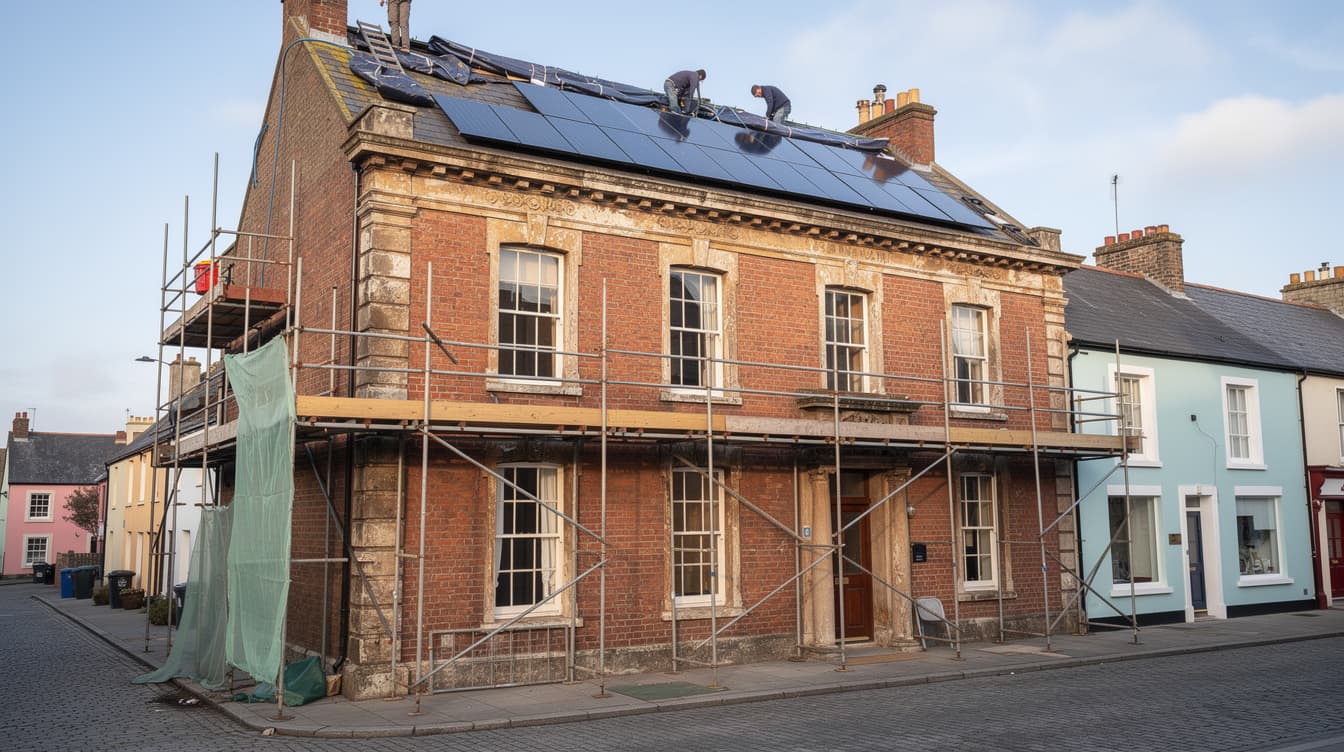
Vacant Property Refurbishment Grant + Solar Ireland 2026: How to Stack €50k VPRG With €1,800 SEAI
Stack the €50,000 Vacant Property Refurbishment Grant with the €1,800 SEAI Solar PV grant in Ireland 2026 — real refurb numbers, timing, traps.
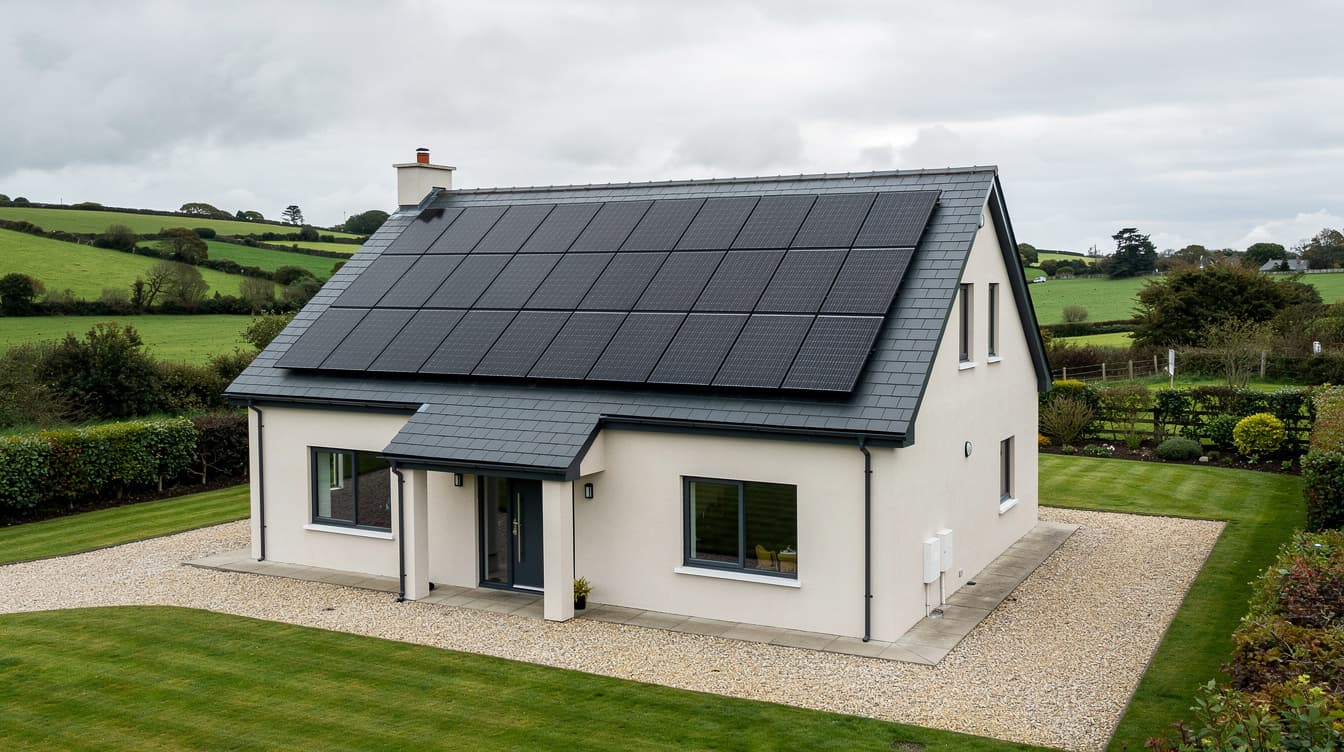
6kW Solar System Cost Ireland 2026: Real Prices, Output & Payback
6kW solar costs €7,700–€10,500 net after the €1,800 SEAI grant and 0% VAT in Ireland 2026. Real quote, 5,270 kWh/yr output, EV/battery ROI.