
Solar Panels for Flat Roofs Ireland: Costs, Mounting Systems & What to Know (2026)
Flat roofs are surprisingly well-suited for solar panels — if you get the mounting right. Here is everything Irish homeowners need to know.
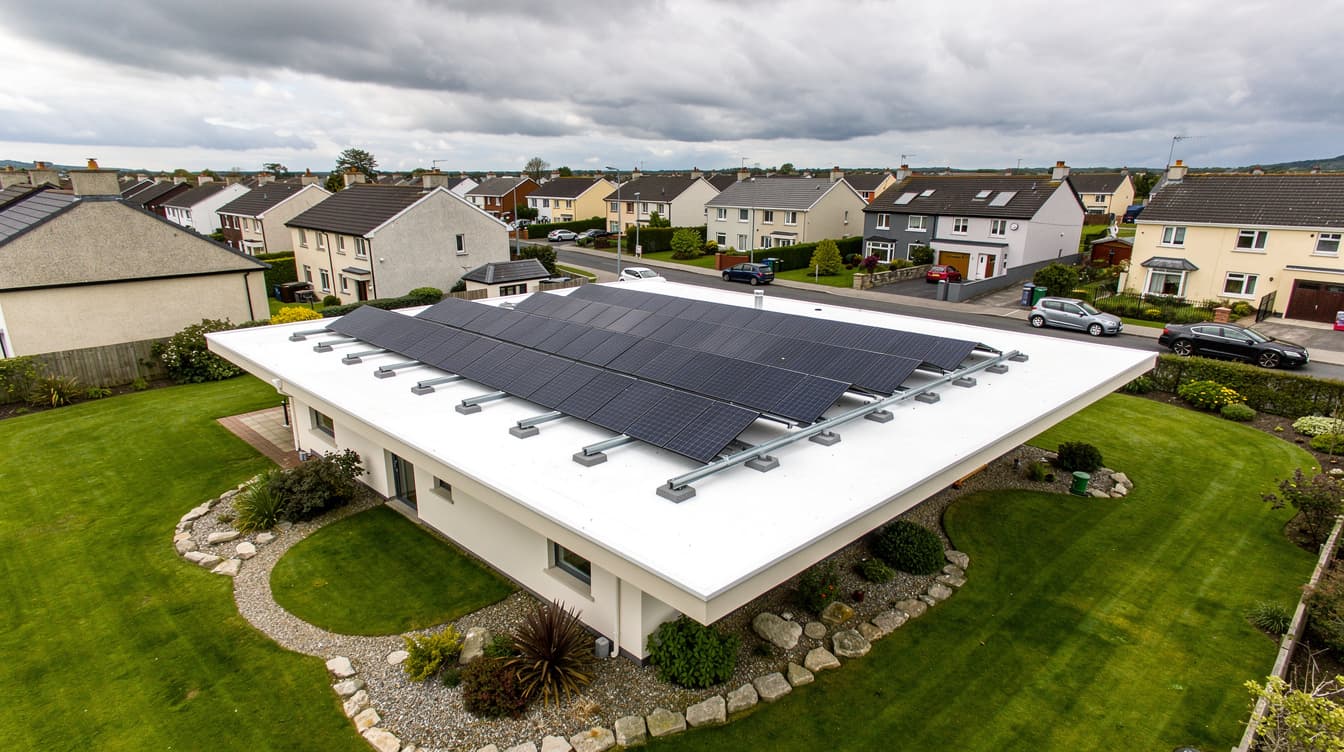
If you have a flat-roof extension, garage, or dormer, you might assume solar panels are off the table. They are not. In fact, flat roofs have some genuine advantages over pitched roofs for solar: you can choose the optimal tilt angle, face panels in any direction, and maintenance is far easier when you are not climbing a 40-degree slope.
But flat-roof installations are different. The mounting hardware costs more. You need to think about ballast weight. Spacing between rows matters to avoid self-shading. And your roof membrane has to be in good condition before anyone starts placing concrete blocks on it.
This guide covers everything specific to flat-roof solar in Ireland — from the two main mounting methods to realistic 2026 costs, SEAI grants, and planning permission rules. If you are looking for general solar panel information, start with our comprehensive cost guide instead.
Get a Flat-Roof Solar Quote
Compare prices from SEAI-registered installers experienced with flat-roof mounting systems.
Can You Put Solar Panels on a Flat Roof in Ireland?
Yes — and thousands of Irish homeowners already have. Flat-roof solar is common on:
- Single-storey extensions (the most common scenario in Ireland)
- Detached garages and workshops
- Dormer roofs on bungalows
- Commercial and agricultural buildings
- New-build homes with flat-roof sections
The key difference is that flat-roof panels need tilted mounting frames to catch sunlight at the right angle. In Ireland, the optimal tilt for maximum annual output is between 30–35 degrees, though flat-roof systems typically use 10–15 degrees as a practical compromise between output and wind loading.
A 10–15 degree tilt still captures around 90–95% of the energy you would get at the ideal 35-degree angle — a worthwhile trade-off given the significantly lower wind resistance and ballast requirements.
Two Main Mounting Methods: Ballasted vs. Penetrating
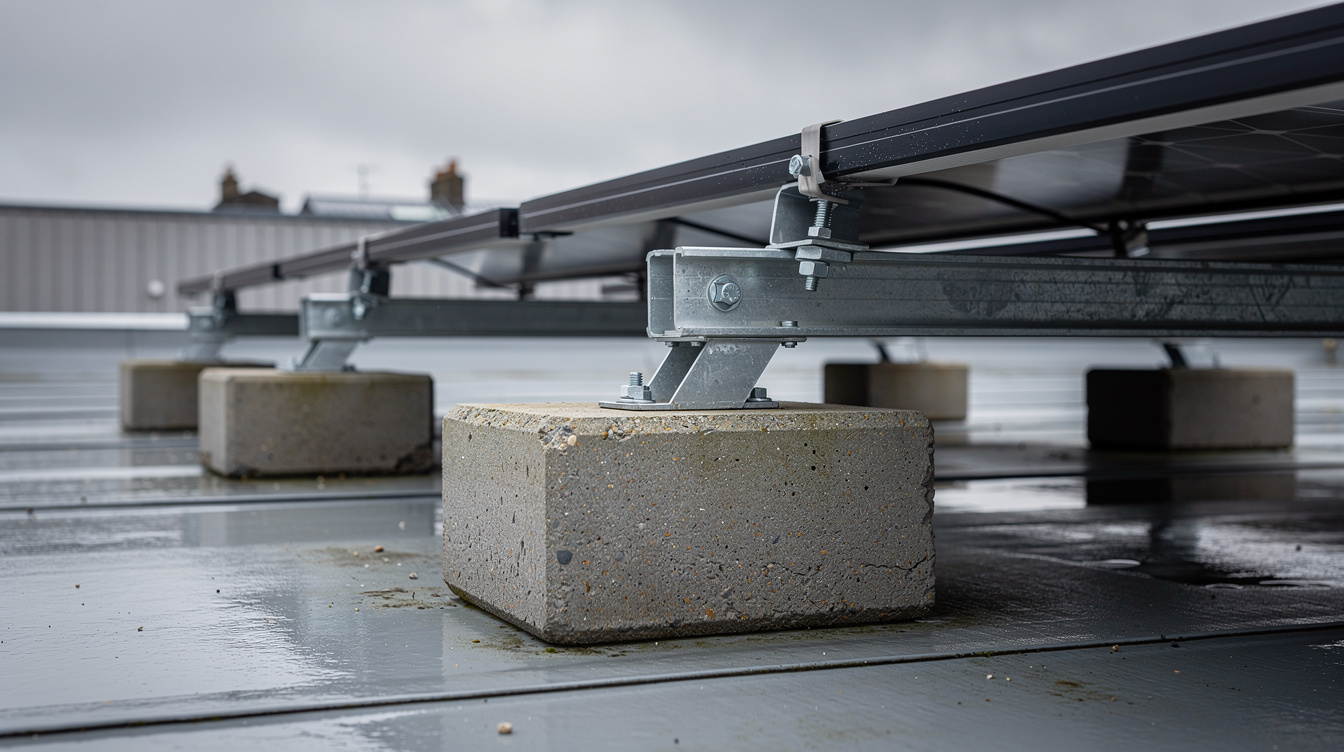
There are two ways to secure solar panels on a flat roof. Each has pros and cons, and the right choice depends on your roof type and condition.
1. Ballasted (Non-Penetrating) Systems
This is the most popular method in Ireland. The panels sit on angled frames that are held in place by concrete ballast blocks rather than being fixed to the roof structure. Think of it as the panels weighing themselves down.
How it works:
- Aluminium or galvanised steel frames are placed on the roof membrane
- Solar panels are mounted on the frames at a 10–15 degree tilt
- Concrete blocks (typically 15–25 kg each) are placed on the frame base
- No screws, bolts, or fixings penetrate the roof surface
Advantages:
- No risk of water leaks from roof penetrations
- Preserves your roof membrane warranty
- Faster installation (typically 1 day)
- System can be removed and repositioned if needed
Disadvantages:
- Significantly heavier — typically 15–25 kg/m² additional load
- Requires a structural check to confirm the roof can take the weight
- Higher tilt angles need more ballast, increasing weight further
2. Penetrating (Mechanically Fixed) Systems
The frames are bolted directly through the roof membrane into the structural deck beneath. This is lighter but carries the risk of water ingress if not sealed properly.
Advantages:
- Much lighter — no ballast needed
- Can handle steeper tilt angles
- Better for roofs that cannot take extra weight
Disadvantages:
- Penetrations must be perfectly sealed to avoid leaks
- May void your roof membrane warranty
- Harder to reposition or remove later
For most Irish domestic installations, ballasted systems are recommended. They are lower risk, and the structural load is manageable for most modern flat roofs. Your installer should always carry out a structural assessment before proceeding.
How Much Do Flat-Roof Solar Panels Cost in Ireland? (2026)
Flat-roof solar costs €500–€1,000 more than an equivalent pitched-roof installation. The extra cost comes from the angled mounting frames, ballast, and slightly longer installation time.
| System Size | Pitched Roof Cost | Flat Roof Cost | After SEAI Grant |
|---|---|---|---|
| 2 kWp (5 panels) | €3,800–€4,500 | €4,300–€5,200 | €2,900–€3,800 |
| 3.5 kWp (8 panels) | €5,500–€6,500 | €6,200–€7,200 | €4,600–€5,600 |
| 4 kWp (10 panels) | €6,200–€7,200 | €6,800–€8,000 | €5,000–€6,200 |
| 6 kWp (14 panels) | €8,500–€10,000 | €9,200–€11,000 | €7,400–€9,200 |
What drives the extra cost?
- Mounting frames: Angled tilt frames for flat roofs cost €300–€500 more than flush-mount roof hooks
- Ballast: Concrete blocks add €100–€200 in materials
- Structural survey: Some installers include this, others charge €150–€300 separately
- Roof membrane protection: Protective matting placed under frames adds a small cost
SEAI Grant for Flat-Roof Solar Panels
The good news: flat-roof installations qualify for the exact same SEAI solar PV grant as pitched-roof systems. There is no penalty or restriction.
| Capacity | Grant Rate | Grant Amount |
|---|---|---|
| First 2 kWp | €700 per kWp | €1,400 |
| 2–4 kWp | €200 per kWp | Up to €400 |
| Maximum total | — | €1,800 |
The SEAI confirmed in late 2025 that the €1,800 maximum grant will remain unchanged for 2026 — the first time the rate has held steady rather than being reduced. Apply before installation begins, and you have 8 months to complete the work.
For full details on the application process, see our step-by-step SEAI grant guide.
Ready to Go Solar?
Get your free personalised quote from SEAI-registered installers.
Flat-Roof Spacing: Why You Need More Roof Area
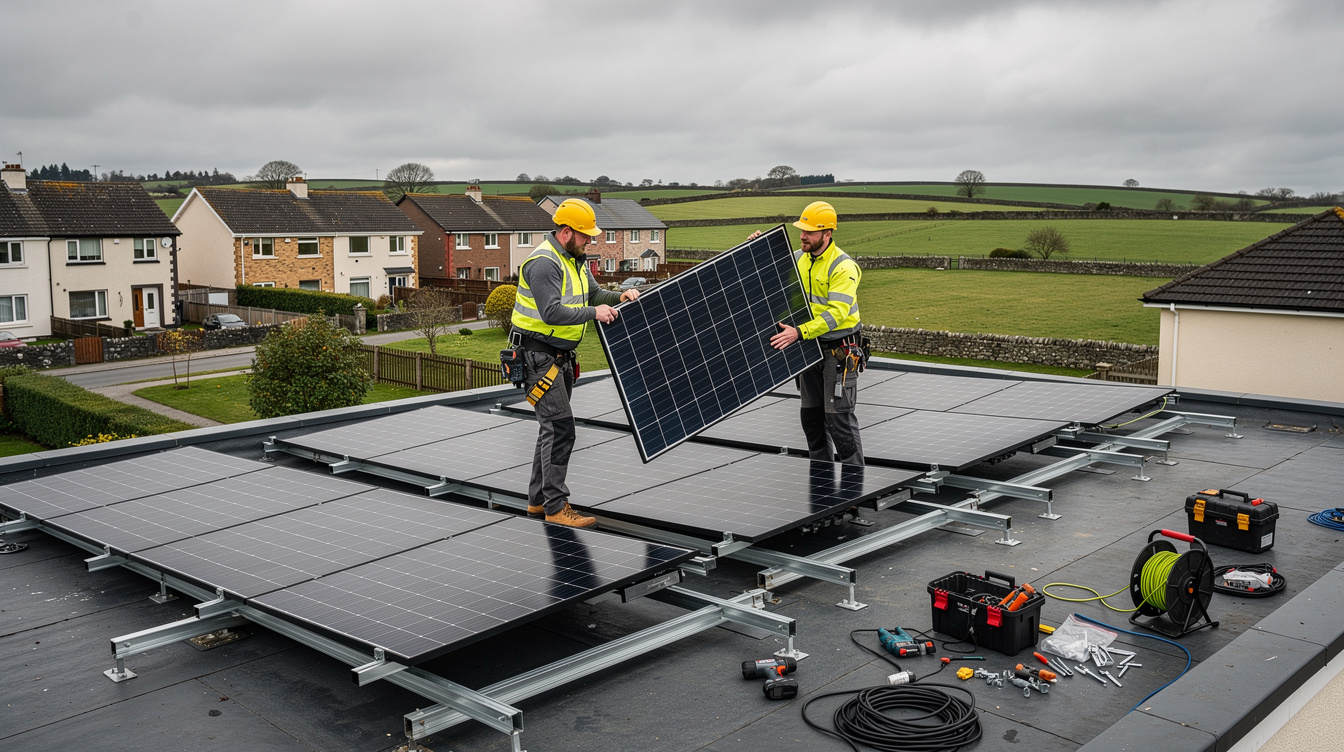
On a pitched roof, panels sit flush against the surface. On a flat roof, tilted panels cast a shadow behind them. To avoid one row shading the next, there must be a gap between rows.
The rule of thumb: you need approximately 40–50% more roof area on a flat roof compared to a pitched roof for the same number of panels.
| System Size | Pitched Roof Area Needed | Flat Roof Area Needed |
|---|---|---|
| 2 kWp (5 panels) | ~8 m² | ~12–14 m² |
| 3.5 kWp (8 panels) | ~14 m² | ~20–22 m² |
| 4 kWp (10 panels) | ~17 m² | ~25–28 m² |
| 6 kWp (14 panels) | ~24 m² | ~35–40 m² |
There must also be a minimum 200 mm gap between the solar panels and any parapet wall around the edge of your flat roof. This is a building regulation requirement in Ireland, designed to allow adequate airflow and prevent water pooling.
Planning Permission: Do You Need It?
For most domestic flat-roof solar installations in Ireland, you do not need planning permission. Since 2022, the planning exemption for rooftop solar on houses has been significantly expanded:
- There is no limit on the area of solar panels you can install on your roof
- Panels can cover the entire roof if you wish
- The old 12 m² / 50% of roof area limit has been removed
Exceptions where you may need planning permission:
- Your property is a protected structure or in an architectural conservation area
- You are in a solar safeguarding zone near an airport or hospital helipad (these are rare — your installer will know)
- The panels protrude more than 300 mm above the plane of the roof when measured perpendicular to the roof surface
For flat roofs specifically, the 300 mm rule means your mounting frames should keep the panels relatively low-profile. A 10–15 degree tilt with standard 1.7 m panels typically stays well within this limit. Higher tilt angles (30+ degrees) may push past it — another reason most flat-roof installers stick to gentler tilts.
Structural Considerations: Can Your Flat Roof Take the Weight?
This is the most important question for any flat-roof solar project. A ballasted system adds 15–25 kg per square metre to your roof — panels, frames, and ballast combined. Over a 25 m² installation, that is 375–625 kg of additional permanent load.
What your installer should check:
- The roof deck material (timber joists, concrete, steel)
- Joist size, spacing, and span
- Current condition of the roof membrane
- Whether the roof was designed to take additional loads (many modern flat roofs are designed for maintenance access and can handle the extra weight)
- Wind uplift calculations — in coastal and exposed areas of Ireland, wind loading is a significant factor
If there is any doubt, a structural engineer’s report is recommended. This typically costs €150–€300 and gives you peace of mind that the installation is safe. Many reputable installers will not proceed without one.
Flat Roof vs. Pitched Roof Solar: Side-by-Side Comparison
| Factor | Flat Roof | Pitched Roof |
|---|---|---|
| Cost (4 kWp) | €6,800–€8,000 | €6,200–€7,200 |
| Orientation flexibility | Panels can face any direction | Fixed by roof direction |
| Tilt angle | Adjustable (10–30°) | Fixed by roof pitch |
| Roof area needed | 40–50% more | Less |
| Visibility from ground | Usually hidden | Visible |
| Maintenance access | Easy (walk on roof) | Requires scaffolding/ladders |
| Structural check needed | Usually yes | Usually no |
| Water leak risk | Low (ballasted) / Medium (penetrating) | Low |
Common Flat-Roof Types in Ireland and Their Suitability
Not all flat roofs are equal. Here is how the most common types in Irish homes perform for solar:
- Felt/bitumen (traditional): The most common on older extensions. Solar is fine as long as the felt is in good condition and not cracking or blistering. Place protective matting under the mounting frames.
- EPDM rubber: Increasingly popular on modern builds. Excellent for solar — durable, flexible, and less likely to be damaged by mounting frames.
- GRP fibreglass: Common on newer extensions. Good for solar, but avoid penetrating fixings as GRP is harder to repair if cracked.
- PVC single-ply membrane: Often used on commercial buildings. Ideal for ballasted solar systems. Very durable and easy to inspect.
- Concrete: Common on apartment blocks and some commercial buildings. Strongest option — weight is never an issue. Either ballasted or penetrating systems work well.
Important: If your flat roof is more than 15–20 years old, consider replacing the membrane before or during the solar installation. A solar system will last 25+ years — you do not want to remove panels in 5 years because the roof underneath needs replacing.
5 Tips for Getting the Best Flat-Roof Solar Installation
- Get at least 3 quotes. Flat-roof pricing varies more than pitched-roof work because the mounting hardware and structural assessment requirements differ between installers.
- Ask about the structural assessment. Some installers include it in their quote, others charge separately. Clarify this upfront.
- Check their flat-roof experience. Not all solar installers regularly do flat-roof work. Ask how many flat-roof installations they have completed and request references.
- Consider an east-west split. On a flat roof, you have the flexibility to face half your panels east and half west. This spreads generation across the day, which can be better for self-consumption than a single south-facing array. See our east-west solar guide for more detail.
- Check your roof condition first. If the membrane needs replacing in the next 5 years, do it before or during the solar install. Coordinating with a roofer and solar installer together can save money.
Ready to Go Solar?
Get your free personalised quote from SEAI-registered installers.
Frequently Asked Questions
Do flat-roof solar panels produce less electricity than pitched-roof panels?
Slightly less — typically 5–10% lower annual output because the tilt angle is shallower than the ideal 30–35 degrees. However, the ability to point panels due south (regardless of roof orientation) can offset this. In practice, the difference is negligible for most Irish homes.
Will solar panels damage my flat roof?
Not if installed correctly. Ballasted systems do not penetrate the roof at all. The main risk is from excessive weight on an unsuitable structure — which is why a structural assessment is essential. Protective matting placed under the frames prevents the membrane from being abraded.
How long does a flat-roof solar installation take?
Typically 1–2 days — slightly longer than a pitched-roof install due to the additional work assembling and positioning the mounting frames and ballast.
Can I install solar panels on a flat roof myself?
Technically you can install the panels yourself, but you will not qualify for the SEAI grant unless the work is done by an SEAI-registered installer. You also need a qualified electrician for the grid connection. For more on the legalities, see our DIY solar legalities guide.
Do I need to clean flat-roof solar panels more often?
Flat-roof panels at a low tilt angle are slightly more prone to dirt and leaf accumulation because rain does not wash them as effectively as steeper panels. Cleaning once or twice a year is usually sufficient. The advantage is that flat roofs are far easier to access for cleaning.
Related Articles
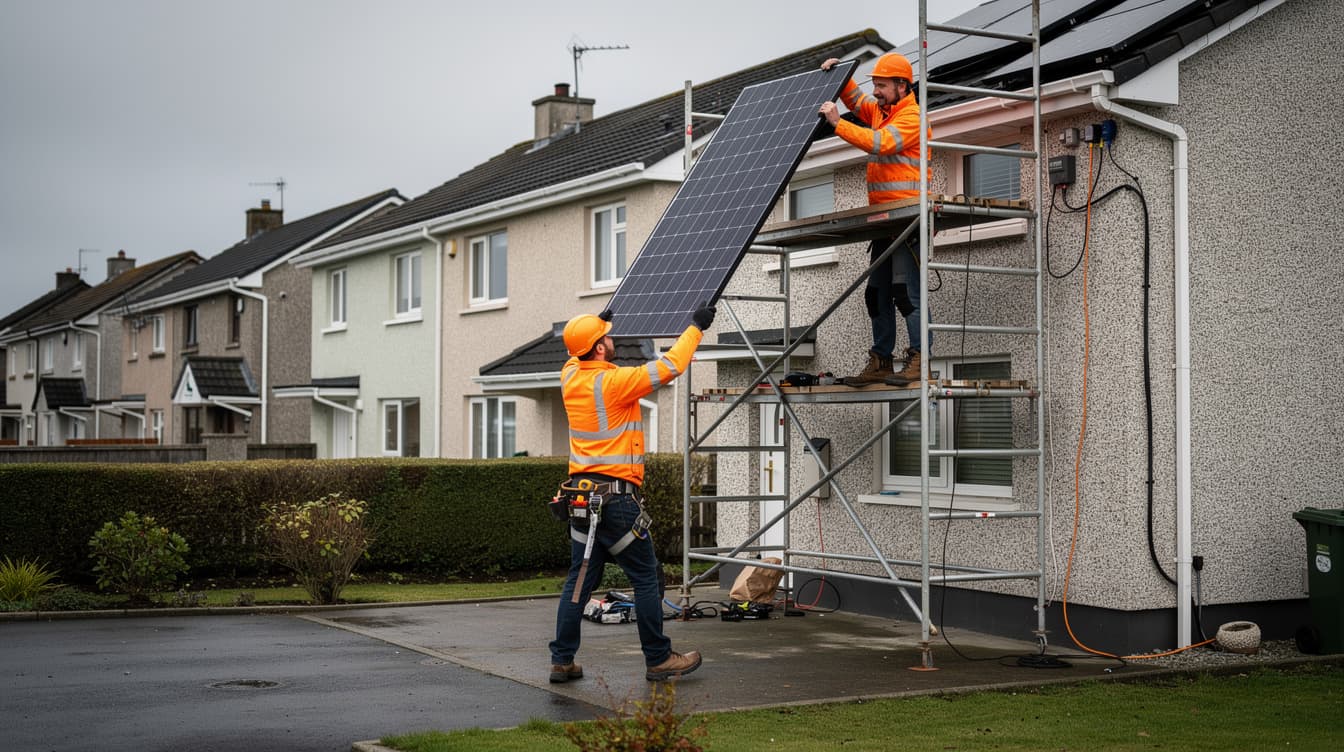
How Long Does Solar Panel Installation Take in Ireland? The Full Timeline (2026)
Solar panel installation takes 1-2 days but the full process is 6-12 weeks. Here is every stage from quotes to grant payment and how to avoid delays.
How to Choose a Solar Installer in Ireland: The Complete 2026 Guide
SEAI registration, what to compare in quotes, red flags, 10 questions to ask, and 2026 pricing benchmarks for choosing the right solar installer in Ireland.
Solar Panel Warranty Ireland 2026: Product, Performance & Workmanship Explained
The three warranties on every Irish solar system explained, honest 2026 brand-by-brand terms, and what actually voids a claim — before you sign the quote.