
Solar Panel Warranty Ireland 2026: Product, Performance & Workmanship Explained
Every solar quote in Ireland comes with warranty numbers attached — 25 years on the panels, 12 on the inverter, 10 on the battery — and homeowners generally take those numbers at face value. They shouldn’t. Warranties are three different documents from three different companies covering three different failure modes, and the fine print is where two-thirds of Irish claims quietly get refused.
This is the honest 2026 breakdown of what each layer of warranty on a domestic solar system actually covers, which brands write the terms best, what voids a claim, and how the process really unfolds when something breaks in year 8.
The three warranties on every solar system
An Irish solar quote bundles three warranties together and calls them one number. They come from three different sources and cover completely different problems.
- Product warranty — from the panel/inverter/battery manufacturer, covering physical defects (delamination, cell fracture, junction-box failure). If the panel breaks because it’s a lemon, this pays.
- Performance warranty — from the same manufacturer, covering degradation. If the panel is intact but only produces 70% of its rated output by year 25, this pays.
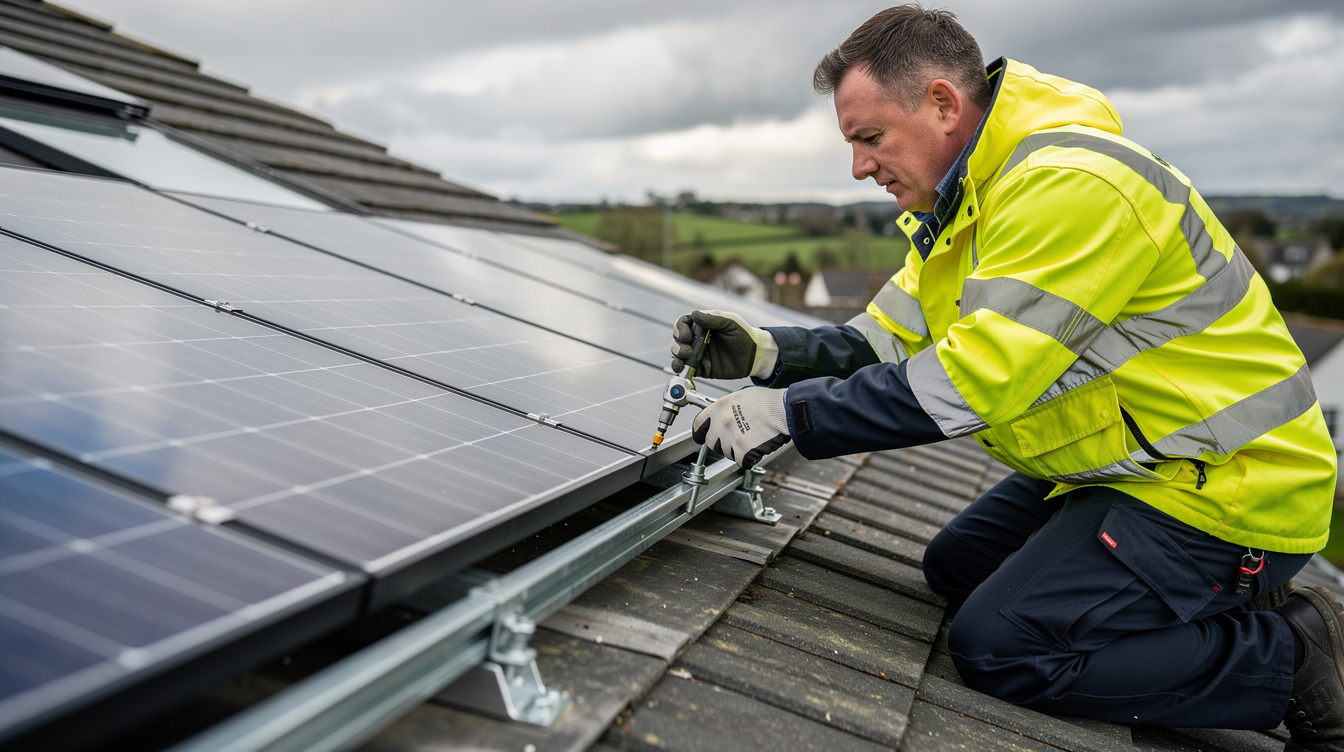
- Workmanship warranty — from the Irish installer, covering their labour, roof penetrations, cabling, and system commissioning. If a rail-foot leaks in year 4 and rots your rafters, this pays.
Most homeowners assume these three layers pay for everything. In practice they miss the single most expensive scenario: an installer who has gone bust two years after signing your workmanship warranty. That’s why SEAI-registration and installer longevity matter more than the number on the certificate.
Panel warranties: what the leading 2026 brands actually offer
The panel is the longest-lived component and the least likely to fail — but when it does, the process is slow. Here is where the current field of tier-1 panels used in Ireland stands on warranty terms.
| Brand & model | Product warranty | Performance warranty | Year-25 output |
|---|---|---|---|
| Longi Hi-MO 6 | 15 years | 25 years | ≥ 87.4% |
| Longi Hi-MO 7 (dual-glass) | 15 years | 30 years | ≥ 88.9% at year 30 |
| JinkoSolar Tiger Neo | 12 years (25y for N-type) | 30 years | ≥ 87.4% |
| REC Alpha Pure-RX | 20 years (25 via ProTrust) | 25 years | ≥ 92% |
| Q CELLS Q.PEAK DUO | 25 years | 25 years | ≥ 86% |
| Canadian Solar TOPHiKu6 | 25 years | 30 years | ≥ 88.9% |
| Maxeon 6 / SunPower | 40 years | 40 years | ≥ 88.3% at year 40 |
Two practical takeaways. First, if you are paying a 30–40% premium for a Maxeon or REC panel, you are largely paying for the warranty length, not for materially better first-year output — the peak wattage numbers are within a few percent of Longi and Jinko. Second, the newest N-type and dual-glass panels (Hi-MO 7, Tiger Neo, TOPHiKu6) now beat older P-type generations on both product warranty and long-term retention, so there is little reason to buy an older-generation panel in 2026 even at a small discount.
What voids a panel warranty
- Pressure washing. Every major manufacturer excludes damage from high-pressure cleaning. Use a soft brush, deionised water, or a professional cleaner.
- Third-party repairs. If a general electrician (not the original installer or an authorised technician) opens a junction box, the product warranty is dead.
- Storage away from the roof. Panels left leaned against a wall in a garage for months before install are excluded — the frame stress can crack cells invisibly.
- Wildlife damage. Rodent-chewed cabling and pigeon nesting are the installer’s problem, not the manufacturer’s. See our bird-proofing guide for what to fit at install.
- Modification or relocation. Moving the array to a new roof or extending the string usually terminates the warranty unless the manufacturer signs off in writing.
Inverter warranties: the weak link
The inverter is where most Irish solar systems fail first. Panels quietly do their job for 25+ years; the inverter is a working electronic device with capacitors, cooling fans, and firmware that reliably needs one replacement inside the panel warranty period.
| Inverter brand | Standard warranty | Extendable to | Typical extension cost |
|---|---|---|---|
| Sungrow SH-RT hybrid | 10 years | 20 years | €250–€400 |
| Solis S6 hybrid | 10 years (5 standard + 5 with registration) | 20 years | €300–€500 |
| Fronius Symo/Gen24 | 10 years | 20 years | €400–€700 |
| SolarEdge SExxK-RWx | 12 years | 25 years | €450–€800 |
| SolarEdge power optimisers | 25 years | n/a | — |
| Enphase IQ8 microinverter | 25 years | n/a | — |
Two of these deserve highlighting. Enphase microinverters and SolarEdge optimisers are the only components in the entire system that ship with a warranty that matches the panels — that’s why systems using them cost 15–25% more, but they also skip the classic year-8 inverter replacement bill entirely.
For string inverters (Sungrow, Solis, Fronius) the honest advice is to always take the extension. A €250–€400 warranty upgrade on install day is dramatically cheaper than a €1,600 out-of-warranty replacement in year 11.
Compare Warranties Before You Sign
Get quotes from SEAI-registered Irish installers — every quote broken down by product, performance, and workmanship cover.
Battery warranties: read the throughput clause
Battery warranties are the trickiest because they have three simultaneous conditions: years, cycles, and total energy throughput. A claim can be refused if you exceed any one of them, even if the other two look fine.
| Battery | Warranty term | Guaranteed end-of-warranty capacity | Throughput cap |
|---|---|---|---|
| Tesla Powerwall 3 | 10 years | 70% | Unlimited cycles (self-consumption) |
| GivEnergy Gen 3 (9.5 kWh) | 12 years | 80% | One full cycle/day |
| Enphase IQ Battery 5P | 15 years | 60% | 6,000 cycles |
| Huawei LUNA2000 | 10 years | 60% | Modelled by kWh, per DoD |
| BYD Battery-Box Premium HVS | 10 years | 60% | Unlimited cycles |
| SolarEdge Home Battery 48V | 10 years | 70% | One full cycle/day |
The throughput clause is where an Irish household running a time-of-use tariff can accidentally break the warranty. If you are charging the battery off the grid at night and cycling it fully during the day for self-consumption, you may be doing 1.5–2 cycles per day. On a battery with a “one cycle/day” cap, you burn through the throughput allowance in 5–6 years, not 10. Tesla and BYD are the safe choices for aggressive time-shifting.
Installer workmanship warranty: the layer that matters most
The manufacturer warranties are legally rock-solid but slow — three to nine months for a panel replacement claim to complete once the fault is confirmed. The installer’s workmanship warranty is where day-to-day problems get resolved: a rail-foot leaking after a storm, a DC isolator that never quite worked, a battery that keeps dropping off the app.
A minimum sensible workmanship warranty in Ireland is now 10 years, up from the 5–7 years that was standard until 2023. What separates a real workmanship warranty from a paper one:
- Written scope, not verbal. A one-page document naming the components covered (rails, feet, penetration seals, AC and DC cabling, isolators, meter connections) and the response time (e.g. 5 working days).
- Insurance backing. A workmanship warranty from an installer without a policy behind it is worth nothing if that installer folds. Ask for the underwriter’s name.
- Transferable on sale. If you sell the house in year 6, does the warranty transfer to the new owner? Many don’t — and a non-transferable warranty is a small hit to the resale value of the system.
- Explicit exclusion list. A short list of what’s excluded (storm damage, tenant misuse, act of God) is a green flag. A vague warranty that seems to cover everything is usually the one that quietly excludes everything when tested.
The SEAI grant registration layer
The SEAI grant process adds a fourth, largely invisible warranty layer — the SEAI Registered Contractor scheme. Registered installers must carry public liability insurance to a set minimum, meet a Code of Practice on documentation, and are subject to a complaints procedure with the SEAI itself.
That doesn’t give you a written warranty on top of the installer’s workmanship cover, but it does give you a route to escalate a dispute when the installer stops answering the phone. In practice, SEAI-registered installers know they can be delisted for repeated complaints, so they resolve issues that a non-registered installer might ignore. This is the single strongest argument for staying inside the grant scheme even if you don’t strictly need the €1,800.
What happens when you actually make a claim
Real-world Irish warranty claims follow this rough sequence. Understanding the flow up front saves months of frustration:
- Symptom noticed — system underperforming on the app, an inverter fault code, a visible crack, a puddle in the loft near a rail foot.
- Contact the installer first — not the manufacturer. Even if the fault is in the panel, the installer is your point of contact for the whole system.
- On-site diagnostic — the installer confirms whether it’s a workmanship fault (their bill) or a product fault (manufacturer’s bill). Ask for a written diagnostic.
- Warranty claim filed with the manufacturer — the installer submits serial numbers, install date, monitoring data, and photos. Expect 4–12 weeks for a decision.
- Replacement shipped — almost always to the installer, not to you.
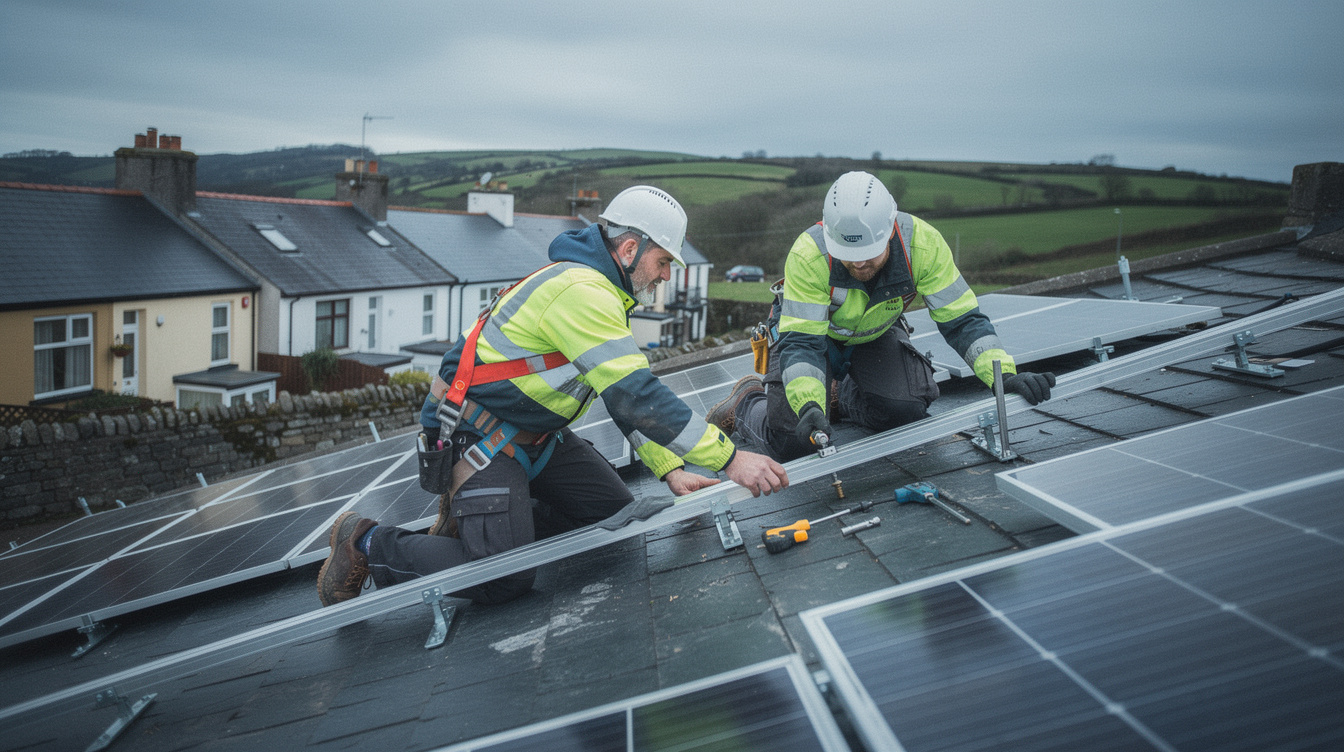
- Installer fits the replacement — and here’s the catch: the labour cost of removing the old and fitting the new is only covered if the workmanship warranty is still live. Manufacturer product warranties almost never cover the labour to swap the part. Budget €250–€600 for a panel swap or €400–€900 for an inverter swap out of workmanship warranty.
Six practical rules for buyers
- Buy panels from a manufacturer with an Irish or UK service office. Chinese panels are fine; Chinese-only warranty processes are painful. Longi, Jinko, Canadian, REC, Q CELLS, and Maxeon all have European service arms.
- Always take the inverter warranty extension. It’s the highest-return decision on the whole quote.
- Register the panels within the manufacturer’s registration window. Some brands (REC ProTrust, Silfab) require registration within 6–12 months of install to unlock the extended terms.
- Match the workmanship warranty to the panel warranty as far as you can. A 10-year workmanship warranty on a 25-year panel is the current sensible baseline in Ireland.
- Keep the paperwork. Warranty claim first ask: original invoice, MCS or equivalent installation certificate, ESB Networks NC6 confirmation. If you don’t have them, the claim starts weeks behind.
- Check the installer’s trading history. A workmanship warranty from a company that has traded under three different names since 2020 is a red flag — the underwriter is fine, but the company will not be there to file the claim.
Frequently asked questions
What’s the difference between product and performance warranty?
Product warranty covers the panel physically failing (delamination, cracking, junction-box failure). Performance warranty covers the panel degrading below a stated output percentage. Most modern tier-1 panels carry 15–25 years of product cover and 25–30 years of performance cover, ending at 87–92% of nameplate output.
Does the SEAI grant give me a warranty?
Not directly — it gives you a route to escalate complaints via the SEAI Registered Contractor scheme. The written warranties still come from the panel and inverter manufacturers and from the installer. See our SEAI grant guide for the current 2026 process.
Will my home insurance cover storm damage to the panels?
Yes on most Irish home policies, provided the installation was declared to the insurer at commissioning. The manufacturer product warranty explicitly excludes storm damage, so home cover is the relevant policy in a wind event. See our solar and home insurance guide for what to declare.
What if my installer goes out of business?
Your manufacturer warranties on the panels, inverter, and battery are unaffected — those are with the factory, not the installer. What you lose is the workmanship warranty and, in most cases, the labour to fit any warranty replacements. This is why installer longevity and insurance-backed workmanship policies matter far more than the number of years on the certificate.
Are 30-year or 40-year warranties worth paying more for?
Only if you plan to own the house that long, or if you value the resale story. In practice most Irish homes turn over inside 15 years, and a 25-year warranty already outlives the typical inverter replacement cycle. Pay the premium for Maxeon-tier warranties only if the panel efficiency also stacks up on your specific roof.
Get Warranties Explained in Plain English
Compare 2026 quotes from SEAI-registered Irish installers — product, performance, and workmanship terms broken out clearly on every quote.
Related Articles
How to Choose a Solar Installer in Ireland: The Complete 2026 Guide
SEAI registration, what to compare in quotes, red flags, 10 questions to ask, and 2026 pricing benchmarks for choosing the right solar installer in Ireland.
Solar Panels for Flat Roofs Ireland: Costs, Mounting Systems & What to Know (2026)
Can you install solar panels on a flat roof in Ireland? Yes. Costs, ballasted vs penetrating mounting, SEAI grants, planning rules, and what to know in 2026.
Best Solar PV Panels Ireland 2026: TOPCon vs HJT vs IBC Buyer's Guide
Which PV panel actually performs best in Ireland in 2026? N-type TOPCon vs HJT vs IBC compared, with Tier 1 brand picks and Irish-specific buying advice.