
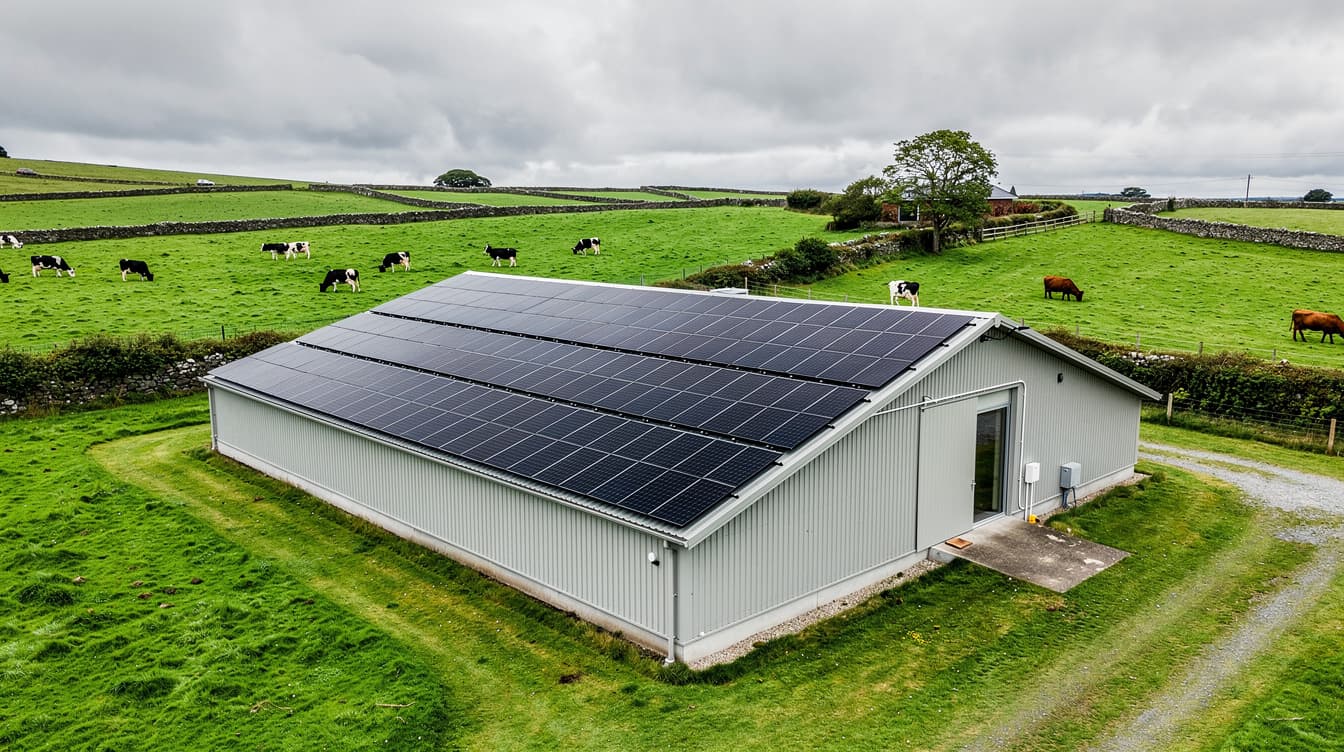
Solar Panels for Farms in Ireland 2026: TAMS 3 Grants, Costs & What Every Farmer Needs to Know
With TAMS 3 covering 60% of costs and electricity prices still high, farm solar is the smartest investment most Irish farmers can make in 2026. Here is everything you need to know — from system sizing to the application process.
Irish farmers are some of the biggest electricity users in the country. A dairy farm with a milking parlour, bulk tank, and water heating can easily burn through €8,000–€15,000 in electricity per year. A poultry operation with ventilation, lighting, and climate control? Even more.
The good news is that the TAMS 3 Solar Capital Investment Scheme covers 60% of the cost of installing solar PV on your farm buildings. That means a system that would cost €25,000 before the grant could leave you with an out-of-pocket cost of just €10,000 — and annual savings that pay that back in 3–5 years.
This guide covers everything: what TAMS 3 actually pays for, how much farm solar costs by farm type, system sizing, the application process step by step, and the mistakes that get farmers’ applications rejected.
Why Solar Makes Exceptional Sense for Farms
Farms are uniquely suited to solar PV for reasons that do not apply to most homes:
- Large south-facing roof areas: Farm sheds, milking parlours, and agricultural buildings often have 200–500 m² of unobstructed roof space — far more than a typical house.
- High daytime electricity use: Most farm operations (milking, grain drying, refrigeration, water pumping) run during daylight hours, which is exactly when solar panels produce electricity.
- 60% TAMS 3 grant: Compared to the residential SEAI grant (€2,100 max), the TAMS 3 scheme is vastly more generous, covering 60% of the total cost up to €90,000 investment ceiling.
- No VAT: Solar PV installations are zero-rated for VAT in Ireland since 2023, which applies to farm systems too.
- Stable income supplement: Reducing electricity costs by €4,000–€15,000 per year is a significant and predictable income boost for any farming operation.
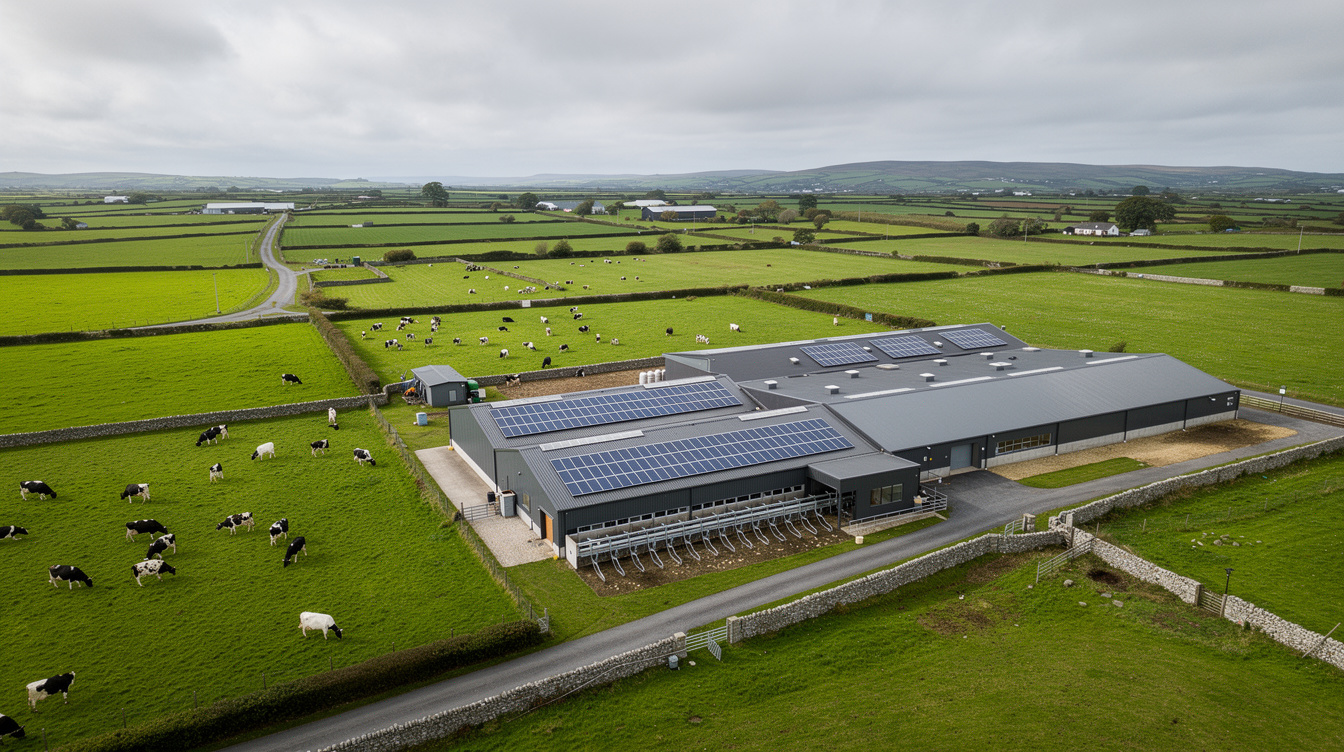
TAMS 3 Solar Grant: How It Works in 2026
The Targeted Agricultural Modernisation Scheme 3 (TAMS 3) is administered by the Department of Agriculture, Food and the Marine (DAFM). It is separate from the SEAI grants that homeowners apply for — this is specifically for working farms.
What TAMS 3 covers
| Detail | TAMS 3 Terms |
|---|---|
| Grant rate | 60% of eligible costs |
| Investment ceiling | €90,000 per holding |
| Max system size | Up to 62 kWp (pig & poultry); 30 kWp (other farms) |
| Battery storage | Eligible — capped at 50% of solar panel capacity |
| Location | Farm buildings only (sheds, parlours, stables) |
| Electricity use requirement | 100% must be consumed on the farm holding |
| Completion deadline | 12 months from approval |
Important: The 100% self-consumption rule means your system should be sized to match your electricity usage, not to export surplus. This is different from residential solar where you can sell excess back through the Clean Export Guarantee.
Who is eligible?
- Registered farmers with a valid herd number
- Minimum 5 hectares of usable agricultural area (owned or leased)
- Must have applied for Basic Income Support for Sustainability (BISS) on those acres
- Tax Reference Number (TRN) and PPSN required
- Farmers under 40: herd number must be in their own name
- Farmers over 40: must have held a herd number for at least 2 years
Planning Your Farm Solar System?
Get free quotes from SEAI-registered solar installers experienced with agricultural installations and TAMS 3 applications.
How Much Does Farm Solar Cost in 2026?
Farm solar costs depend heavily on system size, roof type, and whether you add battery storage. Here are typical 2026 costs for different farm types:
| Farm Type | Typical System Size | Cost Before Grant | After TAMS 3 (60%) | Annual Savings |
|---|---|---|---|---|
| Small tillage / beef | 10–15 kWp | €12,000–€18,000 | €4,800–€7,200 | €2,000–€3,500 |
| Medium dairy | 20–30 kWp | €25,000–€38,000 | €10,000–€15,200 | €4,000–€8,000 |
| Large dairy | 30 kWp | €35,000–€45,000 | €14,000–€18,000 | €6,000–€12,000 |
| Poultry / pig | 40–62 kWp | €50,000–€80,000 | €20,000–€32,000 | €10,000–€18,000 |
These costs include panels, inverter(s), mounting hardware, wiring, and installation. Battery storage adds €4,000–€12,000 before the TAMS 3 grant, depending on capacity.
At current electricity prices (averaging 30–35c/kWh for agricultural tariffs in 2026), the payback period after TAMS 3 is typically 3–5 years. The system then generates essentially free electricity for another 20–25 years.
Sizing Your Farm Solar System
Getting the system size right is critical for farms — more so than for homes. Under TAMS 3, 100% of the electricity generated must be consumed on the farm. If you oversize, you are paying for panels that generate electricity you cannot use (and cannot be paid for under the grant terms).
Step 1: Check your electricity bills
Pull out your last 12 months of electricity bills and calculate your total annual consumption in kWh. Here are typical ranges for Irish farms:
| Farm Type | Annual Electricity Use | Recommended System Size |
|---|---|---|
| Beef / suckler (small) | 5,000–10,000 kWh | 6–10 kWp |
| Tillage | 8,000–15,000 kWh | 8–15 kWp |
| Dairy (80–150 cows) | 20,000–40,000 kWh | 15–30 kWp |
| Dairy (200+ cows) | 40,000–70,000 kWh | 25–30 kWp |
| Poultry (broiler house) | 50,000–100,000 kWh | 30–62 kWp |
| Pig farm | 60,000–120,000 kWh | 40–62 kWp |
Step 2: Match generation to daytime use
Solar panels produce electricity roughly between 7am and 7pm, with peak output between 10am and 3pm. You want a system that generates no more than what you use during daylight hours. For most farms, that means sizing the system to cover 60–80% of your total annual consumption, since you will still need grid electricity at night and on very overcast days.
Battery storage can help you shift some of that daytime generation to evening and night use. Under TAMS 3, battery capacity is capped at 50% of your solar panel capacity (e.g., a 20 kWp system qualifies for up to 10 kWh of battery storage).
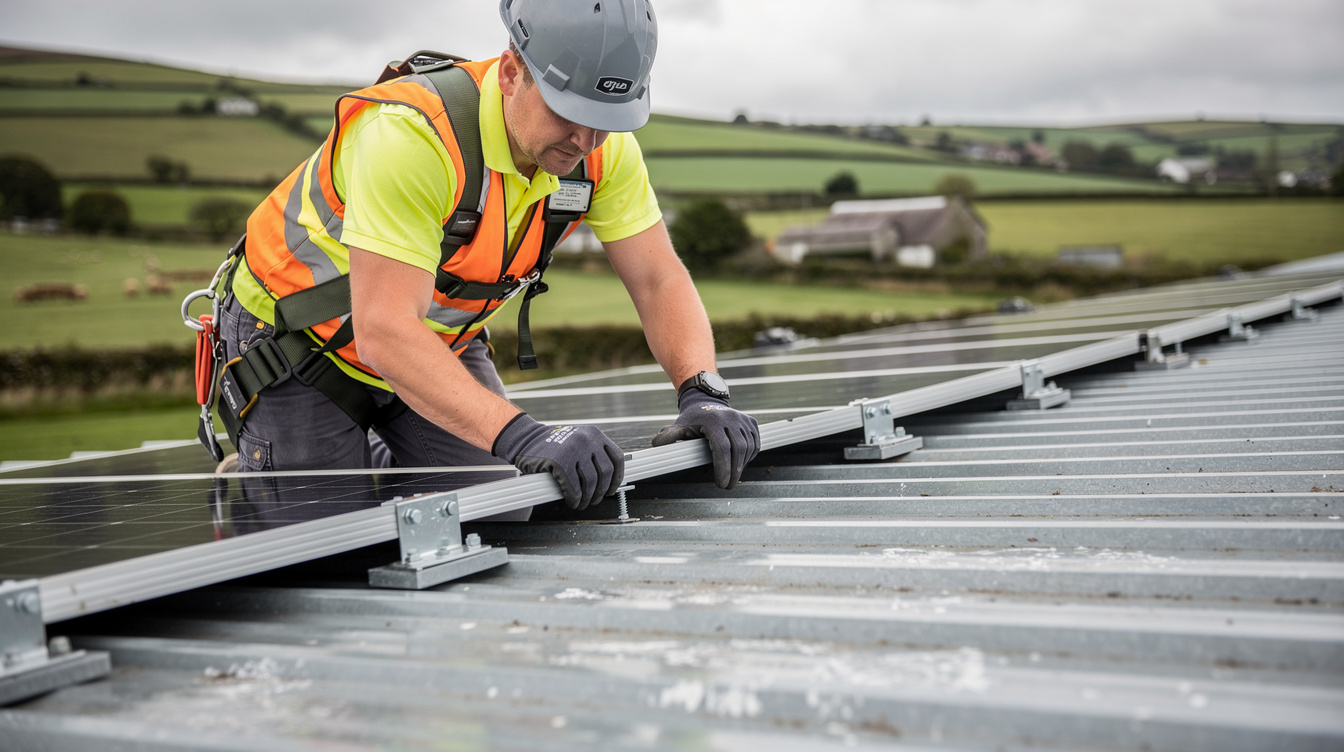
The TAMS 3 Application Process: Step by Step
This is where many farmers trip up. The process is strict, and doing things in the wrong order will get your application rejected. Here is the correct sequence:
1. Get quotes (but do NOT sign anything yet)
Contact 2–3 solar installers who have experience with TAMS 3 farm installations. Ask for detailed quotes showing system size, panel specifications, inverter details, and total cost. You can use these quotes to inform your application, but do not sign a contract or pay a deposit until you have your TAMS 3 approval letter.
2. Submit your TAMS 3 application online
Applications are submitted through the DAFM’s online portal at agfood.ie. TAMS 3 operates in tranches — typically 2–3 per year — each with a specific opening and closing date. Check the DAFM website for the next tranche opening.
Your application must include:
- Farm holding number and herd number
- Details of the proposed solar PV system
- Specification of the farm buildings where panels will be installed
- Evidence of BISS application
- Three-phase meter details (if applicable)
3. Wait for your approval letter
Processing time varies but typically takes 4–8 weeks. You cannot begin any work, purchase equipment, or sign a contract before receiving your approval letter. Starting early is the single most common reason for grant rejection.
4. Proceed with installation
Once approved, you have 12 months to complete the installation. Engage your chosen installer, sign the contract, and schedule the work. Ensure the installer provides all documentation needed for the grant claim.
5. Submit your payment claim
After installation, submit your payment claim to DAFM with invoices, proof of payment, installer certification, and photos of the completed installation. The 60% grant payment is made after this claim is verified.
⚠ Common TAMS 3 Mistakes That Get Applications Rejected
- Starting work before approval — Any purchase, deposit, or installation before receiving your approval letter will disqualify you.
- Oversizing the system — If your system is sized to export rather than self-consume, it may not be approved.
- Missing the tranche deadline — Late applications are not accepted. Set a reminder for the next opening date.
- Not having BISS applied for — Even if your BISS application is pending, you need to have submitted it.
- Incomplete documentation — Missing invoices, incomplete specifications, or poor photos can delay your payment claim for months.
Farm Solar by Sector: What Works Best
Dairy farms
Dairy farms are the ideal candidate for solar PV. Milking parlours use significant electricity for vacuum pumps, milk cooling, water heating, and lighting — and most of this happens during daylight hours. A 100-cow dairy farm typically uses 25,000–35,000 kWh per year, and a 20–30 kWp solar system can offset 50–70% of that.
Key tip for dairy: Install a solar diverter to send surplus electricity to your water heater. Hot water for parlour wash-down and bulk tank cleaning is a major energy cost, and a diverter ensures nothing goes to waste.
Poultry and pig farms
These are the highest electricity users in Irish agriculture, which is why TAMS 3 allows larger systems (up to 62 kWp). Ventilation fans, heating, and lighting in poultry houses run almost continuously. A 50–60 kWp system on a broiler house can save €12,000–€18,000 per year.
Beef and suckler farms
Lower electricity users, but solar still makes sense — especially if you have a water pumping system, electric fencing, or farm workshop. A smaller 8–12 kWp system on a slatted shed can save €1,500–€3,000 per year, with a payback of 3–4 years after the TAMS 3 grant.
Tillage farms
Grain drying is the big electricity consumer for tillage farmers. If you use electric grain dryers, a solar system can significantly reduce costs during the summer drying season, which conveniently coincides with peak solar production. Consider a system sized to match your drying season demand.
Ready to Go Solar on Your Farm?
Get free quotes from installers experienced with TAMS 3 agricultural solar installations across Ireland.
Ground-Mounted vs Roof-Mounted: Which Is Better for Farms?
Most TAMS 3 installations go on farm building roofs, but ground-mounted systems are also an option. Here is how they compare:
| Factor | Roof-Mounted | Ground-Mounted |
|---|---|---|
| Cost | Lower (no frame/foundation) | 10–25% more expensive |
| TAMS 3 eligible | Yes (farm buildings) | Check current tranche terms |
| Planning permission | Exempt (most cases) | Exempt up to 75 m² for agricultural |
| Optimal angle | Depends on roof pitch | Can be set to ideal 30–35° |
| Maintenance access | Requires roof access | Easy ground-level access |
| Land use | No land taken up | Uses some agricultural land |
For most farms, roof-mounted is the better choice under TAMS 3 — it is cheaper, clearly eligible, and does not take up productive land. Ground-mounted makes sense if your roof is unsuitable (wrong orientation, asbestos, or structural concerns) or if you need a larger system than the roof can accommodate.
Note on planning permission: agricultural sites benefit from a higher exemption threshold of 75 m² for ground-mounted solar PV, compared to 25 m² for residential properties.
Battery Storage for Farms: Worth It?
Battery storage is eligible under TAMS 3, with the grant covering 60% of the battery cost (capped at 50% of solar panel capacity). But is it worth adding?
For dairy farms: Often yes. Battery storage lets you shift solar electricity to early morning and evening milking sessions. A 10–15 kWh battery alongside a 25 kWp system can increase your self-consumption from 50–60% to 75–85%.
For poultry/pig farms: Less critical, because these operations use electricity almost continuously, so self-consumption is already very high (70–90%) without a battery.
For beef/tillage: Can be useful if you have workshop equipment or other evening electricity needs, but the economics are tighter for lower-consumption farms.
Read our full guide to whether a solar battery is worth it in Ireland for more detail on the financial calculations.
Tax Considerations for Farm Solar
Farm solar has some specific tax advantages worth discussing with your accountant:
- Capital allowances: The portion of the solar system you pay out of pocket (after TAMS 3 grant) can be claimed as a capital allowance against farm income, spread over 7 years at the standard 15%/15%/15%/15%/15%/15%/10% rates.
- Accelerated Capital Allowance (ACA): Solar PV is listed as energy-efficient equipment under the ACA scheme, which may allow you to write off 100% of the cost in the first year. Check with your accountant whether this applies to your situation alongside TAMS 3.
- Zero VAT: No VAT on solar PV installation since 2023, so the cost figures above are what you actually pay.
- Electricity savings are not taxable income: Reducing your electricity bill is not a taxable event — it is simply a cost reduction.
How to Choose a Solar Installer for Farm Work
Not every solar installer is set up for farm work. Agricultural installations involve larger systems, three-phase power, corrugated or fibre cement roofs, and TAMS 3 paperwork. Here is what to look for:
- TAMS 3 experience: Ask how many TAMS 3 installations they have completed. An experienced installer knows the documentation requirements and can help avoid application mistakes.
- SEAI registered: The installer must be on the SEAI’s register of renewable energy installers.
- Agricultural roof experience: Farm roofs are different from domestic roofs. The installer should have experience with corrugated metal, fibre cement, and portal frame structures.
- Three-phase capability: Most farms run on three-phase electricity. Your installer needs to supply and configure a three-phase inverter system.
- After-sales support: Farm systems are larger investments. Ensure the installer offers monitoring, maintenance, and warranty support.
Get multiple quotes and compare like for like — panel brands, inverter specifications, warranty terms, and what is included in the installation price. Our guide to choosing a solar installer in Ireland covers the full checklist.
Get Quotes from Farm Solar Specialists
Connect with SEAI-registered installers who specialise in TAMS 3 agricultural solar across Ireland.
Frequently Asked Questions
Can I combine TAMS 3 with the SEAI solar grant?
No. TAMS 3 and the SEAI residential solar grant are separate schemes and cannot be combined for the same installation. However, if you have a farmhouse separate from the farm buildings, the farmhouse may qualify for the SEAI grant independently.
Can I sell surplus electricity back to the grid under TAMS 3?
Under the current TAMS 3 terms, 100% of the electricity generated must be consumed on the farm holding. If you want to export and receive the Clean Export Guarantee rate, you would need to install panels outside the TAMS 3 scheme at your own cost.
Do I need planning permission for farm solar panels?
Roof-mounted panels on farm buildings are generally exempt from planning permission. Ground-mounted systems are exempt up to 75 m² on agricultural land. Larger ground arrays or installations near protected structures may need permission. Read our full planning permission guide.
How long does a farm solar installation take?
A typical 20–30 kWp farm installation takes 3–5 days. Larger poultry/pig farm systems (40–62 kWp) may take 5–8 days. This does not include the TAMS 3 application process, which should be started 3–6 months before your desired installation date.
What happens if my farm shed roof has asbestos?
Solar panels cannot be mounted on asbestos roofing. The asbestos must be professionally removed and replaced before installation, which adds significant cost. However, roof replacement may itself be eligible for TAMS 3 support under a separate investment category. Check with DAFM for current terms.
Can a partnership or company farm apply?
Yes. Farm partnerships and limited companies with valid herd numbers can apply for TAMS 3. The investment ceiling of €90,000 applies per holding, not per individual.
Related Articles
Solar Panel System Cost by Number of Panels Ireland 2026: 8, 12, 14, 20, 24 Panel Prices
What 8, 12, 14, 16, 20 or 24 solar panels actually cost in Ireland 2026 — net after €1,800 SEAI grant & 0% VAT, output kWh, roof area & battery add-ons.
6kW Solar System Cost Ireland 2026: Real Prices, Output & Payback
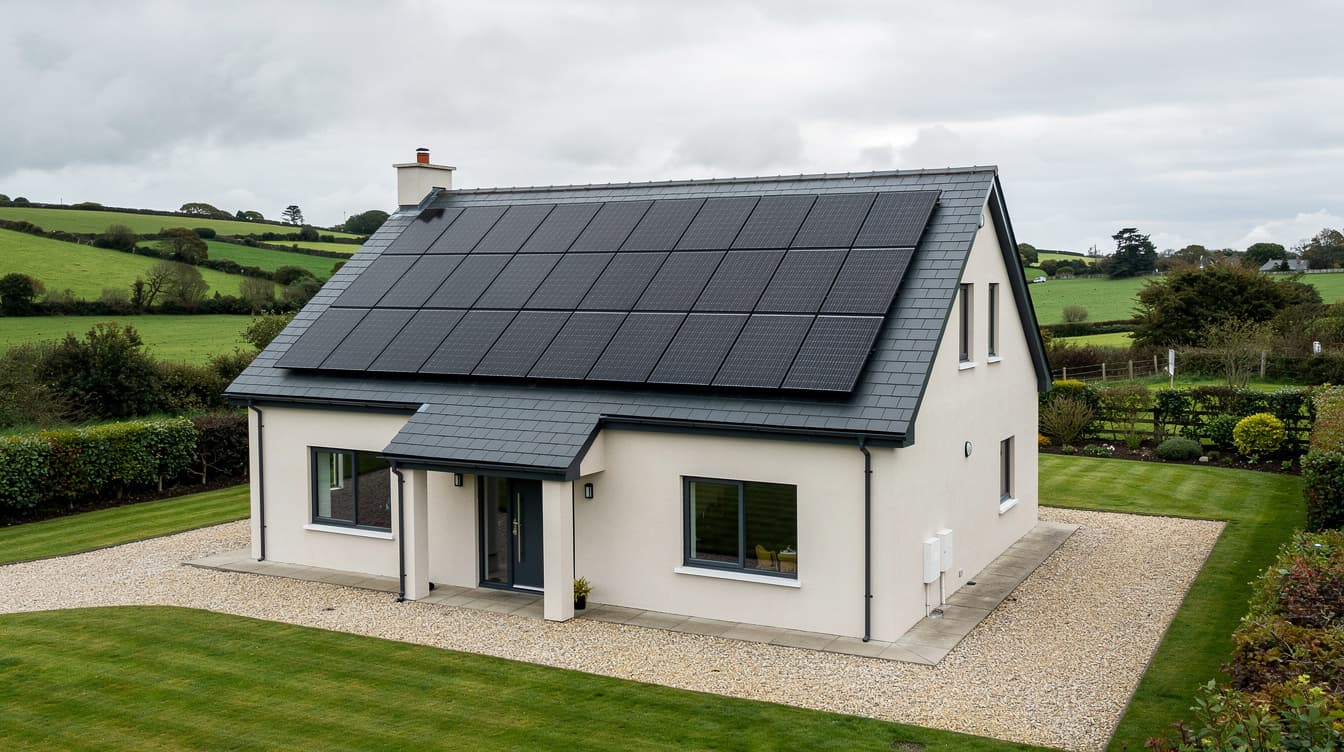
6kW solar costs €7,700–€10,500 net after the €1,800 SEAI grant and 0% VAT in Ireland 2026. Real quote, 5,270 kWh/yr output, EV/battery ROI.
5kW Solar System Cost Ireland 2026: Real Prices, Output & 25-Year ROI
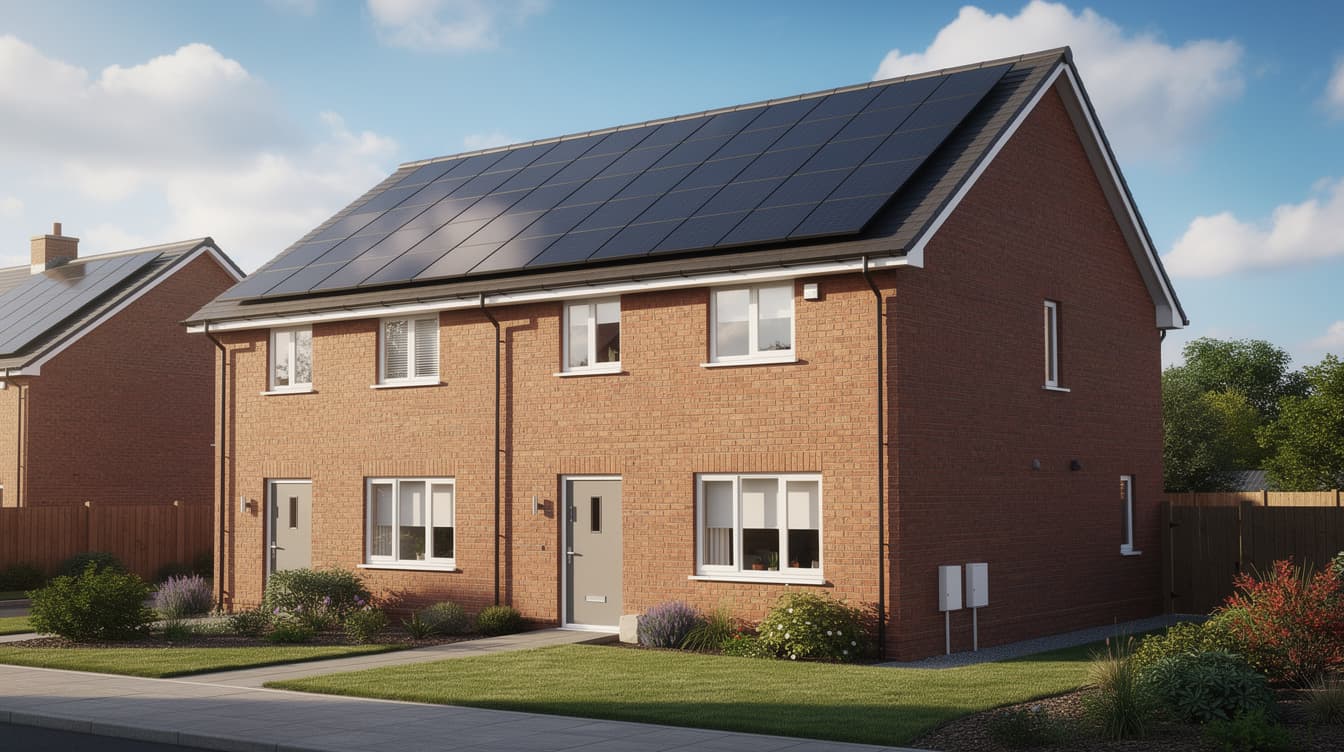
5kW solar system costs €6,700–€9,200 net after the €1,800 SEAI grant and 0% VAT in Ireland 2026. Full itemised breakdown, real output data & battery ROI.