
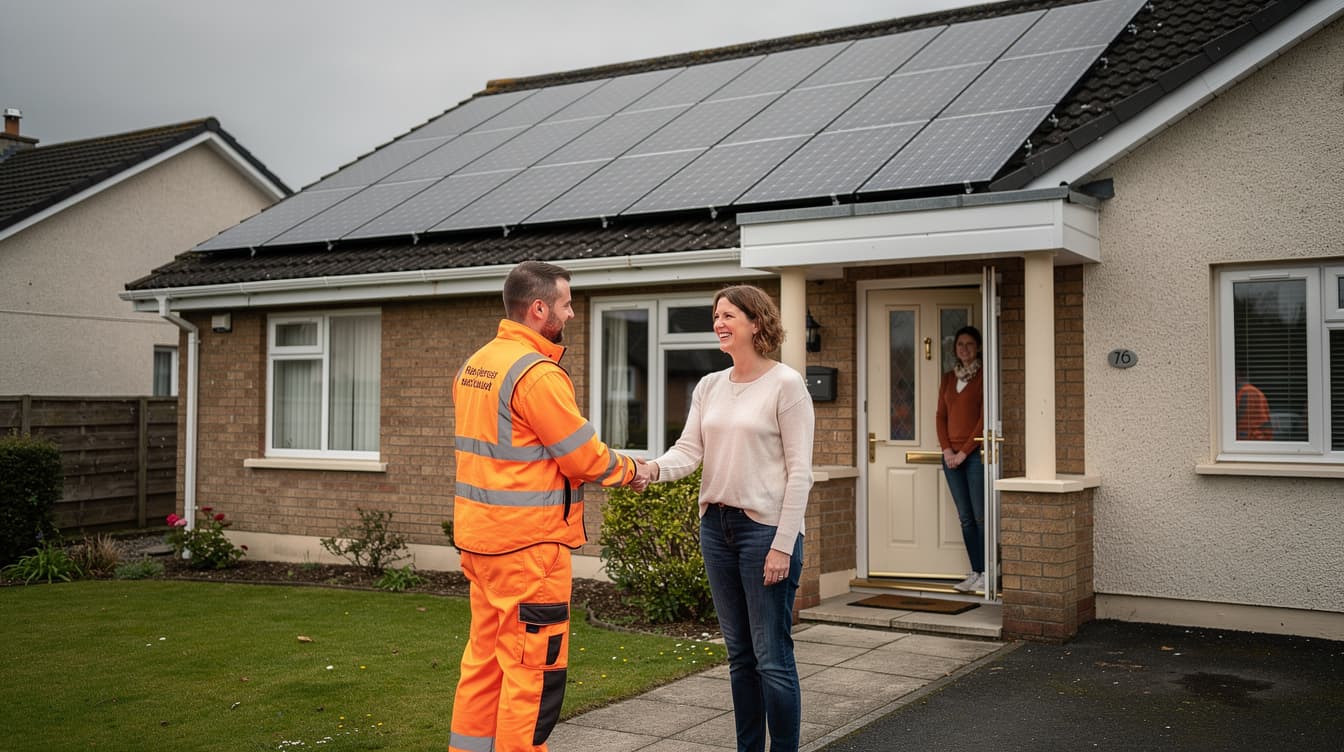
How to Choose a Solar Installer in Ireland: The Complete 2026 Guide
The installer you pick matters as much as the panels they put on your roof. Here is how to separate the professionals from the cowboys.
You have decided to go solar. You know the costs, you know the SEAI grant is worth up to €1,800, and you are ready to get quotes. But here is the thing nobody tells you: the quality of your installation depends far more on who installs it than which panels they use.
A great installer with mid-range panels will outperform a bad installer with premium panels every time. Bad wiring, poor roof sealing, wrong panel placement, undersized inverters — these mistakes cost homeowners thousands in lost output and repair bills. And with the Irish solar market booming (over 80,000 domestic systems installed by early 2026), there are more companies than ever competing for your business — not all of them equally competent.
This guide gives you a concrete, step-by-step process for choosing the right solar installer in Ireland. No vague advice — actual checks you can do, questions you should ask, and red flags that should send you running.
Step 1: Start with the SEAI Register (and Why It Is Non-Negotiable)
The single most important thing you can do is verify that any installer you consider is on the SEAI Solar PV Company Register. This is not optional — it is the baseline.
Why it matters:
- Only SEAI-registered installers can complete grant-eligible installations. If your installer is not registered, you lose the €1,800 SEAI grant.
- Registered companies must adhere to the SEAI Domestic Technical Standards and Specification (DTSS) — a detailed code of practice covering everything from panel selection to wiring standards.
- They must employ installers who hold QQI Level 6 certifications (modules 6N306 and 6N307) specifically for solar PV installation.
- They must be Registered Electrical Contractors (REC) with Safe Electric Ireland.
- SEAI conducts random audits and inspections of registered companies’ work.
How to check: Visit the SEAI “Find a Solar PV Company” page on seai.ie and search by your county. The register is updated regularly. Bookmark this page — you will use it to verify every company that contacts you.
Warning: Some companies claim to be “SEAI approved” or “SEAI certified” in their marketing but are not actually on the register. Always verify directly. The SEAI has issued repeated warnings about this.
Get Quotes from Verified Installers
We only connect you with SEAI-registered solar companies.
Step 2: Get at Least 4 Quotes (SEAI Recommends It)
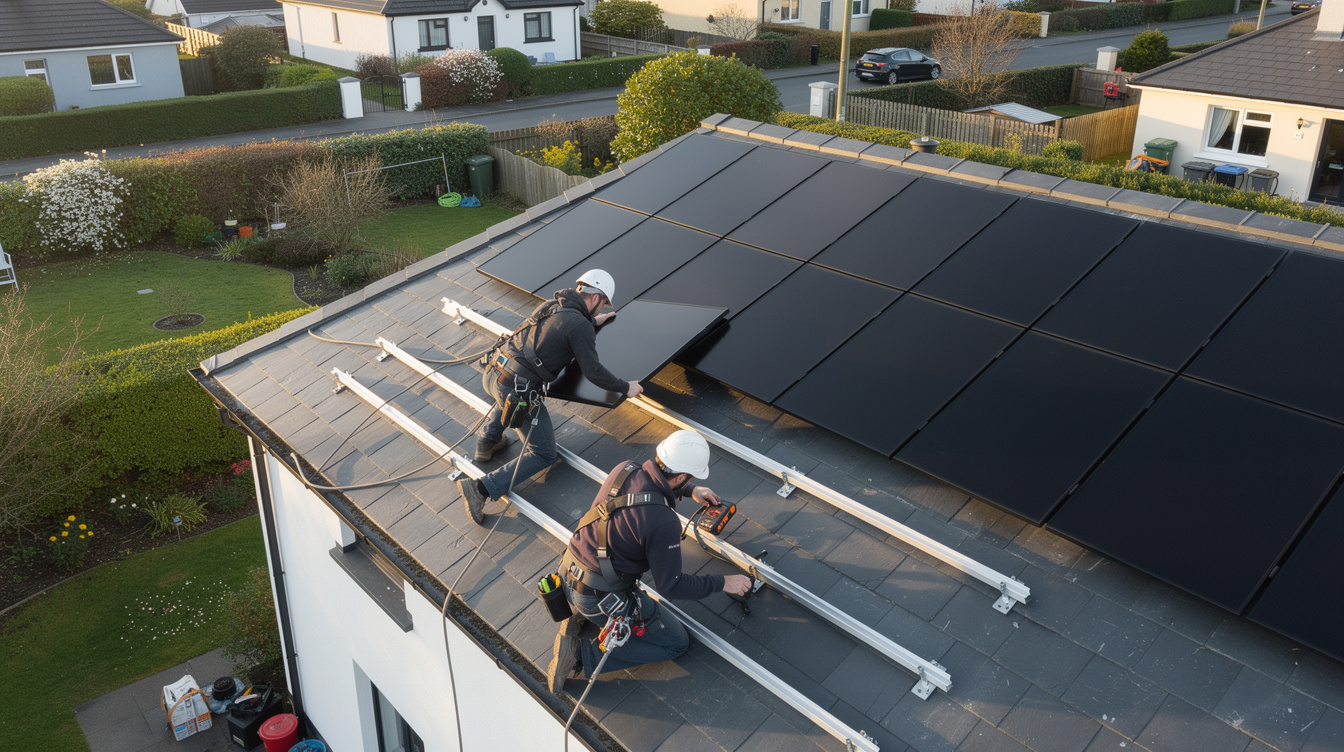
SEAI explicitly recommends getting at least 4 quotes from different companies. This is not just about finding the cheapest price — it is about understanding what “normal” looks like so you can spot outliers.
What to compare across quotes:
| Quote Item | What to Look For | Red Flag |
|---|---|---|
| Panel brand and model | Named Tier 1 brand (JA Solar, Trina, Jinko, Canadian Solar, etc.) | Generic “premium panels” with no brand specified |
| Inverter brand and model | Named brand (SolarEdge, Fronius, Enphase, Huawei) | No inverter details or unknown brands |
| System size (kWp) | Clear kWp rating with panel count | Only “number of panels” without wattage |
| Estimated annual output | Realistic kWh estimate based on your roof | Wildly optimistic claims (>1,100 kWh/kWp in Ireland) |
| Warranty terms | Panel (25yr), inverter (10-25yr), workmanship (5-10yr) specified separately | Vague “25-year warranty” without specifying what is covered |
| Scaffolding | Included in price | Listed as an add-on or not mentioned |
| BER assessment | Included (required for SEAI grant) | Not mentioned or charged as extra |
| SEAI grant handling | Company deducts grant from invoice | You have to claim the grant yourself after paying full price |
What does a typical 2026 quote look like?
A standard 4 kWp system (10 panels) should cost €6,200–€7,500 before the SEAI grant, or roughly €4,400–€5,700 after the grant. If a quote is significantly below €5,500 before grant, ask what is being cut. If it is above €8,500, ask what premium features justify the price.
For a detailed pricing breakdown by system size, see our 2026 solar panel costs guide.
Step 3: Check Their Track Record
An SEAI-registered company with great reviews is not the same as one that just scraped onto the register. Here is how to dig deeper:
Online reviews:
- Check Google Business reviews — look for consistent themes, not just the star rating. Are people mentioning clean work, good communication, and on-time completion?
- Check Trustpilot — some larger Irish solar companies have hundreds of reviews here.
- Search for the company name on Boards.ie — Irish forums often have candid discussions about solar installers that you will not find on review platforms.
Direct references:
- Ask the company for 2–3 references from recent installations in your area. A confident installer will happily provide these.
- If possible, ask to see a completed installation in person. Look at the cable routing, the neatness of the panel layout, and how the mounting system connects to the roof.
Company history:
- How long have they been installing solar specifically? Some companies pivoted to solar from other trades during the boom — experience matters.
- Check the Companies Registration Office (CRO) at core.ie to verify how long the company has been trading. A company registered in 2024 is not necessarily bad, but one trading since 2018 has survived market cycles.
Step 4: Insist on a Site Survey Before Signing
Any reputable installer will conduct a site survey before giving you a final quote. This is not optional — it is the only way to design a system properly for your specific home.
What a good site survey covers:
- Roof assessment: Orientation, pitch angle, shading from trees/chimneys/neighbouring buildings, structural condition, tile type
- Electrical check: Your existing consumer unit (fuse board), meter type, earthing arrangement
- Energy usage analysis: Your electricity bills, daily usage patterns, whether you have an EV or heat pump (or plan to)
- System design: Panel layout, inverter location, cable runs, whether the meter needs upgrading
Red flag: If a company gives you a “final” quote over the phone or from a Google Maps satellite image without visiting your home, be very cautious. A satellite image cannot tell them about shading, roof condition, or your electrical setup.
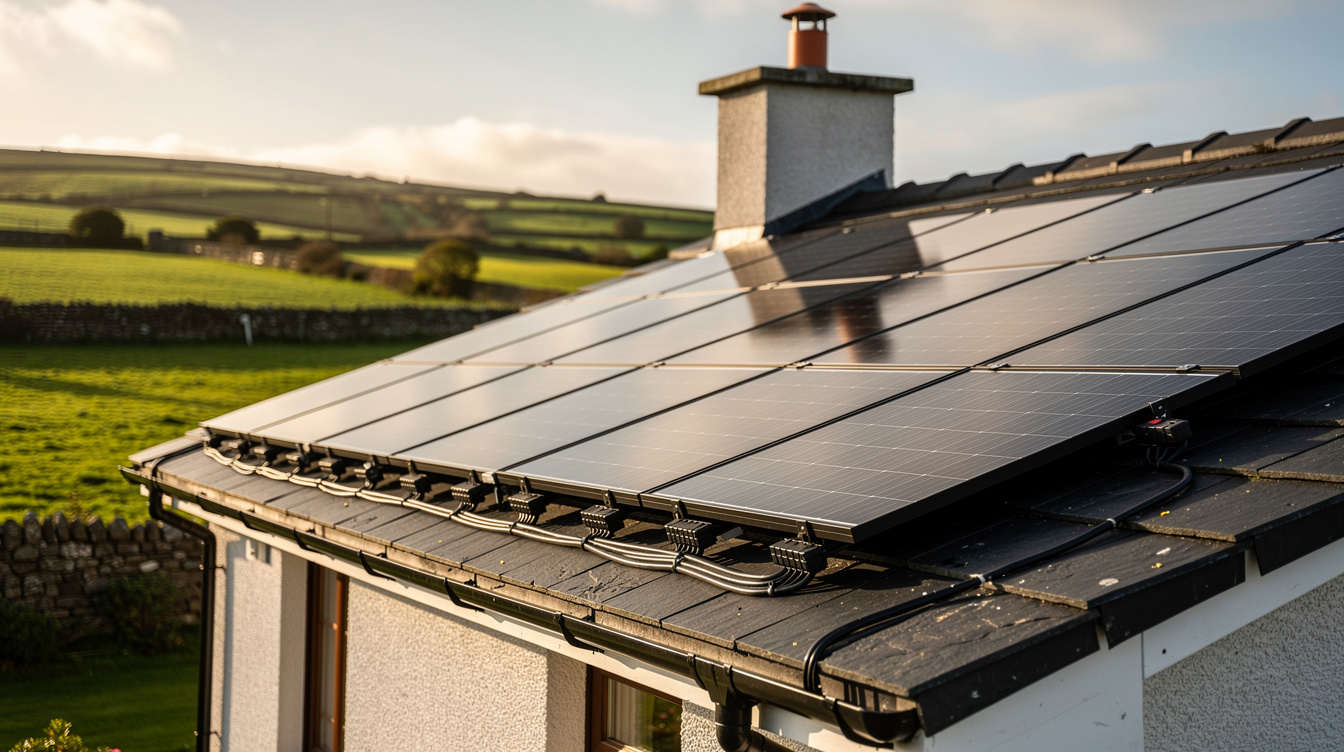
Step 5: Understand Who Actually Does the Work
This is a crucial question that many homeowners forget to ask: “Will your own employees install my system, or do you subcontract the work?”
Some solar companies are essentially sales organisations that outsource the actual installation to subcontractors. This is not automatically a problem — but it does change the accountability structure:
- Direct installation team: The company that quotes you is the company on your roof. Communication is simpler, accountability is clearer.
- Subcontracted installation: A third party does the work. If something goes wrong, there may be finger-pointing between the sales company and the subcontractor.
If the company uses subcontractors, ask:
- Are the subcontractors also SEAI-registered?
- Who is responsible for the workmanship warranty — the sales company or the subcontractor?
- Will you know the name of the installation company before the work starts?
8 Red Flags That Should Make You Walk Away
Over the past two years, Irish consumer organisations and the SEAI have flagged recurring issues with rogue operators in the solar market. Here are the warning signs:
- “This offer expires today” — High-pressure sales tactics are the number one red flag. A legitimate installer knows you need time to compare quotes. Anyone pushing for an on-the-spot signature is prioritising their commission over your interests.
- Demanding a large deposit upfront — A deposit of 10–20% to secure your booking is normal. Demanding 50%+ before work starts is not. Never pay the full amount before installation is complete.
- Not on the SEAI register — No exceptions. If they claim they are “in the process of registering,” wait until they actually are.
- No site survey — A quote without a home visit is a guess, not a quote.
- Unrealistic output promises — In Ireland, a well-positioned 1 kWp system generates approximately 850–1,000 kWh per year. If someone promises you 1,200+ kWh/kWp, they are either in a different country or lying.
- Vague warranty terms — “25-year warranty” means nothing without specifying what is covered. Ask for the manufacturer’s warranty document and the installer’s own workmanship warranty in writing. For a full breakdown, see our warranty guide.
- Cold calling / door-to-door selling — While not always a scam, door-to-door solar sales have been flagged by the Competition and Consumer Protection Commission (CCPC) as a common channel for misleading claims. Be extra cautious.
- No written contract — Everything should be in writing before work starts: price, equipment, timeline, warranty terms, payment schedule, and what happens if there are delays or problems.
Skip the Guesswork
Get matched with vetted, SEAI-registered installers in your area.
10 Questions to Ask Every Installer Before You Sign
Print this list and bring it to your site surveys. A good installer will answer every one of these without hesitation:
- Are you currently on the SEAI Solar PV Company Register? (Verify afterwards.)
- What panel brand and model will you install? What is their product warranty?
- What inverter will you use? What is the standard warranty, and how much is an extended warranty?
- What is your workmanship warranty period? Is it insurance-backed?
- Will your own team do the installation, or do you use subcontractors?
- How many residential installations have you completed in the last 12 months?
- Is scaffolding included in the price?
- Will you handle the SEAI grant application and deduct it from the invoice?
- What happens if I need to make a warranty claim in 5 years? Who do I contact?
- Can you provide 2–3 references from recent customers I can speak to?
Any hesitation, deflection, or “we will sort that out later” on these questions is a concern.
What Should You Pay? 2026 Pricing Benchmarks
Here is what the market looks like right now. These are typical prices from SEAI-registered installers for a standard pitched-roof installation using Tier 1 equipment, including 0% VAT:
| System Size | Before SEAI Grant | After €1,800 Grant | Annual Output (est.) |
|---|---|---|---|
| 2 kWp (5 panels) | €3,800–€4,500 | €2,400–€3,100 | 1,700–2,000 kWh |
| 3.5 kWp (8 panels) | €5,500–€6,500 | €3,700–€4,700 | 3,000–3,500 kWh |
| 4 kWp (10 panels) | €6,200–€7,500 | €4,400–€5,700 | 3,400–4,000 kWh |
| 6 kWp (14 panels) | €8,500–€10,000 | €6,700–€8,200 | 5,100–6,000 kWh |
Prices vary by region. Dublin and the east coast tend to be at the higher end; rural areas may be slightly lower due to lower overheads, but also have fewer installers competing for your business.
The SEAI Grant Process: What Your Installer Should Handle
A good installer takes care of most of the SEAI grant paperwork for you. Here is the typical process:
- You apply to SEAI for grant approval (your installer can help you with this, or you can do it online)
- SEAI approves your application — you then have 8 months to complete the installation
- Your installer does the work, uploads the Declaration of Works to the SEAI portal, and arranges your post-installation BER assessment
- SEAI pays the grant directly to you, or the installer deducts it from your invoice upfront (the second option is more common and more convenient)
Important: You must apply for the grant before the installation begins. If you get the panels installed first and then try to claim the grant, you will be rejected. Your installer should know this and factor it into the timeline.
For the complete step-by-step, see our SEAI grant application guide.
After Installation: What to Check on Day One
When your installation is complete, do not just sign the paperwork and walk away. Take 30 minutes to check the following:
- Visual inspection: Are the panels aligned neatly? Are cables clipped and routed tidily, not dangling loose?
- Roof penetrations: Check from inside the attic if possible — are the mounting brackets sealed properly?
- Inverter: Is it mounted in a sensible, accessible location? Is it showing a green light and generating power?
- Monitoring: Has the installer set up the monitoring app (SolarEdge, Enphase, Huawei FusionSolar, etc.) on your phone?
- Meter: If your meter needed upgrading, confirm it has been done.
- Documentation: You should receive the panel datasheets, inverter manual, warranty certificates, electrical compliance certificate, and SEAI Declaration of Works.
- Clean up: Has the installer removed all packaging, cable off-cuts, and left the site tidy?
Take photos of everything on day one — the panel layout, the inverter display, the cable routing, and the roof from inside the attic. These will be invaluable if you ever need to make a warranty claim.
Your Solar Installer Checklist (Save This)
| Check | Status |
|---|---|
| Verified on SEAI Solar PV Company Register | □ |
| Got 4+ quotes from different companies | □ |
| Checked Google / Trustpilot reviews | □ |
| Asked for and contacted references | □ |
| Site survey completed (not just satellite image) | □ |
| Quote specifies panel brand and model | □ |
| Quote specifies inverter brand and model | □ |
| Warranty terms clear (panel, inverter, workmanship) | □ |
| Scaffolding and BER included in price | □ |
| Written contract signed before work starts | □ |
| SEAI grant applied for before installation | □ |
| No pressure to sign immediately | □ |
Ready to Get Started?
Get free, no-obligation quotes from SEAI-registered installers in your area.
The Bottom Line
Choosing a solar installer is the most consequential decision in your solar journey. The panels and inverter are commodity products — what separates a great installation from a mediocre one is the skill, care, and professionalism of the people who put it on your roof.
Take your time. Get multiple quotes. Verify SEAI registration. Ask tough questions. Check references. Read the contract. And if anything feels off — trust your gut and move on. There are plenty of excellent solar installers in Ireland; you just need to find one.
If you need help getting started, use our solar panel calculator to estimate the right system size, then request quotes from our network of verified installers. It is free, takes 2 minutes, and there is absolutely no obligation.
Related Articles
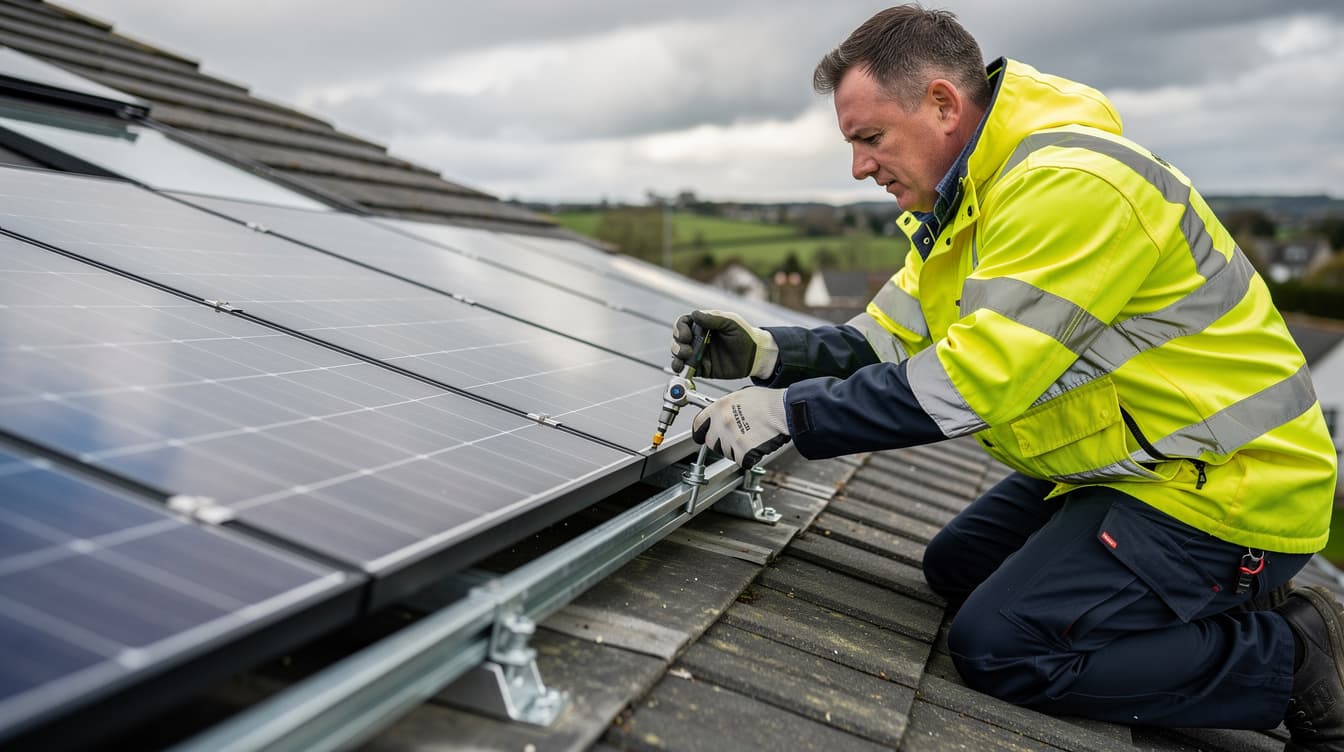
Solar Panel Warranty Ireland 2026: Product, Performance & Workmanship Explained
The three warranties on every Irish solar system explained, honest 2026 brand-by-brand terms, and what actually voids a claim — before you sign the quote.
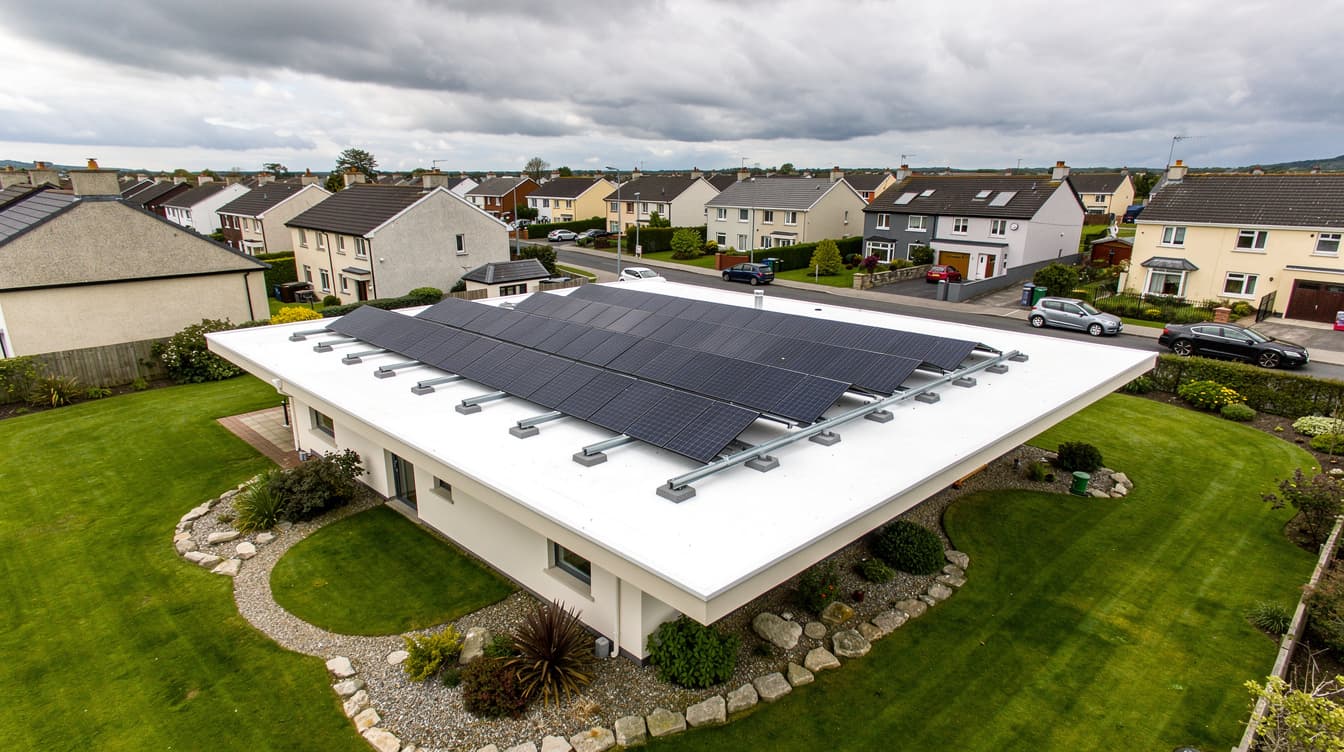
Solar Panels for Flat Roofs Ireland: Costs, Mounting Systems & What to Know (2026)
Can you install solar panels on a flat roof in Ireland? Yes. Costs, ballasted vs penetrating mounting, SEAI grants, planning rules, and what to know in 2026.
Best Solar PV Panels Ireland 2026: TOPCon vs HJT vs IBC Buyer's Guide
Which PV panel actually performs best in Ireland in 2026? N-type TOPCon vs HJT vs IBC compared, with Tier 1 brand picks and Irish-specific buying advice.