

Solar Power Diverters Ireland 2026: myenergi Eddi vs Solar iBoost+ vs Apollo Gem — The Honest Comparison
Solar Power Diverters Ireland 2026: myenergi Eddi vs Solar iBoost+ vs Apollo Gem — The Honest Comparison
A solar power diverter pays for itself in 18–30 months in most Irish homes — faster than any battery, faster than panels themselves, and on a fraction of the budget. In 2026 there are three real choices: the myenergi Eddi, the Marlec Solar iBoost+, and the Apollo Gem. This guide explains exactly what each one does, what it costs installed, and which one fits your house.
Every solar PV system in Ireland exports surplus electricity to the grid on a sunny day. Under the Clean Export Guarantee, you are paid roughly €0.09–€0.20 per kWh for it. Meanwhile, the immersion heater in your hot water cylinder is sitting idle. A power diverter steps in: instead of selling the surplus, it dumps it into your immersion heater to make free hot water. Free, in the literal sense — the alternative was an export payment of maybe 10c, while heating the same water from the grid costs you 28–35c.
The savings on a typical 3-bed Irish home with a 5kWp solar array are €250–€450 per year, which means a €500–€700 installed diverter pays back inside two years and runs maintenance-free for fifteen.
Quick answer for 2026
For most Irish homes: get the myenergi Eddi. It is the cleanest install, has the best app, and integrates with the Zappi EV charger and Libbi battery if you add either later. Budget around €550–€750 fully installed. If you already have a Marlec or Apollo system from a previous installer, stick with the matching brand for compatibility. If you want the cheapest possible solution and do not care about apps, the basic Solar iBoost+ at ~€400 installed still works fine.
What is a solar power diverter actually doing?
A power diverter is a small wall-mounted unit (about the size of a hardback book) that sits between your consumer unit and your immersion heater. It uses a current sensor (CT clamp) on the incoming meter tail to detect when your house is about to export power to the grid. When it sees surplus, it diverts that exact amount of power — modulated continuously, watt by watt — to the immersion heater instead.
The key word is modulated. A normal immersion heater is on or off — either drawing 3 kW or zero. A diverter throttles that down using either burst-fire or phase-angle control, so it can divert 200 W on a cloudy afternoon or 2.8 kW on a sunny one. You never pull power from the grid to heat the cylinder. Every kWh that goes in came from your own panels.
The savings stack up because of the price spread:
- Day rate import: €0.28–€0.35/kWh in 2026
- Clean Export Guarantee rate: €0.09–€0.20/kWh
- Spread captured by a diverter: ~€0.15–€0.25/kWh of redirected energy
A typical 3-bed semi diverts 1,500–2,200 kWh per year into hot water. At a captured spread of €0.18/kWh, that is €270–€400 saved annually.
The three diverters sold in Ireland in 2026
myenergi Eddi (most installed in 2026)
British-designed, sold widely in Ireland through SEAI-registered installers. The Eddi is the polished option — clean white casing, a clear LCD, the myenergi smartphone app, and a serious ecosystem around it. Same brand makes the Zappi EV charger and the Libbi home battery, and they all talk to each other through the Hub. If you have or are planning a solar EV charger, this is the obvious pick.
Key specs: Two outputs (handles immersion + a second load like an underfloor heating manifold or a second cylinder). 3.68 kW per output. WiFi and Ethernet. 3-year warranty (extendable). Boost function for forced heating overnight on a low Night Saver rate.
Hardware: €450–€520
Installed: €600–€800
Marlec Solar iBoost+ (the workhorse)
The original. Marlec has been selling diverters in the UK and Ireland for over a decade and the iBoost+ is the most-installed diverter in Ireland by volume. Two-piece design: a transmitter unit clips onto the meter tails, and the receiver sits next to the cylinder. Reliable, simple, and cheap.
Key specs: 3 kW single output. Display on the receiver unit. No native app (older models). The Buddy add-on adds a second output (for a second cylinder or underfloor). Optional iBoost+ WiFi module for monitoring. 2-year warranty.
Hardware: €280–€350
Installed: €400–€550
Apollo Gem (the smart cylinder option)
Apollo’s Gem is the cylinder-integrated approach — designed to slot in alongside their stainless-steel hot water cylinders. Less common as a retrofit, more common when you are replacing the cylinder anyway during a deep retrofit. Has Wi-Fi monitoring and integrates with smart home setups.
Key specs: 3 kW single output. Built-in monitoring. Best when paired with an Apollo cylinder during a One Stop Shop retrofit.
Hardware: €320–€400 standalone
Installed: €500–€650
Side-by-side comparison
| Feature | myenergi Eddi | Marlec Solar iBoost+ | Apollo Gem |
|---|---|---|---|
| Installed price | €600–€800 | €400–€550 | €500–€650 |
| Power output | 3.68 kW × 2 | 3 kW (Buddy adds 2nd) | 3 kW |
| Native smartphone app | Yes (excellent) | Optional WiFi module | Yes |
| EV charger integration | Yes (Zappi) | No | No |
| Battery integration | Yes (Libbi) | No | No |
| Warranty | 3 years (5 if registered) | 2 years | 2 years |
| Boost / scheduling | Yes (full schedules) | Manual boost button | Yes |
| Install complexity | Medium | Easy (wireless) | Medium |
Adding a diverter to an existing system?
An SEAI-registered installer can fit a diverter in 2–3 hours and integrate it with your existing solar setup.
The real numbers for a 3-bed Irish home
Take a typical Irish 3-bed semi with a 5 kWp south-facing array. Annual generation: ~4,500 kWh. Of that, the household self-consumes around 1,800 kWh during the day — fridges, dishwashers, charging, lighting. The remaining ~2,700 kWh would otherwise export to the grid.
With a power diverter installed:
- Approximately 1,800–2,200 kWh per year of that surplus is captured and dumped into the immersion heater (depends on cylinder size and hot water demand — once the cylinder reaches 65ºC the diverter stops adding heat).
- The remaining 500–900 kWh continues to export under the CEG.
- Each diverted kWh replaces an immersion kWh that would have cost €0.30–€0.35 from the grid, instead of being exported for €0.18–€0.20.
Net annual saving: 1,800 kWh × (€0.32 saved − €0.18 forgone export) = €252/year at the low end. At higher tariffs, €380–€420/year.
Payback on a €650 installed Eddi: 20–26 months. Payback on a €450 iBoost+: 14–18 months.
Diverter vs battery — which first?
This is the question we get asked most. The short answer: install a diverter first, then a battery. The diverter pays back faster and the two complement each other.
| Comparison | Power Diverter | Solar Battery |
|---|---|---|
| Installed cost | €450–€800 | €4,500–€10,500 |
| Annual saving | €250–€420 | €450–€800 |
| Simple payback | 18–28 months | 7–12 years |
| What it captures | Daytime surplus → hot water | Daytime surplus → evening electricity |
| Best paired with | Any solar system + immersion cylinder | Hybrid inverter, high evening demand |
If you have an oil or gas boiler and rely on the immersion only for backup, a diverter saves less because you are already heating water cheaply. Run the numbers: if your immersion is producing 80–100% of your hot water already (heat pump and pure-electric homes), the diverter is gold. If your immersion is a once-a-week backup, it is still worthwhile but slower.
Common questions
Do I need a special cylinder?
No. Any standard hot water cylinder with a 3 kW immersion heater works. Twin-coil cylinders (one coil for the boiler, immersion for solar diverter) are slightly better because the diverter feeds heat in from the top while the boiler can still feed from the lower coil if needed.
Can I add a diverter to an existing solar system?
Yes, easily. A diverter is essentially a load-control device — it does not interfere with the inverter or the panels. Any registered electrician can fit one in 2–3 hours. You do not need to inform ESB Networks, and your existing CEG payment continues for whatever surplus is still exported after the immersion is fully heated.
What about heat pumps — do diverters work with them?
Heat pumps use their own hot water cycle — usually a buffer or directly heated hot water tank. Adding a diverter feeding a 3 kW immersion alongside the heat pump can shift some of the summer hot water duty off the pump, freeing it up for space heating later. The payback gets slightly weaker because the heat pump was already producing hot water cheaply (COP ~3), but in summer when space heating demand is zero, the diverter still wins. See our full heat pumps + solar guide for the wider picture.
Will I still get my CEG export payment?
Yes, on whatever surplus is left after the cylinder is fully heated. In summer the cylinder fills up by lunchtime and the rest goes to the grid as before. In winter, the diverter rarely fills the cylinder fully so most surplus goes to hot water.
Can a diverter heat an EV instead?
Not directly — EVs need an active charging communication protocol that diverters do not provide. However the myenergi Zappi EV charger does the same job for cars: it diverts surplus solar to your EV instead of (or in addition to) the immersion. Many homes run an Eddi on the immersion and a Zappi on the car, prioritising whichever you set.
Does the SEAI grant cover a power diverter?
No. The SEAI €1,800 Solar PV Grant covers panels and the inverter only. Diverters, batteries, and EV chargers are extras you pay for separately. The good news is the diverter payback is fast enough that grant support is almost unnecessary.
How to choose — a decision tree
Three quick questions get you to the right answer:
- Do you have or plan to add a myenergi Zappi EV charger or Libbi battery?
→ Yes: pick the Eddi. The ecosystem benefits are real. - Are you on a tight budget and just want the cheapest working diverter?
→ Yes: pick the Marlec Solar iBoost+. Lower spec but it works and saves the same amount of money. - Are you doing a One Stop Shop deep retrofit with a new cylinder?
→ Yes: ask if the Apollo Gem fits your project. Otherwise stick with the Eddi.
If you are unsure: get the Eddi. It is more expensive by about €150–€200 but the install is cleaner, the warranty is longer, and the resale value is higher if you ever sell the house.
Ready to Go Solar?
Get your free personalised quote from SEAI-registered installers — ask about including a power diverter in the package.
Further reading
Related Articles
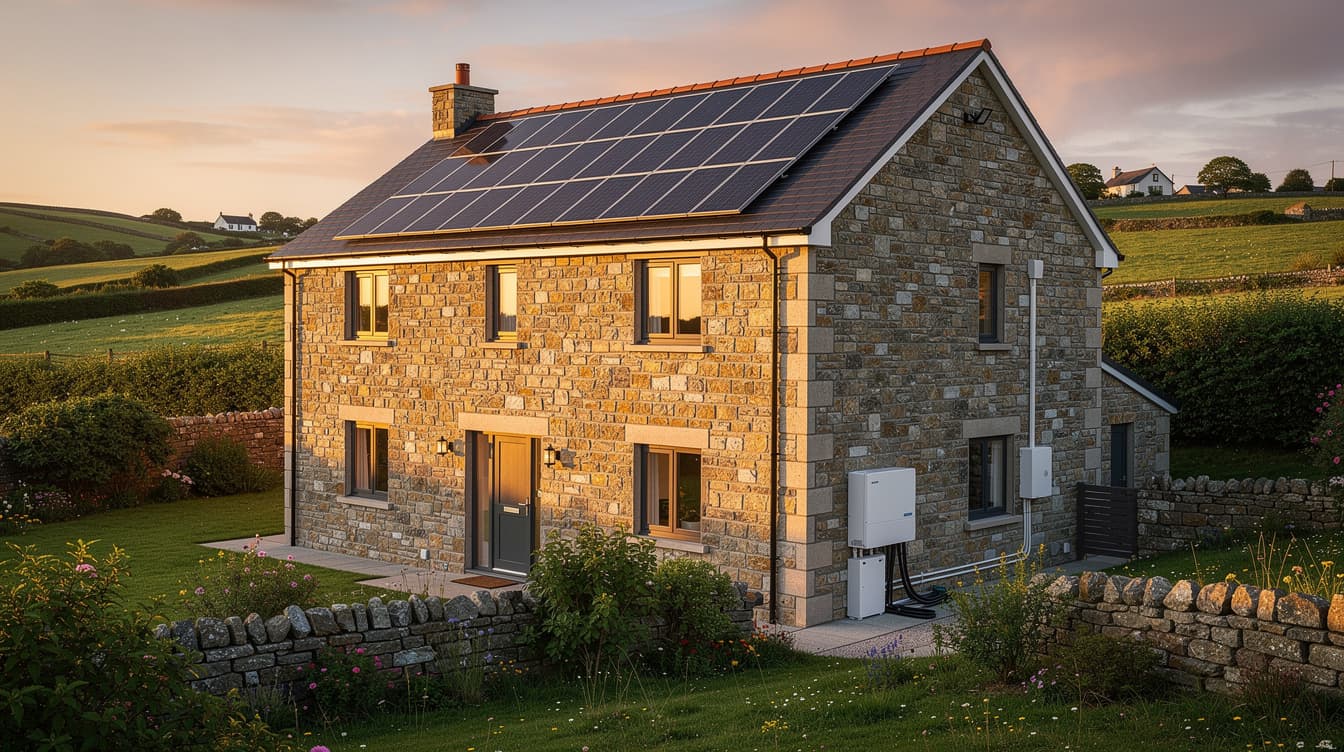
Best Solar Setup Ireland 2026: Complete System Design Guide
The best solar setup for Ireland 2026 — panels, inverter, battery, diverter and installer — with 4 real-world configurations, prices and paybacks.
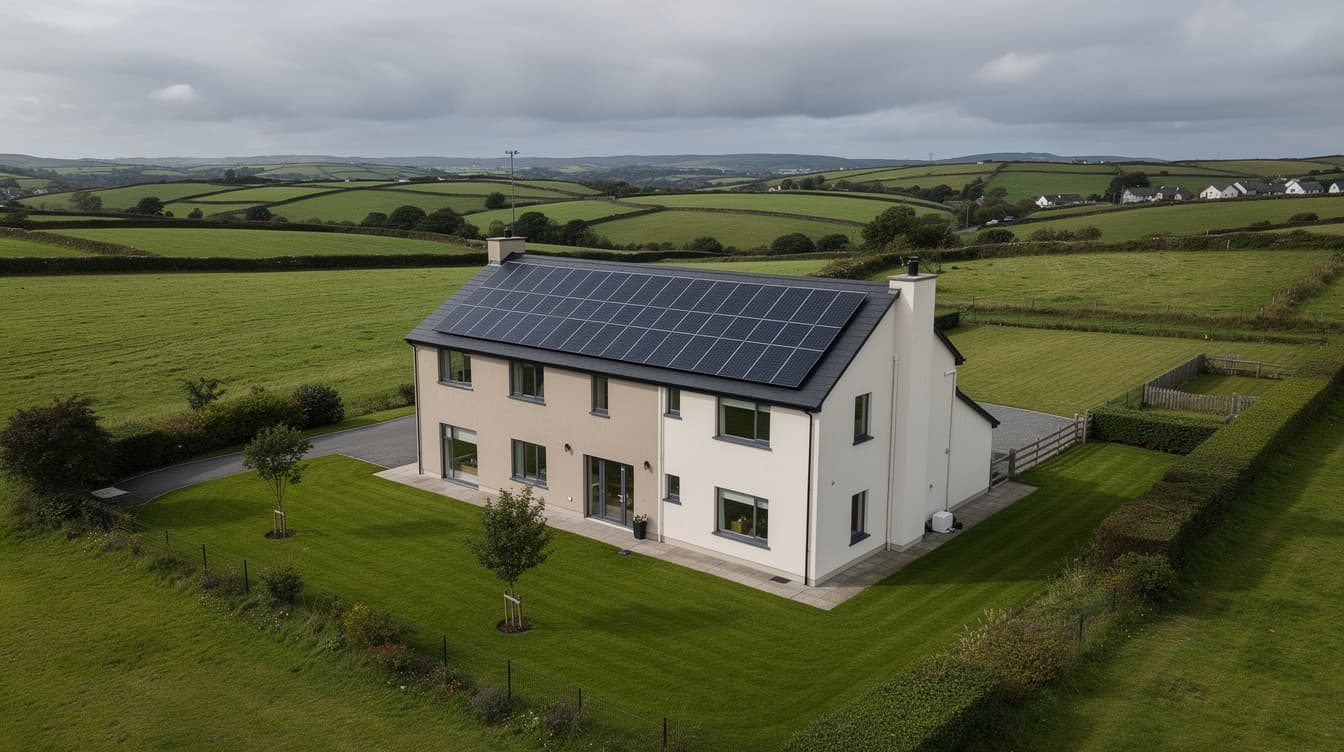
20 Solar Panels Ireland 2026: Cost, Output, Battery & Payback
What 20 solar panels cost in Ireland 2026 (€12.7-18.6k net after grant), 7,600-8,100 kWh output, roof space, battery choice and payback vs 10 or 14 panels.
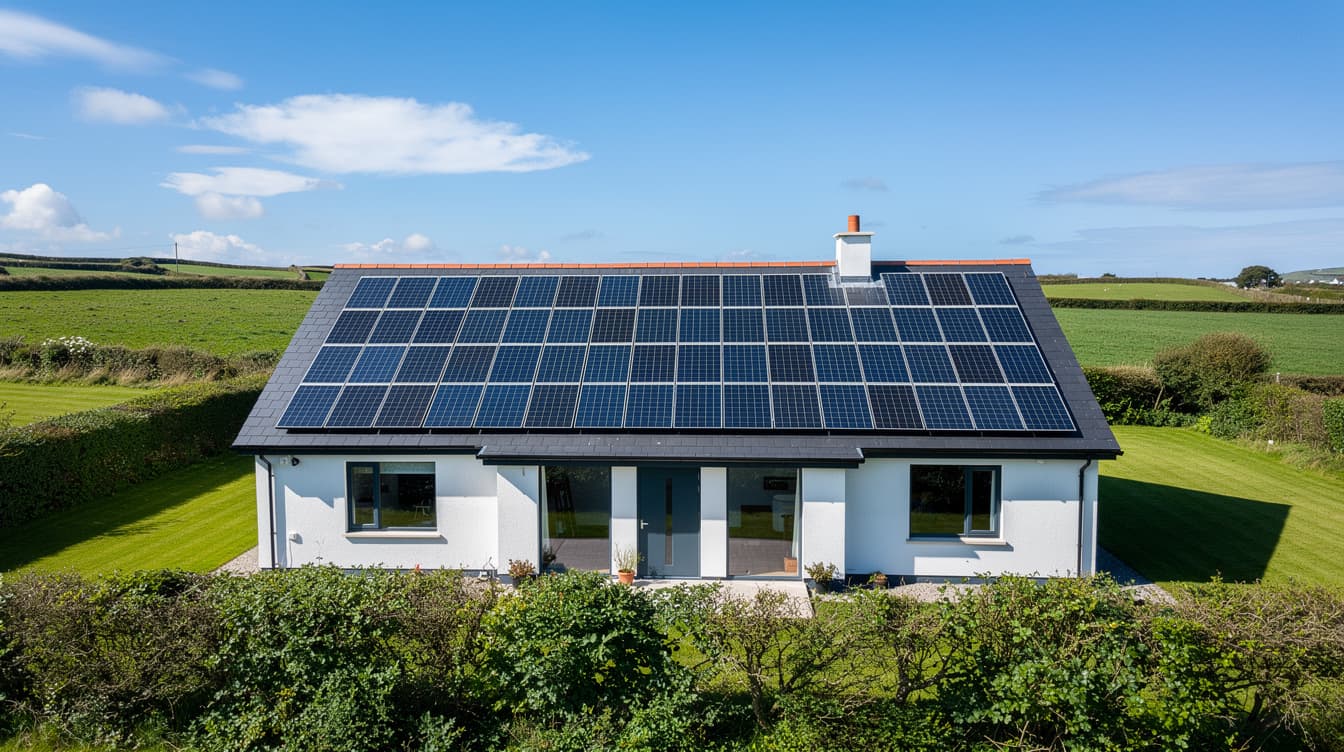
Solar Panel Temperature Coefficient Ireland 2026: How Heat Affects Output
What temperature coefficient really means for Irish solar output, real cell temps by season, 2026 brand rankings, and why low-light beats heat spec in Ireland.