
Best Electricity Supplier for Solar Export in Ireland 2026: Every Rate Compared
Best Electricity Supplier for Solar Export in Ireland 2026: Every Rate Compared
The difference between the best and worst solar export rate in Ireland is nearly 10c/kWh — that is €150–€250 per year on a typical system. Here is a full supplier-by-supplier comparison so you can pick the one that puts the most money back in your pocket.
If you have solar panels in Ireland, you are almost certainly exporting surplus electricity to the grid. Under the Clean Export Guarantee (CEG), every electricity supplier is legally required to pay you for that electricity — but they can set their own rate. And the rates vary enormously.
This guide compares every supplier’s export rate, explains why the highest export rate is not always the best deal, and shows you exactly how much you could earn — or lose — by switching.
All Export Rates Compared (May 2026)
Here is every electricity supplier in Ireland and what they pay for your exported solar electricity, ranked from highest to lowest:
| Rank | Supplier | Export Rate (c/kWh) | Annual Export Income* |
|---|---|---|---|
| 1 | Pinergy | 25.0c | €375 |
| 2 | Community Power | 20.0c | €300 |
| 3= | SSE Airtricity | 19.5c | €293 |
| 3= | Electric Ireland | 19.5c | €293 |
| 5= | Bord Gáis Energy | 18.5c | €278 |
| 5= | Energia | 18.5c | €278 |
| 5= | Flogas | 18.5c | €278 |
| 8= | Yuno Energy | 15.9c | €239 |
| 8= | PrePayPower | 15.9c | €239 |
| 10 | EcoPower | 15.2c | €228 |
*Based on 1,500 kWh annual export from a typical 4.4 kWp system. Your actual export will depend on system size, self-consumption, and orientation. Rates as of May 2026 — suppliers can change rates at any time.
The spread is striking: Pinergy pays €375/year for the same electricity that EcoPower pays €228 for. That is a €147 difference — every single year — just from choosing the right supplier.
How the Clean Export Guarantee Works
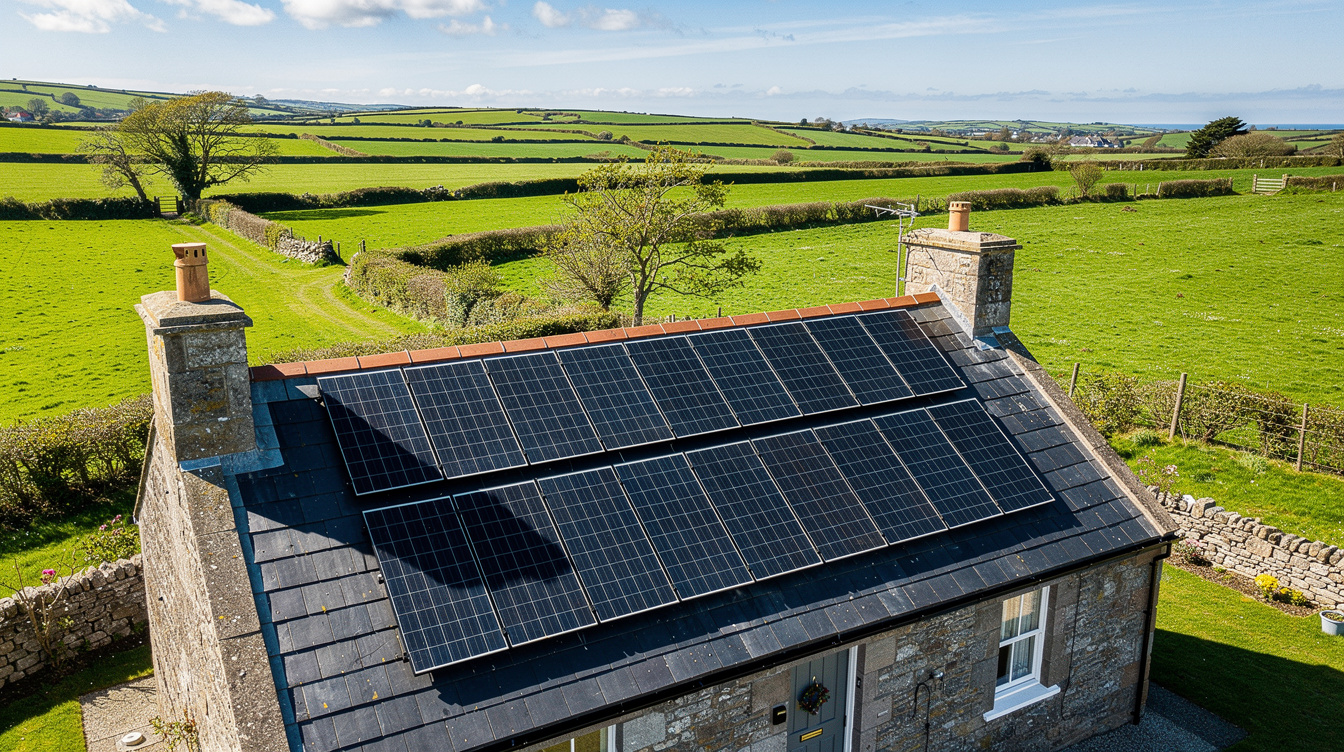
The Clean Export Guarantee (CEG) is the legal mechanism that requires every electricity supplier in Ireland to pay you for surplus solar electricity you export to the grid. Here is how it works in practice:
- You generate solar electricity. Your panels produce power during daylight hours.
- You use what you need first. Your home appliances consume solar electricity directly — this is called self-consumption.
- Surplus flows to the grid. Any electricity you do not use is automatically exported through your meter.
- Your smart meter records exports. ESB Networks installs a free smart meter (or upgrades your existing one) that records both import and export.
- Your supplier pays you. The export payment appears as a credit on your electricity bill, reducing what you owe.
Important: Export payments are credits on your bill, not cash payments. If your export credit exceeds your import bill in a given period, the balance rolls forward. You cannot “cash out” surplus credits.
The CEG is not regulated — the CRU (Commission for Regulation of Utilities) does not set rates. Each supplier sets its own export rate, which is why there is such a wide range.
How Much Will You Actually Earn?
Your export earnings depend on two things: how much you export and what rate you get. Here is a realistic breakdown for different system sizes:
| System Size | Annual Generation | Typical Export | At 15c/kWh | At 19.5c/kWh | At 25c/kWh |
|---|---|---|---|---|---|
| 3.1 kWp (7 panels) | 2,800 kWh | 1,100 kWh | €165 | €215 | €275 |
| 4.4 kWp (10 panels) | 3,900 kWh | 1,500 kWh | €225 | €293 | €375 |
| 6.2 kWp (14 panels) | 5,500 kWh | 2,200 kWh | €330 | €429 | €550 |
Most Irish solar homes with a 4.4 kWp system export roughly 55–65% of what they generate. Working from home or running appliances during the day reduces your export (but increases your self-consumption savings, which is even more valuable).
Ready to Go Solar?
Get your free personalised quote from SEAI-registered installers.
Why Import Rates Matter More Than Export Rates
This is the most common mistake solar homeowners make when choosing a supplier: focusing on the export rate while ignoring the import rate.
Here is why that is backwards. With a typical 4.4 kWp system:
- You export about 1,500 kWh/year at 19.5c/kWh = €293
- You still import about 3,000–4,000 kWh/year at ~38c/kWh = €1,140–€1,520
Your import bill is 4–5 times larger than your export income. A supplier with a 2c/kWh lower import rate saves you €60–€80/year on imports — which can easily outweigh a 2c/kWh higher export rate that only earns you €30 extra.
The golden rule: Optimise for the lowest total annual bill (imports minus exports), not the highest export rate. A supplier paying 18.5c export with a low import rate will often beat a supplier paying 25c export with a high import rate.
Best Overall Supplier for Solar Homes
The “best” supplier depends on your specific usage pattern. Here are our recommendations for different scenarios:
| Scenario | Best Supplier | Why |
|---|---|---|
| Highest export rate (no questions) | Pinergy (25c/kWh) | Best if you export a lot and already have low import costs (e.g. heat pump on night rate) |
| Best total bill (most households) | Energia or SSE Airtricity | Competitive import rates + solid 18.5–19.5c export rate = lowest net annual cost for most homes |
| Large system with battery | SSE Airtricity or Electric Ireland | Day/night tariffs let you charge battery cheap at night, use solar during day, export at 19.5c |
| Community-minded | Community Power (20c/kWh) | Community-owned, 100% renewable, competitive export rate |
| Prepay meter | PrePayPower (15.9c/kWh) | Only prepay option with CEG — lower rate but no alternative in this segment |
Our overall pick for most solar homes: SSE Airtricity or Electric Ireland. Both offer 19.5c/kWh export, competitive import rates, smart meter support, and straightforward billing. They are not the flashiest option, but they consistently deliver the best total value.
Premium Rates Through Installer Partnerships
Some solar installers have partnerships with suppliers that offer enhanced export rates — significantly above the standard rates listed above. The main one to know about:
SSE Airtricity Premium via Activ8 Energies
- Year 1: Standard rate (19.5c) + 12.5c premium = 32c/kWh
- Year 2: Standard rate (19.5c) + 7.5c premium = 27c/kWh
- Year 3+: Reverts to standard 19.5c/kWh
- Condition: You must have your solar system installed by Activ8 Energies
At 32c/kWh in Year 1, a 4.4 kWp system exporting 1,500 kWh would earn €480 — compared to €293 at the standard 19.5c rate. That is €187 extra in the first year alone.
These premium deals change over time. If you are getting a new solar system installed, it is worth asking your installer about any supplier partnerships they have.
Compare Solar Quotes
Get free quotes from SEAI-registered installers — ask about premium export rates.
How to Switch Supplier with Solar Panels
Switching electricity supplier when you have solar panels is almost identical to a normal switch, with one extra step:
- Compare total costs. Use a comparison site or contact suppliers directly. Request a quote that includes both import and export rates.
- Sign up with the new supplier. They handle the switch with your current supplier — you do not need to contact your old one.
- Register for their CEG/export tariff. Most suppliers require you to fill out a short microgeneration registration form. You will need your MPRN (meter point reference number) and your system’s MCS/installer certification.
- Wait for the switch. Typically takes 2–4 weeks. Your export meter and solar system continue working throughout — no downtime.
Key point: You do not lose your export payments during a switch. The old supplier pays you up to the switch date, and the new supplier starts paying from the switch date. Your smart meter records everything continuously.
Tax on Solar Export Income
Good news: most Irish homeowners pay no tax on solar export income. Here is the current position:
- The first €200 per year of income from domestic microgeneration is tax-free (income tax, USC, and PRSI exempt)
- For most households with a 3–5 kWp system, annual export income falls within or close to this €200 threshold
- If your export income exceeds €200, only the amount above €200 is taxable as income
- Since export payments are bill credits (not cash), the practical tax impact is minimal for the vast majority of homes
If you have a very large system (6+ kWp) and consistently export more than €200/year, consult an accountant. For everyone else, tax is a non-issue.
5 Ways to Maximise Your Export Earnings
- Switch to a higher-paying supplier. This is the single biggest lever. Moving from 15c to 25c/kWh on 1,500 kWh of exports adds €150/year instantly.
- Install an immersion diverter. Counterintuitive, but using surplus to heat water (saving 38c/kWh on imports) is more valuable than exporting at 19.5c. Use the diverter first, export the rest.
- Time your heavy appliances. Run the washing machine, dishwasher, and tumble dryer between 10am and 3pm to self-consume more. Every kWh you use directly saves ~38c vs the 19.5c you would earn by exporting it.
- Get a smart meter. You need one for export payments. If you do not have one yet, ESB Networks installs them free. Contact your supplier or request one at esb.ie.
- Monitor your system. Use your inverter’s app to see when you are exporting most. Adjust your habits to shift consumption into those peak export periods.
The Bottom Line
Choosing the right electricity supplier for solar export is worth €100–€250 per year. That might sound modest, but over 25 years of panel life, that is €2,500–€6,250 — money that is yours to keep simply by being with the right supplier.
If you do not have solar panels yet, the combination of the €1,800 SEAI grant, zero VAT, and strong export payments makes 2026 an excellent time to make the switch. Get a quote, compare suppliers, and start earning from your roof.
Get Your Free Solar Quote
Find out how much you could save — and earn — with solar panels.
Related guides:
Related Articles

Solar Panel System Cost by Number of Panels Ireland 2026: 8, 12, 14, 20, 24 Panel Prices
What 8, 12, 14, 16, 20 or 24 solar panels actually cost in Ireland 2026 — net after €1,800 SEAI grant & 0% VAT, output kWh, roof area & battery add-ons.
4kW Solar System Cost Ireland 2026: Real Prices, Output & Payback
Real 2026 Irish 4kW quotes (€7,210 gross, €5,410 net after €1,800 SEAI grant), 3,600–4,200 kWh/yr output, 4.8yr payback and when 4kW beats 3kW or 5kW.

10kW Solar System Cost Ireland 2026: Price, Output & When It’s Worth It
Real 2026 Irish installer prices for a 10kW solar system (€14,300 gross – €1,800 SEAI grant), three-phase rules, expected output and when 10kW beats 6kW.