
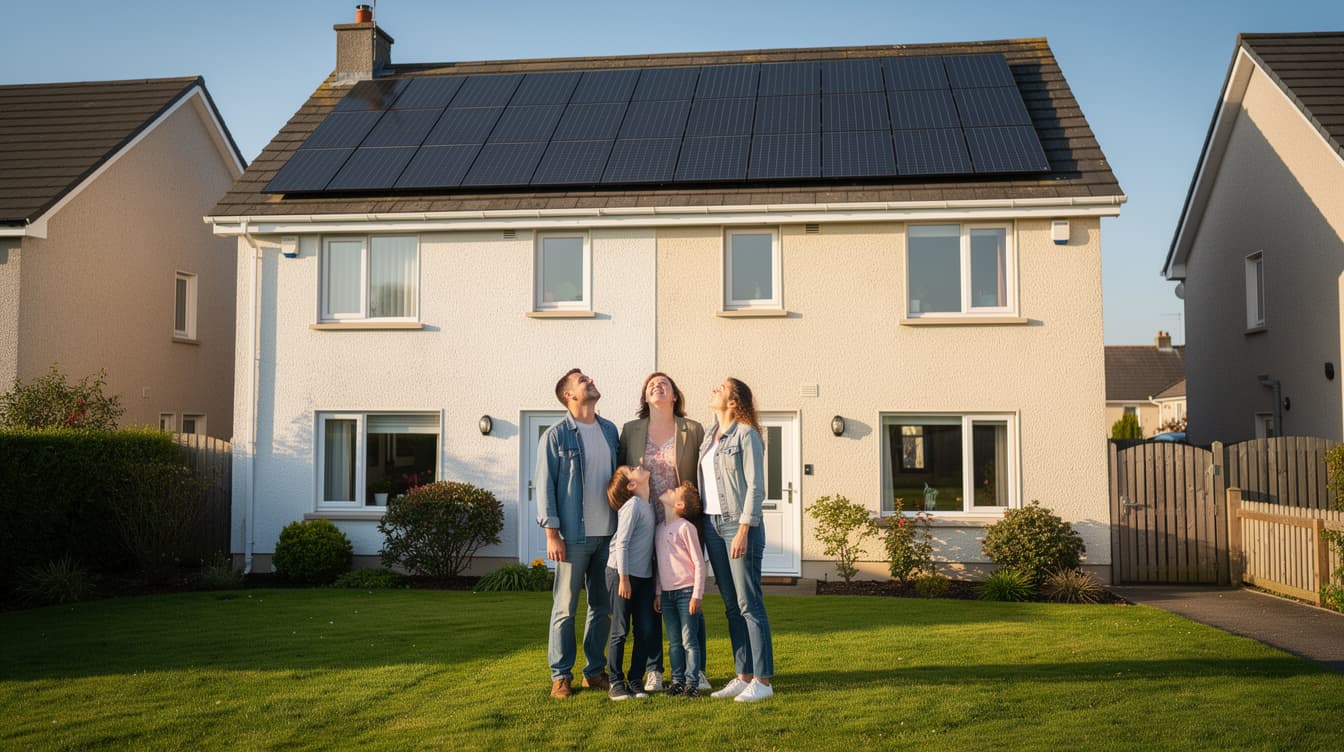
How Much Do Solar Panels Save on Your Electricity Bill in Ireland? Real Numbers for 2026
The average Irish household spends €1,817 per year on electricity. Solar panels can cut that by 50–70%. Here is exactly how much you will save based on your system size, usage, and export payments — with worked examples.
It is the question that every Irish homeowner asks before going solar: how much will I actually save? Not in theory. Not in a sales brochure. In real euros off your real electricity bill.
The answer depends on three things: your system size, how much electricity you use during daylight hours, and what your supplier pays for the surplus you export to the grid. This guide breaks down each factor with concrete numbers based on 2026 electricity prices.
The Quick Answer
Here is what typical Irish households save per year with solar panels at current 2026 electricity prices:
| System Size | Annual Generation | Bill Savings | Export Income | Total Annual Saving |
|---|---|---|---|---|
| 3 kWp (7 panels) | 2,700 kWh | €550–€700 | €80–€150 | €630–€850 |
| 4.4 kWp (10 panels) | 3,960 kWh | €750–€950 | €120–€220 | €870–€1,170 |
| 6 kWp (14 panels) | 5,400 kWh | €900–€1,200 | €200–€350 | €1,100–€1,550 |
| 8 kWp (18 panels) | 7,200 kWh | €1,050–€1,400 | €300–€500 | €1,350–€1,900 |
Based on average electricity rate of 36c/kWh, 55–65% self-consumption ratio, and export rate of 19–21c/kWh. Your actual savings will vary based on your specific usage patterns and electricity tariff.
How the Savings Actually Work
Solar panel savings come from two separate streams, and understanding both is key to maximising your return:
1. Self-consumption savings (the big one)
Every unit of electricity your solar panels produce that you use directly in your home is a unit you do not buy from the grid. At current Irish electricity prices averaging 36c per kWh (including VAT), this is where the real money is.
For example: if your 4.4 kWp system generates 3,960 kWh per year and you self-consume 60% of that (2,376 kWh), you save:
2,376 kWh × €0.36 = €855 saved on your electricity bill
2. Export income (the bonus)
The electricity your panels produce that you are not using at that moment gets exported to the grid. Under the Clean Export Guarantee (CEG), your electricity supplier pays you for these exported units.
Export rates in Ireland in 2026 range from 15c to 25c per kWh depending on your supplier:
| Supplier | Export Rate (c/kWh) |
|---|---|
| Pinergy | 25.0c |
| SSE Airtricity | 19.5c (up to 32c via installer partnerships) |
| Electric Ireland | 19.5c |
| Bord Gáis Energy | 18.5c |
| Energia | 18.5c |
| Flogas | 18.5c |
| Community Power | 18.0c |
| Yuno Energy | 15.9c |
Important: The first €400 of solar export income per year is tax-free for Irish homeowners. This exemption runs until at least December 2028.
Using the same example: if you export 40% of your 3,960 kWh (1,584 kWh) at 19.5c/kWh, you earn:
1,584 kWh × €0.195 = €309 in export payments (tax-free)
Total annual saving: €855 + €309 = €1,164
Find Out What You Could Save
Get a free personalised savings estimate from SEAI-registered installers in your area.
What Is Self-Consumption and Why Does It Matter So Much?
Self-consumption is the percentage of your solar electricity that you use directly in your home, rather than exporting it to the grid. It is the single most important factor in determining your savings.
Why? Because self-consumed electricity saves you 36c per kWh (the full grid import price), while exported electricity earns you only 15–25c per kWh. Every unit you use yourself is worth roughly twice as much as a unit you export.
Typical self-consumption rates
| Household Type | Self-Consumption Rate | Why |
|---|---|---|
| Working couple, house empty daytime | 30–40% | Most solar generated while nobody is home |
| Family with children, some daytime activity | 45–55% | Cooking, washing, and devices running during the day |
| Work-from-home household | 55–70% | Computers, heating, and appliances running all day |
| Retired couple at home | 55–70% | Consistent daytime usage |
| Any household + battery storage | 70–85% | Battery stores daytime surplus for evening use |
| Any household + battery + EV | 80–90% | EV absorbs large amounts of surplus solar |
Worked Example: A Typical 3-Bed Semi in Dublin
Let us walk through a realistic scenario for a family of four in a 3-bed semi-detached house:
- Annual electricity usage: 4,500 kWh (slightly above the 4,200 kWh average because they have an electric shower and a tumble dryer)
- Current annual bill: €1,920 (at 36c/kWh + €251 standing charge + VAT)
- System installed: 4.4 kWp (10 panels) — cost €8,500 before grant, €6,600 after the €1,900 SEAI grant
- Annual generation: 3,960 kWh
- Self-consumption rate: 55% (one parent works from home part-time)
- Supplier: Electric Ireland (19.5c export rate)
The maths
| Category | Calculation | Annual Value |
|---|---|---|
| Self-consumed solar | 3,960 × 55% = 2,178 kWh × €0.36 | €784 saved |
| Exported solar | 3,960 × 45% = 1,782 kWh × €0.195 | €347 earned |
| Total annual saving | €1,131 | |
| New annual bill | €1,920 − €1,131 | €789 |
| Bill reduction | 59% | |
| Payback period | €6,600 ÷ €1,131 | 5.8 years |
After the system pays for itself in under 6 years, this family gets roughly €1,100+ per year in savings for the remaining 19+ years of the panel warranty. Over 25 years, that is over €22,000 in total savings from a €6,600 investment.
Seasonal Variation: When You Save the Most
Solar generation in Ireland follows a predictable seasonal pattern. Your savings will be higher in summer and lower in winter:
| Month | % of Annual Generation | Approx. Monthly Saving (4.4 kWp) |
|---|---|---|
| December – January | 3–4% | €30–€45 |
| February – March | 6–8% | €60–€90 |
| April – May | 11–13% | €120–€150 |
| June – July | 13–15% | €140–€170 |
| August – September | 10–12% | €110–€140 |
| October – November | 5–6% | €50–€70 |
The key insight: from April to September, your solar panels are doing the heavy lifting. Many homeowners see electricity bills close to zero (or even negative with export payments) during these months. Winter bills are higher, but your annual total is still dramatically reduced.
5 Ways to Maximise Your Savings
The difference between a good solar investment and a great one often comes down to habits. Here are the most effective ways to boost your self-consumption and savings:
1. Shift heavy loads to daytime
Run your washing machine, dishwasher, and tumble dryer during peak solar hours (10am–3pm). Many appliances have delay-start timers for exactly this purpose. Each load shifted from evening to daytime saves roughly €0.50–€1.00 in electricity costs.
2. Use a solar diverter for hot water
A solar PV diverter (also called an immersion controller) automatically sends surplus solar electricity to your immersion heater. This heats your water for free instead of exporting it at a lower rate. A diverter costs €300–€500 and can save an additional €200–€400 per year on hot water costs.
3. Add battery storage
A home battery (5–10 kWh) stores daytime solar surplus for use in the evening when electricity prices are highest. This can increase self-consumption from 50–60% to 70–85%, adding €300–€500 to your annual savings. However, batteries cost €3,000–€6,000, so the payback on the battery alone is longer than on the panels.
4. Charge your EV with solar
If you have an electric car, charging it during peak solar hours is one of the most effective ways to use surplus electricity. A typical EV commute uses 8–10 kWh per day — well within what a 4–6 kWp system produces on a good day. Charging with solar instead of grid electricity saves roughly €800–€1,200 per year in fuel costs.
5. Choose the right electricity tariff
Some suppliers offer solar-specific tariffs with higher export rates, lower daytime import rates, or both. Switching to the best tariff for your usage pattern can add €100–€300 to your annual savings. Use a solar calculator to model different scenarios.
Want to Know Your Exact Savings?
Every home is different. Get a personalised savings estimate from SEAI-registered installers.
What About the Investment Cost?
Here is the full picture including system costs, grants, and payback periods at 2026 prices:
| System | Gross Cost | After SEAI Grant | Annual Saving | Payback |
|---|---|---|---|---|
| 3 kWp (7 panels) | €5,800–€6,800 | €4,000–€5,000 | €630–€850 | 5–7 years |
| 4.4 kWp (10 panels) | €7,500–€8,500 | €5,600–€6,600 | €870–€1,170 | 5–7 years |
| 6 kWp (14 panels) | €9,500–€11,000 | €7,600–€9,100 | €1,100–€1,550 | 6–7 years |
| 4.4 kWp + 5 kWh battery | €11,000–€13,000 | €9,100–€11,100 | €1,100–€1,400 | 7–9 years |
All prices include 0% VAT (applicable to residential solar installations in Ireland since May 2023). The SEAI grant is up to €2,100 for systems of 4 kWp or above. See the full solar panel costs guide for detailed pricing.
Will Solar Savings Increase Over Time?
Almost certainly yes, for two reasons:
- Electricity prices tend to rise. Irish electricity prices have increased by an average of 5–8% per year over the past decade. Every price increase makes your solar savings larger, because each self-consumed kWh is displacing a more expensive grid unit. If electricity prices rise by just 5% per year, your annual savings from a 4.4 kWp system would grow from €1,131 in year one to over €1,800 by year ten.
- Export rates are mandated. The Clean Export Guarantee is backed by EU legislation, ensuring suppliers must pay for exported electricity. Rates may fluctuate, but the mechanism is here to stay.
Meanwhile, your system costs are fixed. You pay once and save for 25+ years. This is why solar panels are often described as a hedge against electricity price inflation.
Common Questions About Solar Savings
Do I still get an electricity bill with solar panels?
Yes. You will still have a standing charge (€200–€260/year depending on supplier) and you will still buy some electricity from the grid, particularly in the evenings and during winter months. Solar does not eliminate your bill entirely, but it reduces the usage portion dramatically.
What happens on cloudy days?
Solar panels still generate electricity on cloudy and overcast days — just less than on sunny days. Ireland’s climate actually suits solar well because panels are more efficient at cooler temperatures. Even on a heavily overcast winter day, a 4.4 kWp system typically generates 2–5 kWh. See our guide on solar panels in Irish weather.
Can I really get a negative electricity bill?
In summer months (May–August), households with larger systems (5+ kWp) and good self-consumption habits can sometimes earn more from exports than they spend on grid imports. Your bill shows a credit that carries forward. It is not common to have a negative annual bill, but negative monthly bills in summer are achievable.
Do solar panels save more if I have a heat pump?
Heat pump households use more electricity overall (typically 5,000–7,000 kWh/year), which means there is more opportunity for solar to offset grid consumption. However, heat pumps use most electricity in winter when solar generation is lowest. The combination works best with a larger solar system (6+ kWp) and a battery. See our heat pumps and solar guide.
How do I track my savings?
Most modern inverters come with a monitoring app (SolarEdge, Enphase, Huawei SunGrow, etc.) that shows real-time generation, consumption, and export data. Compare your electricity bills before and after installation to see the actual impact. Many homeowners are surprised to find they save even more than estimated.
Ready to Start Saving?
Get your free personalised quote from SEAI-registered installers.
Related Articles
Solar Panel System Cost by Number of Panels Ireland 2026: 8, 12, 14, 20, 24 Panel Prices
What 8, 12, 14, 16, 20 or 24 solar panels actually cost in Ireland 2026 — net after €1,800 SEAI grant & 0% VAT, output kWh, roof area & battery add-ons.
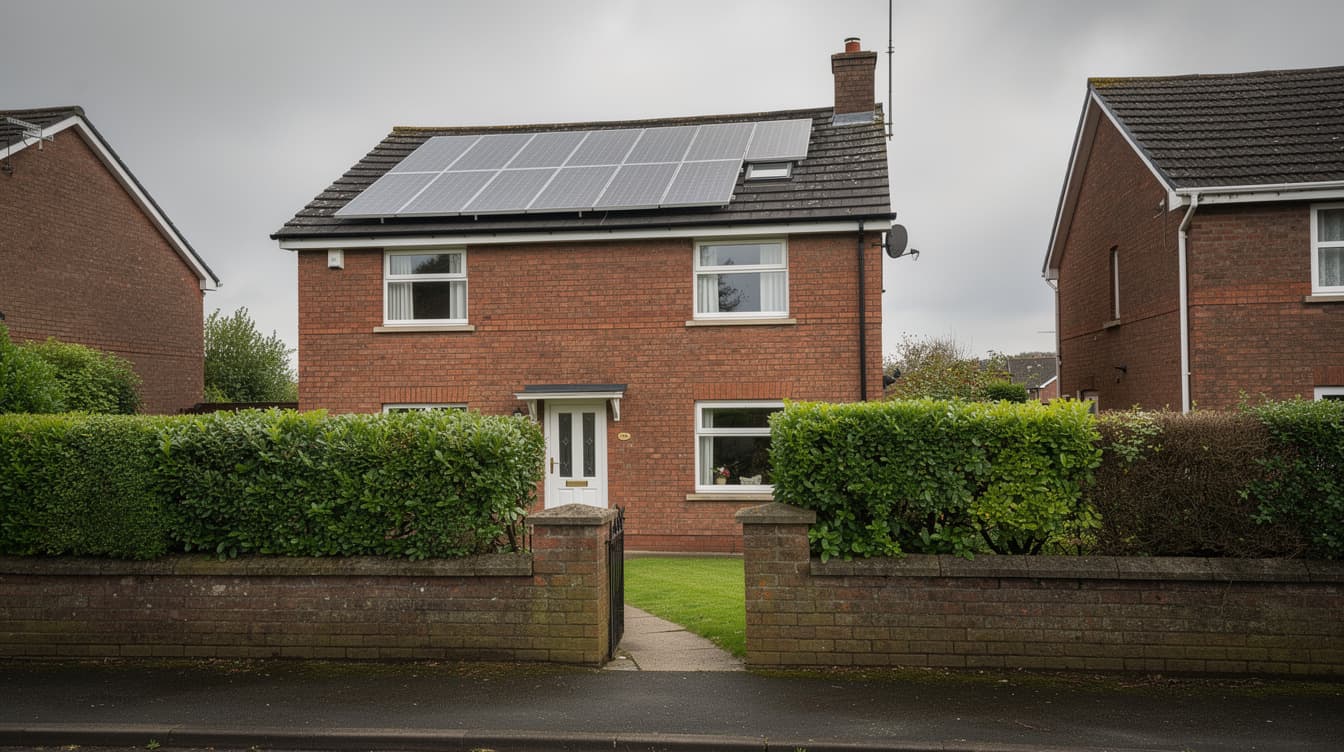
4kW Solar System Cost Ireland 2026: Real Prices, Output & Payback
Real 2026 Irish 4kW quotes (€7,210 gross, €5,410 net after €1,800 SEAI grant), 3,600–4,200 kWh/yr output, 4.8yr payback and when 4kW beats 3kW or 5kW.
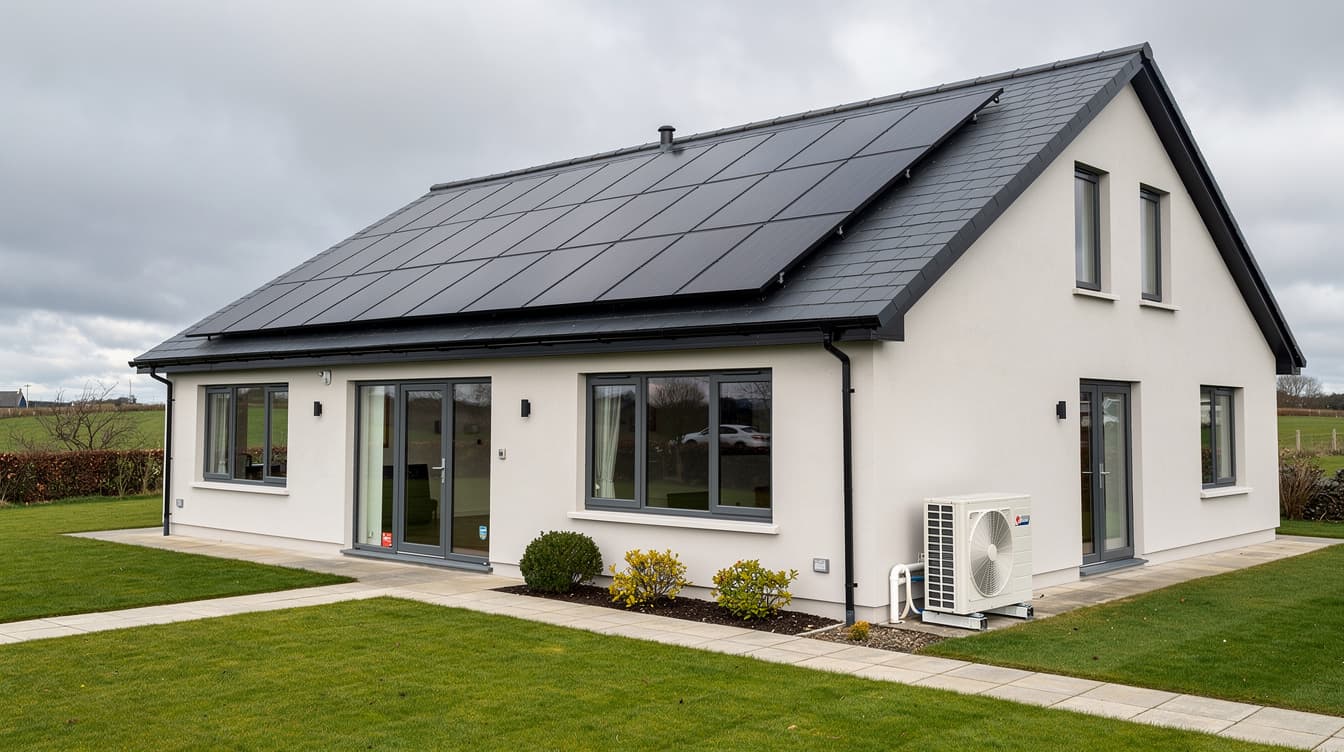
10kW Solar System Cost Ireland 2026: Price, Output & When It’s Worth It
Real 2026 Irish installer prices for a 10kW solar system (€14,300 gross – €1,800 SEAI grant), three-phase rules, expected output and when 10kW beats 6kW.