
Heat Pumps and Solar Panels Together in Ireland: The Complete 2026 Guide
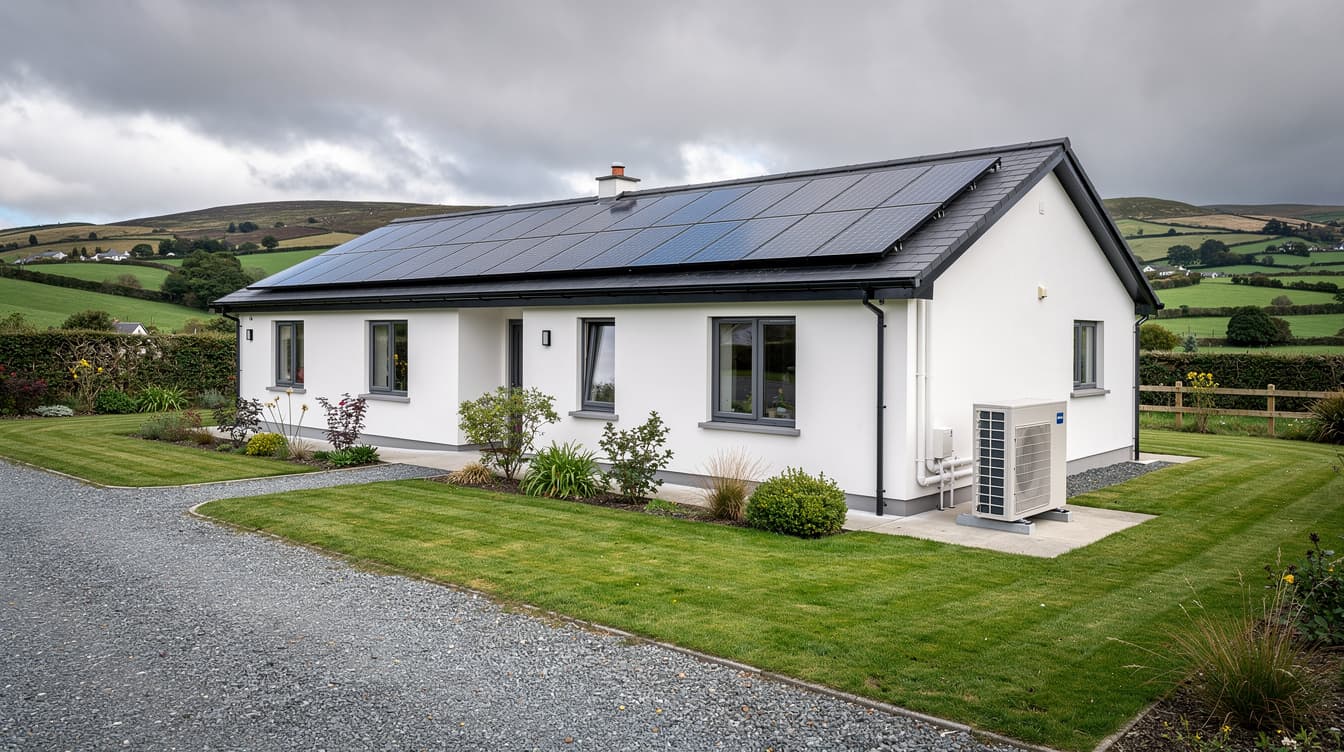
Ireland’s push toward net-zero has put two technologies firmly in the spotlight: solar panels and heat pumps. Individually, each slashes your energy bills. Together, they form what energy advisors now call the “golden combination” – solar panels generate free electricity during the day, and the heat pump uses that electricity to heat your home and water for a fraction of what oil or gas costs.
In this guide we break down exactly how the two systems work together, what it costs in 2026, the grants available, and whether it makes sense for your home.
Why Heat Pumps and Solar Panels Are a Perfect Match
A heat pump runs on electricity – but it’s extraordinarily efficient. For every 1 kWh of electricity it consumes, it produces 3–4 kWh of heat (this ratio is called the Coefficient of Performance, or COP). The catch? Switching from oil or gas to a heat pump increases your electricity bill, typically by 4,000–7,000 kWh per year for a well-insulated 3-bed semi.
That’s where solar panels come in. A typical 4–6 kWp system on an Irish roof generates 3,500–5,500 kWh annually – enough to offset most or all of the extra electricity your heat pump needs. The result: you heat your home with free sunshine instead of paying €0.30+/kWh to the grid.
| Heating System | Annual Running Cost (3-bed semi) | CO² Emissions |
|---|---|---|
| Oil boiler | €2,200–€2,800/year | High |
| Gas boiler | €1,600–€2,200/year | Medium |
| Heat pump (grid only) | €800–€1,500/year | Low |
| Heat pump + solar panels | €300–€700/year | Very low |
The savings are dramatic. An Irish home switching from oil to a heat pump with solar can save €1,500–€2,100 per year on heating costs alone.
How the Two Systems Work Together Day-to-Day
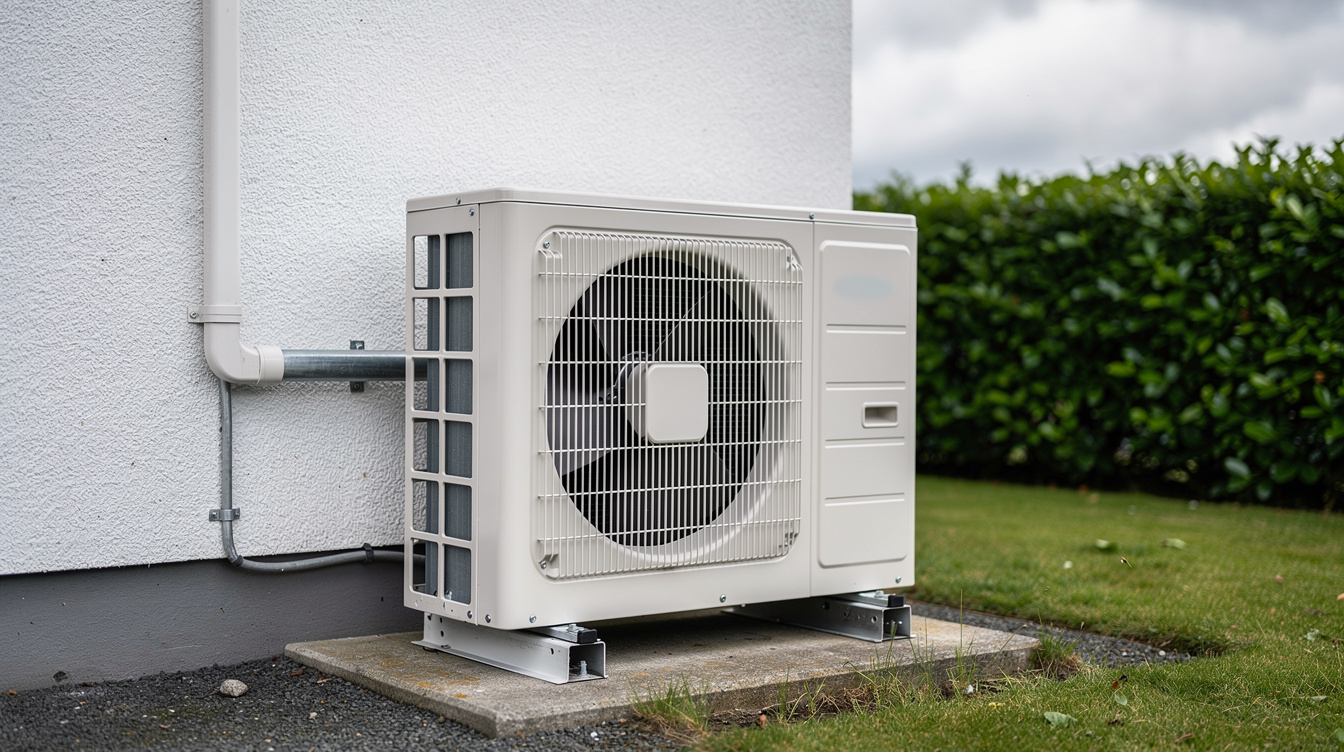
Here’s what a typical day looks like for a home with both systems:
- Morning (7–9am): Solar panels begin generating as daylight increases. The heat pump runs its morning heating cycle, drawing power directly from the panels rather than the grid.
- Midday (11am–3pm): Peak solar generation. The heat pump heats your hot water cylinder to 55–60°C using free solar electricity. Any surplus power either charges a battery or gets exported to the grid.
- Evening (5–10pm): Solar generation drops off. If you have a battery, stored solar power continues to supply the heat pump. Otherwise, the system draws from the grid – ideally on a cheap night-rate tariff.
- Night (11pm–7am): On a smart tariff, the heat pump can run at off-peak rates as low as €0.10/kWh, pre-heating the house and water for the next day.
The key insight: schedule your heat pump to run when your panels are producing. Most modern heat pump controllers let you set time schedules, and many smart home systems can automate this entirely.
Ready to Go Solar?
Get your free personalised quote from SEAI-registered installers.
What Does It Cost in 2026? Full Breakdown
Let’s look at the realistic costs for an average 3-bedroom semi-detached home in Ireland:
| Component | Cost Before Grants | SEAI Grant | Net Cost |
|---|---|---|---|
| Heat pump system (air-to-water) | €12,000–€18,000 | Up to €12,500 | €3,500–€8,000 |
| Solar PV (4 kWp, ~10 panels) | €5,500–€8,000 | Up to €1,800 | €3,700–€6,200 |
| Battery storage (5 kWh, optional) | €3,500–€5,000 | – | €3,500–€5,000 |
| Total (with battery) | €21,000–€31,000 | Up to €14,300 | €10,700–€19,200 |
The SEAI heat pump grant was significantly increased in February 2026 – from a maximum of €6,500 to up to €12,500. This includes €6,500 for the heat pump itself, €2,000 for central heating upgrades, and a €4,000 renewable heat bonus when replacing a fossil fuel system. Combined with the €1,800 solar grant, the government is covering a substantial chunk of the investment.
Remember: solar panels installed in 2026 benefit from 0% VAT, saving you another €1,000–€1,500 on the solar portion.
SEAI Grants Explained: Heat Pump + Solar Combined
You can claim both grants separately – there’s no penalty for combining them. Here’s what you need to know:
Heat Pump Grant (up to €12,500)
- €6,500 for the heat pump unit and installation
- €2,000 for central heating system upgrades (radiators, piping, controls)
- €4,000 renewable heat bonus – available when you’re replacing an oil, gas, or solid fuel boiler
- Apartments get up to €9,500; air-to-air systems qualify for up to €7,500
Solar PV Grant (up to €1,800)
- €700 per kWp for the first 2 kWp
- €200 per kWp for capacity above 2 kWp, up to 4 kWp
- Maximum grant: €1,800
Key Requirements for Both
- Home must be built and occupied before 31 December 2020
- Installation by an SEAI-registered contractor
- Grant must be approved before work starts
- A BER assessment is required after installation (€150–€300)
- You have 8 months to complete the work after approval
Pro tip: Apply for both grants at the same time through the SEAI portal. Coordinate with your installer to schedule both installations close together – this saves on scaffolding costs and minimises disruption.
Sizing Your System: How Big Should You Go?
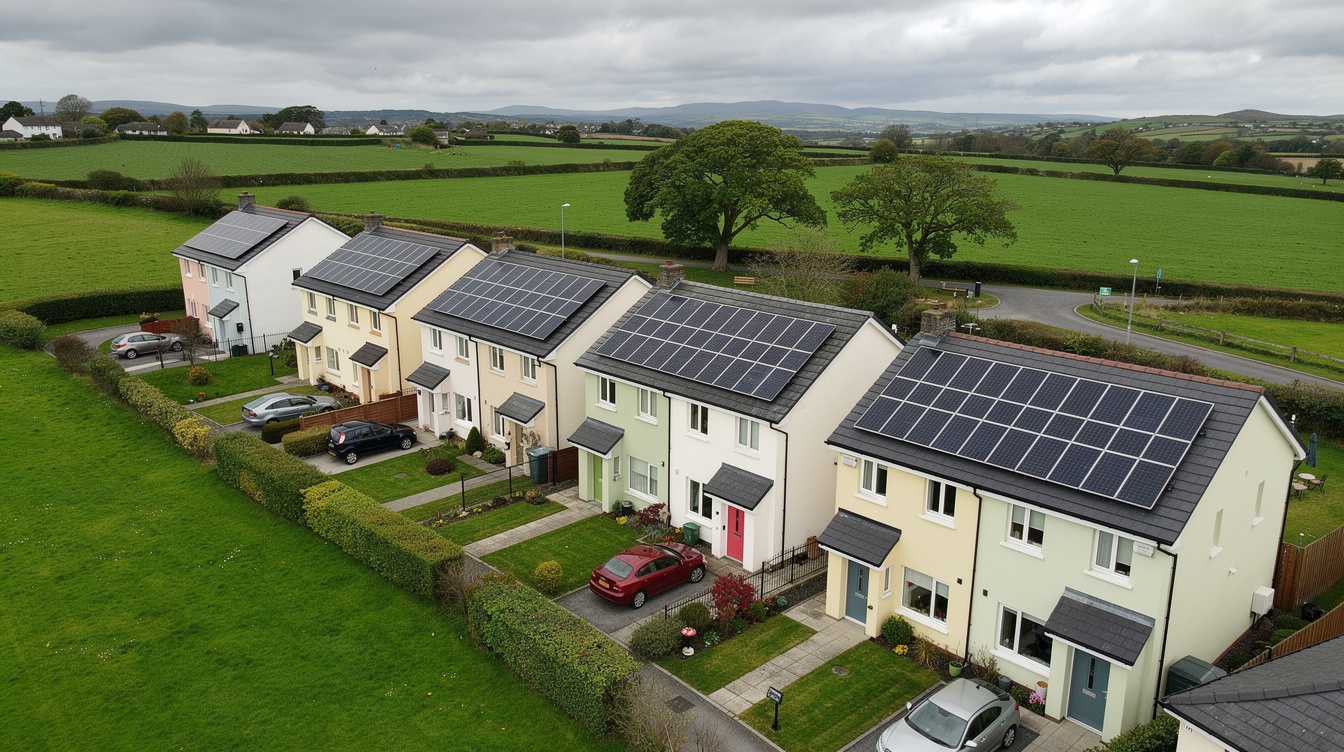
Getting the system size right is critical. Too small and you won’t offset enough electricity; too large and you’re paying for generation you can’t use.
| Home Type | Heat Pump Size | Recommended Solar | Annual Generation |
|---|---|---|---|
| 2-bed apartment | 4–6 kW | 2–3 kWp | 1,800–2,700 kWh |
| 3-bed semi-detached | 6–10 kW | 4–5 kWp | 3,600–4,500 kWh |
| 4-bed detached | 10–14 kW | 5–7 kWp | 4,500–6,300 kWh |
| 5+ bed / farmhouse | 12–18 kW | 6–8 kWp | 5,400–7,200 kWh |
Important: If you have or plan to get an EV charger, add 1–2 kWp to the solar recommendation above. An EV adds roughly 2,000–3,000 kWh of annual electricity demand.
Insulation First
Heat pumps work most efficiently in well-insulated homes. Before investing in a heat pump, make sure your home has:
- Attic insulation to at least 300mm
- Cavity wall or external wall insulation
- Double or triple glazed windows
- A BER rating of B3 or better (ideally A-rated)
If your home is poorly insulated, the heat pump will work harder and consume more electricity, reducing the benefit of your solar panels. The SEAI also offers insulation grants that can be combined with heat pump and solar grants.
Not Sure What Size System You Need?
Use our free calculator to find the right solar system for your home.
Payback Period: When Do You Break Even?
For a combined system on a typical 3-bed semi, here’s a realistic payback calculation:
| Metric | Without Battery | With 5 kWh Battery |
|---|---|---|
| Net cost after grants | €7,200–€14,200 | €10,700–€19,200 |
| Annual savings vs oil | €1,500–€2,100 | €1,800–€2,400 |
| CEG export income | €150–€300/year | €50–€150/year |
| Payback period | 4–8 years | 5–9 years |
These are significantly faster payback periods than either system on its own. The key driver is the €12,500 heat pump grant – it covers 50–70% of the heat pump cost, making the combined investment highly attractive in 2026.
After the payback period, you’re essentially heating your home for free (or close to it) for the remaining 15–20 years of the system’s lifespan.
Selling Surplus Electricity: The Clean Export Guarantee
With a heat pump consuming much of your solar generation, you’ll export less to the grid than a solar-only home. But there will still be surplus during summer months when solar output peaks and heating demand is minimal.
Under the Clean Export Guarantee (CEG), you can sell surplus electricity back to the grid. Current rates from major suppliers:
- Pinergy: 25c/kWh
- Community Power: 20c/kWh
- Electric Ireland / SSE Airtricity: 19.5c/kWh
- Energia / Bord Gáis / Flogas: 18.5c/kWh
Income up to €400 per year from the CEG is tax-free until December 2028. Even with a heat pump consuming most of your solar output, you can realistically earn €100–€300 per year from exports.
Should You Install Both at the Same Time?
In short: yes, if you can. Here’s why:
- 0% VAT on solar applies when installed as part of the same project – adding solar later under a separate contract means 23% VAT
- Shared scaffolding and labour saves €500–€1,000
- Better system integration – the installer can optimise the heat pump’s scheduling around solar generation from day one
- One BER assessment instead of two (€150–€300 saved)
- Immediate savings – you start offsetting the heat pump’s electricity consumption from the moment both systems are live
If budget is tight, install solar first (faster payback, smaller investment), then add the heat pump when you can afford the remaining cost after the €12,500 grant.
Real-World Example: A Cork 3-Bed Semi
Let’s walk through a realistic scenario:
- Home: 3-bed semi-detached in Cork, BER B2, currently heating with oil
- Oil bill: €2,400/year
- System installed: 8 kW air-to-water heat pump + 4.4 kWp solar (10 panels) + 5 kWh battery
- Total cost: €25,000
- Grants: €12,500 (heat pump) + €1,800 (solar) = €14,300
- Net cost: €10,700
- New annual energy cost: €450 (grid top-up + standing charges)
- Annual savings: €1,950
- Payback: 5.5 years
After year 6, this household saves nearly €2,000 per year – that’s €30,000+ over the 20-year lifespan of the system.
Common Questions
Do heat pumps work well in Ireland’s climate?
Absolutely. Air-source heat pumps work efficiently down to –15°C, and Ireland rarely drops below –5°C even in the coldest winters. Our mild, maritime climate is actually ideal for heat pumps – they perform better in moderate temperatures than in extreme cold. A COP of 3.0–4.0 is typical year-round in Ireland.
What happens in winter when solar output is low?
Your solar panels still generate in winter – about 20–30% of their summer output. The heat pump will draw more from the grid during December–February, but smart tariffs with off-peak rates of €0.10–€0.15/kWh keep costs low. A battery helps bridge the gap between short winter days and evening demand.
Can I retrofit solar to an existing heat pump?
Yes, but you’ll pay 23% VAT on the solar installation (versus 0% if installed together). The solar grant of up to €1,800 still applies. Ensure your electrical panel can handle the additional capacity – your installer will advise on any upgrades needed.
Do I need to upgrade my radiators?
Often yes. Heat pumps operate at lower flow temperatures (35–50°C vs 60–80°C for boilers), so you may need larger radiators or underfloor heating in some rooms to compensate. This is covered by the €2,000 central heating upgrade portion of the SEAI grant.
What about planning permission?
Solar panels up to 12m² on a house roof are exempt from planning permission in most cases. Air-source heat pumps are also generally exempt, provided the outdoor unit is more than 1 metre from the property boundary and doesn’t exceed certain noise levels. Check with your local authority if you’re in a conservation area.
Get Free Quotes for Solar + Heat Pump
Connect with SEAI-registered installers in your area today.
The Bottom Line
Heat pumps and solar panels together represent the single best investment an Irish homeowner can make in 2026 for long-term energy savings. With the SEAI now offering up to €14,300 in combined grants, the net cost is lower than ever, and payback periods of 4–8 years make this a genuine no-brainer for homes currently on oil or gas.
The formula is simple: insulate first, then install a heat pump and solar panels together. Add a battery if your budget allows. Schedule the heat pump to run during solar hours. Switch to a smart tariff for cheap overnight electricity. The result is a home that’s warm, comfortable, and costs a fraction of what you’re paying today.
Ireland’s climate, grant structure, and electricity prices have never been more favourable for this combination. If you’re still burning oil or gas, 2026 is the year to make the switch.
Related Articles
Solar Panel Financing in Ireland 2026: Loans, Grants & Payment Options
Every way to pay for solar panels in Ireland in 2026. SEAI grants, HEULS loans from 2.99%, credit union green loans, 0% VAT and real cost examples.
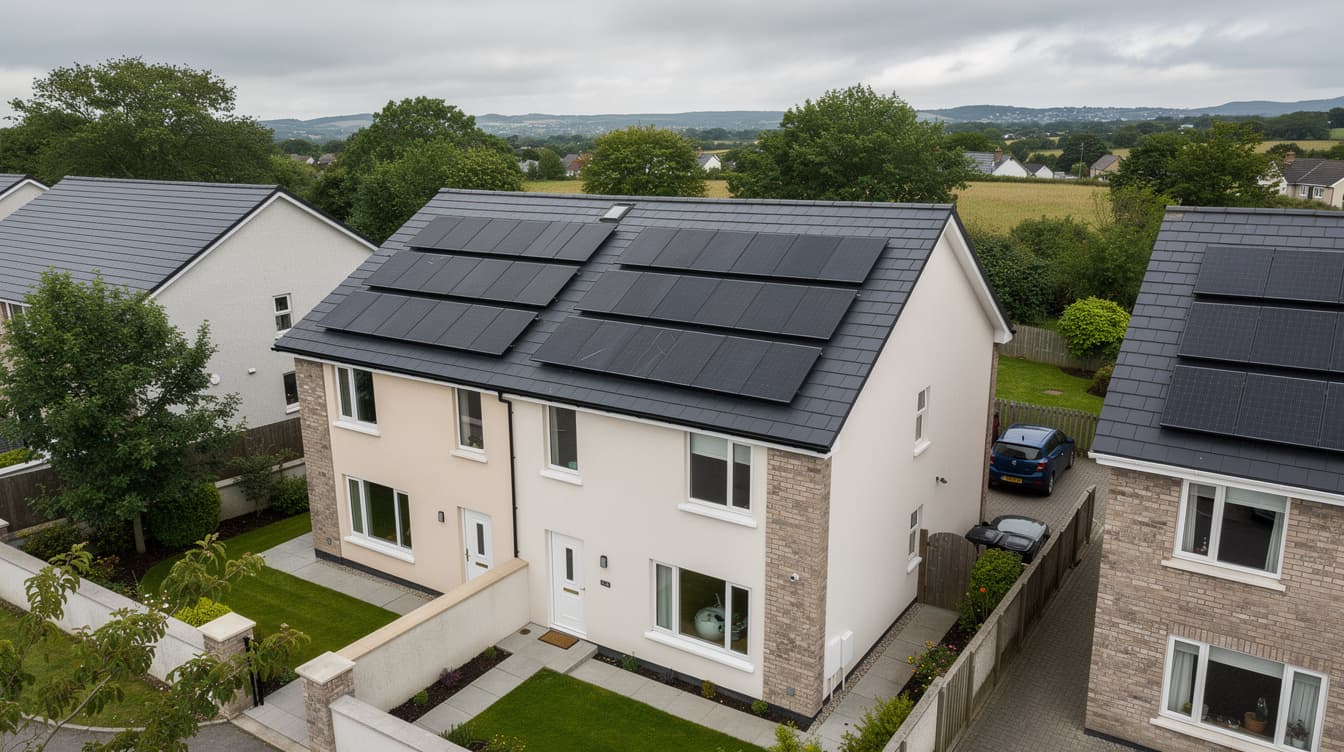
Solar Panel System Cost by Number of Panels Ireland 2026: 8, 12, 14, 20, 24 Panel Prices
What 8, 12, 14, 16, 20 or 24 solar panels actually cost in Ireland 2026 — net after €1,800 SEAI grant & 0% VAT, output kWh, roof area & battery add-ons.
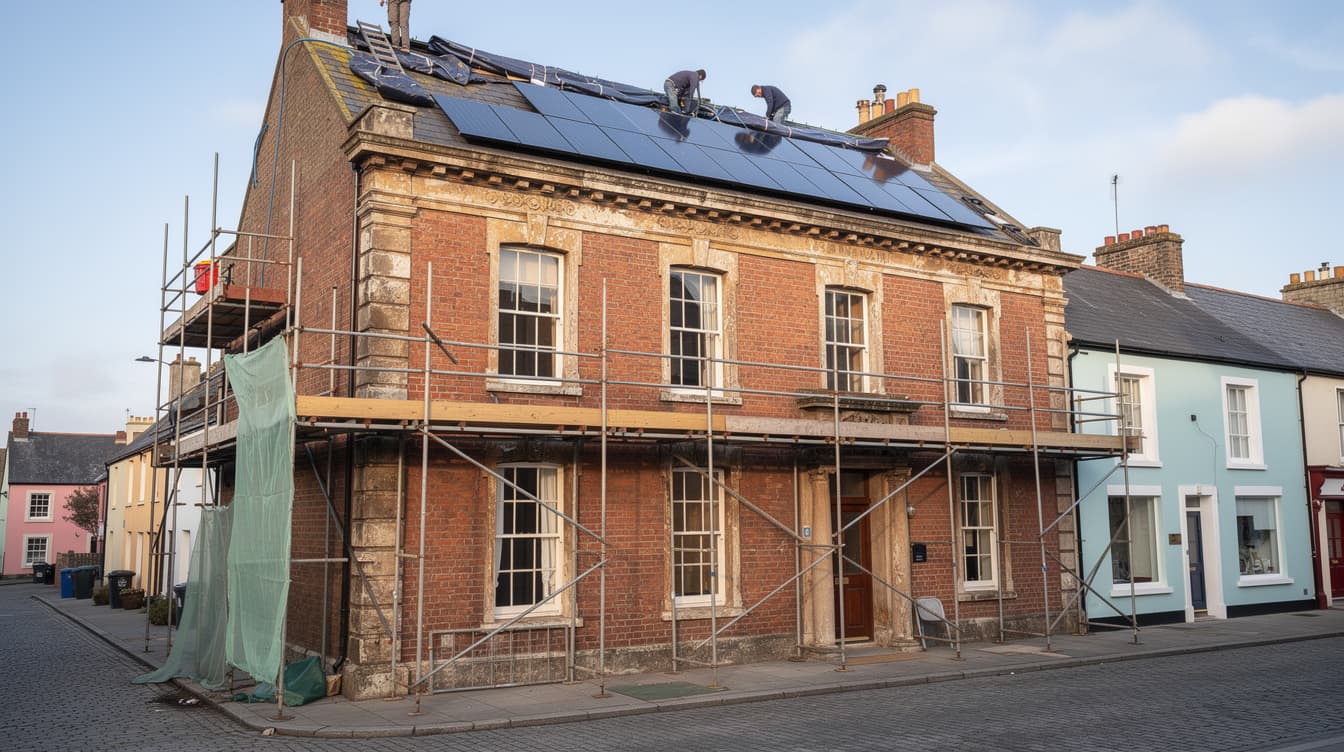
Vacant Property Refurbishment Grant + Solar Ireland 2026: How to Stack €50k VPRG With €1,800 SEAI
Stack the €50,000 Vacant Property Refurbishment Grant with the €1,800 SEAI Solar PV grant in Ireland 2026 — real refurb numbers, timing, traps.