
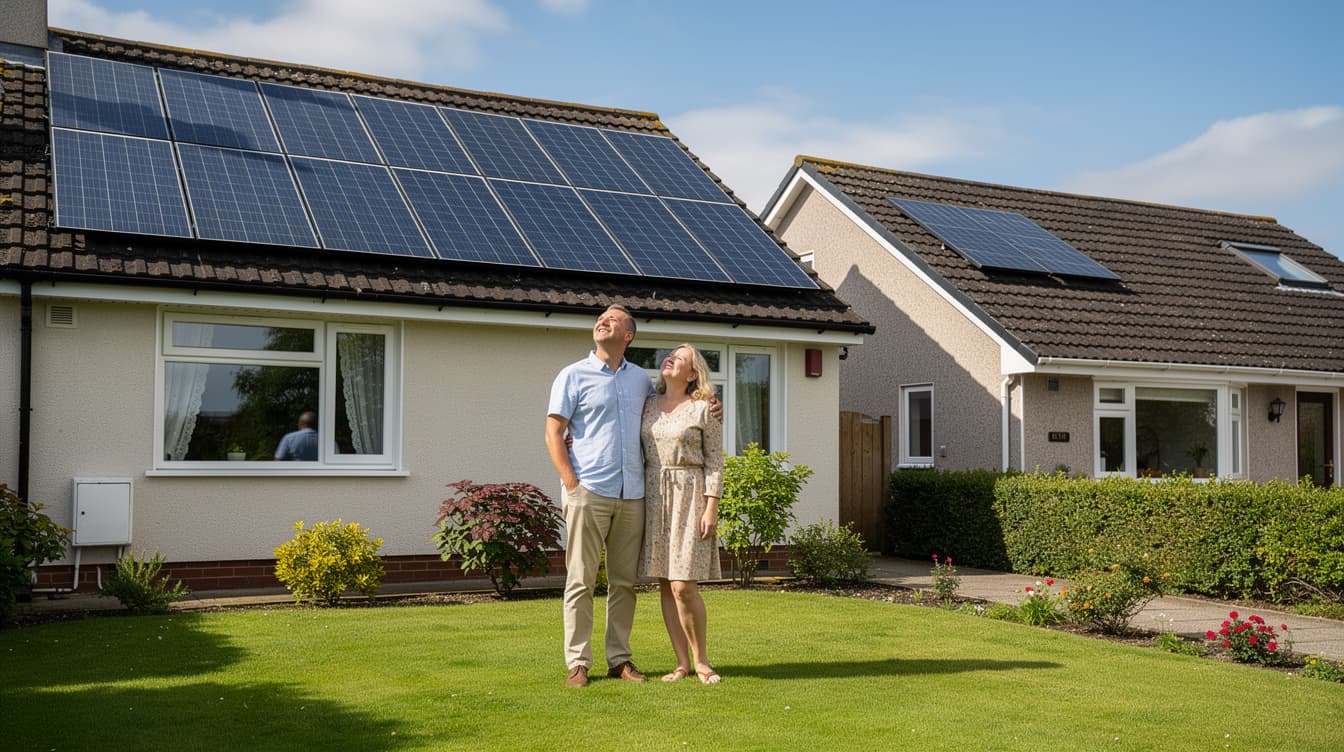
Solar Panel Financing in Ireland 2026: Loans, Grants & Payment Options
Solar panels are one of the best investments an Irish homeowner can make in 2026 – but the upfront cost of €5,500–€12,000 still gives many people pause. The good news? Between SEAI grants, government-backed low-interest loans, credit union green loans, and 0% VAT, you can get solar installed for surprisingly little out of pocket – or even spread the cost with monthly repayments that are less than your current electricity savings.
This guide breaks down every financing option available to Irish homeowners in 2026, with real numbers so you can pick the smartest route for your situation.
Option 1: The SEAI Solar PV Grant (Up to €1,800)
Before looking at loans, start here. The SEAI grant isn’t a loan – it’s free money that reduces your upfront cost. Every homeowner should claim it.
| System Size | Grant Amount | How It’s Calculated |
|---|---|---|
| First 2 kWp | €1,400 | €700 per kWp |
| Next 2 kWp (2–4 kWp) | €400 | €200 per kWp |
| Maximum grant (4+ kWp) | €1,800 | Capped at 4 kWp |
Eligibility Requirements
- Home built and occupied before 31 December 2020
- Installation by an SEAI-registered contractor
- Grant approval before work begins (no retroactive claims)
- BER assessment required after installation (€150–€300)
- 8 months to complete work after approval
The grant is paid directly to you (not the installer) within 4–6 weeks of submitting the paperwork. Apply online at seai.ie.
Option 2: The Home Energy Upgrade Loan Scheme (HEULS)
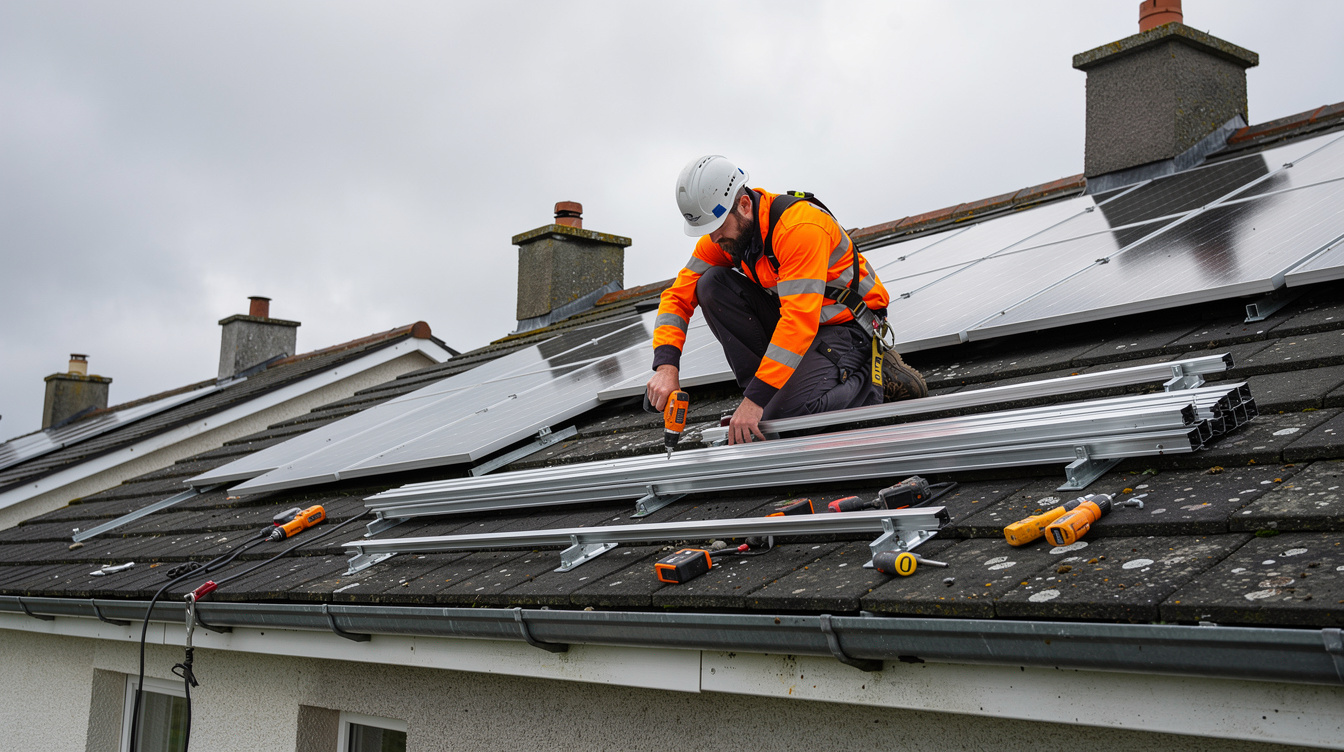
This is the government’s flagship financing programme, backed by the Strategic Banking Corporation of Ireland (SBCI). It offers significantly lower interest rates than standard personal loans thanks to a government subsidy of up to 2%.
| Loan Amount | Interest Rate (from) | Max Term |
|---|---|---|
| €5,000–€14,999 | 4.15% | Up to 10 years |
| €15,000–€24,999 | 3.75% | Up to 10 years |
| €25,000–€49,999 | 3.35% | Up to 10 years |
| €50,000–€75,000 | 2.99% | Up to 10 years |
Key Details
- Unsecured – no charge on your property
- At least 75% of the loan must fund energy efficiency upgrades
- Upgrades must be supported by an SEAI grant and achieve a minimum 20% improvement in energy efficiency
- Available until 31 December 2026 or until funds run out
- Up to 3 properties per borrower (€225,000 maximum total)
Participating Lenders
- PTSB – market-leading rate from 2.99% (for larger loans)
- AIB – rates from 3.35%
- Bank of Ireland – rates from 3.50%
- An Post Money – available online and in-branch
- Select credit unions – rates from 2.99–4.5%
Important caveat: Solar panels alone don’t qualify for this scheme. You need to bundle solar with another energy upgrade (insulation, heat pump, windows) to meet the 75%/20% improvement rule. However, up to 25% of your loan can cover additional home improvements like solar panels as part of a broader retrofit. If you’re only installing solar, look at Options 3–5 below.
Ready to Go Solar?
Get your free personalised quote from SEAI-registered installers.
Option 3: Credit Union Green Loans
If you’re installing solar panels on their own (without a broader retrofit), your local credit union is often the best financing option. Credit unions across Ireland now offer dedicated green loans for energy upgrades.
Typical Credit Union Green Loan Terms
- Interest rates: 5–7% APR (varies by credit union)
- Loan amounts: €1,000–€75,000
- Terms: Up to 10 years
- No arrangement fees in most cases
- Flexible repayment – many allow overpayments without penalty
- Some credit unions offer discounted rates specifically for solar installations
Credit unions are particularly attractive because they tend to be more flexible with lending criteria than banks. Many will lend based on your savings history and repayment capacity rather than requiring extensive documentation. Some credit unions have even partnered with solar installers to offer streamlined packages.
Tip: Check with your local credit union before going to a bank. The Irish League of Credit Unions actively promotes green lending, and your credit union may have special terms not advertised widely.
Option 4: Bank Green Personal Loans
All major Irish banks now offer green personal loans with preferential rates for energy-efficient home improvements, including solar panels.
| Bank | Green Loan Rate (from) | Max Amount | Max Term |
|---|---|---|---|
| AIB | 6.5% APR | €65,000 | 7 years |
| Bank of Ireland | 6.9% APR | €75,000 | 7 years |
| An Post | 6.5% APR | €75,000 | 7 years |
These rates are typically 1–2% lower than standard personal loans from the same banks. You can apply for solar panels specifically – no need to bundle with other upgrades like the HEULS scheme.
Option 5: Zero-VAT Savings (Worth €1,000–€1,500)
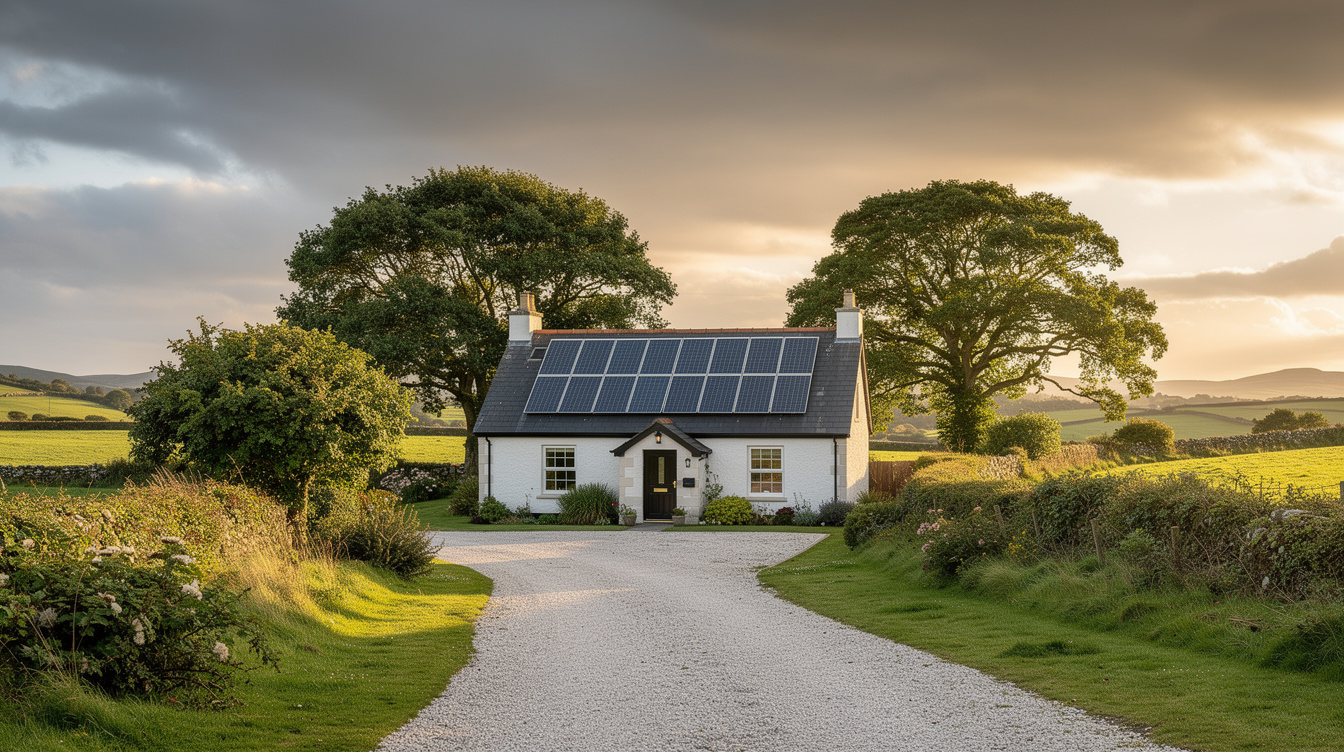
This isn’t a loan, but it’s one of the most significant financial benefits available in 2026. Solar panel installations in Ireland currently benefit from 0% VAT, saving you €1,000–€1,500 on a typical installation compared to the standard 23% rate.
Key points about zero-VAT solar:
- Applies to new installations of solar PV panels
- Must be installed as part of the same contract (adding panels later under a separate contract may trigger 23% VAT)
- Covers panels, inverters, mounting hardware, and installation labour
- Battery storage also qualifies for 0% VAT when installed alongside panels
Putting It All Together: Real Cost Examples
Let’s see what solar actually costs after all the discounts for two common scenarios:
Scenario A: 4 kWp System (10 panels) – Paid Upfront
| Item | Amount |
|---|---|
| System cost (0% VAT) | €6,500 |
| SEAI grant | –€1,800 |
| Net cost | €4,700 |
| Annual savings | €800–€1,200 |
| Payback period | 4–6 years |
Scenario B: 4 kWp System – Financed with Credit Union Green Loan
| Item | Amount |
|---|---|
| Amount borrowed (after grant) | €4,700 |
| Interest rate | 6% APR |
| Term | 5 years |
| Monthly repayment | ~€91 |
| Monthly electricity savings | €67–€100 |
| Total interest paid | ~€740 |
| Net cost after loan + savings | €5,440 – €4,800 savings = €640 |
Even on a loan, the electricity savings nearly cover the repayments. After year 5, you own the system outright and pocket €800–€1,200 in savings every year for the next 20+ years.
Find Out How Much You Could Save
Use our free solar calculator to estimate your savings and payback period.
Which Financing Route Should You Choose?
Here’s a quick decision framework:
- You have the cash: Pay upfront after claiming the SEAI grant. This gives the fastest payback (4–6 years) with zero interest.
- You’re doing a broader retrofit (solar + insulation or heat pump): Apply for the HEULS scheme. Rates from 2.99–4.15% are unbeatable for an unsecured loan.
- You want solar only, on finance: Credit union green loan. Competitive rates, flexible terms, and no requirement to bundle with other upgrades.
- You want maximum flexibility: Bank green personal loan. Higher rates than HEULS or credit unions, but simpler application and no bundling requirements.
Regardless of which route you choose, always claim the SEAI grant first. It reduces the amount you need to borrow (or pay upfront) by up to €1,800.
Extra Income: The Clean Export Guarantee
On top of savings, you can earn money by selling surplus electricity back to the grid under the Clean Export Guarantee (CEG). Current export rates range from 15–25c/kWh depending on your supplier, with up to €400 per year tax-free until 2028.
For a typical 4 kWp system, expect to earn €150–€350 per year from exports. This effectively reduces your loan repayments further or shortens your payback period if you paid upfront.
Tips to Maximise Your Solar Investment
- Get at least 3 quotes from SEAI-registered installers. Prices for the same system can vary by 15–25%.
- Install battery storage at the same time to benefit from 0% VAT on the battery too. A 5 kWh battery adds €3,500–€5,000 but increases self-consumption from 30–40% to 60–80%.
- Switch to a smart tariff with cheap night rates (€0.10–€0.15/kWh) to charge your battery overnight.
- Choose the best export tariff – compare suppliers for the highest CEG rate.
- Time your big appliances (washing machine, dishwasher, immersion) to run during peak solar hours (11am–3pm).
- Consider adding a heat pump – the €12,500 SEAI grant makes the combined investment highly attractive.
Common Questions About Solar Financing
Can I get solar panels with no money down?
Effectively, yes. With a credit union green loan, you borrow the full cost (minus the SEAI grant). Your monthly loan repayments are partially or fully offset by electricity savings from day one. The only upfront cost is the BER assessment (€150–€300).
Is the SEAI grant available for rental properties?
The standard SEAI solar grant is for owner-occupied homes built before 2021. However, landlords can claim a tax deduction of up to €10,000 per property for energy retrofitting expenses (including solar), provided they’ve received an approved SEAI grant and complete the work by the end of 2028.
What if my home was built after 2020?
You won’t qualify for the SEAI grant, but you still benefit from 0% VAT on solar installations. Newer homes are also typically better insulated, meaning your solar panels may generate more savings relative to your overall energy use.
How long do solar panels last?
Modern solar panels come with 25–30 year performance warranties and typically last 30–35 years. That means even on a 10-year loan, you get 20+ years of pure profit after the loan is paid off.
Ready to Start Saving?
Get free quotes from SEAI-registered installers in your area.
The Bottom Line
Solar panels in Ireland have never been more affordable. Between the €1,800 SEAI grant, 0% VAT, and low-interest financing from 2.99%, the barrier to entry is genuinely low. Even if you finance the full cost, your electricity savings cover most of the monthly repayments – and after the loan is cleared, you enjoy 20+ years of near-free electricity.
The key is to act while the current incentives last. The HEULS scheme runs until December 2026, the 0% VAT rate could change, and the SEAI grant has been at €1,800 since 2023 – there’s no guarantee it will remain at this level. If you’ve been thinking about solar, 2026 is the year the numbers make the most sense.
Related Articles
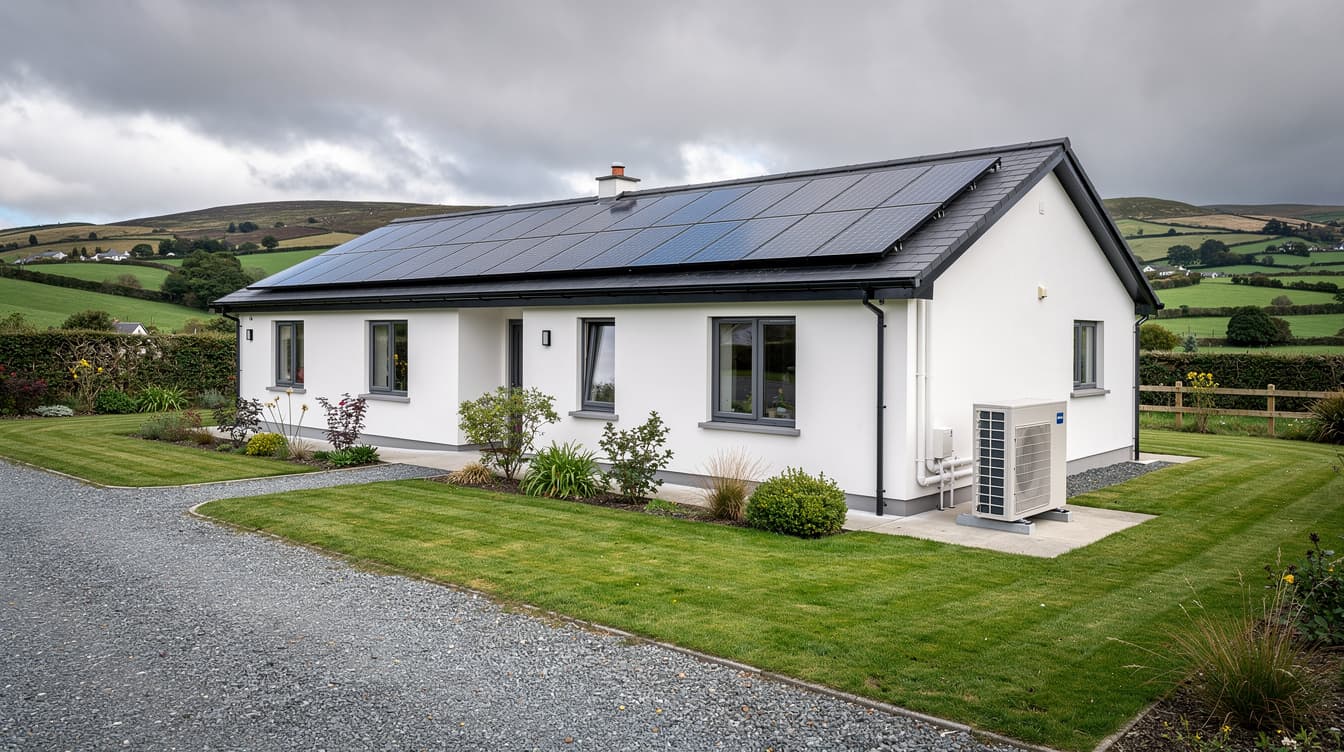
Heat Pumps and Solar Panels Together in Ireland: The Complete 2026 Guide
How heat pumps and solar panels work together in Ireland. 2026 costs, SEAI grants up to €14,300, payback periods, sizing guide and real savings breakdown.
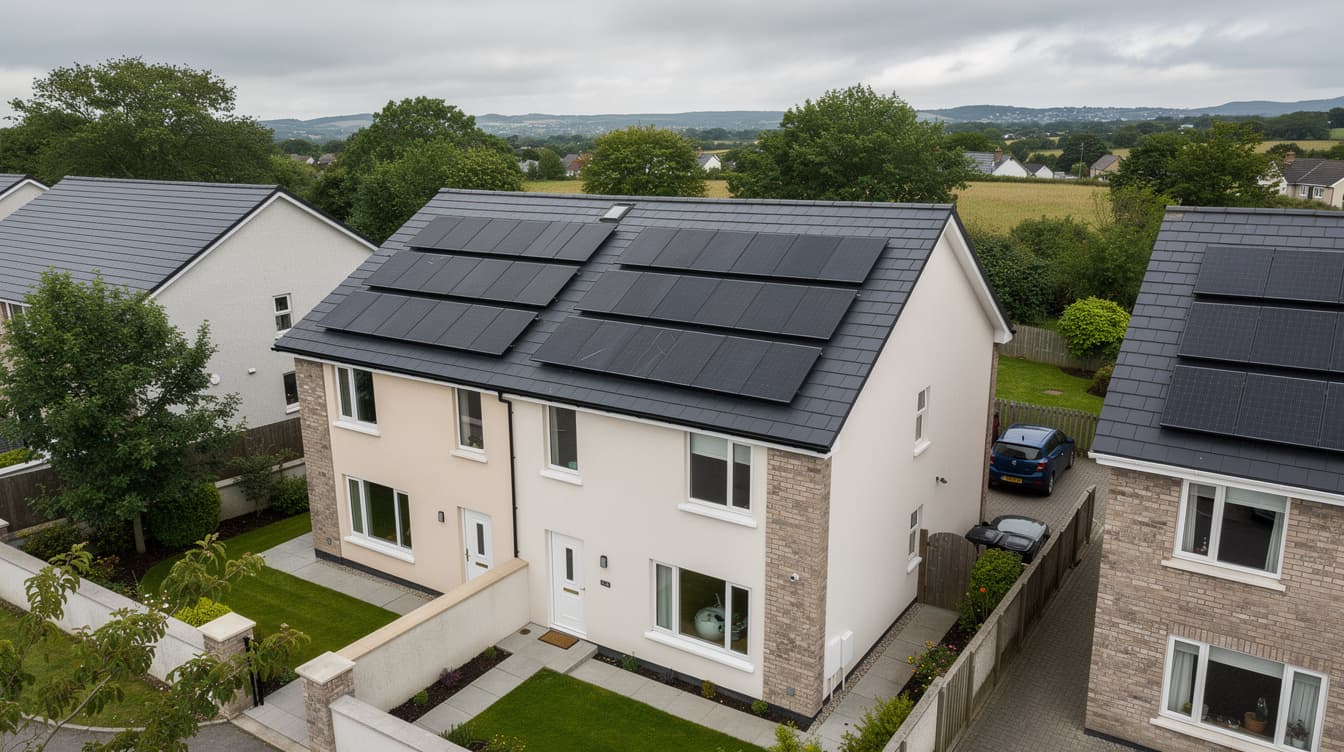
Solar Panel System Cost by Number of Panels Ireland 2026: 8, 12, 14, 20, 24 Panel Prices
What 8, 12, 14, 16, 20 or 24 solar panels actually cost in Ireland 2026 — net after €1,800 SEAI grant & 0% VAT, output kWh, roof area & battery add-ons.
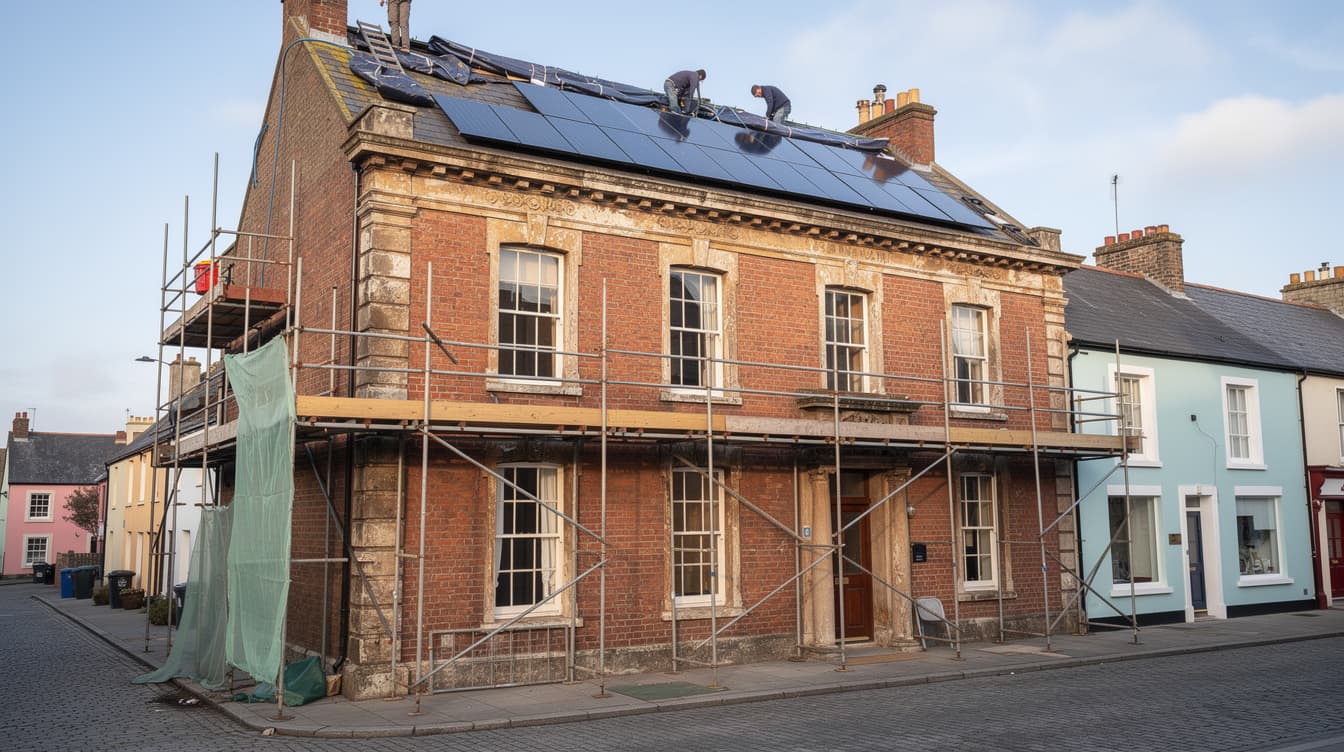
Vacant Property Refurbishment Grant + Solar Ireland 2026: How to Stack €50k VPRG With €1,800 SEAI
Stack the €50,000 Vacant Property Refurbishment Grant with the €1,800 SEAI Solar PV grant in Ireland 2026 — real refurb numbers, timing, traps.