

0% VAT on Solar Panels Ireland 2026: What Qualifies, How to Claim, and When It Ends
The 0% VAT rate on residential solar panel supply and installation in Ireland has been extended through the end of 2026 and is the single biggest reason that domestic solar economics look better today than they did in 2022. It saves the typical homeowner €900–€1,500 on a standard install, stacks on top of the €1,800 SEAI grant, and applies at the invoice level (not as a rebate you have to claim). This 2026 guide covers what qualifies, what doesn’t, how the rate interacts with grants and the CEG, and the practical pitfalls Irish homeowners run into when the VAT treatment is misapplied.
Ready to Go Solar?
Get three free quotes from SEAI-registered installers with 0% VAT applied.
Quick answer: 0% VAT on solar in Ireland in 2026
- Rate: 0% VAT on the supply and installation of solar PV panels for private dwellings.
- Duration: Confirmed until 31 December 2026 under Finance Act 2023 as extended in Budget 2025 and Budget 2026.
- Applies to: Panels, mounting hardware, inverters, DC/AC cabling, roof works needed to install, and the installer’s labour.
- Also 0% VAT since 2024: Home battery storage systems installed in conjunction with (or after) a residential PV install.
- Does NOT apply to: Commercial or industrial installations, purely off-grid installations with no dwelling connection, retrofits without a qualifying dwelling declaration.
- Estimated saving: €900–€1,500 on a typical €7,000–€12,000 install compared with the 13.5% rate that would otherwise apply.
Why the 0% rate exists at all
The zero rate came in on 1 May 2023 under the Finance Act 2023 amendment to Schedule 2 of the VAT Consolidation Act 2010, following the EU 2022 VAT reform that permitted Member States to zero-rate solar panels for residential use. Ireland was one of the first Member States to activate it. Budget 2025 (announced October 2024) extended the sunset by two years to 31 December 2026, and the 2024 amendment specifically added domestic battery storage to the zero-rated category.
The Revenue guidance is set out in eBrief No. 099/23 and updated commentary in Revenue’s VAT Tax and Duty Manual on the Supply and Installation of Solar Panels. The current version is available on revenue.ie.
Cost impact: how much does 0% VAT actually save you?
Solar installs would normally attract the reduced 13.5% VAT rate applied to most home improvement services in Ireland. On typical 2026 residential installs:
| System size | Ex-VAT install cost | At 13.5% VAT | At 0% VAT (now) | You save |
|---|---|---|---|---|
| 3kWp panels only | €6,000 | €6,810 | €6,000 | €810 |
| 4kWp panels only | €7,200 | €8,172 | €7,200 | €972 |
| 4kWp + 5kWh battery | €10,500 | €11,918 | €10,500 | €1,418 |
| 6kWp + 10kWh battery | €14,500 | €16,458 | €14,500 | €1,958 |
The 0% rate stacks with the SEAI grant: your installer applies 0% VAT at invoice, then you separately claim the €1,800 SEAI grant on the paid invoice amount. Together these two mechanisms typically reduce the net cost of a 4kWp install to around €5,000–€6,500.
What exactly is covered by the 0% rate?
Per Revenue’s guidance, the zero rate covers the following supplies for private dwellings:
- Solar photovoltaic (PV) panels including monocrystalline, polycrystalline, and thin-film modules.
- Solar walls and solar windows integrated into building fabric (rare but qualifying).
- Photovoltaic slates or tiles used in place of conventional roof coverings.
- Mounting systems — roof rails, brackets, hooks, weight ballasts.
- Inverters (string, hybrid, microinverters).
- DC isolators and AC isolators.
- Home battery storage installed with or after a residential PV system (added 2024).
- Cabling, conduit and interconnection internal to the system.
- Installer labour including scaffolding, roof access, commissioning, DEC issuance.
- Meter changes and connection works undertaken by the installer as part of the install.
What is NOT covered?
The zero rate does not extend to:
- Commercial or industrial premises. A pub with a flat above it? The flat portion may qualify pro-rata; the pub portion does not. Get invoice apportionment in writing.
- Off-grid caravan, boat or camper installs. These are not "dwellings" for VAT purposes.
- Standalone battery storage installations that are not part of an existing or new PV install. If you buy a battery to arbitrage a smart tariff without any solar, 23% standard VAT applies.
- Ground-source and air-source heat pumps — these fall under a separate reduced VAT rate treatment, not the 0% solar rate.
- Solar thermal (hot water) panels alone. The 0% rate is for solar PV. Solar thermal collectors attract 13.5% VAT.
- DIY / self-supplied installations. The rate applies to the supply-and-install package. Buying panels retail for self-install attracts 23% VAT on the materials.
- Non-related roof works that are not part of the install. A full re-roof done "at the same time" is separately invoiced at 13.5%.
- Solar carports and standalone canopy structures if not integral to a dwelling.
Watch the "supply and installation" test. Revenue’s guidance specifically ties the 0% rate to the combined supply-and-install. If your installer breaks the invoice into a "materials-only" line and a "labour-only" line at 13.5%, that’s incorrect. The invoice must show the combined solar package at 0%.
0% VAT + SEAI grant + CEG: how the three stack
Homeowners often ask whether taking the grant reduces the 0% VAT benefit, or vice-versa. The answer is: they are independent. Here’s a worked example on a 4kWp panels-only install:
| Step | Amount |
|---|---|
| Installer’s ex-VAT price (4kWp all-in) | €7,200 |
| VAT at 0% (was 13.5%) | €0 (saves €972) |
| Invoice payable to installer | €7,200 |
| Less SEAI Solar PV grant | −€1,800 |
| Net homeowner cost | €5,400 |
| Annual bill savings (mid-year one) | €850–€1,000 |
| Effective payback | 5–7 years |
For the full grant workflow see our SEAI grant 2026 application guide. For CEG (export payments) see our CEG rates 2026 guide.
What happens after 31 December 2026?
The 0% rate is currently legislated to end on 31 December 2026 — unless it is extended (again) in Budget 2027. Historically each extension has been announced 6–10 weeks before the sunset, and the current political and climate policy direction strongly favours another extension. The Climate Action Plan 2026 explicitly cites domestic PV VAT relief as a "critical enabler of the residential 5 GW rooftop solar target" through 2030.
Our practical read for anyone considering solar in 2026:
- If you can install before 31 December 2026, do — you have certainty on the 0% rate.
- If your installer’s earliest slot is Q1 2027 and the extension has been announced by then, no action needed.
- If Q1 2027 arrives and no extension has been announced, expect a rush of installers pulling projects forward into December to preserve the rate.
Common misapplications of the 0% rate
1. Standalone battery quoted at 0%
Some installers still quote a standalone battery upgrade at 0% VAT. This is only correct if the battery is being installed as part of a PV system (either the same job or a subsequent upgrade to an existing PV system on the same dwelling). If there is no PV system at all, 23% VAT applies. Reject any 0% VAT battery-only quote and ask the installer to clarify.
2. Materials-and-labour split invoices
Occasionally installers issue two separate invoices — one for materials at 0%, one for labour at 13.5% — on the incorrect assumption that only materials qualify. The 0% rate covers the whole supply-and-install package. If you see this, ask for a revised single-invoice under Revenue’s VAT Tax and Duty Manual guidance.
3. Commercial premises with residential floor
Mixed-use buildings (shop with flat above, farm with dwelling attached) can apportion the 0% rate to the qualifying residential portion of the system. This requires a written apportionment on the invoice and typically an engineer’s allocation of the PV load between the dwelling and the commercial part.
4. Landlords assuming they can’t claim 0%
0% VAT applies to private dwellings regardless of whether the dwelling is owner-occupied or rented. Landlords do get the 0% rate. See our solar for rental properties guide for the full landlord treatment.
5. Northern Ireland cross-border quotes
The 0% rate applies to installs in the Republic. Northern Ireland has a separate UK VAT treatment (currently 0% for domestic solar under UK Finance Act 2022, extending to March 2027). If your installer is based in the North and installing in the South, the invoice should be issued under Irish VAT rules at 0%, not UK rules.
How to make sure you actually get 0% VAT
- Ask each installer to quote gross of VAT and specify the VAT rate applied. The line should read "VAT at 0% (Schedule 2, VAT Consolidation Act 2010 — solar PV supply and installation, private dwelling)" or a similar reference.
- Confirm the dwelling qualifies — owned or rented residential unit with a valid MPRN. Second homes and holiday lets qualify. Vacant properties being brought back into rental use qualify.
- Ask about battery treatment if you’re including one — it must be tied to the PV install invoice.
- Check the quote against comparable installers. If one is 8–12% higher for the same specification, they may be quoting 13.5% VAT and passing it on. Ask them to reissue at 0%.
- Keep the invoice for at least 6 years — Revenue may audit, and a properly-VAT-treated invoice protects you and the installer.
Get 0% VAT Solar Quotes
Three free quotes from SEAI-registered installers who correctly apply the 0% VAT rate.
FAQ
Do I need to do anything to claim 0% VAT?
No. The installer applies it directly at the invoice level. You pay the ex-VAT figure and there’s nothing to claim back.
Does 0% VAT reduce the SEAI grant?
No. The grant is a flat €1,800 regardless of your invoice total.
What if my installer refuses to apply 0% VAT?
Ask them to check Revenue eBrief 099/23. If they still refuse, move to another SEAI-registered installer — there are hundreds in the market and 0% VAT should be standard.
Can I claim VAT back if I’m VAT-registered as a landlord?
Residential lettings are VAT-exempt in Ireland, so a landlord letting to a residential tenant cannot recover input VAT. The 0% rate means there is no input VAT to recover in the first place — net effect is the same or better.
Does the 0% rate apply to solar thermal (hot water)?
No — the 0% rate is specific to solar PV, mounting, inverters and batteries. Solar thermal collectors and controllers attract the 13.5% reduced rate. See our solar hot water 2026 guide.
What if I’m combining solar with a heat pump?
The solar portion attracts 0% VAT; the heat pump portion attracts 13.5%. A competent installer will itemise the invoice so each qualifies for the correct rate.
Is there a cap on the invoice size for 0% VAT?
No cap. Whether the system is €5,000 or €25,000, the 0% rate applies to the whole qualifying residential PV supply and installation.
The bottom line
The 0% VAT rate on residential solar PV is one of the strongest and most under-publicised savings in the Irish home energy landscape. It saves the typical homeowner €900–€1,500 at the invoice level, stacks freely with the €1,800 SEAI grant, and now (since 2024) also covers home battery storage. If you were on the fence about solar in 2024 or 2025, the combination of the 0% rate, the extended sunset, and the continuing rise in retail electricity prices makes 2026 a materially better year to install.
Ready to Go Solar?
Get your free personalised quote from SEAI-registered installers.
Related Articles
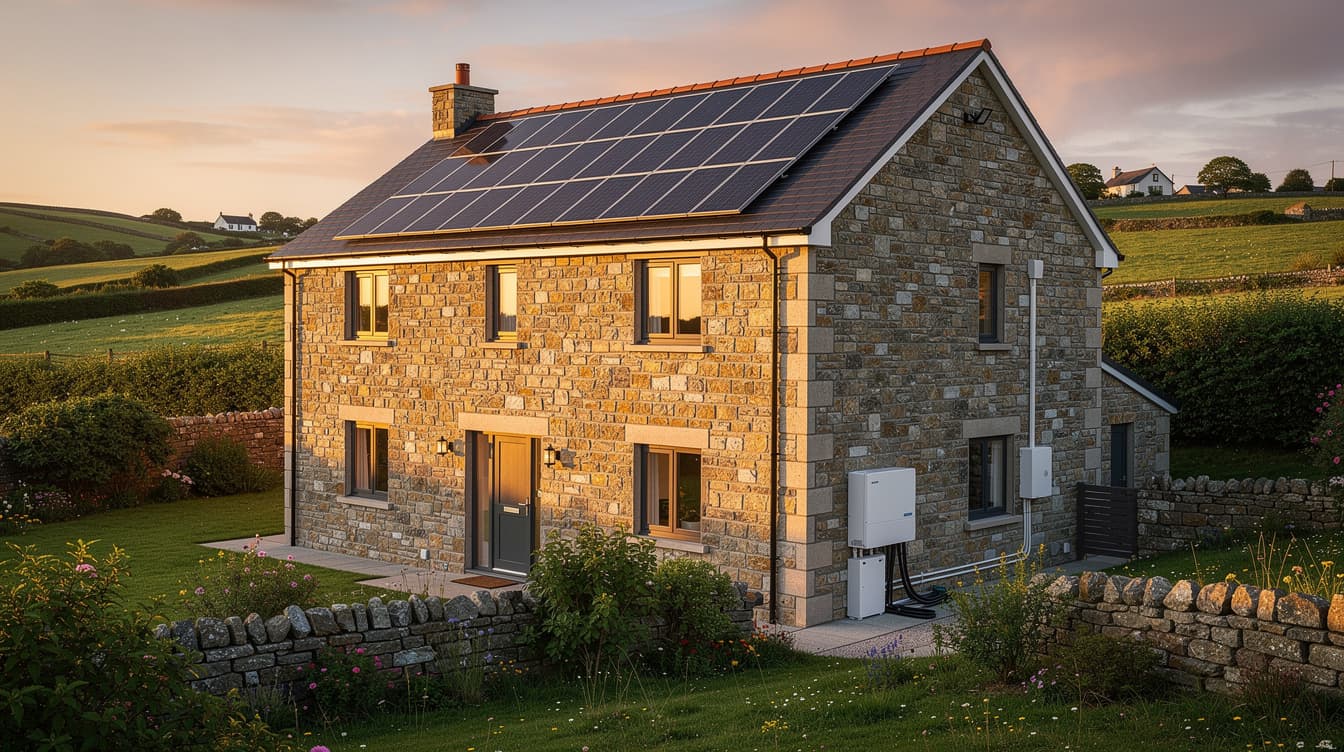
Best Solar Setup Ireland 2026: Complete System Design Guide
The best solar setup for Ireland 2026 — panels, inverter, battery, diverter and installer — with 4 real-world configurations, prices and paybacks.
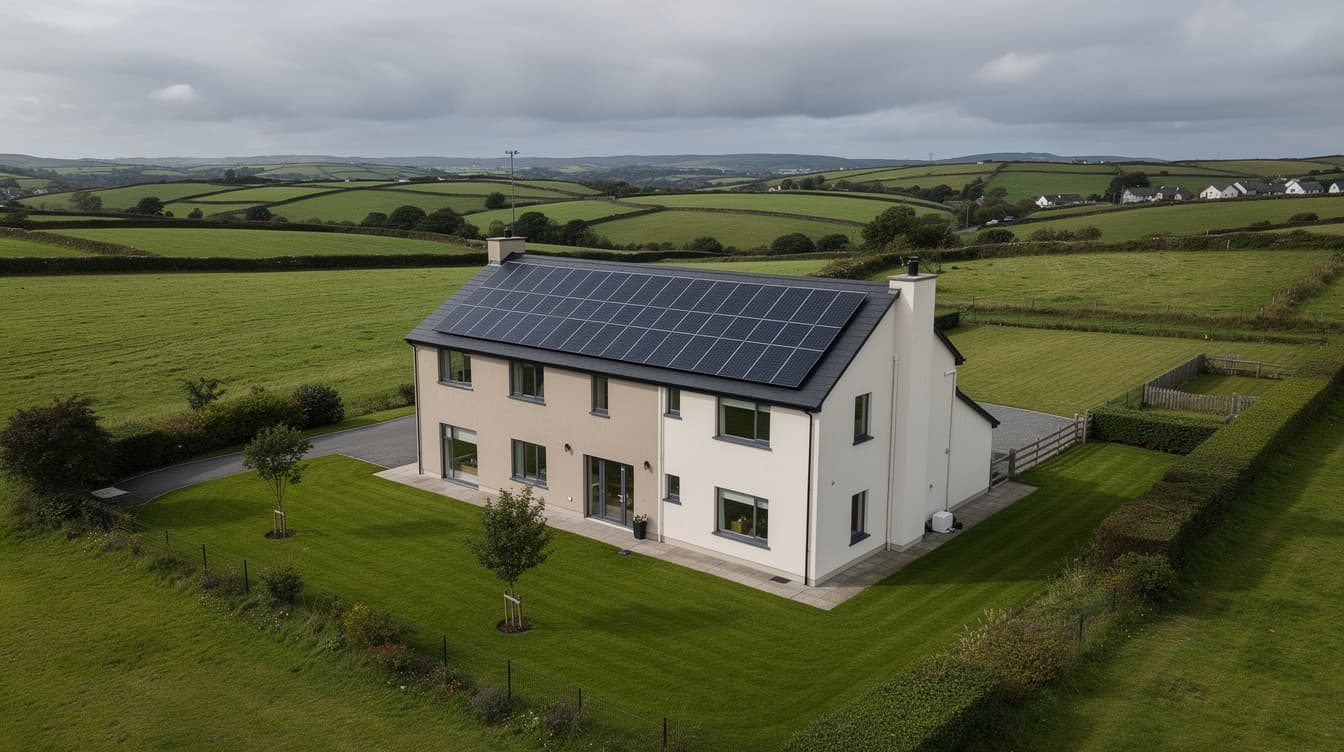
20 Solar Panels Ireland 2026: Cost, Output, Battery & Payback
What 20 solar panels cost in Ireland 2026 (€12.7-18.6k net after grant), 7,600-8,100 kWh output, roof space, battery choice and payback vs 10 or 14 panels.
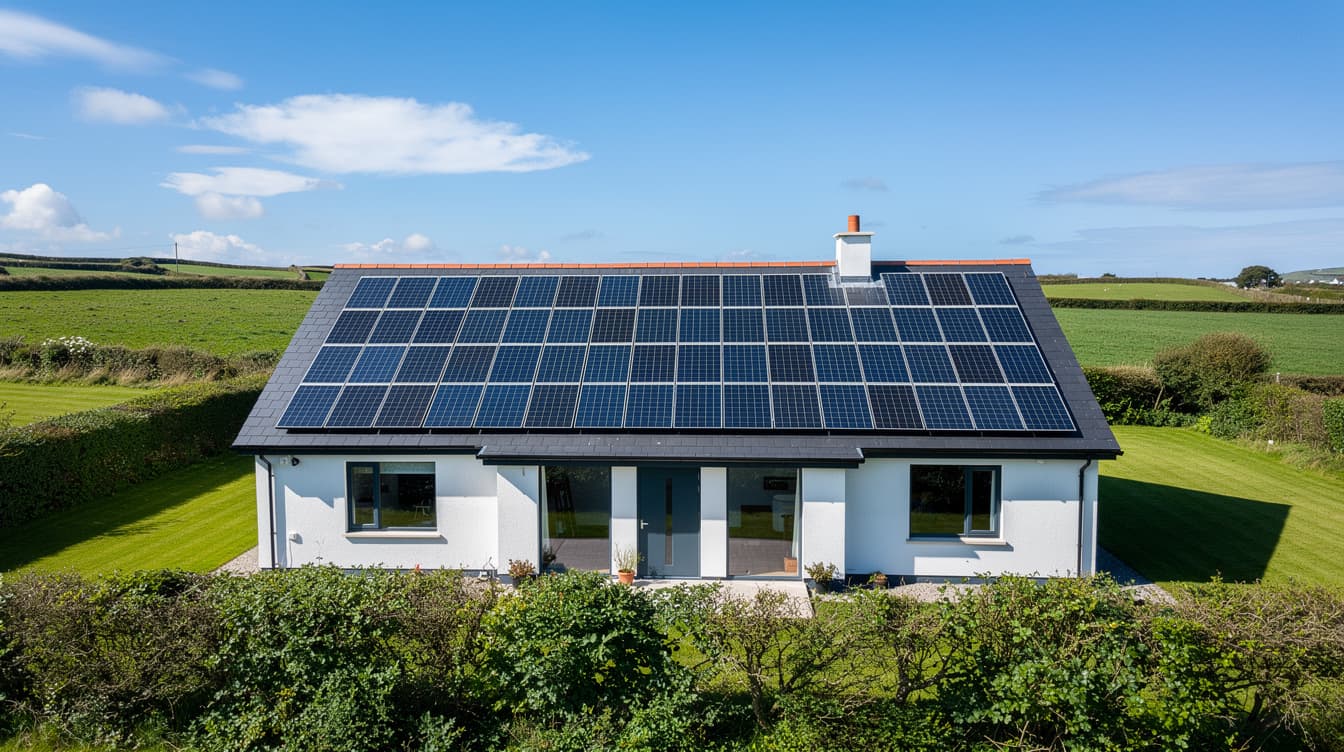
Solar Panel Temperature Coefficient Ireland 2026: How Heat Affects Output
What temperature coefficient really means for Irish solar output, real cell temps by season, 2026 brand rankings, and why low-light beats heat spec in Ireland.