
Best Electricity Tariff for Solar Panel Owners in Ireland 2026: Every Supplier Compared
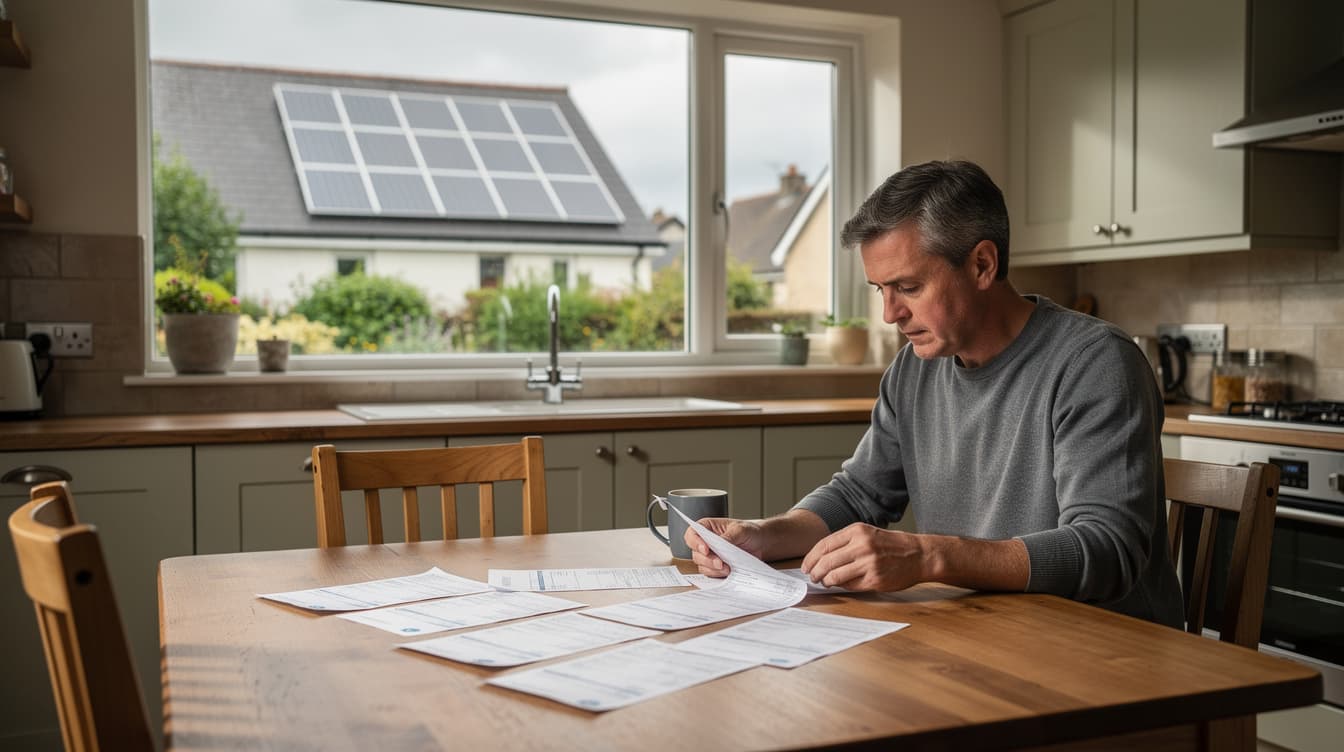
You have solar panels on your roof and you are saving money. But are you saving as much as you could be? The electricity tariff you are on matters just as much as the panels themselves. The wrong supplier can quietly cost you hundreds of euros per year — and most solar homeowners never switch because they assume all tariffs are roughly the same. They are not.
In April 2026, export rates across Irish suppliers range from 18.5c to 25c per kWh — a 35% gap. But here is the counterintuitive truth: the supplier with the highest export rate is not always the best deal. Your import rate, standing charge, and tariff structure matter more, because most solar homes still buy more electricity from the grid than they sell to it. This guide breaks down every supplier, every rate, and every scenario so you can pick the tariff that actually saves you the most.
Want to Maximise Your Solar Savings?
Get free quotes from SEAI-registered installers and find the right system size for your home.
Every Supplier's Solar Export Rate (April 2026)
Under the Clean Export Guarantee (CEG), every electricity supplier in Ireland must offer a payment for each kWh you export to the grid. But the rates vary significantly. Here is the full comparison as of April 2026:
| Supplier | Export Rate | Annual Export Earnings (4 kWp) | Conditions |
|---|---|---|---|
| SSE Airtricity (Activ8) | 32c/kWh (Year 1), 27c (Year 2) | €480 (Year 1) | Must install through SSE partner |
| Pinergy | 25c/kWh | €375 | No lock-in, pay-as-you-go |
| SSE Airtricity (standard) | 24c/kWh | €360 | Standard rate for any customer |
| Community Power | 20c/kWh | €300 | Community-owned co-operative |
| Electric Ireland | 19.5c/kWh | €293 | Largest supplier, quarterly credit |
| Energia | 18.5c/kWh | €278 | Competitive import rates |
| Bord Gáis Energy | 18.5c/kWh | €278 | Quarterly credit |
| Flogas | 18.5c/kWh | €278 | Clean Export Premium tariff |
Annual export earnings assume a typical 4 kWp system exporting approximately 1,500 kWh per year. Your actual exports depend on your system size, electricity usage patterns, and whether you have a battery.
At first glance, Pinergy at 25c/kWh looks like the obvious winner (ignoring the SSE Activ8 programme, which requires installing through a specific partner). But export earnings are only part of the equation — and usually the smaller part.
Why Your Import Rate Matters More Than Your Export Rate
Here is a fact that surprises most solar homeowners: even with a 4 kWp system, you still import more electricity than you export. A typical Irish household with solar panels uses about 60–70% of their solar generation directly and exports the remaining 30–40%. But they still draw 2,500–3,500 kWh from the grid over the year — especially in the evenings, at night, and during winter.
This means your import rate has a bigger impact on your total annual bill than your export rate. Consider this comparison:
| Scenario | Pinergy (high export) | SSE Airtricity (balanced) | Energia Smart Data |
|---|---|---|---|
| Export rate | 25c/kWh | 24c/kWh | 18.5c/kWh |
| Export earnings (1,500 kWh) | €375 | €360 | €278 |
| Day/24hr import rate | ~42c/kWh (PAYG) | 28.3c/kWh | 33.7c/kWh (day), 18.5c (night) |
| Import cost (3,000 kWh) | €1,260 | €849 | €780* |
| Standing charge | €283 | €242 | €265 |
| Net annual cost | €1,168 | €731 | €767 |
*Energia Smart Data import cost assumes 50% of consumption at night rate (18.5c) and 50% at day rate (33.7c), reflecting a solar home that shifts heavy loads to night hours.
The result: SSE Airtricity’s 24hr plan delivers the lowest net bill despite having a lower export rate than Pinergy. Pinergy’s high PAYG import rate of ~42c/kWh wipes out the export advantage and then some. Energia is competitive if you can shift consumption to night hours using a smart meter.
The lesson: always compare the total annual cost (imports minus exports plus standing charge), not just the export rate.
Smart Meter Tariffs: A Game-Changer for Solar Homes
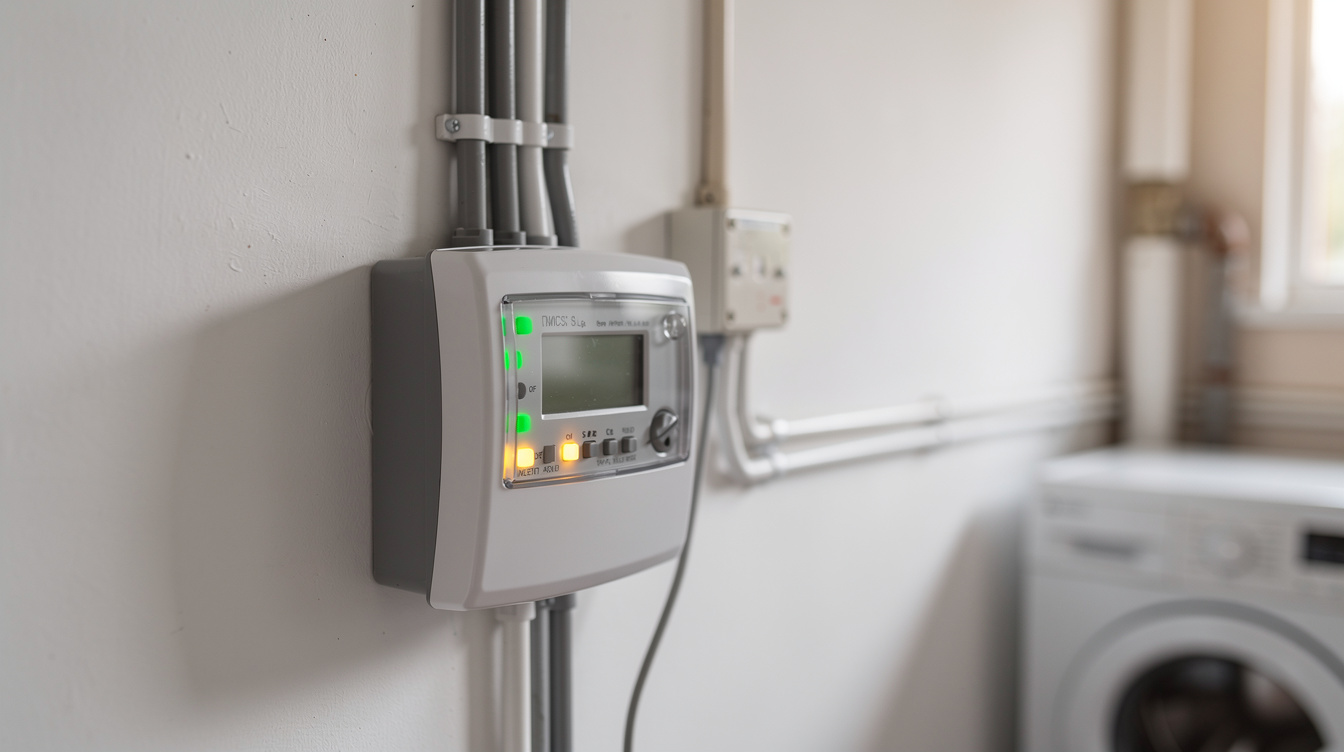
If you have a smart meter (ESB Networks installs them free as part of the NC6 process when you go solar), you unlock time-of-use tariffs that can dramatically improve your solar economics. Here is how the main smart tariffs compare:
| Supplier | Plan | Night Rate | Day Rate | Peak Rate |
|---|---|---|---|---|
| Electric Ireland | Smart Electricity | 18.4c | 35.0c | 37.3c |
| Energia | Smart Data | 18.5c | 33.7c | 37.9c |
| SSE Airtricity | Smart Electricity | 19.3c | 30.0c | 33.5c |
| Bord Gáis Energy | Smart Electricity | 24.6c | 33.3c | 40.6c |
| Pinergy | EV Drive Time | 6.0c (2–5am only) | ~42c | — |
Why smart tariffs suit solar homes:
- Your solar covers daytime needs. During the day when rates are highest (30–38c/kWh), your panels are generating. You avoid buying expensive daytime electricity.
- You shift heavy loads to cheap night hours. Dishwasher, washing machine, tumble dryer, EV charging, and immersion heater can all run on timers between 11pm and 8am when rates drop to 18–19c.
- With a battery, you buy cheap and sell dear. Charge your battery at 18c overnight, use that stored energy during peak hours when the grid would charge you 35–40c. Some advanced battery systems like GivEnergy can do this automatically.
The best smart tariff for most solar homes in April 2026 is Energia Smart Data or SSE Airtricity Smart Electricity. Both offer competitive night rates around 18–19c/kWh with reasonable day rates. SSE Airtricity edges ahead on the 24hr flat rate (28.3c vs Energia’s 33.7c daytime), but Energia’s lower night rate can win if you are disciplined about shifting loads.
The Best Tariff for Your Situation
There is no single “best” tariff — it depends on your setup, habits, and household. Here is our recommendation for each common scenario:
Solar panels only (no battery, standard meter)
Best choice: SSE Airtricity 24hr plan (28.3c/kWh, 24c export)
Why: Lowest flat import rate among major suppliers, combined with the second-highest standard export rate. Simple, no need to manage time-of-use. Net cost is consistently the lowest for standard-meter solar homes.
Solar panels only (no battery, smart meter)
Best choice: Energia Smart Data or SSE Airtricity Smart
Why: You can shift washing machines, dishwashers, and immersion to the 18–19c night window. Solar covers your daytime needs. The combination of cheap nights + free solar days is hard to beat.
Solar panels + battery
Best choice: Energia Smart Data
Why: With a battery, you can buy at the 18.5c night rate, store it, and avoid buying at 33.7c during the day when solar is not enough. The wide spread between night and day rates (15.2c gap) makes battery arbitrage highly profitable. Even though the export rate is only 18.5c, with a battery you are exporting far less anyway.
Solar panels + EV
Best choice: Pinergy EV Drive Time or Energia Smart Data
Why: If you charge your EV overnight, Pinergy’s 6c/kWh rate between 2–5am is unbeatable for EV charging alone. A full charge at 6c saves over €1,000/year compared to charging at standard rates. However, the rest of your electricity is expensive on Pinergy, so this only works if your EV charging is a large portion of your consumption. Otherwise, Energia’s 18.5c night rate covers both EV charging and other overnight loads more consistently.
High export volume (large system, low daytime usage)
Best choice: SSE Airtricity (standard 24c export) or Pinergy (25c export)
Why: If you work from home and use most of your solar directly, exports are low and import rate matters most. But if you have a large 6+ kWp system and are away during the day, you export a lot. In that case, the higher export rate has more impact. Run the numbers both ways.
Not Sure Which System Size Suits You?
Use our free calculator to find the right solar panel system for your home and usage.
How to Switch Supplier (It Takes 10 Minutes)
Switching electricity supplier in Ireland is straightforward and free. Here is the process:
- Check your current bill. Note your MPRN (Meter Point Reference Number), current unit rate, standing charge, and contract end date. If you are still in a fixed-price contract, check for exit fees (usually €50–€100).
- Compare net costs. Do not just compare export rates. Calculate your expected annual bill: (grid imports × import rate) + standing charge – (exports × export rate). Use your actual consumption figures from your last 12 months of bills.
- Sign up online. Visit your chosen supplier’s website and register. You will need your MPRN and an IBAN for direct debit.
- Your new supplier handles the switch. They contact your current supplier, arrange the meter reading, and transfer your account. The process takes 2–4 weeks. Your electricity supply is never interrupted during the switch.
- Register for microgeneration. After switching, contact your new supplier to register for their microgeneration export tariff. You will need your NC6 confirmation and smart meter details.
Important: When you switch supplier, your Clean Export Guarantee registration transfers automatically. However, you should confirm your export rate with your new supplier within the first month, as it is not always applied automatically.
The €400 Tax-Free Export Income
A quick note on tax: under current Irish tax law, the first €400 per year of microgeneration export income is completely tax-free. This exemption was introduced in 2022 and has been extended to the end of 2028.
What this means in practice:
- A 4 kWp system exporting 1,500 kWh at 25c/kWh earns €375 — fully tax-free.
- A larger 6 kWp system exporting 2,500 kWh at 24c/kWh earns €600 — only €200 is taxable.
- Most residential systems earn well under €400 in exports, so the entire amount is tax-free for the majority of homeowners.
You do not need to register for VAT or fill in any special tax forms for income under €400. If your export income exceeds €400, you declare the excess on your annual tax return under “other income.”
5 Mistakes Solar Homeowners Make With Their Tariff
- Chasing the highest export rate. As we showed above, Pinergy’s 25c export rate does not make up for its 42c import rate. Always calculate the net annual cost.
- Staying on a 24hr meter when they have a smart meter. If ESB Networks has installed a smart meter (they do automatically for solar installs), switch to a time-of-use tariff. The savings from cheap night rates typically outweigh any simplicity benefit of a flat rate.
- Not registering for microgeneration with their supplier. Having solar panels does not automatically mean you get paid for exports. You must register with your supplier and ensure your smart meter is recording both import and export. Check your bill — if there is no export credit line, call your supplier.
- Ignoring the standing charge. A difference of €40–€90 per year in standing charges between suppliers adds up. Factor it into your comparison.
- Not switching after their introductory discount expires. Most suppliers offer 20–32% discounts for the first 12 months. After that, rates jump significantly. Set a calendar reminder to review your tariff every 12 months.
A Note on Rate Changes
Electricity rates in Ireland change frequently — suppliers adjust pricing every few months based on wholesale energy costs, CRU regulations, and competitive pressure. The rates in this article are accurate as of April 2026, but you should verify current rates directly with each supplier before switching.
What does not change often is the relative positioning of suppliers. Historically:
- Pinergy consistently offers the highest export rate but the highest import rate
- SSE Airtricity tends to offer competitive all-round pricing for solar homes
- Energia tends to have the most aggressive smart meter tariffs
- Electric Ireland, Bord Gáis, and Flogas cluster in the middle
These patterns have held for the past two years and are likely to continue, even as specific rates adjust.
The Bottom Line
For most solar homes in Ireland in 2026:
- Without a smart meter: SSE Airtricity’s 24hr plan offers the best balance of low import rates (28.3c) and high export rates (24c)
- With a smart meter: Energia Smart Data or SSE Airtricity Smart, depending on how much you can shift to night hours
- With a battery: Energia Smart Data, where the 15c gap between night and day rates makes battery storage highly profitable
- With an EV: Pinergy EV Drive Time for dedicated EV charging; Energia Smart Data for everything else
The single most impactful thing you can do after installing solar panels is switch to a smart meter tariff and shift your heavy loads to night hours. This alone can save €200–€400 per year on top of your solar savings — often more than the difference in export rates between any two suppliers.
And remember: switching is free, takes 10 minutes, and your electricity is never interrupted. There is no reason to stay on a tariff that costs you more than it should.
Ready to Go Solar?
Get your free personalised quote from SEAI-registered installers.
Related Articles
Solar Panel Grants for Landlords in Ireland 2026: SEAI Grant, Tax Relief & BER Rules
Landlords can claim the SEAI solar grant plus up to €10,000 tax relief per rental property. Full 2026 guide to eligibility, BER rules, and ROI.
How Long Does It Take to Install Solar Panels in Ireland? The Full 2026 Timeline
Solar panel installation in Ireland takes 1-2 days on the roof, but 4-8 weeks end-to-end. Here's every step from quotes to SEAI grant, with exact timelines.
Solar Panels for New Builds in Ireland 2026: What Developers Include, What You Should Upgrade & What It Costs
New build homes in Ireland come with solar panels under nZEB rules. Find out how much, whether to upgrade, costs, and why you can't get the SEAI grant.