
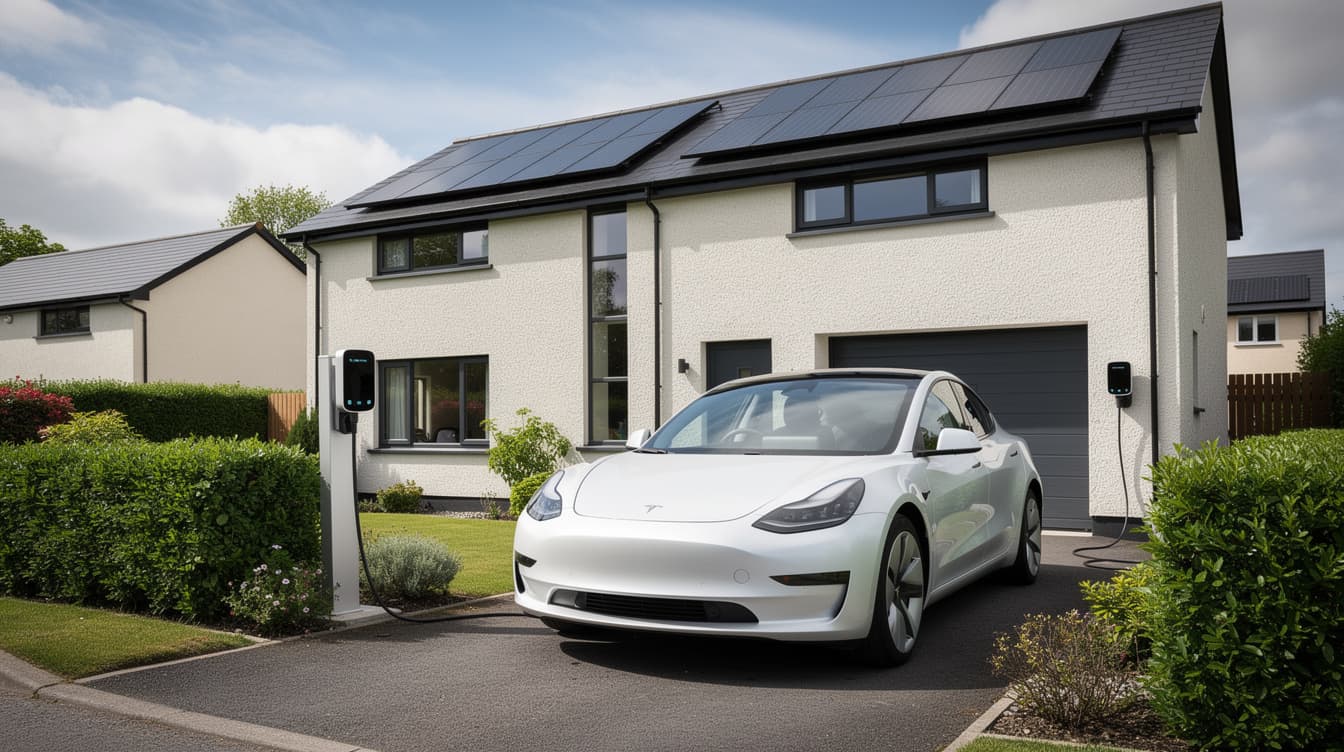
Solar Panels and Electric Cars Ireland 2026: How to Charge Your EV for Free
Solar panels and an electric car are the ultimate money-saving combo for Irish homeowners in 2026. Charge your EV from your own roof and you're driving on free fuel — no petrol station, no electricity bill spike, no carbon guilt. A typical Irish household can save €1,600–€2,400 per year on fuel and electricity by pairing solar with an EV. Here's exactly how to set it up, what it costs, and whether the numbers make sense for you.
Ireland has hit a tipping point. Electricity prices remain stubbornly high at 35–42c/kWh. Petrol is hovering around €1.70–€1.85 per litre. Meanwhile, solar panel costs have dropped 30% in three years and EV prices are finally approaching petrol-car parity. The homeowners who combine all three — solar, battery, EV — are locking in the lowest running costs of anyone on the road.
This guide covers the practical reality of charging an EV from solar in Irish conditions: how many panels you need, which charger to buy, what it actually costs, and the real savings you can expect.
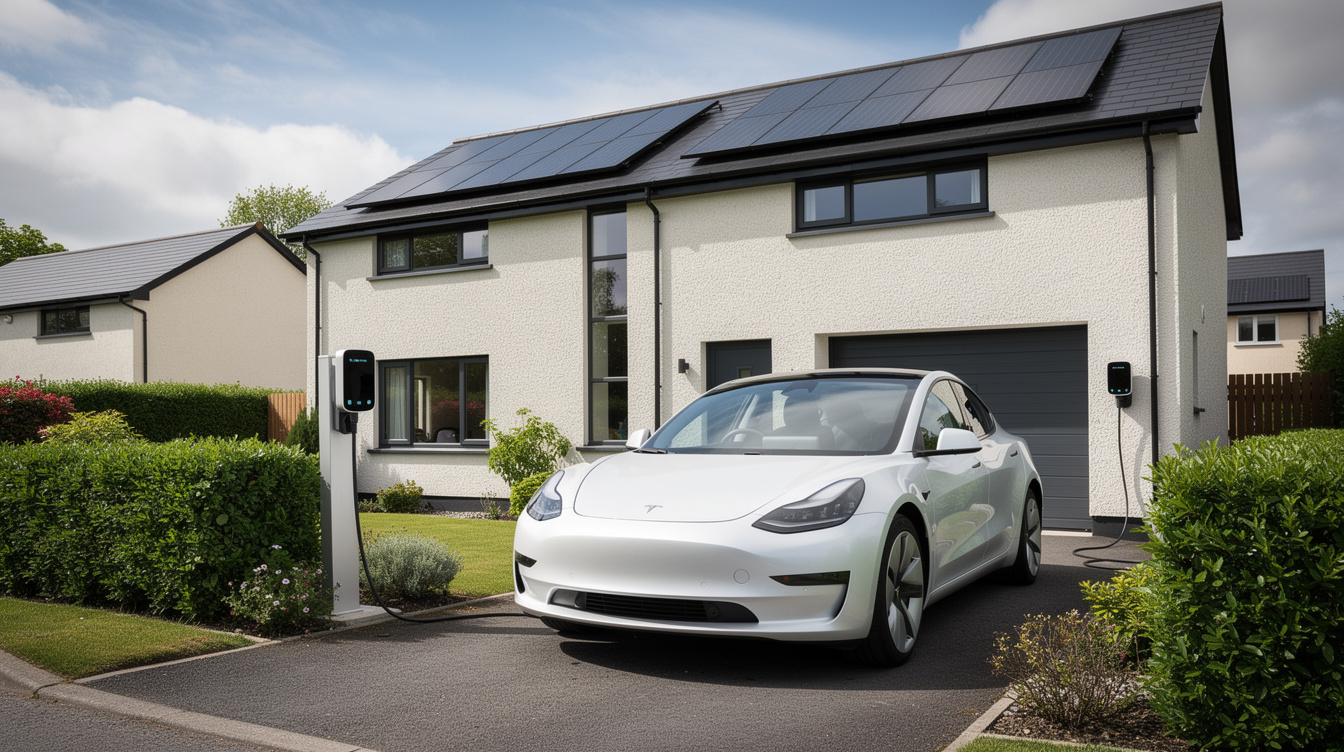
How Much Electricity Does an EV Actually Use?
Before sizing your solar system, you need to know how much energy your car will consume. Here's a breakdown based on real-world Irish driving:
| Driver Type | Annual km | EV Consumption | Annual kWh Needed | Equivalent Petrol Cost |
|---|---|---|---|---|
| Light commuter | 8,000 km | 16 kWh/100km | 1,280 kWh | €1,050 |
| Average driver | 15,000 km | 17 kWh/100km | 2,550 kWh | €1,970 |
| Heavy driver | 25,000 km | 18 kWh/100km | 4,500 kWh | €3,280 |
The average Irish driver covers about 15,000 km/year. In a typical EV (Tesla Model 3, Hyundai Ioniq 5, VW ID.4), that's roughly 2,550 kWh of electricity. Charged entirely from the grid at 35c/kWh, that costs €893/year. Charged from your solar panels? Effectively €0.
Compare that to the same distance in a petrol car averaging 7 litres/100km at €1.88/litre: €1,974/year in fuel. The EV on solar saves you over €1,970 annually on fuel alone.
Planning Solar + EV Together?
Get a free quote that sizes your solar system for both home and car charging.
How Many Solar Panels Do You Need to Charge an EV?
In Ireland, each modern 440W solar panel generates approximately 370–400 kWh per year. Here's how that translates to EV charging:
| Driving Profile | EV kWh/Year | Panels for EV Only | Panels for Home + EV | Total System Size |
|---|---|---|---|---|
| Light (8,000 km) | 1,280 kWh | 3–4 | 11–14 | 4.8–6.2 kWp |
| Average (15,000 km) | 2,550 kWh | 6–7 | 14–18 | 6.2–7.9 kWp |
| Heavy (25,000 km) | 4,500 kWh | 11–12 | 19–23 | 8.4–10.1 kWp |
The reality check: You won't charge 100% from solar. Ireland's solar generation peaks in summer and drops significantly in winter. Even with a battery, you'll cover 40–60% of your EV charging from solar annually. The rest comes from the grid — ideally on a night rate of 10–15c/kWh, which is still far cheaper than petrol.
For our recommended system sizing guide, a home with an EV should aim for 6–8 kWp (14–18 panels) to cover both household electricity and a meaningful share of EV charging.
The Solar-Compatible EV Charger: Your Most Important Choice
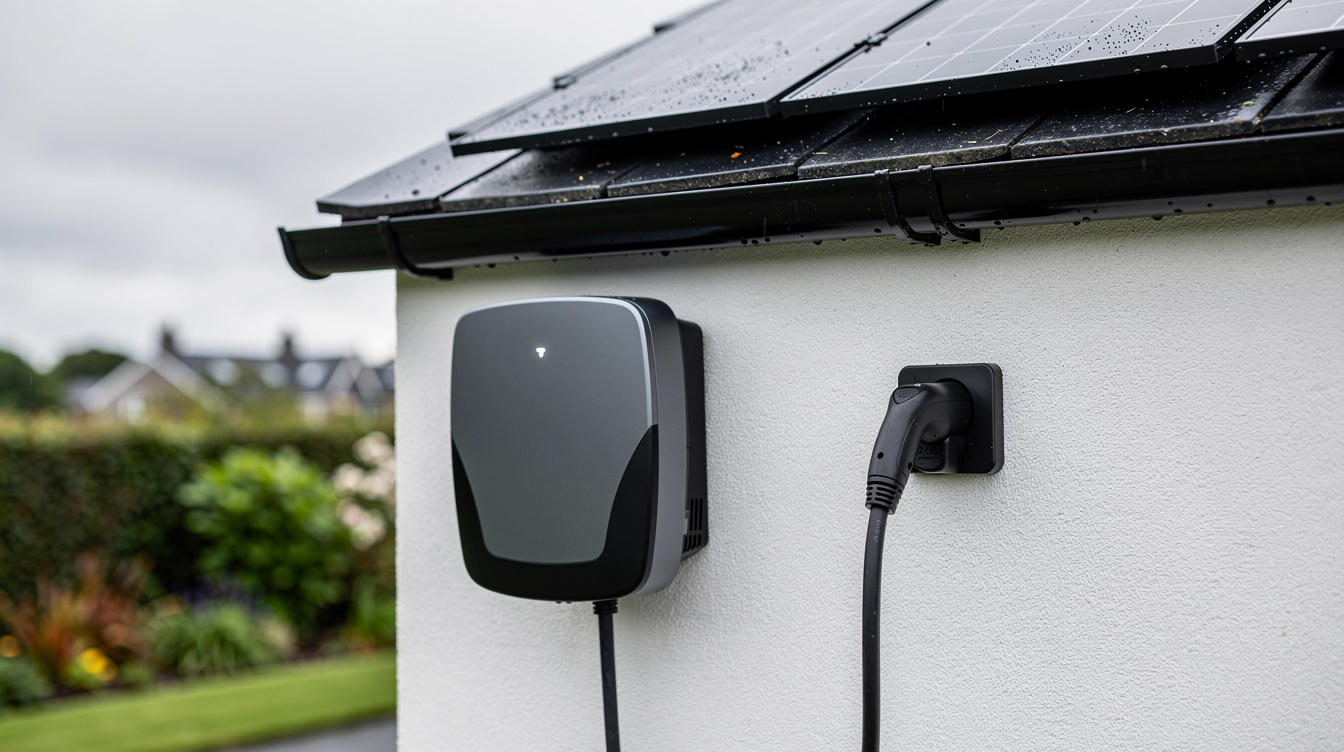
Not all EV chargers are created equal. A standard “dumb” charger draws power from the grid whenever you plug in. A solar-compatible smart charger monitors your solar generation in real time and only charges your car with surplus solar energy. This is the key to genuinely free driving.
Best Solar-Compatible EV Chargers in Ireland (2026)
| Charger | Power | Price | Solar Mode | SEAI Grant |
|---|---|---|---|---|
| myenergi Zappi | 7 kW / 22 kW | €975–€1,115 | Full solar diversion | €300 |
| Ohme Home Pro | 7.4 kW | €700–€850 | Smart scheduling + solar | €300 |
| Easee Charge | 7.4 kW / 22 kW | €800–€1,000 | Solar integration via app | €300 |
| Tesla Wall Connector | 7.4 kW / 22 kW | €550–€700 | Tesla solar only | €300 |
Our pick: the myenergi Zappi. It's the only charger that offers true solar surplus diversion out of the box with any solar system. The Zappi has a CT clamp that monitors your grid connection in real time. When your solar panels produce more than your home uses, the Zappi automatically starts charging your car with the surplus. When a cloud passes over, it throttles down. When the sun returns, it ramps back up. No excess goes to the grid — it all goes into your car.
After the €300 SEAI EV charger grant, the Zappi costs about €675–€815 installed. That investment pays for itself in under 6 months of solar-charged driving.
The Total Cost: Solar + Battery + EV Charger
Here's what the complete setup costs for an average Irish family with an EV:
| Component | Size/Model | Cost | Grant | Net Cost |
|---|---|---|---|---|
| Solar panels | 6.2 kWp (14 panels) | €8,800–€10,800 | €1,800 | €7,000–€9,000 |
| Battery | 5 kWh (GivEnergy) | €1,800–€2,500 | — | €1,800–€2,500 |
| EV charger | Zappi 7 kW | €975 | €300 | €675 |
| Total | — | €11,575–€14,275 | €2,100 | €9,475–€12,175 |
That might sound like a lot upfront. But consider the annual savings:
- Home electricity savings: €700–€1,050/year (self-consumption + CEG exports)
- EV fuel savings vs petrol: €1,600–€1,970/year
- Total annual saving: €2,300–€3,020/year
Payback period on the full system: 3.5–5 years. After that, you're generating free electricity and driving on free fuel for the remaining 20+ year lifespan of the panels.
How Solar EV Charging Actually Works Day-to-Day
Here's what a typical day looks like for an Irish homeowner with solar panels, a battery, and a Zappi charger:
7:00 AM — Sun rises. Solar panels start generating but output is low. Battery handles the morning kettle and shower.
9:00 AM — You leave for work in your EV (charged overnight on night rate). Solar generation ramps up. The house uses some, the rest fills the battery.
10:00 AM – 3:00 PM — Peak solar generation. Battery is full. The Zappi detects surplus and starts charging your partner's car in the driveway. On a good summer day, 4–5 hours of surplus gives 15–25 kWh of charge — enough for 90–150 km of driving.
4:00 PM — Solar output drops. Zappi stops charging. Battery takes over powering the house for the evening.
11:00 PM — Night rate kicks in (10–15c/kWh). Your car tops up on cheap grid electricity if needed.
In summer, this cycle can cover 80–100% of your EV charging from solar. In winter, you'll rely more on night-rate grid charging, but your electricity bills are still far lower than without solar.
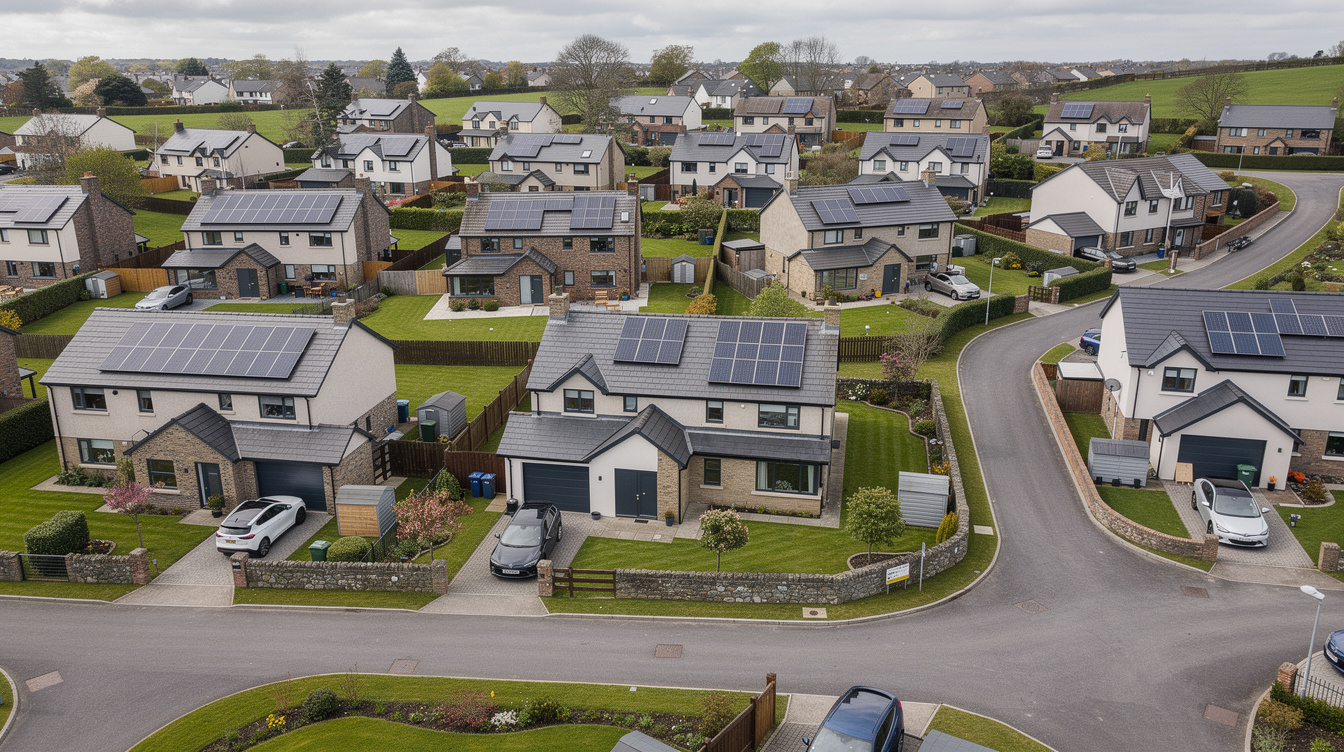
Summer vs Winter: What to Realistically Expect
| Season | Daily Solar Output (6 kWp) | Surplus for EV | Free km/Day | Grid Top-Up Needed? |
|---|---|---|---|---|
| Jun–Aug | 25–30 kWh | 15–20 kWh | 90–120 km | Rarely |
| Mar–May, Sep–Oct | 12–20 kWh | 5–12 kWh | 30–70 km | Sometimes |
| Nov–Feb | 3–8 kWh | 0–3 kWh | 0–18 km | Yes — use night rate |
The key takeaway: solar EV charging in Ireland is a summer sport. From April to September, you'll cover most of your driving from your roof. In winter, smart night-rate charging fills the gap at 10–15c/kWh — still a fraction of petrol costs.
Ready to Drive on Sunshine?
Get your free personalised quote for solar panels and an EV charger from SEAI-registered installers.
Grants Available in 2026
Irish homeowners can stack multiple grants to reduce the cost of a solar + EV setup:
| Grant | Amount | What It Covers | How to Apply |
|---|---|---|---|
| SEAI Solar PV Grant | Up to €1,800 | Solar panel installation | Full guide here |
| SEAI EV Charger Grant | €300 | Home EV charger installation | Via SEAI online portal |
| 0% VAT on Solar | Saves €1,200–€2,400 | All solar panel installations | Automatic — applied by installer |
| Clean Export Guarantee | 12–24c/kWh exported | Surplus solar sold to grid | CEG guide |
Combined, these incentives reduce the cost of a full solar + battery + EV charger setup by €3,300–€4,500.
Do You Need a Battery for Solar EV Charging?
Strictly speaking, no. The Zappi charger diverts surplus solar directly to your car without needing a battery. But a home battery adds significant benefits:
- Evening power: Without a battery, your home switches to expensive grid electricity as soon as the sun goes down. A 5 kWh battery covers 3–5 hours of evening usage.
- Better self-consumption: Days when the car isn't home during solar hours, the battery captures surplus instead of exporting it at lower rates.
- Backup power: Some batteries (like the Tesla Powerwall) provide backup during grid outages.
Our recommendation: If budget allows, add a 5–10 kWh battery. If you need to choose between a bigger solar system and a battery, go bigger on solar first — the Zappi handles the EV charging without a battery. See our full battery analysis for the detailed numbers.
Step-by-Step: Setting Up Solar EV Charging
- Check your electricity bills. Calculate your annual household consumption. Add your expected EV consumption from the table above. This gives you your target system size.
- Get quotes for solar + EV charger together. Many SEAI-registered installers now offer combined packages. Bundling saves €200–€500 vs. installing separately.
- Choose a solar-compatible charger. The Zappi is the gold standard for solar diversion. Make sure your installer includes the CT clamp setup.
- Apply for SEAI grants. Apply for the solar PV grant and EV charger grant through the SEAI portal before installation begins.
- Sign up for the Clean Export Guarantee. Register with your electricity supplier to get paid for surplus solar you export. Full CEG guide here.
- Set up smart tariff. Switch to a time-of-use electricity plan with a cheap night rate (10–15c/kWh). This covers winter EV charging at the lowest possible cost.
Frequently Asked Questions
Can I charge my EV entirely from solar panels in Ireland?
On an annual basis, a 6–8 kWp system generates enough electricity to cover an average EV's consumption. But seasonally, you'll rely on grid power in winter. Realistically, expect 40–60% of annual EV charging from solar.
How long does it take to charge an EV from solar?
It depends on your surplus. On a sunny summer day with a 6 kWp system, you might have 3–4 kW of surplus for charging, giving about 20–25 km of range per hour of charging. A full day's surplus can add 90–120 km of range.
Do I need a three-phase electricity supply?
No. Most Irish homes have single-phase supply, and a 7 kW charger works perfectly on single-phase. Three-phase is only needed for 22 kW chargers, which are faster but unnecessary for home solar charging where you're drip-feeding surplus over several hours.
What if my car is at work during the day?
This is the main limitation of solar EV charging. If the car isn't home during solar hours, you can't charge it directly. Solutions: (1) add a battery to store surplus for evening charging, (2) charge on night rate, or (3) if you work from home even part-time, plug in on those days.
Is it worth adding solar just for EV charging?
Absolutely. Even without considering home electricity savings, a 3–4 kWp solar system dedicated to EV charging pays for itself in 3–4 years through fuel savings alone. When you add home electricity savings and CEG export income, the payback is even faster.
Start Driving on Free Solar Energy
Get matched with SEAI-registered installers who specialise in solar + EV systems.
Related Articles
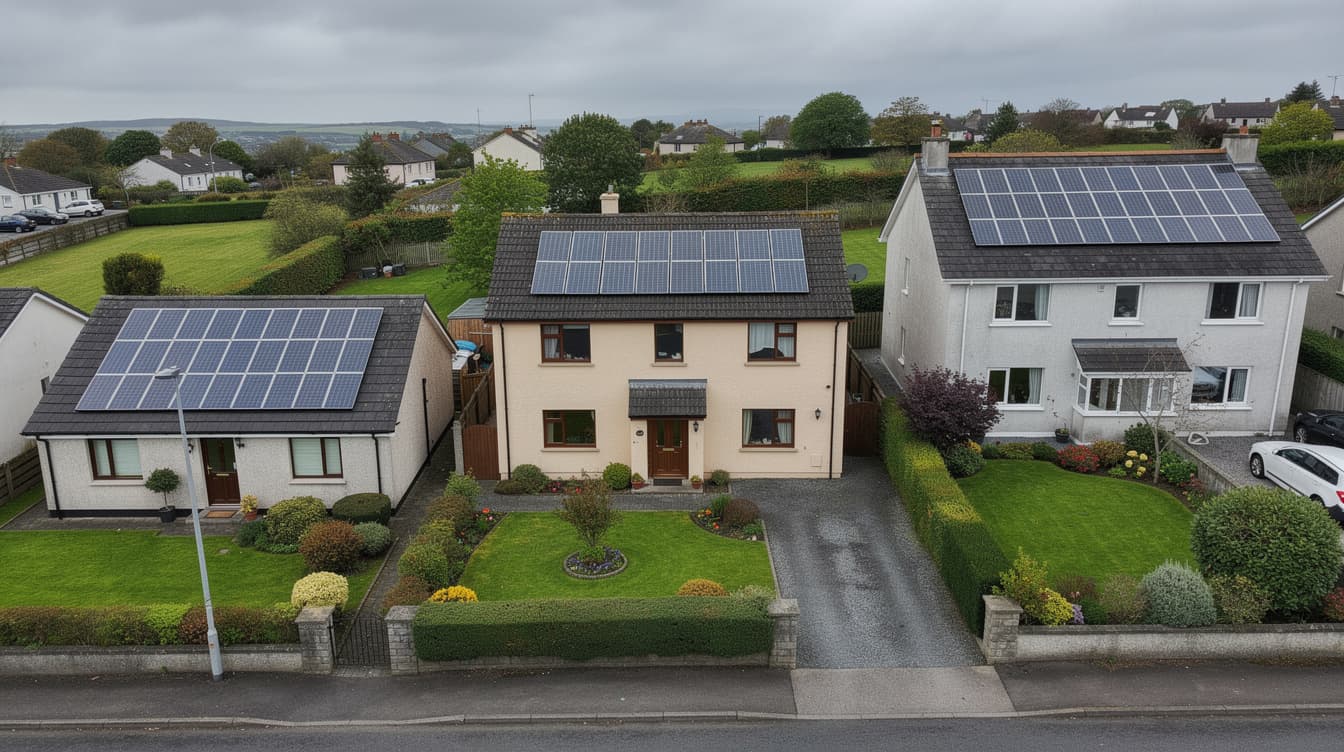
Solar Panel System Sizes Ireland 2026: 3 kW vs 5 kW vs 10 kW Compared
Compare 3kW, 5kW and 10kW solar panel systems in Ireland. Costs, output, savings and payback by size with 2026 SEAI grant figures.

How Much Do Solar Panels Save Per Month in Ireland? (Real 2026 Numbers)
Solar panels save €60–€145/month in Ireland in 2026. Real monthly breakdown by system size, season and household type with CEG export rates.
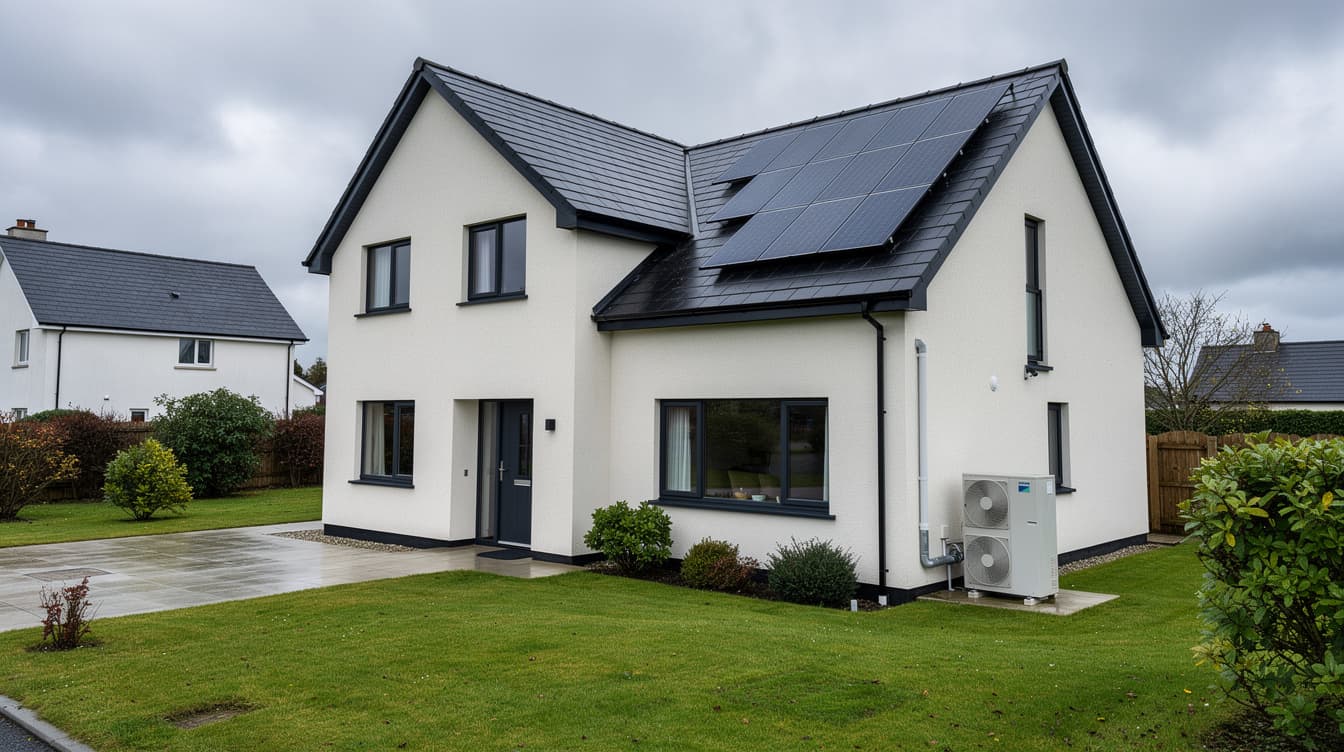
Solar Panels and Heat Pumps in Ireland 2026: The Smart Combo That Slashes Your Bills
Solar panels and heat pumps in Ireland 2026: real costs, SEAI grants up to €14,300, annual savings and the right installation order for Irish homes.