
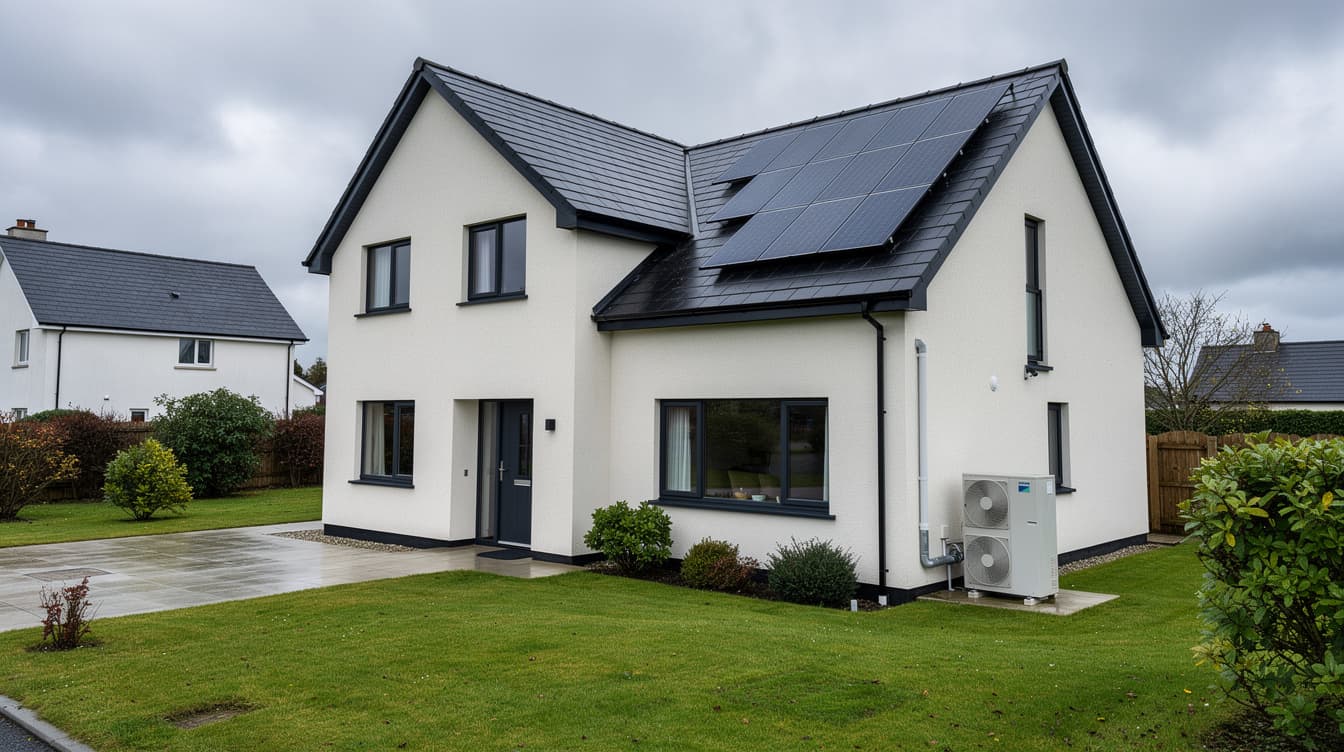
Solar Panels and Heat Pumps in Ireland 2026: The Smart Combo That Slashes Your Bills
Ireland is pushing hard on heat pumps. The government wants 680,000 homes retrofitted by 2030, SEAI just boosted the heat pump grant to €12,500, and every new-build since 2021 ships with one. But here’s the thing nobody in the industry talks about honestly: a heat pump increases your electricity bill. By a lot. A typical air-to-water heat pump adds 3,000–5,000 kWh to your annual electricity consumption — that’s €1,100–€1,900 extra per year at 2026 rates.
Solar panels are the antidote. They generate free daytime electricity exactly when your heat pump is running hardest. Pair the two systems properly and you can heat your home for a fraction of what oil, gas, or even a standalone heat pump would cost.
This guide breaks down the real costs, the real savings, and the right installation sequence for Irish homeowners in 2026.
Considering Solar, a Heat Pump, or Both?
Get free quotes from SEAI-registered installers who can price both systems together.
Why Heat Pumps and Solar Panels Work So Well Together
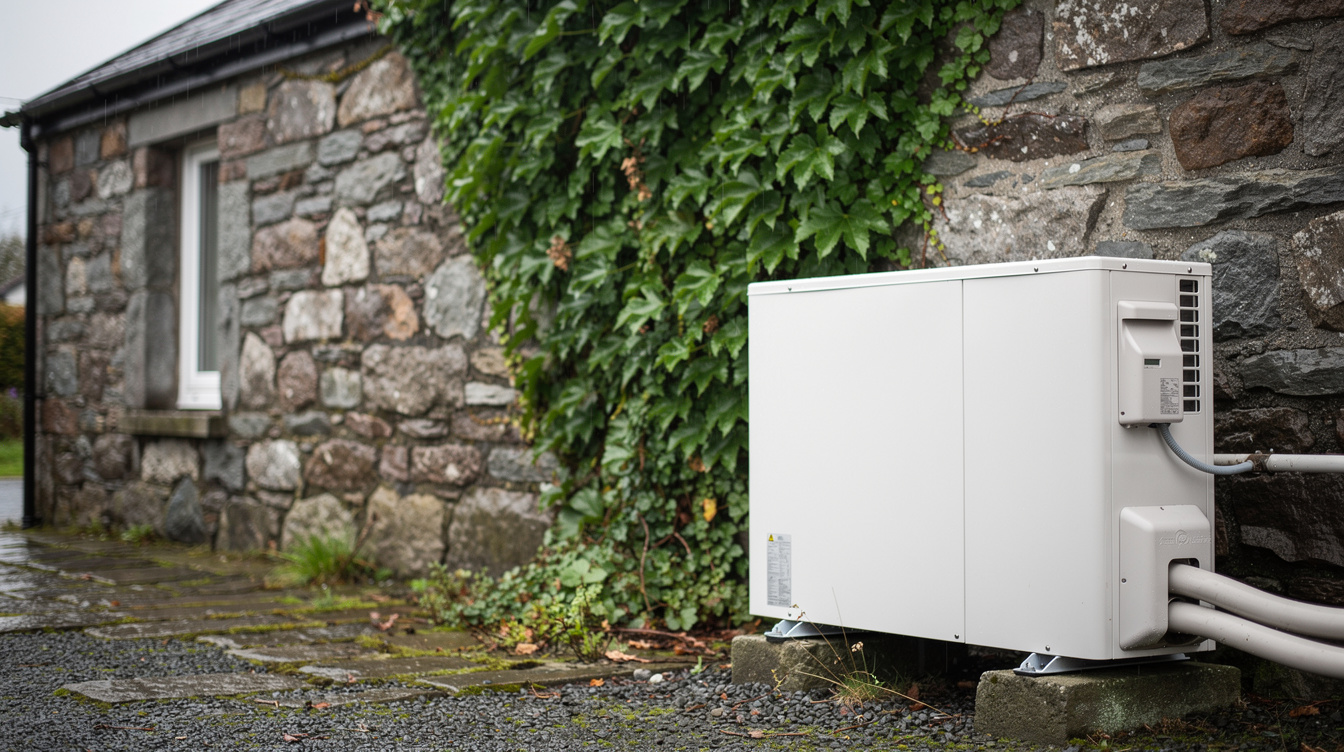
A heat pump doesn’t burn anything. It uses electricity to move heat from outside air (or ground) into your home. For every 1 kWh of electricity it consumes, a modern air-to-water heat pump delivers 3–4 kWh of heat — that ratio is called the Coefficient of Performance (COP).
The catch? It still needs electricity. Lots of it. An air-to-water heat pump in a well-insulated 3-bed semi typically consumes 3,300–4,500 kWh per year. At today’s rates (35–42c/kWh), that’s €1,150–€1,890 added to your electricity bill annually.
Solar panels flip the equation. A 4.4 kWp system generates around 4,000 kWh per year in Ireland. Without a heat pump, you’d export 50–60% of that because you’re not home during peak generation hours. But with a heat pump running during the day, you can consume 50–70% of your solar generation on-site — heating your home, your water, and your radiators for free.
What Does Each System Cost in 2026?
Let’s look at real numbers for a typical Irish 3-bed semi-detached home:
| System | Typical Cost | SEAI Grant | Net Cost |
|---|---|---|---|
| Solar PV (4.4 kWp, 10 panels) | €7,300–€9,300 | €1,800 | €5,500–€7,500 |
| Air-to-water heat pump | €12,000–€18,000 | Up to €12,500* | €3,500–€9,500 |
| 5 kWh battery storage | €3,800–€5,200 | €0 | €3,800–€5,200 |
| Combined (solar + heat pump) | €19,300–€27,300 | Up to €14,300 | €9,000–€17,000 |
*The €12,500 heat pump grant breaks down as: €6,500 heat pump unit + €2,000 central heating upgrade (radiators/underfloor) + €4,000 renewable heat bonus for replacing a fossil fuel system. Not all homes qualify for every component.
Solar panels also qualify for 0% VAT on supply and installation — a policy that continues through 2026 and saves you roughly €1,200–€1,600 compared to the standard 23% rate.
The Real Savings: Solar + Heat Pump vs. Other Heating Systems
Numbers talk. Here’s what a 3-bed semi-detached home actually spends on heating and electricity per year under four different setups, based on 2026 energy prices and typical Irish consumption:
| Heating System | Annual Heating Cost | Annual Electricity | Total Energy Bill |
|---|---|---|---|
| Oil boiler (kerosene) | €1,800–€2,400 | €1,600–€2,000 | €3,400–€4,400 |
| Gas boiler | €1,200–€1,600 | €1,600–€2,000 | €2,800–€3,600 |
| Heat pump only (no solar) | €0 (electric) | €2,800–€3,500 | €2,800–€3,500 |
| Heat pump + solar panels | €0 (electric) | €1,200–€1,800 | €1,200–€1,800 |
The combined system saves €1,600–€2,600 per year compared to oil, and €1,000–€1,800 per year compared to gas. Over 20 years (the minimum lifespan of both systems), that’s €20,000–€52,000 in cumulative savings — well above the upfront investment.
What Would You Save With Solar + Heat Pump?
Use our free calculator to estimate your savings based on your home’s size and current heating system.
Which Should You Install First?
This is the most common question we get, and the answer is almost always the same: install solar panels first.
Here’s why:
- Faster payback. Solar pays for itself in 4–7 years. A heat pump takes 6–12 years. Getting solar first means your savings start compounding sooner.
- Lower disruption. Solar installation takes one day. A heat pump retrofit can take 3–5 days and involves plumbing, radiator upgrades, and potentially insulation work.
- Insulation comes before heat pumps. A heat pump only performs well in a well-insulated home (BER B3 or better). If your insulation isn’t there yet, solar makes sense now while you plan the deeper retrofit.
- Solar pre-wires for the heat pump. Once you have solar generating free electricity, your future heat pump runs on that free electricity during the day — dramatically improving its economics.
The exception: if you’re doing a full deep retrofit (insulation + heat pump + solar all at once), it makes sense to install everything together. You’ll get maximum grant value (potentially over €21,500 combined) and avoid double scaffolding costs.

SEAI Grants for Solar + Heat Pump (2026)
The good news: both systems qualify for separate SEAI grants, and you can claim both. Here’s the full breakdown as of April 2026:
| Grant | Amount | Key Requirements |
|---|---|---|
| Solar PV grant | €1,800 | Min 2 kWp system, SEAI-registered installer |
| Heat pump unit | €6,500 | Air-to-water or ground-source, SEAI-registered |
| Central heating upgrade | €2,000 | New radiators or underfloor heating with heat pump |
| Renewable heat bonus | €4,000 | Replacing fossil fuel system (oil/gas boiler) |
| Air-to-air heat pump | €7,500 | Alternative to air-to-water (no radiator grant) |
| Max combined (solar + heat pump) | €14,300 | All conditions met |
Add insulation grants (cavity wall €700, attic €1,500, external insulation €8,000) and windows/doors (€3,000+) and total SEAI funding can exceed €21,500 for a comprehensive home energy upgrade.
One critical point: the €4,000 renewable heat bonus only applies if you’re replacing a fossil fuel heating system. If your home already has electric heating or a heat pump, you won’t qualify for that component.
How to Size Your Solar System for a Heat Pump
This is where most guides get vague. Let’s be specific.
A heat pump adds 3,000–5,000 kWh to your annual electricity consumption. Your base household consumption is around 4,200 kWh (Irish average). So a home with a heat pump uses 7,200–9,200 kWh per year total.
To meaningfully offset that with solar, you want a system that generates at least 50% of your total consumption. In Ireland, that means:
- Apartment / small 2-bed: 3.5–4.4 kWp (8–10 panels)
- 3-bed semi-detached: 5.3–6.6 kWp (12–15 panels)
- 4-bed detached: 6.6–8.8 kWp (15–20 panels)
With a heat pump, it generally makes sense to go bigger on solar than you would otherwise. The heat pump acts as a built-in “dump load” for your solar generation — instead of exporting surplus electricity at 18–24c/kWh, you’re using it to heat your home at an effective value of 35–42c/kWh.
Many modern heat pump controllers can be configured to ramp up when solar generation is high — pre-heating your hot water cylinder or buffer tank during peak sun hours. Ask your installer about solar-aware heat pump scheduling.
The Insulation Question
This matters more than most people realise. A heat pump in a poorly insulated home is a money pit.
Heat pumps produce lower-temperature heat than boilers (typically 35–45°C flow temperature versus 60–80°C from a gas boiler). This works brilliantly in a well-insulated home with large radiators or underfloor heating. It works terribly in a draughty 1970s bungalow with single-glazed windows and 100mm cavity walls.
The SEAI recommends a BER rating of B3 or better before installing a heat pump. If your home is currently rated C or worse, the upgrade sequence should be:
- Insulation first — cavity wall, attic, external wall if needed
- Solar panels — quick payback, no insulation dependency
- Heat pump — once the building fabric is tight enough to benefit
The SEAI grants support this sequence: you can claim insulation, solar, and heat pump grants separately or together in a single application.
Real-World Example: 3-Bed Semi in Cork
Let’s walk through a real scenario. The Murphy family in Ballincollig, Cork, upgraded their 2004-built 3-bed semi from an oil boiler to solar + heat pump in early 2026:
| Item | Detail |
|---|---|
| Home | 2004 semi, 110 m², BER B2 (after cavity + attic insulation) |
| Previous system | Oil boiler, 1,200 litres kerosene/year (€2,100) |
| Solar installed | 5.3 kWp (12 x 440W), south-facing, no battery |
| Heat pump installed | Daikin Altherma 3, 8 kW air-to-water |
| Total cost | €24,800 |
| SEAI grants received | €14,300 (solar €1,800 + HP €6,500 + heating €2,000 + bonus €4,000) |
| Net cost out of pocket | €10,500 |
| Old annual energy bill | €3,800 (oil + electricity) |
| New annual energy bill | €1,400 (electricity only, after solar offset) |
| Annual savings | €2,400 |
| Payback period | 4.4 years on net cost |
After payback, the Murphy family saves €2,400 every year for the next 15–20 years. That’s €36,000–€48,000 over the system lifetime — on a €10,500 net investment.
Common Mistakes to Avoid
- Installing a heat pump before insulating. The COP drops from 3.5 to below 2.5 in a poorly insulated home, making it barely cheaper than direct electric heating. Always insulate first.
- Undersizing the solar system. If you know a heat pump is coming, install 20–30% more solar capacity than you’d need for electricity alone. The marginal cost of extra panels is small.
- Ignoring hot water scheduling. Programme your heat pump to heat the water cylinder during peak solar hours (10am–3pm), not at night on expensive grid electricity.
- Skipping the heating system upgrade. Old 1990s radiators are undersized for heat pump flow temperatures. Budget for larger radiators or underfloor heating — the €2,000 SEAI grant helps.
- Not claiming all grant components. Many homeowners miss the €4,000 renewable heat bonus or the €2,000 heating system grant. Make sure your installer applies for everything you’re eligible for.
Ready to Get Started?
Our network of SEAI-registered installers can quote for solar panels, heat pumps, or both — with full grant support.
Frequently Asked Questions
Can I run a heat pump entirely on solar panels?
Not year-round. In summer (May–August), a well-sized solar system can cover most of your heat pump’s electricity needs. In winter, when the heat pump works hardest but solar generation is lowest, you’ll rely heavily on grid electricity. Realistic self-sufficiency with solar + heat pump is 40–55% annually, rising to 60–70% with a battery.
Do I need a battery with solar panels and a heat pump?
Not necessarily. The heat pump itself acts as a “thermal battery” — by heating your water and home during sunny hours, you’re effectively storing solar energy as heat. A lithium battery adds further flexibility (powering the heat pump in the evening) but the payback on batteries is longer. Start without one and add later if needed.
What size heat pump do I need?
For an Irish home: 4–6 kW for a well-insulated apartment or small house, 6–10 kW for a typical 3-bed semi, 10–16 kW for a larger detached home. Your installer will do a formal heat-loss calculation — never accept a rule-of-thumb quote without one.
Can I get both the solar grant and heat pump grant?
Yes. The SEAI solar PV grant (€1,800) and heat pump grant (up to €12,500) are completely separate and stackable. You can apply for both in a single application.
Will a heat pump work with my existing radiators?
Possibly, but often not optimally. Heat pumps run at lower flow temperatures (35–45°C) than boilers (60–80°C), so small 1990s-era radiators may not deliver enough heat. Most retrofits need some radiator upgrades — the €2,000 SEAI central heating grant covers part of this cost.
Related Articles

How Much Do Solar Panels Save Per Month in Ireland? (Real 2026 Numbers)
Solar panels save €60–€145/month in Ireland in 2026. Real monthly breakdown by system size, season and household type with CEG export rates.
Solar Panels Dublin 2026: Complete Installation Guide, Costs & Installers
Solar panels in Dublin 2026: real installation costs, yield figures, planning exemptions and how to choose from 100+ SEAI-registered Dublin installers.
Best Solar Panels in Ireland 2026: Top Brands Ranked
The best solar panels for Irish homes in 2026, ranked. Aiko, Jinko, JA Solar, Trina and more compared on efficiency, warranty and pricing.