
Solar Panels Dublin 2026: Complete Installation Guide, Costs & Installers
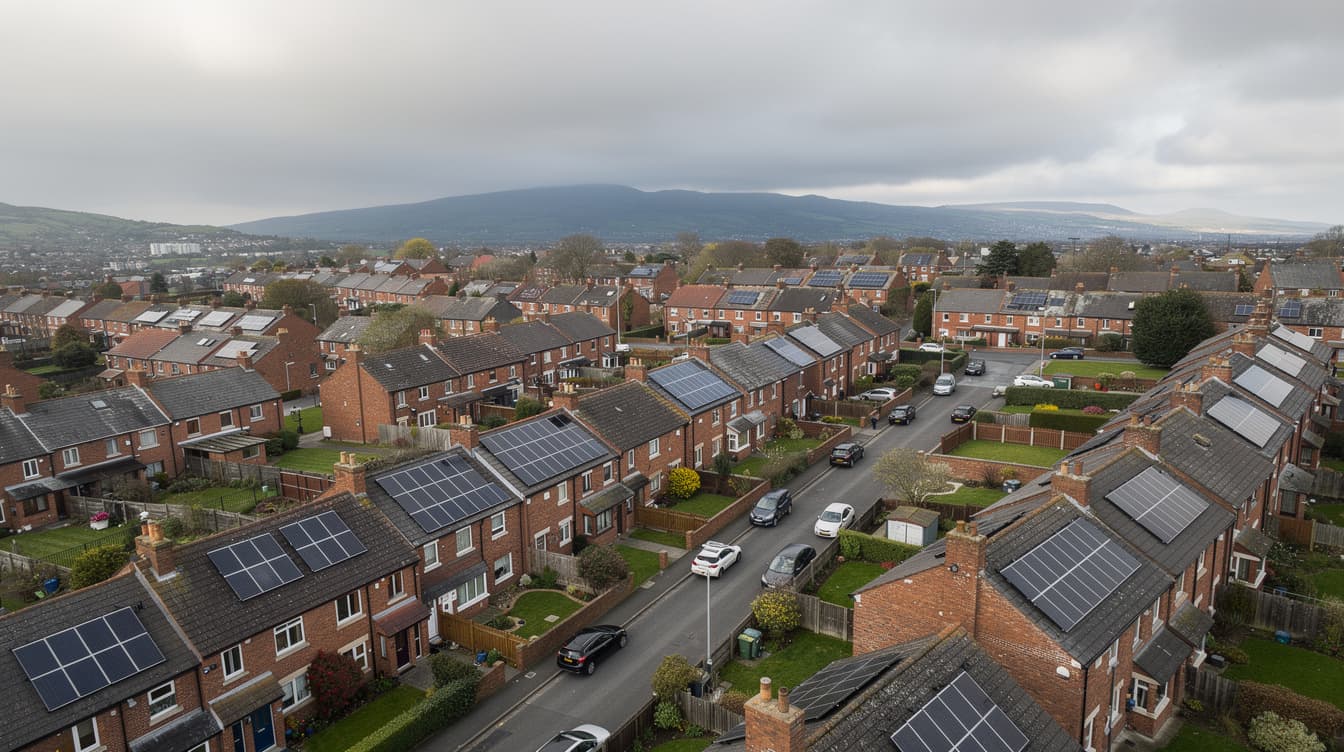
Dublin is Ireland's solar-panel capital. More SEAI-registered installers operate here than in any other county, more homes have gone solar in Dublin than anywhere else, and the typical Dublin three-bed semi is almost perfectly sized and oriented for a cost-effective solar PV system. But Dublin also has quirks — tight terraces, Georgian conservation areas, planning nuances from Dublin City Council versus South Dublin, Dún Laoghaire-Rathdown and Fingal, and a pricing market where the gap between installers can exceed €2,500 on the same job.
This guide walks you through exactly what solar panel installation in Dublin looks like in 2026: the real costs by house type, yield figures specific to Dublin's latitude and cloud cover, planning rules you actually need to worry about, and how to choose between the 100+ installers competing for your business.
Get Three Dublin Installer Quotes in 24 Hours
Compare prices, panel brands and battery options from SEAI-registered Dublin installers — no cost, no obligation.
How Much Solar Panels Cost in Dublin in 2026
Dublin pricing runs roughly 5–10% higher than rural counties like Roscommon or Leitrim because installer overheads (vans, insurance, labour) are higher in the capital. Against that, strong competition between 100+ registered installers keeps the average quote competitive, and most Dublin installs don't need specialist rigging or long travel days.
Here's what an average Dublin home actually pays in April 2026, after the €1,800 SEAI solar grant is applied:
| House Type | Typical System | Before Grant | After €1,800 Grant | Annual Output |
|---|---|---|---|---|
| 2-bed Dublin terrace | 6–8 panels / 2.6–3.5 kWp | €5,100–€6,600 | €3,300–€4,800 | 2,400–3,200 kWh |
| 3-bed Dublin semi | 10–12 panels / 4.4–5.3 kWp | €7,500–€9,500 | €5,700–€7,700 | 4,000–4,800 kWh |
| 4-bed Dublin detached | 14–18 panels / 6.2–7.9 kWp | €10,200–€13,000 | €8,400–€11,200 | 5,700–7,200 kWh |
| With 5 kWh battery added | +battery only | +€3,800–€5,200 | +€3,800–€5,200 | Raises self-use 25–35% |
A few things worth flagging about these numbers. First, the SEAI grant is capped at €1,800 and requires a minimum 2 kWp system size — so anything smaller than six 440W panels won't fully qualify. Second, prices vary by €1,500–€3,000 between installers for the same job, so never accept the first quote. And third, batteries no longer attract an SEAI grant separately — you only get the €1,800 towards the panels.
How Much Electricity Solar Panels Produce in Dublin
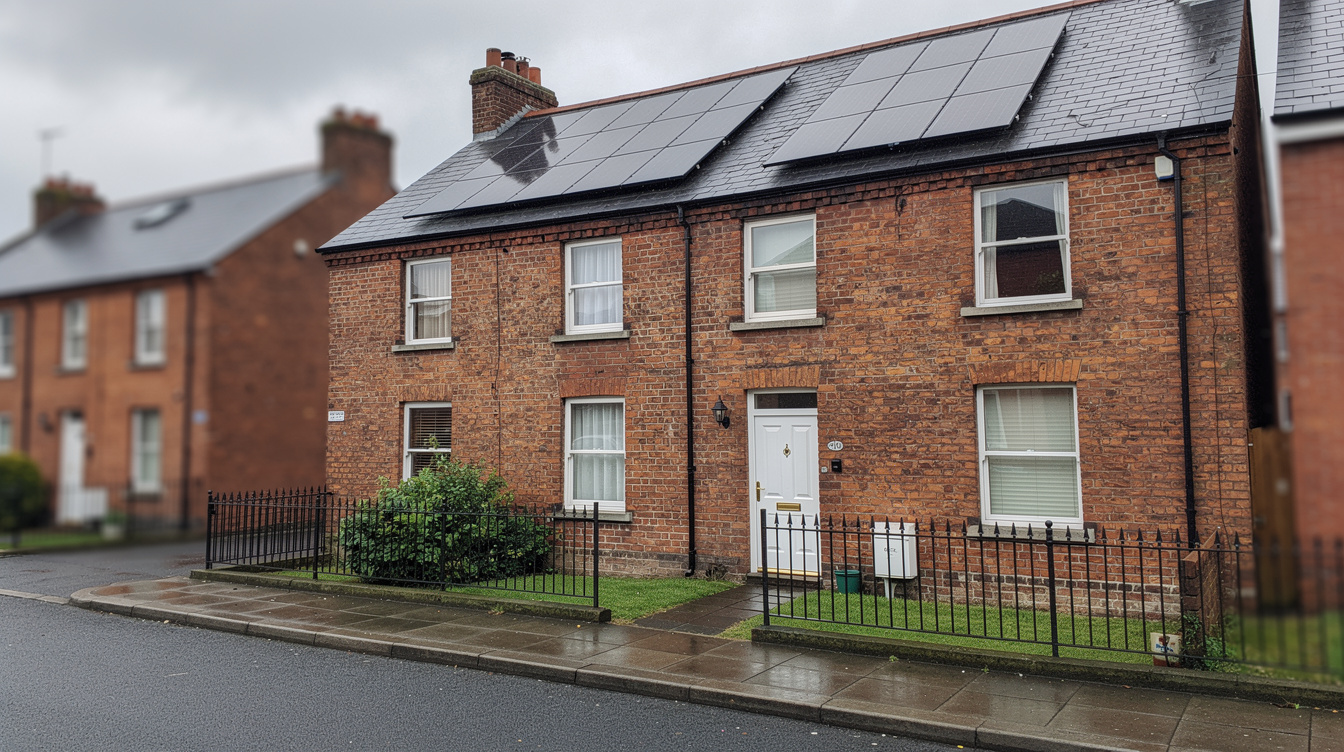
Dublin's latitude is 53.35°N, roughly the same as Manchester, Liverpool and Hamburg. Annual solar irradiance in Dublin averages around 1,000–1,050 kWh/m²/year, slightly better than the Irish midlands because Dublin is on the drier east coast with less cloud cover than the Atlantic-facing west.
For a south-facing pitched roof with no shading, expect roughly 915 kWh per kWp installed per year in Dublin. Here's what that actually means:
- A 4.4 kWp system (10 x 440W panels) generates ~4,000 kWh/year in Dublin — about 95% of the annual electricity consumption of a typical 3-bed semi.
- Output ranges from ~120 kWh/month in December to ~550 kWh/month in June. You won't be self-sufficient in winter, but you'll cover most of your daytime usage from March through October.
- Roof orientation matters less than most Dubliners think. A south-facing Dublin roof produces 100%, east- or west-facing produces 80–85%, and south-east/south-west produces 92–96%. See our full Irish roof orientation guide for numbers by bearing.
Dublin's microclimate helps too — we get slightly more sunshine hours per year than Galway or Cork, and the urban heat island effect means winter panel performance holds up better than in rural open sites.
Planning Permission for Solar Panels in Dublin
This is the question Dubliners ask most. The short answer: for the vast majority of Dublin homes, you do not need planning permission to install solar panels. Since 7 October 2022, the Irish government removed the previous 12 m² and "50% of roof area" limits that used to apply. Rooftop solar is now fully exempt development on houses.
But there are three Dublin-specific exceptions to watch for:
1. Architectural Conservation Areas (ACAs)
If your home is in a designated ACA — and Dublin has many, including large parts of Ranelagh, Rathmines, Drumcondra, Clontarf, Howth, Dalkey and inner south-city Victorian terraces — exemption may not apply. In practice this usually means panels can still be fitted but on rear-facing roofs only, with a Section 5 declaration from Dublin City Council confirming exempt status before you proceed.
2. Protected Structures
Listed buildings or protected structures (including many Georgian and Victorian Dublin houses and some inter-war homes) always require planning permission for solar panels. The planners are generally willing to grant it for panels that aren't visible from the street, but the application takes 8–12 weeks.
3. Apartment Blocks and Shared Roofs
Most Dublin apartment blocks sit under a management company. Even if roof solar is technically allowed, you'll need the management company's consent, and the system is usually best treated as a block-wide project rather than individual installs.
For a standard Dublin semi-d or detached house outside any ACA, no paperwork is required — your installer just fits the panels and you go live. Planning queries can be confirmed with the relevant local authority: Dublin City Council, South Dublin County Council, Dún Laoghaire-Rathdown, or Fingal County Council.
Not sure if your Dublin home qualifies?
An experienced Dublin installer will check ACA and protected-structure status as part of your free site survey.
What to Look for in a Dublin Solar Installer
Dublin has over 100 SEAI-registered installers on the books. That's great for competition, but it also means the quality range is wide — from experienced electrical contractors with a full in-house crew, to sales-led outfits subcontracting the work to whoever is available that week. Here's what matters:
- SEAI Registration — Non-negotiable. Without it, you lose the €1,800 grant. Check the SEAI Approved Installer list before signing anything.
- Safe Electric Ireland (SEI) registration — Separate from SEAI, this covers the electrical side. Every DC isolator, AC isolator, consumer-unit change and G99 grid connection should be signed off by a Safe Electric registered electrician.
- G99 / G98 commissioning experience — Dublin installs must be notified to ESB Networks under the Distribution Code. Good installers do this during commissioning without you lifting a finger. Ask.
- Local track record — Ask for three Dublin customer references installed within the last 12 months, with contact details. A Dublin installer who hesitates is hiding something.
- In-house team vs subcontractor — Directly employed crews tend to deliver better quality. Ask, "Will the people in my house be employees or subcontractors?"
Our directory of vetted SEAI-registered installers includes Dublin specialists serving every postcode from D1 to D24 and the surrounding commuter belt into Kildare, Meath and Wicklow.
Payback Time for Dublin Homes
Dublin's combination of decent irradiance, relatively high retail electricity prices (35–42c/kWh in 2026) and the €1,800 SEAI grant produces the best payback numbers in Ireland. Here's a realistic 3-bed Dublin semi with a 4.4 kWp system:
| Metric | Value |
|---|---|
| System size | 4.4 kWp (10 x 440W Jinko Tiger Neo) |
| Cost after SEAI grant | €6,600 |
| Annual generation | 4,000 kWh |
| Self-consumption (no battery) | 30% = 1,200 kWh @ €0.38/kWh = €456 |
| Export (CEG @ €0.20/kWh) | 2,800 kWh x €0.20 = €560 |
| Year 1 savings + export | €1,016 |
| Payback | ~6.5 years |
Add a 5 kWh battery and self-consumption jumps to 55–65%, which pushes year-one returns above €1,200 and payback inside 8 years on the full system cost including the battery. See our Clean Export Guarantee guide for a breakdown of supplier-by-supplier export rates.
Installation Process: What Actually Happens on the Day
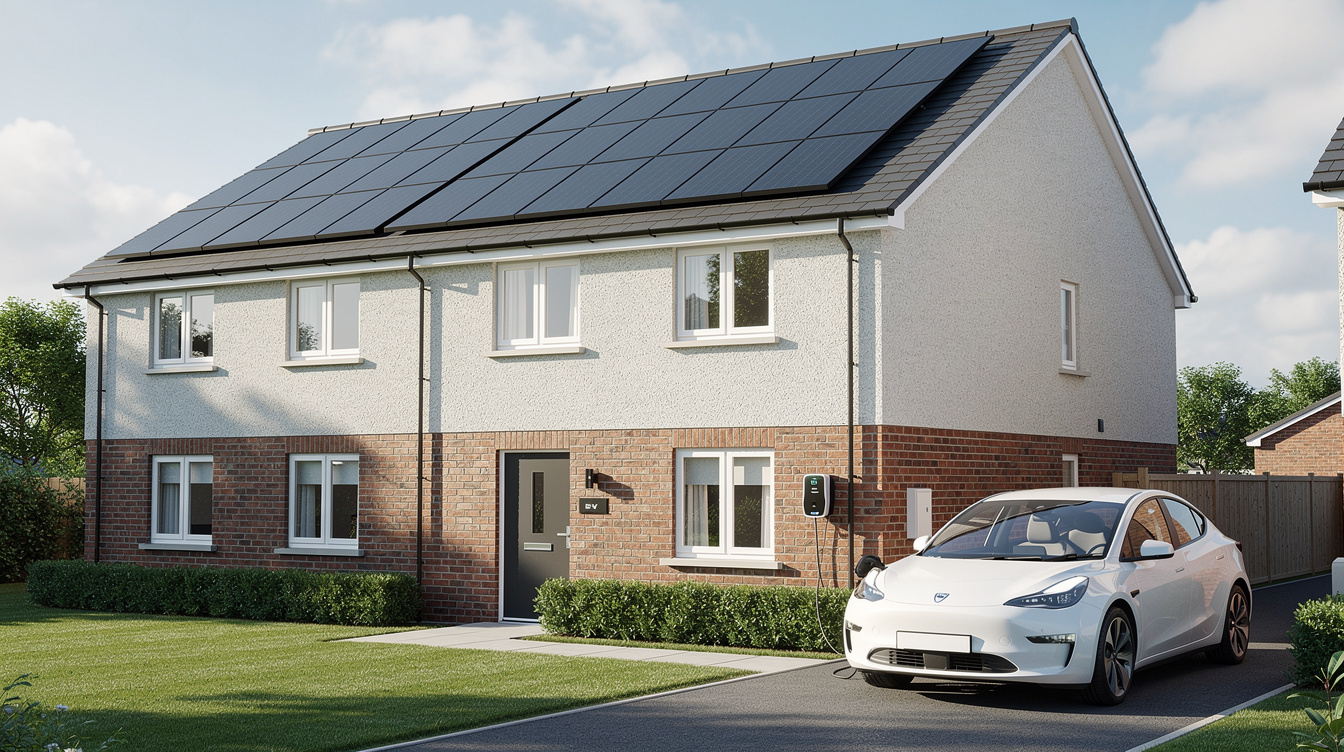
A standard Dublin 10-panel install takes one day on site. Here's the sequence, based on dozens of installs our readers have been through:
- Site survey (week 0) — Installer visits your home, measures the roof, checks the consumer unit, confirms SEAI grant eligibility. Usually free.
- Grant application (week 1–2) — You apply to SEAI online; approval takes roughly 2–3 weeks. Work cannot start before approval.
- Scaffolding erected (install day -1) — Most Dublin semi-ds need a day of scaffolding for roof access. Terraces can sometimes be done from a mobile tower.
- Install day (~8 hours) — Mounting rails fitted to the rafters, panels lifted up, inverter installed (usually in the attic or utility room), DC and AC cable run, isolators fitted, consumer unit tie-in completed.
- Commissioning & ESB notification — The installer notifies ESB Networks under G99/G98, and you sign the SEAI Declaration of Works. The system is live the same day.
- Grant paid (week 2–6 post-install) — SEAI pays the €1,800 directly to your bank account after the Declaration of Works is submitted.
- CEG registration — Contact your electricity supplier (Electric Ireland, Bord Gáis, Energia, SSE Airtricity) to register for Clean Export Guarantee payments. Your first export credit should arrive within 2–3 billing cycles.
Total time from "yes to the quote" to "generating electricity" is typically 4–8 weeks in Dublin, depending on installer backlog and SEAI processing times.
Frequently Asked Questions
How much do solar panels cost for a 3-bed semi in Dublin?
A standard 4.4 kWp system (10 panels) costs €7,500–€9,500 before the SEAI grant, or €5,700–€7,700 after. Adding a 5 kWh battery pushes the total to roughly €9,500–€12,900 after grant.
Do I need planning permission for solar panels in Dublin?
No, for almost all homes. Since October 2022, rooftop solar is fully exempt development on Irish houses. Exceptions: Architectural Conservation Areas, protected structures (listed buildings), and shared apartment roofs — those do require additional permission or Section 5 declarations.
How much electricity will solar panels produce in Dublin?
Expect roughly 915 kWh per kWp per year on a south-facing Dublin roof. A 4.4 kWp system generates around 4,000 kWh/year — enough to cover 85–95% of a typical 3-bed semi's annual consumption, though winter months rely on grid backup.
Which Dublin postcodes have the best solar yield?
There's minimal variation within Dublin — all postcodes see 900–940 kWh/kWp/year. South Dublin (D6, D14, D16, D18) and south county (Dalkey, Killiney, Foxrock) marginally edge out the northside for sunshine hours, but roof pitch and orientation matter 10x more than postcode.
Can I get solar panels on a Dublin city centre terrace?
Usually yes, but with caveats. Check whether your street is in an ACA — many Victorian and Georgian terraces are. If it is, panels generally must be fitted to the rear-facing roof only, which reduces yield by about 15–20% versus a south-facing front roof. Roof pitch, chimney shading and access for scaffolding also matter more on terraces.
How long does a solar panel installation take in Dublin?
On-site work is one day for a standard 10-panel install. Total timeline from quote acceptance to generating electricity is typically 4–8 weeks, with the SEAI grant approval being the main bottleneck.
Ready to Compare Dublin Installers?
Dublin is one of the easiest and most cost-effective places in Ireland to go solar in 2026. The grant is straightforward, planning is almost always exempt, 100+ installers compete for your job, and the payback numbers are genuinely good. The only decision is choosing the right installer at the right price.
Use our Irish solar calculator to estimate your system size and savings, then request three written quotes from SEAI-registered Dublin installers. Don't accept the first one. The difference between the cheapest and most expensive Dublin quote for the same job is typically €2,000–€3,000 — money in your pocket if you shop around.
Related Articles
Best Solar Panels in Ireland 2026: Top Brands Ranked
The best solar panels for Irish homes in 2026, ranked. Aiko, Jinko, JA Solar, Trina and more compared on efficiency, warranty and pricing.
Are Solar Panels Worth It in Ireland in 2026? We Ran the Numbers (With Real Data)
Are solar panels worth it in Ireland? We break down real costs, savings, payback periods, and ROI for Irish homeowners in 2026. Full analysis with data.
Solar Panels Ireland 2026: The Complete Guide to Costs, Grants, Savings & Installation
Everything you need to know about solar panels in Ireland in 2026. Real costs, SEAI grants, payback periods, best installers, and how much you can save.