
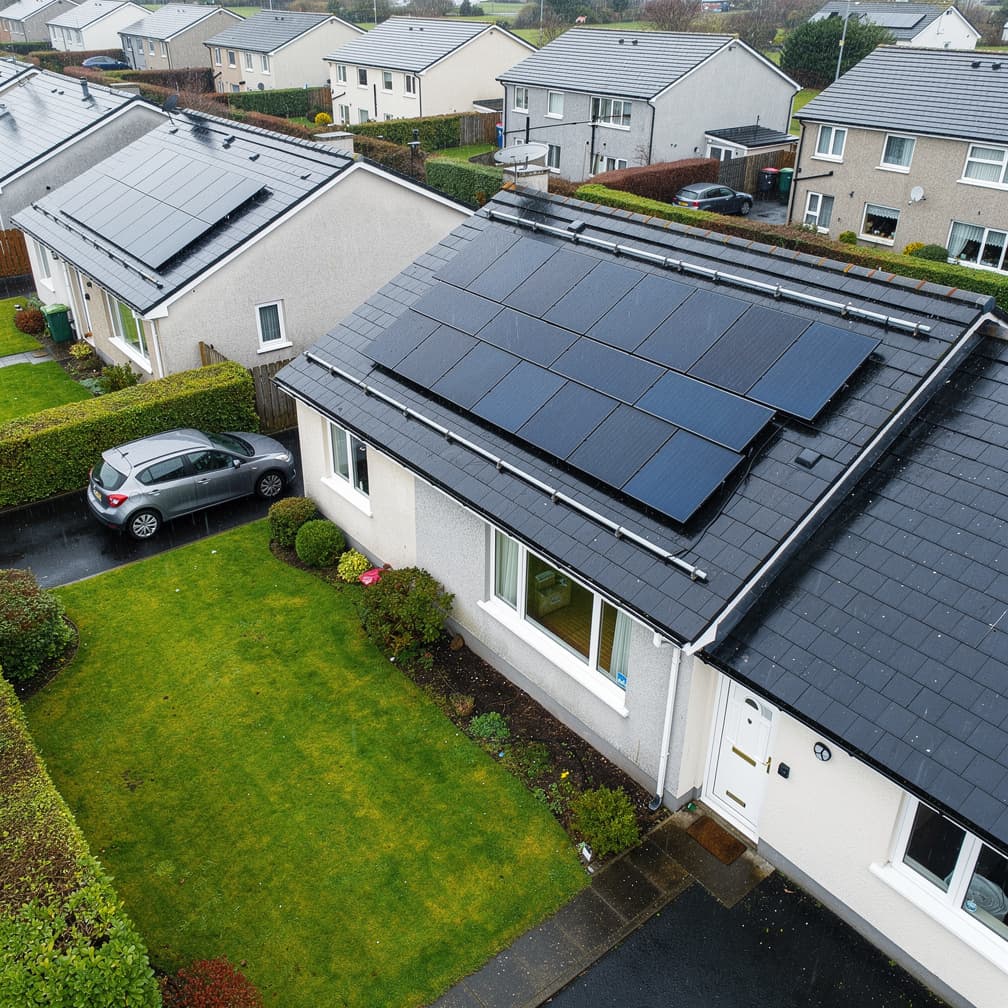
Solar Panels Ireland 2026: The Complete Guide to Costs, Grants, Savings & Installation
If you've searched for "solar panels Ireland" in 2026, you've probably found a confusing mix of outdated articles, vague cost estimates, and generic advice written for the UK or US market. This guide is different. Every figure, regulation, and recommendation on this page is specific to Ireland, updated for 2026, and based on real installation data from Irish homeowners.
Whether you're trying to figure out if solar is worth it, how much it actually costs after the SEAI grant, or which system size is right for your home — this is the only page you need.
Let's get into it.
Ready to Go Solar?
Get your free personalised quote from SEAI-registered installers in Ireland.
How Much Do Solar Panels Cost in Ireland in 2026?
This is the question everyone asks first, so let's answer it with real numbers. Solar panel costs in Ireland have stabilised in 2026 after the supply chain disruptions of previous years. Here's what you can expect to pay for a typical residential installation:
| System Size | Number of Panels | Gross Cost (Before Grant) | SEAI Grant | Net Cost (After Grant) | Typical Annual Savings |
|---|---|---|---|---|---|
| 2 kWp | 5 panels | €4,500 – €5,500 | €900 | €3,600 – €4,600 | €350 – €450 |
| 3 kWp | 7–8 panels | €6,000 – €7,500 | €1,200 | €4,800 – €6,300 | €500 – €650 |
| 4 kWp | 10 panels | €7,500 – €9,500 | €1,800 | €5,700 – €7,700 | €650 – €850 |
| 5 kWp | 12–13 panels | €9,000 – €11,500 | €2,100 | €6,900 – €9,400 | €800 – €1,050 |
| 6 kWp+ | 15+ panels | €10,500 – €14,000 | €2,400 | €8,100 – €11,600 | €950 – €1,300 |
These prices include panels, inverter, mounting hardware, wiring, commissioning, and VAT at 0% (zero-rate VAT on solar installations continues in 2026). They do not include battery storage, which we'll cover below.
The most popular system size for Irish homes is 4 kWp, which typically covers a 3–4 bedroom semi-detached house with average electricity consumption of around 4,200 kWh per year.
Want to see exactly what a system would cost for your specific home? Use our free solar panel calculator to get an instant estimate based on your roof, location, and usage.
The SEAI Solar PV Grant in 2026: How It Works
The Sustainable Energy Authority of Ireland (SEAI) continues to offer grants for domestic solar PV installations in 2026. Here's exactly how the grant structure works:
- First 2 kWp: €900 (€450 per kWp)
- Remaining capacity (2–4 kWp): €300 per kWp
- Maximum grant: €2,400 (for systems of 4 kWp or larger)
Key eligibility requirements:
- Your home must have been built and occupied before 2021
- You must use an SEAI-registered installer (this is non-negotiable)
- You need a BER assessment before and after installation
- The system must be connected to the ESB Networks grid
The grant is applied for by your installer on your behalf after the work is complete. You pay the full amount upfront and receive the grant payment directly from SEAI, typically within 4–8 weeks. For a full walkthrough of the application process, see our SEAI solar grant guide.
Are Solar Panels Worth It in Ireland in 2026?
This is the second most common question, and the honest answer is: yes, for most homeowners, but with caveats. Let's look at the real economics.
The Payback Calculation
For a typical 4 kWp system:
- Net cost after SEAI grant: ~€6,500
- Annual electricity savings: ~€750 (assuming 40% self-consumption, €0.35/kWh electricity rate)
- Annual export income (Clean Export Guarantee): ~€80–€120 (exporting surplus at ~€0.185/kWh)
- Total annual benefit: ~€850–€870
- Simple payback period: ~7.5 years
With panel warranties of 25–30 years and a system lifespan well beyond that, you're looking at 17+ years of essentially free electricity after the payback period.
The economics improve significantly if you:
- Work from home (higher daytime consumption = more self-consumption)
- Have an electric vehicle (charge during solar production hours)
- Add a battery storage system to use more of what you generate
- Use a solar diverter to heat your water with excess energy
When Solar Might NOT Be Worth It
To be completely honest, solar isn't for everyone:
- North-facing roofs only: If your only viable roof space faces due north, your output will be significantly reduced. See our guide on panel orientation.
- Heavy shading: Trees, chimneys, or adjacent buildings that shade your roof for most of the day will hurt performance. Read more on how shading affects output.
- Very low electricity usage: If your bills are already under €500/year, the payback period stretches out considerably.
- Planning to move soon: While solar panels do add value to your home, you'll benefit most from long-term ownership.
How Much Electricity Do Solar Panels Produce in Ireland?
Ireland isn't the Sahara, but solar works surprisingly well here. Ireland receives between 900 and 1,100 kWh of solar irradiance per square metre per year, depending on location (the southeast gets the most, the northwest the least).
Here's what you can realistically expect from different system sizes:
| System Size | Annual Output (Ireland Average) | % of Typical Home Usage (4,200 kWh) |
|---|---|---|
| 2 kWp | 1,800 – 2,000 kWh | 43–48% |
| 3 kWp | 2,700 – 3,000 kWh | 64–71% |
| 4 kWp | 3,600 – 4,000 kWh | 86–95% |
| 5 kWp | 4,500 – 5,000 kWh | 107–119% |
| 6 kWp | 5,400 – 6,000 kWh | 129–143% |
For a detailed breakdown including seasonal variation and winter performance, check our average solar panel output in Ireland article.
Important: generating 100% of your annual usage doesn't mean you'll never buy electricity again. Solar output is seasonal — you'll generate roughly 70% of your annual total between April and September, and much less in winter. That's why self-consumption rate (how much you use directly vs. export) is the key metric for savings. For more on winter output, see our winter solar performance guide.
Find Out What Solar Would Save You
Use our free calculator to estimate your savings based on your roof and location.
Selling Electricity Back to the Grid: The Clean Export Guarantee
Since 2022, Irish homeowners with solar panels can sell surplus electricity back to the grid through the Clean Export Guarantee (CEG). In 2026, the rates vary by supplier but typically range from €0.15 to €0.24 per kWh exported.
Here's how the main electricity suppliers compare for export payments:
| Supplier | Export Rate (2026) | Notes |
|---|---|---|
| Electric Ireland | €0.185/kWh | Available on most plans |
| SSE Airtricity | €0.18/kWh | Solar buyback tariff |
| Bord Gáis Energy | €0.185/kWh | Requires smart meter |
| Energia | €0.21/kWh | Higher rate, check terms |
| Panda Power / Flogas | €0.15 – €0.18/kWh | Varies by plan |
You must have a smart meter installed (by ESB Networks, free of charge) to participate in the CEG. For a full explanation, see our Clean Export Guarantee guide and our article on selling electricity back to the grid.
Pro tip: Don't oversize your system just for export income. At current rates, you earn roughly half per kWh exported compared to what you save by using electricity directly. Maximising self-consumption is always the better strategy.
Should You Add a Battery?
Battery storage is the most debated topic in Irish solar. Here's the reality in 2026:
| Battery | Capacity | Cost (Installed) | SEAI Grant | Net Cost |
|---|---|---|---|---|
| Tesla Powerwall 3 | 13.5 kWh | €9,500 – €11,500 | €0* | €9,500 – €11,500 |
| Huawei LUNA 2000 (10 kWh) | 10 kWh | €6,500 – €8,000 | €0* | €6,500 – €8,000 |
| GivEnergy All-in-One | 9.5 kWh | €6,000 – €7,500 | €0* | €6,000 – €7,500 |
| BYD HVS (5.1 kWh) | 5.1 kWh | €3,500 – €4,500 | €0* | €3,500 – €4,500 |
*The SEAI battery grant (previously €600 per kWh up to €1,800) was folded into the overall solar PV grant. There is currently no separate standalone battery-only grant. Check SEAI's website for the latest.
A battery increases your self-consumption from a typical 35–45% (without battery) to 70–85% (with battery). However, the payback period on the battery component alone is typically 10–14 years, compared to 6–8 years for panels only.
Our recommendation: if budget allows, a battery is a good long-term investment, especially if you have an EV or use a lot of evening electricity. If budget is tight, start with panels only — you can always add a battery later. For the full analysis, read our battery worth it guide and our best solar batteries in Ireland comparison.
How to Choose a Solar Installer in Ireland
This is where many homeowners go wrong. The installer matters as much as the equipment. Here's what to look for:
- SEAI registration: Non-negotiable. Only SEAI-registered installers can process your grant. Check the SEAI registered installer list.
- Safe Electric certification: Your installer must be a Registered Electrical Contractor (REC) with Safe Electric.
- MCS or equivalent certification: Ensures they meet Microgeneration Certification Scheme standards.
- Track record: Ask for references, check Google reviews, and look for completed installations in your area.
- Warranty support: Ensure they offer workmanship warranty (minimum 2 years, ideally 5–10) on top of manufacturer panel/inverter warranties.
- Detailed quotation: A proper quote should itemise panels, inverter, mounting, labour, BER assessment, and SEAI grant processing.
Browse our directory of solar installation companies across Ireland to find vetted installers in your county.
Planning Permission for Solar Panels in Ireland
Good news: most residential solar installations in Ireland are exempt from planning permission under the 2022 updated planning exemptions. You do NOT need planning permission if:
- Total panel area does not exceed 50 m² (roughly 25 panels)
- Panels are mounted flush to the roof or on a flat roof
- Ground-mounted arrays don't exceed 25 m² and are behind the building line
- The house is not a protected structure
- You are not in an Architectural Conservation Area (ACA)
For a full breakdown, see our planning permission exemptions guide. Most standard 4–6 kWp systems (10–15 panels) fall well within the exemption limits.
Solar Panels and Your BER Rating
Installing solar panels will improve your home's Building Energy Rating (BER). A typical 4 kWp system can improve your BER by one to two grades — for example, from C2 to B2. This matters because:
- A better BER increases your property value
- BER is increasingly required for rental properties (minimum B2 by 2030 for new leases)
- Some mortgage providers offer green mortgage rates for high-BER homes
For more detail, read our guide on how solar affects your BER rating.
Get Your Free Solar Quote
Tell us about your home and we'll connect you with SEAI-registered installers.
Step-by-Step: How Solar Installation Works in Ireland
If you've never been through the process, here's exactly what happens from start to finish:
- Get a quote: Submit your details and receive a personalised assessment.
- Site survey: Your installer visits your home to inspect the roof, electrics, and meter.
- Proposal and contract: You receive a detailed system design with equipment specifications, price, and projected output.
- Pre-installation BER: A BER assessor rates your home before the solar installation.
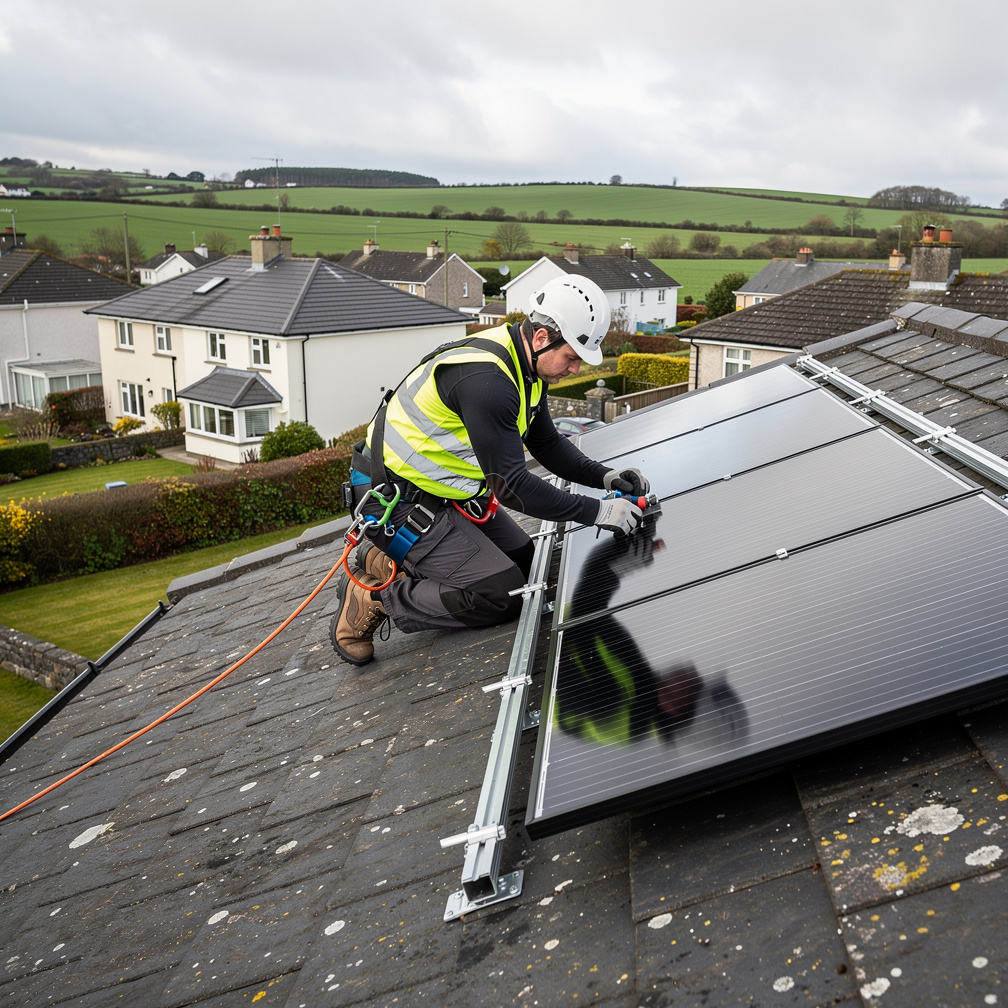
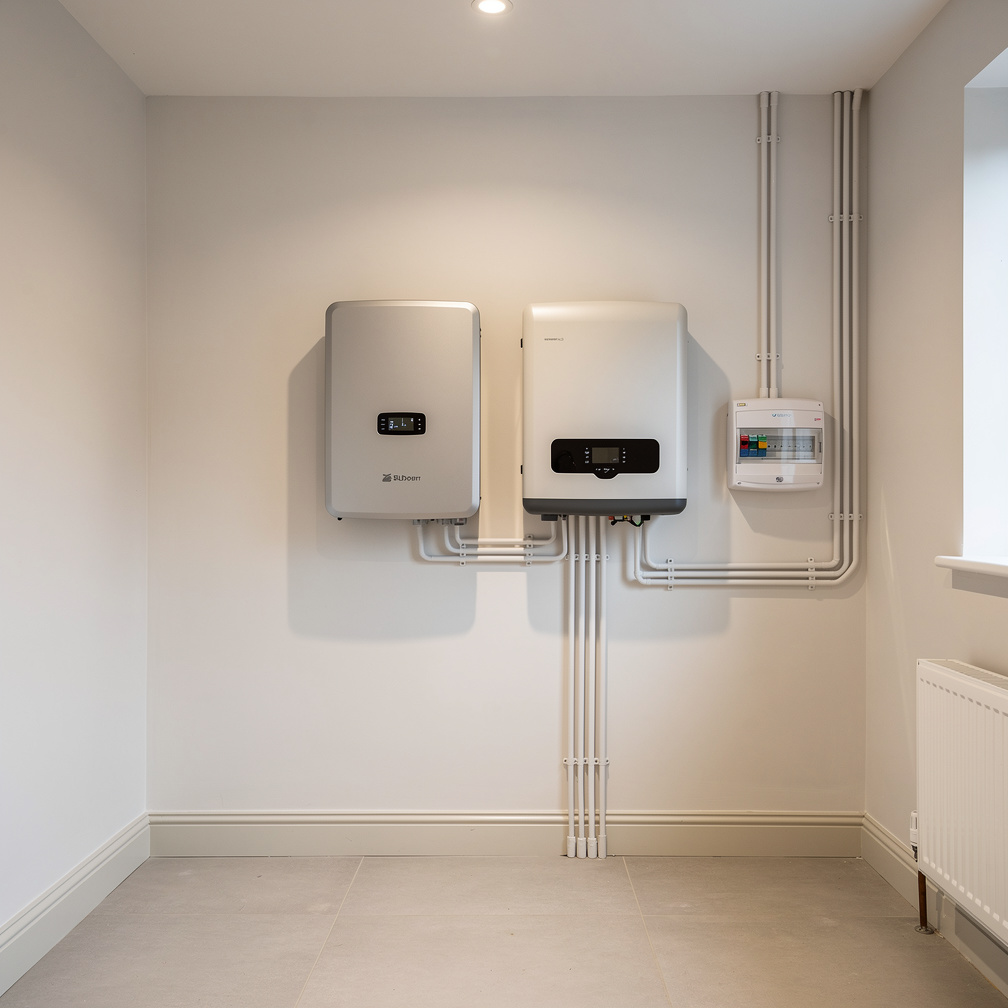
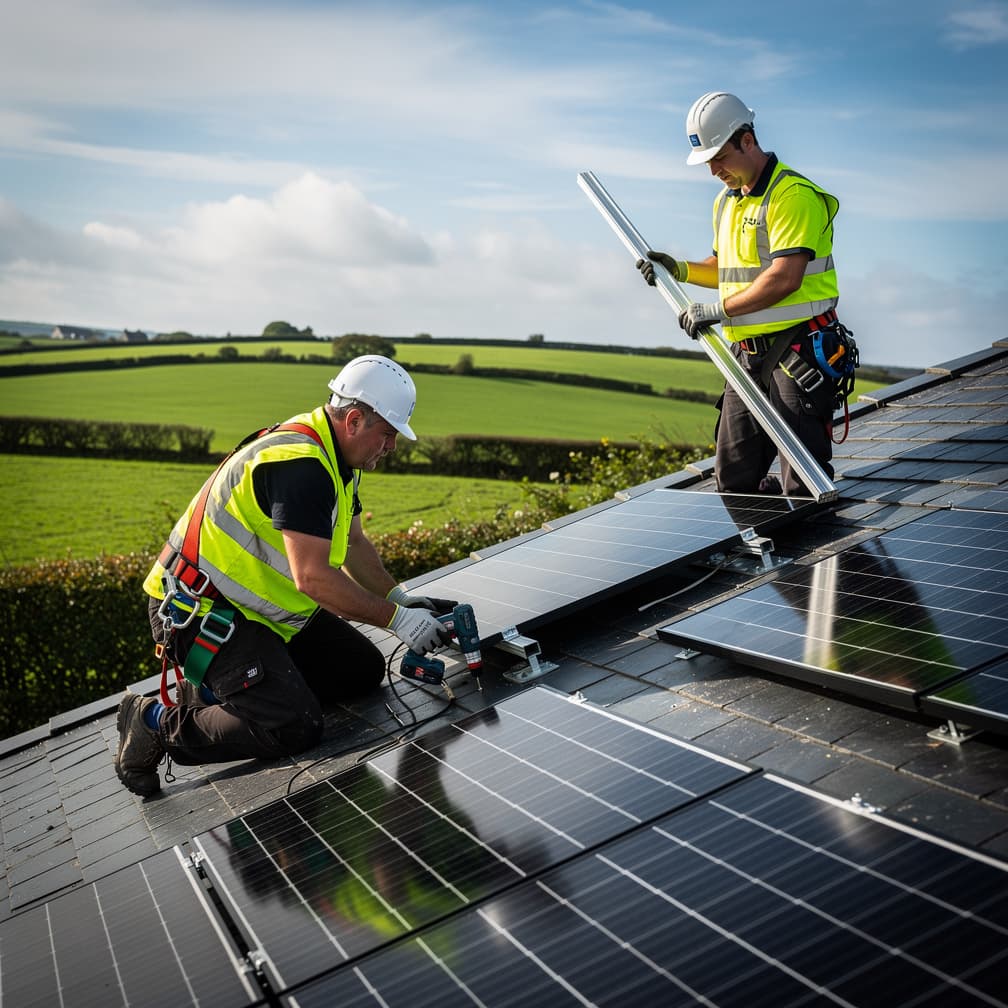
- Installation day: Most systems are installed in 1 day (occasionally 2 for larger systems with batteries). Panels are mounted, the inverter is installed, and everything is wired into your consumer unit.
- ESB Networks notification: Your installer submits an NC6 form to ESB Networks to register your microgeneration.
- Smart meter: ESB Networks installs a smart meter (if you don't already have one) — free of charge.
- Post-installation BER: A second BER assessment is done.
- SEAI grant claim: Your installer submits the grant application. Payment usually arrives in 4–8 weeks.
- CEG registration: Contact your electricity supplier to activate export payments.
The entire process from first contact to a fully operational system typically takes 4–8 weeks, depending on installer availability.
Top Tips to Maximise Your Solar Investment
- Run heavy appliances during the day: Set your washing machine, dishwasher, and tumble dryer to run between 10am and 4pm when solar output is highest.
- Consider a solar diverter: A device like an Eddi or SolarEdge diverter sends surplus electricity to your immersion heater, giving you free hot water.
- Use timers and smart plugs: Automate appliance schedules to align with peak generation.
- Monitor your system: Most inverters come with monitoring apps. Check your production and consumption regularly to optimise behaviour.
- Keep panels clean: While rain does most of the work in Ireland, periodic cleaning prevents build-up from seagulls, tree sap, and pollen.
Frequently Asked Questions
How many solar panels do I need for a 3-bed semi in Ireland?
A typical 3-bed semi-detached house in Ireland uses approximately 4,000–4,500 kWh of electricity per year. A 4 kWp system (10 panels) is the most common recommendation, generating around 3,600–4,000 kWh annually. This costs approximately €5,700–€7,700 after the SEAI grant. Use our solar calculator for a personalised estimate, or read our detailed guide on how many panels you need.
Do solar panels work in Ireland's cloudy weather?
Yes. Solar panels work with daylight, not direct sunshine. While Ireland gets less irradiance than southern Europe, modern panels are highly efficient in diffused light conditions. A well-installed system in Ireland will produce 900–1,000 kWh per kWp per year. Germany, which has similar solar irradiance to Ireland, is one of the world's largest solar markets. Read more in our article on solar panels in Irish weather.
Can I install solar panels myself in Ireland to save money?
Technically you can install panels yourself, but you will not qualify for the SEAI grant, and the electrical connection must be completed by a registered electrician. DIY installations also void most manufacturer warranties and may cause issues with your home insurance. For most homeowners, professional installation is the better option. See our DIY solar guide for more detail, or read about the legalities.
How long do solar panels last in Ireland?
Modern solar panels come with 25–30 year performance warranties and typically degrade at a rate of only 0.3–0.5% per year. This means after 25 years, your panels should still be producing around 85–90% of their original output. The inverter will likely need replacing once during the panel lifetime (after 10–15 years, costing €1,000–€2,000). For a comprehensive breakdown, see our solar panel lifespan guide.
What is the best direction for solar panels in Ireland?
Due south is optimal, but panels facing southeast or southwest perform within 5–10% of a south-facing array. Even east-west split systems work well, producing around 80–85% of a south-facing equivalent, and can actually improve self-consumption by spreading generation across morning and evening. North-facing roofs should generally be avoided. See our panel direction guide and our east-west facing roof article.
Related Articles
Solar Panel Costs Ireland 2026: Complete Price Breakdown by System Size
How much do solar panels cost in Ireland in 2026? From €4,600 for 2.6kWp to €13,500 for 8.8kWp before grants. After SEAI grant: €3,100–€11,700. Full cost breakdown, brand comparison, ROI calculator, and what to look for in quotes.
SEAI Solar Panel Grant 2026: How to Apply, Eligibility & Step-by-Step Guide
The SEAI solar panel grant gives Irish homeowners up to €1,800 towards solar PV installation in 2026. Landlords now eligible. Complete step-by-step application guide, eligibility rules, documentation, and common mistakes to avoid.
SEAI Solar Panel Grant 2026: How Much, Who Qualifies & How to Apply
How to get the €1,800 SEAI solar panel grant in 2026. Eligibility, step-by-step application, what you need, common mistakes, and how long it takes to get paid.