
Solar Panel Costs Ireland 2026: Complete Price Breakdown by System Size
Solar panels in Ireland cost €6,100–€9,300 for a typical 3.5–4.4 kWp system in 2026. After the SEAI grant of up to €1,800, your net cost is €4,300–€7,500. With 0% VAT, annual savings of €850–€1,050, and payback periods of 5–7 years, solar has never been more affordable for Irish homeowners. This guide breaks down every cost, compares brands, and shows you exactly what to expect.
Solar panel prices in Ireland have fallen dramatically since 2022. Systems that cost €12,000–€15,000 three years ago now cost €7,000–€10,000 thanks to oversupply of panels from Chinese manufacturers, 0% VAT, and a maturing installer market. Combined with the SEAI grant and the Clean Export Guarantee, the financial case for solar has never been stronger.
But prices still vary by 15–25% between installers for equivalent systems, and not every quote includes the same things. This guide gives you the real numbers so you can compare quotes with confidence.
Solar Panel Prices by System Size (2026)
| System Size | Panels | Cost Before Grant | SEAI Grant | Your Net Cost |
|---|---|---|---|---|
| 2.6 kWp | 6 | €4,600–€5,500 | €1,500 | €3,100–€4,000 |
| 3.5 kWp | 8 | €6,100–€7,350 | €1,700 | €4,400–€5,650 |
| 4.4 kWp | 10 | €7,300–€9,300 | €1,800 | €5,500–€7,500 |
| 5.3 kWp | 12 | €8,900–€10,800 | €1,800 | €7,100–€9,000 |
| 6.2 kWp | 14 | €10,200–€12,000 | €1,800 | €8,400–€10,200 |
| 7.0 kWp | 16 | €10,000–€13,500 | €1,800 | €8,200–€11,700 |
| 8.8 kWp | 20 | €13,500–€15,400 | €1,800 | €11,700–€13,600 |
All prices include 0% VAT (which applies to all residential solar PV installations in Ireland since May 2023). The SEAI grant caps at €1,800 for systems of 4 kWp and above.
The average cost per kWp installed is approximately €1,750 before the grant. This is a useful benchmark when comparing quotes — if an installer is quoting significantly above €2,000/kWp, ask why.
What Does the Price Include?
A standard solar panel installation quote should include:
| Component | Cost (4.4 kWp system) | % of Total |
|---|---|---|
| Solar panels (10 × 440W) | €2,500–€3,500 | 35–40% |
| Hybrid inverter | €1,200–€1,800 | 15–20% |
| Mounting system and cabling | €800–€1,200 | 10–15% |
| Installation labour | €1,500–€2,000 | 20–25% |
| BER assessment | €150–€300 | 2–4% |
What Should Be Included (Always Check)
- Panels, inverter, and all mounting hardware
- All electrical work and cabling
- Commissioning and system testing
- NC6 form submission to ESB Networks
- Generation meter
- Post-works BER assessment
- SEAI grant paperwork
What Is Often Extra (Ask)
- Scaffolding: €500–€1,500 for slate roofs, multi-storey, or difficult access
- Battery storage: €3,000–€10,000 depending on capacity
- Power diverter: €300–€600 (diverts excess solar to immersion)
- Flat roof tilt frames: €500–€1,000
- EV charger: €800–€1,500 installed
Solar Panel Brands Available in Ireland
All major brands now use N-type TOPCon technology with 440W+ panels as standard. Here are the most common brands installed in Ireland:
| Brand | Typical Panel | Efficiency | Product Warranty | Performance Warranty | Tier |
|---|---|---|---|---|---|
| Jinko Solar | Tiger Neo 440W | 22.3% | 25 years | 30 years | Most popular in Ireland |
| JA Solar | DeepBlue 4.0 440W | 22.4% | 25 years | 30 years | Excellent low-light |
| Trina Solar | Vertex S+ 445W | 22.5% | 25 years | 25 years | Strong track record |
| Canadian Solar | TOPHiKu6 450W | 22.8% | 25 years | 30 years | Good value |
| Aiko Solar | Neostar 470W | 23.5% | 25 years | 30 years | Highest efficiency, premium |
| Hyundai | TNC 2.0 440W | 21.8% | 25 years | 25 years | Korean made, premium |
| Leapton | LP182 440W | 22.0% | 25 years | 25 years | Budget Tier 1 |
Our take: For most Irish homes, Jinko, JA Solar, or Trina are the sweet spot — excellent quality, proven reliability, and the most competitive pricing. Premium brands like Aiko and Hyundai command a 20–30% price premium for marginal efficiency gains that rarely justify the extra cost in Irish conditions.
Inverter Costs: String vs Micro-Inverter
The inverter converts DC power from your panels to AC power for your home. It is the second most expensive component after the panels themselves.
| Type | Brand | Cost | Warranty | Best For |
|---|---|---|---|---|
| String/Hybrid | Huawei SUN2000 | €1,200–€1,800 | 10 years | Most Irish homes |
| String/Hybrid | Solis Hybrid | €900–€1,400 | 10 years | Budget option |
| String/Hybrid | GoodWe Hybrid | €1,100–€1,600 | 10 years | Mid-range |
| Optimiser-based | SolarEdge | €1,500–€2,500 | 12–25 years | Partially shaded roofs |
| Micro-inverter | Enphase | €2,000–€3,500 | 25 years | Complex/multi-direction roofs |
Recommendation: A Huawei SUN2000 hybrid inverter is the best choice for most Irish homes. It handles solar, battery, and grid export in one unit, is highly efficient, and is competitively priced. Micro-inverters (Enphase) are 15–30% more expensive and only worth it for complex roof layouts with multiple orientations or significant shading.
String inverters typically last 10–15 years and will need replacing once during your panels' 25–30 year lifespan (budget approximately €1,500 for replacement). Micro-inverters last 25 years but cost more upfront.
Battery Storage Costs
Adding a battery increases self-consumption from approximately 35% to 70%, but adds significant cost:
| Battery Size | Installed Cost | Popular Options |
|---|---|---|
| 5 kWh | €3,000–€5,500 | Huawei LUNA2000, GivEnergy 5.2 kWh |
| 6.5–7 kWh | €4,500–€6,500 | GivEnergy 9.5 kWh, SolaX |
| 10 kWh | €5,000–€8,000 | Huawei LUNA2000 10 kWh, BYD |
| 13.5 kWh | €8,000–€10,000 | Tesla Powerwall 3, GivEnergy AIO2 |
Key VAT rule: Batteries qualify for 0% VAT only when installed with solar panels under the same contract. Adding a battery later under a separate contract attracts 23% VAT — an extra €800–€1,500 on a typical battery. If you think you might want a battery, include it in your initial installation.
There is no standalone SEAI grant for batteries. The €1,800 grant covers panels only.
For a detailed battery comparison, read our guide: Best Solar Batteries Ireland 2026
How Have Prices Changed?
| Year | Typical 4 kWp System Cost | Key Change |
|---|---|---|
| 2022 | €12,000–€15,000 | High demand, constrained supply |
| 2023 | €9,000–€12,000 | 0% VAT introduced (May 2023) |
| 2024 | €7,500–€10,000 | Panel prices plummeted (oversupply) |
| 2025 | €7,000–€9,500 | Market stabilising |
| 2026 | €7,300–€9,300 | Prices largely flat, mature market |
Solar panel prices have essentially halved since 2022. Further significant drops are unlikely — the hardware is already very cheap, and labour costs (which make up 20–25% of the total) are not falling. If you are waiting for prices to drop further, the savings from generating your own electricity today outweigh any potential future price reduction.
ROI and Payback Period
Here is what you can realistically expect from different system sizes:
| System Size | Net Cost (After Grant) | Annual Savings | Payback Period | 25-Year Return |
|---|---|---|---|---|
| 3.5 kWp | €4,400–€5,650 | €846 | 5–7 years | €21,150 (274% ROI) |
| 4.4 kWp | €5,500–€7,500 | €1,043 | 5–7 years | €26,250 (300%+ ROI) |
| 5.3 kWp | €7,100–€9,000 | €1,269 | 6–7 years | €31,725 (347% ROI) |
| 7.0 kWp | €8,200–€11,700 | €1,720 | 5–7 years | €43,005 (434% ROI) |
Assumptions: electricity at 37c/kWh, 60% self-consumption, CEG export at 21c/kWh, south-facing roof at 30° pitch. First €400/year of export income is tax-free.
Key insight: larger systems deliver better ROI. The marginal cost of additional panels is low (roughly €400–€600 per extra panel) because the fixed costs (inverter, installation, scaffolding, BER) do not increase proportionally. Install as many panels as your roof can fit — even beyond the 4 kWp SEAI grant cap.
How to Compare Solar Quotes
Getting at least 3 quotes is essential. Here is what to look for:
A Good Quote Includes:
- System size in kWp and number of panels
- Panel brand, model, and wattage — avoid quotes that do not name the brand
- Inverter brand and type (string/hybrid/micro)
- Battery details if included (brand, capacity, cost)
- Estimated annual output in kWh for your specific roof
- Itemised cost breakdown (equipment, labour, scaffolding, BER, VAT)
- What is included and excluded
- Warranty details — panels, inverter, and workmanship separately
- SEAI grant deducted or clearly noted
- Installer's SEAI registration number
Red Flags to Watch For
- No site survey before quoting — a serious installer will always visit your property
- Unnamed or vague panel/inverter brands — "Tier 1 panels" without specifying which brand is a warning sign
- High-pressure sales tactics — "this price is only available today" is a classic sign of overpricing
- Prices significantly below market — if a quote is 30%+ cheaper, ask what is being compromised (panel quality, workmanship warranty, scaffolding excluded)
- Not SEAI-registered — check their registration before signing anything
- Large upfront deposit — 10–20% deposit is reasonable; 50%+ before work starts is risky
- No workmanship warranty — good installers offer 10–15 years on their work, on top of the manufacturer's panel warranty
Commercial Solar Costs
For businesses considering solar, the economics are even more compelling thanks to higher electricity consumption, Accelerated Capital Allowances (100% tax write-off in year 1), and the SEAI Non-Domestic Microgen Grant (NDMG):
| System Size | Cost | SEAI NDMG Grant | Net Cost | Payback |
|---|---|---|---|---|
| 10 kWp | €15,000–€20,000 | ~€4,800 | €10,200–€15,200 | 4–7 years |
| 20 kWp | €25,000–€35,000 | ~€6,600 | €18,400–€28,400 | 4–7 years |
| 50 kWp | €50,000–€75,000 | ~€12,600 | €37,400–€62,400 | 4–7 years |
| 100 kWp | €85,000–€130,000 | ~€22,600 | €62,400–€107,400 | 4–7 years |
The NDMG grant scales up to a maximum of €162,600 for large installations. Combined with Accelerated Capital Allowances and 0% VAT, commercial solar often pays back in under 5 years. For farm installations, TAMS 3 grants are also available.
Read more: Commercial Solar Systems in Ireland
Frequently Asked Questions
What is the cheapest solar panel system in Ireland?
The smallest practical system is 2.6 kWp (6 panels) at €4,600–€5,500 before the grant, or €3,100–€4,000 after. However, we recommend at least 3.5–4.4 kWp for most homes — the extra cost is modest but the additional electricity generation and savings are significant.
Is it worth going bigger than 4 kWp?
Yes. The SEAI grant caps at 4 kWp (€1,800), but larger systems still make excellent financial sense. A 5.3 kWp system generates approximately 20% more electricity than 4.4 kWp for only €1,600–€1,500 more. If you have the roof space, maximise your system size.
Why do prices vary so much between installers?
The 15–25% variation comes from: different panel/inverter brands, whether scaffolding is included, regional differences in labour costs, installer margins, and what is included in the quote. Always compare like-for-like and check what is excluded.
Do solar panels cost more on certain roof types?
Yes. Standard pitched tile roofs are cheapest to install on. Slate roofs may require scaffolding and specialist mounting (add €500–€1,500). Flat roofs need tilt frames (add €500–€1,000). Listed or protected buildings may require planning permission and specialist work.
Is there 0% VAT on solar panels in Ireland?
Yes. Since May 2023, the supply and installation of solar PV panels for residential properties is charged at 0% VAT. This applies to panels, inverters, mounting hardware, and installation labour. Battery storage also qualifies for 0% VAT when installed with solar panels under the same contract.
Will solar panel prices drop further?
Unlikely to drop significantly. Panel hardware is already at historic lows. Labour costs make up 20–25% of the installation cost and are not falling. The current price range is likely the new normal. Meanwhile, electricity prices remain high — every month you wait is money spent on grid electricity you could be generating for free.
The Bottom Line
Solar panels in Ireland cost €7,300–€9,300 for a typical 4.4 kWp system (€5,500–€7,500 after the SEAI grant). With annual savings of €1,000+ and payback in 5–7 years, it is one of the best home investments you can make in 2026.
Our advice: install the largest system your roof can fit, get at least 3 quotes from SEAI-registered installers, include a battery if budget allows, and do not wait for prices to drop further — they have already bottomed out.
Get started: Use our Solar Panel Calculator to estimate costs and savings for your home, or browse SEAI-registered installers in your area.
Related Articles
SEAI Solar Panel Grant 2026: How to Apply, Eligibility & Step-by-Step Guide
The SEAI solar panel grant gives Irish homeowners up to €1,800 towards solar PV installation in 2026. Landlords now eligible. Complete step-by-step application guide, eligibility rules, documentation, and common mistakes to avoid.
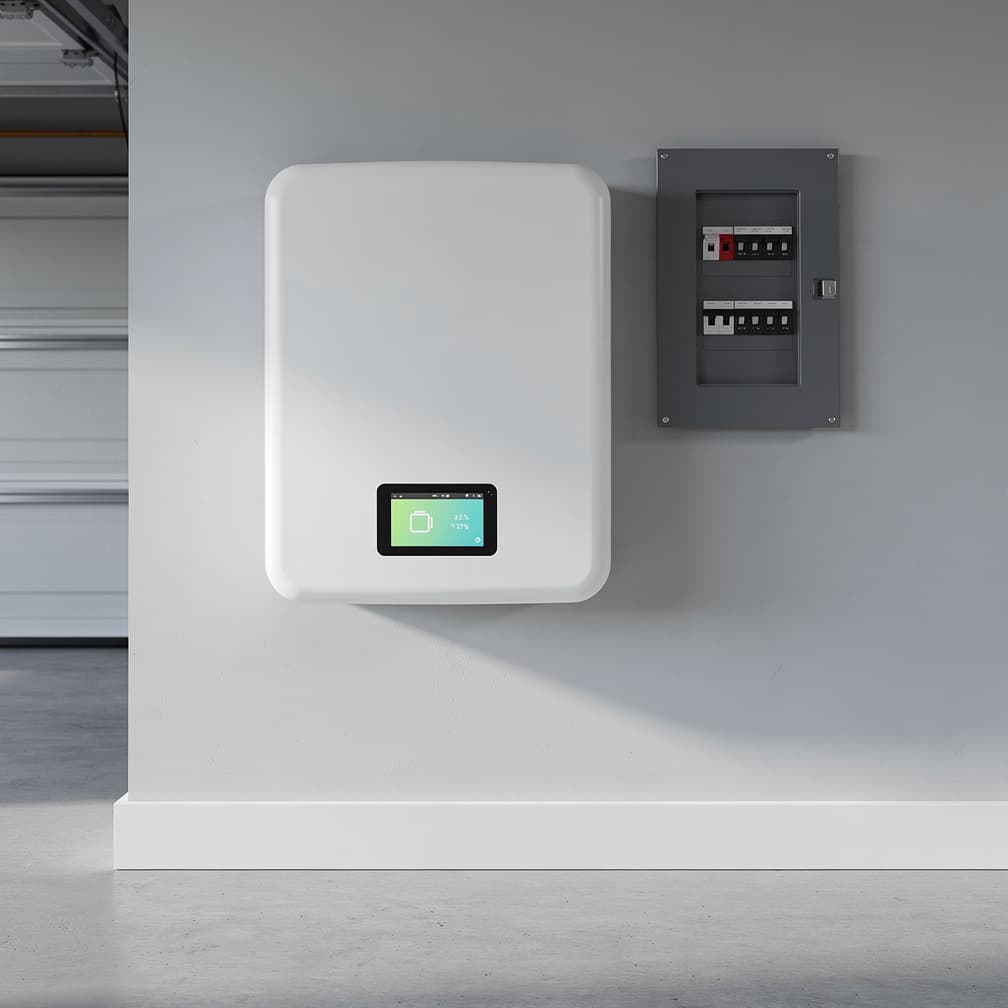
Best Solar Batteries Ireland 2026: GivEnergy vs Tesla Powerwall vs Huawei Compared
Compare the best solar batteries in Ireland for 2026. GivEnergy from €3,500, Huawei LUNA2000 from €3,500, Tesla Powerwall 3 from €8,000. Full specs, pricing, ROI calculations, and whether a battery or diverter is better value.
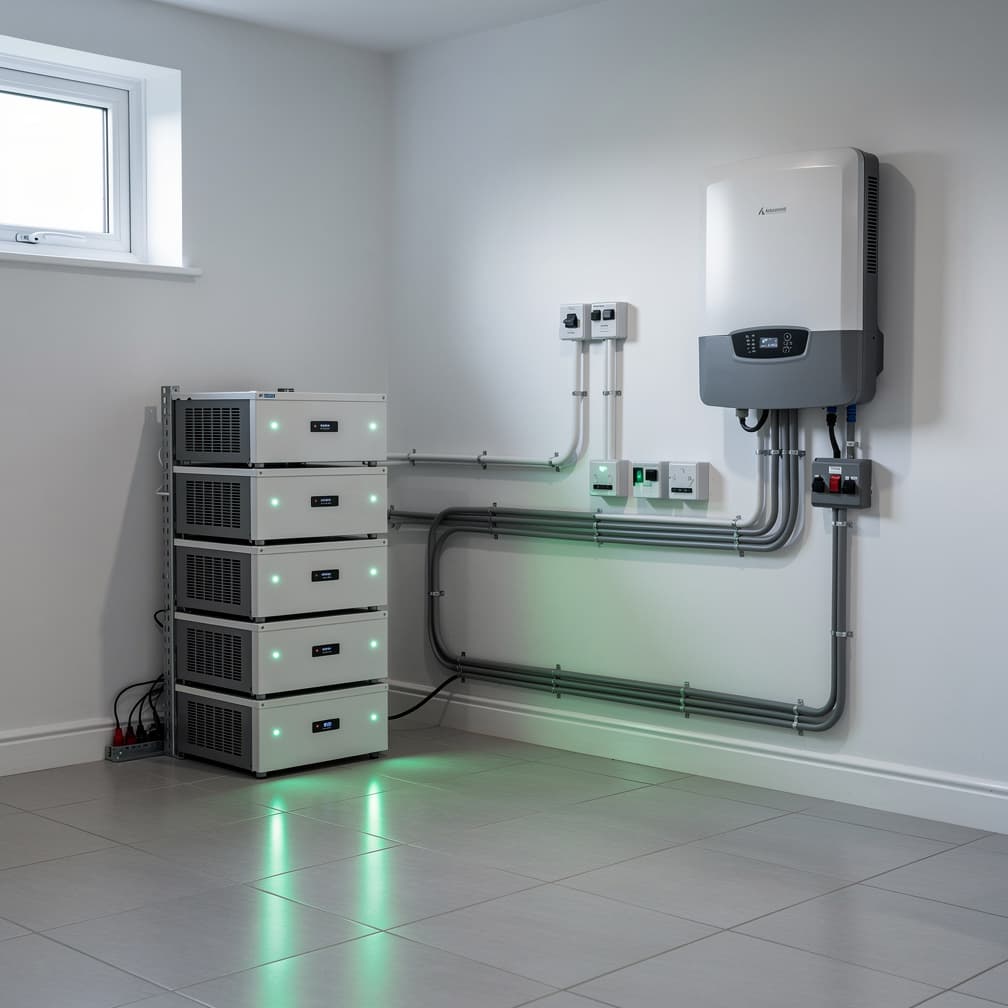
Off-Grid Solar Battery Sizing Ireland: How to Design a System That Actually Works
How to size batteries, solar panels, and inverters for off-grid living in Ireland. Costs from €18,000 (cabin) to €66,000 (family home). Pylontech, Victron, BYD compared. Generator backup explained.