
SEAI Solar Panel Grant 2026: How to Apply, Eligibility & Step-by-Step Guide
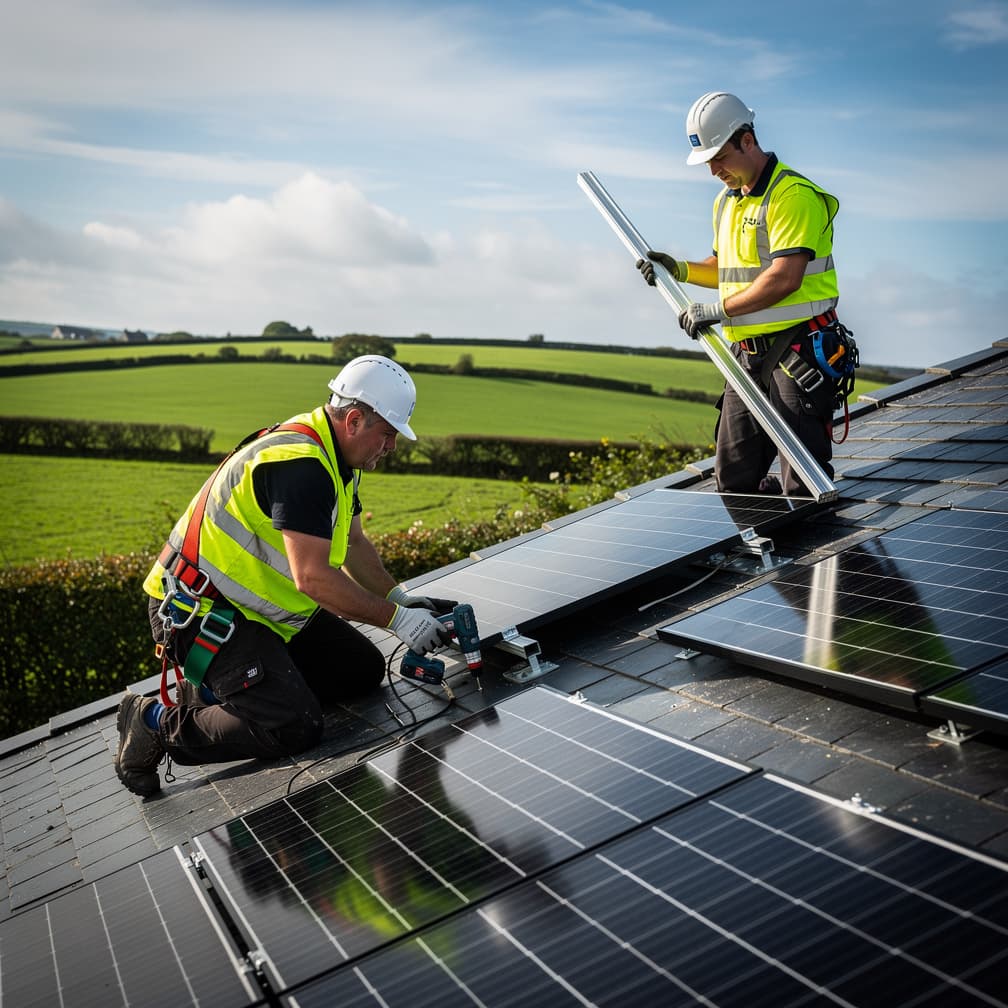
The SEAI solar electricity grant gives Irish homeowners up to €1,800 towards the cost of installing solar panels in 2026. The grant covers €700 per kWp for the first 2 kWp and €200 per additional kWp up to 4 kWp. Landlords and approved housing bodies are now eligible alongside owner-occupiers. You must apply and be approved before any work begins — starting early is the single biggest mistake that gets applications rejected.
The SEAI (Sustainable Energy Authority of Ireland) solar PV grant is the most popular home energy grant in the country. It has helped tens of thousands of Irish homeowners reduce the cost of going solar. But the application process has specific rules and requirements that trip people up. This guide walks you through everything: exact grant amounts, who qualifies, how to apply step by step, what documentation you need, and the mistakes that get applications rejected.
SEAI Solar Grant Amounts (2026)
Minister O'Brien confirmed that the maximum grant under the domestic solar PV scheme will remain at €1,800 in 2026. The grant is tiered based on system size:
| System Size | Grant Calculation | Total Grant |
|---|---|---|
| 1 kWp | 1 × €700 | €700 |
| 2 kWp | 2 × €700 | €1,400 |
| 3 kWp | €1,400 + 1 × €200 | €1,600 |
| 4 kWp | €1,400 + 2 × €200 | €1,800 |
| 5 kWp+ | Capped at 4 kWp | €1,800 (maximum) |
The most common residential system in Ireland is 3.5–4 kWp, which qualifies for the full €1,800 grant. There is no additional grant for systems larger than 4 kWp, though bigger systems generate more electricity and save more money — the economics of going larger than 4 kWp still work well even without extra grant support.
What the Grant Means in Practice
| System Size | Typical Installed Cost | SEAI Grant | Your Cost |
|---|---|---|---|
| 3 kWp (8 panels) | €5,000–€7,000 | €1,600 | €3,400–€5,400 |
| 4 kWp (10 panels) | €6,000–€8,500 | €1,800 | €4,200–€6,700 |
| 5 kWp (12 panels) | €7,000–€10,000 | €1,800 | €5,200–€8,200 |
| 6 kWp (15 panels) | €8,000–€12,000 | €1,800 | €6,200–€10,200 |
Note: Prices above include 0% VAT on solar PV panels and installation. Battery storage, if added under the same contract, also qualifies for 0% VAT.
Who Is Eligible for the SEAI Solar Grant?
You Can Apply If:
- You are a homeowner — the property is in your name
- You are a private landlord — landlords are now eligible (this is a relatively recent change)
- You are an owner management company — for apartment complexes
- You are an Approved Housing Body (AHB)
- Your property was built and occupied before 2021
- Your property has an MPRN (Meter Point Reference Number — found on your ESB Networks electricity bill)
- No previous SEAI solar PV grant has been paid for your MPRN
You Cannot Apply If:
- Your home was built after 2021 — newer homes should already meet nZEB (Nearly Zero Energy Building) standards which typically include solar PV
- You are a tenant — only the property owner can apply (but your landlord can now apply on your behalf)
- The property already received an SEAI solar grant — one grant per MPRN, regardless of ownership changes
- Work has already started — you must receive SEAI approval before any installation begins
Step-by-Step Application Process
Step 1: Get Quotes from SEAI-Registered Installers
Before applying, get at least 2–3 quotes from SEAI-registered solar PV installers. Only work carried out by a registered installer qualifies for the grant.
You can find registered installers on the SEAI website by searching your county or Eircode. We also maintain a directory of solar installers across Ireland.
What to look for in quotes:
- System size in kWp
- Panel brand and wattage
- Inverter brand and type (string vs micro-inverter)
- Whether battery storage is included
- Total price including installation and VAT
- Confirmation the installer is SEAI-registered
- Warranty details for panels, inverter, and workmanship
Step 2: Apply Online for Grant Approval
Submit your application through the SEAI online portal at seai.ie. You will need:
- Your MPRN number (found on your ESB electricity bill — it is a 6 or 11 digit number)
- Your property Eircode
- Personal details (name, address, phone, email)
- Bank account details (for grant payment — must be in the applicant's name)
Critical: Do NOT start any installation work before you receive your grant offer letter from SEAI. Applications for work already started or completed will be rejected. This is the number one reason applications fail.
Step 3: Receive Your Grant Offer Letter
SEAI reviews your application and issues a grant offer letter. Current processing time is approximately 4–8 weeks, though this can vary — spring and summer are busiest.
The offer letter confirms your approved grant amount and gives you 8 months to complete the works and submit your claim. If you need more time, contact SEAI before the deadline to request an extension.
Step 4: Engage Your Installer
Once you have the grant offer letter, proceed with your chosen SEAI-registered installer. The installer will:
- Carry out a site survey
- Design the system for your home
- Order and install the panels, inverter, and any battery storage
- Submit the NC6 form to ESB Networks on your behalf (more on this below)
- Provide a Safe Electric Completion Certificate
Step 5: NC6 Form and ESB Networks Registration
Your installer submits the NC6 (Microgeneration Notification Form) to ESB Networks. This registers your solar system as a microgeneration source on the electricity grid. The process takes approximately 2–4 weeks.
For domestic systems up to 6 kWp, this is a simplified notification process — ESB Networks does not need to carry out a detailed technical assessment. Once registered, you can sign up with your electricity supplier for export payments under the Clean Export Guarantee.
Step 6: Post-Works BER Assessment
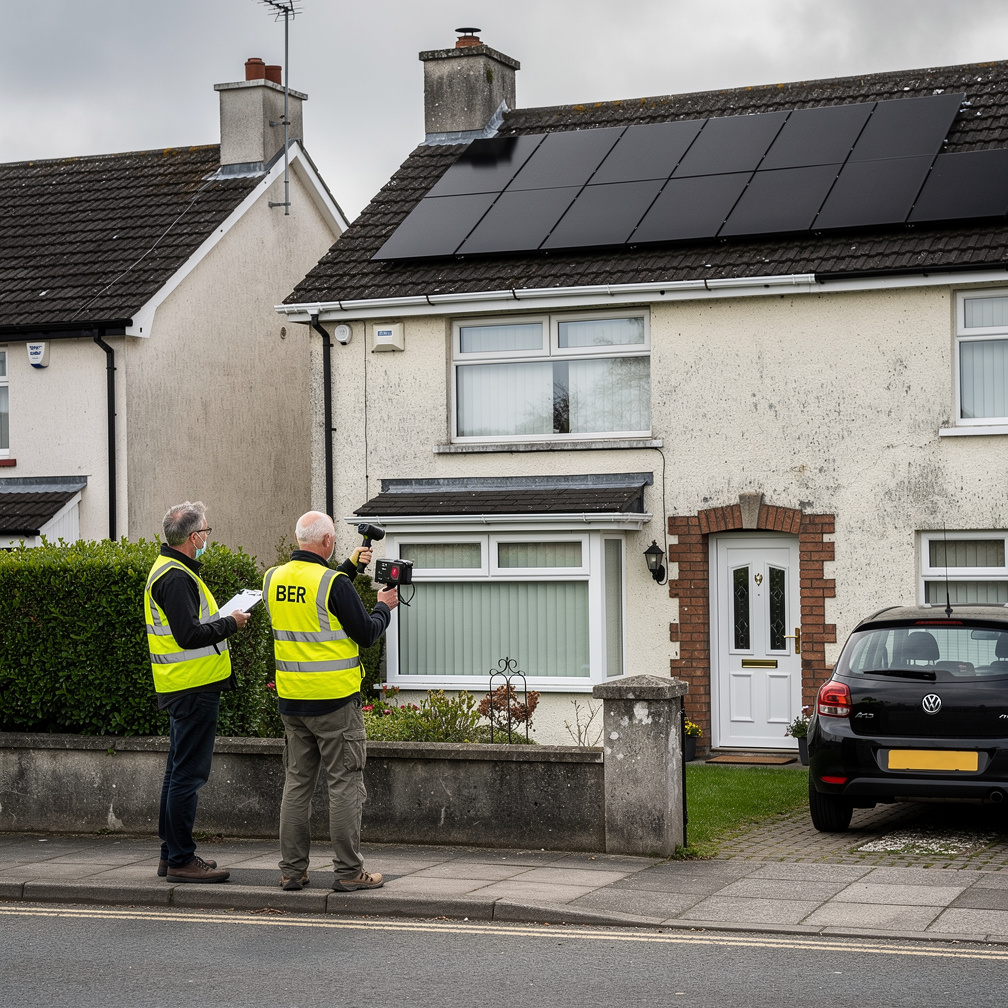
After installation, you must have a BER (Building Energy Rating) assessment carried out by an SEAI-registered BER assessor. This updates your home's energy rating to reflect the solar panels.
The BER does not need to achieve a specific rating — it simply needs to record the solar PV installation. A BER assessment typically costs €150–€250. Some installers include this in their package.
Step 7: Submit Your Claim
Your installer uploads the declaration of works and documentation to the SEAI portal. You then submit your claim with:
- Contractor invoice (showing the work completed and cost)
- Post-works BER certificate number
- NC6 confirmation from ESB Networks
- Safe Electric Completion Certificate
- Photos of the installation (your installer typically provides these)
Step 8: Receive Your Grant Payment
SEAI processes the claim and pays the grant directly into your bank account. Current processing time is approximately 4–6 weeks after all documentation is submitted.
Important: You pay the installer the full cost upfront. SEAI reimburses you the grant amount afterwards. Factor this into your cash flow planning — you may be waiting 2–3 months for the grant payment after installation is complete.
Timeline: How Long Does the Whole Process Take?
| Stage | Typical Duration |
|---|---|
| Getting quotes | 1–2 weeks |
| SEAI application to offer letter | 4–8 weeks |
| Installer scheduling and installation | 2–6 weeks |
| NC6 processing (ESB Networks) | 2–4 weeks |
| BER assessment | 1–2 weeks |
| Claim submission and grant payment | 4–6 weeks |
| Total from start to grant payment | 3–6 months |
The busiest period is March to September. If you apply in January or February, you will typically experience shorter wait times for both SEAI approval and installer availability.
Is There an SEAI Battery Grant?
No. As of 2026, there is no separate SEAI grant for battery storage. The €1,800 grant covers the solar panels only, regardless of whether you include a battery.
However, if you install a battery as part of the same solar PV contract, the battery qualifies for 0% VAT — which can save you €800–€1,500 on a typical battery. If you add a battery later under a separate contract, 23% VAT applies. This is a strong argument for including a battery with your initial solar installation.
Read our full battery comparison: Best Solar Batteries Ireland 2026
Other SEAI Grants You Can Combine with Solar
The solar PV grant can be combined with other SEAI home energy grants to create a comprehensive upgrade package:
| Grant | Amount | Good Combination with Solar? |
|---|---|---|
| Air-to-water heat pump | €3,500 | Excellent — solar powers the heat pump |
| Ground-source heat pump | €6,500 | Excellent |
| External wall insulation | €4,500–€8,000 | Very good — reduces energy demand |
| Internal wall insulation | €1,500–€4,500 | Very good |
| Attic insulation | €1,500 | Good |
| Cavity wall insulation | €700 | Good |
| Heating controls | €700 | Good |
One-Stop-Shop service: SEAI offers a One-Stop-Shop model where approved project coordinators manage multiple upgrades as a single package. This can simplify the process and sometimes unlock higher combined funding levels.
National Home Energy Upgrade Scheme: For deeper whole-house retrofits, homeowners may qualify for up to 80% of costs covered, which can include solar PV alongside insulation, heating, and ventilation upgrades. This is particularly valuable for older homes with poor BER ratings.
How to Find SEAI-Registered Solar Installers
- Visit the SEAI solar grant page
- Use the registered installer search tool
- Enter your county or Eircode
- Contact 2–3 installers for quotes
We also maintain an up-to-date directory of solar installation companies across Ireland, including which counties they serve and customer reviews.
Tips for Choosing an Installer
- Always verify they are currently SEAI-registered — the register changes, and an installer who was registered last year may not be now
- Get at least 3 quotes — prices for the same system size can vary by 30–50% between installers
- Ask about the full package — does the quote include scaffolding, BER assessment, NC6 submission, generation meter?
- Check reviews — look for Google reviews, Trustpilot, or ask for references from recent local installations
- Beware of very cheap quotes — they may use lower-quality panels or cut corners on mounting and electrical work
- Ask about warranty — good installers offer 10–15 year workmanship warranties on top of the manufacturer's panel warranty (typically 25 years)
Common Mistakes That Get Applications Rejected
Avoid these pitfalls to ensure your grant application goes smoothly:
1. Starting Work Before Approval (Most Common)
SEAI will reject your application if any installation work has begun before you receive your grant offer letter. This includes ordering panels, starting electrical work, or having scaffolding erected. Wait for the letter.
2. Using a Non-Registered Installer
Only work carried out by a contractor who is on the SEAI register at the time of installation qualifies. Verify your installer's registration before signing any contract — not just when getting quotes.
3. Incomplete Documentation
Missing a BER certificate, NC6 confirmation, or Safe Electric certificate will delay or block your claim. Make a checklist and ensure every document is submitted.
4. Letting the Offer Expire
You have 8 months from the offer letter to complete works and submit your claim. If your installer has a long waiting list, book them immediately after receiving your offer. Contact SEAI before the deadline if you need an extension.
5. Wrong MPRN
Double-check your Meter Point Reference Number. An incorrect MPRN will cause your application to fail. Find it on your ESB Networks bill or call ESB Networks on 1800 372 757.
6. Property Already Received a Grant
Only one solar PV grant per MPRN. If a previous owner received the grant, you cannot apply again — even if you are a new owner.
Frequently Asked Questions
Can landlords apply for the SEAI solar grant?
Yes. Private landlords are now eligible for the SEAI solar PV grant. This is a relatively recent change and applies to properties where the landlord owns the dwelling and it has a valid MPRN. The property does not need to be the landlord's primary residence.
Can I get the grant for an apartment?
Yes, if the apartment was built and occupied before 2021 and has its own MPRN. Owner management companies can also apply on behalf of apartment complexes.
Do I have to pay the installer the full amount upfront?
Yes. SEAI reimburses the grant to you (the homeowner) after the work is completed and all documentation is submitted. You pay the installer the full invoice amount. Some installers offer payment plans — ask when getting quotes.
Can I install more than 4 kWp and still get the grant?
Yes. You can install any size system, but the grant caps at €1,800 (for 4 kWp). Many homeowners install 5–6 kWp systems because the additional panels cost relatively little compared to the fixed installation costs, and the extra generation improves your ROI.
What if my application is rejected?
SEAI will notify you of the reason for rejection. In most cases, you can address the issue and reapply. If work has already started, however, there is no way to reverse that — the application is permanently ineligible.
Can I get the grant and the Clean Export Guarantee?
Yes. The SEAI grant and the Clean Export Guarantee (CEG) are separate schemes and can be used together. The grant reduces your installation cost, and the CEG pays you for surplus electricity you export to the grid. Combined, they significantly improve the financial return on solar panels.
How much will I save with solar panels after the grant?
A typical 4 kWp system costs €6,000–€8,500 installed. After the €1,800 grant, your net cost is €4,200–€6,700. Annual savings of €800–€1,200 (electricity savings plus export income) mean a payback period of approximately 4–7 years. Over the 25+ year lifespan of the panels, total savings can reach €15,000–€25,000. Use our Solar Panel Calculator to estimate your specific savings.
The Bottom Line
The SEAI solar PV grant of up to €1,800 significantly reduces the cost of going solar in Ireland. Combined with 0% VAT on solar panels and the Clean Export Guarantee, 2026 is one of the best years to invest in solar energy for your home.
The application process is straightforward but has strict rules — especially the requirement to get approval before starting work. Follow the steps in this guide, use an SEAI-registered installer, keep all your documentation, and you will have a smooth experience.
Ready to start? Find SEAI-registered installers near you, or use our Solar Panel Calculator to see what a system would cost after the grant.
Related Articles
Solar Panel Costs Ireland 2026: Complete Price Breakdown by System Size
How much do solar panels cost in Ireland in 2026? From €4,600 for 2.6kWp to €13,500 for 8.8kWp before grants. After SEAI grant: €3,100–€11,700. Full cost breakdown, brand comparison, ROI calculator, and what to look for in quotes.
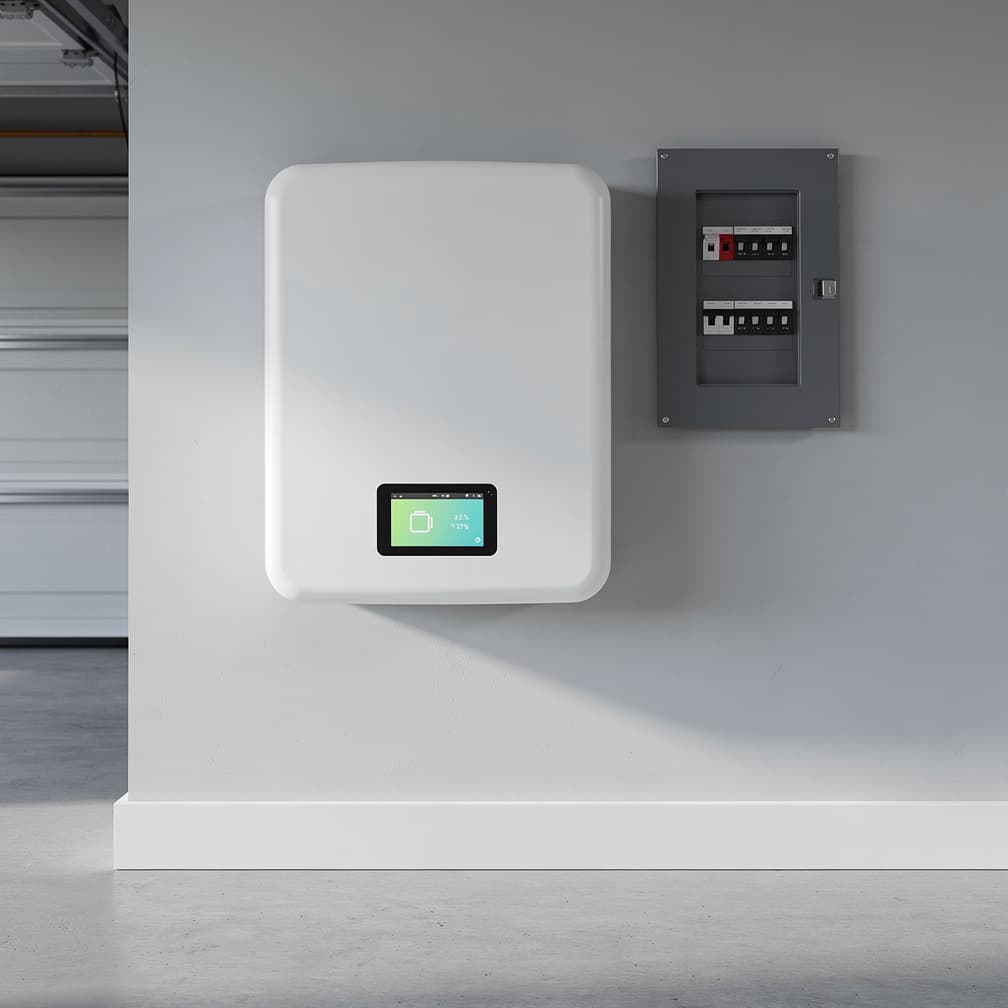
Best Solar Batteries Ireland 2026: GivEnergy vs Tesla Powerwall vs Huawei Compared
Compare the best solar batteries in Ireland for 2026. GivEnergy from €3,500, Huawei LUNA2000 from €3,500, Tesla Powerwall 3 from €8,000. Full specs, pricing, ROI calculations, and whether a battery or diverter is better value.
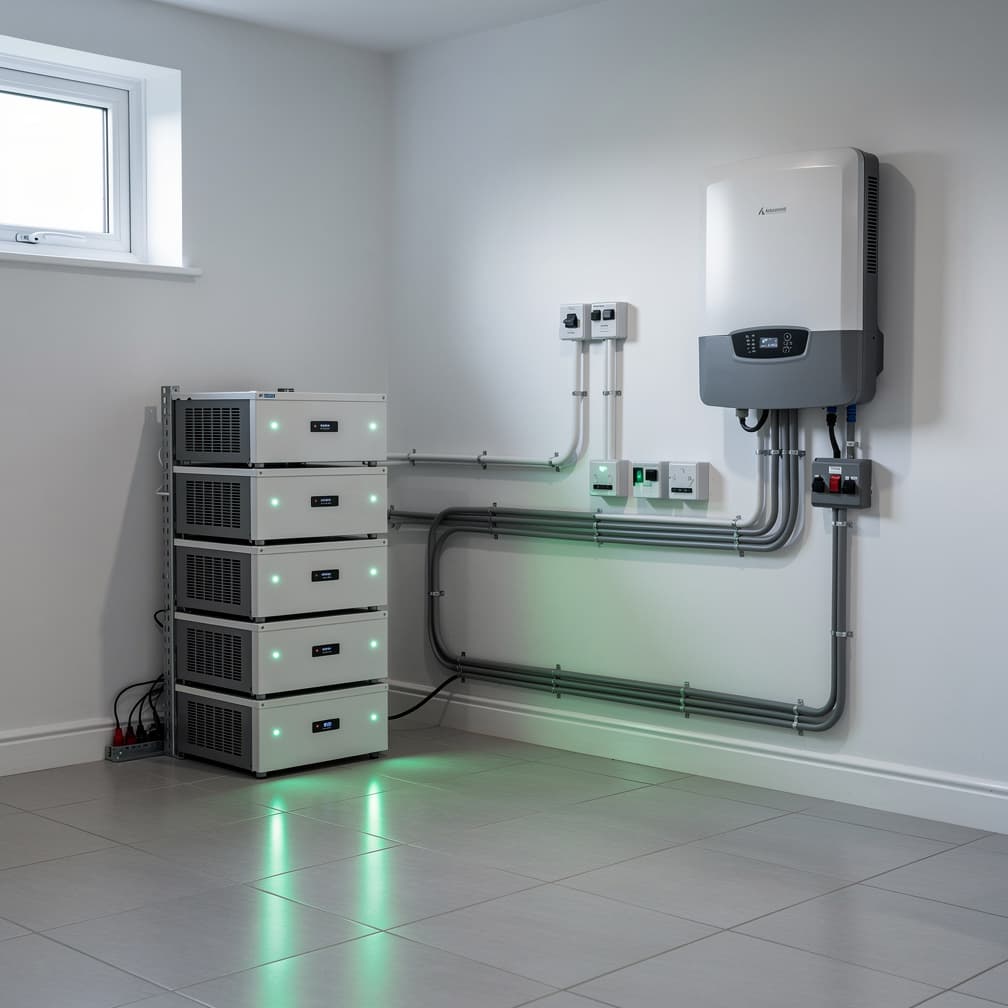
Off-Grid Solar Battery Sizing Ireland: How to Design a System That Actually Works
How to size batteries, solar panels, and inverters for off-grid living in Ireland. Costs from €18,000 (cabin) to €66,000 (family home). Pylontech, Victron, BYD compared. Generator backup explained.