

How Much Do Solar Panels Save Per Month in Ireland? (Real 2026 Numbers)
The average Irish household spends €151 per month on electricity in 2026. That’s €1,817 per year, based on 4,200 kWh of consumption at an average rate of 36c/kWh. It’s also €338 more than last year, thanks to the end of government energy credits and rising network charges.
Solar panels don’t eliminate that bill entirely — but they can cut it by €60 to €145 per month depending on your system size, electricity usage, and how much of your solar power you actually use. This guide breaks down the real monthly savings with specific numbers for different house types, system sizes, and electricity tariffs in Ireland in 2026.
The Quick Answer: Monthly Savings by System Size
Here’s what you can realistically expect to save per month with solar panels in Ireland, based on 2026 electricity rates and typical self-consumption patterns:
| System Size | Panels | Annual Output | Monthly Saving | Annual Saving |
|---|---|---|---|---|
| 2.2 kWp (small) | 5 panels | 2,000 kWh | €45–€65 | €540–€780 |
| 4.4 kWp (standard) | 10 panels | 4,000 kWh | €75–€110 | €900–€1,320 |
| 6.6 kWp (large) | 15 panels | 6,000 kWh | €100–€145 | €1,200–€1,740 |
The range depends on two key factors: how much solar electricity you use yourself (vs. exporting) and your electricity rate. We’ll dig into both below.
How Much Could You Save?
Get a personalised savings estimate from SEAI-registered installers based on your actual electricity usage.
How the Maths Works: Self-Consumption vs. Export
This is the single most important concept in solar economics, and the one most websites gloss over. Not all solar electricity is worth the same amount:
- Electricity you use yourself is worth your full import rate: 35–42c/kWh in 2026.
- Electricity you export to the grid earns your Clean Export Guarantee (CEG) rate: 15–25c/kWh depending on your supplier.
The gap matters enormously. If you use 50% of your solar generation and export 50%, your effective return per kWh is around 27c. If you use 70% and export 30%, it jumps to 33c. That’s a 22% difference in savings from the same panels.
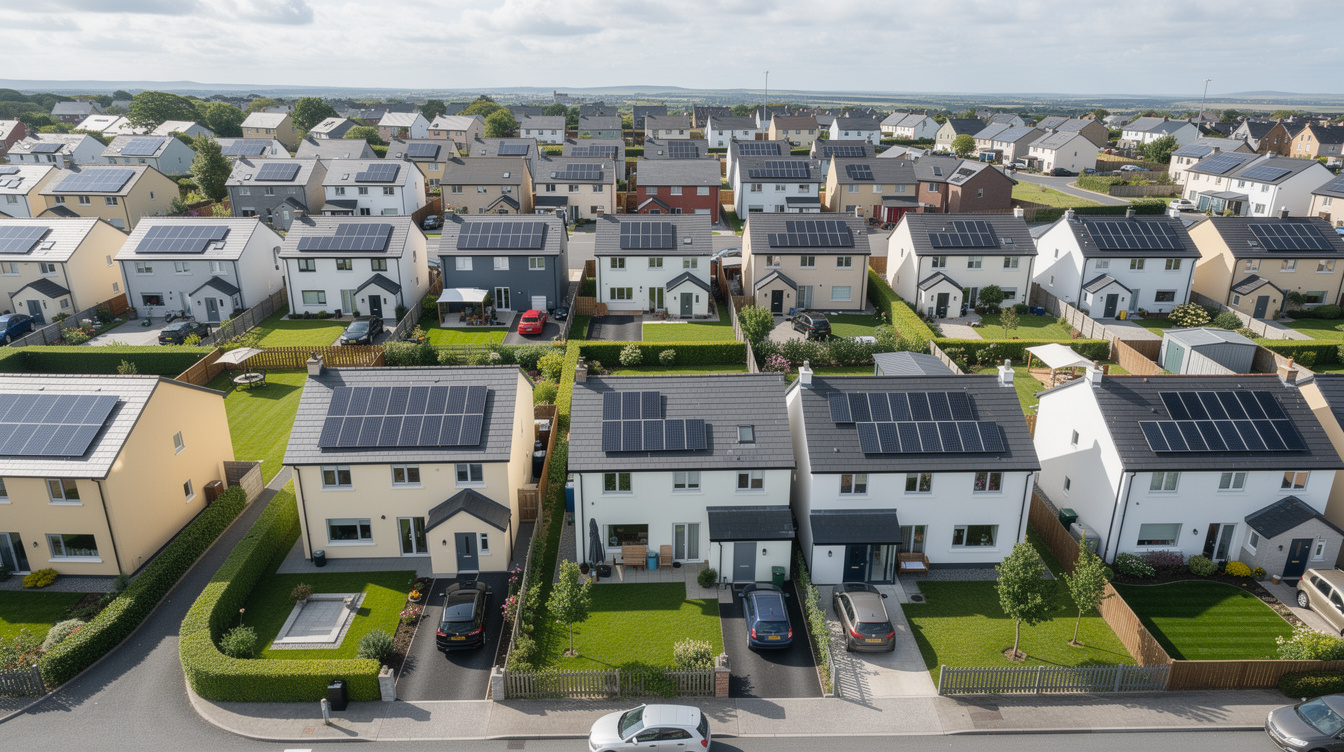
A typical Irish home without a battery uses 30–40% of its solar generation directly. With a battery, that jumps to 55–70%. Working from home pushes it higher still.
Month-by-Month: What Solar Actually Saves Through the Year
Solar savings aren’t flat. Ireland gets 5x more sunshine in June than December. Here’s a realistic month-by-month breakdown for a 4.4 kWp system (10 panels) on a south-facing roof, with 35% self-consumption and a 19.5c/kWh CEG rate:
| Month | Generation (kWh) | Self-Use Value | Export Income | Total Saving |
|---|---|---|---|---|
| January | 120 | €16 | €15 | €31 |
| February | 180 | €24 | €23 | €47 |
| March | 310 | €41 | €39 | €80 |
| April | 420 | €56 | €53 | €109 |
| May | 510 | €68 | €65 | €133 |
| June | 540 | €72 | €68 | €140 |
| July | 500 | €67 | €63 | €130 |
| August | 430 | €57 | €55 | €112 |
| September | 330 | €44 | €42 | €86 |
| October | 210 | €28 | €27 | €55 |
| November | 130 | €17 | €16 | €33 |
| December | 100 | €13 | €13 | €26 |
| Full Year | 3,780 | €503 | €479 | €982 |
That’s an average of €82 per month. But notice the range: you save €140 in June but only €26 in December. Most homeowners see meaningful bill reductions from March through September, with winter months providing a smaller contribution.
Three Scenarios: How Different Households Save Differently
Every home is different. Here are three realistic Irish households to show how savings vary:
Scenario 1: The Commuter Couple (Low Daytime Usage)
| Detail | Value |
|---|---|
| System size | 4.4 kWp (10 panels) |
| Self-consumption | 25% (both at work 9–6) |
| Electricity rate | 38c/kWh import, 19.5c/kWh export |
| Annual saving | €965 (€380 self-use + €585 export) |
| Monthly saving | €80 |
Scenario 2: The Work-From-Home Family (High Daytime Usage)
| Detail | Value |
|---|---|
| System size | 6.6 kWp (15 panels) |
| Self-consumption | 45% (one parent WFH, kids home by 3pm) |
| Electricity rate | 36c/kWh import, 19.5c/kWh export |
| Annual saving | €1,615 (€972 self-use + €643 export) |
| Monthly saving | €135 |
Scenario 3: Retired Couple With Battery (Maximum Self-Use)
| Detail | Value |
|---|---|
| System size | 4.4 kWp + 5 kWh battery |
| Self-consumption | 65% (home all day + battery stores surplus) |
| Electricity rate | 38c/kWh import, 19.5c/kWh export |
| Annual saving | €1,196 (€938 self-use + €258 export) |
| Monthly saving | €100 |
The key takeaway: self-consumption is king. The WFH family saves 40% more than the commuter couple despite having only 50% more panels — because they use more of their own electricity at the full retail rate.
Find Out Your Exact Monthly Savings
Our calculator estimates your savings based on your home size, electricity usage, and roof orientation.
Best CEG Export Rates in Ireland (April 2026)
Your choice of electricity supplier directly affects how much you earn from exported solar electricity. Here are the current Clean Export Guarantee rates:
| Supplier | CEG Rate (incl. VAT) |
|---|---|
| SSE Airtricity Activ8 (Year 1) | 32c/kWh* |
| SSE Airtricity Activ8 (Year 2) | 27c/kWh* |
| Pinergy | 25c/kWh |
| Community Power | 20c/kWh |
| Electric Ireland | 19.5c/kWh |
| SSE Airtricity (standard) | 19.5c/kWh |
| Energia | 18.5c/kWh |
| Bord Gáis Energy | 18.5c/kWh |
| Flogas | 18.5c/kWh |
| Yuno / PrepayPower | 15.89c/kWh |
*Activ8 rates require installation through an SSE Airtricity partner. Standard SSE rate applies otherwise.
Switching supplier can add €50–€200 per year in extra export income. If you’re on Yuno at 15.89c and switch to Pinergy at 25c, that’s an extra 9c per kWh on every unit you export. On 2,500 kWh of annual exports, that’s €225/year more — just for switching. Read our full Clean Export Guarantee guide for more detail.
Five Ways to Maximise Your Monthly Savings
- Shift heavy loads to sunny hours. Run your washing machine, dishwasher, and tumble dryer between 10am and 3pm. Each load shifted from evening to midday saves 1–2 kWh of grid electricity (€0.36–€0.84).
- Set your immersion heater on a solar timer. A solar diverter (e.g., Eddi by myenergi, ~€450) automatically sends surplus solar to your hot water cylinder instead of exporting it. This alone can boost self-consumption by 15–20%.
- Choose the best CEG supplier. The difference between the lowest and highest export rate is 16c/kWh — that’s real money if you’re exporting 2,000+ kWh per year.
- Add a battery (when the numbers work). A 5 kWh battery costs €3,800–€5,200 and increases self-consumption by 25–35 percentage points. The payback is 8–12 years — worthwhile if you plan to stay in the house long-term. See our battery analysis.
- Work from home when you can. Even one or two WFH days per week significantly increases your daytime consumption, meaning more free solar electricity and less export.
What About the SEAI Grant?
The €1,800 SEAI solar grant reduces your upfront cost, which means your payback period is shorter and your “effective” monthly saving starts sooner. Here’s how the numbers look:
| System | Cost After Grant | Annual Saving | Payback |
|---|---|---|---|
| 4.4 kWp (no battery) | €5,500–€7,500 | €900–€1,320 | 4–7 years |
| 4.4 kWp + 5 kWh battery | €9,300–€12,700 | €1,100–€1,500 | 7–10 years |
| 6.6 kWp (no battery) | €8,200–€10,500 | €1,200–€1,740 | 5–7 years |
After the grant, solar panels are also zero-rated for VAT — saving you a further €1,200–€1,600 compared to the standard 23% rate. This combination makes 2026 one of the best years ever to install solar in Ireland. For the full grant application walkthrough, see our SEAI grant guide.
Ready to Start Saving?
Get free quotes from SEAI-registered installers and find out exactly what you’d save each month.
Frequently Asked Questions
Can solar panels eliminate my electricity bill entirely?
Not completely. Even with a large system and a battery, you’ll still draw from the grid in winter and on dark days. Realistically, solar can reduce your annual electricity bill by 50–70%. The remaining 30–50% covers winter nights and overcast periods.
Do solar panels save money in winter in Ireland?
Yes, but less. December and January savings are typically €25–€35/month for a standard system — compared to €120–€140/month in summer. The annual average is what matters for payback calculations.
Is it better to get a bigger system or add a battery?
Usually a bigger system first. Extra panels are cheaper per kWh of generation than battery storage, and you earn export income on everything you don’t use. A battery makes more sense once you’re already exporting heavily and want to shift more consumption to self-use. See our solar battery guide.
How do day/night tariffs affect solar savings?
Positively. If you’re on a day/night meter, your daytime rate is typically 40–45c/kWh (higher than standard) and your night rate is 20–25c. Solar generation happens during the expensive day period, so your self-use savings are even higher than the numbers above.
Related Articles
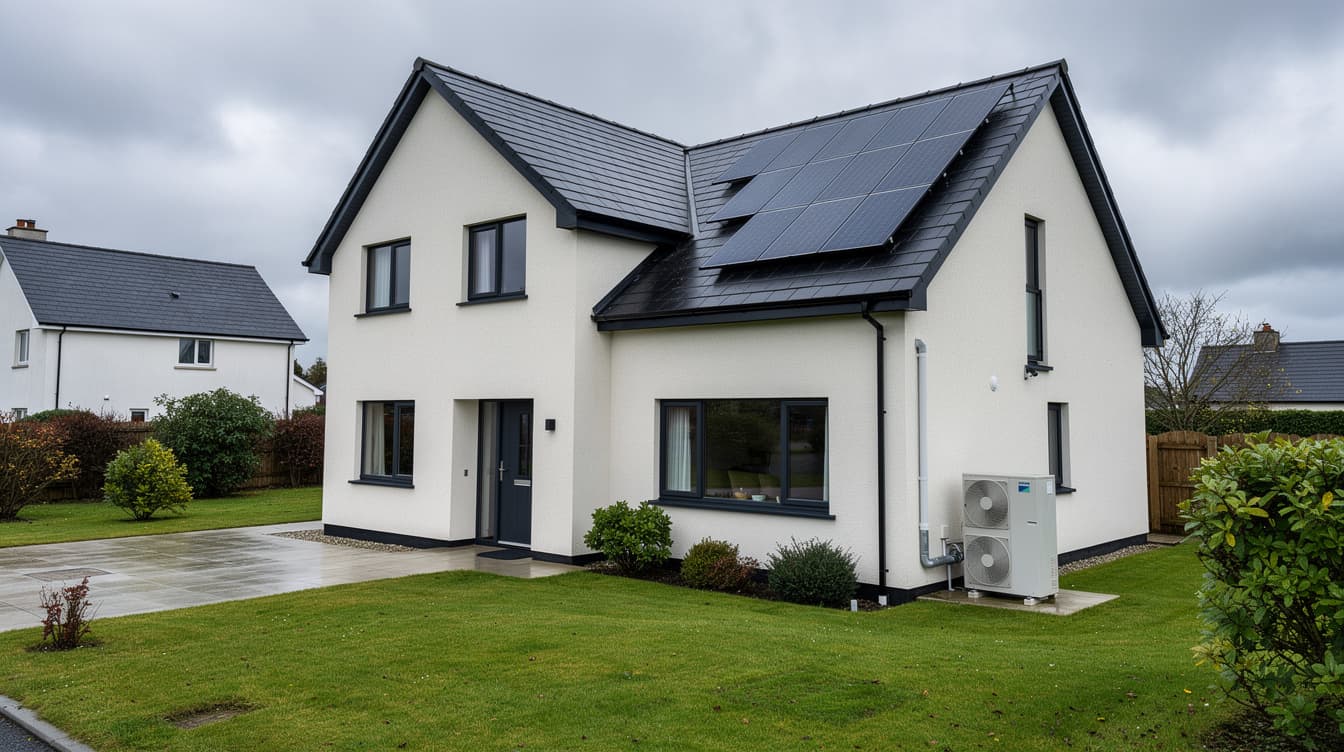
Solar Panels and Heat Pumps in Ireland 2026: The Smart Combo That Slashes Your Bills
Solar panels and heat pumps in Ireland 2026: real costs, SEAI grants up to €14,300, annual savings and the right installation order for Irish homes.
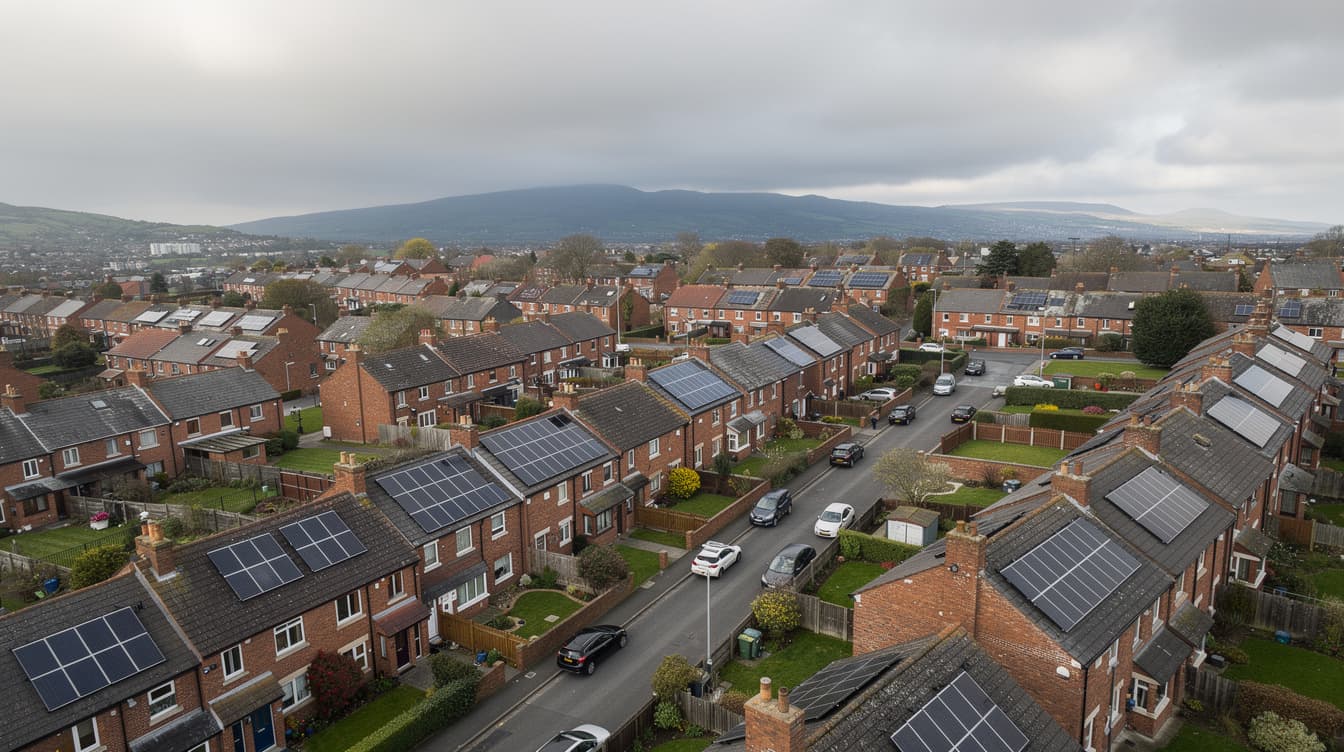
Solar Panels Dublin 2026: Complete Installation Guide, Costs & Installers
Solar panels in Dublin 2026: real installation costs, yield figures, planning exemptions and how to choose from 100+ SEAI-registered Dublin installers.
Best Solar Panels in Ireland 2026: Top Brands Ranked
The best solar panels for Irish homes in 2026, ranked. Aiko, Jinko, JA Solar, Trina and more compared on efficiency, warranty and pricing.