
Solar Panel System Sizes Ireland 2026: 3 kW vs 5 kW vs 10 kW Compared
Should you get a 3 kW, 5 kW, or 10 kW solar panel system for your Irish home? The answer depends on your electricity usage, roof space, budget, and whether you plan to add a battery or EV charger later. This guide compares every system size installed in Ireland in 2026 — costs, output, savings, payback — so you can pick the right one first time.
One of the most common mistakes Irish homeowners make is choosing a system that's too small to make a real dent in their bills, or too large and exporting most of the energy for a fraction of what they pay to import it. Getting the size right is the single biggest factor in your return on investment.
We've broken down the five most common system sizes installed across Ireland, with real 2026 pricing from SEAI-registered installers, actual output figures for Irish conditions, and worked savings examples for different household types.
Quick Answer: Which System Size Do You Need?
| Your Situation | Recommended Size | Why |
|---|---|---|
| 1–2 person home, low usage (<3,000 kWh/yr) | 2.6–3 kW | Covers most daytime use without heavy exports |
| Average family (3,500–5,000 kWh/yr) | 4–5 kW | Optimal self-consumption ratio for typical usage |
| Large family or home workers (5,000–7,000 kWh/yr) | 5–6 kW | Higher daytime demand justifies larger array |
| EV owner or planning to add one | 6–8 kW | Extra capacity feeds the car during daytime |
| High-usage home + battery + EV | 8–10 kW | Maximises self-consumption and export income |
Not Sure What Size You Need?
Get a free assessment from SEAI-registered installers who'll size the system to your actual electricity bills.
How Solar System Sizes Work in Ireland
Solar panel systems are measured in kilowatts peak (kWp) — the maximum output under ideal test conditions. In Ireland's climate, a system generates roughly 850–950 kWh per kWp per year. That means a 5 kW system produces around 4,250–4,750 kWh annually, enough to cover 80–100% of an average household's electricity consumption.
But here's the critical point: it's not about how much you generate — it's about how much you use directly. Electricity you use as it's generated (self-consumption) saves you the full retail rate of 30–42c/kWh. Electricity you export earns just 12–24c/kWh under the Clean Export Guarantee. That gap is why system sizing matters so much.
Key Terms Explained
- kWp (kilowatts peak) — the system's rated capacity under standard test conditions
- Self-consumption ratio — the percentage of generated electricity you use on-site (typically 30–60% without a battery, 70–90% with one)
- Export rate — payment for surplus electricity sent to the grid under the CEG (12–24c/kWh in 2026)
- Payback period — years until cumulative savings equal the installation cost
Complete Cost Comparison by System Size (2026)
These prices reflect real quotes from SEAI-registered installers across Ireland in April 2026, including panels, inverter, mounting, wiring, and commissioning. All prices include 0% VAT.
| System Size | Panels | Cost Before Grant | SEAI Grant | Net Cost |
|---|---|---|---|---|
| 2.6 kWp | 6 | €4,600–€5,500 | €1,520 | €3,080–€3,980 |
| 3.5 kWp | 8 | €6,100–€7,350 | €1,700 | €4,400–€5,650 |
| 4.4 kWp | 10 | €7,300–€9,300 | €1,800 | €5,500–€7,500 |
| 5.7 kWp | 13 | €8,500–€10,500 | €1,800 | €6,700–€8,700 |
| 8.8 kWp | 20 | €11,500–€14,000 | €1,800 | €9,700–€12,200 |
| 10 kWp | 23 | €13,000–€16,000 | €1,800 | €11,200–€14,200 |
Why does the SEAI grant cap out? The grant pays €700/kWp for the first 2 kWp and €200/kWp for capacity between 2–4 kWp, up to a maximum of €1,800. Systems above 4 kWp get the same €1,800 grant, so the cost per watt after grant rises for larger systems. This is why oversizing purely for the sake of it doesn't always make financial sense.
Annual Output and Savings by System Size
These figures assume a south-facing roof at 30–35° tilt in central Ireland (roughly 900 kWh/kWp/year), electricity import rate of 35c/kWh, and CEG export rate of 18c/kWh.
| System | Annual Output | Self-Use (40%) | Export (60%) | Annual Saving | Payback |
|---|---|---|---|---|---|
| 2.6 kWp | 2,340 kWh | €328 | €253 | €581 | 5.3–6.8 yrs |
| 3.5 kWp | 3,150 kWh | €441 | €340 | €781 | 5.6–7.2 yrs |
| 4.4 kWp | 3,960 kWh | €554 | €428 | €982 | 5.6–7.6 yrs |
| 5.7 kWp | 5,130 kWh | €718 | €554 | €1,272 | 5.3–6.8 yrs |
| 8.8 kWp | 7,920 kWh | €1,109 | €856 | €1,965 | 4.9–6.2 yrs |
| 10 kWp | 9,000 kWh | €1,260 | €972 | €2,232 | 5.0–6.4 yrs |
Important: Self-consumption ratios vary hugely by household. A family where someone works from home might self-consume 50–60% of output. A household where everyone is out during the day might only self-consume 25–30%. Adding a battery pushes self-consumption to 70–90%, significantly improving returns.
3 kW System: Best for Small Homes and Apartments
A 3 kW (or 2.6–3.5 kWp) system uses 6–8 panels and needs roughly 10–14 m² of roof space. It's the most common entry-level system in Ireland and is well-suited to:
- 1–2 person households using 2,500–3,500 kWh/year
- Terraced or semi-detached homes with limited south-facing roof
- Homeowners on a tight budget who want to test the waters
- Properties where the SEAI grant covers a significant chunk of the cost
The maths: A 3.5 kWp system generates about 3,150 kWh/year. If your annual usage is 3,500 kWh, you're generating roughly 90% of your needs. But you'll only self-consume about 35–45% because generation peaks midday when you might not be home. Still, after the €1,700 SEAI grant, you're looking at a net cost of €4,400–€5,650 and annual savings of €700–€900. Payback: under 7 years.
Tip: Maximise self-consumption on a small system
Run your washing machine, dishwasher, and immersion heater during solar peak hours (11am–3pm). A €200–€400 solar diverter can automatically send surplus energy to your hot water tank instead of exporting it.
5 kW System: The Sweet Spot for Most Irish Families
A 5 kW (4.4–5.7 kWp) system uses 10–13 panels and needs about 17–22 m² of roof space. This is the most popular system size in Ireland for good reason — it hits the sweet spot between cost, output, and self-consumption for a typical family home.
- 3–4 person households using 4,000–5,500 kWh/year
- Semi-detached and detached homes with a clear south-facing roof
- Households where someone works from home at least part-time
- Homeowners planning to add a battery or EV charger within 2–3 years
The maths: A 4.4 kWp system generates about 3,960 kWh/year. With typical 40% self-consumption, you're offsetting €554 of imported electricity and earning €428 from exports. Net cost after the €1,800 grant is €5,500–€7,500. Annual savings of €982 give you a payback period of 5.6–7.6 years. Add a battery and payback drops to 5–6 years because you shift more energy from export to self-use.
Why 5 kW is the sweet spot: Systems above 4 kWp don't benefit from additional grant (it's capped at €1,800), but the cost per watt actually decreases for larger systems because the fixed costs (scaffolding, inverter, electrician, commissioning) are spread across more panels. A 5 kW system typically costs only €1,200–€1,500 more than a 3.5 kW system but generates 40–60% more electricity.
Ready to Go Solar?
Get your free personalised quote from SEAI-registered installers.
10 kW System: For High-Usage Homes, EVs, and Maximum Savings
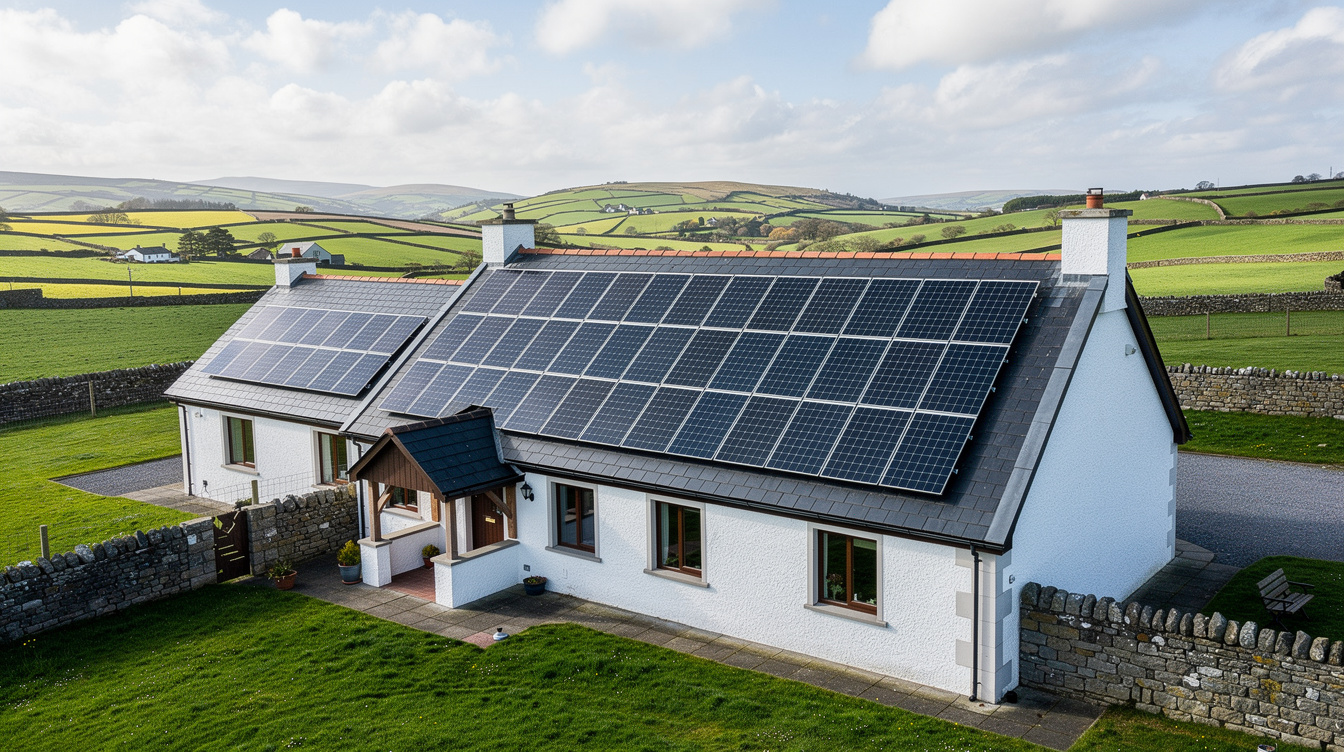
A 10 kW (8.8–10+ kWp) system uses 20–23 panels and needs 34–40 m² of roof space. These larger systems are increasingly popular in Ireland as electricity prices remain high and more homeowners add batteries and electric vehicles.
- 4+ person households using 6,000–10,000 kWh/year
- Homes with an electric vehicle (adds 2,000–4,000 kWh/year demand)
- Properties with a heat pump (adds 2,000–5,000 kWh/year demand)
- Large detached homes or farmhouses with extensive roof space
- Homeowners who want maximum energy independence
The maths: A 10 kWp system generates about 9,000 kWh/year. Without a battery, you'll self-consume about 35–40% (many panels, same daytime hours). But add a 10 kWh battery and self-consumption jumps to 65–75%. Annual savings of €2,200–€2,800 (with battery) give you a payback period of 5–7 years on the combined system.
Do You Need Planning Permission for a 10 kW System?
Under Ireland's planning permission exemptions, domestic solar panels are generally exempt from planning permission provided they don't protrude more than 15 cm from the roof surface, don't exceed the highest point of the roof, and don't cover more than 50% of the total roof area. Most 10 kW systems fit within these limits on a detached house, but check with your local authority if you're unsure.
Adding a Battery: How It Changes the Equation
A solar battery stores surplus daytime generation for evening use, dramatically increasing self-consumption. Here's how battery costs and savings look in 2026:
| Battery Size | Cost (incl. hybrid inverter) | Best Paired With | Extra Annual Saving |
|---|---|---|---|
| 5 kWh | €1,800–€2,500 | 3–4 kWp systems | €250–€400 |
| 10 kWh | €3,500–€5,000 | 5–7 kWp systems | €450–€650 |
| 13.5 kWh (Tesla Powerwall) | €8,000–€10,000 | 8–10+ kWp systems | €550–€750 |
For most Irish households, a 5 kWh battery paired with a 4–5 kW solar system offers the best return. The larger Tesla Powerwall makes more financial sense for high-usage homes with 8+ kW systems. Read our full battery analysis and battery comparison guide for detailed numbers.
Roof Space: What Will Actually Fit?
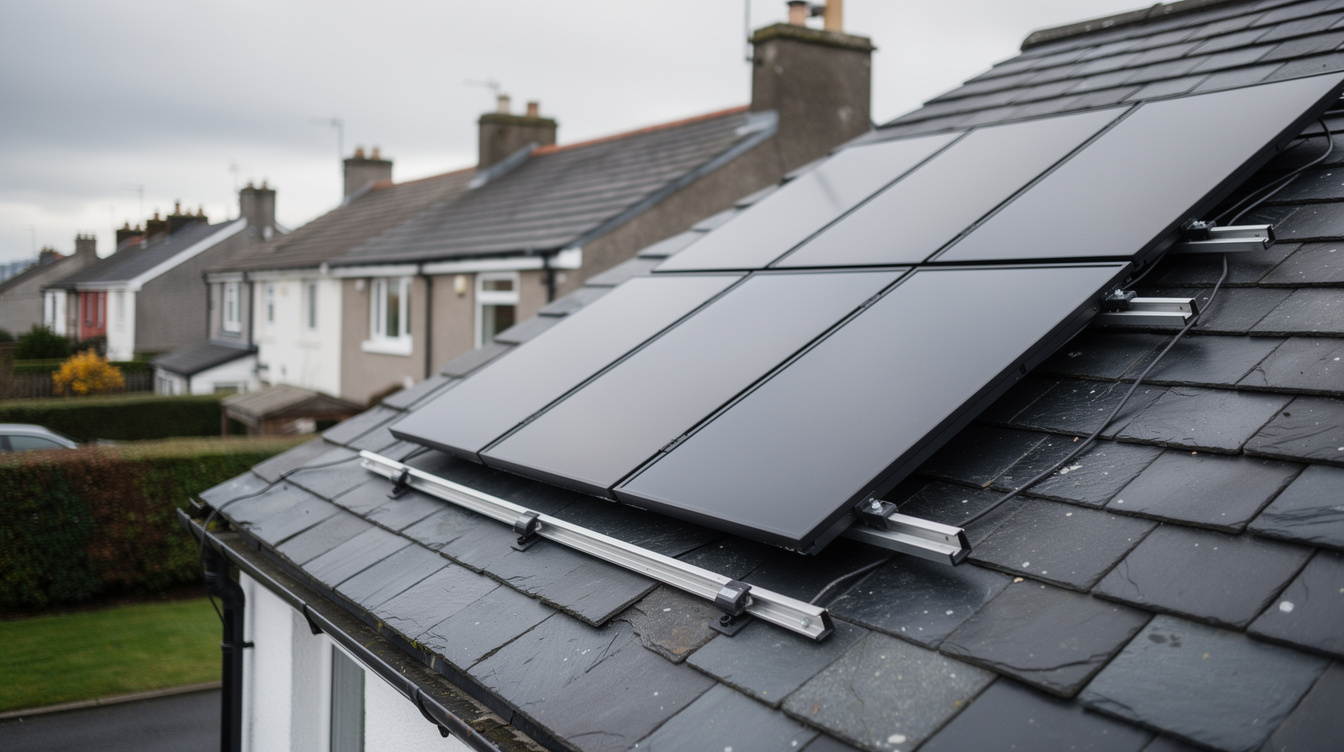
Modern 440W panels measure roughly 1.1m × 1.7m (1.87 m²). Here's what you need:
| System Size | Panels (440W) | Roof Area Needed | Typical House Type |
|---|---|---|---|
| 2.6 kWp | 6 | 11 m² | Terraced / small semi-d |
| 3.5 kWp | 8 | 15 m² | Semi-detached |
| 4.4 kWp | 10 | 19 m² | Larger semi-d / small detached |
| 5.7 kWp | 13 | 24 m² | Detached |
| 8.8 kWp | 20 | 37 m² | Large detached / dormer |
| 10 kWp | 23 | 43 m² | Large detached / farmhouse |
Don't have enough south-facing roof? East/west split installations are increasingly common and only lose 10–15% output compared to due south. They actually spread generation more evenly across the day, which can improve self-consumption. See our guide: Can I Put Solar Panels on an East or West Facing Roof?
Future-Proofing: Should You Oversize Now?
This is one of the most common questions we hear. Here's the logic:
Arguments for installing bigger now:
- The fixed costs (scaffolding, electrician, commissioning) only happen once — adding panels later means paying these again
- If you plan to add an EV in the next 3–5 years, a larger system will be needed anyway
- The heat pump trend is accelerating — your electricity usage will likely increase
- Electricity prices show no sign of falling — more generation = more protection
Arguments for right-sizing now:
- You only get the same €1,800 SEAI grant regardless of system size above 4 kWp
- Without a battery, excess generation is exported at 12–24c/kWh (less than half the import rate)
- Panel prices continue to fall — adding capacity in 3–5 years may cost less per watt
- Your actual usage patterns might change (kids leave home, work patterns shift)
Our recommendation: If you can afford it and have the roof space, install at least one size up from your current needs. The marginal cost of an extra 3–4 panels is €1,200–€1,800, but the lifetime value of those panels is €4,000–€6,000 over 25 years. That's a very good investment, especially if you're likely to electrify heating or transport in the coming years.
Get the Right Size First Time
Our network of SEAI-registered installers will assess your roof, review your electricity bills, and recommend the optimal system size.
Common Mistakes When Choosing System Size
- Only looking at annual output vs. annual usage. A 5 kW system generates enough for an average home on paper, but generation happens during the day and usage peaks in the evening. Without a battery, you'll export 50–70% of what you generate.
- Ignoring the SEAI grant taper. The grant drops from €700/kWp to €200/kWp after 2 kWp, and caps at €1,800. This makes the 3.5–5 kWp range the sweet spot for grant-subsidised cost per watt.
- Skipping the battery conversation. A solar-only system and a solar-plus-battery system have completely different optimal sizes. If you're planning a battery, you should size the solar array 20–30% larger to keep the battery well-fed.
- Choosing based on neighbour's system. Your neighbour's 10-panel system might be perfect for them but wrong for you. Usage patterns, roof orientation, shading, and future plans all matter.
- Not getting multiple quotes. Prices for identical system sizes vary by 15–25% between installers. Always get at least three quotes.
Frequently Asked Questions
What size solar system does a 3-bed semi need in Ireland?
A typical 3-bed semi-detached house uses 4,000–5,000 kWh/year. A 4.4 kWp system (10 panels) is the most common choice, costing €5,500–€7,500 after the SEAI grant. If you work from home or have an EV, step up to 5.7 kWp (13 panels).
Is a 3 kW solar system enough for an Irish home?
It depends on your usage. For a 1–2 person home using under 3,500 kWh/year, a 3 kW system can cover most of your needs. For a family of 3+, you'll want at least 4–5 kWp to make a meaningful impact on your bills.
How many panels is a 10 kW system?
With today's standard 440W panels, a 10 kWp system uses about 23 panels and needs roughly 43 m² of roof space. This is typically only feasible on larger detached homes or farmhouses.
Can I add more panels later?
Yes, but it's not always straightforward. You'll need the same or compatible panel model, your inverter must support the additional capacity (or be upgraded), and you'll pay the fixed installation costs again. It's usually 20–30% cheaper per panel to install everything at once.
Do I need a bigger system if I have an EV?
An average EV adds 2,500–3,500 kWh/year to your electricity demand. If you charge during the day (using a solar diverter or smart charger like the Zappi), you'll want an extra 3–4 kWp of solar capacity to cover this. So if you'd normally choose a 5 kW system, go with 8 kW instead.
What's the maximum domestic solar system size in Ireland?
There's no legal maximum for domestic solar, but planning permission exemptions apply to arrays that don't cover more than 50% of total roof area and don't protrude more than 15 cm. Most domestic systems range from 2–12 kWp. The SEAI grant maxes out at €1,800 regardless of size.
Next Steps
The best way to determine your ideal system size is to have an SEAI-registered installer assess your property. They'll review your electricity bills, survey your roof, and recommend a system sized to your actual needs — not a one-size-fits-all solution.
Use our solar panel calculator for an instant estimate, or get quotes directly from verified installers in your area.
Related Articles
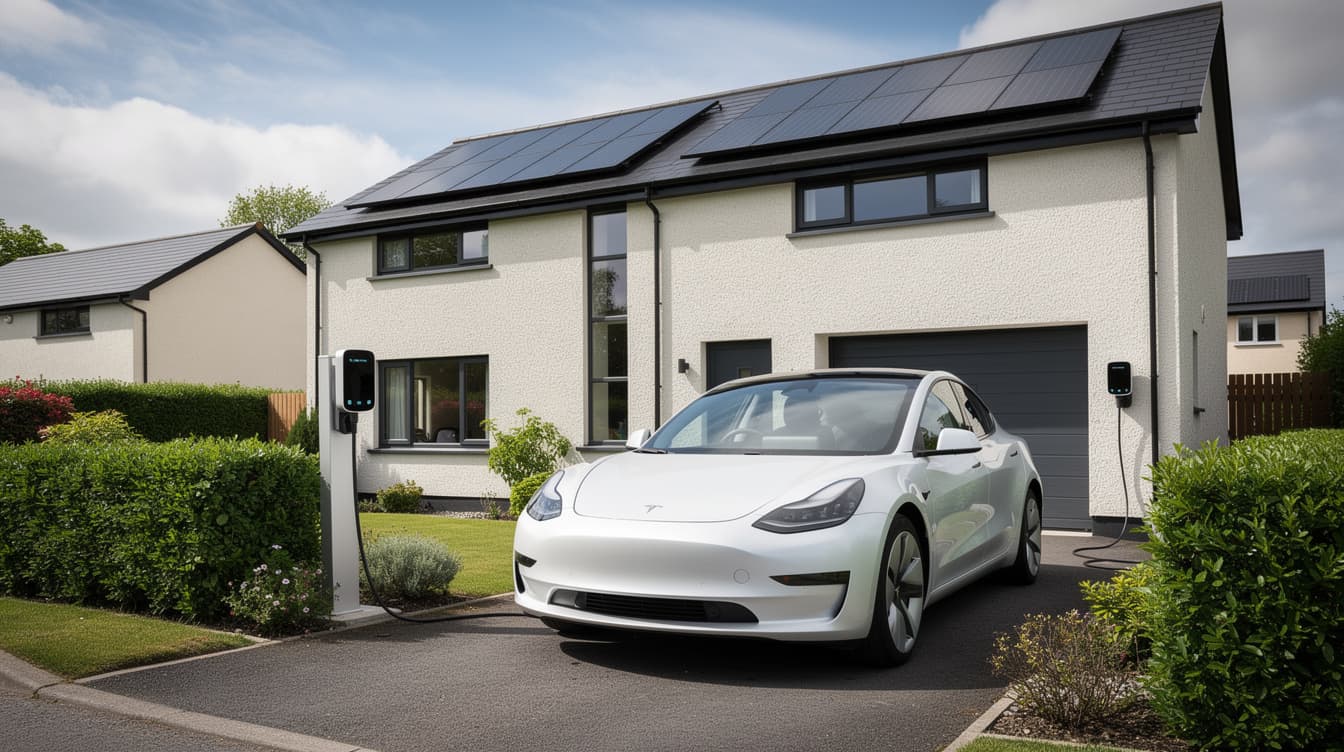
Solar Panels and Electric Cars Ireland 2026: How to Charge Your EV for Free
How to charge your electric car from solar panels in Ireland. Costs, charger options, panel requirements and real savings for 2026.

How Much Do Solar Panels Save Per Month in Ireland? (Real 2026 Numbers)
Solar panels save €60–€145/month in Ireland in 2026. Real monthly breakdown by system size, season and household type with CEG export rates.
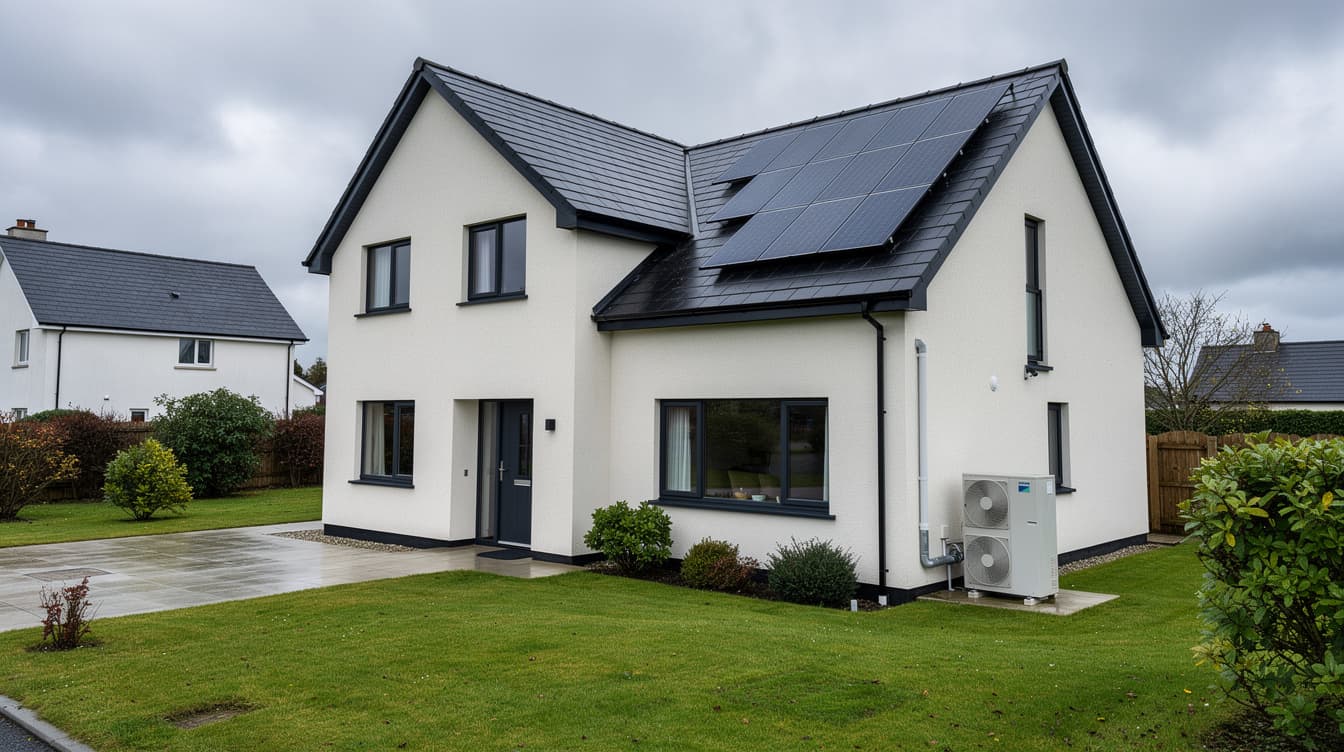
Solar Panels and Heat Pumps in Ireland 2026: The Smart Combo That Slashes Your Bills
Solar panels and heat pumps in Ireland 2026: real costs, SEAI grants up to €14,300, annual savings and the right installation order for Irish homes.