
Solar Panels for New Builds in Ireland 2026: What Developers Include, What You Should Upgrade & What It Costs
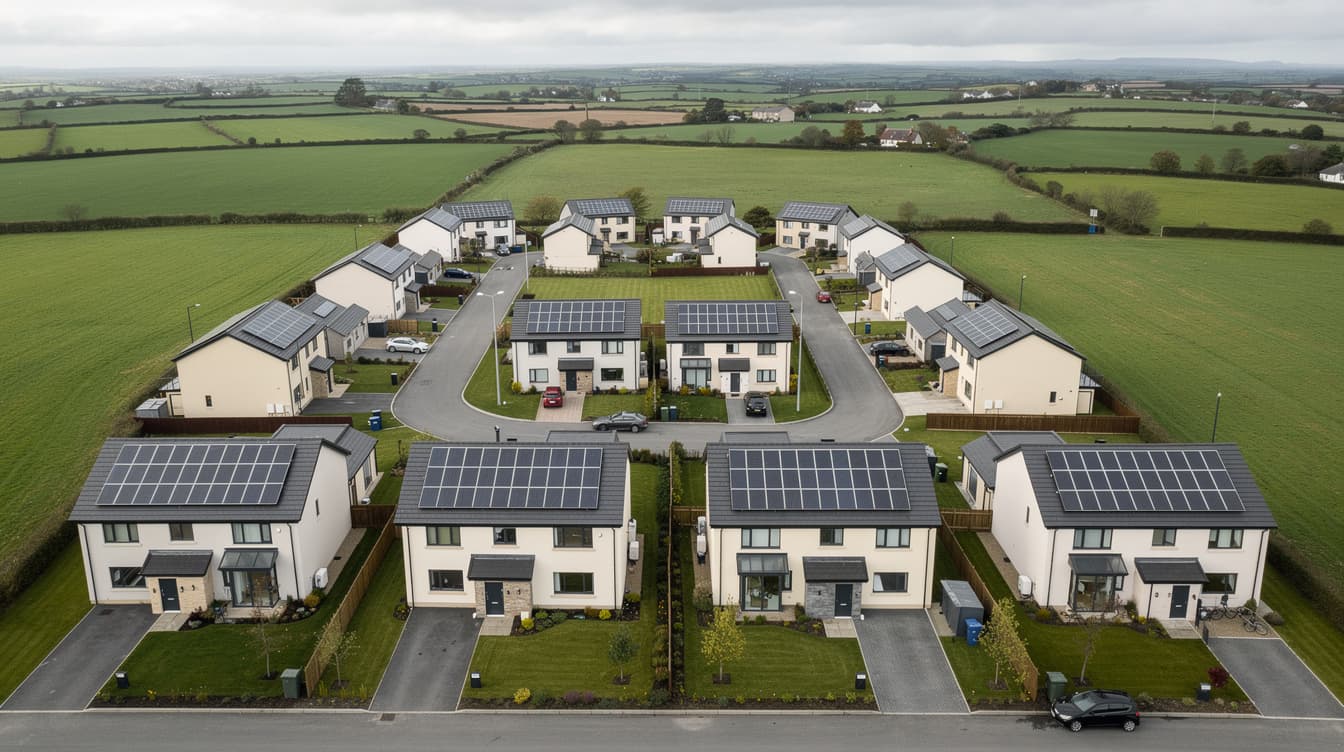
If you are buying or building a new home in Ireland, there is a good chance it already comes with solar panels on the roof. Since 2019, every new dwelling must meet the Nearly Zero Energy Building (nZEB) standard under Part L of the Building Regulations — and solar PV is the most common way developers hit the renewable energy target. But “comes with solar panels” does not always mean “comes with the right solar panels.” Some new builds ship with tiny 1.5 kWp systems that tick the regulatory box while leaving money on the table. Others come with a generous 4–6 kWp array that genuinely slashes your bills from day one.
This guide explains exactly what nZEB means for your solar setup, how much extra you should pay to upgrade, why new-build buyers cannot claim the SEAI grant, and what to negotiate with your developer before you sign.
Building or Buying a New Home?
Get expert advice on the right solar system size for your new build — free, no obligation.
What nZEB Actually Means for Your New Home
Nearly Zero Energy Building (nZEB) is not optional. Every new home in Ireland since 1 November 2019 must comply with Part L 2019 of the Building Regulations, which requires:
- A BER rating of A2 or better — meaning the home uses no more than 45 kWh/m²/year of primary energy
- A Renewable Energy Ratio (RER) of at least 20% — at least one-fifth of the home’s energy must come from renewable sources produced on-site or nearby
- A Carbon Performance Coefficient (CPC) no worse than 0.35 — far below the 2011 standard of 0.46
In practice, this means your new home will have some combination of:
- An air-to-water heat pump (93% of nZEB homes use one)
- Solar PV panels (the most common way to meet the RER target)
- Superior insulation, triple glazing, and airtightness
- Mechanical ventilation with heat recovery (MVHR)
The result is a home that uses roughly 70% less energy than one built before 2010 and produces 70% fewer carbon emissions. That is the good news. The question is whether your developer installed just enough solar to pass — or enough to actually make a difference.
How Much Solar Do New Builds Actually Get?
Here is where it gets interesting. The nZEB standard does not specify a minimum solar system size. It sets performance targets (BER A2, RER 20%, CPC 0.35) and lets the developer decide how to meet them. A well-insulated home with a high-efficiency heat pump can technically hit BER A2 with as little as 1.5 kWp of solar — just four panels.
But “just enough to pass” and “enough to actually save you money” are two very different things. Here is how typical new-build solar compares to what you would actually want:
| Scenario | System Size | Annual Output | Annual Savings | Meets nZEB? |
|---|---|---|---|---|
| Minimum spec (1.5 kWp) | 4 panels | ~1,350 kWh | €350–€450 | Yes |
| Typical developer spec (2.5 kWp) | 6–7 panels | ~2,250 kWh | €550–€700 | Yes |
| Optimal for a 3-bed semi (4 kWp) | 10 panels | ~3,600 kWh | €850–€1,100 | Yes |
| Large family home (6 kWp) | 15 panels | ~5,400 kWh | €1,200–€1,600 | Yes |
The difference between the minimum spec and optimal is roughly €500–€650 per year in savings. Over 25 years, that is €12,500–€16,250 you are leaving on the table if you accept the bare minimum.
The SEAI Grant Catch: New Builds Do Not Qualify
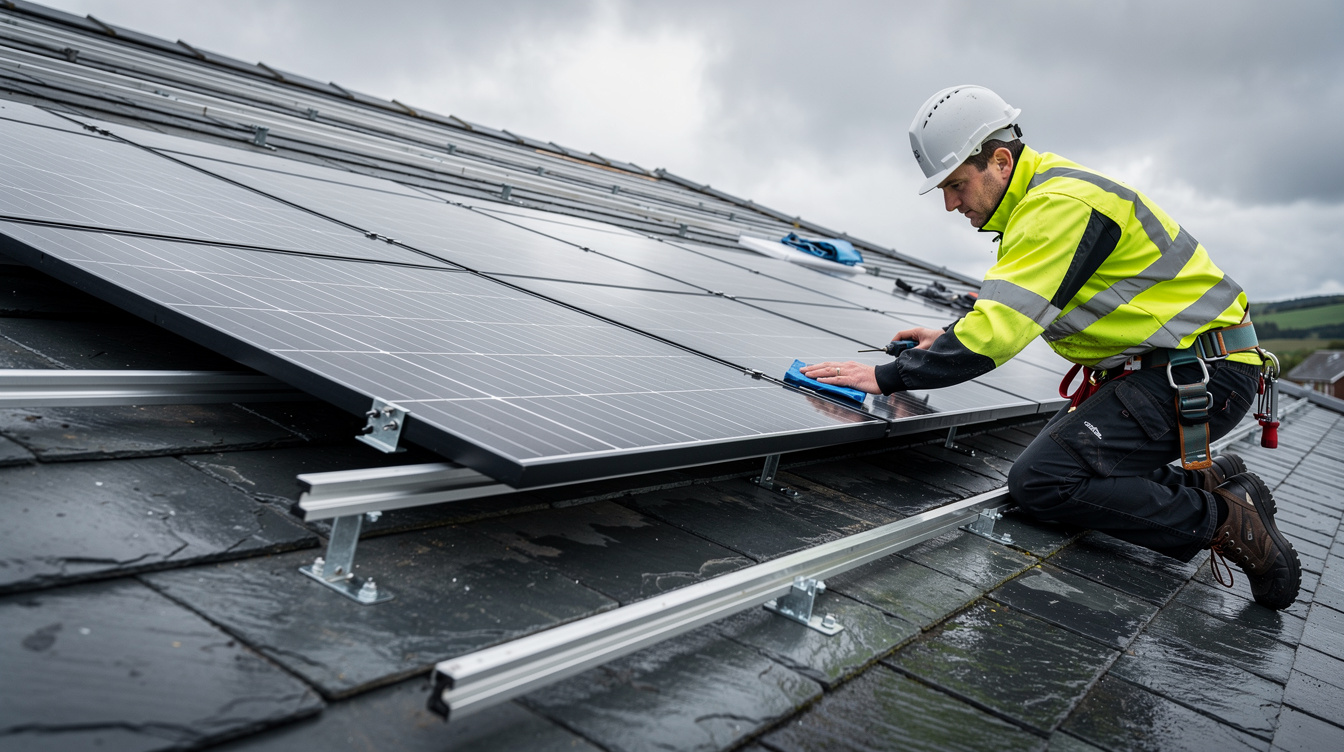
This is the single most important thing new-build buyers need to know about solar: you cannot claim the SEAI solar PV grant if your home was built and occupied after 31 December 2020.
The SEAI solar electricity grant (up to €1,800 for a 4 kWp system) is designed for retrofit installations on existing homes. The logic is that new builds already benefit from nZEB requirements that mandate renewable energy, so the grant targets older housing stock that needs upgrading.
What this means in practice:
| Item | Retrofit (existing home) | New Build |
|---|---|---|
| SEAI grant (4 kWp) | €1,800 | €0 |
| VAT rate | 0% | 0% (if itemised) |
| Planning permission | Exempt | Covered in development permission |
| Typical 4 kWp cost | €5,000–€7,000 (after grant) | €3,000–€5,000 (included in price) |
The silver lining: solar installed during construction is significantly cheaper than retrofit because scaffolding is already up, the electrician is already on-site, and the roof is being built fresh. Developers typically pay €1,200–€1,500 per kWp installed at scale, compared to €1,500–€1,800 per kWp for a one-off retrofit job. So even without the grant, the actual cost to the buyer — if the developer passes the savings through — can be lower.
What the EU Is About to Change (2029 Solar Mandate)
The revised Energy Performance of Buildings Directive (EPBD), adopted by the EU in 2024, introduces mandatory solar for buildings in phases:
- 31 December 2026: All new public and commercial buildings over 250 m² must install solar
- 31 December 2027: All existing public and commercial buildings over 250 m² undergoing major renovation
- 31 December 2029: All new residential buildings must be “solar-ready” — meaning structurally designed for solar, with conduits and mounting points pre-installed
Ireland must transpose these requirements into national law by May 2026. While the 2029 residential mandate includes a “technically and economically feasible” exemption, the direction of travel is clear: solar on new homes will shift from “usually included” to “legally required.” An Irish poll found 81% of people support making solar mandatory on new builds.
If you are buying in 2026, you are effectively buying a home that will be required to have solar within three years anyway. The question is whether you want the minimum or something that actually pays for itself.
Want to Upgrade Your New Build’s Solar?
Get quotes from SEAI-registered installers to add panels or a battery to your new home.
The Heat Pump + Solar Combo: Why It Matters More in a New Build
In a new build, the heat pump and solar panels are not two separate systems — they are designed to work together. Here is why this matters more than in a retrofit:
Your heat pump is your biggest electricity consumer. A typical air-to-water heat pump in a well-insulated new build uses 2,000–3,000 kWh per year for heating and hot water. That is €600–€900 at current electricity rates. Solar panels generate most of their energy during the day when the heat pump can be programmed to run — heating your hot water cylinder and pre-warming the house before evening.
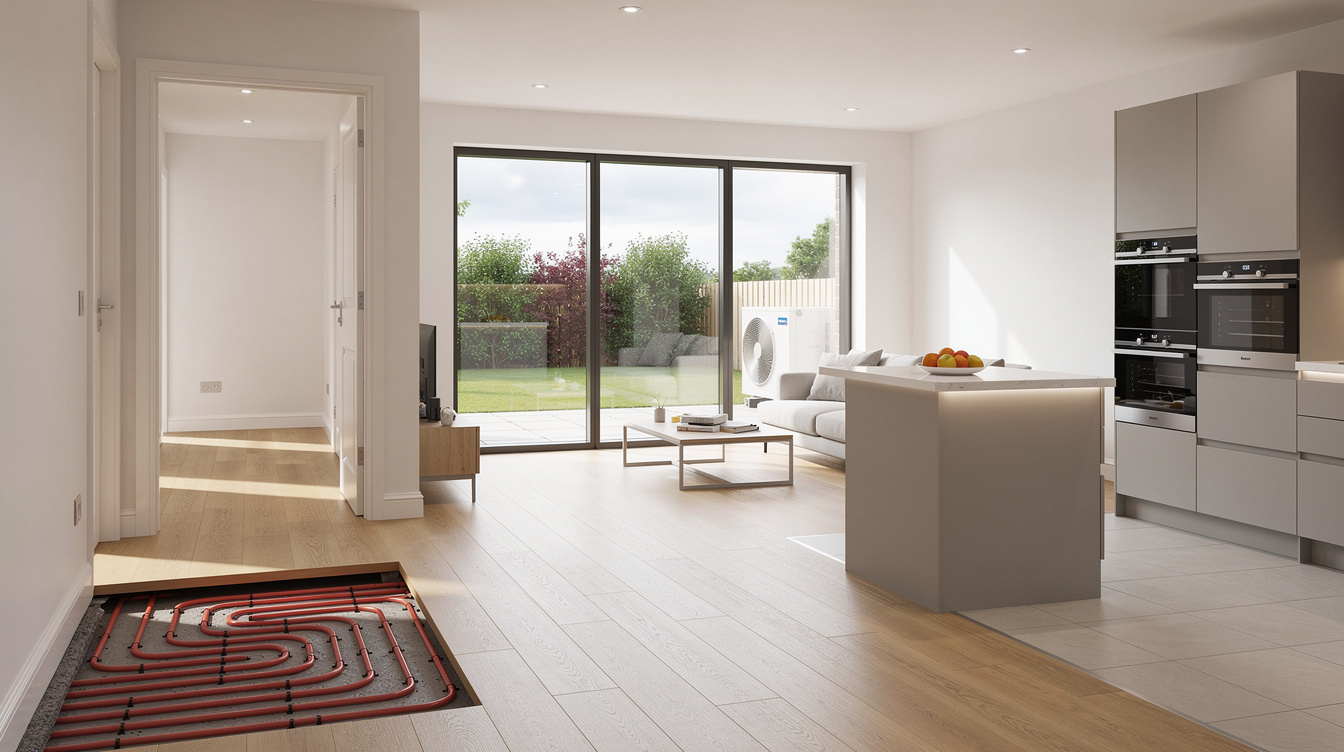
Underfloor heating acts as a thermal battery. Most new builds have underfloor heating throughout, which stores heat in the concrete slab. A smart controller can tell the heat pump to run harder during peak solar hours, effectively storing free solar energy as warmth in your floor. By evening, the slab is radiating heat and the heat pump can rest.
The numbers on the combo:
| Setup | Annual Electricity Bill | Self-Consumption Rate |
|---|---|---|
| Heat pump only (no solar) | €1,400–€1,800 | n/a |
| Heat pump + 2 kWp solar | €1,000–€1,300 | 35–45% |
| Heat pump + 4 kWp solar | €700–€1,000 | 30–40% |
| Heat pump + 4 kWp solar + battery | €450–€700 | 60–75% |
With a 4 kWp system and a battery, you can realistically cut your electricity bill by 60–75% compared to heat pump alone — and your total energy bill (heating + electricity + hot water) can drop below €700 per year. Try achieving that in a 1990s semi.
Can You Upgrade Your New Build’s Solar System?
Yes, and this is where the real opportunity lies. If your developer installed a minimum-spec 1.5–2.5 kWp system, you have three upgrade paths:
Option 1: Negotiate Before You Buy
The cheapest time to add solar is during construction. Ask your developer about upgrading to a larger system as part of the build. Because the scaffolding, electrician, and roof access are already in place, adding extra panels at build stage typically costs €200–€350 per extra panel (versus €400–€600 per panel for a retrofit). Some developers offer solar upgrade packages as standard customisation options alongside kitchen and bathroom upgrades.
What to ask your developer:
- What size solar system is included in the base spec? (Get the kWp number, not just “solar panels included”)
- What brand and model of panels are being used?
- Is the inverter sized for the current system or for future expansion?
- Can I upgrade to 4–6 kWp before construction? What is the cost?
- Is the roof wiring pre-run for additional panels?
- What warranty comes with the panels and inverter?
Option 2: Add Panels After Moving In
If you have already moved in and want more solar, you can hire an SEAI-registered installer to add panels to your roof. The catch: you still cannot claim the SEAI grant if the home was built after 2020, even for additional panels added later. However, the 0% VAT on solar installation still applies, which saves you roughly €700–€1,000 on a typical 4 kWp system.
Before adding panels, check whether your existing inverter can handle extra capacity. If the developer installed a string inverter sized only for the original system, you may need to upgrade it (€800–€1,200) or add micro-inverters to the new panels.
Option 3: Add a Battery
If your solar system is already a decent size (3+ kWp) but you are exporting a lot of electricity to the grid, a battery storage system can dramatically increase your self-consumption. Popular options for new builds include:
- GivEnergy 5.2 kWh: €3,500–€4,500 installed
- Huawei LUNA2000 5 kWh: €3,200–€4,200 installed
- Tesla Powerwall 3 (13.5 kWh): €8,000–€10,000 installed
With the Clean Export Guarantee paying just 10–15c/kWh for exported electricity versus paying 30–38c/kWh to import, every kWh you store and use yourself saves you roughly 20c. A 5 kWh battery cycling daily saves €300–€400 per year.
What Solar Actually Costs in a New Build (2026 Prices)
Here is the full cost picture, distinguishing between what the developer pays at scale, what you might pay as an upgrade, and what a retrofit costs for comparison:
| System Size | Developer Cost (at scale) | Upgrade at Build Stage | Retrofit Cost (no grant) |
|---|---|---|---|
| 1.5 kWp (minimum) | €1,800–€2,200 | Included | n/a |
| 2.5 kWp (typical) | €3,000–€3,800 | Included | n/a |
| 4 kWp (optimal) | €4,800–€6,000 | €1,500–€2,500 extra | €6,500–€8,500 |
| 6 kWp (premium) | €7,200–€9,000 | €3,000–€4,500 extra | €9,000–€12,000 |
The takeaway: upgrading at build stage costs roughly 40–50% less than retrofitting the same system later. If you are buying off-plan, this is the single best time to negotiate.
How Solar Affects Your BER Rating
Your new build already hits BER A2 — that is the nZEB floor. But more solar can push it to BER A1, which matters for two reasons:
- Resale value: Research from the ESRI and other studies shows that each step up in BER adds roughly 1.5–3% to a home’s value. Moving from A2 to A1 on a €400,000 home could add €6,000–€12,000.
- Lower bills from day one: A BER A1 home uses less than 25 kWh/m²/year — roughly half the A2 threshold. That translates directly into lower running costs.
The typical impact of adding solar on a new-build BER:
| Solar Addition | Typical BER Improvement | Likely Rating |
|---|---|---|
| 1.5 kWp (minimum nZEB spec) | Meets A2 baseline | A2 |
| 3–4 kWp | 10–15 kWh/m² reduction | A2 (upper) to A1 |
| 5–6 kWp | 15–25 kWh/m² reduction | A1 |
Your New-Build Solar Checklist
Whether you are buying off-plan, in a development under construction, or viewing a completed show house, here is exactly what to check:
- Get the kWp number in writing. “Solar panels included” is meaningless without knowing the system size. Insist on the exact kWp, number of panels, and panel brand/model.
- Check the inverter capacity. If the developer installed a 2 kWp inverter for a 2 kWp system, expanding later means replacing the inverter. Ask for an inverter sized for at least 4 kWp, even if only 2 kWp of panels are installed initially.
- Ask about roof orientation. South-facing roofs generate the most energy, but east-west splits can work well too, especially if you are home during mornings and evenings.
- Verify the panel warranty. Good panels come with a 25-year performance warranty guaranteeing at least 80–85% output. Budget panels may only offer 10–15 years.
- Check if conduit is pre-run for a battery. Even if you do not want a battery now, having the cabling in place during construction saves €300–€500 later.
- Confirm the system is registered with ESB Networks. Your developer should handle the NC6 registration and Clean Export Guarantee signup.
- Get the DEAP calculation. This is the technical assessment used for the BER cert. It shows exactly how the solar contributes to the home’s energy performance.
Ready to Go Solar?
Get your free personalised quote from SEAI-registered installers.
Self-Build vs Developer: Different Solar Strategies
If you are building your own home (rather than buying from a developer), you have far more control — and some different considerations:
Self-builders can claim the SEAI grant. This is a significant advantage. If you occupy the home and then install solar as a separate project after the house is substantially complete, you may be eligible for the €1,800 grant. The key is that the solar installation must be a distinct project from the house build, with its own BER assessment. Consult with your BER assessor about timing.
Design the roof for solar from the start. Unlike a developer build where roof pitch and orientation are fixed, a self-build lets you optimise:
- A 30–35° south-facing pitch is ideal for Ireland’s latitude (51–55°N)
- Avoid roof windows, vents, or chimneys on the solar-intended roof section
- Allow 1.5–2 m² per panel (standard 400W panels are roughly 1.7 m²)
- Run conduit from the roof to the utility room during construction
Budget more generously. Without developer constraints, most self-builders install 4–6 kWp systems. At 0% VAT and with the potential SEAI grant, a 4 kWp system can cost as little as €4,000–€5,500 fully installed.
The Bottom Line
Every new home in Ireland comes with some solar — but “some” is often the bare minimum needed to pass nZEB. The gap between minimum-spec and optimal solar on a new build is typically €1,500–€3,000 at build stage, but it saves €500–€700 per year in electricity bills and can add €6,000–€12,000 to your home’s resale value.
If you are buying off-plan, negotiate the solar upgrade now — it is the cheapest it will ever be. If you have already moved in with a small system, adding panels is straightforward and still makes financial sense even without the SEAI grant. And if you are self-building, you have the best opportunity of all: design the roof for solar from day one and potentially claim the grant too.
The EU will require solar on all new homes by 2029. You can wait for the mandate or get ahead of it now and start saving from day one.
Related Articles
How Long Does It Take to Install Solar Panels in Ireland? The Full 2026 Timeline
Solar panel installation in Ireland takes 1-2 days on the roof, but 4-8 weeks end-to-end. Here's every step from quotes to SEAI grant, with exact timelines.
Solar Panels for Farms Ireland 2026: TAMS III Grants, Costs & ROI for Irish Farmers
Complete guide to farm solar panels in Ireland. TAMS III covers 60% of costs. Typical payback 2.5-5 years with savings of €4,000-€15,000/year.
Balcony Solar Panels Ireland 2026: A Complete Guide for Apartments & Renters
Complete guide to balcony solar panels in Ireland. Costs, regulations, best kits, savings and whether plug-in solar is worth it for apartments.