
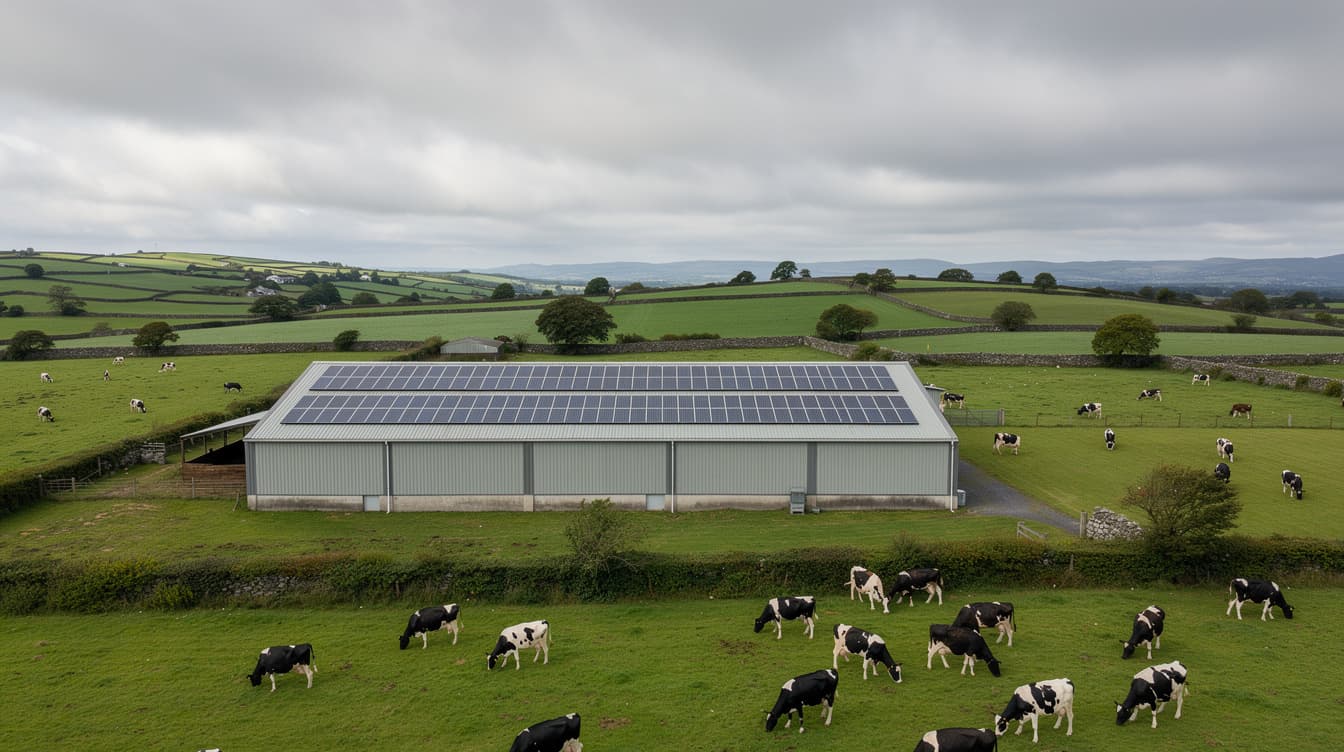
Solar Panels for Farms Ireland 2026: TAMS III Grants, Costs & ROI for Irish Farmers
Irish farmers are saving €4,000–€15,000 per year on electricity by installing solar panels on their farm buildings — and the government is covering 60% of the cost. The TAMS III Solar Capital Investment Scheme is the most generous agricultural solar grant in Europe, with funding up to €54,000 per holding. If you run a dairy, tillage, beef, or poultry operation in Ireland, solar PV is now the single best capital investment you can make. Here’s everything you need to know.
Farm electricity bills in Ireland have roughly doubled since 2021. A 100-cow dairy farm typically spends €8,000–€14,000 per year on electricity for milking machines, bulk tanks, water heating, ventilation, and lighting. Poultry operations can spend €20,000+. Meanwhile, the cost of solar panels has dropped by over 30% in three years, and the TAMS III grant means you only pay 40% of the installation cost out of pocket (or just 20% if you’re a qualifying young farmer).
The maths is now overwhelmingly in favour of farm solar. This guide breaks down the grants, costs, savings, and step-by-step process for getting solar panels on your farm in 2026.
TAMS III Solar Capital Investment Scheme: The Numbers
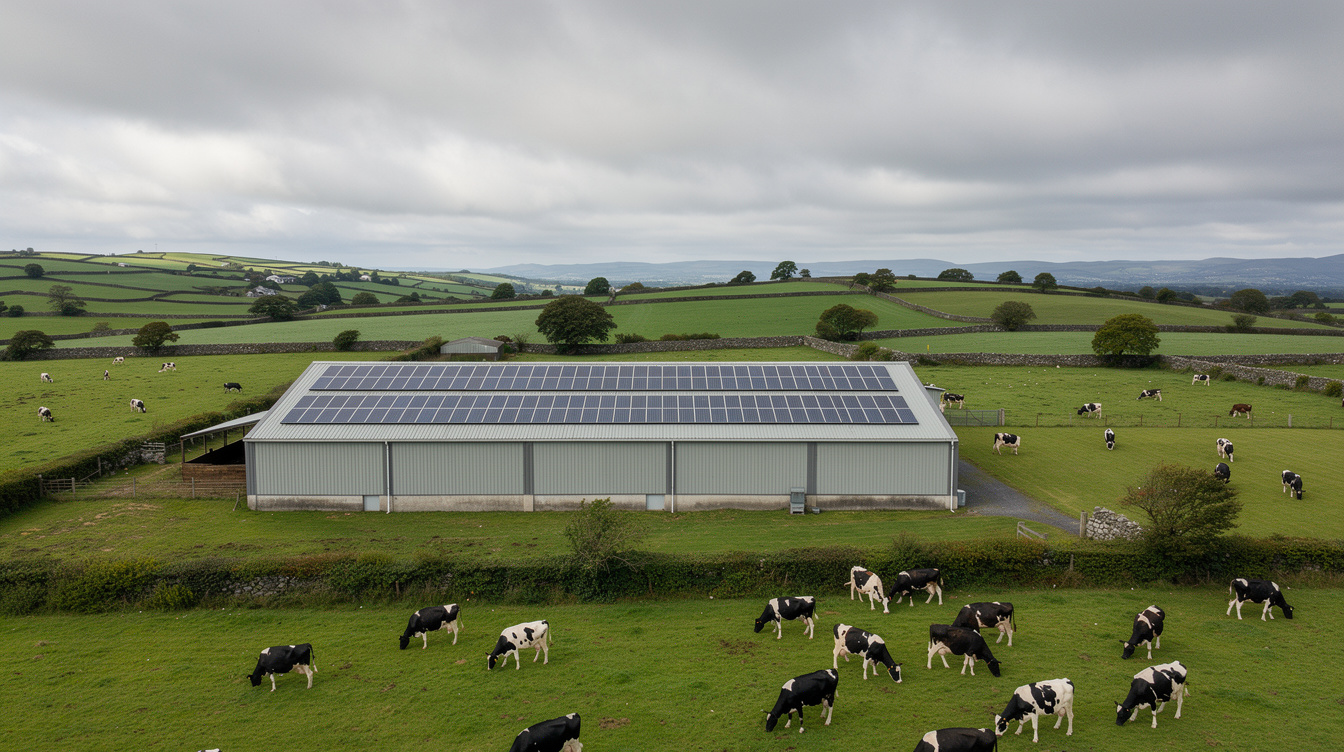
The Targeted Agricultural Modernisation Scheme (TAMS III) is administered by the Department of Agriculture, Food and the Marine (DAFM). The Solar Capital Investment Scheme is the specific strand that covers solar PV installations on farm buildings.
Here are the key figures for 2026:
| Parameter | Standard Rate | Young Farmer Rate |
|---|---|---|
| Grant rate | 60% of eligible costs | 80% of eligible costs |
| Investment ceiling | €90,000 per holding | €90,000 per holding |
| Maximum grant payment | €54,000 | €72,000 |
| Maximum system size | 62 kWp | 62 kWp |
| Battery included? | Yes — up to 50% of PV capacity | Yes — up to 50% of PV capacity |
| Young farmer requirement | N/A | Under 40 + Level 6 agricultural qualification |
Important rule: The system you install can only generate energy equal to your previous 12 months’ electricity consumption. DAFM will check your electricity bills during the application. You can’t install a 62 kWp system if your farm only uses 15,000 kWh/year.
Pro tip: If you’re planning to expand your operation (e.g., adding a robotic milker, more ventilation, or EV charging), factor that future consumption into your application. Teagasc advisers can help you project forward energy needs.
What Does Farm Solar Actually Cost in 2026?
Farm solar installations cost between €1,300 and €1,600 per kWp installed, depending on system size, roof type, and location. Larger systems get better per-kWp pricing. Here’s what typical farm systems cost before and after the TAMS III grant:
| Farm Type | Typical System | Cost Before Grant | TAMS III Grant (60%) | Your Cost |
|---|---|---|---|---|
| Small beef/sheep | 10 kWp | €14,000–€16,000 | €8,400–€9,600 | €5,600–€6,400 |
| Medium dairy (80–120 cows) | 25–30 kWp | €27,000–€42,000 | €16,200–€25,200 | €10,800–€16,800 |
| Large dairy (200+ cows) | 40–62 kWp | €52,000–€85,000 | €31,200–€51,000 | €20,800–€34,000 |
| Poultry house | 40–62 kWp | €52,000–€90,000 | €31,200–€54,000 | €20,800–€36,000 |
| Tillage/grain drying | 20–40 kWp | €26,000–€56,000 | €15,600–€33,600 | €10,400–€22,400 |
These prices include panels, inverters, mounting hardware, wiring, and installation. Battery storage adds €500–€800 per kWh of capacity, also covered at 60% by TAMS III (up to half your PV system size).
Get a Free Farm Solar Quote
Compare prices from SEAI-registered installers experienced with TAMS III applications.
Why Farm Solar Pays Back So Fast
The reason solar makes exceptional financial sense for farms is daytime consumption. Unlike a typical house where residents are at work all day, farms use most of their electricity during daylight hours — exactly when solar panels are generating power.
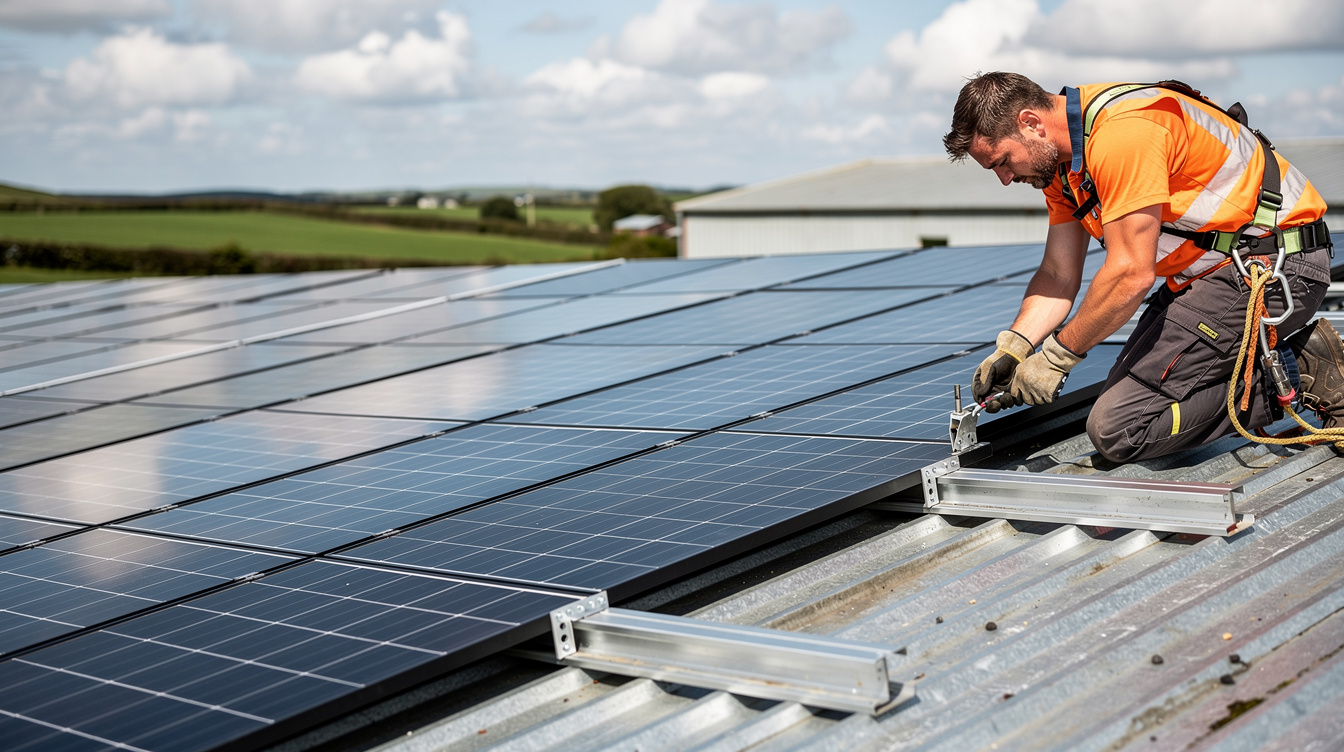
Here’s what consumes power on a typical dairy farm during the day:
- Milking machines — morning and afternoon milking (4–6 hours/day)
- Bulk tank cooling — runs continuously after each milking
- Water heating — for parlour wash-down and calf feeding
- Ventilation fans — especially in poultry and pig houses
- Lighting — sheds, parlours, workshops
- Grain drying — seasonal but extremely energy-intensive
- Electric fencing — small but constant draw
- Water pumps — livestock water systems
A typical dairy farm self-consumes 60–80% of its solar generation directly. That’s far higher than a residential home (which typically self-consumes only 30–40%). Higher self-consumption means faster payback, because every kWh you use yourself saves you the full retail electricity rate of 35–42c/kWh.
Real Payback Numbers by Farm Type
Here’s what the payback period looks like for different farm operations, based on 2026 electricity rates and TAMS III at 60%:
| Farm Type | System Size | Your Cost (After Grant) | Annual Saving | Payback Period |
|---|---|---|---|---|
| Dairy (100 cows) | 30 kWp | €11,000–€14,000 | €4,000–€6,000 | 2.5–3.5 years |
| Dairy (200+ cows) | 50–62 kWp | €22,000–€34,000 | €8,000–€12,000 | 2.5–4 years |
| Poultry | 40–62 kWp | €20,800–€36,000 | €7,000–€15,000 | 2–4 years |
| Beef/sheep | 10–15 kWp | €5,600–€8,000 | €1,500–€3,000 | 3–5 years |
| Tillage | 20–40 kWp | €10,400–€22,400 | €3,000–€7,000 | 3–5 years |
After payback, the system generates free electricity for 20–25+ years. A 30 kWp dairy farm system that pays back in 3 years will deliver €80,000–€120,000 in lifetime savings. Solar panels are warranted for 25 years and typically last 30+.
Step-by-Step: How to Apply for TAMS III Solar
The application process is straightforward but has specific requirements. Here’s the exact sequence:
- Contact your local Teagasc adviser — This is mandatory. A Teagasc adviser must assess your farm’s suitability, review your 12-month electricity consumption, and help complete the application. They’ll also advise on optimal system sizing.
- Gather your electricity bills — You need 12 months of bills to prove your energy consumption. The system you apply for cannot exceed your annual usage.
- Submit your TAMS III application online — Through the DAFM’s agfood.ie portal. Your Teagasc adviser will guide this.
- Wait for approval — Processing typically takes 6–12 weeks. Do NOT start any work before receiving written approval — you will lose the grant.
- Get quotes from registered installers — You need at least two quotes. The installer must be SEAI-registered and Safe Electric certified.
- Complete the installation — Must be done within the timeframe specified in your approval letter.
- Submit your payment claim — Upload invoices, proof of payment, and installer certifications through agfood.ie.
- Receive your grant payment — DAFM pays the grant directly to you after verification. Typically 4–8 weeks after claim submission.
Critical warning: Never start installation before receiving DAFM approval. This is the most common mistake farmers make, and it results in complete loss of the grant. No exceptions.
Which Farm Buildings Are Best for Solar?
Not all farm roofs are created equal. TAMS III only covers solar on farm buildings (not the farmhouse — that’s covered by the separate SEAI residential grant). Here’s how different buildings rank:
| Building Type | Roof Suitability | Notes |
|---|---|---|
| Modern steel-frame shed | Excellent | Large, unshaded, easy mounting on purlins |
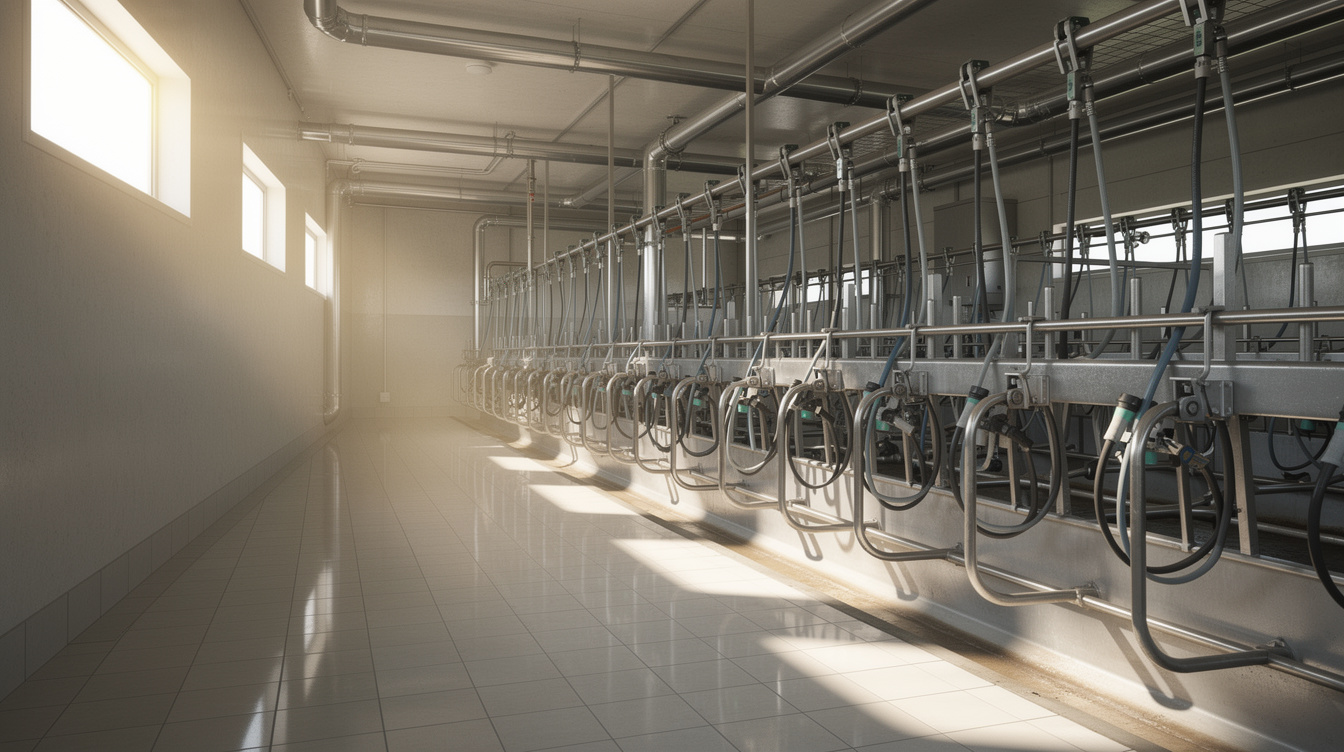
| Milking parlour roof | Excellent | Close to main electricity consumer |
| Grain store | Very good | Large roof area, seasonal but high consumption |
| Poultry house | Very good | High constant electricity demand, ideal match |
| Older stone/block shed | Fair | May need structural assessment; roof may need reinforcing |
| Open-sided lean-to | Good | Often south-facing; check structural capacity |
South-facing roofs generate the most energy (up to 100% of rated output). East/west-facing roofs still generate 80–85% and can actually be better for self-consumption because they spread generation across morning and afternoon. Your installer will model the optimal layout using your specific roof orientation and any shading from trees or other buildings.
Not Sure What Size System You Need?
Our network of SEAI-registered installers will assess your farm’s energy usage for free.
Battery Storage: Worth It for Farms?
TAMS III covers battery storage at 60%, but the battery can only be up to 50% of your PV system capacity. For a 30 kWp system, that means a maximum 15 kWh battery.
For most dairy and poultry farms, a battery is less critical than for residential installations. Why? Because farms already self-consume most of their solar generation during the day. A battery adds value mainly if:
- You run equipment overnight (e.g., ventilation in poultry houses, overnight milking robots)
- You want to store excess summer generation for evening use
- You want backup power during grid outages (important in rural Ireland)
For a dairy farm that milks twice daily and shuts down at night, the extra cost of a battery (even at 60% grant) may not be worth it. For a poultry farm running fans 24/7, it almost certainly is.
Can You Sell Excess Electricity Back to the Grid?
Yes. Under Ireland’s Clean Export Guarantee (CEG), you can sell surplus solar electricity back to your supplier. Current export rates range from 15–24c/kWh depending on your supplier.
However, the economics heavily favour self-consumption over export. Every kWh you use yourself saves you the full retail rate (35–42c/kWh). Every kWh you export earns you only 15–24c/kWh. This is why proper system sizing — matching your solar capacity to your actual usage — is so important. The TAMS III rule of sizing to 12-month consumption actually protects farmers from over-investing in panels they can’t fully utilise.
Tax Benefits: Accelerated Capital Allowances
On top of the TAMS III grant, farmers can claim Accelerated Capital Allowances (ACA) on the portion they pay themselves. This means you can write off the full cost of your solar investment against farm income in the year of purchase, rather than over the standard 8-year depreciation period.
For a farmer in the 40% income tax bracket, this can reduce the effective out-of-pocket cost by a further 40%. Example:
- 30 kWp system costs €35,000
- TAMS III grant (60%): €21,000
- Your cost: €14,000
- ACA tax relief (40% of €14,000): €5,600
- True net cost: €8,400
With annual savings of €4,000–€6,000, that’s a payback of under 2 years. Speak to your accountant or Ifac adviser about how ACA applies to your specific tax situation.
Planning Permission: Do You Need It?
In most cases, no. Solar panels on farm buildings are exempt development under Ireland’s planning exemptions, provided:
- The panels are mounted on the roof of an existing agricultural building
- They don’t extend more than 15cm above the roof surface
- They don’t project beyond the roof line
- The building is not in an architectural conservation area
Ground-mounted solar arrays on farms may require planning permission depending on size and location. Check with your local authority if you’re considering a ground-mounted system.
TAMS III vs. SEAI Grant: Which One for Your Farm?
Farmers often get confused between these two grant schemes. Here’s the simple distinction:
| Feature | TAMS III (Farm) | SEAI Grant (Home) |
|---|---|---|
| Covers | Farm buildings only | Farmhouse/dwelling only |
| Grant rate | 60% (80% young farmer) | Up to €2,100 flat |
| Max system | 62 kWp | No cap (grant is fixed) |
| Can use both? | Yes! You can claim TAMS III for your farm sheds AND SEAI for your farmhouse | |
Many farmers install solar on both their farm buildings (via TAMS III) and their farmhouse (via the SEAI solar grant). These are completely separate schemes and you can claim both.
Common Mistakes Farmers Make with Solar
- Starting work before DAFM approval — This disqualifies you from the grant entirely. Wait for the written approval letter.
- Oversizing the system — Installing more than your 12-month consumption means the excess capacity won’t be covered by the grant. Size to your actual usage.
- Ignoring the farmhouse — TAMS III doesn’t cover the farmhouse, but the SEAI grant does. Apply for both.
- Choosing the cheapest installer — Always verify SEAI registration and Safe Electric certification. Check their track record with farm installations specifically — farm roofs have different structural requirements than domestic roofs.
- Forgetting about batteries for 24/7 operations — If you run ventilation, cooling, or robotic milking overnight, a battery dramatically increases your self-consumption rate.
- Not considering future expansion — If you’re planning to increase herd size, add robotic milking, or install EV charging, factor projected consumption into your application.
Frequently Asked Questions
Can I install solar on the farmhouse under TAMS III?
No. TAMS III only covers farm buildings (sheds, parlours, stores). For the farmhouse, apply for the SEAI residential solar grant separately. You can claim both grants.
What if I’m a part-time farmer?
You can still apply for TAMS III provided you have a registered herd number and meet the standard eligibility criteria (e.g., completing a FETAC Level 6 agricultural training course, or being in receipt of a Basic Payment Scheme entitlement). Your Teagasc adviser can confirm eligibility.
How long does the whole process take?
From Teagasc consultation to panels generating electricity, expect 4–8 months. Application processing takes 6–12 weeks, then you need to source quotes, schedule installation, and complete within the approval timeframe.
Do solar panels affect farm insurance?
You must notify your insurer, but most Irish farm insurers cover solar panels at no extra premium. FBD, Zurich, and Allianz all have established processes for farm solar. Get this in writing before installation.
What happens to the grant if I sell the farm?
TAMS III grants have a clawback period of 5 years. If you sell within 5 years, you may need to repay some or all of the grant. After 5 years, there’s no clawback.
Ready to Get Solar on Your Farm?
Get free quotes from installers experienced with TAMS III farm installations across Ireland.
The Bottom Line for Irish Farmers
Solar panels on farm buildings are now the highest-ROI capital investment available to Irish farmers. With TAMS III covering 60% of the cost (80% for young farmers), payback periods of 2.5–5 years, and 25+ years of free electricity afterwards, the financial case is overwhelming. Add accelerated capital allowances and the ability to sell excess electricity back to the grid, and the only real question is: why haven’t you applied yet?
Start by contacting your local Teagasc office. They’ll assess your farm, review your electricity consumption, and guide you through the TAMS III application. Or get a free quote below from installers who specialise in farm solar installations across Ireland.
Related Articles
Balcony Solar Panels Ireland 2026: A Complete Guide for Apartments & Renters
Complete guide to balcony solar panels in Ireland. Costs, regulations, best kits, savings and whether plug-in solar is worth it for apartments.
Solar Panel Financing Ireland 2026: Payment Plans, Green Loans & How to Pay
Compare solar panel financing in Ireland: credit union green loans, SBCI scheme, Finance Ireland plans. Real monthly costs and which option saves most.
Solar Panels and Electric Cars Ireland 2026: How to Charge Your EV for Free
How to charge your electric car from solar panels in Ireland. Costs, charger options, panel requirements and real savings for 2026.