
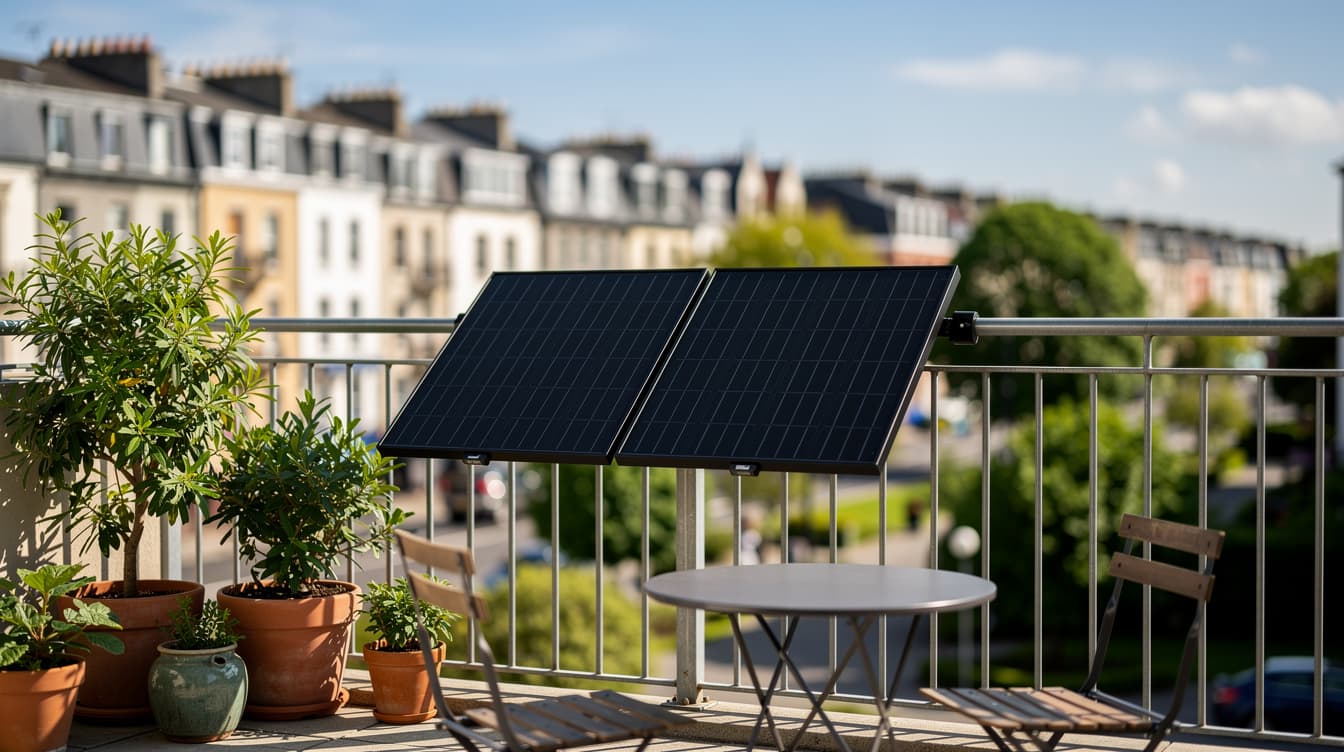
Balcony Solar Panels Ireland 2026: A Complete Guide for Apartments & Renters
Can you generate your own solar electricity if you live in an apartment in Ireland? Yes — but it’s not as simple as buying a panel and plugging it in. Balcony solar panels (also called plug-in solar or balcony power plants) are exploding across Germany, Austria, and the Netherlands, where over 4 million units have been installed. Ireland is catching up, but the regulations here are different. This guide covers what works, what’s legal, what it costs, and whether it’s worth it for Irish apartment dwellers and renters in 2026.
If you own your home and have a roof, this isn’t the guide for you — check our complete solar panels guide instead. This is specifically for people who don’t have a roof they can put panels on: apartment owners, renters, people with unsuitable roofs, and anyone who wants a small, affordable solar setup without a full installation.
What Are Balcony Solar Panels?
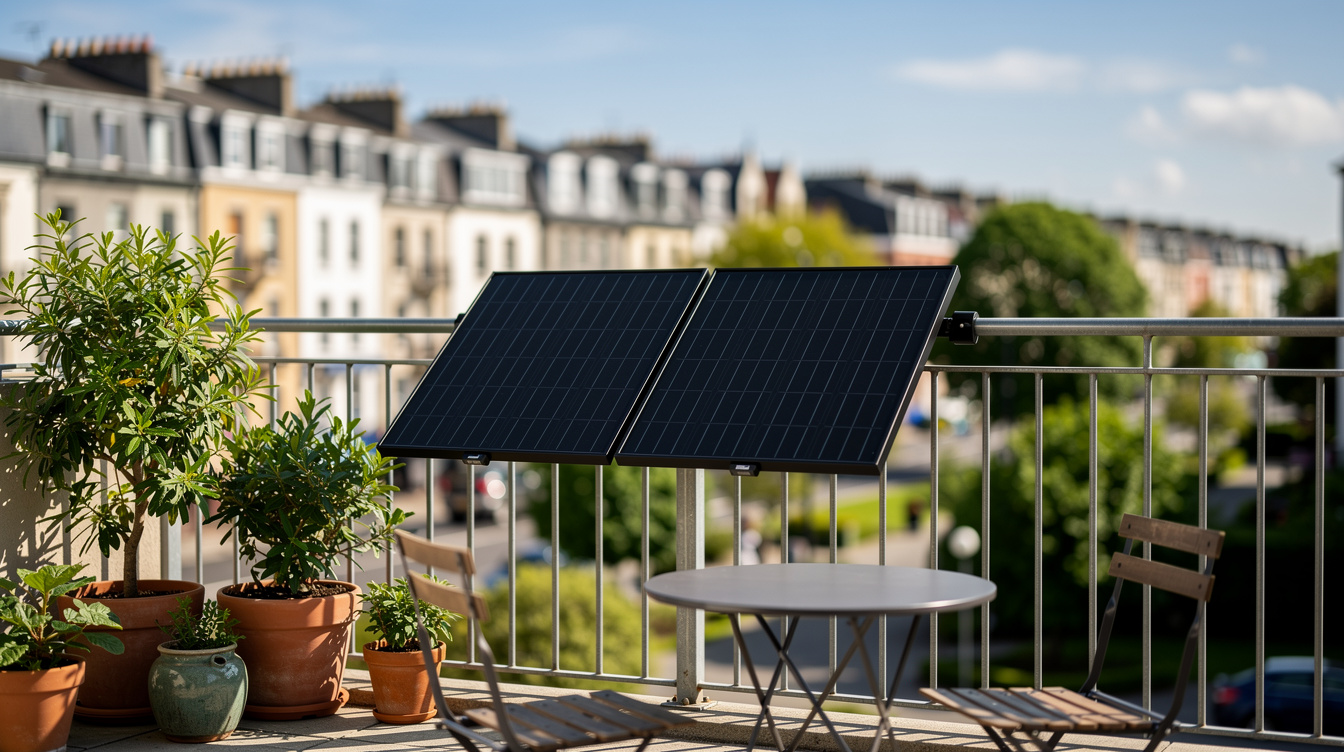
A balcony solar system is a small, self-contained solar setup designed to mount on a balcony railing, garden fence, or lean against a wall. A typical system consists of:
- 1–2 solar panels (400–800W total capacity)
- A micro inverter that converts DC solar power to AC household electricity
- Mounting brackets for railing, wall, or ground installation
- A cable connecting to your home’s electrical system
In countries like Germany, you literally plug the system into a wall socket and the panels feed electricity directly into your apartment’s wiring. Your meter slows down, and you use less grid electricity. Simple.
In Ireland, it’s not quite that simple. But it is possible — and increasingly practical.
The Legal Reality in Ireland (2026)
This is the section most guides get wrong, so let’s be precise:
Planning permission: Not required for balcony-mounted solar panels on residential properties since October 2022. The exempt development rules cover panels mounted on walls and balconies of houses.
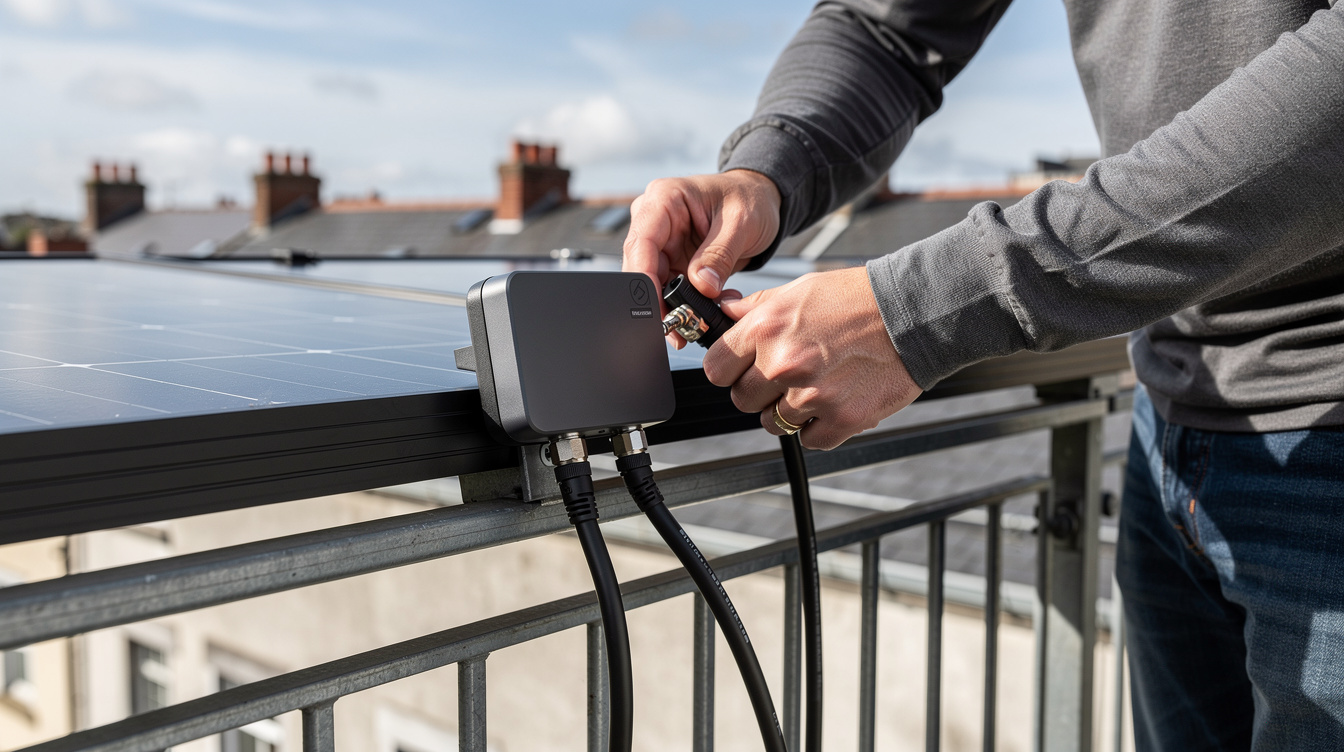
Grid connection: Any solar system connected to your home’s wiring — including balcony panels — must be registered with ESB Networks via an NC6 form. This requires a Safe Electric registered electrician. You cannot legally plug panels into a standard wall socket and feed into the grid in Ireland.
Apartment rules: Even though planning permission isn’t needed from the council, your apartment management company or landlord may have rules about external modifications. Always check your lease or management agreement first.
In practice, this means:
- You can install balcony solar panels in Ireland
- You must hire a registered electrician to connect them properly
- You must submit an NC6 form to ESB Networks
- You cannot simply plug them into a socket (unlike Germany)
The electrician cost adds €200–€500 to your setup, but it ensures your system is safe and legal.
How Much Do Balcony Solar Panels Cost in Ireland?
Here’s the realistic breakdown for 2026:
| System Size | Kit Cost | Electrician | Total Cost | Annual Output |
|---|---|---|---|---|
| 400W (1 panel) | €350–€500 | €200–€400 | €550–€900 | 330–400 kWh |
| 800W (2 panels) | €620–€950 | €300–€500 | €920–€1,450 | 650–800 kWh |
| 800W + battery | €1,100–€1,500 | €300–€500 | €1,400–€2,000 | 650–800 kWh |
For comparison, a full rooftop solar installation costs €4,700–€6,200 after the SEAI grant. A balcony system is 5–10x cheaper upfront but generates roughly 5–10x less electricity. The economics per watt are similar — the difference is scale.
How Much Can You Actually Save?
An 800W balcony system in Ireland generates 650–800 kWh per year. At 2026 electricity rates of 36–42c/kWh, that translates to:
| Scenario | Self-Consumption | Annual Saving | Payback Period |
|---|---|---|---|
| Home during day (WFH) | 60–70% | €170–€235 | 4–7 years |
| Out during day (office) | 30–40% | €85–€130 | 7–12 years |
| With small battery | 70–85% | €200–€275 | 5–8 years |
Self-consumption is everything. Unlike rooftop systems, balcony panels aren’t typically eligible for Clean Export Guarantee payments. Any electricity you generate but don’t use is effectively wasted (fed to the grid for free). So your savings depend entirely on how much solar you use in real time.
The best-case scenario: You work from home, have daytime appliances running (fridge, laptop, router, washing machine timer), and generate 800 kWh/year with 70% self-consumption. That’s a €200+ annual saving and a 5–6 year payback on an €1,100 system.
Want to See What a Full System Could Save You?
If you have roof access, a full solar installation saves 5–10x more. Get a free quote to compare.
Best Balcony Solar Panel Kits Available in Ireland (2026)
Irish retailers are slowly stocking balcony solar kits, but you can also order from European stores that ship here. Here are the top options:
| Kit | Power | Inverter | Price | Best For |
|---|---|---|---|---|
| Anker SOLIX 800W | 800W | Built-in micro | €959–€1,199 | Premium all-in-one |
| EcoFlow STREAM Kit | 800W | Integrated | €799–€999 | Easy setup |
| Wind & Sun 800W Kit | 800W | Hoymiles HMS-800 | €620–€750 | Budget & Irish retailer |
| Lidl Plug-In Solar | 400–800W | Included | €349–€499 | Cheapest entry point |
Key buying advice:
- Make sure the micro inverter is certified to I.S. EN 50549-1 — this is required for legal grid connection in Ireland
- The Hoymiles HMS-800-2T is the most popular inverter for Irish installations due to its certification
- Avoid ultra-cheap kits from Aliexpress — uncertified inverters won’t pass the NC6 process
- Check if the kit includes mounting brackets for your specific balcony type (railing, wall, ground)
For more on the Lidl option specifically, see our popular Lidl plug-in solar panels guide.
Where to Mount: Balcony, Garden, Wall, or Shed?
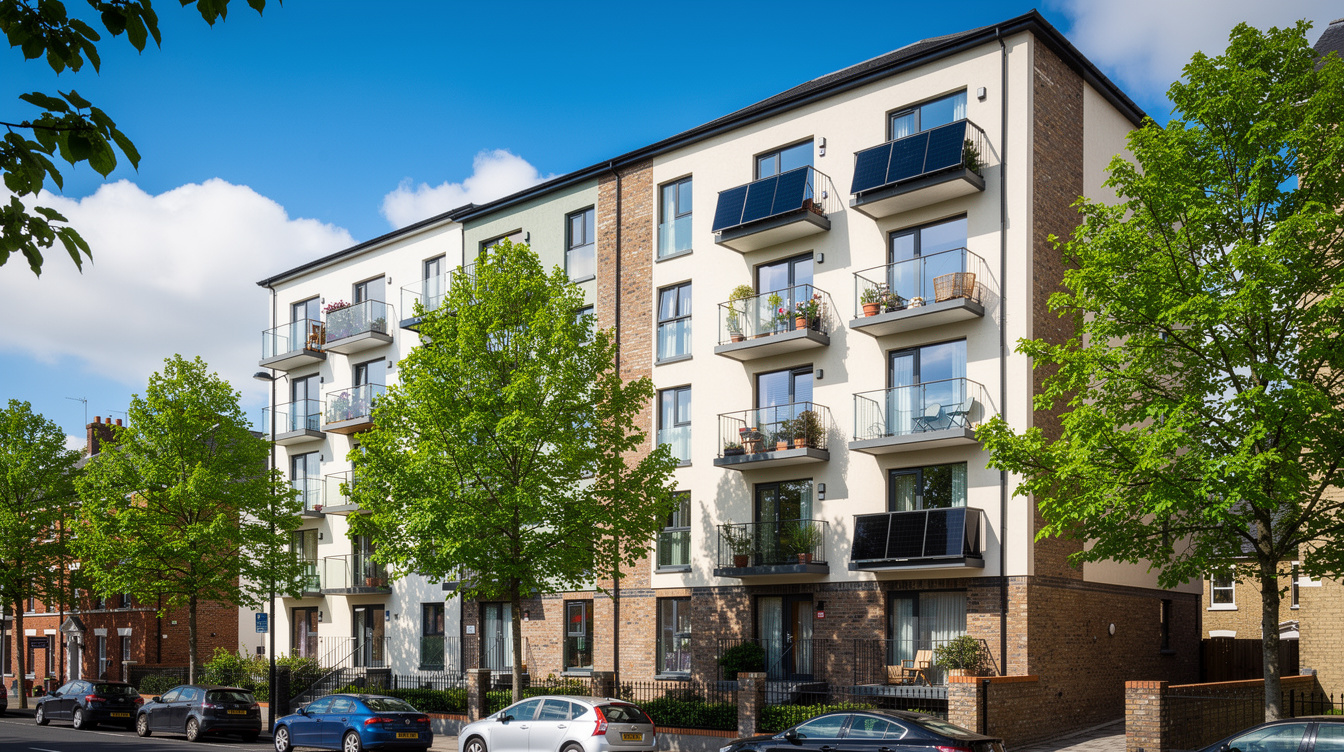
Balcony isn’t the only option. Here’s how different mounting locations compare in Irish conditions:
| Location | Ideal Facing | Typical Output | Pros | Cons |
|---|---|---|---|---|
| Balcony railing | South-facing | 70–85% of optimal | No ground space needed | Vertical angle reduces output |
| Garden (ground mount) | South at 30–35° | 90–100% of optimal | Best angle, easy access | Uses garden space, shading risk |
| South-facing wall | South | 65–75% of optimal | Out of the way | Vertical mount = least efficient |
| Flat shed roof | South at 30–35° | 85–95% of optimal | Good angle, no shading | May need structural check |
The key factor is south-facing exposure. A south-facing balcony generates up to 85% of what the same panel would produce on an optimally-tilted roof. An east or west-facing balcony drops to about 55–65%. North-facing? Don’t bother.
For more on panel direction, see our solar panel direction guide.
Balcony Solar vs Rooftop Solar: When Does Each Make Sense?
| Factor | Balcony Solar | Rooftop Solar |
|---|---|---|
| Upfront cost | €550–€1,450 | €4,700–€9,000 (after grant) |
| Annual output | 330–800 kWh | 3,600–7,000 kWh |
| Annual saving | €85–€275 | €700–€1,740 |
| SEAI grant | Usually not eligible | Up to €1,800 |
| Portability | Can take with you | Fixed to property |
| Renter-friendly | Yes (with permission) | No |
| CEG export income | Usually not | Yes — 15–24c/kWh |
Choose balcony solar if: You rent, live in an apartment, have a small budget, want a starter system, or don’t have suitable roof access.
Choose rooftop solar if: You own your home, want maximum savings, qualify for the SEAI grant, and plan to stay long-term.
Step-by-Step: How to Install Balcony Solar in Ireland
- Check your apartment lease/management rules. Get written permission for external modifications if you’re in a managed complex or renting.
- Assess your balcony. Is it south-facing? Is there shading from upper balconies or buildings? Use a compass app — you want as close to due south (180°) as possible.
- Buy a certified kit. Ensure the micro inverter has I.S. EN 50549-1 certification for Irish grid connection.
- Hire a Safe Electric registered electrician. They’ll connect the panels to a dedicated circuit (not a plug socket) and submit the NC6 form to ESB Networks.
- Mount the panels. Most kits come with railing clamps. The electrician can advise on secure mounting.
- Monitor and enjoy. Most modern inverters come with WiFi apps showing real-time generation. Time your appliances (washing machine, dishwasher, hoover) to run during peak solar hours.
Tips to Maximise Your Balcony Solar Output in Ireland
- Tilt your panels if possible. A 30–35° tilt from vertical increases output by 15–25% compared to a flat vertical mount on the railing. Some kits include adjustable brackets.
- Run appliances during sunshine. Set your washing machine and dishwasher timers for midday. Every kWh you use directly saves you 36–42c.
- Consider a small battery (1–2 kWh). Systems like the Anker SOLIX with built-in storage capture surplus for evening use, boosting self-consumption to 70–85%.
- Clean your panels regularly. Balcony panels are at eye level and accessible — wipe them down monthly for maximum output.
- Avoid shading. Even partial shade from plants, drying laundry, or upper balconies can cut output by 30–50%.
Thinking About Going Bigger?
If you have roof access, a full solar system saves €700–€1,740/year. Find out what’s possible for your home.
Do You Get the SEAI Grant for Balcony Solar?
Currently, no. The SEAI Solar PV Grant is designed for permanent rooftop installations on homes built before 2021. Balcony-mounted plug-in systems don’t typically qualify because:
- They’re not permanently fixed to the building structure
- They don’t meet the minimum system size requirements
- The SEAI scheme requires a BER assessment, which apartment owners may not be able to arrange
However, the 0% VAT on solar panels does apply to balcony kits, and there’s growing lobbying for the SEAI to include small-scale systems. Watch this space.
Is It Worth It? The Honest Assessment
Here’s the pragmatic view:
Balcony solar makes financial sense if:
- You work from home and can use the electricity during the day
- Your balcony faces south or south-west
- You plan to stay at your current home for 4+ years
- You’re comfortable with a 5–8 year payback period
Balcony solar might not make sense if:
- Your balcony faces north
- You’re away from home during all daylight hours (unless you add a battery)
- You’re moving in the next 2–3 years
- You have roof access and can get a full installation with the SEAI grant instead
For many apartment dwellers, the value isn’t purely financial. There’s real satisfaction in generating your own clean electricity, reducing your grid dependence, and taking a practical step on climate — even if the payback takes a few years. And unlike a rooftop system, you can take balcony panels with you when you move.
Ready to Go Solar?
Get your free personalised quote from SEAI-registered installers.
Related Articles
Solar Panel Financing Ireland 2026: Payment Plans, Green Loans & How to Pay
Compare solar panel financing in Ireland: credit union green loans, SBCI scheme, Finance Ireland plans. Real monthly costs and which option saves most.
Solar Panels and Electric Cars Ireland 2026: How to Charge Your EV for Free
How to charge your electric car from solar panels in Ireland. Costs, charger options, panel requirements and real savings for 2026.
Solar Panel System Sizes Ireland 2026: 3 kW vs 5 kW vs 10 kW Compared
Compare 3kW, 5kW and 10kW solar panel systems in Ireland. Costs, output, savings and payback by size with 2026 SEAI grant figures.