
Solar Panel Financing Ireland 2026: Payment Plans, Green Loans & How to Pay
You don’t need €7,000 in cash to go solar in Ireland. Between credit union green loans starting at 6% APR, the government-backed Home Energy Upgrade Loan Scheme at just 3% APR, installer payment plans from Finance Ireland, and the €1,800 SEAI grant, there are more ways than ever to finance solar panels without draining your savings. This guide breaks down every option available in 2026 — what each costs monthly, the total interest you’ll pay, and which option actually makes the most financial sense.
Here’s the uncomfortable truth most installers won’t tell you: even after the SEAI grant, a typical 4.4 kWp solar system still costs €4,700–€6,200 out of pocket. That’s a lot of money. But financing changes the equation completely. When your monthly loan repayment is less than what you’re saving on electricity, solar pays for itself from month one.

What Solar Panels Actually Cost in Ireland (2026)
Before we talk financing, let’s nail down the numbers. Here’s what you’re looking at for different system sizes in 2026, with and without the SEAI grant:
| System Size | Panels | Cost Before Grant | SEAI Grant | Your Cost |
|---|---|---|---|---|
| 2 kWp (small) | 5 panels | €3,500–€4,200 | €1,400 | €2,100–€2,800 |
| 4 kWp (standard) | 10 panels | €6,500–€8,000 | €1,800 | €4,700–€6,200 |
| 6 kWp (large) | 14 panels | €8,800–€10,800 | €1,800 | €7,000–€9,000 |
| 8 kWp (large + battery) | 18 panels | €12,000–€15,000 | €1,800 | €10,200–€13,200 |
Remember: Ireland has 0% VAT on solar panel installations for homes since May 2023, so these prices already include that saving. The SEAI grant is €700 per kWp for the first 2 kWp, then €200 per kWp up to 4 kWp, capped at €1,800.
Now let’s look at how to pay for it without a lump sum.
Get Your True Cost First
Use our free calculator to see what solar would cost for your specific home before choosing how to pay.
Option 1: Government-Backed Home Energy Upgrade Loan (Best Rate)
This is the cheapest borrowing option for solar panels in Ireland, but it comes with a catch.
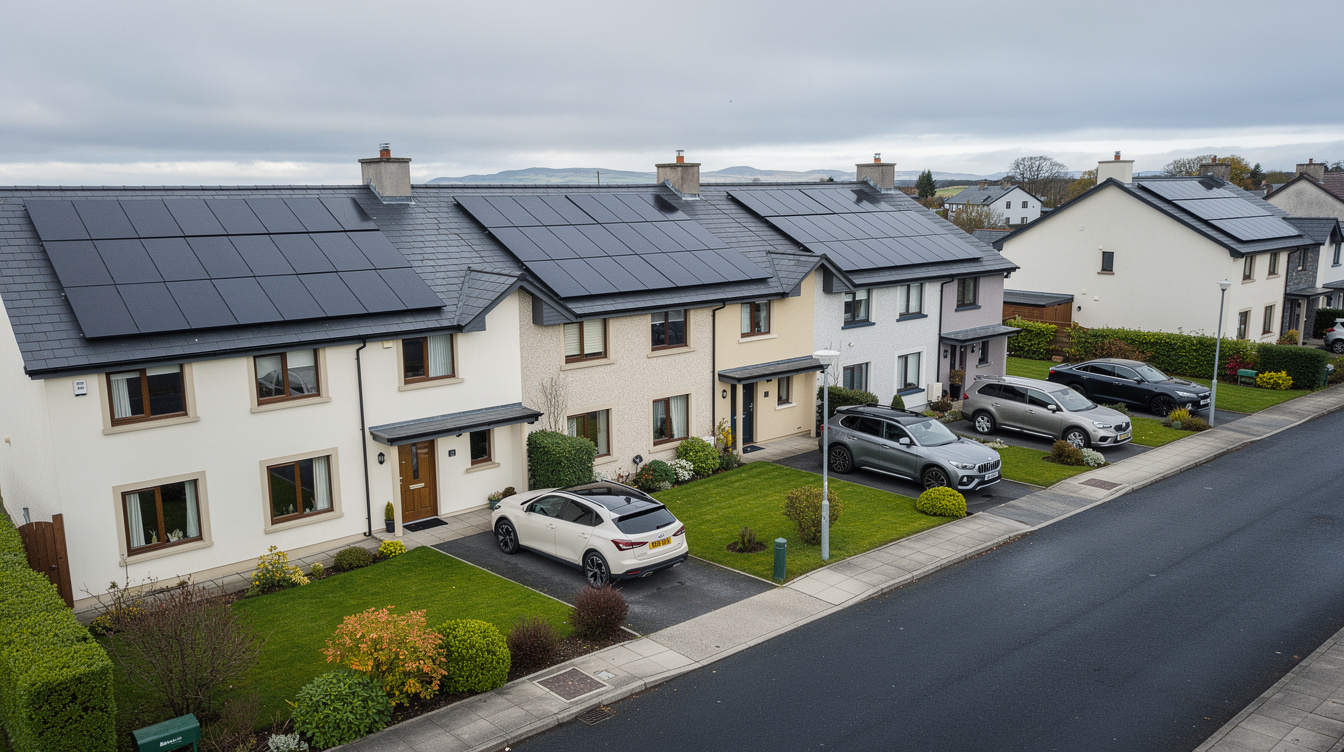
The Home Energy Upgrade Loan Scheme, run by the Strategic Banking Corporation of Ireland (SBCI), offers loans at rates starting from 3% APR through participating banks (Bank of Ireland, AIB) and credit unions. Key details:
- Rate: From 3% APR (banks) or 2.99–4.5% APR (credit unions)
- Amount: €5,000–€75,000
- Term: Up to 10 years
- Security: Unsecured (no mortgage required)
- Available until: 31 December 2026 or until funds run out
The catch: Solar panels alone don’t qualify. The loan must be for a “deeper retrofit” — meaning you need to combine solar with at least one other energy upgrade (insulation, heat pump, windows, etc.). However, up to 25% of the loan can cover additional home improvements.
If you’re already planning other energy upgrades, this is a no-brainer. A €15,000 loan covering solar + attic insulation + a heat pump upgrade at 3% APR over 7 years costs just €198/month. Your combined energy savings will likely exceed that.
Option 2: Credit Union Green Loans (Most Flexible)
Credit unions are often the best option for solar-only financing because they don’t require you to bundle other upgrades.
Rates vary by credit union, but here’s what’s typical in 2026:
| Credit Union | Rate | Max Loan | Term | Notes |
|---|---|---|---|---|
| Typical green loan | 6–7% APR | €50,000+ | Up to 10 years | Solar-only eligible |
| Greenify (nationwide) | Variable | €75,000 | Up to 10 years | Available at 100+ credit unions |
| SBCI-backed CU loan | 2.99–4.5% APR | €75,000 | Up to 10 years | Must include other upgrades |
Why credit unions are great for solar:
- No arrangement fees or exit penalties at most credit unions
- Many offer loan interest rebates at year-end, effectively reducing your rate
- Decision in 1–3 days, often same-day for existing members
- More forgiving credit assessments than banks
- You can apply for solar-only (no bundling requirement for standard green loans)
Real example: A €5,000 credit union green loan at 6.17% APR over 5 years costs €97/month. Total interest paid: €820. Meanwhile, your 4 kWp system saves you €75–€110/month on electricity from day one. Over 5 years, you save €4,500–€6,600 on electricity while paying €5,820 total on the loan. After the loan is paid off, you’re saving €900–€1,320/year for the next 20+ years.
Option 3: Finance Ireland (Through Your Installer)
Many Irish solar installers offer payment plans through Finance Ireland, making it easy to spread the cost at the point of purchase. No separate bank application needed — your installer handles the paperwork.
- Rate: From 6.7% variable (7.5% APR)
- Amount: €4,000–€25,000
- Term: Up to 10 years
- Decision: Within 24 hours
- Eligibility: Irish homeowners aged 18+
Real example: A €10,000 Finance Ireland loan (covering a 6 kWp system after the SEAI grant) at 7.5% APR over 10 years costs €119/month. Total amount repayable: €14,244. That’s €4,244 in total interest.
This is the most convenient option but also the most expensive in terms of total interest. It makes sense if you want a larger system and need to keep monthly payments low, or if you don’t have a credit union relationship.
Option 4: Humm (Buy Now, Pay Later for Solar)
Humm is a buy-now-pay-later platform that some Irish solar installers accept. It works like a credit facility:
- Spread payments over 6–60 months
- Apply at checkout with your installer
- Quick online approval
Rates vary, so compare the APR carefully with credit union options. BNPL can be convenient but watch for higher effective rates on longer terms.
Option 5: Pay Cash (If You Can)
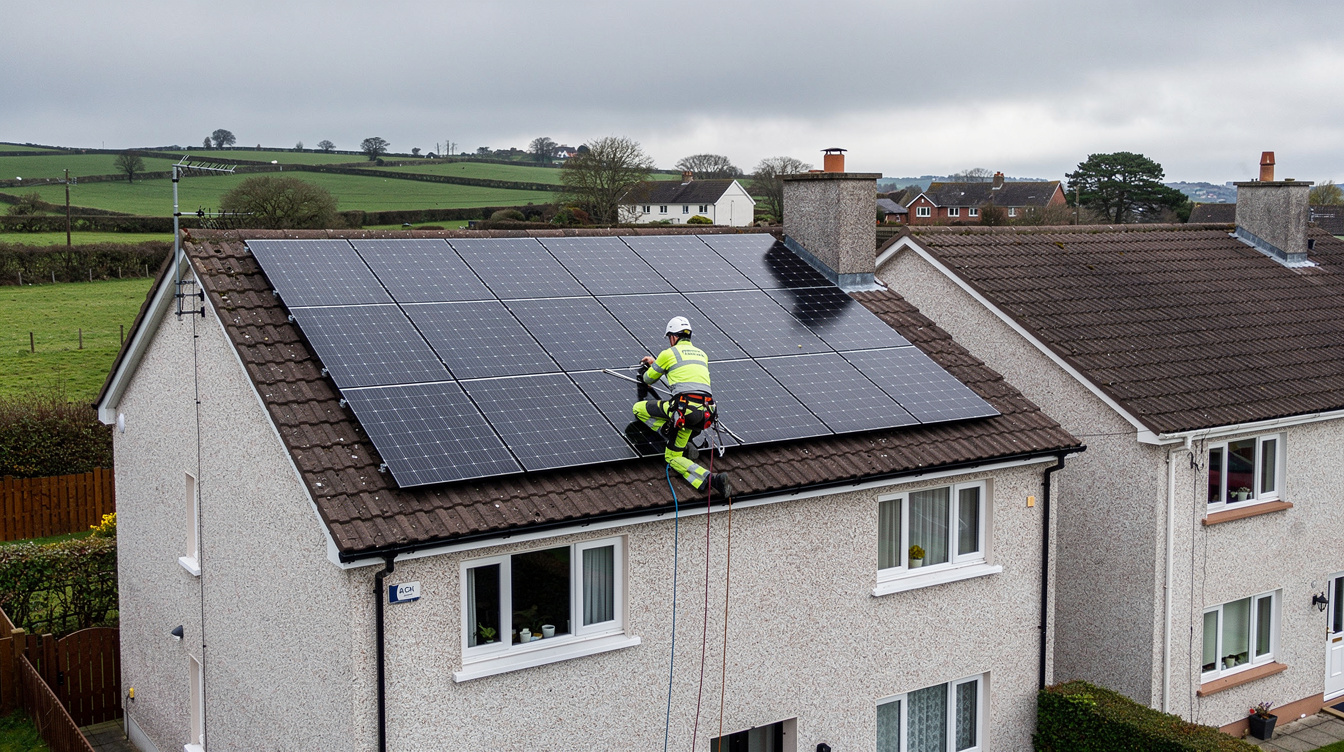
Paying upfront is the cheapest option overall — you avoid all interest. But only choose this if:
- You have the cash without emptying your emergency fund
- You don’t have higher-interest debt (credit cards, car loans) to pay down first
- You’re comfortable with a 5–7 year payback period
For a €5,000 system after grant, paying cash gives you a clean €900–€1,320 annual return — an effective return of 18–26% per year on your investment. That beats any savings account or most stock market returns.
Side-by-Side: Which Financing Option Is Cheapest?
Let’s compare all options for a standard 4.4 kWp system costing €5,000 after the SEAI grant:
| Option | APR | Term | Monthly Payment | Total Interest |
|---|---|---|---|---|
| Cash | — | — | €0 | €0 |
| SBCI Loan (3% APR) | 3% | 5 years | €90 | €393 |
| Credit Union Green Loan | 6.17% | 5 years | €97 | €820 |
| Finance Ireland | 7.5% | 7 years | €77 | €1,468 |
| Finance Ireland | 7.5% | 10 years | €59 | €2,122 |
The sweet spot: A 5-year credit union green loan at ~6% APR. Your monthly payment of €97 is roughly offset by your €75–€110 electricity savings, meaning solar costs you almost nothing month-to-month while the loan is active. Once it’s paid off, you pocket the full savings for 20+ years.
Ready to Compare Quotes?
Get free quotes from SEAI-registered installers. Many offer Finance Ireland payment plans built in.
How the SEAI Grant Works With Financing
A common question: can you use the SEAI grant and a loan together? Yes, absolutely. Here’s how the typical process works:
- Apply for the SEAI grant through the SEAI online portal. You’ll receive grant approval (usually within 2–4 weeks).
- Get installer quotes. The quote shows the full cost. Your SEAI-registered installer knows the grant amount and will usually deduct it from your bill.
- Apply for your loan for the amount AFTER the grant. So if the system costs €6,800 and the grant is €1,800, you borrow €5,000.
- Installation happens. You pay the installer the full €6,800 (using loan + grant).
- SEAI pays the grant after installation and BER assessment. Some installers absorb the grant upfront; others require you to pay full price and receive the grant as a refund.
Important: Ask your installer upfront whether they deduct the grant from your bill or require full payment. This affects how much you need to borrow.
Can Renters or Landlords Finance Solar?
If you’re a private landlord, you can claim the SEAI grant for rental properties (the property must have been built before 2021). The financing options are the same — credit unions and Finance Ireland both lend to landlords for home improvements.
If you’re a renter, you can’t install rooftop solar on your landlord’s property. But you can look at plug-in solar panels that don’t require installation — they cost €350–€800 and can move with you.
5 Tips to Get the Best Solar Financing Deal
- Apply to your credit union first. They often have the best rates for existing members, and many offer same-day decisions.
- Bundle upgrades if possible. If you also need insulation or a heat pump, the SBCI-backed 3% loan saves you thousands vs. a standard green loan.
- Get at least 3 installer quotes. Prices vary by 20–30% for the same system. Use our free quote tool to compare.
- Choose the shortest loan term you can afford. A 5-year loan at 6% costs €820 in interest. A 10-year loan at the same rate costs €1,680. Shorter is always cheaper.
- Don’t forget the SEAI grant. Apply for the grant BEFORE installation. Missing it means losing €1,800 you’re entitled to. See our step-by-step SEAI guide.
The Bottom Line: Solar on Finance Still Saves You Money
Even with interest, financing solar panels is a smart investment. Here’s the 10-year outlook for a €5,000 system financed at 6% over 5 years:
| Year | Loan Repayment | Electricity Savings | Net Position |
|---|---|---|---|
| Years 1–5 | €5,820 total | €5,000 total | –€820 |
| Years 6–10 | €0 | €5,500 total | +€4,680 |
| 10-Year Total | €5,820 | €10,500 | +€4,680 profit |
Over 10 years, you’re €4,680 ahead — even after paying interest. Over the 25–30 year lifespan of your panels, that number grows to €20,000+ in total savings. Not bad for an asset that adds value to your home, reduces your carbon footprint, and protects you from future electricity price rises.
The real question isn’t whether you can afford solar panels. It’s whether you can afford not to get them.
Start Saving on Your Electricity Bill
Get your free personalised quote from SEAI-registered installers. Financing options available.
Related Articles
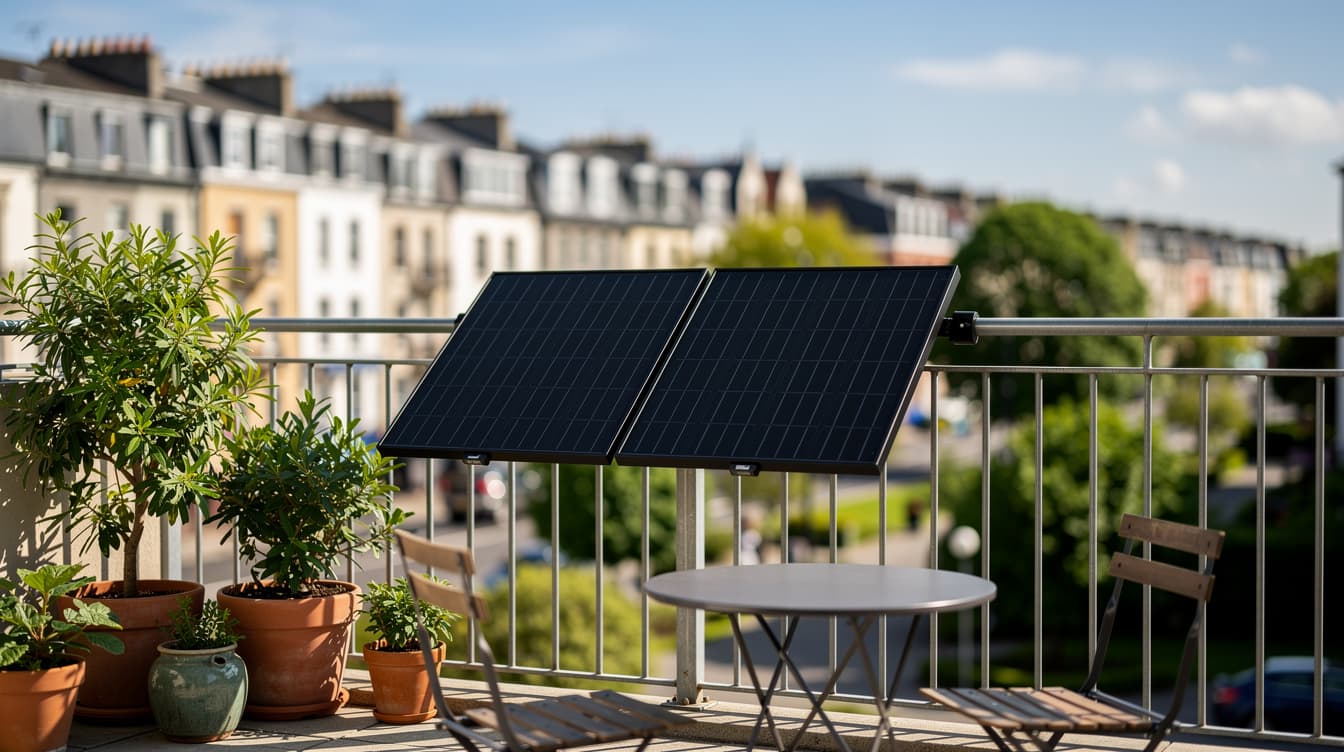
Balcony Solar Panels Ireland 2026: A Complete Guide for Apartments & Renters
Complete guide to balcony solar panels in Ireland. Costs, regulations, best kits, savings and whether plug-in solar is worth it for apartments.
Solar Panels and Electric Cars Ireland 2026: How to Charge Your EV for Free
How to charge your electric car from solar panels in Ireland. Costs, charger options, panel requirements and real savings for 2026.
Solar Panel System Sizes Ireland 2026: 3 kW vs 5 kW vs 10 kW Compared
Compare 3kW, 5kW and 10kW solar panel systems in Ireland. Costs, output, savings and payback by size with 2026 SEAI grant figures.