
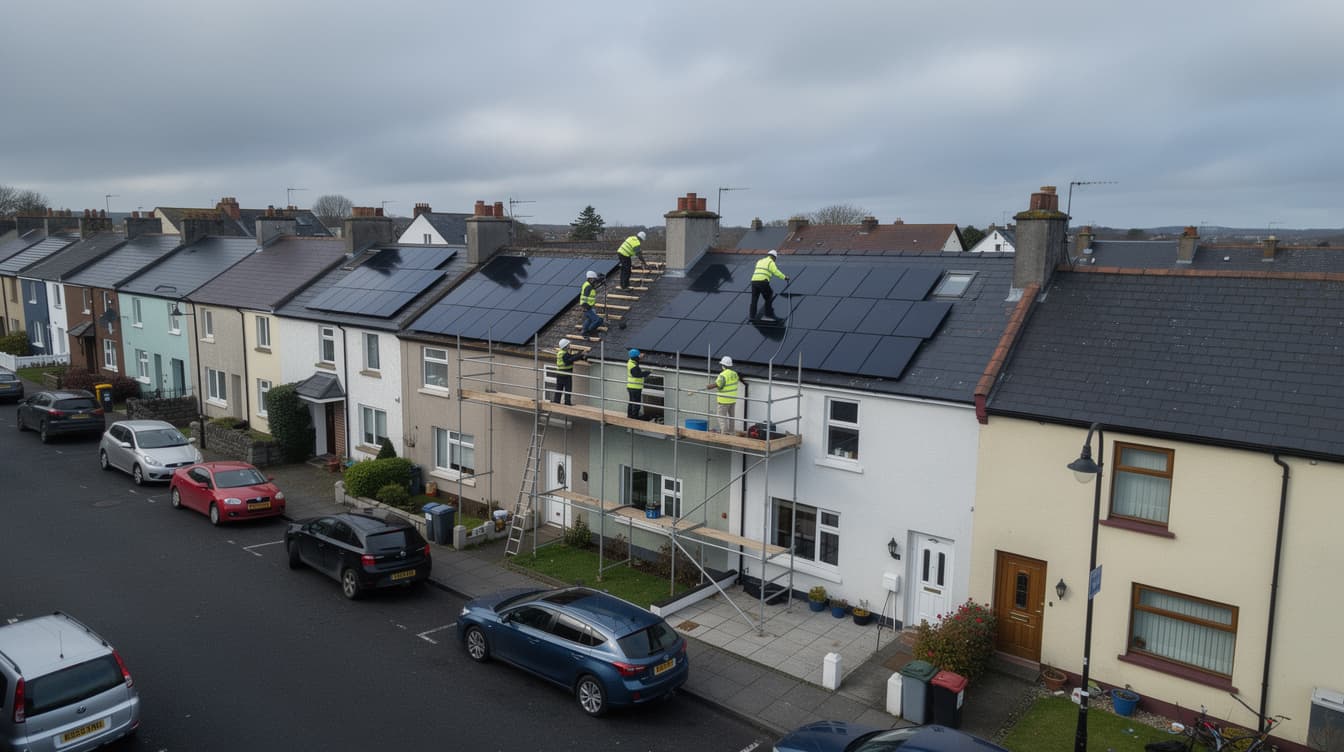
Solar Panel Grants for Landlords in Ireland 2026: SEAI Grant, Tax Relief & BER Rules
If you own a rental property in Ireland, you might assume the SEAI solar grant is only for homeowners living in their own house. It is not. Private landlords can claim the full €1,800 SEAI solar PV grant on rental properties built before 2021 — and from 2026, you can also claim up to €10,000 in tax relief on qualifying retrofit costs per property. Combined with the new BER minimum standards coming for rental homes, there has never been a stronger financial case for putting solar panels on your rental property.
This guide covers everything landlords need to know: grant eligibility, the application process, tax relief, the new BER rules, who pays the electricity bill, and whether solar actually makes financial sense on a property you do not live in yourself.
Own a Rental Property?
Get free quotes from SEAI-registered installers for your rental property — no obligation.
Can Landlords Get the SEAI Solar Grant? Yes.
The SEAI individual energy upgrade grants are available to all property owners, not just owner-occupiers. If you own a rental property that was built and occupied before 31 December 2020, you are eligible for the solar PV grant of up to €1,800.
The grant structure is the same as for any homeowner:
| System Size | Grant Amount | Typical Total Cost | Your Cost After Grant |
|---|---|---|---|
| 2 kWp (5 panels) | €1,400 | €3,500–€4,500 | €2,100–€3,100 |
| 3 kWp (7–8 panels) | €1,600 | €4,500–€5,800 | €2,900–€4,200 |
| 4 kWp (10 panels) | €1,800 | €5,500–€7,000 | €3,700–€5,200 |
The grant pays €700 per kWp for the first 2 kWp, then €200 per kWp up to 4 kWp, capped at €1,800. The 0% VAT rate on solar installations also applies to rental properties, saving you a further €600–€1,000.
Landlord Eligibility Checklist
Before you apply, check that your property ticks every box:
- You own the property. Tenants cannot apply — only the property owner (or their authorised agent) can claim the grant.
- The property was built and occupied before 31 December 2020. New builds completed after this date are not eligible.
- The MPRN has not received an SEAI solar PV grant before. Each property can only receive the grant once. If a previous owner claimed it, you cannot claim again.
- You will use an SEAI-registered installer. The installer must be on the SEAI’s approved list.
- The property has (or will get) a BER certificate. A pre-works BER is required as part of the grant process. If the property does not have one, your installer or a BER assessor can arrange it (€150–€200).
- You will not start installation before receiving your Letter of Offer. This is critical — beginning work before SEAI approval disqualifies you from the grant.
Important: You do not need to live in the property. You do not need to tell SEAI it is a rental. The grant application form asks for the property owner’s details, not the occupant’s. If you own the property and it meets the criteria above, you qualify.
The €10,000 Tax Deduction: Revenue’s Retrofit Relief
This is where the numbers get really interesting for landlords. Under Section 97A of the Taxes Consolidation Act (as extended by Budget 2026), landlords who carry out qualifying energy retrofit works on rental properties can claim a tax deduction of up to €10,000 per property against rental income.
Here is how it works:
| Item | Details |
|---|---|
| What qualifies | Retrofit works that received an SEAI grant (solar PV, insulation, heat pump, windows, etc.) |
| Deduction amount | Your qualifying expenditure net of grants, up to €10,000 per property |
| Maximum properties | Up to 2 properties can claim the relief |
| Time period | Works must be carried out between 1 January 2023 and 31 December 2028 |
| Clawback risk | If you sell or stop renting the property within 2 years of claiming, the deduction is clawed back |
Example for a solar-only install:
- Total cost of 4 kWp system: €6,000
- SEAI grant received: €1,800
- Your net spend: €4,200
- Tax deduction against rental income: €4,200
- If you are in the 40% tax bracket: tax saved = €1,680
- Your actual out-of-pocket cost: €6,000 – €1,800 (grant) – €1,680 (tax saving) = €2,520
That is a 4 kWp solar system on your rental property for €2,520. At current electricity prices, your tenant saves roughly €700–€1,000 per year on bills. The property is more attractive to tenants, commands higher rent, and meets BER requirements. The system pays for itself in increased property value alone.

The BER Deadline: Why Landlords Need to Act Now
New BER minimum standards are being phased in for all private rental properties in Ireland:
| Deadline | Minimum BER Required | Impact |
|---|---|---|
| End of 2026 | D2 | Properties rated E, F, or G cannot be re-let |
| End of 2028 | C1 | Properties rated C2, C3, or D cannot be re-let |
| End of 2030 | B2 | Only B2 or above can be rented |
Currently, over 55% of private rentals in Ireland have a BER rating of D or worse, and roughly 20% are rated F or G. These properties will need significant upgrades to remain legally rentable.
Solar panels alone will not take a G-rated property to D2 — you will also need insulation and potentially a heating upgrade. But solar is one of the most cost-effective ways to improve a BER rating, typically boosting it by 1–2 grades depending on the property. For a property sitting at D3 or E1, adding solar can push it across the D2 threshold and keep it legally compliant for the 2026 deadline.
And here is the kicker: when setting rent for a new tenancy, landlords must reference comparable properties from the RTB Rent Register with a similar BER rating. A property with a B rating can command significantly higher rent than an equivalent property rated D or E. Solar panels improve your BER, which directly affects the rent you can legally charge.
Who Gets the Benefit: Landlord or Tenant?
This is the question every landlord asks — and the answer is nuanced. With solar panels on a rental property:
The tenant benefits from:
- Lower electricity bills (€500–€1,000 per year saved, depending on the system size and their usage)
- A more comfortable, energy-efficient home
- The ability to sell excess electricity back to the grid (the electricity account is in the tenant’s name)
The landlord benefits from:
- Higher property value (€5,000–€15,000 increase, based on ESRI research)
- Improved BER rating (meeting current and upcoming minimum standards)
- More attractive to tenants (lower bills = competitive advantage in a tight rental market)
- Potential to charge higher rent (better BER allows comparison to higher-rated properties on the Rent Register)
- Tax deduction on the installation cost
- SEAI grant towards the cost
The split is not perfectly symmetrical. The tenant gets the immediate bill savings; the landlord gets the capital appreciation and BER improvement. But in Ireland’s current rental market — where demand far outstrips supply in most areas — a solar-equipped property at a higher BER is a genuine competitive advantage.
Compare Installer Quotes for Your Rental Property
SEAI-registered installers can handle everything, including the grant paperwork.
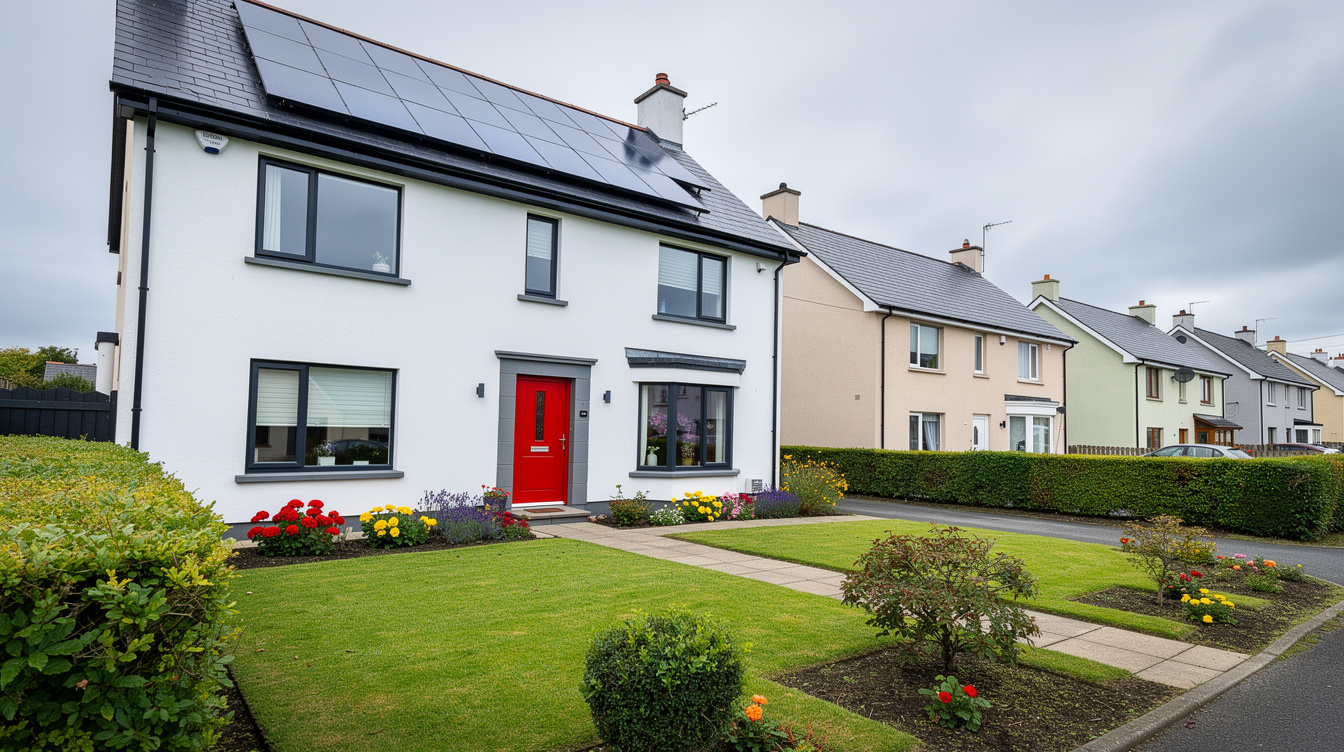
Step-by-Step: How Landlords Apply for the SEAI Grant
The application process for landlords is identical to owner-occupiers. Here is the step-by-step:
- Get quotes from SEAI-registered installers. Request at least three quotes. You can use our service to get competitive quotes quickly. Make sure each quote specifies the system size in kWp, panel brand, and total cost including VAT (0%).
- Choose an installer and confirm the system size (we recommend 3–4 kWp for most rental properties — large enough to make a meaningful difference, small enough to keep costs proportional to the benefit).
- Apply online through SEAI. You need the property’s MPRN, your details as the owner, and the installer’s SEAI registration number. Apply at seai.ie.
- Wait for your Letter of Offer (approximately 20 working days). Do NOT begin installation before this arrives.
- Coordinate with your tenant. The installation takes 1–2 days. You will need to give the installer roof and electrical panel access. Electricity is off for roughly 30–60 minutes during the inverter connection. Give your tenant advance notice.
- Installation and commissioning. The installer handles everything: mounting, wiring, inverter, and the NC6 notification to ESB Networks.
- Post-works BER assessment. A BER assessor visits the property to verify the installation and update the BER certificate (€150–€200, sometimes included in the installer’s price).
- Submit Declaration of Works to SEAI. Your installer handles this. SEAI processes the grant within 4–6 weeks and deposits it in your bank account.
- Claim the tax deduction. On your annual tax return, claim the retrofit deduction under Section 97A. You will need the SEAI grant confirmation letter and receipts for the work. Consult your accountant for the exact treatment.
Practical Considerations for Rental Properties
Tenant consent: Legally, you do not need your tenant’s consent to install solar panels (it is a capital improvement to your own property). However, good practice is to inform them well in advance, explain the benefits to their bills, and agree on the installation date. Most tenants will welcome the upgrade.
Access for installation: You will need access to the roof (scaffolding outside), the attic or cable route, and the electricity consumer unit (usually in the hall or utility room). Arrange this with the tenant ahead of time.
The electricity account stays in the tenant’s name. The solar system feeds the property, and the tenant benefits directly through lower import bills and export payments. You do not need to change anything about the electricity billing arrangement.
Between tenancies: If the property is vacant between lets, the solar panels still generate electricity. Any exported electricity goes unpaid unless an electricity account is active. Consider keeping the account active in your name during void periods, or simply accept the small loss.
Maintenance: Solar panels require virtually no maintenance. Rain keeps them clean in Ireland’s climate. The inverter may need replacement after 10–15 years (€800–€1,200). Panels carry 25-year performance warranties. Include a clause in your tenancy agreement noting the solar system and basic care requirements (do not block panels, report damage, etc.).
The ROI: Does Solar Make Financial Sense on a Rental Property?
Let us run the numbers for a typical landlord scenario:
| Item | Amount |
|---|---|
| 4 kWp system installed cost | €6,000 |
| SEAI grant | –€1,800 |
| Tax deduction value (40% bracket) | –€1,680 |
| Net cost to landlord | €2,520 |
| Property value increase (conservative) | +€5,000–€10,000 |
| BER improvement | 1–2 grades (e.g. D3 → C3) |
| Tenant bill savings (per year) | €700–€1,000 |
The net cost of €2,520 is immediately recovered — and then some — through the increase in property value. You are effectively being paid to install solar panels when you factor in the grant, tax relief, and capital appreciation. The tenant gets cheaper bills, the property meets BER standards, and you have a more valuable, more lettable asset.
Even at the 20% tax bracket, the numbers work. The tax saving drops to €840, making your net cost €3,360 — still well below the €5,000+ property value uplift.
What About Multiple Rental Properties?
If you own more than one rental property, here is how the grants and tax relief stack up:
- SEAI grant: Available per property (each MPRN can receive one grant). If you own three rental properties, you can claim up to €1,800 on each.
- Tax deduction: Limited to 2 properties. You can claim up to €10,000 per property on a maximum of 2 properties, for a total deduction of up to €20,000.
- VAT: 0% on all residential solar installations, regardless of how many properties you own.
For landlords with 3+ properties, prioritise the two with the worst BER ratings for the tax deduction, then install solar on additional properties using only the SEAI grant. The grant alone reduces the cost enough to make the investment worthwhile.
Common Questions From Landlords
Can I install solar between tenancies?
Yes, and this is often the easiest approach. No need to coordinate access or explain temporary disruption. The downside is that you are not earning rental income during the installation period, but since the install takes just 1–2 days, this is negligible.
Does the tenant get the export payments?
Yes. The Clean Export Guarantee payments go to whoever holds the electricity account at the property. Since this is the tenant’s account, they receive the export credits on their bill. This is a selling point — tell prospective tenants that the property earns money from the sun.
Can I increase the rent to cover the installation cost?
In Rent Pressure Zones (most urban areas), rent increases are capped at the lower of 2% per year or inflation. You cannot increase rent specifically because you installed solar. However, if the property is between tenancies, the improved BER allows you to benchmark against higher-BER comparable properties on the Rent Register, which may naturally support a higher rent.
What happens if I sell the property within 2 years?
If you claimed the Section 97A tax deduction and sell within 2 years, the deduction is clawed back by Revenue. The SEAI grant is not affected by a property sale. If you plan to sell soon, skip the tax deduction but still claim the grant.
Do I need planning permission?
No. Solar panels on residential properties are exempt development in Ireland, provided they do not extend more than 15 cm above the roof surface and the property is not a protected structure.
Ready to Go Solar?
Get your free personalised quote from SEAI-registered installers.
Related Articles
Best Electricity Tariff for Solar Panel Owners in Ireland 2026: Every Supplier Compared
Compare every Irish electricity supplier's import and export rates for solar homes. SSE, Energia, Pinergy, Electric Ireland and more ranked for April 2026.
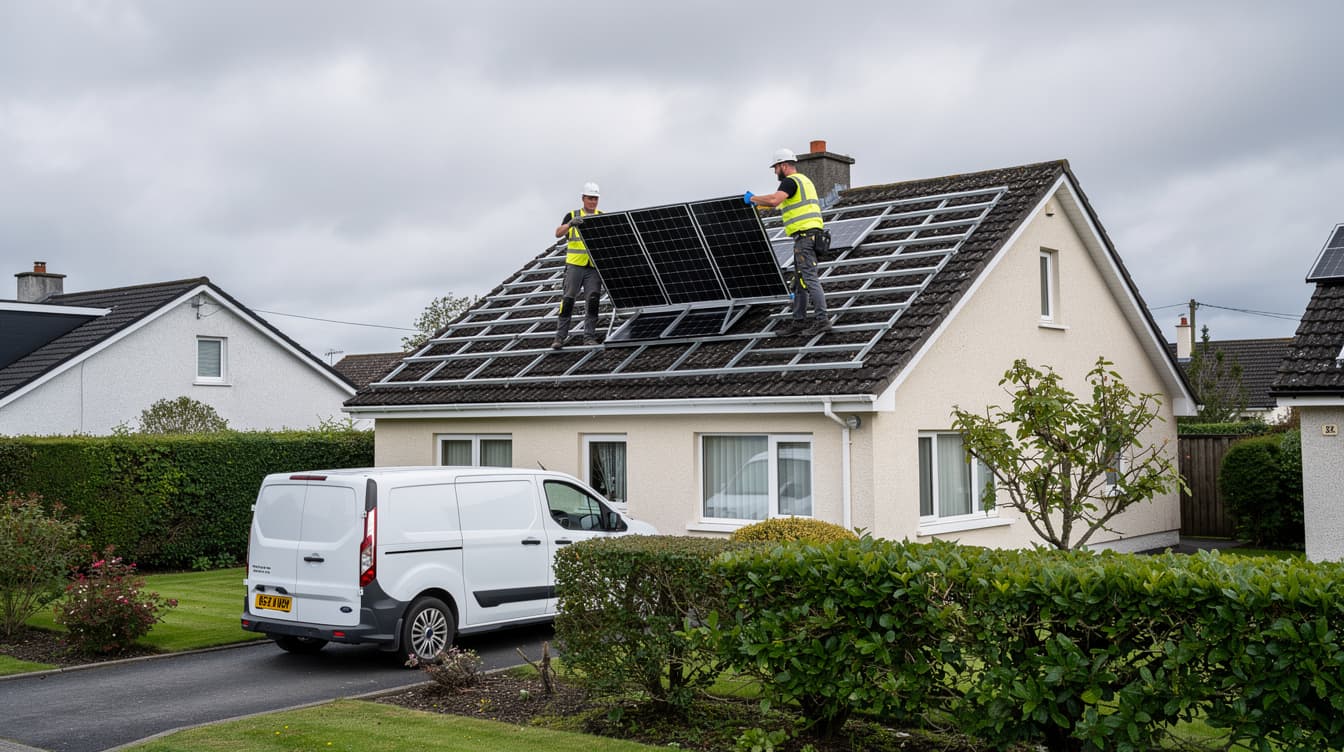
How Long Does It Take to Install Solar Panels in Ireland? The Full 2026 Timeline
Solar panel installation in Ireland takes 1-2 days on the roof, but 4-8 weeks end-to-end. Here's every step from quotes to SEAI grant, with exact timelines.
Solar Panels for New Builds in Ireland 2026: What Developers Include, What You Should Upgrade & What It Costs
New build homes in Ireland come with solar panels under nZEB rules. Find out how much, whether to upgrade, costs, and why you can't get the SEAI grant.