
Solar Panels and Immersion Heaters in Ireland: How to Get Free Hot Water from Your Panels
Solar Panels and Immersion Heaters in Ireland: How to Get Free Hot Water from Your Panels
A solar immersion diverter costs €450–€640 installed and gives you free hot water from March to October. Here is how it works, which brands to consider, and whether it is worth it for your home.
If you already have solar panels — or you are about to get them — there is a simple add-on that most installers will recommend: a solar immersion diverter. It sends your surplus solar electricity to your immersion heater instead of exporting it to the grid, giving you free hot water whenever the sun shines.
It is one of the fastest-payback upgrades in the entire home energy space. For €450–€640 installed, you can save €350–€600 per year on hot water. That is a payback period of 1–2 years — far faster than a battery or even the solar panels themselves.
This guide explains exactly how solar immersion diverters work, compares the leading brands available in Ireland, and helps you decide whether to add one to your solar setup.
Quick Answer: Connect Solar to Immersion Heater
A solar PV immersion diverter (Eddi, Solar iBoost, Sunamp, Apollo) detects surplus solar power and routes it to your existing immersion heater element instead of exporting to the grid at 19c/kWh. Install cost: €450–€640 by a Safe Electric registered electrician. Annual hot-water savings: €350–€600. Payback: 1–2 years. Works with both 3kW (standard Irish) and 1kW (low-power retrofit) immersion elements.
How a Solar Immersion Diverter Works
The concept is straightforward:
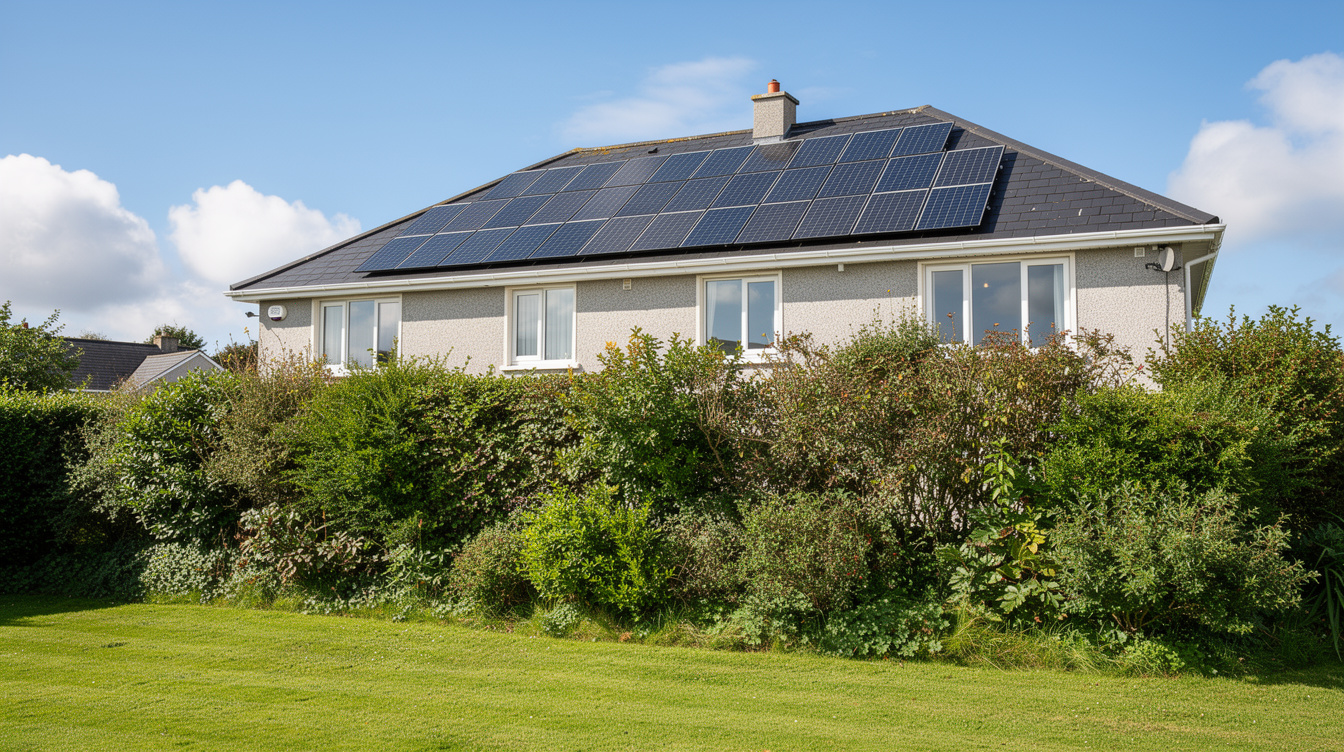
- Your solar panels generate electricity during the day.
- Your home uses what it needs for lights, appliances, and so on.
- Any surplus electricity would normally flow back to the grid, earning you about 19c/kWh under the Clean Export Guarantee.
- The diverter detects this surplus in real time and redirects it to your immersion heater element instead.
- Your water heats up gradually throughout the day, using power that would otherwise have been exported.
Key point: The diverter does not take electricity away from your home. It only uses the surplus — the power you are generating above what you are consuming at that moment. Your appliances always get priority.
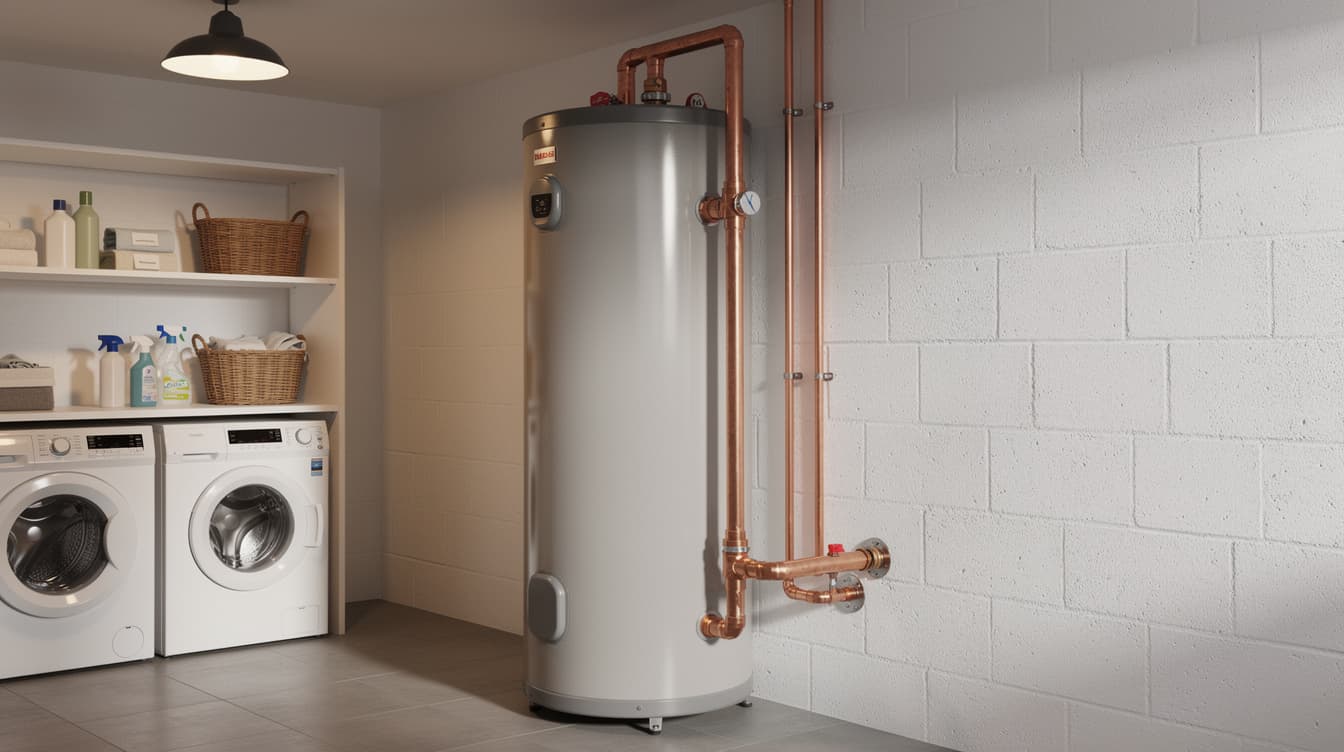
Unlike solar thermal panels (which heat water directly using the sun’s heat), a PV diverter uses your existing solar PV electricity to power the immersion heating element in your hot water cylinder. You do not need any new plumbing — just an electrical connection between the diverter unit and your existing immersion heater.
How to Connect a Solar Panel to an Immersion Heater (Step by Step)
You do not connect a solar panel directly to an immersion heater. Solar PV produces variable DC power; an immersion needs steady AC at a specific voltage. The connection runs through your existing inverter, your consumer unit, and a dedicated diverter unit. Here is the actual sequence:
- Confirm your inverter supports a CT clamp. The diverter measures real-time export at the grid meter using a current-transformer (CT) clamp. Almost every modern solar inverter (SolarEdge, GoodWe, Huawei, Sungrow, Fronius) supports this.
- Choose a diverter unit. myenergi Eddi, Solar iBoost+, Sunamp Storage Heater, and Apollo Gem are the most common in Ireland. Eddi is the default choice with most Irish installers.
- Plan the cable run. The diverter mounts near your consumer unit (typically next to the inverter). A dedicated cable runs from the diverter to the immersion heater element — usually a 1.5 mm² or 2.5 mm² cable rated for the element wattage.
- Install the CT clamp at the meter tails. The CT clamp goes around your incoming live tail (or export tail, depending on installer) so the diverter knows the exact moment surplus export starts.
- Wire the diverter through a switched fused spur to the immersion heater. Most installers use a 16A spur for a 3kW element, or 6A for a 1kW retrofit element.
- Commission and configure. Set target hot-water temperature (typically 60°C), boost timers (e.g. an hour each evening if surplus was insufficient), and grid-import safeguards.
- Test in isolation. Cover the panels or run the test mode — the diverter should show zero output. Uncover, confirm it modulates power to the immersion as export rises.
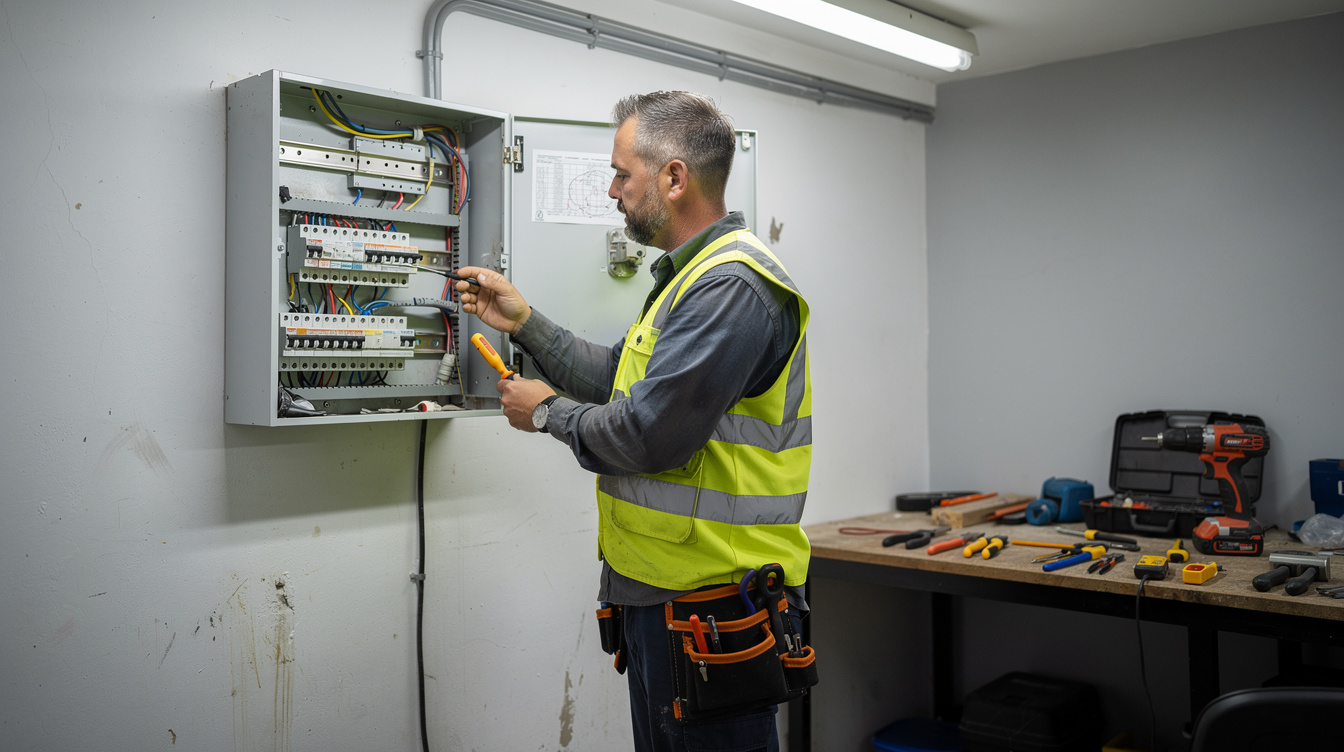
The full install – including running cable, mounting, CT clamp, switched fused spur, commissioning – takes a competent Safe Electric registered electrician 2–4 hours. You should not do this work yourself: the CEG export tariff and your home insurance both require certified electrical work.
1kW Immersion Heater + Solar PV: Should You Downsize the Element?
Most Irish homes have a 3 kW immersion heater element in their hot water cylinder. A few diverter setups use a 1 kW element instead. Here is when each makes sense:
| Element Size | When It Works Best | Trade-Off |
|---|---|---|
| 3 kW (standard) | 4 kWp+ solar system; family of 4+; sunny day surplus >1 kW common | Diverter modulates power down on low-export days — needs PWM-capable diverter (Eddi, Solar iBoost) |
| 1 kW (retrofit) | Small 2–3 kWp systems; single occupant; cloudy-day surplus rarely exceeds 1 kW | Cheaper diverter (non-modulating can work); slower heat-up; uses any surplus >1 kW |
For 95% of Irish homes, the answer is: keep your 3 kW element and use a modulating diverter. The myenergi Eddi modulates from ~30 W up to the full 3 kW based on real-time surplus, capturing every available watt without ever importing from the grid. The 1 kW retrofit only makes financial sense for very small systems (sub-3 kWp) or off-grid setups with limited inverter capacity.
Is a Solar Immersion Diverter Worth It?
Let us run the numbers for a typical Irish household with a 4.4 kWp solar system (10 panels):
| Scenario | Without Diverter | With Diverter |
|---|---|---|
| Surplus exported to grid | 2,400 kWh/yr | 1,200 kWh/yr |
| Export income (@ 19c/kWh) | €576 | €288 |
| Hot water cost (gas/electric) | €500–€700/yr | €150–€250/yr |
| Hot water savings from diverter | — | €350–€450/yr |
| Net benefit of diverter | — | €62–€162/yr better off |
Why it works: You lose €288 in export income (because you are diverting 1,200 kWh to the immersion instead of the grid), but you save €350–€450 on hot water heating. The net gain is €62–€162 per year — and the diverter pays for itself in under 2 years.
The bigger your household, the more you save. A family of 4–5 uses more hot water and gets more value from the diverted electricity. Households that currently heat water with an electric immersion (rather than gas) see even larger savings because they are replacing 38c/kWh electricity with free solar power.
Ready to Go Solar?
Get your free personalised quote from SEAI-registered installers — ask about including a diverter.
Best Solar Immersion Diverters in Ireland (2026)
Three brands dominate the Irish market. Here is how they compare:
| Feature | myenergi Eddi | Solar iBoost+ | BPE PV Divert |
|---|---|---|---|
| Price (unit only) | €400–€500 | €300–€400 | €250–€350 |
| Installation cost | €100–€150 | €100–€150 | €100–€150 |
| Smartphone app | Yes (myenergi app) | No | No |
| Works with batteries | Yes — prioritise battery or tank | Limited | No |
| Works with heat pumps | Yes | No | No |
| Dual load support | Yes (immersion + heater) | No | No |
| Best for | Future-proof setups | Simple, reliable installs | Budget-conscious buyers |
Our Pick: myenergi Eddi
The myenergi Eddi is the most popular diverter in Ireland for good reason. It is the most intelligent of the three — it works alongside a solar battery, letting you decide whether surplus power goes to the battery or the hot water tank first. It also works with heat pumps, which the iBoost cannot do. The smartphone app lets you monitor exactly how much free hot water you are generating.
If you want the simplest, cheapest option and do not plan to add a battery or heat pump, the iBoost+ is a solid, reliable choice that has been on the Irish market for years.
Seasonal Performance: When Does It Heat Your Water?
Solar immersion diverters are not a year-round replacement for your boiler — but they cover more of the year than you might expect:
| Season | Months | Hot Water from Solar | Boiler Backup Needed? |
|---|---|---|---|
| Summer | May–Aug | 80–100% | Rarely |
| Spring / Autumn | Mar–Apr, Sep–Oct | 50–80% | Some days |
| Winter | Nov–Feb | 10–30% | Yes — most days |
In practical terms, you can turn off your boiler for hot water from May to August in most years. During spring and autumn, the diverter will pre-heat the water to lukewarm, and your boiler only needs to top it up — using far less gas or oil. In winter, you still get some contribution on bright days, but you will rely on your boiler or immersion for most hot water.
Over a full year, a well-sized system typically provides 60–70% of a household’s hot water needs for free.
Do You Need a Solar Immersion Diverter?
A diverter makes sense if you tick any two of these boxes:
- You have (or are getting) solar panels of 3 kWp or larger
- Your home has a hot water cylinder with an immersion heater element
- You are not home during the day to use surplus electricity as it is generated
- You do not have a solar battery (or do not plan to get one soon)
- Your hot water is currently heated by oil, gas, or peak-rate electricity
A diverter is less useful if:
- You have a combi boiler with no hot water cylinder (no immersion to divert to)
- You already have a large solar battery that absorbs most of your surplus
- You use very little hot water (single-person household)
Find Out What You Could Save
Use our calculator to see how solar panels and a diverter could cut your energy bills.
Diverter vs Battery: Which Should You Get First?
This is one of the most common questions from Irish solar owners. Here is a quick comparison:
| Solar Diverter | Solar Battery (5 kWh) | |
|---|---|---|
| Installed cost | €450–€640 | €2,500–€3,500 |
| Annual savings | €350–€600 | €250–€400 |
| Payback period | 1–2 years | 7–10 years |
| Lifespan | 15–20 years | 10–15 years |
| What it does | Heats water with surplus | Stores electricity for evening use |
Our recommendation: If you are on a budget, get the diverter first. It has a far better return on investment and starts saving you money almost immediately. You can always add a battery later — and if you choose the myenergi Eddi, it will integrate with a battery when you add one.
Installation: What’s Involved?
Installing a solar immersion diverter is a straightforward job for a qualified electrician. Here is what happens:
- CT clamp fitted — A small sensor (current transformer) clips around your main electricity supply cable. This is how the diverter detects surplus power.
- Diverter unit mounted — The unit is wall-mounted near your consumer unit (fuse board), usually in the utility room or wherever your hot water cylinder is.
- Wired to immersion — The diverter is connected to your existing immersion heater element. No plumbing changes needed.
- Commissioned and tested — The electrician tests that the diverter correctly detects surplus and diverts the right amount of power.
The whole job typically takes 1–2 hours. If you are having solar panels installed at the same time, most installers will fit the diverter as part of the same visit for a reduced labour cost.
Important: You need a hot water cylinder with an immersion heater element. If your home has a combi boiler (which heats water on demand with no cylinder), a diverter will not work. Most Irish homes built before 2010 have a cylinder; newer homes may or may not, depending on the heating system.
Common Questions
Will the diverter damage my immersion heater?
No. The diverter modulates power gradually (it does not simply switch on and off). Modern diverters use thyristor control to vary the power smoothly, which is actually gentler on the element than a standard on/off thermostat.
Can I use a diverter AND a battery?
Yes, but you need a diverter that supports this (the myenergi Eddi does). You can set priority: battery first then hot water, or hot water first then battery. In summer when there is plenty of surplus, both will get charged.
Does the diverter work with solar thermal panels?
No. A diverter works with solar PV (electric) panels only. If you have solar thermal panels, they already heat water directly and you do not need a diverter.
Is there an SEAI grant for diverters?
Not specifically. The SEAI solar PV grant (up to €1,800) covers the solar panels and inverter, but not the diverter. However, many installers include a diverter in their system package at a bundled price.
Ready to Go Solar?
Get your free personalised quote from SEAI-registered installers.
The Bottom Line
A solar immersion diverter is the single best-value add-on for a solar PV system in Ireland. The maths is simple:
- €450–€640 installed — less than a weekend away
- €350–€600 saved per year on hot water bills
- 1–2 year payback — then free hot water for 15–20 years
- Free hot water from March to October in most households
- No plumbing changes — just a 1–2 hour electrical installation
If you are getting solar panels, ask your installer to include a diverter in the package. If you already have panels, a diverter is the cheapest way to extract more value from your investment. Either way, get a free quote to find out exactly what you could save.
Related Articles
Solar Panel System Cost by Number of Panels Ireland 2026: 8, 12, 14, 20, 24 Panel Prices
What 8, 12, 14, 16, 20 or 24 solar panels actually cost in Ireland 2026 — net after €1,800 SEAI grant & 0% VAT, output kWh, roof area & battery add-ons.
4kW Solar System Cost Ireland 2026: Real Prices, Output & Payback
Real 2026 Irish 4kW quotes (€7,210 gross, €5,410 net after €1,800 SEAI grant), 3,600–4,200 kWh/yr output, 4.8yr payback and when 4kW beats 3kW or 5kW.
10kW Solar System Cost Ireland 2026: Price, Output & When It’s Worth It
Real 2026 Irish installer prices for a 10kW solar system (€14,300 gross – €1,800 SEAI grant), three-phase rules, expected output and when 10kW beats 6kW.