Solar Panels & ESB Grid Connection Ireland 2026 — NC6, NC7 & CEG Process
If you’re installing solar panels in Ireland, somewhere between “deposit paid” and “system switched on” a piece of paper called an NC6 form needs to make its way to ESB Networks. Without it, your inverter is technically not allowed to push electricity onto the grid, you can’t register for the Clean Export Guarantee (CEG), and your smart meter won’t be set up to record export.
The good news: in 99% of domestic Irish solar installs the homeowner never touches this form. The bad news: plenty of homeowners only find out it exists when something has gone wrong — the CEG payment never lands, the inverter throws a grid code error, or a buyer’s solicitor asks for the ESB connection certificate during a house sale.
This guide walks through the entire ESB grid connection process for solar PV in Ireland in 2026: what NC6 and NC7 mean, the difference between a micro-generator and a mini-generator, who actually fills out the form, what to expect for timing, the role of the smart meter, and the documents you should keep in your house file forever.
Going Solar? Get Three Quotes from SEAI-Registered Installers
All of our partner installers handle the NC6 submission and ESB Networks paperwork as part of the install — no homeowner forms required.
The short version: what every Irish solar customer should know
Before we dive in, the four things you actually need to remember:
- Every grid-connected solar PV system in Ireland must be notified to ESB Networks before it’s switched on.
- For domestic systems (up to 6 kW single phase / 11 kVA three phase) the relevant form is NC6. Larger systems use NC7.
- Your SEAI-registered installer files the NC6 — it’s their job, not yours.
- Once ESB Networks acknowledges the NC6, you can apply to your electricity supplier for the Clean Export Guarantee (CEG) and start earning for exported units.
If your installer can’t answer the question “will you handle the NC6 and ESB Networks notification?” with a confident “yes, included” — walk away. This is non-negotiable basic compliance.
What ESB Networks actually does (and why this matters)
It’s easy to confuse ESB Networks with the ESB electricity supplier, Electric Ireland, Bord Gáis, or whoever you currently pay for power. They’re different organisations:
| Organisation | What it does for solar customers |
|---|---|
| ESB Networks | Owns and operates the poles, wires, transformers and smart meters. Approves every solar connection. Receives the NC6/NC7 form. |
| Your supplier (Electric Ireland, Bord Gáis, SSE Airtricity, Energia, Pinergy, Flogas) | Buys your exported solar units under the Clean Export Guarantee. Sends you the bill (and the export credit). |
| SEAI | Pays the up-to-€1,800 Solar PV grant. Maintains the register of approved installers. |
| CRU (Commission for Regulation of Utilities) | Sets the rules for everyone above — including the grid code your installer must follow. |
For solar, the chain of events is: SEAI grants money → an SEAI-registered installer designs and fits the system → the installer submits the NC6 to ESB Networks → ESB Networks updates the meter point to allow export → you apply for CEG with your supplier. Every step depends on the one before it.
Micro-generator vs mini-generator: which form do you need?
The Commission for Regulation of Utilities defines two domestic-scale categories. The form you need depends on which side of the line your system falls on.
| Category | Single-phase limit | Three-phase limit | Form |
|---|---|---|---|
| Micro-generator | Up to 25 A (6 kVA / approx. 6 kW) | Up to 16 A per phase (11 kVA) | NC6 |
| Mini-generator | 25–72 A (6–17 kVA) | 16–72 A per phase (11–50 kVA) | NC7 |
| Small-scale generator | Above 17 kVA | 50–200 kVA | Bespoke application (longer process) |
What this means in practice for a typical Irish home:
- A standard 3–4 kWp single-phase rooftop install on a semi-D or terrace — NC6, no question.
- A 5–6 kWp system on a 4-bed detached house — NC6, as long as the inverter is sized at or under 6 kVA. Many installers cap export at 6 kW for exactly this reason.
- A large 7–10 kWp array on a rural detached or farmhouse with a three-phase connection — still NC6, because 10 kW on three phases is comfortably inside the 11 kVA cap.
- A 12–15 kWp system on a sizeable home, farm building or small commercial unit — you’re into NC7 mini-generator territory and the process takes longer.
If your installer is hedging on whether you need NC6 or NC7, that’s a sign their system sizing isn’t finalised. Ask them to put it in writing in the quote.
What’s actually on the NC6 form
The NC6 PDF is two pages. It’s designed so that an experienced installer can fill it out in about five minutes. The information it asks for:
- MPRN (Meter Point Reference Number) — the 11-digit number that uniquely identifies your electricity meter. It’s on every electricity bill.
- Site address and Eircode.
- Customer name and contact details.
- Installer name, RECI/Safe Electric number, contact details.
- Inverter manufacturer, model, serial number, rated AC output in both kW and kVA.
- Total DC array size (kWp).
- Type of system — solar PV (most common), wind, micro-CHP or hydro.
- Type of connection — single-phase or three-phase, and the main fuse rating.
- Battery storage details if present (manufacturer, model, capacity in kWh, AC/DC coupled).
- Anti-islanding compliance — confirmation that the inverter complies with EN 50549-1 or the older EN 50438. Every reputable Irish-spec inverter does.
- Installer’s signature and certification that the system has been commissioned to EN 50549-1 and Safe Electric (RECI) standards.
That last bullet is the legal weight of the form. The installer is certifying that the inverter will disconnect from the grid within milliseconds of a power cut (anti-islanding), that the equipment won’t inject harmonics or voltage spikes onto the network, and that the install meets the National Wiring Rules (ET 101).
The full ESB connection timeline, step by step
- Day 0 — survey and design. Your installer measures the roof, checks your fuse board, and confirms the inverter rating they’ll use. This is when they decide whether you’re NC6 or NC7.
- Days 7–14 — SEAI grant application. The installer files a BER assessment confirmation and submits the SEAI grant offer in your name. You receive a grant offer letter valid for eight months.
- Days 14–21 — install day. Panels go on the roof, the inverter is mounted, the optional battery is wired in, and the system is commissioned. Total time on site: usually one day for a small install, two for a complex one.
- Day of install or the next working day — NC6 submitted. The installer logs into the ESB Networks online portal or emails the signed NC6 PDF. They also issue you a Certificate of Compliance (Safe Electric / RECI).
- Days 21–42 — ESB Networks acknowledges. ESB Networks logs the new generator against your MPRN. For most micro-generators this happens within 20 working days. You’ll usually receive an email confirmation.
- Day ~42–56 — smart meter mode updated. If you have a smart meter already (most homes now do), ESB Networks remotely reconfigures it to export-capable mode at this point. If you have an older mechanical meter, it’s replaced at no charge.
- Day 56+ — CEG registration. You apply to your electricity supplier for the Clean Export Guarantee. Some suppliers backdate to the NC6 date; others only start counting from the registration date — ask before you sign up.
In best-case workflows the whole process is finished within six weeks of the install. The slowest step is usually the smart meter reconfiguration: if your installer fits the system before ESB Networks has the NC6 logged, you can find yourself generating solar but not yet earning for export.
The smart meter angle: why it matters more than you think
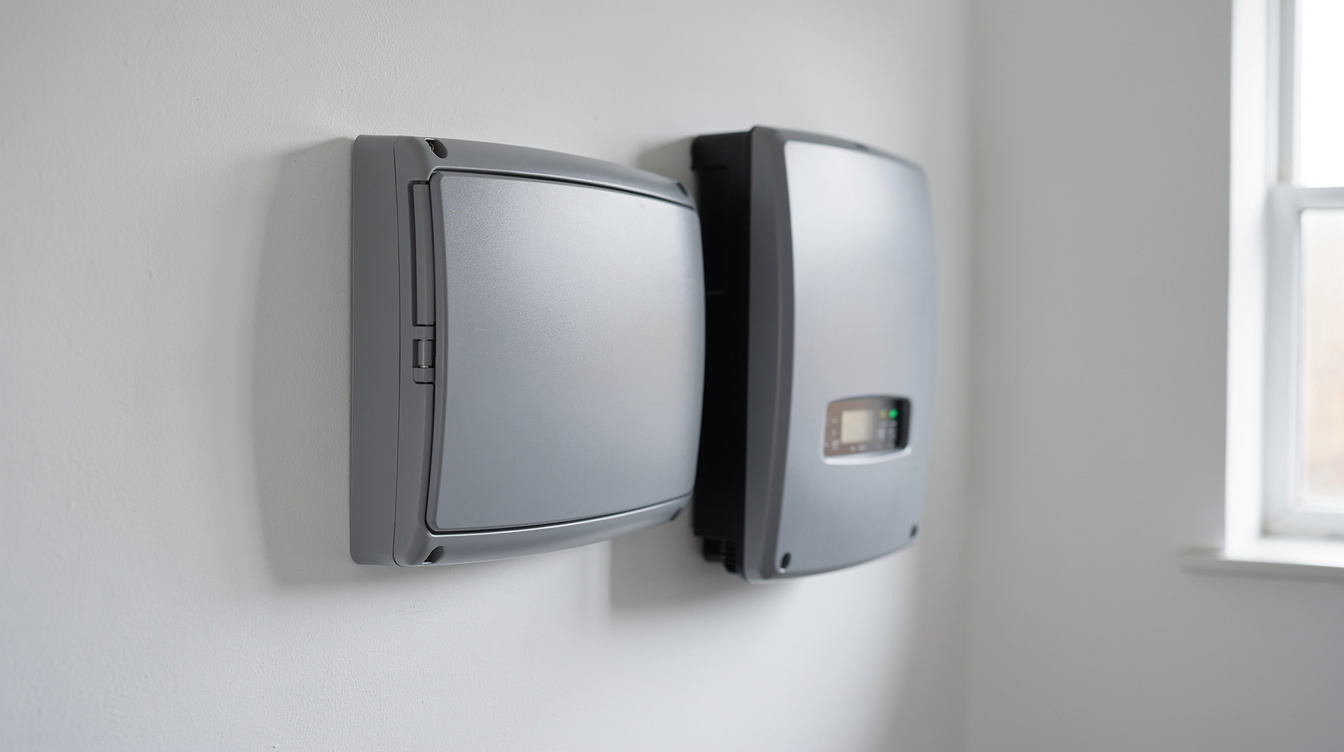
Pre-2020, Irish homes had mechanical electricity meters that physically spun in reverse when the house exported. That worked, in a rough way, for net metering. But mechanical meters can’t separately measure import and export, so the modern Clean Export Guarantee requires a smart meter.
ESB Networks has been rolling out smart meters since 2019 and the programme is now effectively complete — roughly 2.4 million installed nationally. If you already have a smart meter:
- Your existing meter stays put. Nobody comes to your house.
- ESB Networks switches it from import-only mode to net export mode after acknowledging the NC6. This is a remote configuration change.
- From that moment, every kWh you export is logged separately and shows up on your supplier’s CEG statements.
If you don’t yet have a smart meter (genuinely rare in 2026), ESB Networks will schedule an installer to fit one before your CEG can be activated. The visit takes about 30 minutes and is free.
The big practical implication: your CEG income depends on accurate smart meter data. If your inverter is generating but your meter hasn’t been switched into export mode, you’re giving free electricity to the grid. Always check your first export statement within 60 days of switch-on to make sure non-zero numbers are appearing.
For more on what those export tariffs actually pay, see our guide to CEG export tariff rates in Ireland 2026.
What about batteries? Do they change the NC6?
If you add a battery (AC-coupled or hybrid inverter), the NC6 captures it as a piece of grid-connected equipment. ESB Networks needs to know:
- Battery storage capacity in kWh.
- Maximum charge/discharge rate in kW.
- Whether the battery has its own grid-tied inverter or shares the PV hybrid inverter.
- Whether the system has a backup mode (the ability to power the house during an outage). Backup mode requires extra anti-islanding equipment and is a specific bullet on the NC6.
From the grid’s perspective, a battery that’s only charged from solar doesn’t change anything — it just lets you export less. But a battery that can be charged from the grid at off-peak rates and discharged later (the most common UK and Irish setup with Tesla Powerwall, GivEnergy, Sigenergy or Sungrow) could in theory export at high power, so ESB Networks needs to know the maximum output. This rarely affects whether you stay inside the micro-generator threshold — the inverter still caps the total AC output — but it must be declared.
Common ESB connection mistakes (and how to avoid them)
Most homeowners never deal with the NC6 directly, but here are the gotchas that trip up the ones who do:
- The installer hasn’t actually submitted the NC6. Some smaller operators forget. Always ask for written confirmation from ESB Networks (an acknowledgement email referencing your MPRN). Without it, the install is non-compliant.
- The inverter chosen exceeds 6 kVA on a single-phase home. A 5 kWp DC array paired with a 7.6 kW inverter cannot be registered as a micro-generator. Either downsize the inverter or accept the NC7 process.
- No CEG application after install. ESB Networks notifying your meter is only half the story. You still need to ring your electricity supplier and ask them to activate the CEG. Without it, you generate, you export, but you don’t get paid.
- Selling the house with no paperwork. Conveyancing solicitors now routinely ask for the NC6 acknowledgement, the Certificate of Compliance (Safe Electric), and the SEAI grant offer letter. Store them in your house file from day one.
- Adding panels or a battery later. Any upgrade that changes the inverter rating, the DC array size, or adds storage requires a fresh NC6 notification. Most installers handle this; some forget.
Tip: Save your ESB Networks acknowledgement email forever
It’s the single document a future house buyer, conveyancer, or insurance company will ask for to confirm the solar system is on the grid legally. Forward it to a permanent personal email address the day you receive it.
What if you’re going off-grid? Do you still need an NC6?
No. The NC6 is specifically a grid connection notification. A genuine off-grid system — one that is electrically isolated from the public network, typically with no main fuse to the grid — doesn’t require an NC6. Examples include:
- A holiday cabin or boat with no ESB connection.
- An outbuilding or workshop that’s islanded from the main house.
- A campervan installation.
Hybrid systems — where the house is connected to the grid but a battery provides backup during outages — do need an NC6, because the inverter is grid-tied even if the battery can run isolated. See our guide to off-grid solar costs in Ireland for the off-grid scenario.
FAQ — quick answers
Can I submit the NC6 myself?
Technically yes, but you also have to sign the certification confirming the install meets ET 101 and EN 50549-1. Unless you’re a Safe Electric registered electrician with the relevant grid-code competence, you can’t legally sign that section.
Is there a fee for the NC6?
No. Micro-generator notifications are free.
How long does ESB Networks take to acknowledge?
Usually 10–20 working days. Larger NC7 mini-generator applications can take 6–12 weeks because ESB Networks may need to assess the transformer capacity in your area.
What happens if I switch the system on before the NC6 is acknowledged?
In practice, nothing dramatic. The inverter still works and exports. But you’re technically operating an unregistered generator and your CEG can’t be activated. Most installers commission the system on the day of install and submit the NC6 the same day — the timing gap is usually a non-issue.
What if I add a second inverter or extend the array later?
Your installer files a fresh NC6 update. The MPRN, customer details and installer ID stay the same; only the equipment fields change.
Do I need planning permission as well as an NC6?
For domestic rooftop PV, no — planning exemption rules in Ireland are very permissive since 2022. For ground-mount arrays, large rural sites or listed buildings, planning permission may apply on top of the NC6.
How to get this right from the start
When you compare solar quotes, four words protect you from every common ESB-connection problem: “NC6 submission is included.” If it’s in writing in the quote, you’re sorted. If it isn’t, ask the installer to add it.
You should also check:
- Installer is on the SEAI register (it’s the only way to claim the €1,800 grant anyway).
- Electrician on site is Safe Electric / RECI registered — their reg number goes on the NC6.
- Inverter is EN 50549-1 compliant — every mainstream brand sold in Ireland is, but always ask.
- The installer will forward you the ESB Networks acknowledgement email once it arrives.
Skip the Paperwork Stress
All of our recommended SEAI-registered installers handle the NC6, ESB Networks notification and CEG paperwork end-to-end. You sign once and the rest happens behind the scenes.
Related reading
- SEAI Solar PV Grant 2026 — how to apply and qualify
- Clean Export Guarantee Ireland 2026 — selling solar back to the grid
- Solar panels and smart meters Ireland 2026 — what changes after install
- How much does CEG pay Ireland 2026 — export tariff rates compared
- Find the best solar installers near you in Ireland 2026 — vetting guide
Related Articles
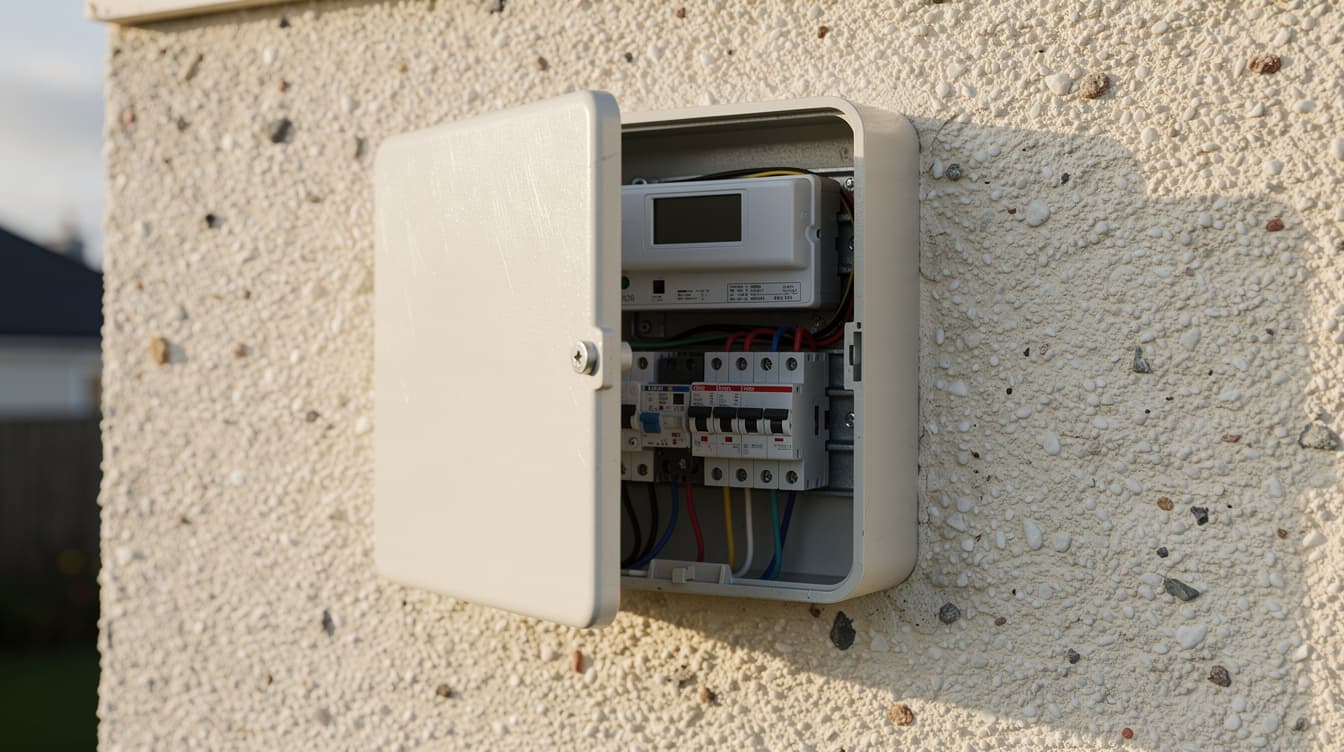
MPRN Ireland 2026: What Your Meter Point Reference Number Is & Why Every Solar Installer Asks for It
Every Irish solar quote asks for your MPRN. What the 11-digit number means, where to find it, and the SEAI grant mistake it prevents.
3-Phase Voltage Ireland Explained: 400V, 230V & Home Solar 2026
Ireland’s 3-phase mains is 400V line-to-line and 230V line-to-neutral. Full explainer on tolerance bands, voltage rise, inverter over-voltage trips & how to check your supply.
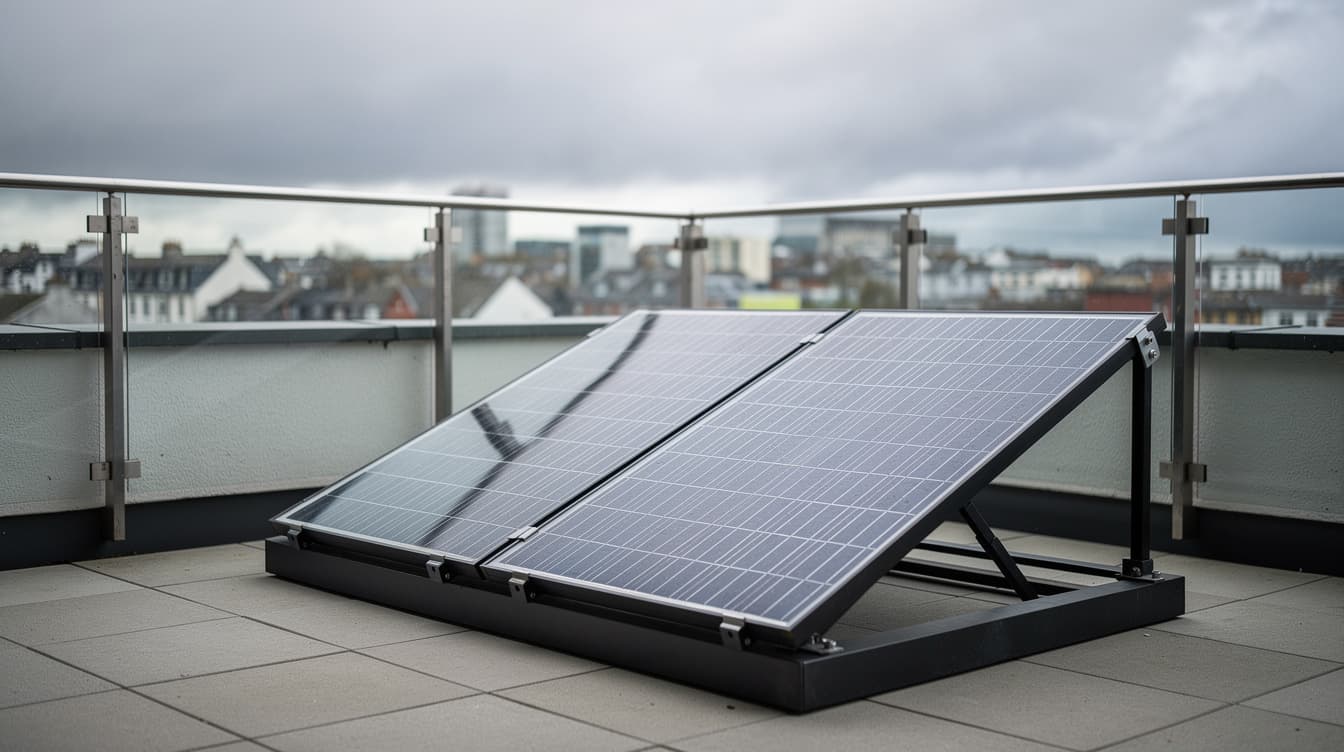
Balcony Solar Power Ireland 2026: What’s Legal, What Works & What It Costs
Full 2026 guide to balcony solar in Ireland: ESB Networks rules, EN 50549 inverters, best kits, real yield on Irish balconies, management-company reality and payback.