
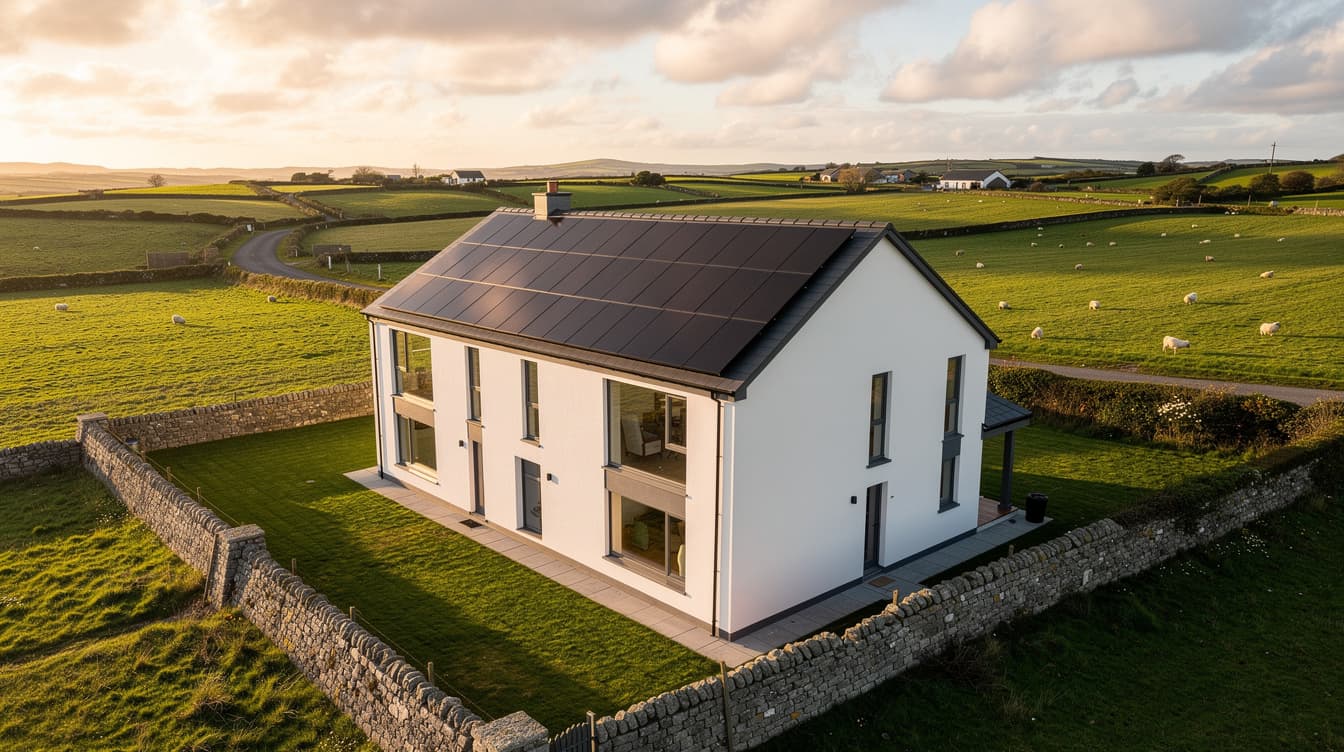
Solar Panel Cost Per kWp Ireland 2026: Real Prices, Grant Effect & Curve by Size
Quoting a solar PV system in euros per kilowatt-peak (€/kWp) is the most useful single number for comparing installers because it normalises out system size. Two quotes for €7,500 and €9,500 look different until you realise they are for 4 kWp and 6 kWp systems respectively. Both are at €1,580 per kWp net, and either could be fair. This 2026 guide explains what an Irish solar install actually costs per kWp, how the curve falls as systems get larger, what the SEAI grant does to the effective price, and what your €/kWp tells you about quote quality.
Quick Answer: Cost Per kWp Ireland 2026
Solar panels in Ireland cost €1,650–€2,000 per kWp pre-grant and €1,200–€1,550 per kWp net after the €1,800 SEAI grant, at 0% VAT. Smaller systems cost more per kWp because labour, scaffolding and certification are fixed costs. Per-kWp pricing falls sharply between 2 kWp and 4 kWp where the grant maxes out, then more gradually up to 8 kWp. Batteries are quoted separately at €600–€850 per kWh installed.
What "Per kWp" Actually Means on an Irish Solar Quote
A kilowatt-peak (kWp) is the rated output of a solar panel at Standard Test Conditions: 1,000 W/m² irradiance, 25°C cell temperature, AM1.5 spectrum. A modern panel in Ireland is typically 430–450 Wp. So a "5 kWp system" means about 11–12 panels, total nameplate 5,000 watts.
"Cost per kWp" is the total installed price divided by the total nameplate Wp. It's the most useful metric because it controls for the biggest variable on any quote: system size. A €6,000 quote isn't cheap if it's for 3 kWp (€2,000/kWp). A €10,000 quote isn't expensive if it's for 8 kWp (€1,250/kWp).
Whenever you receive a quote, divide the headline price by the system kWp and compare against the benchmarks in this guide. Any installer significantly above €2,000/kWp pre-grant (or €1,650/kWp net) is either bundling premium hardware you didn't ask for or running an inflated margin.
The Cost-Per-kWp Curve for Irish Residential Systems (2026)
Because labour, scaffolding, certification, the inverter and grant admin are essentially fixed costs spread across the array, larger systems are cheaper per kWp. The curve looks like this in Q1–Q2 2026:
| System Size | Pre-Grant Cost | SEAI Grant | Net Cost | € / kWp (Net) |
|---|---|---|---|---|
| 2.2 kWp (5 panels) | €4,800–€5,600 | €1,400 | €3,400–€4,200 | €1,550–€1,910 |
| 3.5 kWp (8 panels) | €6,400–€7,400 | €1,800 | €4,600–€5,600 | €1,310–€1,600 |
| 4.4 kWp (10 panels) | €7,200–€8,800 | €1,800 | €5,400–€7,000 | €1,230–€1,590 |
| 5.3 kWp (12 panels) | €8,200–€10,000 | €1,800 | €6,400–€8,200 | €1,210–€1,550 |
| 6.6 kWp (15 panels) | €9,400–€11,400 | €1,800 | €7,600–€9,600 | €1,150–€1,460 |
| 8.0 kWp (18 panels) | €11,000–€13,200 | €1,800 | €9,200–€11,400 | €1,150–€1,430 |
| 10 kWp (22 panels) | €13,000–€16,000 | €1,800 | €11,200–€14,200 | €1,120–€1,420 |
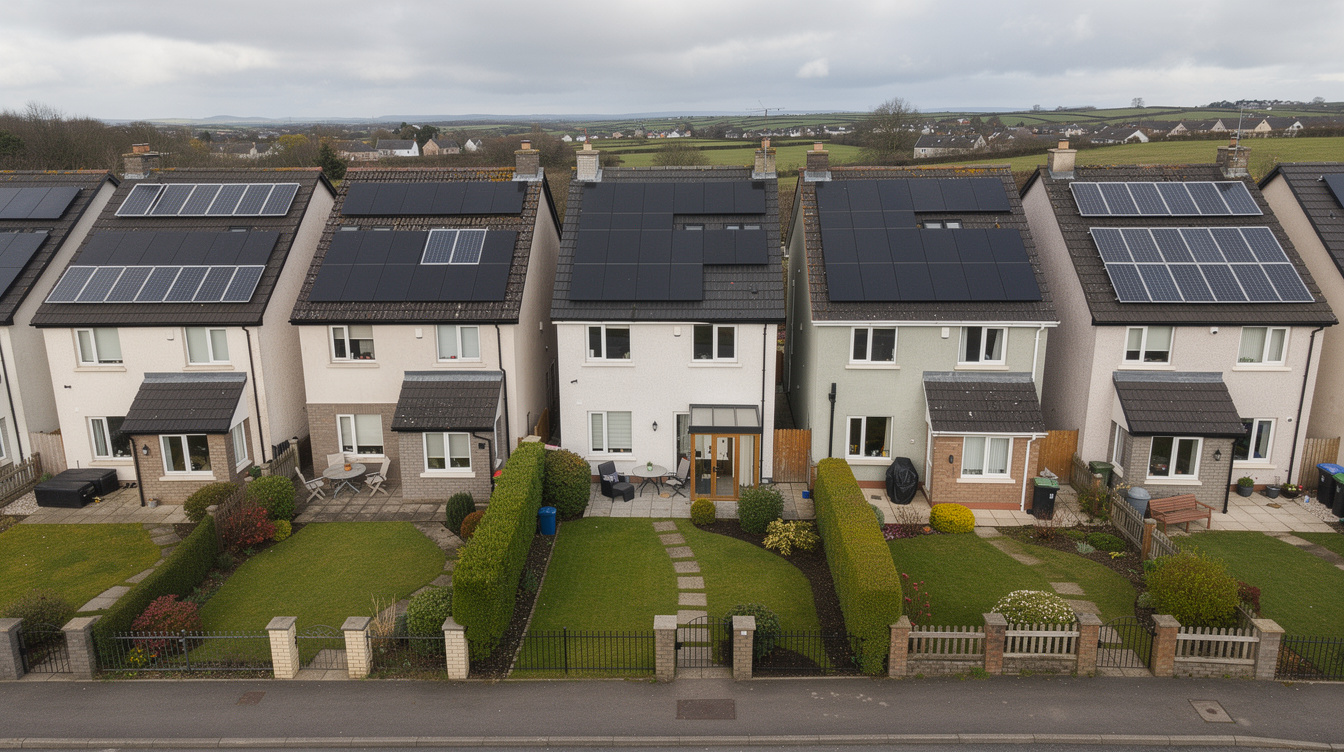
Why the €/kWp Curve Falls (and Why It Plateaus Above 6 kWp)
The reason cost per kWp falls with system size is that several major cost categories are essentially fixed regardless of array size:
- Scaffolding (€400–€700): The same scaffold serves a 5-panel install as a 15-panel install.
- Cert 3 electrical sign-off (€200–€350): Fixed per job.
- ESB Networks NC6 paperwork (€80–€150): Fixed per job.
- SEAI grant administration (€80–€200): Fixed per job.
- Mobilisation labour (1 person-day): Fixed per job. Travel to site, equipment setup, customer handover.
- Inverter (semi-fixed): A 4 kW inverter costs around €1,000; a 6 kW inverter costs around €1,300. The unit cost per inverter-kW falls slightly with size.
Together these fixed costs total €1,800–€2,500 per job. Spread across 2 kWp they add €900–€1,250 to the per-kWp price. Spread across 8 kWp they add only €225–€310. That's the economy-of-scale effect on the curve.
The curve plateaus above 6 kWp because at that point you start hitting the ESB Networks NC6 6 kW single-phase limit. Going above 6 kW AC inverter capacity on single-phase supply requires moving to NC7 Mini-Generation, which adds €200–€500 in connection fees and weeks of paperwork. Above 6 kWp the savings from spreading fixed costs further are partly offset by NC7 overheads or by inverter clipping if you stay on NC6.
The Grant Cliff at 4 kWp
The single biggest discontinuity in the Irish €/kWp curve is the SEAI grant cliff at 4 kWp:
- First 2 kWp pays €700/kWp grant (i.e. €1,400 grant)
- Next 2 kWp pays €200/kWp grant (i.e. €400 grant)
- Above 4 kWp: no grant on additional capacity
That makes a 4 kWp system the sweet spot for the grant: full €1,800 of grant captured against the smallest reasonable system that maxes it out. Going from 4 kWp to 6 kWp adds 2 kWp of unsubsidised panels, increasing your out-of-pocket per-kWp on the marginal capacity.
For a household with low daytime electricity use (under 12 kWh average daily import), a 4 kWp system delivers the best €/kWp economics. For a household with EV charging, heat pump, or daytime work-from-home loads, going to 6–8 kWp still pays back well despite the steeper marginal €/kWp because more of the extra generation displaces 35c import rather than exporting at 19c.
What Drives the Variation Within Each System Size
The €1,230 to €1,590 range for a net 4 kWp install reflects real differences in scope. Where you land in that range depends on:
| Factor | Impact on €/kWp (Net) |
|---|---|
| Tier-1 vs premium panels | +€150–€300 per kWp |
| Hybrid vs non-hybrid inverter | +€25–€75 per kWp |
| String vs microinverter | +€200–€300 per kWp |
| 2-storey vs bungalow scaffolding | +€80–€130 per kWp |
| Slate vs tile roof (specialist hooks) | +€15–€35 per kWp |
| Multi-pitch roof (extra MPPTs) | +€30–€80 per kWp |
| Long DC cable run from roof to inverter | +€20–€50 per kWp |
| Bird/squirrel mesh perimeter | +€40–€65 per kWp |
| Hot water diverter (Eddi) | +€180–€240 per kWp |
When comparing quotes, normalise to a like-for-like spec then compare €/kWp. A Tier-1 panel string-hybrid quote with scaffolding, 2-storey, no battery, no bird mesh, no hot water diverter should land around €1,300–€1,450 per kWp net for a 4–5 kWp install. Anything above that pays for premium hardware or excess margin.
Per-kWh Cost of Solar Generation Over 25 Years
Per-kWp tells you what the installation costs. Per-kWh tells you what the energy costs over the system's life. To calculate per-kWh you divide net install cost by total lifetime generation, assuming 0.5% annual panel degradation and 25-year operating life.
| Scenario | Annual Yield | 25-Year Generation | Net Cost | Levelised Cost (c/kWh) |
|---|---|---|---|---|
| 4 kWp South-facing | 3,740 kWh | 87,500 kWh | €6,200 | 7.1 c/kWh |
| 4 kWp East-West | 3,280 kWh | 76,700 kWh | €6,200 | 8.1 c/kWh |
| 6 kWp South-facing | 5,500 kWh | 128,500 kWh | €8,500 | 6.6 c/kWh |
| 8 kWp South-facing | 7,300 kWh | 170,500 kWh | €10,300 | 6.0 c/kWh |
An Irish solar system generates electricity at 6–8 cents per kWh over its lifetime. Compare that to the average Irish residential import price of 35 cents and CEG export at 19 cents and the maths is overwhelming: every kWh you self-consume saves you 28 cents, every kWh you export earns you 12 cents net. Even the worst-case east-west system delivers an internal rate of return of 11–13% post-tax.
Estimate Your Cost & Output
Try our calculator for an instant size, grant and payback estimate.
Battery Storage Cost Per kWh Installed
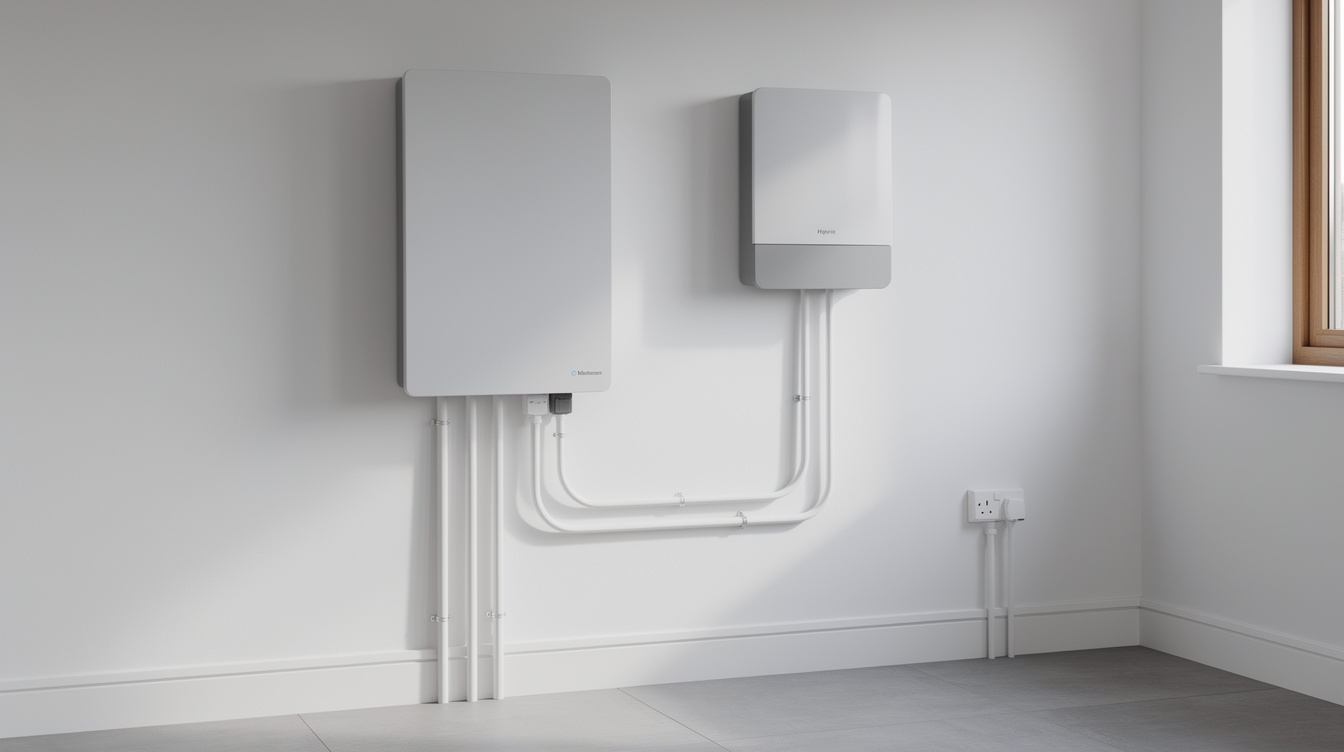
Batteries are quoted separately and have their own €/kWh metric — not to be confused with solar €/kWp. Battery cost runs:
| Battery Capacity | Installed Cost (Incl. Hybrid Inverter) | Cost per kWh Installed | Example Brands |
|---|---|---|---|
| 5 kWh | €3,500–€4,500 | €700–€900 | GivEnergy, Pylontech, BYD HVS |
| 7 kWh | €4,500–€5,500 | €640–€785 | GivEnergy 8.2, Sungrow SBR |
| 10 kWh | €5,500–€7,000 | €550–€700 | Sigenergy 10, BYD HVM, Tesla PW3 |
| 13.5 kWh (Tesla PW3) | €9,500–€11,500 | €700–€850 | Tesla Powerwall 3 |
How Cost Per kWp in Ireland Compares Internationally
Ireland sits in the middle of the European range on residential solar costs. The Irish €1,650–€2,000 per kWp pre-grant compares to:
- Germany: €1,300–€1,700 per kWp (larger market, more competition, lower labour rates)
- Netherlands: €1,200–€1,500 per kWp (high installer density, panels delivered direct from Rotterdam port)
- UK: €1,600–€1,900 per kWp (similar labour rates, less scaffolding regulation overhead)
- Spain: €1,000–€1,400 per kWp (lower labour, simpler permitting)
- Italy: €1,500–€1,900 per kWp (similar to Ireland)
Irish per-kWp pricing is higher than continental Europe primarily because of (1) higher Irish labour rates — an Irish electrician earns 25–40% more than a Spanish counterpart, (2) more stringent scaffolding and Working at Heights requirements, and (3) lower installer density per capita. The Irish premium has narrowed from 30–40% in 2022 to 15–25% in 2026 as the Irish market has matured.
What Per-kWp Will Look Like in 2027 and Beyond
Panel prices reached a structural floor in 2024 at around €0.30/Wp wholesale and have remained there into 2026. Inverter prices have stabilised. The two upcoming variables that will move Irish €/kWp pricing in 2027:
- 0% VAT expires 31 October 2026. Unless extended, the rate reverts to 13.5% on private dwellings. That's an automatic €225–€270 per kWp price increase from November 2026 onwards.
- SEAI grant rates. The current €1,800 cap has been stable since 2023. A potential battery grant under consultation through 2026 could add €500–€1,500 of subsidy to battery installs, indirectly improving the per-kWp economics of combined solar+battery packages.
The net 2026 economic case — €1,200–€1,550 per kWp net — is likely the most generous it will be in the foreseeable future. Installing before 31 October 2026 captures the 0% VAT relief automatically.
What €/kWp Tells You About Quote Quality
When you have three quotes, plot them on the curve:
| €/kWp Net (4 kWp) | What It Means |
|---|---|
| Under €1,100 | Likely missing scope. Check for excluded scaffolding, certification, bird mesh, monitoring. |
| €1,150–€1,350 | Lean budget install, often with budget-tier panels. Acceptable if inverter brand is named. |
| €1,350–€1,500 | Standard market rate for Tier-1 panels, hybrid inverter, scaffolding included. |
| €1,500–€1,700 | Premium hardware (microinverters, premium panels) or high-margin installer. |
| Over €1,700 | Margin loading or top-tier Western-made hardware. Negotiate or walk away. |
The most useful comparison is between three quotes for the same system spec. Differences of €100–€200 per kWp between installers reflect legitimate competition. Differences of €400+ usually reflect either a corner-cutting quote at the low end or an inflated quote at the high end.
FAQ: Solar Panel Cost Per kWp Ireland 2026
How much do solar panels cost per kWp in Ireland in 2026?
Pre-grant: €1,650–€2,000 per kWp. Net after SEAI grant: €1,200–€1,550 per kWp on systems above 4 kWp. Smaller systems cost more per kWp because fixed costs (scaffolding, certification) don't scale down.
Why is per-kWp cheaper on larger solar systems?
Scaffolding, certification, ESB Networks paperwork, SEAI grant administration and mobilisation labour are all fixed costs per job. Spreading them over more panels reduces €/kWp. The curve falls steeply between 2–4 kWp then flattens above 6 kWp.
What's the sweet spot for residential solar in Ireland?
4 kWp maxes out the €1,800 SEAI grant and delivers the best net €/kWp economics. 6–8 kWp makes sense if you have EV charging, heat pump or daytime work-from-home loads that absorb extra generation at 35c import-displacement rather than 19c export.
What does each €100/kWp of difference between quotes mean?
On a 4 kWp install, €100/kWp equals €400 of total quote difference. That's roughly the price of premium-vs-Tier-1 panels, or a hybrid-vs-non-hybrid inverter, or including bird mesh.
How does battery storage affect €/kWp pricing?
Batteries are quoted separately at €600–€850 per kWh installed. They don't change the solar €/kWp but they alter the payback dynamics because they shift more generation from 19c export to 35c self-use savings.
Will solar prices fall further in 2027?
Unlikely in absolute terms. Panel prices hit a structural floor in 2024. If 0% VAT expires 31 October 2026 without extension, installed prices will rise by 13.5% from November 2026 — equivalent to €225–€270 per kWp.
How does Irish €/kWp compare to Europe?
Ireland sits 15–25% above the German and Dutch markets, similar to the UK and Italy, well above Spain. The gap to continental Europe has narrowed from 30–40% in 2022 as the Irish market has matured.
What's the lifetime levelised cost of solar electricity in Ireland?
6–8 cents per kWh on a typical residential install over 25 years. That compares to 35 cents per kWh import and 19 cents per kWh CEG export — an enormous structural advantage that makes Irish residential solar one of the highest-IRR consumer investments available.
Bottom Line: Use Per-kWp as the Honest Comparison Metric
Per-kWp pricing is the most useful number on any Irish solar quote because it normalises out system size, isolates the installer's margin and hardware choices, and benchmarks easily against the 2026 market. A net €1,300–€1,500 per kWp is the fair market range for a Tier-1, hybrid-inverter, 4–6 kWp install with scaffolding included.
Compare three quotes on a like-for-like spec, normalise to €/kWp, then negotiate from the middle of the range. The fastest way to get like-for-like quotes is through our free quote comparison with the same SEAI-registered installer requirements.
Related Articles
20 Solar Panels Ireland 2026: Cost, Output, Battery & Payback
What 20 solar panels cost in Ireland 2026 (€12.7-18.6k net after grant), 7,600-8,100 kWh output, roof space, battery choice and payback vs 10 or 14 panels.
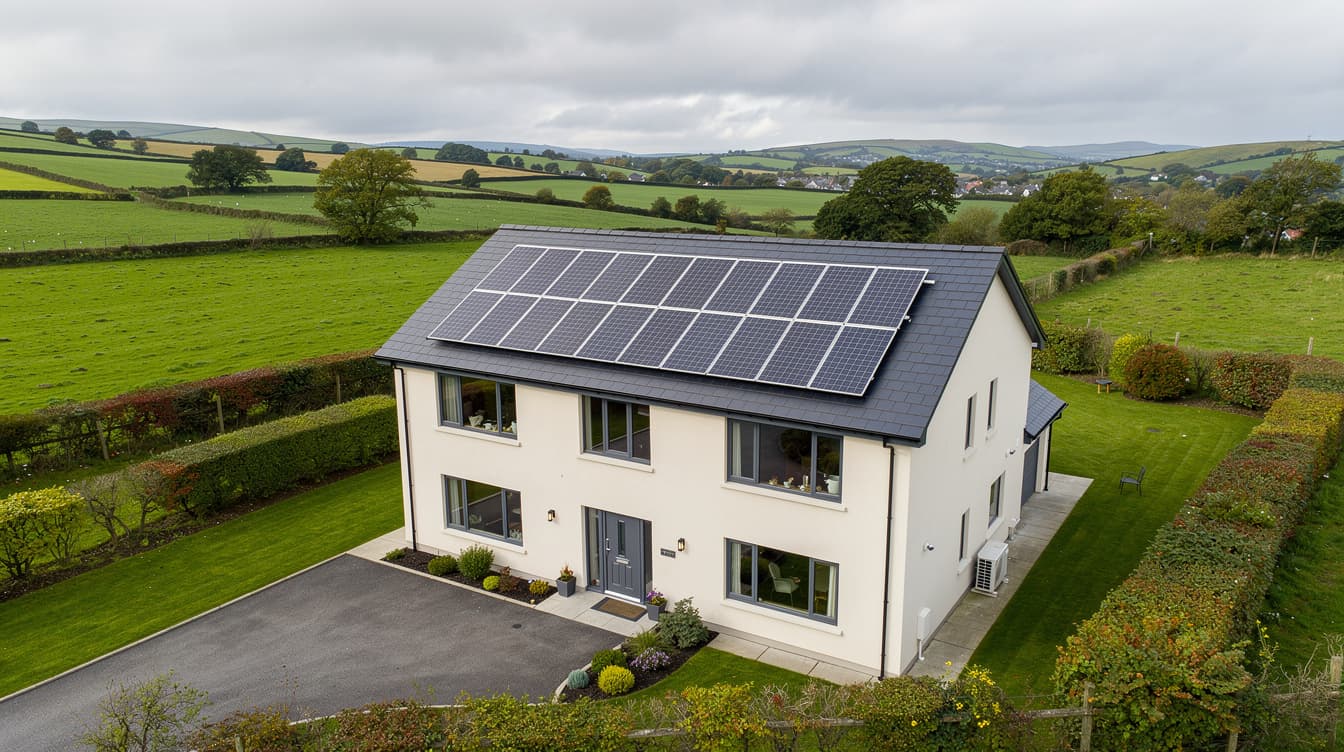
12 Solar Panels Ireland 2026: Cost, Output, Battery & Payback
What 12 solar panels cost in Ireland 2026 (€9.1-10.8k after grant), annual kWh output, battery sizing, roof space needed and how 12 stacks vs 10 or 14 panels.
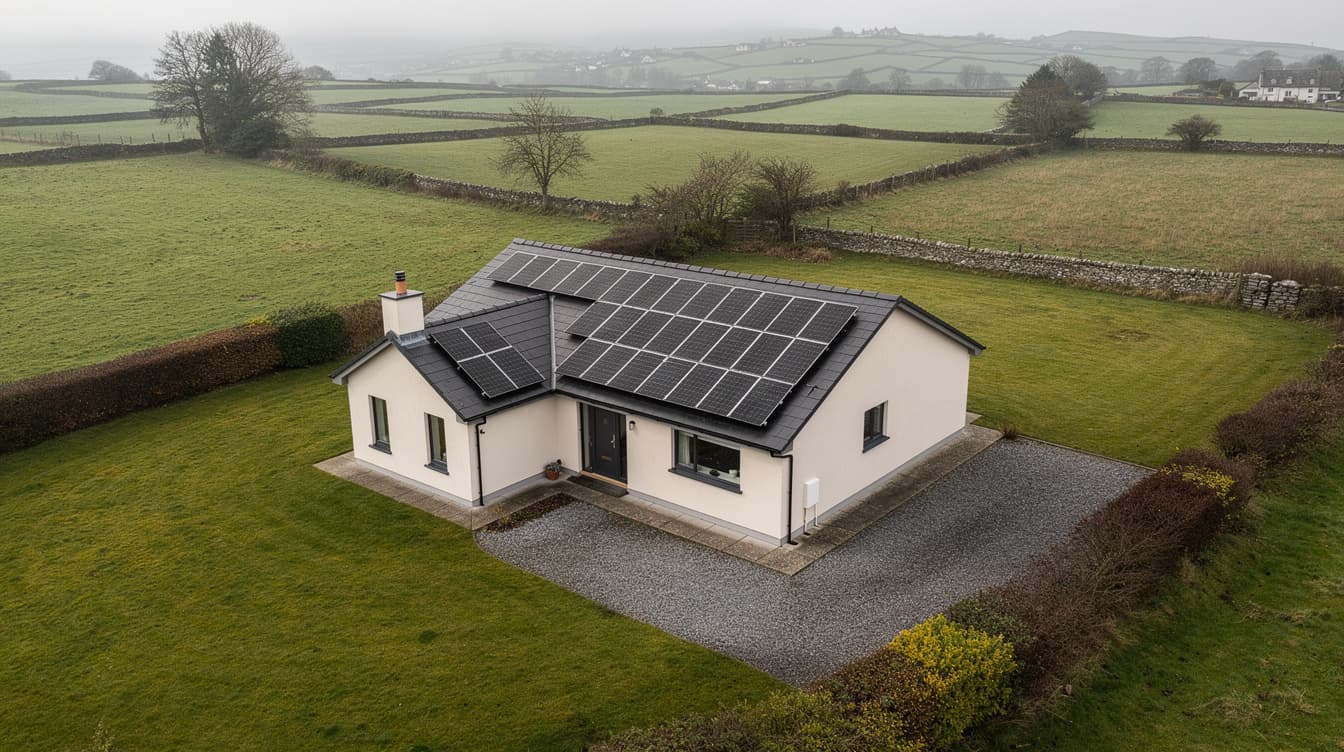
14 Solar Panels Ireland 2026: Cost, kWh Output, Battery & Payback
What 14 solar panels cost in Ireland 2026 (€10.4-12.1k after grant), annual kWh output, roof space, battery pairing and how 14 stacks vs 12 or 16 panels.