

Solar Panels and Underfloor Heating Ireland 2026: The Complete System Guide (Costs, Grants & Running Costs)
Solar panels and underfloor heating are one of the smartest combinations you can install in an Irish home — but only if you do it right. The physics are elegant: your solar panels generate free electricity during the day, a heat pump converts that electricity into 3–4 times its value in heat, and underfloor heating distributes that warmth evenly across your floors at the low temperatures heat pumps love. The result? A home that's warm from the ground up, powered largely by your own roof.
This guide covers how the system works in practice for Irish homes in 2026, what it costs, what grants are available, and the critical mistakes to avoid. Whether you're retrofitting a 1990s semi or planning a deep energy renovation, you'll find the numbers and practical advice you need.
Considering Solar + Underfloor Heating?
Get free quotes from SEAI-registered installers who can design the full system for your home.
How Solar Panels Power Underfloor Heating (The Short Version)
Solar PV panels don't heat your floors directly — that's the most common misconception. Here's the actual chain:
- Solar panels generate electricity from daylight (not just direct sun).
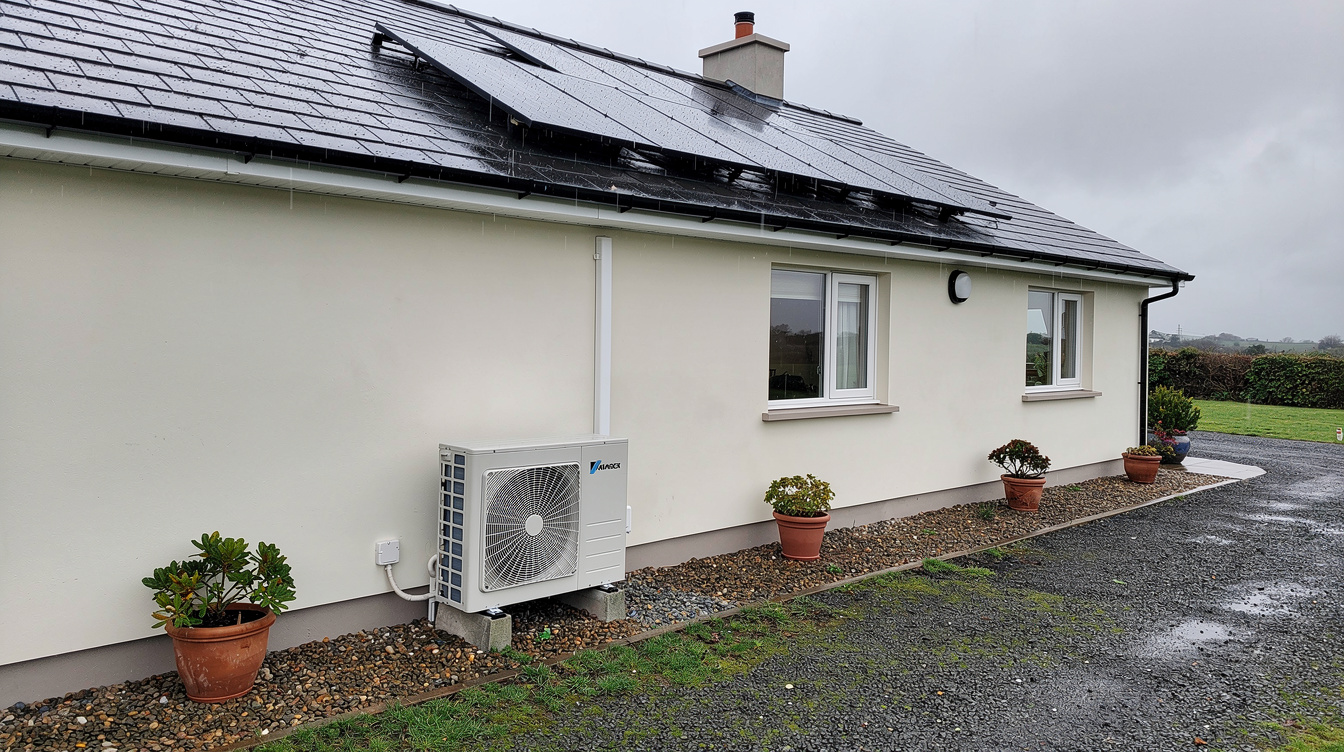
- That electricity powers a heat pump (air-to-water is the most common in Ireland).
- The heat pump heats water to 30–45°C — the ideal temperature range for underfloor heating loops.
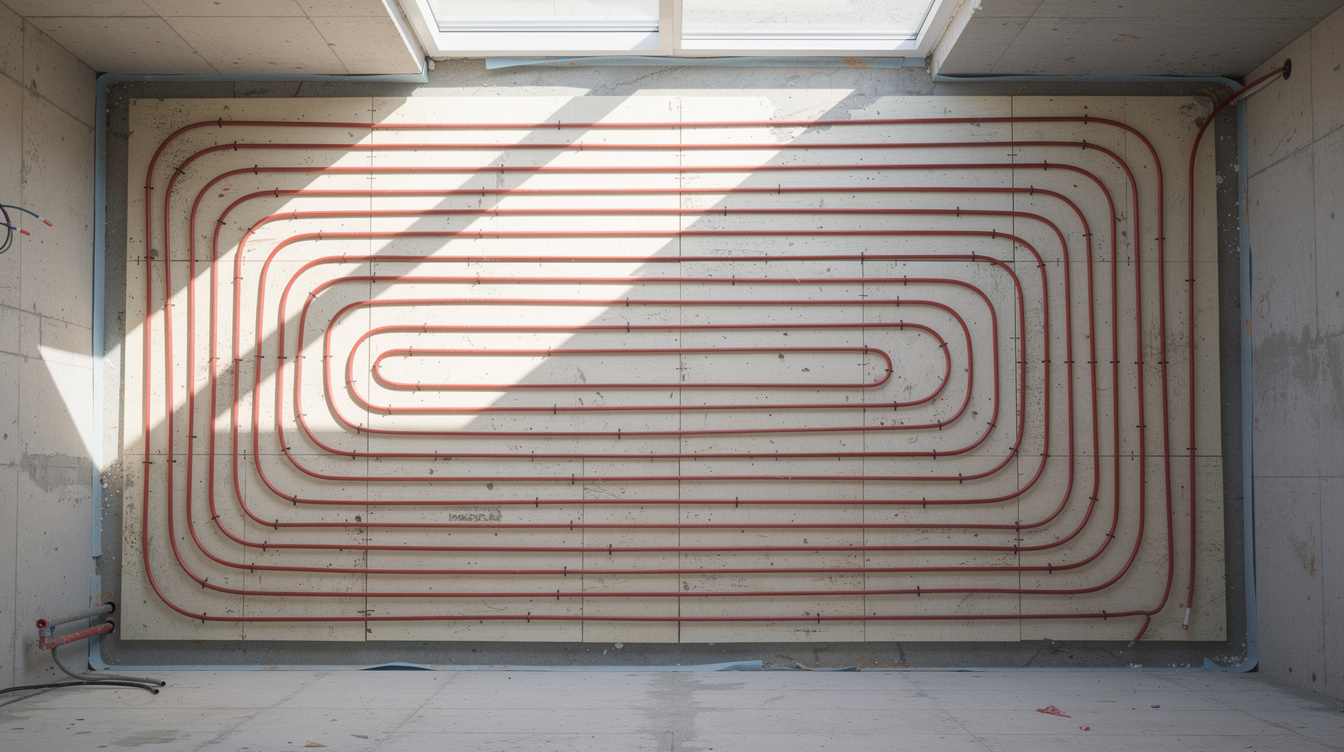
- Warm water circulates through pipes embedded in your floor, radiating heat evenly across the room.
The magic is in the heat pump's efficiency. For every 1 kWh of electricity it consumes, it produces 3–4 kWh of heat (its Coefficient of Performance, or COP). So your solar panels aren't just offsetting electricity — they're effectively tripling their heating impact.
Why underfloor heating specifically? Heat pumps work best at low flow temperatures (30–45°C). Traditional radiators need 55–70°C water to heat a room effectively, which forces the heat pump to work harder and reduces its COP. Underfloor heating operates perfectly in the heat pump's sweet spot, which means lower running costs and more of your solar generation goes further.
What the Full System Costs in Ireland (2026)
Let's break down the real costs for a typical 3-bed semi-detached house in Ireland, then show what grants knock off:
| Component | Typical Cost | SEAI Grant | Net Cost |
|---|---|---|---|
| Solar PV (4.1 kWp, 10 panels) | €6,500–€7,500 | €1,800 | €4,700–€5,700 |
| Solar battery (5 kWh) | €3,500–€4,500 | €600 | €2,900–€3,900 |
| Air-to-water heat pump | €8,000–€14,000 | €6,500 | €1,500–€7,500 |
| Underfloor heating (retrofit, ground floor) | €3,000–€6,000 | €2,000* | €1,000–€4,000 |
| Renewable Heat Bonus** | — | €4,000 | — |
| Total | €21,000–€32,000 | €14,900 | €10,100–€21,100 |
*The €2,000 central heating upgrade grant covers underfloor heating, new radiators, or pipework — claimed as part of the heat pump grant package.
**The €4,000 Renewable Heat Bonus is available if you're switching from oil, gas, solid fuel, or electric storage heating to a heat pump. This bonus was introduced in February 2026.
The total heat pump grant package can now reach €12,500 — that's €6,500 for the heat pump itself, €2,000 for the heating distribution upgrade, and €4,000 Renewable Heat Bonus. Combined with the €1,800 solar PV grant and €600 battery grant, you could receive up to €14,900 in total SEAI grants for the full system.
Running Costs: Solar + Heat Pump vs Traditional Heating
Here's where the combination really shines. Let's compare annual heating costs for a typical 3-bed semi (heat demand ~12,000 kWh/year):
| Heating System | Fuel/Electricity Needed | Annual Cost |
|---|---|---|
| Oil boiler (85% efficiency) | 1,550 litres kerosene | €1,550–€1,800 |
| Gas boiler (90% efficiency) | 13,300 kWh gas | €1,200–€1,400 |
| Heat pump + UFH (grid only) | 3,400 kWh electricity | €1,430 |
| Heat pump + UFH + solar (no battery) | ~2,100 kWh from grid | €880 |
| Heat pump + UFH + solar + battery | ~1,400 kWh from grid | €590 |
The solar + heat pump + underfloor heating combination cuts heating costs by 60–70% compared to an oil boiler, and you're also generating export income on surplus electricity. At 42c/kWh for grid electricity and 18c/kWh export rates, the maths strongly favour maximising self-consumption — which is exactly what a battery helps you do.
The Seasonal Challenge (And How to Handle It)
Here's the honest bit that most guides skip: solar generation and heating demand are inversely correlated in Ireland. You generate the most electricity in May–July when you need the least heating, and the least electricity in November–January when heating demand peaks.
This doesn't make the combination unviable — far from it. But it does mean you need to be realistic about expectations:
- April–September: Solar panels comfortably cover 80–100% of heat pump electricity needs. You'll export surplus and barely touch the grid for heating.
- October–March: Solar covers roughly 20–35% of heat pump electricity needs. The rest comes from the grid.
- Annual average: A well-sized 4–5 kWp solar system typically offsets 35–45% of a heat pump's annual electricity consumption without a battery, or 50–60% with a battery.
The key insight: even in winter, your solar panels are still generating. Ireland gets usable daylight year-round — a 4 kWp system in December still produces 4–6 kWh per day, which is enough to run a heat pump for 2–3 hours of heating. Combined with cheap night-rate electricity, the system works well even in the darkest months.
Ready to Combine Solar + Underfloor Heating?
Get matched with installers who specialise in integrated solar and heating systems.
Retrofit vs New Build: Two Very Different Projects
New Builds and Major Renovations
If you're building a new home or doing a full renovation (back to bare floors), underfloor heating is straightforward. The pipes are laid before the screed goes down, adding minimal cost to the build. Since 2021, Part L building regulations effectively require heat pumps in new Irish homes, so solar + heat pump + underfloor heating is becoming the default specification.
Cost for underfloor heating in a new build: €2,000–€4,000 for a typical 3-bed house (materials and installation on exposed subfloor).
Retrofitting Existing Homes
This is where it gets more complex and expensive. Retrofitting underfloor heating into an existing home typically means one of three approaches:
- Low-profile overlay systems — Thin (15–20mm) panels sit on top of your existing floor. Least disruptive, but you lose some floor height and may need to trim doors. Cost: €60–€90/m².
- Full screed replacement — Existing floor is dug out, insulation and pipes laid, new screed poured. Most effective but most disruptive. Cost: €80–€120/m².
- Ground floor only + radiators upstairs — The most common retrofit approach. Underfloor heating on the ground floor (where you spend most time) with upgraded radiators on the first floor. This is often the best compromise between cost, disruption, and performance.
Retrofit cost for ground floor only (typical 50–60m²): €3,000–€6,000 depending on approach.
What Size Solar System Do You Need?
The answer depends on whether you're sizing for electricity only or for electricity + heating:
| Scenario | Recommended System | Annual Output | % of Heat Pump Demand Offset |
|---|---|---|---|
| Electricity only (no heat pump) | 3–4 kWp (8–10 panels) | 2,650–3,540 kWh | N/A |
| Electricity + heat pump (3-bed) | 5–6 kWp (12–15 panels) | 4,420–5,300 kWh | 35–50% |
| Electricity + heat pump (4-bed) | 6–8 kWp (15–20 panels) | 5,300–7,070 kWh | 40–55% |
If you're planning to add a heat pump in the future, install a larger solar system now. The marginal cost of extra panels is low (€200–€300 per panel), and you'll be grateful for the extra generation when the heat pump arrives. See our system size comparison guide for detailed sizing advice.
The SEAI Grant Stack: How to Maximise Funding
Ireland's SEAI grants for 2026 are the most generous they've ever been. Here's how to stack them for the full solar + heat pump + underfloor heating package:
- Solar PV grant: Up to €1,800 (€700/kWp for first 2 kWp, €200/kWp for 2–4 kWp). See our SEAI solar grant guide.
- Battery grant: Up to €600
- Heat pump grant: Up to €6,500
- Central heating upgrade grant: Up to €2,000 (covers underfloor heating installation)
- Renewable Heat Bonus: €4,000 (if switching from oil/gas/solid fuel/electric storage heating)
Total potential grants: €14,900
Important eligibility notes: Your home must have been built and occupied before 2021. For the heat pump grant, your home must achieve a Heat Loss Indicator (HLI) of 2.0 W/K/m² or below — this usually means your insulation needs to be up to standard first (wall, attic, and floor insulation). You may need to do insulation upgrades before qualifying for the heat pump grant.
5 Mistakes to Avoid
- Installing underfloor heating without adequate insulation. If your floor isn't insulated, you'll heat the ground beneath your house instead of the rooms above it. Floor insulation (50–100mm PIR board) is essential and should be installed before the heating loops.
- Oversizing the heat pump. A common installer mistake. An oversized heat pump cycles on and off too frequently (short-cycling), which reduces efficiency and increases wear. Insist on a proper heat loss calculation — not a rule-of-thumb estimate.
- Skipping the battery. Without a battery, your solar generation during a sunny afternoon can't be stored for the heat pump to use in the evening. A 5–10 kWh battery bridges this gap and significantly improves self-consumption. See our battery cost guide.
- Not switching to a smart tariff. With a heat pump and battery, you can pre-heat your home or charge the battery on cheap night-rate electricity (as low as 10–15c/kWh), then use solar during the day. A smart time-of-use tariff can save an extra €200–€400 per year.
- Doing it all at once when the budget is tight. The smart approach for many Irish homeowners is phased: install solar panels first (quickest payback, lowest cost), then add a heat pump and underfloor heating later. Your solar panels start saving money from day one, and the experience helps you plan the heating upgrade.
Should You Install Solar First or the Heat Pump First?
This is one of the most common questions we hear. The answer for most Irish homeowners is clear: install solar first.
Here's why:
- Lower upfront cost: Solar panels cost €4,700–€5,700 after the grant vs €8,000+ for a heat pump system.
- Faster payback: Solar panels pay for themselves in 5–7 years regardless of your heating system.
- Immediate savings: You start saving on electricity bills from week one.
- Future-proofing: When you do add a heat pump, your solar panels are already there to reduce its running costs.
- Grant stacking: The solar PV grant and heat pump grant are separate — you don't lose any funding by doing them in stages.
The exception: if your oil boiler has failed or you're doing a major renovation anyway, it may make sense to do everything at once to minimise disruption and take advantage of the full €14,900 grant stack.
Electric Underfloor Heating vs Wet Underfloor Heating
A quick but important distinction. There are two types of underfloor heating, and only one works well with solar panels and a heat pump:
| Feature | Wet (Hydronic) UFH | Electric UFH |
|---|---|---|
| How it works | Warm water through pipes | Electric heating mats/cables |
| Works with heat pump? | Yes — ideal match | No heat pump benefit |
| Efficiency with solar | 3–4x multiplier via heat pump | 1:1 (no multiplier) |
| Running cost (whole house) | €590–€880/year | €1,800–€2,500/year |
| Installation cost (retrofit) | Higher (€60–€120/m²) | Lower (€30–€50/m²) |
| Best use case | Whole-house primary heating | Single-room supplementary |
| SEAI grant eligible? | Yes (with heat pump) | No |
Bottom line: If you're combining solar panels with underfloor heating, you want wet (hydronic) underfloor heating connected to a heat pump. Electric underfloor heating mats are fine for a single bathroom or kitchen as supplementary warmth, but they're far too expensive to run as your primary heating system — even with solar panels.
Is It Worth It? The 25-Year View
Let's run the long-term numbers for a full system (solar + battery + heat pump + wet UFH) vs staying on oil heating:
| Factor | Oil Boiler (Status Quo) | Solar + Heat Pump + UFH |
|---|---|---|
| Upfront cost (after grants) | €0 | €10,100–€15,000 |
| Annual heating + electricity cost | €3,200–€3,800 | €1,000–€1,400 |
| 25-year energy cost | €80,000–€95,000 | €25,000–€35,000 |
| BER improvement | None | +2–3 grades |
| Home value increase | None | +€15,000–€25,000 |
| 25-year net position | –€80,000+ | +€20,000–€45,000 ahead |
Even at today's energy prices (which are unlikely to fall), the full system pays for itself within 7–10 years and then generates pure savings for the remaining 15–18 years of the panels' life. Factor in rising energy costs and BER-linked home value increases, and the case becomes overwhelming.
Ready to Get Started?
Get free quotes from installers who can design your complete solar + heating system.
Related Articles
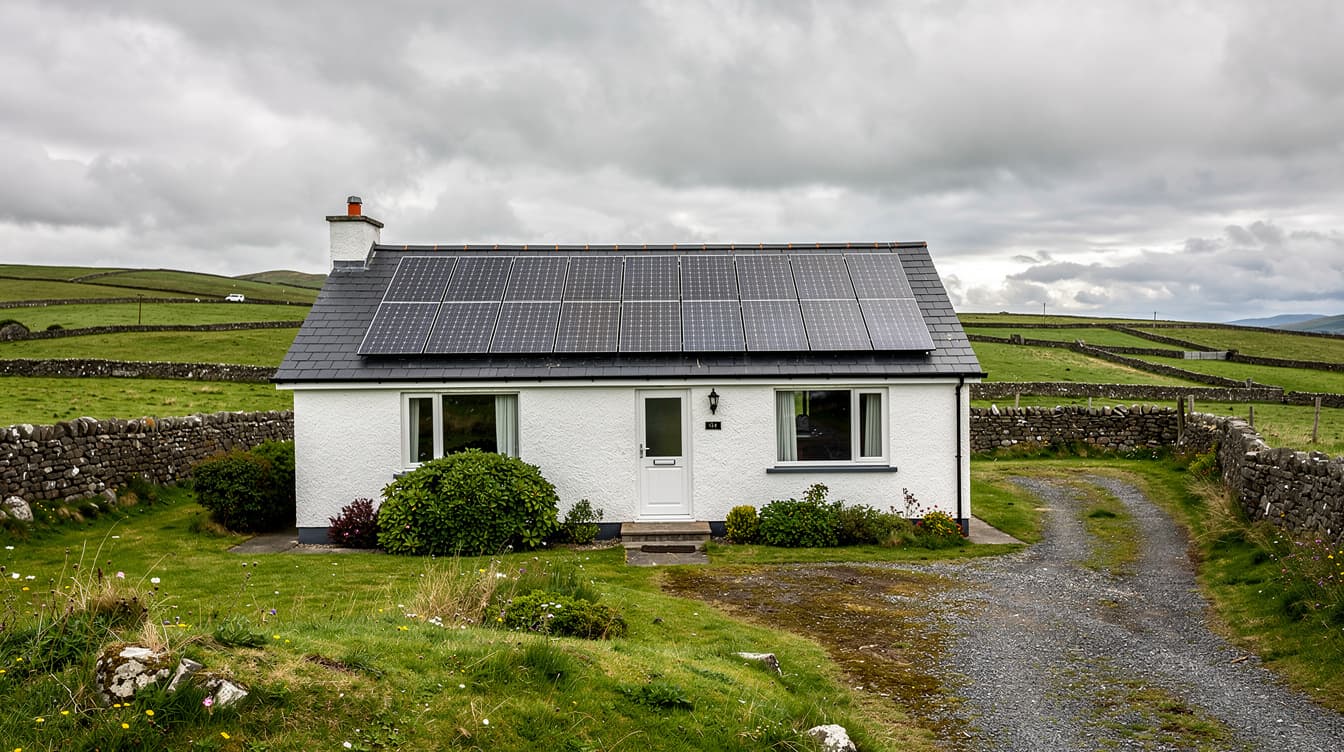
Solar Panels for a Bungalow in Ireland 2026: Costs, Roof Space & Why Bungalows Are Ideal
Irish bungalows are ideal for solar. A 4 kWp system costs €4,000–5,000 after SEAI grant, saves €730–1,360/yr. Full cost breakdown for 2–4 bed bungalows.
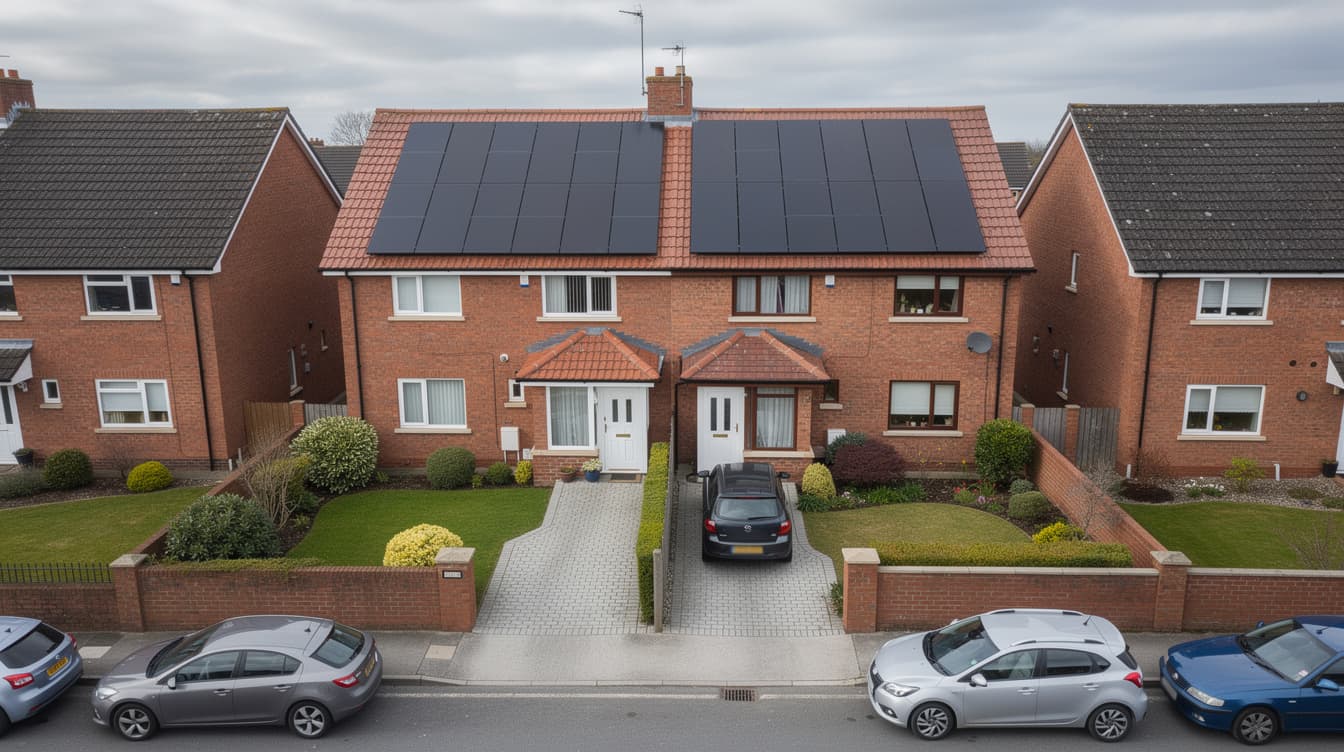
How Much Do Solar Panels Cost for a 3-Bed House in Ireland? (2026 Prices)
A 4.4 kWp solar system on a 3-bed semi costs €4,700–€6,700 after SEAI grant and saves €900–€1,450/year. Full 2026 cost breakdown with monthly savings.
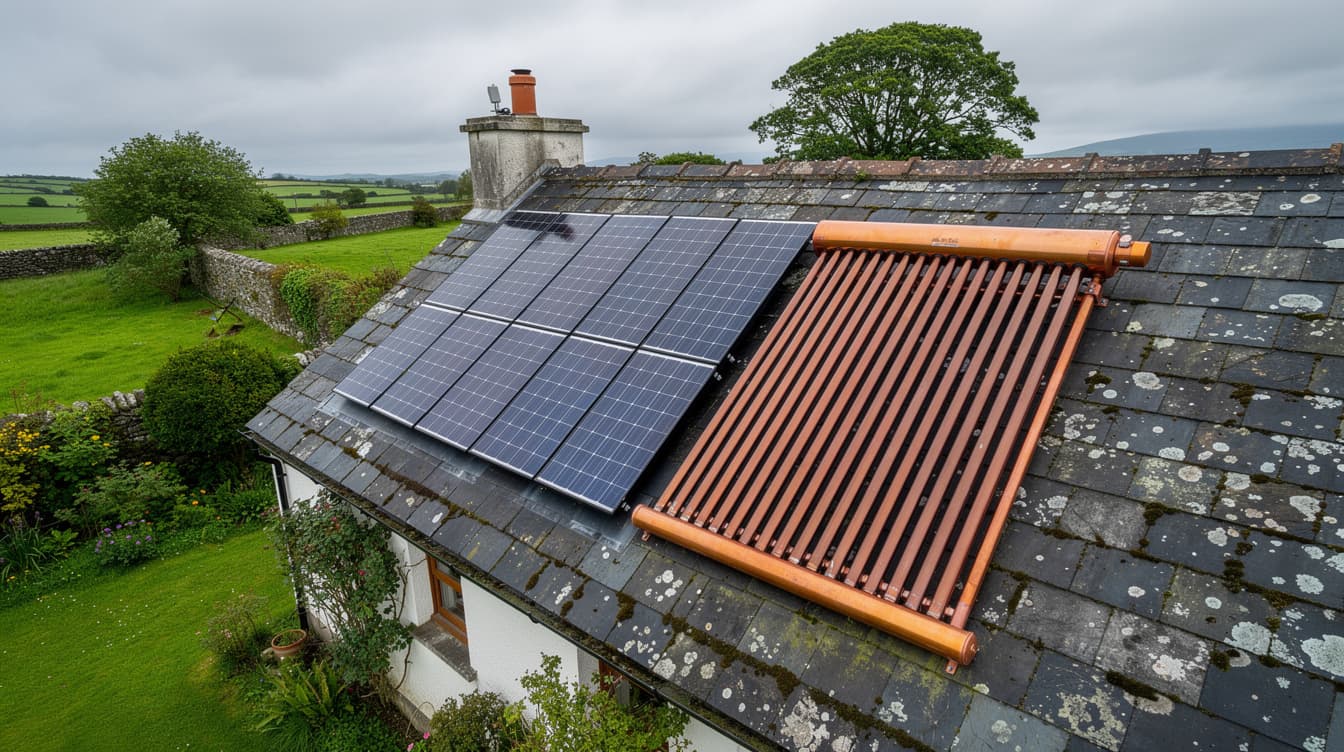
Solar PV vs Solar Thermal Panels Ireland 2026: Costs, Grants & Which Is Better for Your Home
Solar PV vs solar thermal in Ireland compared: costs, SEAI grants, savings, maintenance and which technology is best for Irish homes in 2026.