
How Much Does a Solar Battery Cost in Ireland in 2026? Every Price, Brand & Hidden Cost Explained
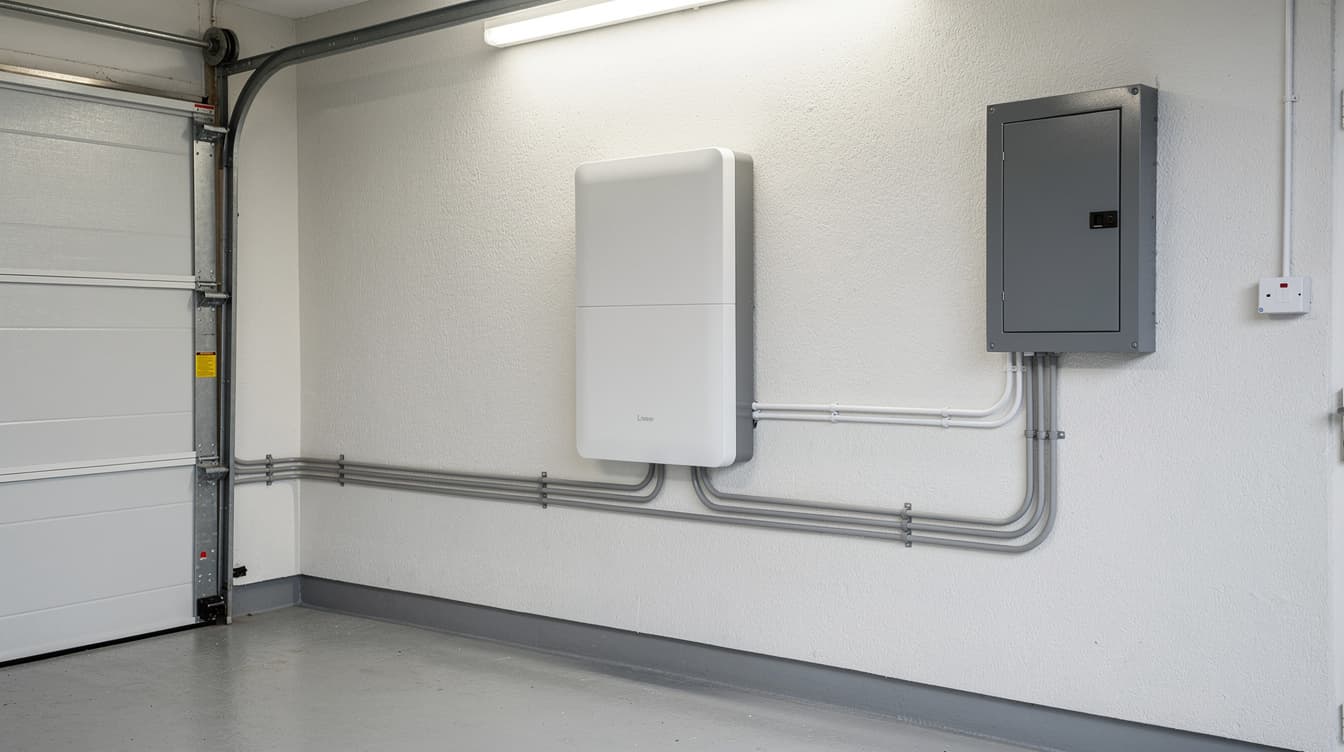
Adding a battery to your solar panel system costs between €3,000 and €15,000 in Ireland in 2026, depending on capacity and brand. That's a wide range — and it matters, because the wrong battery at the wrong price can turn a good solar investment into a mediocre one. This guide breaks down exactly what every major battery costs in Ireland right now, what affects the price, and whether a battery actually makes financial sense for your home.
If you already have solar panels (or are getting them installed), a battery lets you store daytime solar electricity for evening use instead of exporting it at €0.15–€0.24/kWh and then buying it back from the grid at €0.30+/kWh. The maths is simple — but only if the battery doesn't cost too much upfront.
Get Battery + Solar Quotes
Compare prices from SEAI-registered installers who supply and fit batteries — free, no obligation.
Solar Battery Prices in Ireland at a Glance (May 2026)
Here's what you'll actually pay, fully installed, from an SEAI-registered installer in Ireland:
| Battery | Capacity | Installed Price | Price per kWh | Backup Power? |
|---|---|---|---|---|
| Huawei LUNA 2000 5 kWh | 5 kWh | €3,500–€4,500 | €700–€900 | With backup box (€500+) |
| Huawei LUNA 2000 10 kWh | 10 kWh | €5,500–€7,500 | €550–€750 | With backup box (€500+) |
| GivEnergy 5.2 kWh | 5.2 kWh | €3,800–€5,000 | €730–€960 | Yes (built-in) |
| GivEnergy 9.5 kWh | 9.5 kWh | €5,800–€7,000 | €610–€740 | Yes (built-in) |
| Tesla Powerwall 3 | 13.5 kWh | €12,000–€15,000 | €890–€1,110 | Yes (built-in) |
| SolarEdge Home Battery 10 kWh | 10 kWh | €6,500–€8,500 | €650–€850 | With backup interface |
| BYD HVS/HVM 5.1–10.2 kWh | 5.1–10.2 kWh | €4,500–€7,500 | €735–€880 | With compatible inverter |
Key takeaway: Huawei and GivEnergy offer the best value per kWh in Ireland. The Tesla Powerwall costs significantly more — you're paying for the brand, the integrated inverter, and the app ecosystem. For most Irish homes, a Huawei LUNA 2000 or GivEnergy system delivers the same core function at 40–50% less cost. See our full battery comparison guide for detailed reviews of each brand.
What's Included in the Installed Price?
When an installer quotes you for a battery, the price should include:
- The battery unit itself — the lithium-ion storage module
- Hybrid inverter (if needed) — if your existing inverter isn't battery-compatible, you'll need an upgrade. This can add €1,000–€2,000 to the cost
- Wiring and electrical work — connecting the battery to your consumer unit and solar array
- Mounting hardware — wall brackets and fixings
- Commissioning and testing — configuring the battery, setting charge/discharge schedules, testing backup (if applicable)
- ESB Networks notification — your installer must notify ESB of the battery installation
Watch out for: Some quotes exclude the hybrid inverter upgrade. If you have a standard string inverter (common in older solar installations), you'll need a hybrid inverter to manage the battery. Always confirm whether the inverter is included in the quoted price.
The VAT Question: 0% or 23%?
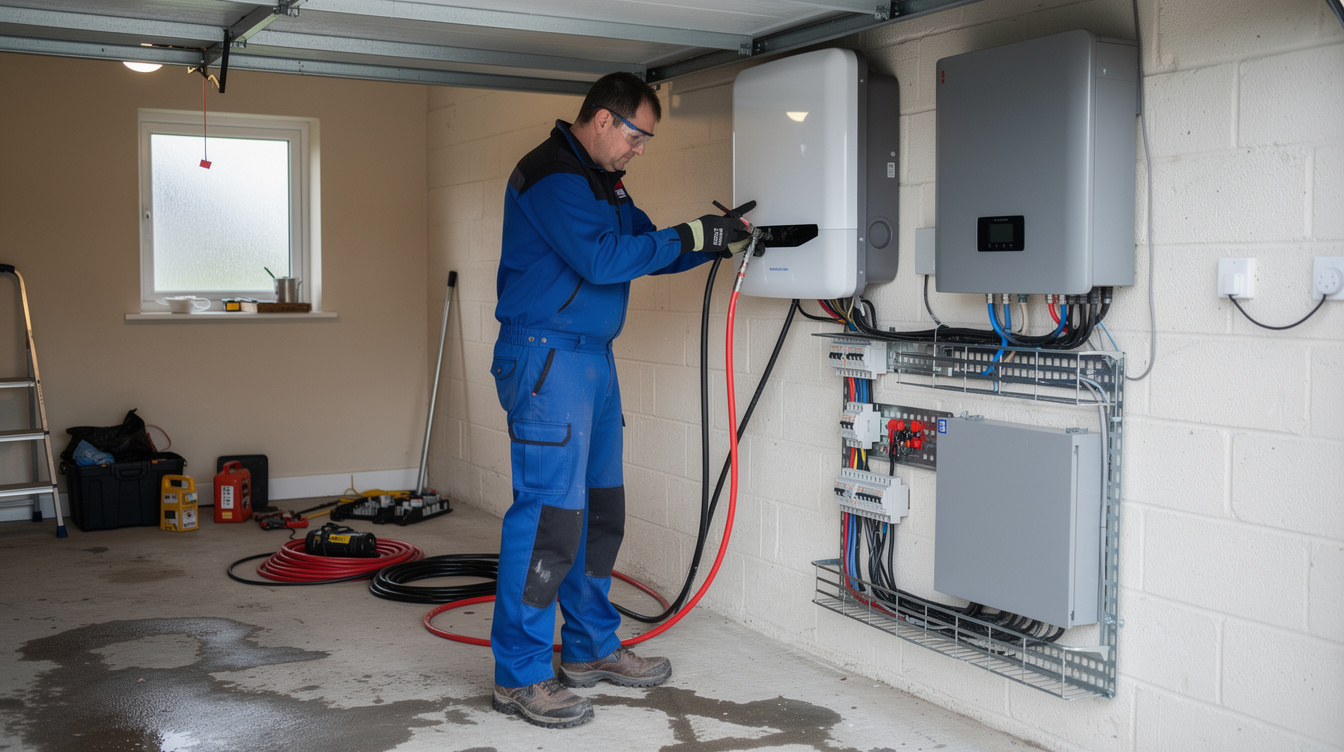
This is one of the most confusing aspects of battery pricing in Ireland, and it makes a big difference:
| Scenario | VAT Rate | Impact on 5 kWh Battery |
|---|---|---|
| Battery installed with new solar panels (same contract) | 0% VAT | Save €700–€900 |
| Battery added to existing solar system (retrofit) | 23% VAT | Adds €700–€900 |
This is huge. If you're getting solar panels installed, adding a battery at the same time saves you 23% in VAT compared to retrofitting one later. On a €5,000 battery, that's over €1,000 in savings. If you're even considering a battery in the future, it's significantly cheaper to include it in your initial solar installation contract.
How Much Will a Battery Actually Save You?
A battery saves money by shifting solar electricity from daytime (when you're exporting) to evening (when you'd otherwise import from the grid). The saving per kWh shifted is the difference between your import rate and your export rate:
| Battery Size | Daily Cycles | Annual kWh Shifted | Annual Saving | Payback (at €4,000) |
|---|---|---|---|---|
| 5 kWh | ~250/year | 1,250 kWh | €190–€250 | 16–21 years |
| 10 kWh | ~220/year | 2,200 kWh | €330–€440 | 14–20 years |
The honest truth: On pure financial payback alone, batteries are borderline in Ireland in 2026. A 5 kWh battery at €4,000 with €200/year savings takes 20 years to pay back — and most battery warranties are only 10 years. The financial case improves if:
- You have a dynamic/time-of-use tariff — charge the battery from the grid at night rates (€0.10–€0.15) and discharge during peak (€0.35–€0.45). This alone can add €150–€250/year in savings
- You have an EV — storing solar for evening EV charging doubles the value of stored electricity. Read our solar + EV guide
- You have a heat pump — similar logic; stored solar powers the heat pump during peak demand hours. Read our solar + heat pump guide
- You want backup power — if power cuts concern you, a battery's value goes beyond pure economics. Learn about solar and power cuts
- Electricity prices rise — every €0.01/kWh increase in grid electricity adds €10–€20/year to battery savings
Read our detailed analysis: is a solar battery worth it in Ireland?
Get Battery Quotes for Your Home
Tell us about your setup and we'll match you with installers who fit the right battery at the right price.
Battery Cost by Scenario: What Should You Actually Buy?
Different households need different batteries. Here's our recommendation based on your situation:
| Your Situation | Recommended Battery | Budget | Why |
|---|---|---|---|
| 3-bed semi, 4 kWp panels, no EV | Huawei LUNA 5 kWh | €3,500–€4,500 | Matches typical evening use; best value |
| 4-bed detached, EV, heat pump | GivEnergy 9.5 kWh | €5,800–€7,000 | Higher capacity for EV + heat pump; built-in backup |
| Rural home, power cut concerns | GivEnergy 9.5 kWh or Tesla Powerwall | €5,800–€15,000 | Built-in backup; GivEnergy better value, Tesla better app |
| Maximum self-sufficiency | Huawei LUNA 10–15 kWh | €5,500–€10,000 | Modular; add 5 kWh blocks as needed |
| Budget-conscious, existing Huawei inverter | Huawei LUNA 5 kWh | €2,500–€3,500 | Plug-and-play with existing Huawei hybrid inverter |
Hidden Costs to Watch For
Battery quotes can vary wildly between installers. Here are the costs that sometimes get buried in the small print:
- Hybrid inverter upgrade (€1,000–€2,000) — if your existing inverter is a standard string inverter, it can't manage a battery. You'll need a hybrid inverter. Some quotes include this, others don't. Always ask.
- Backup box/gateway (€400–€800) — Huawei batteries need a separate backup box to provide power during outages. GivEnergy and Tesla have this built in. If backup power matters to you, factor this cost in for Huawei
- Electrical panel upgrades (€200–€500) — older homes may need a consumer unit upgrade to safely integrate a battery
- CT clamp and monitoring (€50–€150) — usually included, but check. You need this for the battery to know when to charge/discharge
- ESB notification (€0–€100) — your installer handles this, but some charge for the paperwork
Our advice: Always ask for an all-inclusive installed price with no extras. A good installer will quote you everything upfront, including inverter upgrades if needed.
Is There an SEAI Grant for Batteries?
No. There is no standalone SEAI grant for battery storage in Ireland as of 2026. The €1,800 SEAI solar PV grant covers solar panels and installation only — batteries are not included in the grant calculation.
However, batteries do benefit from 0% VAT when installed alongside solar panels in the same contract. This effectively saves you 23% on the battery cost — a saving of €700–€2,000 depending on the system.
There have been ongoing calls for a dedicated battery grant from industry bodies. If one is announced, we'll update this guide. Read our full SEAI grant guide for current grant details.
Adding a Battery Later vs Now: The Cost Comparison
Many homeowners wonder whether to include a battery with their initial solar installation or add one later. Here's how the numbers compare:
| Factor | Install with Solar Panels | Retrofit Later |
|---|---|---|
| VAT rate | 0% | 23% |
| Inverter | Hybrid inverter included in solar quote | May need €1,000–€2,000 inverter swap |
| Labour | Electrician already on site | Separate callout (€200–€400) |
| Typical total extra cost for retrofit | — | €1,500–€3,000 more |
Bottom line: If you're getting solar panels installed and you think you'll want a battery within the next 2–3 years, it's almost always cheaper to include it in the initial installation. The VAT saving alone pays for the decision.
Battery Warranty and Lifespan
All major battery brands sold in Ireland offer a 10-year warranty as standard, typically guaranteeing 60–70% capacity retention after 10 years (or a set number of cycles). In practice, lithium-ion batteries often last 12–15 years before significant degradation.
| Brand | Warranty | Guaranteed Capacity | Cycle Limit |
|---|---|---|---|
| Huawei LUNA 2000 | 10 years | 70% after 10 years | 4,000 cycles |
| GivEnergy | 10 years | 70% after 10 years | 6,000 cycles |
| Tesla Powerwall 3 | 10 years | 70% after 10 years | Unlimited cycles |
| SolarEdge Home Battery | 10 years | 60% after 10 years | N/A |
| BYD HVS/HVM | 10 years | 60% after 10 years | N/A |
GivEnergy's 6,000-cycle warranty and Tesla's unlimited-cycle warranty stand out. At one cycle per day, 6,000 cycles covers 16+ years of daily use — well beyond the 10-year warranty period.
Frequently Asked Questions
Can I add a battery to my existing solar panels?
Yes. You can retrofit a battery to any existing solar PV system. The key consideration is your inverter — if you have a Huawei hybrid inverter, adding a Huawei LUNA battery is plug-and-play (€2,500–€3,500). If you have a different inverter, you may need a compatible battery or an inverter swap.
What size battery do I need?
For most Irish homes, 5 kWh is the sweet spot. A typical household uses 8–12 kWh in the evening/overnight period, but you won't fill a bigger battery from solar during Irish winters. A 5 kWh battery captures the most useful portion of surplus solar at the lowest cost. Homes with EVs or heat pumps may benefit from 10 kWh. Read our battery sizing guide.
Do batteries work during power cuts?
Only if the battery has backup capability. GivEnergy and Tesla Powerwall have this built in. Huawei requires a separate backup box (€400–€800 extra). Standard grid-tied batteries without backup will shut down during outages, just like your solar panels. Full guide to solar and power cuts.
Are battery prices dropping?
Yes, but slowly. Global lithium-ion battery prices fell approximately 14% in 2025, but installed prices in Ireland (which include labour, inverters, and margins) dropped only 5–8%. Prices are expected to continue declining gradually, but the 0% VAT benefit for same-contract installations makes buying now attractive.
Which battery brand is most popular in Ireland?
Huawei dominates the Irish residential market, mainly because most installers already use Huawei hybrid inverters for their solar installations. The LUNA 2000 battery is a natural plug-and-play addition. GivEnergy is the second most popular, valued for its built-in backup and excellent monitoring app.
Ready to Add a Battery?
Get your free personalised quote from SEAI-registered installers.
Related Articles
Solar Panels Tipperary 2026: From the Golden Vale to Your Rooftop — Costs, Grants & the Farming County Going Solar
Solar panels in Tipperary 2026: 1,161 homes got SEAI grants in 2025. Costs from €3,600 after grant, 884 kWh/kWp yield. Clonmel, Thurles, Nenagh pricing.
Solar Panels Meath 2026: The Commuter County Going Solar — Costs, Grants & What 1,972 Homes Already Know
Solar panels in Meath 2026: 1,972 homes got SEAI grants in 2025. Costs from €4,000 after grant, 885 kWh/kWp yield. Navan, Ashbourne, Trim pricing & tips.
Solar Panels Wexford 2026: Ireland's Sunniest County for Solar — Costs, Output & Installers
Solar panels in Wexford 2026: Ireland's #1 sunniest county with 965 kWh/kWp yield. Costs from €2,700 after grant. Real data, pricing & installer guide.